Trout Species Identification Guide for West Virginia
It can be incredibly frustrating to be out on a beautiful West Virginia stream, reeling in a gorgeous trout, only to hesitate, wondering, "Is this a brook, a rainbow, or a brown?" With different regulations, habits, and even preferred baits depending on the species, knowing exactly what you've caught is key to being a responsible and successful angler. This comprehensive guide is designed to help you confidently identify the various trout species you'll encounter in the Mountain State, so you can spend less time guessing and more time enjoying your time on the water.
Understanding West Virginia's Trout Tapestry
West Virginia is a true gem for trout anglers, boasting a mix of pristine wild trout streams, extensively stocked waters, and even some unique genetic marvels. The sheer diversity is part of what makes fishing here so rewarding, but it also means anglers need a keen eye. While many might think "a trout is a trout," the reality is that each species has its own distinctive characteristics, preferred habitats, and even a unique personality that makes them a joy to pursue. Getting to know these differences isn't just about showing off your angling prowess; it's about respecting the fish and the regulations that protect them.
Why Identification Matters on the Water
Imagine you've just landed a stunning fish, vibrant with color. You know it's a trout, but the specifics matter. Some species might have different size limits, creel limits, or even be protected in certain areas. Misidentification could lead to accidentally keeping a protected fish, exceeding a limit, or releasing a fish you could have legally harvested. Beyond legalities, understanding which trout you're catching helps you become a more effective angler. For instance, a wild brook trout in a small mountain stream might respond differently to a dry fly than a recently stocked rainbow in a larger lake. Knowing your target helps you choose the right gear, bait, and approach, significantly increasing your chances of success. Furthermore, being able to correctly identify the species allows you to appreciate the unique biology of each fish, deepening your connection to the natural world around you.
General Trout Characteristics and West Virginia's Waters
Before diving into the specifics of each species, it's helpful to understand what generally defines a "trout." Trout are typically cold-water fish, belonging to the salmon family (Salmonidae). They usually have streamlined bodies, small scales, and an adipose fin – a small, fleshy fin on their back between the dorsal fin and the tail. Their coloration can vary widely based on diet, habitat, and even stress levels, but they often feature spots or patterns that are key to identification. In West Virginia, you'll find trout in various environments, from high-elevation, crystal-clear mountain streams perfect for Fly Fishing for Trout in West Virginia to larger rivers and lakes that are regularly stocked by the state's wildlife agencies. Some waters are managed as "catch and release" only, while others have general harvest regulations. These diverse environments support a healthy mix of native, naturalized, and stocked trout populations, creating a rich angling experience for everyone.
The Jewel of the Mountains: West Virginia's Native Brook Trout
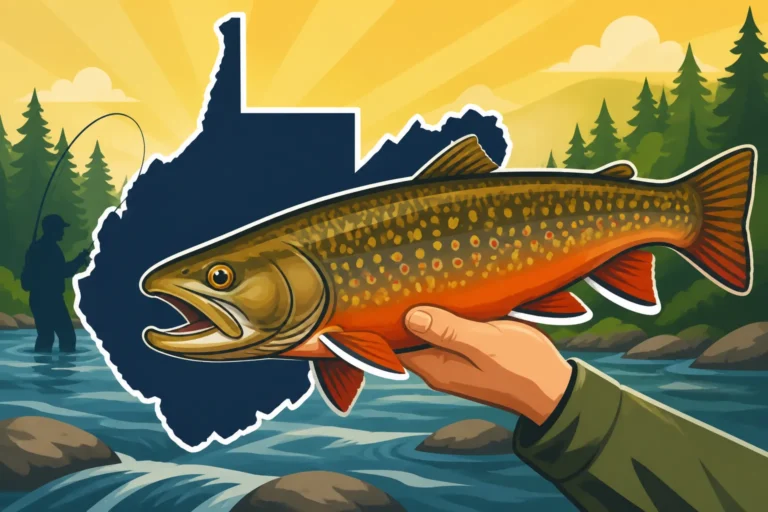
The brook trout, Salvelinus fontinalis, holds a special place in the hearts of West Virginia anglers – it's our official state fish! Often referred to as "brookies" or "speckled trout," these beautiful fish are truly wild treasures. Finding them typically means venturing into the pristine, colder headwaters of mountain streams, where clean water and dense forest cover provide the ideal habitat. Their smaller size doesn't diminish their fierce fighting spirit, and catching a wild brook trout on a small stream is an experience many anglers cherish above all others. This is the trout that truly embodies the wild spirit of the Appalachian Mountains. For more on this incredible fish, you can check out Brook Trout: West Virginia's Native and State Fish.
Distinctive Markings and Coloration
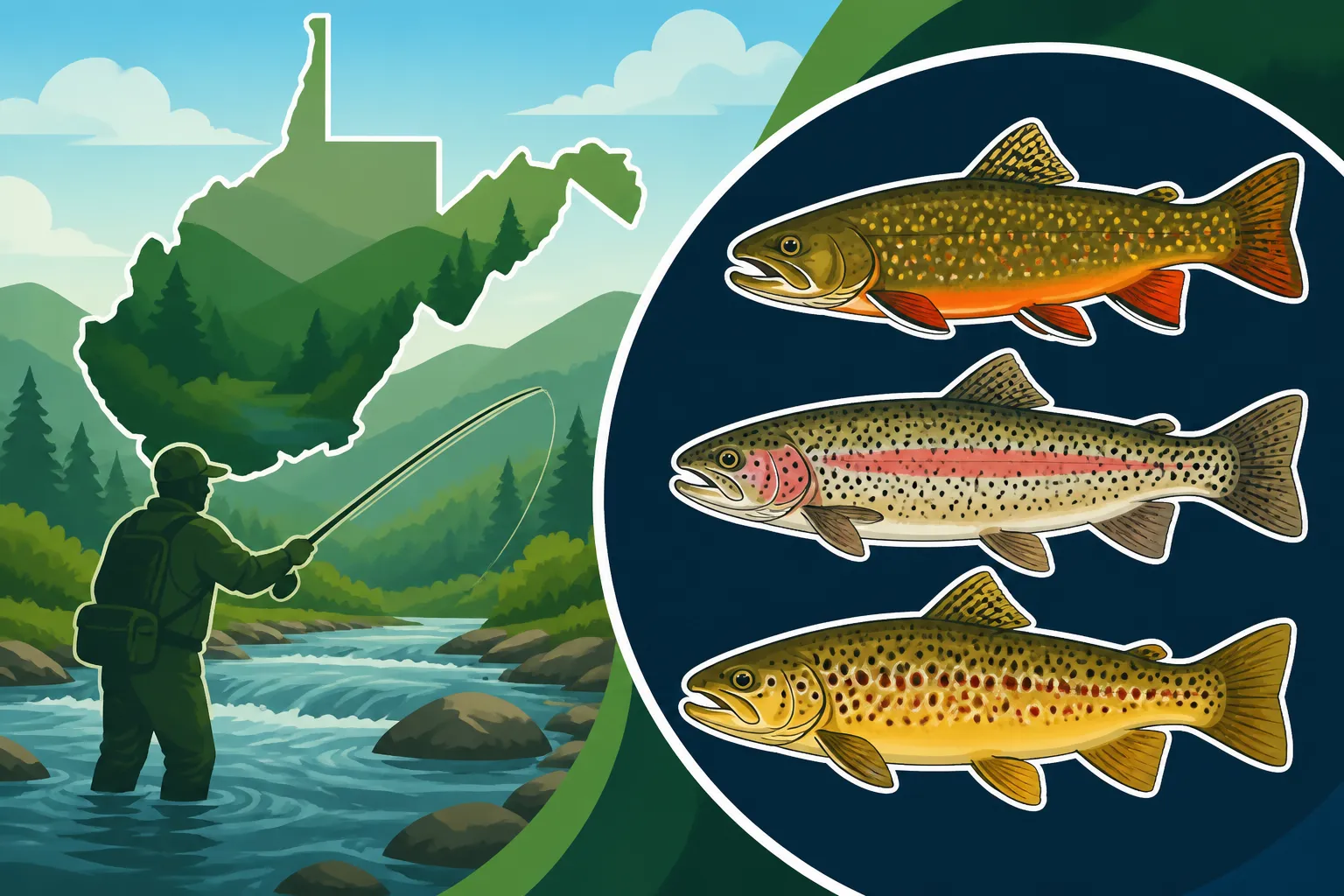
When you hold a West Virginia brook trout, its beauty is immediately apparent. The most striking feature is often the vibrant, worm-like markings on its back and dorsal fin, known as vermiculation. These patterns range from olive green to dark brown, often contrasting sharply with lighter, more yellowish flanks. Along its sides, you'll see scattered red spots, each encircled by a light blue halo – a truly unique characteristic among trout. The lower fins (pelvic, anal, and pectoral) are typically a reddish-orange, tipped with a crisp white leading edge, followed by a thin black line. This white-black-red fin combination is almost always a dead giveaway for a brook trout. Unlike other trout, brookies generally don't have spots on their tail fin, which can also be a helpful identifier. Their belly is usually light, often white or cream, but can turn a brilliant orange or red during spawning season, especially in males.
Preferred Habitats and Behavior
Wild brook trout are incredibly sensitive to water quality and temperature. They thrive in cold, clean, well-oxygenated water, typically found in the high-gradient, forested headwater streams of the Monongahela National Forest and other mountainous regions. They prefer streams with plenty of cover, such as fallen logs, undercut banks, deep pools, and thick streamside vegetation that helps keep the water cool. Because they are often found in smaller streams, they tend to be less wary than their lake-dwelling counterparts, though they are still quick to dart for cover at any perceived threat. Their diet primarily consists of aquatic insects (larvae and adults), terrestrial insects that fall into the water, and occasionally small minnows or crustaceans. They are ambush predators, often holding in seams of current or behind structure, waiting for food to drift by. Anglers often find success targeting them with small dry flies, nymphs, or tiny spinners, mimicking their natural food sources.
Size and West Virginia's Wild Brookies
While brook trout can grow larger in colder, more productive northern waters, the wild brookies in West Virginia's mountain streams are typically on the smaller side. A fish anywhere from 6 to 10 inches is considered a good-sized wild brook trout in these waters, with anything over 12 inches being a genuine trophy. This smaller stature is a natural adaptation to their nutrient-limited, high-elevation environments. Don't let their size fool you, though; they put up a spirited fight on light tackle, making them incredibly fun to catch. The joy of catching a West Virginia brook trout isn't measured in inches but in the pristine beauty of its surroundings and the knowledge that you've connected with a truly native species that has called these mountains home for millennia. Protecting these delicate populations through catch-and-release practices in many wild trout waters is crucial for their survival, ensuring future generations can experience the thrill of a wild brookie.
The Stocked Star: The Rainbow Trout
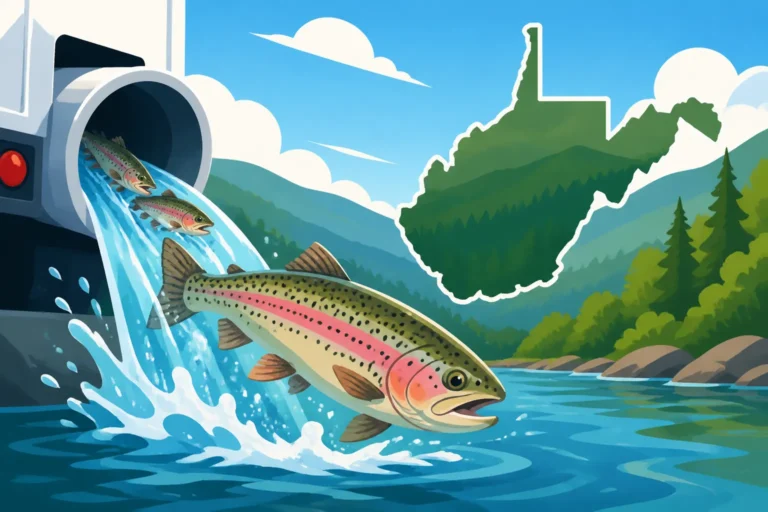
Perhaps the most recognizable and widely stocked trout species in West Virginia is the rainbow trout, Oncorhynchus mykiss. These vibrant, energetic fish are the backbone of the state's popular stocking program, bringing joy to countless anglers, from seasoned veterans to excited beginners. Rainbow trout are known for their strong fights and willingness to hit a variety of baits and lures, making them an accessible and popular target across the state. They are a non-native species to West Virginia but have been successfully introduced and provide fantastic fishing opportunities in many lakes and rivers. For details on where these fish are released, check out Rainbow Trout Stocking in West Virginia.
Rainbow's Signature Look and Spotting Patterns
Rainbow trout are named for the distinctive iridescent pink or red band that runs horizontally along their lateral line, often shimmering like a rainbow. This band can be quite pronounced in some fish, especially males during spawning season, or more subtle in others, appearing as a faint blush. Their bodies are typically silvery-green or blue-green on the back, fading to silvery sides and a white belly. A key identifying feature is the profusion of small, dark spots that cover their entire body, including the head, dorsal fin, and, significantly, the tail fin. Unlike brook trout, rainbows have these spots on their tail, and they are usually more numerous and smaller than the spots found on brown trout. Their fins are generally clear or lightly mottled, without the prominent white leading edges seen on brook trout. When trying to differentiate between species, asking "Does it have spots all over its tail?" is a quick way to narrow it down. If you're struggling to tell them apart, this article on How to tell a brook trout from a rainbow trout can be really helpful.
Where You'll Find Them and Their Foraging Habits
Rainbow trout are incredibly adaptable, which is why they thrive in West Virginia's diverse stocked waters. You'll find them in almost every body of water that's part of the state's stocking program, from large reservoirs like Summersville Lake and Sutton Lake to medium-sized rivers and even small community ponds. They prefer cool, well-oxygenated water but can tolerate slightly warmer temperatures than brook trout, especially the hatchery-raised strains. Stocked rainbows are often less selective feeders than wild trout, making them a great target for those using power baits, corn, worms, or small spinners and spoons. They are opportunistic feeders, consuming aquatic insects, small crustaceans, minnows, and even fish eggs. In lakes and larger rivers, they'll often cruise open water or suspend near structure, while in streams, they'll hold in runs and pools, much like wild fish. The West Virginia Trout Stocking Hotline and Schedule is an invaluable resource for finding out when and where rainbows are being released, ensuring you hit the water at the prime time.
Rainbow Trout Sizes in West Virginia's Stocked Waters
The size of rainbow trout you'll encounter in West Virginia largely depends on whether they are recently stocked or "holdover" fish. Most stocked rainbows are pan-sized, typically ranging from 10 to 14 inches, providing a consistent and enjoyable fishing experience. However, some larger trophy-sized rainbows are also stocked, and if conditions are right, rainbows can survive and grow significantly in West Virginia's lakes and rivers, becoming what are known as What a holdover trout is. These holdovers can reach impressive sizes, often exceeding 20 inches, offering a powerful fight that can test any angler's tackle. The growth rate can be quite good in waters with ample food and cool temperatures, allowing them to gain considerable weight over time. For anglers looking for a tackle organizer that can hold a wide variety of baits and lures suitable for stocked rainbows, a well-organized system from a retailer like Amazon can make all the difference, keeping your PowerBait, spinners, and spoons easily accessible.
The Wary Warrior: The Brown Trout
The brown trout, Salmo trutta, is a European native that has found a comfortable home in many of West Virginia's rivers and streams. While not as extensively stocked as rainbows, brown trout populations thrive in specific waters, often growing to impressive sizes and becoming notoriously difficult to catch. They are revered by many anglers for their cunning, strength, and beautiful, classic trout appearance. Unlike the brook trout, which prefers pristine headwaters, browns often do well in slightly warmer, more turbulent waters, making them a great target in larger rivers.
Key Features for Identifying Brown Trout
Brown trout typically have a golden-brown or olive-brown coloration on their back and sides, fading to a creamy or yellowish belly. Their most distinguishing feature is the presence of prominent dark spots, often ringed with a pale halo, scattered across their upper body, dorsal fin, and adipose fin. Interspersed among these dark spots, you'll usually find vibrant red or orange spots, also often ringed with a lighter halo, particularly along their lateral line. The key distinction from rainbow trout is that brown trout usually have very few, if any, spots on their tail fin. The tail often appears more uniformly colored or subtly mottled. Their jawline can extend past their eye, especially in older, larger males, giving them a more predatory appearance. Like all trout, their coloration can vary depending on their specific environment, diet, and even mood, but the combination of dark and red/orange spots, typically without tail spots, is a reliable identifier. If you're trying to compare them to rainbows, remember that How to tell a brown trout from a rainbow trout will focus on these spotting differences.
Preferred Lie and Challenging Behavior
Brown trout are known for their wary nature and territorial behavior. They are often found in larger rivers and streams with a mix of riffles, runs, and deep pools, especially those with plenty of overhead cover like undercut banks, submerged logs, and rock ledges. They are masters of concealment, often holding in positions that offer both protection and an ambush point for passing prey. This makes them a challenging but incredibly rewarding fish to target. Unlike the more eager-to-bite stocked rainbows, brown trout require a stealthy approach and often a more refined presentation of baits or flies. They are primarily piscivorous as they grow larger, meaning they prefer to eat other fish, but they will also consume large insects, crawfish, and small rodents. Anglers targeting big browns often use larger streamers, minnow imitations, or even live baitfish. They are most active during low-light conditions, such as dawn, dusk, or even at night, particularly for the biggest specimens.
Brown Trout Size and the Quest for Trophy Fish
Brown trout have the potential to grow to very impressive sizes in West Virginia's waters, often surpassing both brook and rainbow trout in maximum weight and length. While many caught will be in the 12-to-18-inch range, browns over 20 inches are not uncommon in prime habitats, and true trophy specimens can exceed 25 inches. The pursuit of these larger brown trout is a passionate endeavor for many anglers in West Virginia. The state's fisheries biologists work to manage certain rivers to support these larger fish, and the thrill of battling a big, powerful brown trout is unparalleled. Many anglers report that Do Brown Trout Get Bigger Than Rainbow Trout in West Virginia? is often true, especially for wild-reproducing populations. For those dedicated to the hunt, ensuring you have the Best Gear for West Virginia Trout Fishing, including a robust landing net, is crucial for safely landing and releasing these magnificent fish, if you choose to do so.
The Golden Enigma: West Virginia's Golden Rainbow Trout
Unique to West Virginia, the Golden Rainbow Trout is a true spectacle in the state's fishing waters. While technically a color variation of the standard rainbow trout, its striking appearance makes it entirely distinct and incredibly sought after by anglers. These fish are bred specifically for stocking in West Virginia and are a highlight of the state's annual Gold Rush event, drawing crowds from all over. They provide a unique angling experience and are easily identifiable.
The Unmistakable Gold and Unique Markings
The most obvious and unmistakable feature of the Golden Rainbow Trout is its brilliant, vivid golden-yellow to orange coloration. They literally shimmer with gold, making them stand out dramatically from all other trout species. While they retain the general body shape of a rainbow trout, their skin lacks the iridescent pink band and dark spotting typical of their counterparts. Instead, their bodies are a uniform, almost metallic gold, often with a faint reddish-orange stripe along the lateral line that can vary in intensity. Some may have very sparse, faint spots, but nowhere near the density or prominence of a regular rainbow or brown trout. Their fins usually match their body color, sometimes with slightly darker edges. This extraordinary coloration is what makes them so popular and easy to identify. For those curious about how such a uniquely colored fish came to be, exploring Golden Rainbow Trout Origin and Genetics sheds light on their fascinating backstory.
Stocking Programs and Catching the Gold
Golden Rainbow Trout are exclusively a product of West Virginia's hatchery system, developed over decades through selective breeding. They are not found naturally reproducing in the wild. The state's D.N.R. primarily stocks them during special events, most famously the annual "Gold Rush" event, which sees thousands of these prized fish released into dozens of lakes and streams across West Virginia. This creates a thrilling fishing opportunity and is a major draw for anglers. Catching a Golden Rainbow often feels like finding a pot of gold at the end of a rainbow, making it a memorable experience. Because they are hatchery-raised, their feeding habits are similar to other stocked rainbows, readily taking power baits, corn, worms, and small flashy lures or flies. The excitement around their release means fishing pressure can be high immediately following stocking, so getting to your chosen spot early is often a good strategy. Keep an eye on the West Virginia Trout Stocking Hotline and Schedule for details on when and where these beauties will be released.
Golden Rainbow vs. Other Trout: Avoiding Misidentification
When you see a Golden Rainbow Trout, there's usually no mistaking it for any other species. Its brilliant, uniform golden hue sets it apart immediately from the spotted patterns of brook, brown, and even regular rainbow trout. The main confusion might come if a regular rainbow trout has a particularly strong yellow hue from its diet or environment, but even then, the abundant dark spots of a typical rainbow will differentiate it from the nearly spotless Golden Rainbow. It's truly a unique fish in the West Virginia waterscape, bred to bring an extra splash of excitement to the angling experience. No other trout you'll encounter will have such a striking and uniform golden coloration. When you’re packing your gear for a trout fishing trip, consider investing in a good pair of polarized sunglasses available from retailers like Amazon; they can drastically cut glare, making it easier to spot these vibrant fish in the water, especially on sunny days.
Why Accurate Trout ID Keeps You Legal and Responsible
Beyond the sheer satisfaction of knowing your fish, accurate trout identification is a cornerstone of responsible and legal angling in West Virginia. The state's Department of Natural Resources (D.N.R.) has specific rules designed to protect and manage each species, ensuring healthy populations for future generations. Ignoring these rules, even unintentionally, can lead to fines and penalties, and more importantly, can negatively impact our precious fisheries.
Regulations and Species-Specific Limits
It's common for West Virginia to have different daily creel limits (the number of fish you can keep) and size limits (the minimum or maximum length of fish you can keep) for various trout species. For example, wild brook trout in certain areas might be catch-and-release only, or have very restrictive limits, to protect their fragile populations. Conversely, stocked rainbow trout might have more generous limits to encourage harvest and provide recreational opportunities. The West Virginia Bag and Possession Limits by Species is a critical document that every angler should consult before heading out. Understanding these nuances is not just about avoiding a ticket; it's about actively participating in the conservation efforts that keep West Virginia's waters thriving. If you're unsure about a fish's identity, it's always best to err on the side of caution and release it carefully.
Contributing to Conservation Through Knowledge
Every angler plays a vital role in the conservation of West Virginia's aquatic ecosystems. By correctly identifying trout species, you contribute directly to effective resource management. If you mistakenly keep a fish from a protected species or exceed a limit, you are unintentionally undermining conservation efforts. Furthermore, your knowledge helps you choose the right angling techniques. For instance, knowing you're in a wild brook trout stream might encourage you to use barbless hooks and practice careful catch and release, minimizing stress on these delicate natives. In areas stocked heavily with rainbow trout, you might feel more comfortable keeping your limit, knowing that the D.N.R. intends for those fish to be harvested. Being informed empowers you to make ethical decisions on the water, ensuring that the thrill of Trout Fishing in West Virginia remains vibrant and accessible for years to come. Ultimately, accurate identification is a small but powerful way for each of us to be better stewards of West Virginia's incredible natural resources.
| Feature | Brook Trout | Rainbow Trout | Brown Trout | Golden Rainbow Trout |
|---|---|---|---|---|
| Back/Sides Color | Olive/dark green to brown, yellowish flanks | Silvery-green to blue-green on back | Golden-brown to olive-brown on back/sides | Brilliant golden-yellow to orange |
| Belly Color | White/cream, often orange/red during spawning | White to silvery | Creamy to yellowish | Golden-yellow to orange (matches body) |
| Lateral Stripe | No distinct stripe | Iridescent pink/red horizontal band | No distinct stripe | Faint reddish-orange band (varies) |
| Body Spots | Red spots with blue halos; worm-like vermiculation | Numerous small, dark spots | Prominent dark spots (often with halos); red/orange spots | Very few, if any, faint spots |
| Tail Spots | Generally no spots | Numerous small, dark spots (entire tail) | Few to no spots | Very few, if any, faint spots |
| Lower Fins | Reddish-orange with white leading edge & black line | Clear or lightly mottled | Usually clear or slightly mottled | Golden-yellow to orange (matches body) |
| Origin | Native to West Virginia | Non-native, extensively stocked | Non-native, naturalized & stocked | Bred in West Virginia hatcheries |
| Typical WV Size | 6-10 inches (wild), up to 12+ inches (trophy) | 10-14 inches (stocked), 20+ inches (holdovers) | 12-18 inches, 20+ inches (trophy) | 10-14 inches (stocked) |
Disclaimer
This article is for general informational purposes only and does not constitute professional advice. Laws, prices and regulations vary by location and change over time. Consult a qualified professional for guidance on your specific situation.