West Virginia state record crappie weight
Trying to land a truly massive crappie in West Virginia can feel like chasing a ghost – you hear whispers of giants, but actually hooking one is another story entirely. It's especially frustrating when you're dreaming of a state record, only to realize how little concrete information is out there on what it actually takes. This guide will dive deep into the legendary weight of West Virginia's state record crappie, explore the best places to find these elusive slab-sided fish, and arm you with the strategies and gear needed to chase your own personal best, or even that coveted record.
The Quest for West Virginia's Crappie Record
For many anglers, the pursuit of a state record is more than just a fishing trip; it's a pilgrimage. It's about pushing the limits of skill, patience, and understanding of the fish we love to chase. West Virginia's crappie record is no exception, representing the pinnacle of size for these popular panfish within our beautiful mountain state. It’s a testament to both the fish’s resilience and the angler’s dedication.
Crappie, whether black or white, are known for their delicious fillets and their feisty fight, especially on light tackle. But a "slab" crappie, one that pushes the scales into record territory, is a creature of legend, often requiring years of perfect conditions and a touch of luck to grow to such immense proportions. Many of us have caught plenty of crappie, but that truly exceptional specimen that makes your heart pound before you even see it is what keeps us coming back.
Understanding the Current State Record
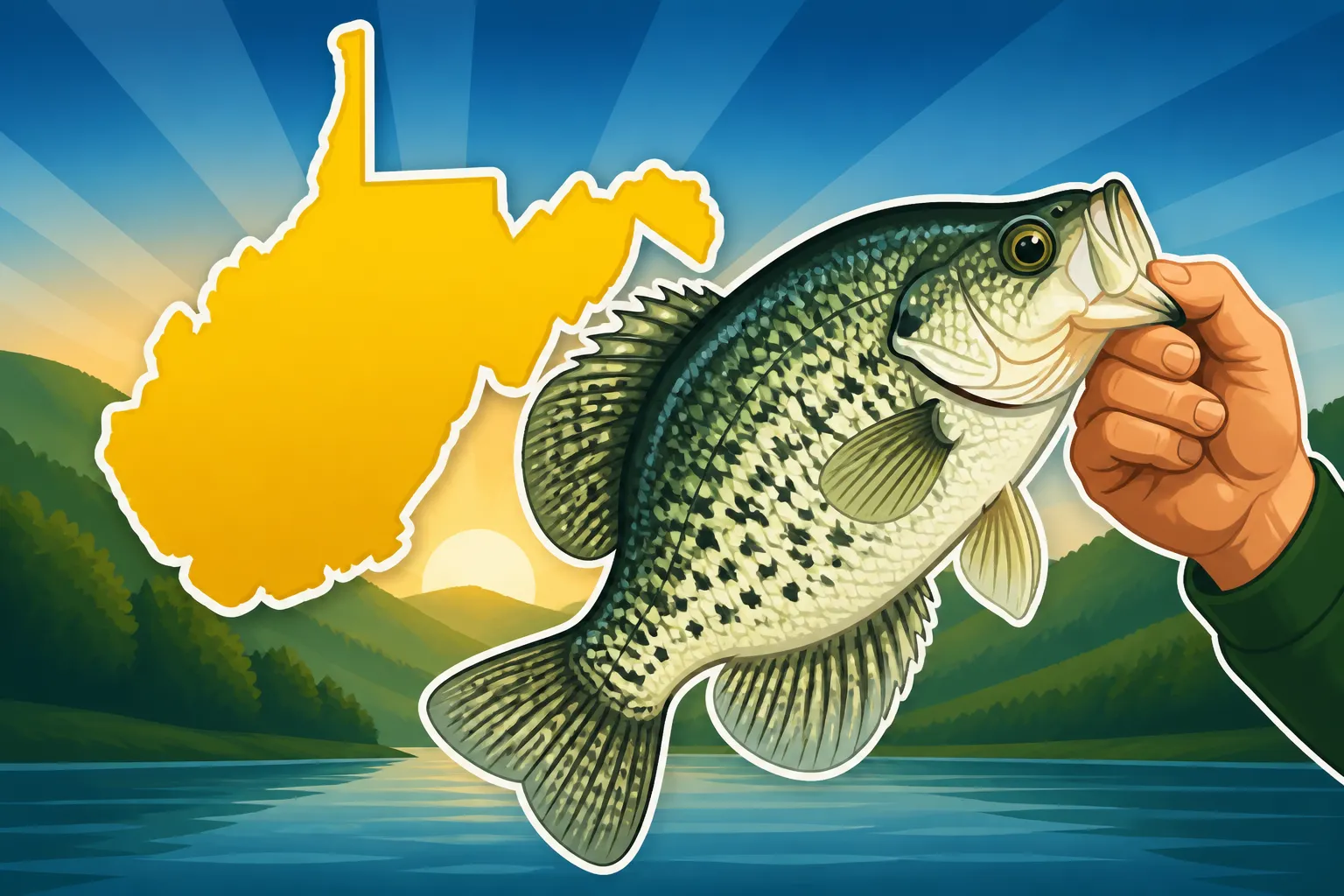
The official record for the largest black crappie ever caught in West Virginia stands at an impressive 4 pounds, 9.6 ounces. This monumental fish was a true "slab," showing just what incredible growth potential these fish can achieve in our waters. It's a weight that many anglers struggle to comprehend, especially if their typical catches are in the one to two-pound range. Imagine the fight, the sheer size of a fish like that! For the white crappie, the record is also substantial, coming in at 4 pounds, 2 ounces. Both of these records highlight the incredible fisheries we have here in West Virginia, capable of producing truly monstrous panfish. For those interested in the grand scheme of things, a comprehensive look at all the state's top catches can be found in West Virginia State Fish Records by Species.
The anglers who hold these records undoubtedly put in their time on the water, understanding the nuanced habits of these fish. It wasn't just a fluke; it was likely a combination of being in the right place at the right time, employing effective techniques, and having the gear to handle such a magnificent creature. Knowing these numbers provides a tangible goal and makes the dream of catching a record-breaker feel a little more real, even if it's still an incredibly rare feat. The story behind The biggest crappie ever caught in West Virginia is always a captivating read for any serious crappie angler.
Why Crappie Records are So Elusive
Crappie records are particularly hard-won because these fish, while abundant, rarely reach such extreme sizes. Several factors contribute to this elusiveness. For one, crappie have a relatively short lifespan compared to some other trophy fish like muskie or catfish. While they grow quickly in their early years, hitting those four-plus pound marks requires ideal conditions throughout their entire life. They need an abundance of high-quality forage, stable water temperatures, and minimal environmental stress to maximize their growth potential.
Another challenge lies in their schooling behavior. When you find one crappie, you often find many, which means they can quickly deplete local food sources if a population becomes too dense. The fish that achieve record size are often solitary giants or part of a less numerous school in a prime habitat, giving them an advantage in the food chain. Plus, crappie are delicious, and many anglers keep their catches, meaning fewer fish live long enough to become true giants. It's a delicate balance of nature and angler interaction that makes a record crappie so special.
Where West Virginia's Crappie Giants Lurk
West Virginia is blessed with numerous lakes and rivers that hold healthy crappie populations. However, finding the specific waters that consistently produce truly enormous crappie, the ones that could potentially challenge a state record, requires a bit more discernment. These are often reservoirs with specific characteristics that allow crappie to thrive and grow to exceptional sizes. It’s not just about finding crappie; it’s about finding the right crappie habitat.
Think about it: a giant crappie needs a consistent food supply, plenty of cover to ambush prey and escape predators, and enough space to roam without excessive competition. Not every lake or even every part of a good crappie lake will offer these perfect conditions. Understanding these nuances is key to narrowing down your search for that record-breaking slab.
Top Lakes for Trophy Crappie Potential
While many West Virginia lakes offer good crappie fishing, a few stand out for their consistent production of larger-than-average fish, making them prime candidates for anglers hoping to land a trophy crappie. Lakes like Stonewall Jackson Lake, for instance, are renowned for their abundant submerged timber and standing structure, providing ideal habitat for crappie to grow large and fat. Similarly, Burnsville Lake and Beech Fork Lake are often mentioned in conversations about big crappie, featuring extensive underwater contours and plenty of cover. These lakes often have healthy populations of baitfish, such as gizzard shad, which provide the high-protein diet necessary for crappie to pack on the pounds.
When planning your trip, consider focusing your efforts on these well-regarded crappie fisheries. They've earned their reputation for a reason, often boasting robust management practices that help maintain a healthy ecosystem for these fish to thrive. For a more comprehensive overview of spots that yield impressive crappie, you might want to check out Best lakes for trophy crappie in West Virginia and Best crappie lakes in West Virginia. These resources can give you even more specific locations and insights into why these particular bodies of water are so productive for crappie anglers.
Identifying Crappie Hotspots Within Lakes
Even on a great crappie lake, you can't just drop a line anywhere and expect to hook a record. Crappie, especially the bigger ones, are structure-oriented fish. They love to relate to cover that offers both protection and ambush points for feeding. This means you'll want to target areas with submerged timber, brush piles, old roadbeds, bridge pilings, and significant depth changes like creek channels or ledges. These underwater features act as highways and homes for crappie, concentrating them in predictable locations.
Many serious crappie anglers utilize modern sonar technology, including side imaging and down imaging, to pinpoint these hidden sanctuaries. A good fish finder can literally show you schools of crappie holding tight to a brush pile 20 feet below your boat. Without electronics, you're often relying on trial and error or local knowledge. However, even without the latest tech, paying attention to points, coves with standing timber, and areas where creeks enter the main lake can put you in the right vicinity. Learning How to locate crappie in West Virginia reservoirs is a fundamental skill for any angler seeking to consistently catch these popular panfish.
Strategies for Targeting Record-Breaking Crappie
Catching a crappie big enough to challenge a state record isn't about luck; it's about a calculated approach that combines the right gear, the perfect technique, and a deep understanding of crappie behavior. You need to think like a trophy crappie, not just any crappie. This means often bypassing the smaller, more aggressive fish to focus on the elusive giants that tend to be a bit more cautious and particular.
It requires patience and a willingness to adapt. Sometimes, the bite is subtle, barely a tap on the line. Other times, the crappie might be holding extremely tight to cover, demanding precise lure placement. Having the right tools and knowing how to use them effectively can make all the difference between a good day on the water and a potentially historic one.
Essential Gear for Trophy Crappie Hunting
When you're after record-breaking crappie, your gear needs to be dialed in. Forget the heavy bass rods; you need something light and sensitive. A quality ultralight or light-action spinning rod, typically 6 to 7 feet long, paired with a small spinning reel spooled with 4- to 6-pound test monofilament or fluorocarbon line, is generally ideal. The sensitivity of the rod blank is paramount, allowing you to detect those incredibly subtle bites from a big, cautious crappie. Many anglers also prefer a braided line with a fluorocarbon leader for added sensitivity and abrasion resistance, especially when fishing around submerged timber.
Beyond your rod and reel, small jigs, often in the 1/32 to 1/16 ounce range, are staples. Think about tiny soft plastics like tube jigs, grub tails, or minnow imitations. Don't forget live bait either; small minnows, hooked lightly through the lip or back, are often irresistible to large crappie. Specialized gear, from specific jig colors to rod holders for "spider rigging," can be found readily online. Many anglers find a wide selection of quality tackle and electronics through retailers like Amazon, making it easy to prepare for their next crappie expedition. For a more general overview of suitable equipment, consider looking into Best Tackle for Panfish.
Proven Techniques for Luring Big Slabs
Catching those monster crappie often requires specific techniques that cater to their preferences and habits. One of the most effective methods, especially on larger reservoirs, is spider rigging. This involves using multiple long rods, fanned out from the boat, each with a different bait or jig, and slow-trolling or drifting over crappie-holding structure. This allows you to cover a wide area and present various offerings until you find what the crappie are biting on that day. It's a fantastic way to locate scattered schools of larger fish.
Another highly productive technique is vertical jigging or tight-lining. This involves dropping a small jig or minnow straight down to the depth where crappie are holding, often directly into a brush pile or along a ledge. The key here is precision and feel; you're often targeting individual fish rather than entire schools. This technique works exceptionally well in clear water or when crappie are lethargic due to cold fronts. Understanding Jigging for Crappie in West Virginia Lakes can significantly improve your success rate. Pay close attention to subtle movements in your line or rod tip, as a big crappie's bite can often feel like just a slight weight, or even a slack in the line, rather than a definitive tug. For those looking to maximize their odds during specific seasons, learning the Best time to fish for crappie in spring can also be a game-changer, as crappie often become more aggressive during the spawn.
Lure Selection and Presentation for Trophy Crappie
When it comes to tempting a record-sized crappie, lure selection is critical, but presentation is often even more so. Big crappie can be incredibly finicky. They've seen a lot of baits in their lifetime, so subtlety is often the name of the game. For jigs, start with natural colors like white, chartreuse, black, or smoke, especially in clear water. In stained or darker waters, brighter colors or those with UV enhancers can be more effective. The action of your soft plastic imitation is also crucial; choose baits with delicate tails that flutter and move with minimal rod input.
If you're using live bait, small minnows are king. Hook them lightly through the lips or just behind the dorsal fin to keep them lively. Consider the water temperature and clarity when choosing your setup. In colder water, a slower, more deliberate presentation is usually best. A jig fished under a small bobber, barely twitching, can be deadly. In warmer water, crappie might be more willing to chase, so a slightly faster retrieve or trolling speed could work. The specific weight of your jig also matters for getting to the right depth and presenting naturally; for instance, understanding the Best jig weight for crappie at Burnsville Lake for different conditions will give you a significant edge.
Crappie Biology and Growth Factors
To truly understand what it takes for a crappie to reach state record proportions, you need to delve a bit into their biology. It's not just about what they eat or where they live; it's about their entire life cycle, their genetic potential, and how environmental factors conspire to allow some individuals to become giants while others remain average. This biological understanding helps anglers target not just any crappie, but the ones with the best chance of becoming truly massive.
Knowing the difference between black and white crappie, for example, can also be important, as they sometimes have slightly different habitat preferences and growth patterns. While both species are excellent table fare and fun to catch, understanding their individual characteristics can inform your approach to targeting record-class fish.
The Life Cycle of a West Virginia Crappie
Crappie, both black and white, generally spawn in the spring when water temperatures reach the 60s Fahrenheit. Males build nests in shallow water, typically near some form of cover like submerged brush or stumps, and guard the eggs. Growth rates are highly dependent on food availability and water quality. In their first year, crappie can grow rapidly, often reaching several inches. However, sustaining that growth over multiple years to hit trophy size requires a consistent, abundant food source, typically small baitfish like shad or minnows, along with various aquatic invertebrates.
A crappie's lifespan is relatively short, usually peaking around 5-7 years, though some can live longer in ideal conditions. This short lifespan means that a crappie aiming for a state record needs to grow exceptionally fast throughout its life. It's a race against time, and only the most successful individuals in the most favorable environments manage to reach the sizes that make anglers' jaws drop. For a detailed exploration of their development, refer to Crappie Life Cycle and Growth Rate in West Virginia Waters. If you're wondering which species you're even after, brushing up on Black Crappie vs White Crappie Identification is always a good idea.
Environmental Influences on Crappie Size
Several environmental factors play a crucial role in whether a crappie remains average or develops into a potential state record. Food availability is paramount; lakes with strong populations of small baitfish or abundant invertebrate life provide the necessary calories for rapid growth. A crappie simply cannot grow to be four pounds without a consistent, rich diet. Water quality is another critical factor. Lakes with stable pH levels, good oxygen content, and minimal pollution create a healthier environment for crappie to thrive without stress, which can inhibit growth.
Fishing pressure also indirectly influences the presence of trophy crappie. In heavily fished waters, larger crappie are more likely to be caught and removed before they can reach their full potential. Lakes with special regulations, or those that are simply harder to access, can sometimes harbor older, larger fish. Finally, the overall size and depth of the lake can also play a role. Larger, deeper reservoirs often offer more diverse habitats and stable thermal stratification, which can provide better conditions for crappie to grow large and remain elusive to anglers. It's a complex interplay, but understanding these elements brings you closer to appreciating and potentially finding those true giants.
Table of West Virginia's Crappie Records
To give you a clear picture of the targets, here's a summary of the current West Virginia state records for both black and white crappie. Keep in mind that these records are subject to change, but they represent the benchmark for trophy crappie in the Mountain State.
| Crappie Species | Record Weight | Location of Catch | Year Caught (Placeholder) |
|---|---|---|---|
| Black Crappie | 4 pounds, 9.6 ounces | Summersville Lake | Check current WV DNR records |
| White Crappie | 4 pounds, 2 ounces | Bluestone Lake | Check current WV DNR records |
(Please note: Specific year information is not available in my current data. Always check the official West Virginia Division of Natural Resources records for the most up-to-date information on state records.)
Disclaimer
This article is for general informational purposes only and does not constitute professional advice. Laws, prices and regulations vary by location and change over time. Consult a qualified professional for guidance on your specific situation.