Muskie Growth Rate to Trophy Size
The thrill of chasing West Virginia muskie is unlike any other, but one of the biggest questions that often crosses an angler's mind when they hook into one of these toothy critters is, "Just how old is this fish, and how big can they actually get?" It's a common frustration, especially when every muskie feels like a trophy. This comprehensive guide aims to demystify the muskie's journey from a fingerling to a true river giant, diving deep into their growth rates and what it truly means to land a "trophy size" muskie in our beautiful Mountain State.
Understanding West Virginia Muskie Biology
Before we can appreciate how big these fish get, it's helpful to understand a little about the creature itself. West Virginia's muskie, or muskellunge, are apex predators, sitting at the very top of the food chain in the waters they inhabit. Their entire biology is geared towards growth and survival, making them one of the most exciting and challenging freshwater fish to pursue.
Life Cycle Overview
Muskie have a fascinating life cycle. They typically spawn in shallow, vegetated areas in spring when water temperatures are just right, often right after ice-out. Unlike many other fish, they don't build elaborate nests, simply broadcasting their eggs over submerged vegetation, rocks, or woody debris. The eggs hatch relatively quickly, and the tiny fry quickly develop into voracious predators. From the moment they hatch, survival is a game of eat or be eaten, and those that survive begin a journey of impressive growth. They'll spend their first year growing rapidly, learning to ambush prey, and avoiding larger predators – sometimes even larger muskie! This initial period of intense growth sets the stage for their long lives, which can span a decade or even more in ideal conditions.
Diet and Metabolism
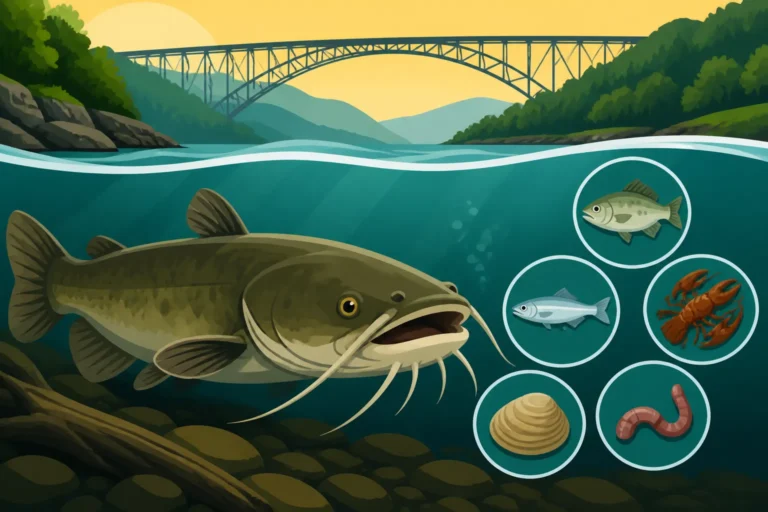
Muskie are opportunistic carnivores, and their diet is a primary driver of their growth. They consume a wide variety of prey, essentially anything they can fit into their cavernous mouths. This includes various forage fish like suckers, shiners, perch, and even other game fish such as bass and trout. In some of our larger reservoirs and rivers, they might even take on waterfowl or small mammals if the opportunity arises. Their metabolism, while not as fast as some smaller, more active species, is incredibly efficient at converting food into lean muscle and length. They are ambush predators, often lying in wait in cover before exploding on unsuspecting prey. The more available high-quality food there is in their environment, the faster and larger a muskie can grow. This constant need for calories means that healthy muskie waters must also be healthy ecosystems, supporting a robust population of smaller fish. You can learn more about What muskie eat in West Virginia rivers to better understand their dietary needs.
Factors Influencing Muskie Growth
Muskie growth isn't a one-size-fits-all equation. Several key environmental factors play a huge role in how quickly a muskie reaches impressive dimensions and how large it ultimately becomes. Understanding these factors can give you insight into why some waters consistently produce bigger fish than others.
Water Quality and Habitat
The quality of the water and the available habitat are paramount to muskie growth. Clean, well-oxygenated water is essential for muskie to thrive, as poor water quality can stress fish, reduce their feeding activity, and make them more susceptible to disease, all of which hinder growth. Equally important is the habitat itself. Muskie need plenty of cover – submerged timber, weed beds, rock piles, and deep pools – not only for ambush points to hunt prey but also for protection from environmental stressors and other large predators. A healthy, complex habitat provides ample hiding spots for both the muskie and its prey, creating a balanced ecosystem where these apex predators can flourish. Rivers with strong currents and deep sections, or lakes with expansive bays and structural features, tend to be prime locations for muskie to grow large and old.
Prey Availability
As mentioned earlier, muskie are incredibly food-driven, and the abundance and variety of their prey directly impact their growth rate. Waters teeming with a diverse and healthy population of forage fish, particularly larger baitfish like suckers and shad, provide the caloric intake necessary for muskie to pack on length and girth. Conversely, waters with sparse prey populations will typically produce slower-growing and smaller muskie, as the fish expend more energy hunting for less reward. This is why some of our most productive muskie waters, such as the New River or the Little Kanawha River, are also known for their rich forage bases. Anglers often choose their baits and lures to mimic these natural food sources; you can find a wide array of options, including realistic swimbait and crankbait imitations of West Virginia's baitfish, on retailers like Amazon.
Genetics and Stocking Programs
While environment and diet are huge, genetics also play a role. Some muskie strains may simply have a genetic predisposition to grow larger and faster than others. West Virginia's natural muskie populations are supplemented by stocking programs, which introduce fingerlings or sub-adults into suitable waters. The quality and genetic diversity of these stocked fish can influence the overall growth potential of the muskie population in a given water body. These programs are carefully managed to enhance fishing opportunities and ensure healthy populations of these magnificent fish throughout the state. Understanding Muskie Life Cycle and Growth Rate in West Virginia Waters can give you a deeper look into these biological considerations.
Typical Muskie Growth Rates in West Virginia
Now for the exciting part: how fast do these fish actually grow? While there's no exact formula, we can look at general trends and averages to get a good idea of what to expect from muskie in West Virginia's diverse waters.
Average Growth by Age
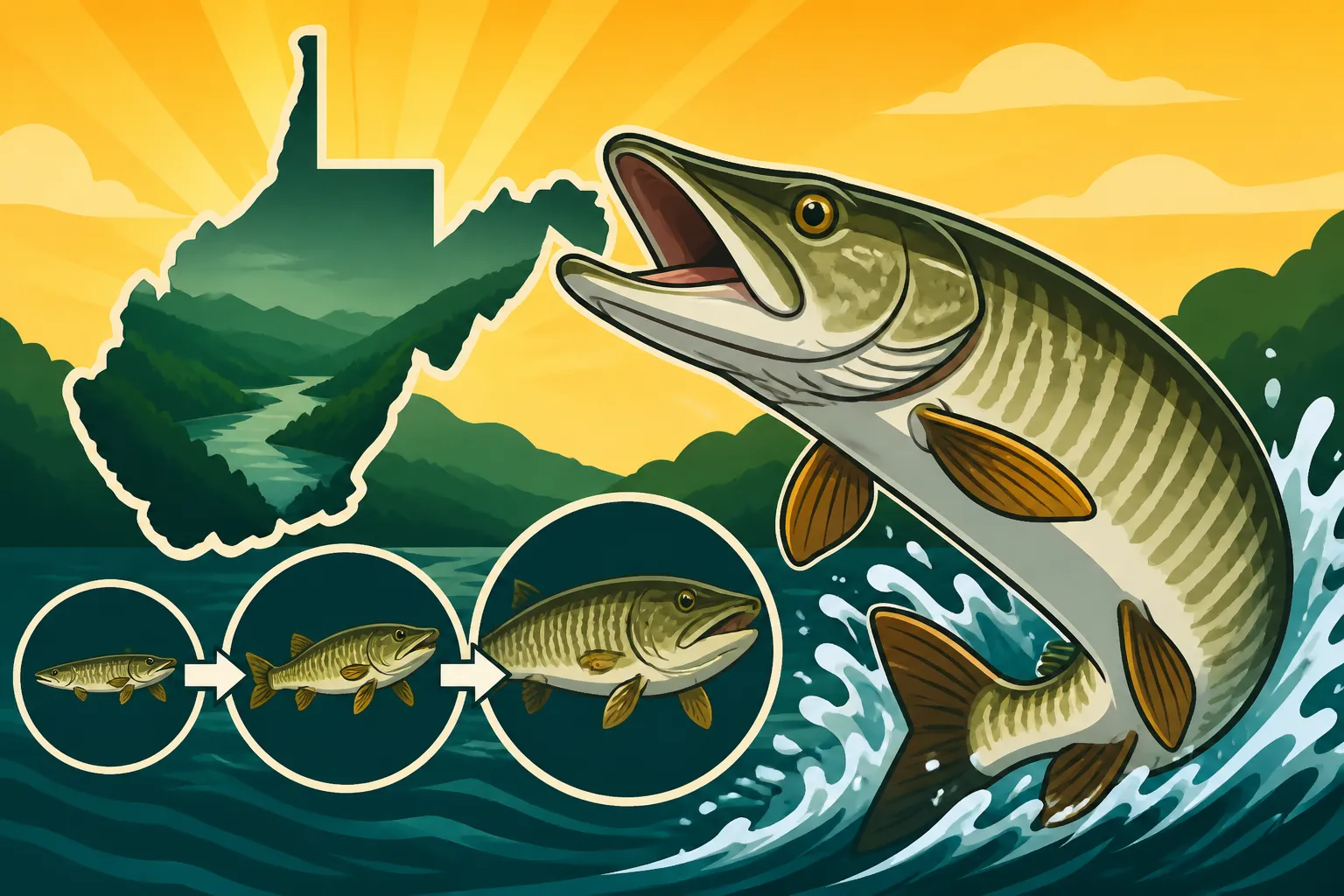
Muskie growth is typically fastest in their early years, as they rapidly increase in length to become too large for most predators to consume. In West Virginia, a muskie might reach 12-18 inches in its first year, and by age three, it could be well into the 20-30 inch range. From there, growth in length slows down somewhat, but they start to pack on serious weight and girth. A muskie might gain 2-4 inches per year in its younger life, then slow to 1-2 inches annually as it matures, but concurrently gain significant poundage.
For example, a muskie might be:
- Year 1-2: 15-25 inches
- Year 3-4: 25-35 inches
- Year 5-7: 35-42 inches
- Year 8-10+: 42+ inches, with significant increases in girth and weight.
It's important to remember these are averages. A muskie in a highly productive lake with an abundant food source and ideal temperatures could outpace these figures, while one in a less optimal environment might grow slower.
Variability Between Waters
The "average" growth rate doesn't tell the whole story, as muskie growth can vary significantly from one West Virginia waterway to another. For instance, muskie in large, fertile reservoirs like Stonewall Jackson Lake or Sutton Lake, which boast huge baitfish populations and extensive deep-water habitat, might show faster growth rates than those in smaller, cooler, or less productive river sections. The length of the growing season also plays a role; waters that remain warm and active for longer periods allow muskie more time to feed and grow.
Consider the stark difference you might see: a muskie caught in the productive lower reaches of the New River, with its vast smallmouth bass and suckers as forage, might be heavier and longer at a given age than a muskie from a colder, less nutrient-rich stream. It's truly a testament to how local conditions shape these magnificent fish. Anglers often research Best Muskie Waters in West Virginia to find locations known for producing larger specimens, understanding that these areas often have optimal growth conditions.
Here's a generalized look at potential muskie growth in West Virginia:
| Age (Years) | Average Length (Inches) | Average Weight (Pounds) | Notes |
|---|---|---|---|
| 1 | 12 – 18 | 0.5 – 1.5 | Rapid initial growth, focused on length |
| 2 | 20 – 28 | 2 – 5 | Continued strong length growth |
| 3 | 28 – 35 | 5 – 10 | Approaching legal size in many areas, starting to gain girth |
| 4 | 34 – 40 | 8 – 15 | Solid, mature fish, significant weight gain |
| 5 – 7 | 38 – 45 | 12 – 25 | Prime growth years, becoming formidable fish |
| 8 – 10+ | 45 – 50+ | 20 – 40+ | True trophy potential, growth slows but girth increases dramatically |
Note: These are general ranges and can vary widely based on specific water body, prey availability, and individual fish genetics.
Defining "Trophy Size" Muskie in the Mountain State
The term "trophy fish" is highly personal, but when it comes to muskie in West Virginia, there are some generally accepted benchmarks that elevate a catch from "nice fish" to "true giant." Chasing these larger fish is what draws many anglers to the sport.
State Records and Benchmarks
For most West Virginia anglers, a muskie officially crosses into "trophy" territory when it hits the 40-inch mark. Many consider 40 inches to be a significant milestone, a testament to the fish's age and survival skills. Moving beyond that, the 45-inch mark is often considered the benchmark for truly exceptional muskie. The elusive 50-inch muskie is the holy grail for many, a fish of a lifetime that represents incredible growth and rarity. While West Virginia has produced several giants over the years, landing one of these leviathans is an experience few anglers forget.
The state record books give us an idea of the absolute maximum potential. These are the fish that have beaten all the odds, finding the best habitat and food sources to grow to truly staggering sizes. While we don't list specific weights or lengths here, you can easily look up West Virginia state record muskie weight and length to see the pinnacle of muskie growth in our state. Catching a fish that even approaches these numbers is a feat to be celebrated.
Personal Trophy Goals
Beyond state benchmarks, a trophy muskie can also be deeply personal. For a beginner, landing any muskie, regardless of size, is a monumental achievement. Their first 30-inch fish might feel like a trophy. As anglers gain experience, their definition of a trophy naturally evolves. Perhaps it's a muskie from a particularly challenging stretch of river, or one caught on a specific, self-tied lure. The quest for a 40-inch muskie on a local river, or finally breaking the 45-inch barrier, becomes a driving force. The beauty of muskie fishing is that every fish tells a story, and the "trophy" is often in the challenge, the fight, and the eventual release. Many anglers carry specialized measuring boards and cameras (easily found on Amazon, often designed specifically for large fish) to properly document their personal bests, ensuring accurate measurements before release.
Hunting for the Giants: Where Trophy Muskie Live
Knowing how muskie grow leads naturally to the question: where are these giants most likely to be found? While muskie are widespread across West Virginia, certain bodies of water and specific conditions are more conducive to producing truly massive fish.
Key West Virginia Muskie Waters
West Virginia boasts several fantastic muskie fisheries, but a few stand out for their potential to produce trophy-sized fish. The New River, especially its middle and lower sections, is legendary for its muskie population and the potential for huge fish. Its diverse habitat, strong current, and abundant forage create an ideal environment. Similarly, the Kanawha River and its tributaries, including the Elk River, are known for their muskie, with the potential for giants lurking in deeper holes and around significant structure. The Little Kanawha River is another gem, particularly famous for its muskie fishing. In terms of impoundments, Burnsville Lake, Sutton Lake, and Stonewall Jackson Lake are popular for their robust muskie populations, offering different fishing experiences from river systems. These lakes, with their vastness and consistent stocking efforts, give muskie the space and food they need to grow to impressive sizes. Exploring guides like Best Muskie Waters in West Virginia can offer even more detailed insights into specific locations and conditions.
Seasonal Considerations for Big Fish
Timing is often everything when it comes to targeting trophy muskie. While muskie can be caught year-round, certain seasons offer better odds for encountering larger, more active fish. Fall is arguably the most popular time for trophy hunters. As water temperatures cool, muskie enter a "feeding frenzy" phase, bulking up for the lean winter months. They become incredibly aggressive, actively hunting large prey, and are more likely to strike larger baits. Best Techniques for Fall Muskie Fishing often revolve around these aggressive feeding patterns.
Spring, particularly after the spawn, can also be productive as muskie recover and begin to feed heavily. During the heat of summer, muskie often retreat to deeper, cooler water or seek out dense cover, making them harder to locate but still catchable for persistent anglers. Even winter can produce some giants through ice fishing in certain lakes, though this requires specialized gear and extreme patience. Understanding seasonal movements and feeding behaviors is crucial for increasing your chances of connecting with a true West Virginia giant.
Conservation and the Future of Big Muskie
With muskie being such a coveted game fish, conservation plays an absolutely critical role in ensuring that these incredible predators continue to thrive and grow to trophy sizes for future generations of anglers. Our actions on the water today directly impact the quality of fishing tomorrow.
Catch and Release Best Practices
Muskie are highly susceptible to stress, especially after a long fight, and their populations are often naturally limited. This is why catch and release is not just encouraged, but truly essential for muskie conservation. Releasing a muskie unharmed ensures it can continue to grow, reproduce, and contribute to the population. When you do land one of these magnificent fish, minimizing handling time is key. Keep the fish in the water as much as possible, use large, rubberized landing nets to protect their slime coat, and employ long-nosed pliers or specialized hook removers to quickly and safely extract hooks. Avoid vertical holds by the jaw and support their body horizontally.
Always have your camera ready, snap a few quick photos, measure if you wish (consider a bump board for accurate measurement and minimal handling, readily available on Amazon), and then release the fish gently, allowing it to recover before swimming away. Education on Muskie catch and release survival tips is invaluable for every muskie angler. By practicing responsible catch and release, we help ensure these fish can continue their journey to trophy size.
Protecting Habitat for Future Generations
Beyond individual catch and release efforts, broader conservation initiatives are vital for muskie. Protecting and restoring aquatic habitats is paramount. This includes maintaining excellent water quality, preventing pollution, and preserving natural shorelines and submerged vegetation that serve as critical spawning and nursery areas, as well as prime hunting grounds for adult muskie. Projects that address erosion, improve stream flows, and create fish-friendly passage around dams all contribute to healthier muskie populations.
Anglers can play a role by supporting organizations dedicated to habitat conservation and advocating for sustainable management practices. The health of the entire ecosystem, from the smallest baitfish to the largest muskie, is interconnected. By safeguarding their environment, we ensure that West Virginia will continue to be a destination for those dreaming of landing a truly trophy-sized muskie, a fish that has grown old and wise in the Mountain State's beautiful waters.
Disclaimer
This article is for general informational purposes only and does not constitute professional advice. Laws, prices and regulations vary by location and change over time. Consult a qualified professional for guidance on your specific situation.