How to tell a brown trout from a rainbow trout
Oh, the age-old dilemma! You’re out on a beautiful West Virginia stream, the water is singing its ancient song, and you pull in a gorgeous trout. Your heart races – is it a brown? A rainbow? Sometimes, especially when you’re still learning the ropes, these two can look so similar in the water, or even in hand, that it's just plain confusing. Trust me, every angler has been there. This guide is here to untangle that confusion once and for all, helping you confidently tell a brown trout from a rainbow trout, so you know exactly what you’ve got and can adhere to all those specific regulations that might come with each species.
The Distinctive Features of a West Virginia Brown Trout
Brown trout, often called "German browns" due to their European origins, are truly magnificent fish. They’re known for their cunning, their robust fighting spirit, and their ability to thrive in waters that might be a little too warm for other trout species. But beyond their reputation, they have some very specific physical characteristics that, once you learn them, become quite clear.
Coloration and Markings: Beyond Just "Brown"
When you hear "brown trout," you might expect a uniformly brown fish. However, their coloration can vary wildly, often depending on their diet, habitat, and even their mood! Generally, brown trout have a body color that ranges from an olive-brown on their backs, fading into a yellowish-brown or even a silvery-bronze on their sides, and typically a creamy white or pale yellow belly. It's not always a deep, dark brown.
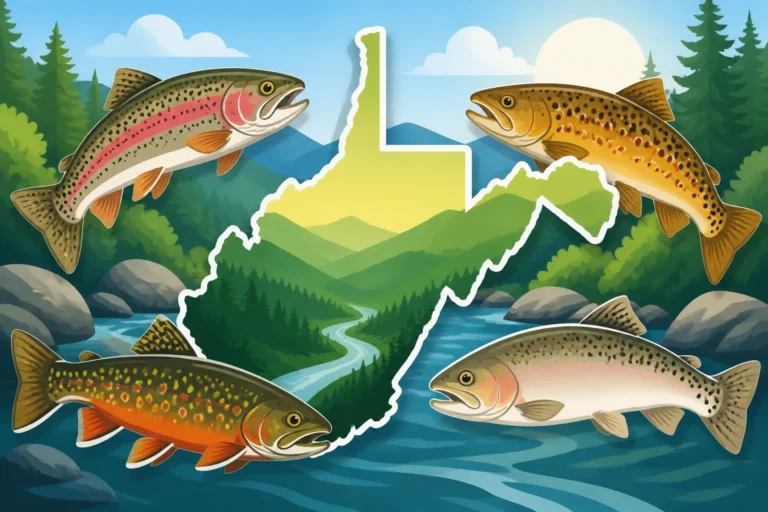
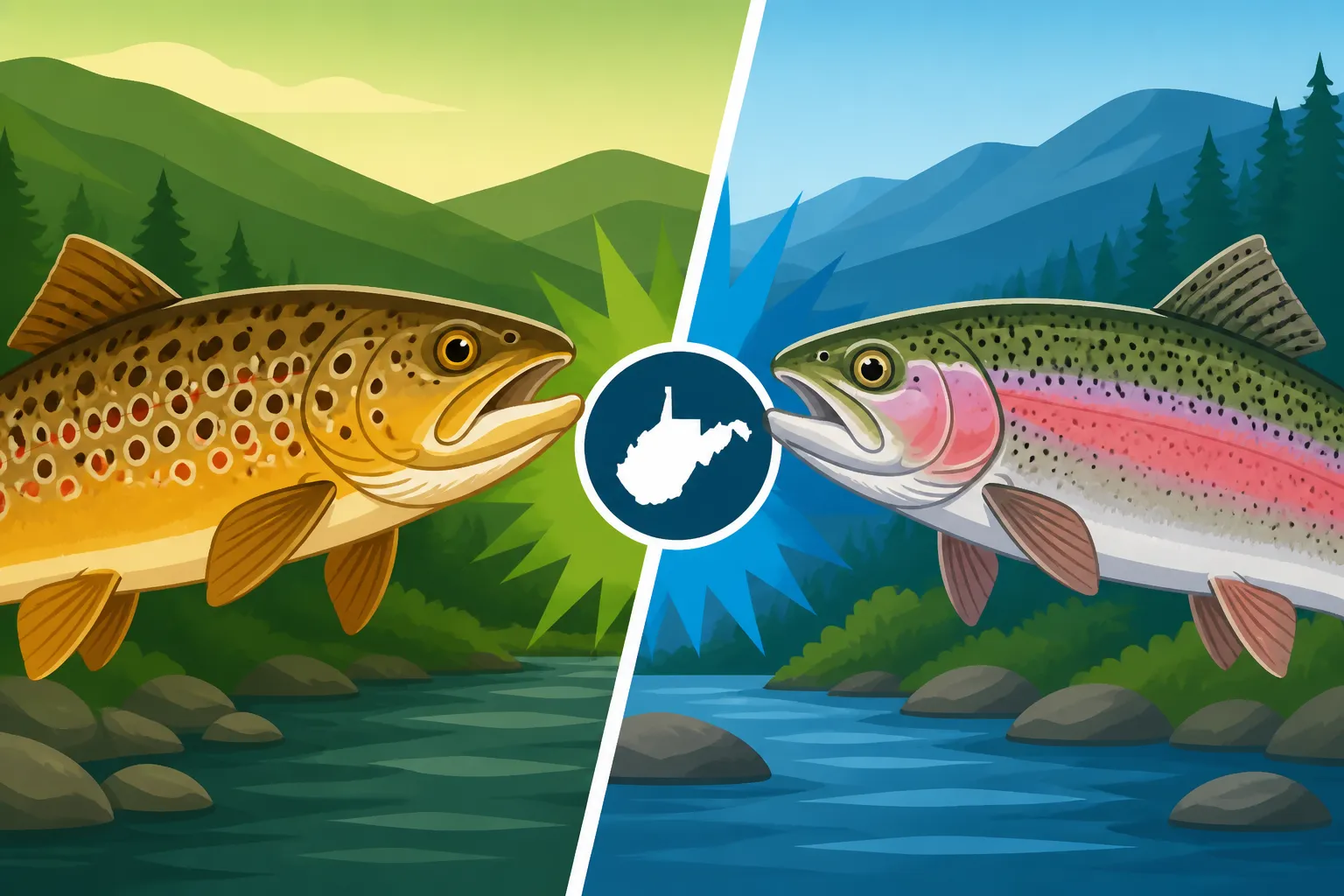
The most distinctive feature, and often the easiest to spot, is their spotting pattern. Brown trout are adorned with numerous dark spots, often with pale halos around them, scattered across their back and sides. Mixed in with these dark spots, especially on their sides, you'll also find some prominent red or orange spots, also frequently encircled by a lighter halo. These red spots are a huge giveaway for brown trout. Now, pay close attention to their tail fin – typically, a brown trout’s tail fin will have very few, if any, spots on it. This is a critical identifier when you're trying to make a quick determination.
Body Shape and Fin Characteristics
Brown trout tend to have a more elongated, somewhat stocky body shape compared to some other trout. Their head is relatively large, and their jawline extends back significantly, often reaching past the rear margin of their eye, especially in larger, older specimens. This gives them a powerful, almost predatory look, which makes sense given their opportunistic feeding habits.
Their fins are usually unpigmented or only lightly pigmented. While most trout have an adipose fin (that small fleshy fin between the dorsal and tail fins), a brown trout’s adipose fin often has an orange or reddish tint, or at least a dark border. This isn't always super obvious, but it's another subtle clue to look for. Their pectoral and pelvic fins might have a yellowish or orange hue, which further contributes to their overall "earthy" coloration. Knowing these subtle differences can truly help, especially when you encounter a fish whose primary body color isn't as pronounced as you'd expect. You can often see these traits best once you’ve landed the fish and can gently examine it.
Unmistakable Traits of a West Virginia Rainbow Trout
Rainbow trout are perhaps the most iconic trout species, widely stocked and beloved by anglers across West Virginia. They are often the first trout many people catch, and their spirited fight and beautiful appearance make them a perennial favorite. Like brown trout, rainbows also have specific physical traits that help set them apart.
The Iconic Rainbow Stripe and Spotting
The most famous calling card of a rainbow trout is, of course, the distinctive, broad, horizontal pink or reddish stripe running along its lateral line, from its gill plate all the way to its tail. This "rainbow" stripe is where they get their name, and while it can vary in intensity – sometimes vibrant, sometimes subtle – it's almost always present to some degree. When a rainbow trout is fresh from the hatchery or in prime condition, this stripe can be absolutely stunning.
Beyond the stripe, rainbow trout are typically covered in numerous small, dark spots. These spots are usually more uniform in size and distribution than those on a brown trout and generally lack the distinct halos. They are scattered over their back, sides, and importantly, extend prominently onto their tail fin. The presence of these dark spots all over the tail is a significant differentiator from brown trout. Their overall body color can range from steel-blue, olive, or even greenish on the back, fading to silvery sides and a white belly. Water conditions and diet can influence this, making some rainbows appear darker or lighter, but that lateral stripe and the spotted tail remain key. Learning how to properly identify them is key, especially when considering West Virginia Bag and Possession Limits by Species.
Head and Mouth Structure
Compared to brown trout, rainbow trout generally have a more streamlined head and body. Their jawline is typically shorter, rarely extending past the middle of the eye. This gives them a slightly less aggressive facial profile than a brown trout. Their mouth is also generally smaller in proportion to their head.
Their fins are usually clear or whitish, lacking the distinct yellow or orange hues sometimes seen on brown trout. The adipose fin on a rainbow trout is typically unpigmented or has a very faint dark edge, contrasting with the often-colored adipose fin of a brown trout. When you're thinking about gear, something like a good pair of polarized sunglasses from Amazon can really help you spot these subtle color differences, especially in clear water where the fish are still submerged. These details, though minor on their own, collectively paint a very clear picture of whether you're looking at a rainbow or a brown.
Side-by-Side: Key Differences and Why They Matter
While both brown and rainbow trout are gorgeous fish and provide incredible sport for anglers, knowing the precise differences isn't just about showing off your fish ID skills. It's often crucial for following regulations, understanding habitat, and appreciating the unique biology of each species.
Spotting Patterns: The Easiest Tell
Let's get right to the easiest and most reliable way to differentiate them: the spots.
- Brown Trout: Look for a mix of dark spots (often with pale halos) and those distinctive red or orange spots (also frequently with halos) on their sides. Critically, their tail fin will be largely unspotted or have only a few scattered spots.
- Rainbow Trout: Expect to see numerous, generally uniform dark spots over their entire body, including a heavy peppering of spots on their tail fin. The famous pink or red lateral stripe will also be present.
This tail fin spotting alone is often enough to make a positive identification, even if the body coloration is a bit off due to environmental factors. It’s truly the easiest trick in the book!
The Adipose Fin: A Subtle but Important Clue
The adipose fin, that small, fleshy lobe on the back near the tail, is another good indicator, though it requires a slightly closer look.
- Brown Trout: Often, the adipose fin on a brown trout will have some noticeable pigmentation, frequently an orange, reddish, or dark border.
- Rainbow Trout: Their adipose fin is generally plain and unpigmented, or at most, has a very faint dark edge, lacking the distinct color of a brown's.
It's a subtle point, but combined with the spotting patterns, it further solidifies your identification. It's a bit like looking for a secret handshake among fish!
Understanding the "Why": Regulations and Conservation
Why does all this meticulous identification matter? Well, for one, West Virginia's fishing regulations can sometimes differ based on species. For instance, specific waters might have different West Virginia Bag and Possession Limits by Species for brown trout versus rainbow trout, or certain stream sections might have West Virginia Catch and Release Rules for Trout that apply to one species more than another. Misidentifying your catch could, inadvertently, lead to violating these regulations.
Beyond the legal aspect, accurate identification helps anglers appreciate the unique roles these fish play in our ecosystems. Brown trout are incredibly resilient and often thrive in wilder, less accessible stretches, sometimes even reproducing naturally in West Virginia. Rainbow trout, while some populations are wild, are primarily supported through extensive stocking programs, making them widely available in many waters. Understanding what you've caught connects you more deeply to the local fisheries and conservation efforts, especially related to Trout Stocking in West Virginia.
| Feature | Brown Trout | Rainbow Trout |
|---|---|---|
| Lateral Stripe | Generally absent, no distinct pink/red stripe. | Prominent pink/red stripe along the lateral line. |
| Body Color | Olive-brown back, yellowish-bronze sides, white/yellow belly. Varies greatly. | Steel-blue/green back, silvery sides, white belly. Varies. |
| Dark Spots | Large, irregular dark spots, often with pale halos. Fewer spots on tail fin. | Numerous, small, uniform dark spots, heavily concentrated on tail fin. |
| Red/Orange Spots | Present on sides, often with pale halos. A key identifier. | Generally absent (occasionally very faint, but not common). |
| Adipose Fin | Often pigmented (orange, reddish, or dark edge). | Generally unpigmented or faint dark edge. |
| Jaw Length | Extends past the rear margin of the eye (especially in larger fish). | Typically does not extend past the middle of the eye. |
| Tail Fin Spots | Few to no spots. | Heavily spotted. |
When Identification Gets Tricky: Factors That Can Fool You
Even with all these handy tips, there are times when Mother Nature, or perhaps just a particularly quirky fish, tries to throw us a curveball. Don't be discouraged if you encounter a fish that doesn't fit the mold perfectly – it happens to the best of us! Understanding why identification can sometimes be tricky is just as important as knowing the classic traits.
Habitat and Water Conditions
Trout, like many fish, are influenced by their environment. The color of the water, the substrate of the stream bed, and even the local forage can all impact a fish's coloration. For example, a brown trout living in a dark, tannic stream with a lot of mud or leaves might appear much darker and more uniformly brown than one caught in a clear, gravelly stream where it needs to blend in with lighter rocks. Similarly, a rainbow trout in a nutrient-rich lake might have a more muted "rainbow" stripe, while one in a fast-flowing, oxygenated river might have a brilliantly colored stripe.
I’ve personally caught brown trout that were so silvery, especially those coming out of larger impoundments or main river channels, that you’d swear they were a different species entirely until you noticed those tell-tale red spots and unspotted tail. The same goes for rainbows; sometimes, the lateral stripe isn't as vibrant as the picture in your head, especially if they've been in a particular section of water for a while. Always rely on the combination of features, especially the spotting, rather than just one characteristic.
Hatchery vs. Wild Trout
This is another big one, especially in West Virginia where Rainbow Trout Stocking in West Virginia is a common practice. Hatchery-raised trout, both rainbows and browns, often look a bit different from their wild counterparts. They might have slightly duller colors, and their fins can sometimes be worn or "nubbier" due to being raised in concrete raceways. The iconic rainbow stripe might be less vibrant on a freshly stocked fish than on a "holdover" or wild fish that has adapted to its environment.
On the flip side, wild trout, having to survive and thrive in challenging conditions, often exhibit much more intense and striking coloration. Their fins are usually perfect, and their spots are incredibly crisp. This is why when you catch a truly wild brown trout in one of West Virginia's remote streams, its beauty is often breathtaking. When you're trying to identify a fish, consider where you caught it. Was it a heavily stocked stream or a wild, remote headwater? This context can sometimes help explain subtle variations in appearance. For a deeper dive, check out Difference between wild and stocked trout in West Virginia.
While it might seem daunting at first, with a little practice and a keen eye, telling the difference between a brown trout and a rainbow trout will become second nature. It enhances your fishing experience, helps you stay within the rules, and fosters a deeper appreciation for the incredible fish that grace West Virginia's waters. So next time you're on the water, take a moment to really look at your catch before you release it or put it on the stringer. You'll be amazed at the details you start to notice! Don't forget, a good field guide can always be helpful, and you can find excellent options on Amazon to keep in your tackle bag.
Disclaimer
This article is for general informational purposes only and does not constitute professional advice. Laws, prices and regulations vary by location and change over time. Consult a qualified professional for guidance on your specific situation.