Sauger Identification and Habits
It's incredibly common for anglers to land a fish in West Virginia's rivers and wonder if they've caught a walleye or something else entirely. That "something else" is often a sauger, a fascinating and often overlooked cousin to the walleye. This comprehensive guide will equip you with everything you need to confidently identify sauger, understand their unique behaviors, and know exactly where to find them across the Mountain State.
Distinguishing Sauger from Walleye: The Key Differences
Let's face it, sauger and walleye can look remarkably similar at first glance, especially when you're caught up in the excitement of a good bite. Many an angler has mistakenly called a sauger a walleye, or vice-versa, only to realize later there are subtle yet crucial differences that set them apart. Understanding these distinctions isn't just about showing off your fish ID skills; it's vital for adhering to West Virginia Fishing Regulations Explained, as bag limits and size restrictions can differ.
Physical Characteristics: Spotting the Tells
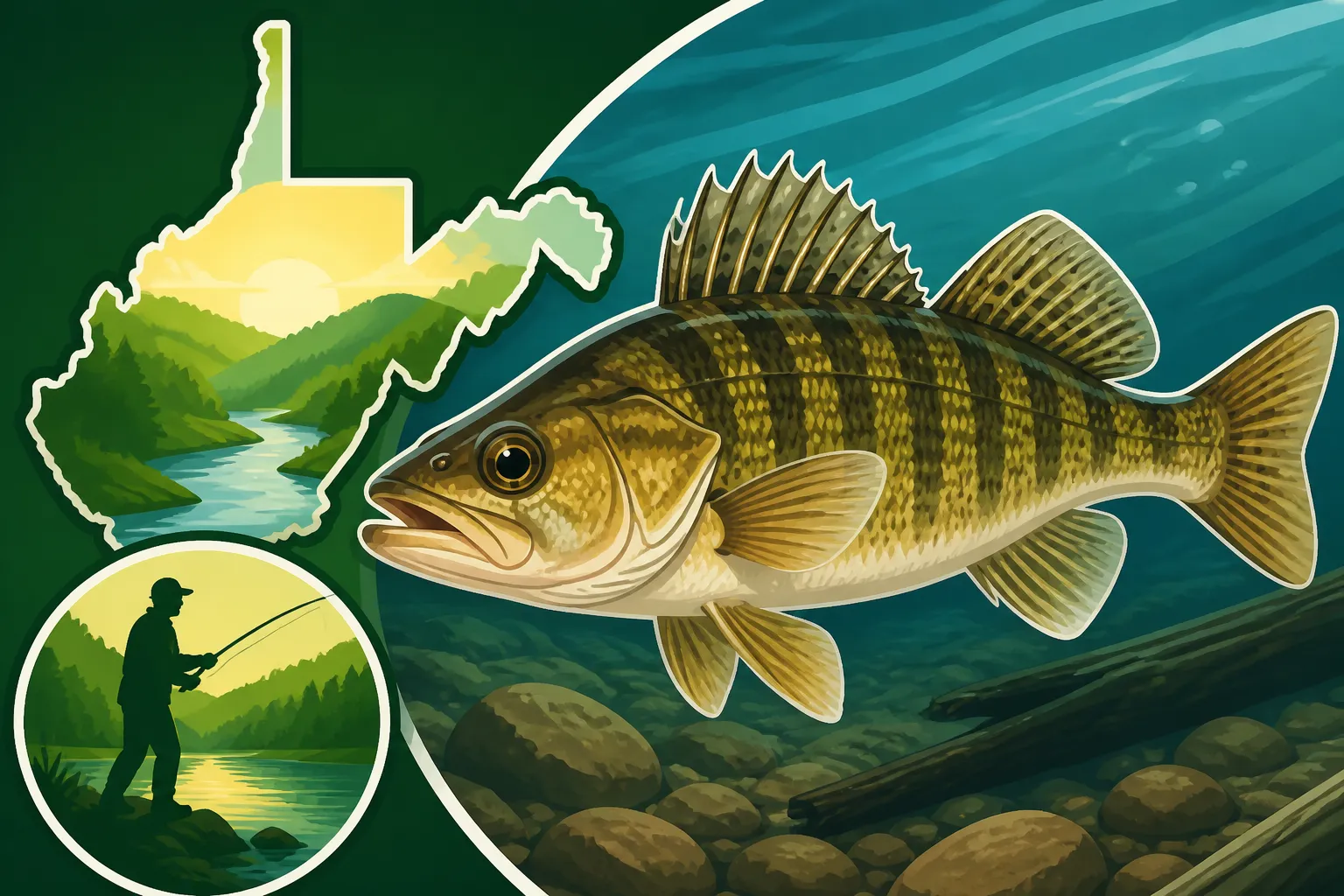
The most definitive way to tell a sauger from a walleye lies in the markings of its dorsal fin. A sauger's first dorsal fin (the spiny one) will have distinct, dark spots evenly distributed across it, creating a leopard-like pattern. In contrast, a walleye typically has a solid, dark blotch at the base of the rear portion of its spiny dorsal fin, but the rest of the fin is usually clear or has faint, indistinct mottling. This is your primary visual cue, and once you know what to look for, it becomes quite obvious.
Beyond the dorsal fin, sauger also have a much more mottled, brassy, or olive-brown body coloration with dark blotches or saddle-like markings along their sides. Walleye, while also camouflaged, tend to have a more uniform golden-yellow to olive-green body with darker vertical bars that are less distinct than a sauger's blotches. Another subtle but often present difference is the lack of a white tip on the lower lobe of the caudal (tail) fin of a sauger, a feature almost always present on a walleye. This detail, combined with the dorsal fin spots, makes identification straightforward.
Finally, consider the overall body shape. Sauger tend to be more slender and elongated than walleye of comparable length. While both fish have sharp teeth and reflective eyes adapted for low light, the sauger's mouth might appear slightly smaller and more pointed. Remember these key traits, and you'll be able to tell them apart like a seasoned pro next time you're on the water. For a deeper dive, you can learn more about What a sauger is and how it differs from a walleye.
Habitat Preferences: Where They Call Home
Sauger are true river dwellers, preferring large, turbid rivers and major tributaries. They thrive in moving water, often congregating in deeper channels, below dams, and in areas with significant current. They don't mind murky water, in fact, they seem to prefer it, often being caught in places where the water might seem too stained for other game fish. Their eyes are exceptionally well-adapted for low light and poor visibility, giving them an advantage in these environments.
Walleye, while certainly found in rivers, also excel in large lakes and reservoirs with clear to moderately clear water. They are more adaptable to varied depths and structures, from shallow rocky reefs to deep open water. While they'll certainly hold in current, they're just as comfortable patrolling offshore humps or deep points in a lake. If you're fishing a highly turbid river like the Ohio, especially below a lock and dam, your chances of encountering sauger are significantly higher than if you were targeting fish in a clearer mountain reservoir.
This difference in preferred habitat means that if you're specifically seeking sauger, you'll want to focus your efforts on the major river systems. Think about where the water is moving, where there's structure like wing dams, rock piles, or current breaks, and where the visibility might be a bit lower. These are the prime sauger hangouts.
Size and Growth: Understanding the Scale
Generally speaking, sauger are a smaller fish than walleye. While a trophy walleye can easily push into the double-digit pound range and exceed 30 inches, a large sauger is typically in the 1 to 3-pound range, with lengths often between 12 and 20 inches. Catching a sauger over 20 inches is considered an exceptional catch in West Virginia. This isn't to say they don't fight hard; for their size, sauger are feisty and provide a spirited battle on light tackle.
Their growth rate is also generally slower, and they don't reach the same maximum size as walleye. Anglers often appreciate sauger for their consistent size and numbers, offering plenty of action rather than relying on a single trophy fish. Because of these size differences, it's crucial to be aware of West Virginia Walleye Daily and Possession Limits as these can sometimes be combined or have specific rules for sauger, especially in shared waters like the Ohio River where you might catch both.
Understanding the typical size helps set realistic expectations for your fishing trips. If you're consistently catching fish in the 12-18 inch range with the distinctive dorsal spots, you're likely on a healthy sauger bite. This knowledge also influences your gear choices, as lighter tackle is often more appropriate and enjoyable for sauger fishing.
Sauger Hotspots in West Virginia: Where to Find Them
Knowing what a sauger is leads directly to the question of where to find these elusive fish. While West Virginia offers incredible fishing for various species across its diverse waters, sauger have a very specific preference for certain environments. If you're planning a trip to specifically target sauger, focusing on these areas will greatly increase your chances of success. It's truly a unique experience to dial into a sauger bite, as they often congregate in good numbers when conditions are right.
The Mighty Ohio River and Its Tributaries
Without a doubt, the Ohio River is the undisputed champion when it comes to sauger fishing in West Virginia. This massive waterway provides the ideal turbid, flowing environment that sauger absolutely thrive in. The locks and dams along the Ohio River, in particular, create perfect sauger habitat. The turbulent water immediately below the dams, the current breaks, and the deeper scour holes all attract baitfish, and where the baitfish go, the sauger follow. Ohio River Fishing Rules for West Virginia Anglers are paramount here, as they often have specific aggregate limits for sauger and walleye.
Beyond the main stem of the Ohio, its larger tributaries that retain some turbidity and current can also hold sauger. Rivers like the Kanawha River, especially near its confluence with the Ohio, can be productive. Anglers often find sauger congregated in wintering holes in these rivers, or pushing upstream from the Ohio during warmer months. Remember that sauger appreciate structure in the current, so looking for submerged wing dams, rock piles, barge tie-ups, or sudden depth changes in these rivers is a smart strategy. You can find more general information about Best Fishing Rivers in West Virginia to help narrow down your options.
Fishing the Ohio River requires a different approach than many other West Virginia waters. Heavy current, barge traffic, and deep channels demand robust gear and a keen understanding of river dynamics. But for those willing to put in the effort, the rewards of consistent sauger action can be immense, especially in the cooler months when these fish really turn on.
Reservoirs with Sauger Populations
While sauger are primarily river fish, some reservoirs that are connected to or were formed by damming a sauger-rich river can occasionally hold populations. However, these are generally less common and less productive for sauger than the main river systems. Many of West Virginia's reservoirs, particularly the clearer mountain lakes, are far more suited to walleye or other warmwater species.
For the most part, if you're targeting sauger, you'll be focusing on the large river systems. Reservoirs that might have a few sauger are often those with significant riverine characteristics in their upper reaches, or those that receive a regular influx of water and fish from a major river. Even then, they typically won't compare to the consistent action found in the Ohio River. Anglers hoping for sauger in a reservoir should prioritize areas close to the main river channel, or where significant current flows into the lake.
It's always worth checking the specific regulations and stocking reports for any given reservoir. While some might occasionally have a sauger population, it's usually not their primary fishery. If you're specifically hunting for sauger, your best bet remains the big, working rivers of the state.
Seasonal Movements and Concentrations
Sauger, like many fish, exhibit distinct seasonal movements. During the colder months, from late fall through early spring, they tend to congregate in deeper pools, below dams, and in scour holes where they can find stable temperatures and ambush passing baitfish. This is often the prime time for sauger fishing, as their metabolism remains active and they are more concentrated.
As spring approaches, typically when water temperatures are in the 40s to low 50s Fahrenheit, sauger begin their spawning migrations. They'll move upstream to shallower, rocky areas with current to lay their eggs. Post-spawn, they'll gradually disperse but will often remain in the main river channel, seeking out current breaks and feeding lanes. Throughout the summer, they might be found in slightly deeper, cooler water, often near current breaks or structure, continuing to feed actively.
Understanding these seasonal patterns is key to consistently finding sauger. You wouldn't look for them in the same spots in January as you would in May. Pay close attention to water temperature and flow rates, as these are major drivers of sauger behavior. Observing where other successful anglers are fishing, especially those targeting sauger on the Ohio River, can also provide valuable clues to current concentrations.
The Sauger's Daily Grind: Habits and Behavior
To successfully fish for sauger, it's not enough to just know where they live; you also need to understand how they live. Their unique adaptations and behaviors dictate when and how they feed, reproduce, and react to their environment. This insight allows you to present your baits and lures in a way that triggers their predatory instincts, turning a slow day into a memorable one.
Feeding Habits and Prey Selection
Sauger are opportunistic predators with a diet that primarily consists of smaller baitfish. In the Ohio River and its tributaries, this means anything from shad and minnows to smaller darters and shiners. They are ambush predators, often holding in current breaks, behind submerged rocks, or in deeper holes, waiting for an unsuspecting meal to drift by. Their excellent low-light vision gives them a distinct advantage during dawn, dusk, and even nighttime hours, especially in turbid water.
While they can be caught throughout the day, sauger often have peak feeding periods during low-light conditions or when there's an increase in current, such as during periods of dam generation. They're not picky eaters, and anything that mimics a wounded baitfish or a struggling minnow can be highly effective. This includes a variety of soft plastics, jigs, and crankbaits, but live bait like shiners or minnows can also be irresistible. Understanding What baitfish West Virginia walleye key on can also give you clues, as sauger often share similar prey preferences.
Presenting your bait directly in their strike zone is critical. Because they often hug the bottom in current, getting your offering down to them and keeping it there, despite the flow, is a constant challenge but one that pays off. They tend to strike aggressively, often with a solid thunk that leaves no doubt you've hooked up.
Spawning Rituals and Reproduction
Sauger typically spawn in late winter or early spring, generally from March through April in West Virginia, when water temperatures range from the mid-40s to low 50s Fahrenheit. Unlike some species that migrate to still, shallow bays, sauger seek out areas with current over gravel or rocky bottoms to broadcast their eggs. This often means shallower sections of major rivers, riffles, and shoals.
During the spawn, sauger will often congregate in significant numbers, making them a prime target for anglers who know their habits. However, it's also a time when they can be vulnerable, so respecting regulations and practicing careful catch-and-release is especially important. The eggs are adhesive and stick to the substrate, and neither parent provides any further care after spawning. The fry hatch and drift downstream, eventually seeking out the calmer waters of embayments or slack current areas to grow.
This period of congregation offers a unique opportunity for anglers. While they might be less focused on feeding during the actual act of spawning, the pre- and post-spawn periods can be incredibly productive as they fuel up or recover. Learning to identify these key spawning areas and understanding the timing based on water temperature will significantly boost your success.
Light Sensitivity and Water Clarity
Sauger are remarkably adapted to low light and turbid water conditions. Their large, reflective eyes contain a light-sensitive layer called the tapetum lucidum, which enhances their vision in dim environments. This adaptation is why they thrive in the often murky waters of the Ohio River and its major tributaries, and why they can be so active during dawn, dusk, and even under cloudy skies or at night.
This means that while a bright, sunny day might send some fish deep or under cover, sauger can remain active and feeding. In fact, on bright days, they might seek slightly deeper, darker water, or areas with more overhead cover or turbidity. This contrasts somewhat with walleye, which, while also light-sensitive, often prefer slightly clearer water than sauger and might be more reluctant to feed in extremely turbid conditions.
Anglers can use this to their advantage. Don't be afraid to fish for sauger on overcast days, at night, or in water that might seem too "dirty" for other species. These are often the very conditions that make sauger feel most comfortable and active. Selecting lures with good vibration and noise, or those that create a strong silhouette, can also be particularly effective in these low-visibility situations, as the sauger will rely on its other senses to locate prey.
Gear and Techniques for Targeting West Virginia Sauger
Now that you know how to identify sauger and where they like to hang out, let's talk about the fun part: catching them! Successfully targeting sauger requires the right tools and a solid understanding of how to present your offerings effectively. It's not always about having the most expensive gear, but rather having the right gear that complements their habits and their environment.
Rods, Reels, and Line Choices
For sauger fishing, particularly in West Virginia's rivers, a medium-light to medium power spinning rod, around 6'6" to 7' in length, is often ideal. This rod action provides enough sensitivity to feel those subtle bites in current, yet enough backbone to handle a feisty sauger and effectively work jigs and crankbaits. You'll find a wide selection of suitable rods on Amazon, from reliable brands that offer good performance without breaking the bank. Paired with a 2000 or 2500 series spinning reel, spooled with 8 to 10-pound test monofilament or fluorocarbon, or a comparable braided line with a fluorocarbon leader, you'll be well-equipped.
Using a high-visibility braided main line (like 10-15 lb test) with a 6-10 lb fluorocarbon leader is a popular choice among many river anglers. The braid offers incredible sensitivity for detecting light bites in current and excellent casting distance, while the fluorocarbon leader provides invisibility in the water and abrasion resistance against rocks and mussels. If you prefer to keep it simple, a good quality 8-pound fluorocarbon line spooled directly onto your reel also works exceptionally well due to its low stretch and abrasion resistance.
The key is balance. You want a setup that's light enough to be fun and sensitive but robust enough to handle the current and the occasional larger fish you might hook, like a walleye or smallmouth bass. Don't skimp on line quality, as it's your only connection to the fish.
Best Baits and Lures for Sauger
Sauger are not typically overly finicky, but certain presentations are consistently more effective. Jigs are arguably the number one bait for sauger. From 1/8 to 1/2 ounce jig heads, tipped with soft plastic grubs, paddle tails, or minnow imitations, can be deadly. Colors like chartreuse, white, black, and motor oil often produce, especially when fished near the bottom in current. The weight of the jig needs to match the current; you want to maintain bottom contact without getting snagged constantly. For specific recommendations, check out Best jigging spoon for winter sauger, as these can also be very effective for sauger when vertical jigging.
Crankbaits are another excellent choice, particularly those designed to dive quickly and run true in current. Shad-profile or crawfish-colored crankbaits that mimic their natural prey are often best. Trolling these baits or casting them to current breaks and retrieving them slowly can trigger aggressive strikes. Look for lures that have a tight wobble, as sauger often prefer this over a wide, sweeping action. A quick search on Amazon will reveal many popular and effective options that sauger can't resist.
Live bait, especially small minnows like shiners or fatheads, can be absolutely irresistible to sauger. Rigged on a jig head, a simple hook with a split shot, or under a slip bobber in slower current, live bait can be a game-changer when the bite is tough. Worms or nightcrawlers can also work, but minnows are generally considered superior for sauger.
Effective Fishing Techniques
Fishing for sauger often involves keeping your bait or lure near the bottom, where these fish prefer to hold, especially in current.
- Vertical Jigging: This is perhaps the most popular and effective technique, especially when sauger are concentrated in deep holes or below dams. Using a boat, position yourself directly over the fish (often indicated on a fish finder) and drop your jig straight down. A slow lift-and-drop retrieve, just barely ticking the bottom, is often all it takes.
- Drift Fishing: In river systems like the Ohio, drifting with the current, allowing your bait or jig to bounce along the bottom, can be incredibly effective. This allows you to cover a lot of water and present your bait naturally. Adjust your weight as needed to maintain bottom contact without snagging too often.
- Casting to Structure: Target current seams, eddy lines, submerged wing dams, bridge pilings, and rock piles. Cast your jig or crankbait upstream and work it back through these zones, allowing the current to help with the presentation. Pay close attention to where the current changes, as these are prime ambush points.
- Trolling: In larger river sections or in the rare reservoir where sauger are found, trolling crankbaits or spinner rigs can be effective for covering vast expanses of water and finding active fish. Best Techniques for Sauger on the Ohio River will often involve a combination of these methods, adapted to specific conditions.
Patience and persistence are key, as is a willingness to adapt your presentation until you find what the sauger are hitting on that particular day.
| Feature | Sauger | Walleye |
|---|---|---|
| Dorsal Fin | Distinct dark spots on spiny dorsal fin | Dark blotch at base, otherwise clear/faint |
| Caudal Fin | No white tip on lower lobe | Often has a white tip on lower lobe |
| Body Coloration | Mottled, brassy, olive-brown with dark blotches | More uniform golden-yellow/olive-green |
| Body Shape | More slender and elongated | Generally deeper-bodied and robust |
| Average Size | Smaller (12-20 inches, 1-3 lbs) | Larger (18-30+ inches, 3-10+ lbs) |
| Preferred Habitat | Turbid, flowing rivers, below dams, deep channels | Rivers, large lakes, reservoirs, varied structure |
| Light Tolerance | Thrives in low light/murky water | Sensitive to light, prefers moderate clarity |
Sauger Conservation and Regulations in West Virginia
As responsible anglers, it's our duty to not only enjoy the fantastic fishing opportunities West Virginia offers but also to ensure these resources remain healthy for generations to come. This means understanding and adhering to conservation practices and all current fishing regulations. Sauger, while generally abundant in their preferred habitats, are still part of a delicate ecosystem that requires our respect and protection.
Understanding Bag and Possession Limits
West Virginia, like all states, has specific regulations designed to manage fish populations, and sauger are no exception. It's absolutely crucial to consult the most current fishing regulations summary provided by the West Virginia Division of Natural Resources (WVDNR) before heading out. These regulations cover bag limits (how many fish you can keep in a day) and possession limits (how many you can have in your cooler or at home). Pay close attention to rules that might combine sauger and walleye limits, especially on shared waters like the Ohio River. For instance, the Ohio River walleye aggregate limit for West Virginia anglers often includes sauger as part of that total.
Minimum size limits are also common for sauger, ensuring that fish have a chance to reproduce at least once before being harvested. Keeping an accurate count of your catch and being able to correctly identify your fish on the water will save you a lot of headache and potentially costly fines. Ignorance of the law is never an excuse, so a quick check of the WVDNR website or a physical copy of the regulations is always a smart move before you wet a line.
Remember, these regulations are put in place by biologists and fisheries managers to ensure sustainable fishing. By respecting them, you're contributing directly to the health of the sauger population and the overall fishery in West Virginia.
Catch and Release Best Practices
Even if you plan to keep a few sauger for the frying pan, practicing proper catch and release for the fish you don't intend to harvest is paramount. Sauger, like walleye, can be susceptible to barotrauma when caught from very deep water, though this is less common than with some other species. Still, minimizing stress is always the goal.
Here are a few tips:
- Handle fish minimally: Try to keep the fish in the water as much as possible. If you must bring it aboard, use wet hands or a wet, rubberized net to avoid removing its protective slime coat.
- Unhook quickly: Use needle-nose pliers or a dehooking tool to remove hooks swiftly. Barbless hooks can make this even easier.
- Support the fish: If taking a photo, support the fish horizontally, especially if it's a larger one, to avoid damage to its internal organs.
- Revive if necessary: In strong currents or if the fish seems sluggish, hold it gently facing into the current until it regains its strength and swims away on its own.
These simple practices ensure that the fish you release have the best possible chance of survival, contributing to a healthy and robust sauger fishery for years to come.
The Importance of Habitat Protection
Sauger are intrinsically linked to the health of West Virginia's rivers and their aquatic ecosystems. Clean water, stable flows, and diverse river bottom habitats are all critical for sauger to thrive. Pollution from various sources, habitat degradation from bank erosion, and alterations to natural river flows can all negatively impact sauger populations by destroying spawning grounds, reducing food sources, or making their environment inhospitable.
Anglers are often the first to notice changes in water quality or habitat, and our voices are powerful. Supporting conservation organizations, participating in river clean-up efforts, and advocating for responsible land and water management are all ways we can contribute to protecting the sauger's home. Remember, a healthy river isn't just good for sauger; it's good for all the other species that share those waters, and it enhances the overall fishing experience for everyone.
By being informed about Where sauger live in West Virginia and actively participating in their conservation, we ensure that the Mountain State continues to be a fantastic destination for sauger fishing for generations to come. Plus, if you're wondering Is Walleye Good to Eat?, sauger are often considered equally delicious, with firm, white, flaky flesh, making conservation efforts all the more rewarding when you do bring a few home for dinner.
Disclaimer
This article is for general informational purposes only and does not constitute professional advice. Laws, prices and regulations vary by location and change over time. Consult a qualified professional for guidance on your specific situation.