Striped Bass Hybrid Stocking in West Virginia
For anglers across West Virginia, there's a unique and often explosive fishing experience waiting in several of our larger reservoirs: hybrid striped bass. These hard-fighting fish offer an incredible challenge and a rewarding catch, but understanding where they come from, why they're here, and how to target them effectively can feel like trying to solve a puzzle. This comprehensive guide will unravel the mystery of striped bass hybrid stocking in West Virginia, helping you understand this exciting fishery and boost your chances of landing one of these remarkable fish.
Understanding Striped Bass Hybrids: A Unique Fishery
When we talk about "hybrid stripers" in West Virginia, we're not just talking about a regular striped bass. These are a distinct, man-made crossbreed that combine the best characteristics of two different species. For many anglers, the aggressive fight and impressive size of these fish make them a premier target, especially when native options might not thrive in a particular environment.
What Exactly Are Hybrid Stripers?
At its heart, a hybrid striped bass is a cross between a white bass and a striped bass. Specifically, in West Virginia, you'll most commonly find the "Palmetto bass," which is a cross between a female striped bass and a male white bass. There's also the "Sunshine bass," the reverse cross (female white bass, male striped bass), but the Palmetto is more prevalent in many stocking programs. This genetic mashup results in a fish that often grows faster than a pure white bass, tolerates a wider range of water conditions than a pure striped bass, and retains much of the striped bass's notorious fighting spirit and schooling behavior. They are also largely sterile, meaning they don't reproduce naturally, which is why stocking is so crucial to maintain their populations in our lakes.
They bring a unique set of traits to our fisheries. Unlike their purebred striped bass parents, who typically need cool, flowing water to spawn successfully in rivers, the hybrids don't have that specific requirement. This makes them perfectly suited for large, deep reservoirs where natural reproduction of pure stripers would be non-existent or minimal. Essentially, they're the ultimate put-grow-and-take game fish, providing incredible sport without impacting native populations through competition for spawning grounds.
Why West Virginia Stocks Hybrid Stripers
The decision to stock hybrid striped bass in West Virginia isn't arbitrary; it's a strategic move by the West Virginia Division of Natural Resources (WVDNR) to enhance sportfishing opportunities and utilize the productive potential of certain reservoirs. Many of our larger lakes possess vast open-water expanses and abundant forage like gizzard shad, but lack the specific habitat requirements for naturally reproducing striped bass. Pure striped bass, while present in some rivers like the Ohio and the lower New River, generally don't thrive as a self-sustaining population in the still waters of most of our impoundments.
By introducing hybrids, the WVDNR creates a fantastic trophy fishery that capitalizes on these abundant baitfish populations. These fish grow quickly, get big, and are incredibly fun to catch, drawing anglers from all over. They fill a niche, providing a big-game fishing experience in waters where other large predators might not flourish or might have different habits. It's about maximizing the angling potential of our state's water resources and giving folks another exciting fish to target, without the expectation of natural reproduction taking place. This ensures a consistent, high-quality fishery through controlled stocking.
Identifying Hybrid Striped Bass
Distinguishing a hybrid striped bass from a pure striped bass or a white bass can sometimes be a bit tricky, especially for the uninitiated. However, there are a few key characteristics to look for that will help you tell them apart. It's important to be able to identify your catch, not only for bragging rights but also to ensure you're adhering to specific regulations that might differ between species, such as West Virginia Bag and Possession Limits by Species.
The most reliable visual cue for hybrids is their lateral lines. While pure striped bass typically have well-defined, unbroken lateral lines running the length of their body, hybrid stripers often have broken or disjointed lines, particularly below the lateral line itself. These lines might zig-zag or stop and restart. White bass, on the other hand, usually have only one or two faint lines, and their body shape is much more stout and less elongated than a hybrid or pure striper. Hybrids also tend to have a more robust, deeper body than a pure striper of the same length, but not quite as deep-bodied as a white bass. Their overall color is usually silvery, with a darker back, similar to a pure striper.
Here's a quick comparison table to help differentiate:
| Feature | Hybrid Striped Bass (Palmetto Bass) | Pure Striped Bass | White Bass |
|---|---|---|---|
| Lateral Lines | Often broken, disjointed, or irregular below midline | Usually solid, distinct, unbroken | Faint, typically one or two, often only on top |
| Body Shape | Robust, deep-bodied, somewhat football-shaped | More elongated, streamlined, cigar-shaped | Deep-bodied, very stout, smaller overall size |
| Size Potential | Large (5-20+ lbs common in stocked waters) | Very Large (10-50+ lbs, can exceed 100 lbs) | Small (0.5-3 lbs, rarely over 5 lbs) |
| Jaw | Lower jaw protrudes slightly | Lower jaw protrudes significantly | Jaws typically meet evenly |
| Tongue Patches | Two distinct patches | Two distinct patches | One distinct patch |
| Habitat | Reservoirs, lakes, some larger rivers | Coastal rivers, large reservoirs, open ocean | Rivers, lakes, often schooling in shallower water |
Prime West Virginia Waters for Hybrid Striper Fishing
West Virginia might be famous for its trout streams and smallmouth rivers, but for those seeking a fight from a hard-hitting hybrid striper, several large reservoirs stand out as prime destinations. These waters are carefully selected and managed by the WVDNR to provide the optimal habitat and forage base for these exciting fish.
Key Lakes Known for Hybrid Striper Stocking
When you're planning a trip specifically for hybrid stripers, there are a few West Virginia lakes that should be at the top of your list. These are the waters where the WVDNR focuses its stocking efforts, creating robust populations of these aggressive feeders. Lakes like Summersville Lake, Sutton Lake, and Bluestone Lake are well-known for their hybrid striper fisheries.
Summersville Lake, with its clear, deep waters and abundant gizzard shad, offers fantastic opportunities. Anglers often find success targeting hybrids in the main lake basin, around submerged humps, or near the dam. Summersville Lake Fishing Guide provides more detail on the overall fishing experience there. Sutton Lake, another deep, clear reservoir, also boasts a strong hybrid striper population, especially in its lower sections and open water where baitfish congregate. Sutton Lake Fishing is a great resource if you're planning to visit that area. Bluestone Lake, located on the New River, provides a different type of environment, with more fluctuations and a riverine influence, but still holds plenty of hard-fighting hybrids. If you're heading that way, check out the Bluestone Lake Fishing Guide for specific tips. These lakes offer the vastness and forage necessary for hybrids to thrive, grow large, and provide an exhilarating angling experience.
How Stocking Programs Work in West Virginia
The presence of hybrid striped bass in West Virginia's waters is a direct result of carefully planned and executed stocking programs by the West Virginia Division of Natural Resources (WVDNR). Since these fish are largely sterile, natural reproduction doesn't sustain their populations, making stocking absolutely essential for their continued existence in our lakes. The WVDNR's fisheries biologists constantly monitor the health of these populations, assessing factors like growth rates, angler harvest, and baitfish availability to determine appropriate stocking levels.
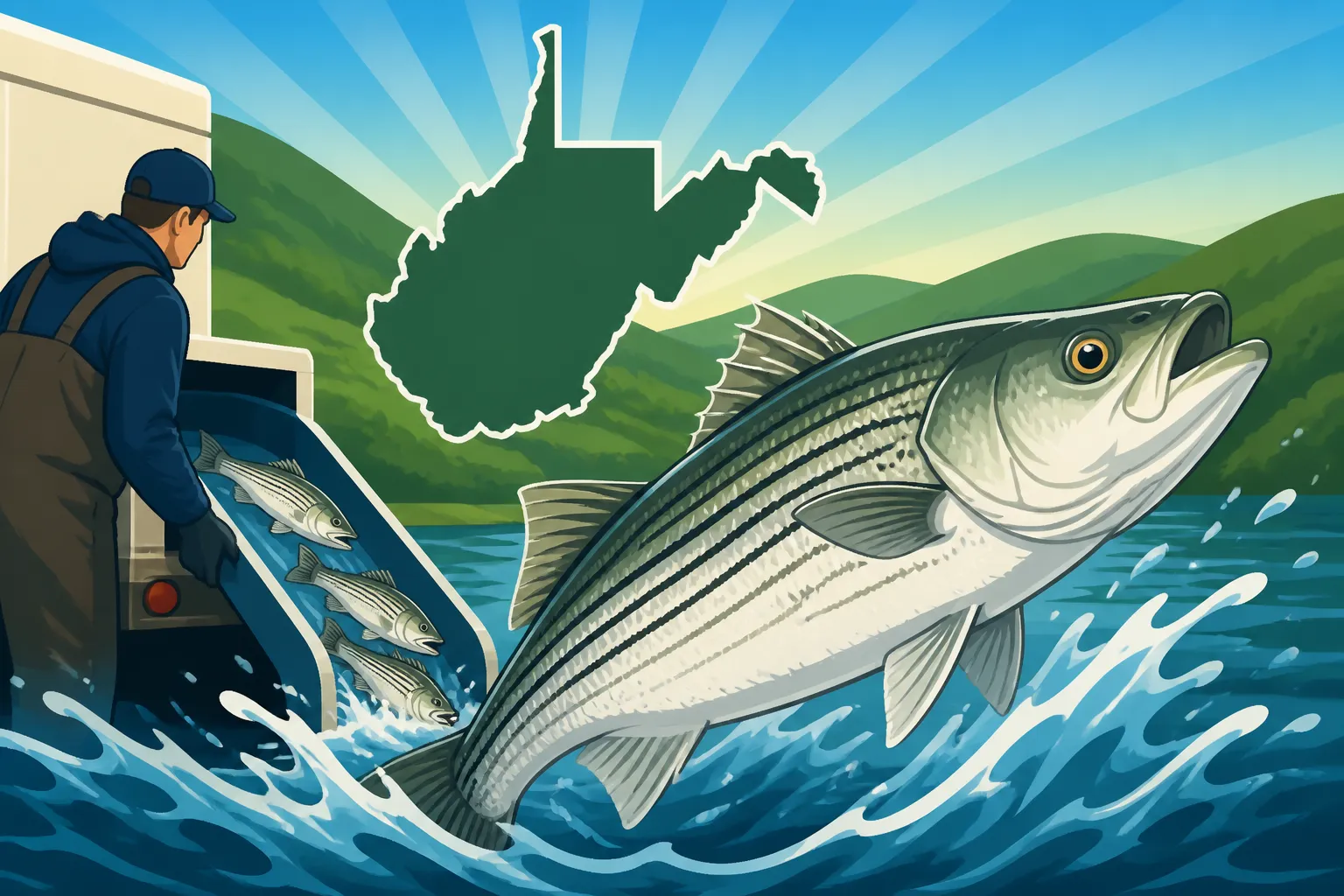
The process typically involves acquiring hybrid striped bass fingerlings from commercial hatcheries. These fingerlings, often just a few inches long, are then transported and carefully released into designated lakes. Timing is crucial; releases are often planned when water temperatures and conditions are optimal for survival, usually in the spring or fall. The goal isn't just to dump fish into the lake, but to ensure they have the best chance to grow into catchable sizes, adding to the angling opportunities for years to come. These proactive stocking efforts are a testament to the WVDNR's commitment to maintaining diverse and exciting fisheries across the state.
Beyond the Stocked Lakes: Unexpected Encounters
While the main focus for hybrid striped bass will undoubtedly be the lakes actively stocked by the WVDNR, it's not entirely unheard of to encounter these fish in other connected waterways. This can happen for several reasons, often involving fish moving downstream out of reservoirs through spillways or during periods of high water. For example, hybrids from Bluestone Lake might find their way into sections of the New River below the dam, offering an unexpected bonus for anglers targeting other species. Similarly, fish escaping from impoundments on tributaries that feed larger rivers could eventually end up in those larger river systems.
However, these "escapee" populations are generally not self-sustaining and are typically isolated incidents rather than established fisheries. If you do catch a fish that looks like a hybrid in a non-stocked river, it's a testament to their resilience and adaptability, but don't expect it to be a consistent hotspot. Always be prepared to properly identify your catch, especially in boundary waters, as regulations can vary. These rare encounters add to the excitement of fishing in West Virginia and are a good reminder that fish can sometimes surprise us by showing up where we least expect them.
The Life and Habits of West Virginia's Hybrid Stripers
Understanding the biology and behavior of hybrid striped bass is key to consistently finding and catching them. These fish are powerful predators, driven by instinct and opportunity, and their habits are largely dictated by water temperature, forage availability, and the unique characteristics of our West Virginia lakes.
Growth Rates and Size Potential
One of the most appealing aspects of hybrid striped bass for anglers is their impressive growth rate. These fish are designed to grow quickly, reaching catchable sizes faster than many other species in our reservoirs. In West Virginia's fertile impoundments, with their abundant gizzard shad and other baitfish, hybrid stripers can pack on pounds rapidly. It's not uncommon for them to reach lengths of 15-20 inches and weights of several pounds within a couple of years after stocking.
The trophy potential is significant, too. While not quite reaching the gargantuan sizes of their purebred striped bass ancestors, hybrid stripers in West Virginia can regularly exceed 10 pounds, with some exceptional specimens pushing towards the 15-20 pound mark or even heavier. Factors like the density of baitfish, the overall health of the ecosystem, and water temperatures all play a role in how quickly and how large these fish grow. A healthy forage base, particularly large schools of shad, provides the fuel for these aggressive predators to become true bruisers, offering a thrilling challenge to any angler.
Seasonal Movements and Preferred Habitats
Hybrid striped bass are nomadic fish, constantly on the move in search of food and comfortable water conditions. Their movements are heavily influenced by the seasons and the behavior of their primary forage, typically gizzard shad or alewives. In spring, as water temperatures rise, hybrids will often move into shallower areas, sometimes even congregating near creek arms or main lake points where baitfish are abundant and perhaps attempting to spawn. This can be a fantastic time for aggressive topwater action.
As summer progresses and surface waters warm, hybrids tend to retreat to deeper, cooler sections of the lake. They'll often suspend in the open water over humps, channels, and main lake points, following schools of baitfish. They also utilize thermoclines, which are layers of water at different temperatures, finding that sweet spot where oxygen is good and temperatures are comfortable. In the fall, as waters cool, they become incredibly active again, aggressively feeding to build up fat reserves for winter. They'll chase baitfish relentlessly, often creating chaotic surface boils that are unmistakable signs of their presence. Winter sees them move to the deepest parts of the lake, often near the bottom or suspended over deep channels, though they will still feed if bait is present. Understanding these seasonal shifts is paramount to locating them effectively.
Diet and Feeding Behaviors
Hybrid striped bass are voracious and opportunistic predators. Their diet in West Virginia's lakes is predominantly made up of whatever baitfish are most abundant. In many of our impoundments, this means gizzard shad and threadfin shad are at the top of their menu. Alewives, small bluegill, and even small crappie can also become targets. They are built for speed and aggression, often herding schools of baitfish into tight balls before crashing through them.
Their feeding behaviors are truly something to behold. Hybrids are notorious for schooling up and driving baitfish to the surface, creating what anglers often refer to as "boils" or "busts." When you see gulls diving and water churning, it's a strong indicator that hybrids (or white bass) are actively feeding. This aggressive pursuit makes them incredibly exciting to target, as they will readily strike a variety of lures that mimic their natural prey. Even when not feeding on the surface, they'll patrol open water, using their keen senses to locate baitfish schools, often relying on their lateral lines to detect vibrations from struggling prey.
Gear, Techniques, and Strategies for Hybrid Striper Success
Successfully targeting hybrid striped bass in West Virginia requires a combination of appropriate gear, effective techniques, and a solid understanding of their behavior. These are powerful fish, and a strong, well-matched setup will be your best friend.
Essential Gear for West Virginia Hybrid Stripers
When gearing up for hybrid stripers, you'll want to think about power and durability. These fish hit hard and fight dirty, so flimsy tackle won't cut it. A medium-heavy to heavy action spinning or baitcasting rod, typically 6'6" to 7'6" long, is ideal. This rod length provides the leverage needed for long casts and the backbone to control a charging hybrid. Paired with a reel that has a smooth, strong drag system is crucial; a size 3000-4000 spinning reel or a robust baitcaster will do the trick. For line, 15-20 lb monofilament or fluorocarbon is a good starting point, but many anglers opt for 30-50 lb braided line with a fluorocarbon leader for increased sensitivity and strength. You can find a fantastic selection of suitable rods and reels, including options like Best Fishing Rods for West Virginia Rivers, on online retailers like Amazon.
Lure selection will largely depend on the time of year and how the fish are feeding. When they're busting on the surface, topwater plugs like poppers, walking baits, and stickbaits are incredibly effective. For sub-surface action, spoons (casting spoons, jigging spoons), swimbaits (paddle tails, flukes), and lipless crankbaits are go-to options. Live bait, especially gizzard shad or large shiners, suspended under a bobber or fished on a Carolina rig, can also be highly productive, particularly when hybrids are holding deeper. Don't forget a sturdy landing net, maybe even one designed for larger fish like a Best Landing Net for Muskie, to safely handle your catch.
Top Techniques for Targeting Hybrid Stripers
Catching hybrid stripers can be an exhilarating experience, and several techniques prove consistently effective in West Virginia's lakes. One of the most common and exciting methods is trolling. This involves pulling crankbaits, spoons, or live bait behind a boat at various speeds, covering large expanses of open water until you locate schools of fish. Trolling allows you to present baits at different depths and speeds, mimicking fleeing baitfish.
Another highly effective technique, especially when fish are surfacing, is casting. If you spot a boil or birds diving, quickly cast a topwater lure, swimbait, or spoon into the commotion. Retrieve aggressively to imitate a panicked baitfish. For deeper-holding fish, vertical jigging with heavy spoons or blade baits directly over suspended schools (often found with a fish finder) can be deadly. Finally, live bait fishing is always a strong contender. Using gizzard shad or large shiners fished on a weighted Carolina rig or freeline can entice even finicky hybrids. Whether from a boat or bank, adapting your technique to the fish's current behavior and location is key to success. Check out Best Techniques for Striped Bass Hybrids for more in-depth strategies.
Reading the Water and Finding the Fish
Finding hybrid striped bass can sometimes feel like searching for a needle in a haystack, especially in vast reservoirs. However, by learning to "read the water" and utilizing modern electronics, you can significantly increase your chances. The first step is often observing the environment. Keep an eye out for surface activity – birds (especially gulls or herons) diving or congregating over open water are often a dead giveaway that baitfish are being driven to the surface by feeding hybrids. Violent splashes or "boils" on the water's surface are also clear indicators.
Beyond visual cues, a good quality fish finder is an indispensable tool. Look for large, dense schools of baitfish, often appearing as dark clouds or arches on your sonar screen. Hybrids will frequently be lurking just below or within these baitfish schools, appearing as larger, distinct arches. Pay attention to changes in bottom contour like humps, points, and old creek channels, as these act as ambush points. Understanding the thermocline (the layer where water temperature changes rapidly) can also be crucial in summer, as hybrids will often suspend just above or within it, where oxygen levels and temperatures are optimal. Investing in a reliable unit, perhaps from Amazon, that provides clear imaging will make a world of difference in pinpointing these elusive schools; consider a model recommended in Best Fish Finders for West Virginia Lakes.
Regulations and Conservation for Hybrid Stripers
While hybrid striped bass offer fantastic angling opportunities, it's crucial to remember that they are a managed species. Adhering to West Virginia's fishing regulations and practicing responsible angling are vital for maintaining healthy populations and ensuring this exciting fishery continues to thrive for years to come.
West Virginia Regulations for Hybrid Striped Bass
Understanding and following the specific regulations for hybrid striped bass in West Virginia is not just good practice, it's the law. These regulations are put in place by the WVDNR to ensure the sustainability of the fishery, preventing overharvest and protecting the investment made in stocking these fish. Regulations typically cover daily creel limits (how many fish you can keep in one day) and possession limits (how many fish you can have in your possession at any given time). In some cases, there might also be size restrictions, such as a minimum length, designed to allow fish to reach maturity or a certain size before being harvested.
It's absolutely essential to check the most current West Virginia Fishing Regulations Summary before each fishing season or trip, as rules can change. You can usually find this information on the WVDNR website. Pay close attention to any special regulations that might apply to specific lakes or rivers, as these can sometimes differ from statewide general limits. Ignoring these rules can lead to fines and penalties, and more importantly, can negatively impact the very fishery we all enjoy. For a broader overview, you can refer to West Virginia Fishing Regulations Explained.
Catch and Release Best Practices
For many anglers, especially those targeting larger hybrid striped bass, practicing responsible catch and release is an important part of conservation. Even if you're keeping a limit, handling fish with care is crucial for the health of the population, ensuring that fish you release have the best chance of survival. Hybrid stripers are powerful fighters, and the battle can sometimes exhaust them, making proper handling even more important.
When releasing a hybrid, minimize its time out of the water. Have your camera and de-hooking tools (like needle-nose pliers or a hook remover, available on Amazon) ready. Avoid handling the fish by its jaw if possible, as this can injure it; instead, support its belly. If a fish is deeply hooked, it's often best to cut the line as close to the hook as possible rather than attempting to rip the hook out, which can cause more damage. For an exhausted fish, hold it gently in the water, facing into the current, until it regains its strength and can swim away on its own. Never just toss a fish back; take the time to revive it properly. These practices ensure that those magnificent hybrids can continue to grow and provide a thrilling fight for another angler down the line.
The Future of Hybrid Stripers in West Virginia
The future of hybrid striped bass fishing in West Virginia looks bright, largely due to the proactive and ongoing management efforts of the West Virginia Division of Natural Resources. Their commitment to stocking, monitoring, and adapting regulations ensures that these exciting game fish will continue to provide exceptional angling opportunities in our reservoirs. As a relatively fast-growing, hard-fighting species, hybrid stripers have carved out a significant niche in the state's diverse fisheries portfolio.
Ongoing research and angler feedback play a crucial role in shaping future stocking strategies. Biologists continuously evaluate factors such as the success rates of previous stockings, the availability of forage, and environmental conditions in key lakes. Anglers also play a vital role in this conservation effort by reporting their catches, observing regulations, and practicing ethical angling techniques. By working together, the WVDNR and the angling community can ensure that the hybrid striped bass fishery in West Virginia remains a vibrant, healthy, and thrilling pursuit for generations of anglers to come.
Disclaimer
This article is for general informational purposes only and does not constitute professional advice. Laws, prices and regulations vary by location and change over time. Consult a qualified professional for guidance on your specific situation.