Best Techniques for Striped Bass Hybrids
Hunting for hybrid striped bass in West Virginia can feel like chasing ghosts sometimes. These powerful, open-water predators are notorious for their nomadic tendencies, making them a real challenge to locate and entice. If you've been struggling to consistently hook into these hard-fighting fish, you're in the right place. This guide is dedicated to breaking down the most effective techniques, gear, and strategies to help you become a more successful hybrid striper angler across the Mountain State's lakes.
Understanding West Virginia's Hybrid Striped Bass
Before you can truly master catching hybrid striped bass, it's crucial to understand who they are, where they hang out, and what makes them tick. These aren't your typical largemouth or trout; they're a unique fish with distinct behaviors that require a tailored approach. The West Virginia Division of Natural Resources (WVDNR) actively stocks these fish in several major impoundments, making them a fantastic sportfish for those willing to learn their ways.
Where to Find Them: Key Lakes and Reservoirs
West Virginia isn't blessed with coastal striped bass, but our inland reservoirs offer incredible opportunities for their hybrid cousins. These fish thrive in large, open bodies of water where they can chase baitfish in vast schools. Knowing which lakes are regularly stocked with hybrids is your first step to success. For instance, Summersville Lake and Sutton Lake are well-known hotspots where anglers routinely report impressive catches. Bluestone Lake is another prime location, offering significant acreage for hybrids to roam and grow to impressive sizes.
These large reservoirs typically feature deep, clear waters with abundant forage, primarily gizzard shad and alewives. Hybrids are pelagic, meaning they prefer open water rather than hugging tight to shore or structure like bass might. However, they will push baitfish into coves or against points, especially during feeding frenzies. Understanding the primary forage in each lake is also key; if the fish are gorging on small shad, your lure choices should reflect that size and profile. The DNR closely monitors these populations, and you can often find information on their website about specific stocking efforts in different impoundments, like those detailed in the post about Striped Bass Hybrid Stocking in West Virginia.
Behavioral Patterns and Feeding Habits
Hybrid striped bass are built for speed and aggression, and their feeding habits reflect this. They are opportunistic predators that hunt in schools, often driving baitfish to the surface in what anglers call "boils" or "jumps." This is when the action can be absolutely frantic, with hybrids slashing through schools of shad. These feeding binges are usually short-lived but incredibly intense, making it vital to react quickly. They'll also feed in deeper water, often suspending over structure or channel edges, waiting to ambush unsuspecting prey.
Water temperature plays a significant role in their activity levels. Hybrids prefer cooler water, generally between 60 and 70 degrees Fahrenheit, which influences their depth and location throughout the seasons. In colder months, they'll typically move deeper and school up tighter, becoming more lethargic. Conversely, in warmer periods, they might be found shallower during low light conditions or pushed to thermoclines in deeper sections of the lake. Their tendency to roam means you can't always rely on them being in the same spot, so being mobile and covering water is often critical for consistent success.
The Thrill of the Fight: Why Hybrids Are So Popular
If you've ever hooked into a hybrid striper, you know exactly why they're such a coveted sportfish. These fish are absolute freight trains, famous for their powerful runs, head shakes, and sheer stamina. They fight hard from the moment they hit your lure until they're boatside, often making multiple strong surges before tiring. It's a fight that truly tests your gear and your angling skills. This robust fight is a big part of their appeal, especially for those seeking a stronger challenge than many other freshwater species.
The size potential of West Virginia's hybrids also contributes to their popularity. While not reaching the behemoth sizes of their saltwater cousins, hybrid striped bass in our lakes can easily grow into the 10 to 15-pound range, with larger specimens occasionally caught. This combination of size and fighting prowess makes every hook-up an adrenaline-pumping experience. Many anglers specifically target these fish for the pure sport, often practicing catch and release to preserve the populations.
Essential Gear for Hybrid Striper Success
Getting the right gear for hybrid striped bass fishing isn't just about making the catch; it's about making the experience enjoyable and successful without breaking your equipment or losing fish. These powerful fish demand tackle that can stand up to their relentless fight. Skimping on quality here can lead to heartbreak.
Rods, Reels, and Line Choices
When it comes to rods, you'll want something with a medium-heavy to heavy power and a fast action. A rod in the 7 to 7.5-foot range is ideal for casting larger lures and providing the leverage needed to battle strong fish. Graphite rods are excellent for their sensitivity and backbone. For instance, a quality spinning rod around 7'3" with a fast tip and a strong butt section will allow you to cast long distances and muscle a big hybrid away from submerged timber or other snags. Many anglers prefer a good baitcasting setup for throwing heavier lures and handling the immense power of these fish, particularly when trolling. When considering your options, checking out resources like Best Rods for West Virginia Rivers can offer insights into rod characteristics that also apply well to large lake species.
Pair your rod with a reliable spinning reel in the 3000-5000 series or a baitcasting reel with a robust drag system and a good retrieve ratio, typically around 6.4:1 or higher for quickly picking up slack. The drag is paramount; it needs to be smooth and consistent to prevent break-offs during those initial, powerful runs. For line, 15-20 lb monofilament or fluorocarbon is a solid choice, but many experienced hybrid anglers opt for 30-50 lb braided line. Braid offers superior sensitivity, minimal stretch, and incredible strength, which is invaluable when setting hooks at a distance or fighting a big fish. A 15-20 lb fluorocarbon leader of 3-5 feet is often tied to the braid to provide abrasion resistance and make the presentation less visible to wary fish.
Lure Selection: Baits That Trigger Bites
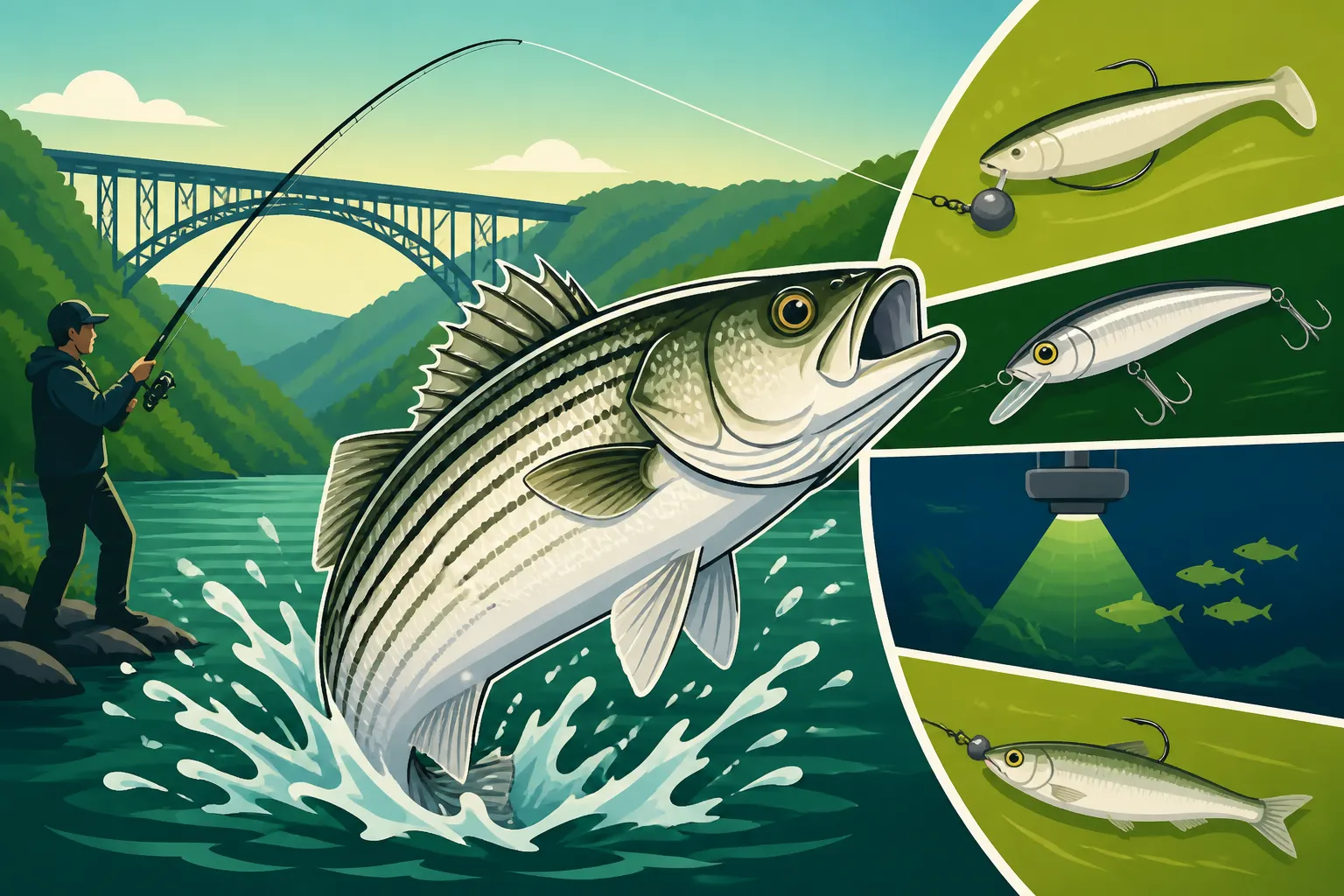
Hybrids are highly predatory, so selecting lures that imitate their primary forage is crucial. Shad imitations are king. Swimbait spoons, especially those in silver, white, or chartreuse, are incredibly effective. Popular choices include Cotton Cordell C.C. Spoons, Hopkins Shorty spoons, or similar models, often found readily on Amazon. These spoons can be cast and retrieved, trolled, or vertical jigged depending on the situation.
Crankbaits that mimic shad or alewives in profile and dive depth are also deadly. Deep-diving crankbaits are essential for reaching fish holding in deeper water, while medium-diving models work well when fish are higher in the water column or chasing bait near points. Topwater lures, such as poppers or walking baits, shine during those surface feeding frenzies, creating explosive strikes that are unforgettable. Finally, soft plastic jerkbaits or paddle-tail swimbaits rigged on jig heads can be extremely versatile. The key is to match the hatch – pay attention to the size and color of the baitfish you see in the water and choose your lures accordingly.
Live Bait Rigs and Techniques
While artificial lures are highly effective, live bait often proves irresistible to hybrid stripers, especially when they are finicky or holding deep. Gizzard shad, alewives, or large shiners are prime choices. The fresher and livelier the bait, the better. You can catch your own bait with a cast net, or sometimes purchase them from local bait shops.
There are several effective ways to fish live bait for hybrids:
- Free-lining: This technique involves simply hooking a live baitfish through the back or lips and allowing it to swim naturally. This is particularly effective when hybrids are busting bait on the surface or when you've located a school just below the surface. Use a light wire hook (e.g., a 2/0 to 4/0 circle hook) to keep the bait lively and minimize harm upon release.
- Carolina Rig: For deeper water, a Carolina rig is excellent. Use an egg sinker (1/2 to 1 oz, depending on depth and current) above a swivel, followed by a 2-4 foot fluorocarbon leader and a 2/0 to 4/0 circle hook. This keeps your bait near the bottom or suspended just above structure, allowing it to move freely. This is a great choice when fish are holding near channel bends or humps.
- Suspension Rigs: Employing a float or bobber can be effective for keeping live bait at a specific depth. This works well when fish are suspending at a consistent depth over open water. You can use a slip float rig, which allows you to adjust the depth easily, crucial for targeting specific thermal layers or bait schools.
Regardless of the rig, always keep a close eye on your rod tip. Hybrid striper bites can range from a gentle tug to a rod-bending yank. If you're using circle hooks, resist the urge to set the hook; instead, simply reel down and apply steady pressure as the fish takes the bait.
Mastering Different Fishing Techniques
Hybrid striped bass are adaptable predators, and successful anglers often need to be just as flexible with their techniques. No single method works all the time, so having a diverse toolkit of strategies is essential. From covering vast stretches of open water to pinpointing deep-lying schools, each technique has its time and place.
Trolling for Open Water Cruisers
Trolling is arguably one of the most effective ways to locate and catch hybrid striped bass, especially in large reservoirs like Summersville Lake. These fish are constantly on the move, chasing baitfish, and trolling allows you to cover a lot of water quickly and present multiple lures at varying depths. Start by identifying areas with known hybrid activity or where baitfish are concentrated, often found using your fish finder.
The key to successful trolling lies in speed, lure selection, and depth control. Speeds typically range from 2 to 4 miles per hour, but sometimes slower or faster speeds are necessary to trigger a strike. Use diving crankbaits, spoons, or even weighted umbrella rigs to mimic schools of bait. Experiment with different colors and sizes until you find what the fish are keying in on. Consider the diving depth of your lures and use planer boards or downriggers if you need to spread your lines or get them deeper. For example, some anglers effectively troll deep-diving crankbaits over main lake points or along creek channels, while others might use shallow-running swimbaits closer to the surface if baitfish are active there. Monitoring your electronics for bait balls and fish arches is crucial to fine-tuning your trolling pattern. Remember, these fish roam, so don't be afraid to make long runs and change up your direction.
Vertical Jigging in Deep Water
When hybrids are holding deep, often suspending over structure or in channel ledges, vertical jigging becomes an invaluable technique. This is particularly effective during the colder months when fish are less active and concentrated, but it can also work year-round when fish are located on sonar. The process involves dropping a heavy jig or spoon directly beneath the boat to the depth where fish are detected and then imparting an enticing up-and-down motion.
Spoons like the aforementioned Hopkins Shorty or similar flutter spoons are excellent for this. Heavy bucktail jigs or blade baits can also be very effective. The action of the jig is critical; a sharp lift followed by a controlled fall that allows the lure to flutter naturally is often what triggers a strike. Pay close attention to your line as the lure falls; many bites occur on the drop. A sensitive rod and braided line are incredibly beneficial for detecting these subtle strikes in deep water. You might find yourself fishing depths of 30-60 feet or even more, especially in lakes like Sutton Lake. Positioning your boat directly over the fish you see on your fish finder, then dropping your lure precisely to their depth, can lead to quick hook-ups.
Casting and Retrieving Near Structure
While hybrids are largely open-water fish, they do relate to structure, especially when driving baitfish into ambush points. Casting and retrieving can be highly productive around main lake points, submerged humps, bridge pilings, or even around dam areas, particularly when water is being released. These structures often congregate baitfish, which in turn attracts the hybrids.
When casting, use lures that can cover water efficiently. Long-casting spoons, lipless crankbaits, or larger soft plastic swimbaits rigged on heavy jig heads are great choices. Fan cast around the structure, varying your retrieve speed and depth until you find the sweet spot. Sometimes a fast, erratic retrieve mimics a panicked baitfish, while other times a slower, more methodical retrieve is what's needed. Keep an eye out for any surface activity; if you see hybrids busting bait, cast immediately into the commotion. These short, intense feeding windows require quick reactions. This technique is often more active and engaging than trolling and can be incredibly rewarding when you hit a school.
Timing Your Hybrid Striper Trips for Peak Action
Successful hybrid striped bass fishing isn't just about what you use or how you fish, but when you fish. Understanding seasonal movements, daily patterns, and how environmental factors influence their behavior will dramatically improve your catch rates.
Seasonal Strategies: Spring, Summer, Fall, and Winter
Hybrid striped bass behavior changes significantly with the seasons, largely driven by water temperature and baitfish movements.
- Spring: As water temperatures rise into the 50s and 60s, hybrids become much more active. They often move shallower, following baitfish into creek arms and coves, preparing for spawning (though hybrids are sterile and cannot naturally reproduce, they still exhibit spawning-like behaviors). This is a great time for casting jerkbaits, swimbaits, or even live bait in shallower areas. You'll want to pay close attention to the post West Virginia Fishing Seasons by Month for specific guidelines.
- Summer: Once water temperatures soar, hybrids typically retreat to deeper, cooler water. They'll often be found near the thermocline, suspending over deep channels, humps, or main lake points. Trolling deep-diving crankbaits, vertical jigging spoons, or fishing live bait on Carolina rigs are prime tactics. Early mornings and late evenings can offer opportunities for topwater action as fish push bait to the surface.
- Fall: This is often considered peak hybrid fishing season. As water temperatures cool down, hybrids become incredibly active, feeding aggressively to build up fat reserves for winter. They'll move shallower again, chasing massive schools of baitfish. Look for surface boils and target main lake points, creek mouths, and flats with casting spoons, swimbaits, and topwater lures. The fish are often more spread out but also more willing to chase.
- Winter: In the coldest months, hybrids will school up tightly and move to the deepest parts of the lake, often near river channels or dam structures. They become less active but can still be caught by vertical jigging spoons or blade baits directly over the schools, or by slowly fishing live bait on the bottom. Success in winter often hinges on finding the schools with your electronics, as their feeding windows can be very short. Ice fishing for hybrids is also possible on some frozen lakes, offering a unique challenge.
Best Times of Day and Environmental Factors
Beyond the seasons, daily factors like time of day, weather, and light conditions significantly impact hybrid striper activity. Generally, low-light conditions are best. Dawn and dusk are often prime times, as the reduced light allows hybrids to ambush baitfish more effectively. Overcast days can extend these feeding windows throughout the day, whereas bright, sunny conditions often push fish deeper.
Wind is another critical factor. A moderate chop on the water surface can break up light penetration, making fish feel more comfortable feeding shallower, and also concentrating baitfish. A good wind can push bait into coves or against main lake points, creating feeding opportunities. However, very strong winds can make boat control difficult and scatter fish. Barometric pressure changes, particularly falling pressure before a storm, can also trigger intense feeding activity, while high, stable pressure often means tougher fishing. Paying attention to these subtle cues can make a huge difference in your success.
Reading the Water: Locating Schools
One of the biggest challenges with hybrid striped bass is simply finding them. They are open-water roamers, and their location can change daily, even hourly. Learning to "read the water" and utilize your electronics is paramount. Look for surface activity – birds diving, baitfish jumping, or visible boils on the surface all indicate active hybrids. These visual cues are gold.
Beyond surface signs, your sonar unit is your most powerful tool. Look for large schools of baitfish, often appearing as dense clouds or arches, and then look for larger, individual arches or groups of arches lurking beneath or within these bait schools. These are your hybrids. Pay attention to channel swings, humps, points, and sudden depth changes, as these are natural ambush points where hybrids often hold. Don't be afraid to move if you're not finding fish; "running and gunning" until you locate a school is a common and effective strategy for these nomadic predators. A quality fish finder, as explored in articles like Best Fish Finders for West Virginia Lakes, is an investment that truly pays off for hybrid striper anglers.
Advanced Tactics and Tips for Consistent Catches
Catching a hybrid striper is exciting, but consistently putting them in the boat requires honing your skills and leveraging every available advantage. It’s about becoming a more intuitive and strategic angler.
Using Electronics to Your Advantage
Modern marine electronics are indispensable for hybrid striped bass fishing. Your fish finder isn't just for showing you depth; it's a window into the underwater world. Learn to interpret what you see: dense bait balls, individual large arches (hybrids), thermoclines, and bottom structure. Side-imaging and down-imaging technologies can reveal crucial details about structure and fish location that traditional sonar might miss, allowing you to see fish off to the sides of your boat or identify subtle changes in the bottom contour.
GPS capabilities are also essential. Mark waypoints when you find a productive area, a bait school, or catch a fish. This allows you to return to the exact spot or troll a precise line where you've had success. Mapping features, often available through platforms like C-MAP or Garmin, allow you to study contours, ledges, and channels before you even launch your boat. Understanding these underwater features helps you predict where fish might be holding. Using your electronics effectively means not just turning them on, but actively interpreting the information they provide to make informed decisions about where and how to fish.
Targeting Specific Forage Patterns
Hybrid striped bass are driven by their stomach. They follow the food. Therefore, understanding the dominant forage in a particular lake and matching your presentation to it is a game-changer. In many West Virginia lakes, gizzard shad are the primary food source, but alewives, bluegill, or even smaller crappie can also be on the menu.
If hybrids are keying on small shad, throwing a large, flashy spoon might not be as effective as a smaller, more subtle swimbait or soft plastic. Conversely, if you notice larger baitfish, don't be afraid to upsize your lures. Pay attention to the color of the baitfish – most are silver, white, or olive, so lures in these colors are usually a safe bet. Sometimes, however, a bright chartreuse or firetiger pattern can trigger an aggressive reaction strike, especially in stained water or during low light. The more you can mimic what they're naturally eating, in terms of size, profile, and action, the more successful you'll be. Often, observing surface activity or even checking the stomach contents of a caught fish can give you invaluable clues about their current diet.
Handling and Releasing Hybrid Stripers
Because hybrid striped bass are primarily a stocked species in West Virginia and are cherished for their strong fight, practicing proper catch and release is vital to maintaining healthy populations. If you plan to release a fish, minimize its time out of the water. Handle the fish gently, preferably with wet hands or a wet towel, to protect its slime coat which is crucial for disease resistance.
Use a large, rubberized landing net specifically designed for catch and release. Avoid traditional nylon nets that can strip away the slime and damage fins. When removing hooks, use a de-hooking tool or pliers, especially if the fish has swallowed the hook. If the hook is deeply embedded, it's often better to cut the line as close to the hook as possible rather than tearing the fish's internal organs. Hold the fish horizontally and support its belly to avoid damaging its internal organs. If the fish seems stressed or lethargic, hold it upright in the water, facing into a gentle current, until it regains its strength and swims away on its own. Releasing healthy fish ensures that these incredible fighters will be there for future generations of anglers.
| Technique | Primary Season | Target Depth | Recommended Lures/Bait | Best Conditions | Notes |
|---|---|---|---|---|---|
| Trolling | Year-round | Mid-depth to Deep | Deep-diving crankbaits, Spoons, Umbrella Rigs | Open water, Moderate chop | Covers large areas, good for locating fish. |
| Vertical Jigging | Fall, Winter, Summer (deep) | Deep | Heavy spoons, Blade baits, Bucktail jigs | Fish schooling deep, Calm conditions | Pinpoints exact depths, effective on electronics. |
| Casting & Retrieving | Spring, Fall, Summer (low light) | Shallow to Mid | Spoons, Lipless crankbaits, Swimbaits, Topwater | Around structure, Surface boils | Active fishing, great for quick reactions. |
| Live Bait (Free-line) | Year-round | Surface to Mid | Gizzard Shad, Alewives, Shiners | Surface activity, Fish suspending | Natural presentation, effective on wary fish. |
| Live Bait (Carolina Rig) | Year-round | Bottom to Mid | Gizzard Shad, Alewives, Shiners | Deep structure, Channel edges, Humps | Keeps bait near bottom, good for lethargic fish. |
Disclaimer
Fishing regulations, stocking schedules, and local conditions can change. Always consult the latest West Virginia Division of Natural Resources (WVDNR) fishing regulations before heading out on the water. This guide is for informational purposes only and does not constitute legal or professional advice.