Best technique for high water muskie fishing
When West Virginia's rivers swell and churn after heavy rains, muskie anglers often find themselves staring at a powerful, muddy current, wondering how on earth they're going to entice a fish in such chaotic conditions. The familiar seams, eddies, and structure you usually target seem to vanish, replaced by a formidable flow that can feel incredibly intimidating. This guide is designed to cut through that frustration, offering proven strategies and specific techniques to help you successfully target and catch muskie, even when the water is high, dirty, and fast.
Understanding High Water Dynamics and Muskie Behavior
High water conditions fundamentally change a river system, and consequently, how muskie behave. It's not just about more water; it's about altered currents, reduced visibility, and redistributed food sources. Understanding these shifts is the first step to adapting your approach.
The Impact of Increased Current and Turbidity
When a river rises, the increased volume of water translates to faster currents, especially in the main channels. This rapid movement can be exhausting for muskie, which are ambush predators by nature. They conserve energy by moving out of the main flow and seeking refuge in slower, more predictable water. This usually means shallower areas, back eddies, creek mouths, and inundated shoreline cover. Turbidity, or the murkiness of the water, is another critical factor. Rain washes sediment, leaves, and debris into the river, drastically reducing visibility. Muskie rely heavily on their sight to hunt, so low visibility forces them to adjust their hunting tactics, often relying more on their lateral line to detect vibrations. This also means your lures need to be more detectable through vibration and profile rather than just color.
Imagine a typical day on the New River, where you might be casting to distinct rock features in clear water. After a few days of heavy rain, that same stretch of river looks completely different. The rocks you usually target are now submerged under feet of fast-moving, chocolate-milk-colored water. The muskie aren't sitting on those rocks anymore, fighting the current. Instead, they've likely tucked into a calmer pocket behind a large boulder, or moved into a flooded grassy bank where the current is minimal. Your job is to think like a muskie: where would you go to escape the current and still be able to ambush prey without expending too much energy?
Where Muskie Relocate in High Water
Muskie are smart, efficient predators. In high water, they don't disappear; they simply relocate to areas where the conditions are more favorable for their predatory lifestyle. Look for "current breaks" – any feature that disrupts the main flow and creates a calm pocket. This includes:
- Shoreline Eddies and Seams: Where fast water meets slower water along the bank. These are prime ambush points.
- Confluence of Tributaries: Creek mouths or incoming feeder streams often provide cleaner, slightly warmer water, and can concentrate baitfish.
- Flooded Timber and Vegetation: Newly submerged trees, brush, and grass offer excellent cover and calm water pockets. These areas are goldmines, as baitfish will also seek refuge here.
- Behind Islands or Large Boulders: Any significant structure that creates a substantial current break downstream.
- Shallow Flats Adjacent to Deep Water: Muskie might move onto shallower, calmer flats to escape the main current, especially if there's structure or cover.
When you're out on the water, don't just stare at the main channel. Instead, turn your focus towards the banks. Look for areas where the water looks calmer, where debris might be collecting, or where the water has a slightly different hue, indicating a pocket of less turbid water. These are the places where muskie will hold. Think about a stretch of the Cheat River; when it's high, the muskie aren't going to be holding in the middle. They'll be tight to the bank, behind downed trees or even in flooded fields if the water extends that far.
Strategic Lure Selection for Turbulent Waters
With reduced visibility and increased current, your lure choices become even more critical. You need baits that are easily detected, move a lot of water, and can be worked effectively in varied current speeds.
Maximizing Vibration and Profile
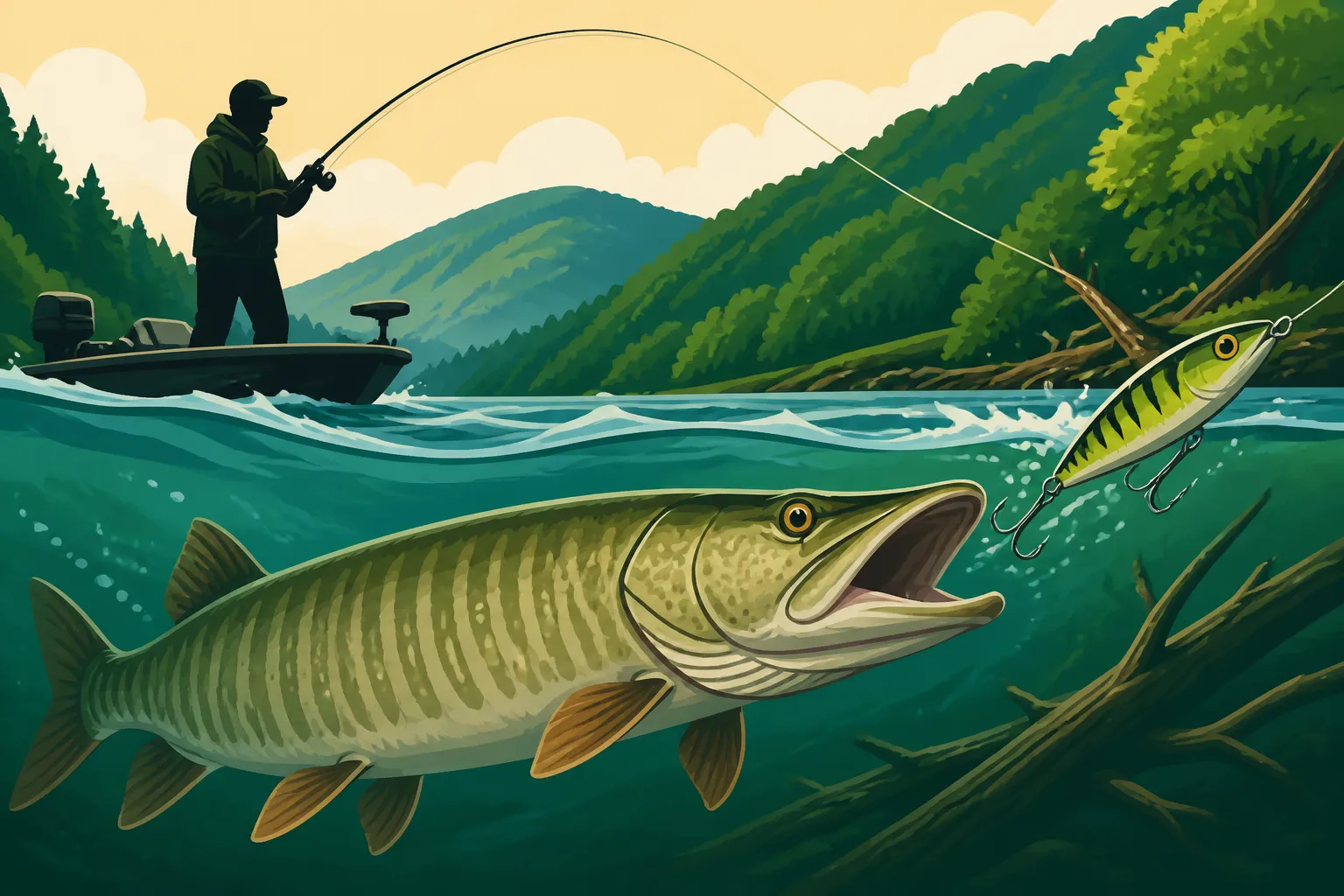
In stained or muddy water, muskie can't rely on sight alone. This means your lures need to generate significant vibration and have a strong profile that displaces a lot of water. Large, thumping bucktails are almost universally agreed upon as a top choice for high water. Their large blades create a powerful thump that muskie can feel with their lateral line from a distance. Similarly, big crankbaits with wide wobbles and loud rattles are excellent. Soft plastics, especially those with large paddle tails or ribbed bodies, also generate a lot of vibration.
When you're sifting through your tackle box or browsing for new options on Amazon, look for lures that are designed to create a disturbance. Think about how a muskie senses its prey in near-zero visibility: it's all about feeling that fish darting through the water. A subtle lure might work in clear conditions, but in high water, you need to be screaming, "Here I am!" to get their attention. Don't be shy about going for larger baits than you might normally use, either. A bigger profile means more water displacement, and easier detection. For deeper pockets or slower sections, a weighted soft plastic like a Bondy Bait or a large swimbait can be incredibly effective, sinking quickly and presenting a substantial meal.
| Lure Type | High Water Advantages | Best Retrieve | Typical Size Range | Color Considerations |
|---|---|---|---|---|
| Large Bucktails | Maximum vibration, good flash (in lighter stains), covers water. | Moderate-fast, steady retrieve; occasional stops. | #8 to #10 blades, 10-14 inches | Black, Black/Nickel, Orange, Chartreuse |
| Deep-Diving Crankbaits | Strong wobble, loud rattles, good depth control, deflects off cover. | Slow to moderate, crank-and-pause, bottom-bouncing. | 6-10 inches | Firetiger, Chartreuse, Perch, Dark Blue/Black |
| Glide Baits/Jerkbaits | Large profile, subtle side-to-side glide, can be paused. | Long sweeps and pauses, short twitches. | 8-12 inches | Natural (perch, sucker), Black, White |
| Soft Plastics (Paddle Tail) | Incredible vibration, realistic profile, can be weighted. | Slow roll, jigging motion, twitch-and-pause. | 8-12 inches | Black, Chartreuse, White, Dark Blue |
Selecting the Right Color Palette
Color choice in high, murky water often boils down to two main philosophies: high contrast and dark silhouette.
- High Contrast: Bright, fluorescent colors like chartreuse, orange, and firetiger create a strong visual contrast against the dark, muddy water, making them easier for a muskie to spot, even from a distance. These colors can be particularly effective on cloudy days or in heavily stained water.
- Dark Silhouette: On the flip side, dark colors like black, dark blue, or purple can create a stark silhouette against the lighter sky, especially if the muskie is looking up from below. This can be surprisingly effective, giving the muskie a clear outline to strike at. Black bucktails with a nickel blade, for example, are a classic high-water combination.
It's often a good idea to have a mix of both in your tackle box. Start with a high-contrast bait, especially if the water is extremely turbid. If that's not producing, switch to a darker silhouette. Don't overlook solid colors either; a solid black or solid white bucktail or soft plastic can be incredibly potent. The goal is to make your lure stand out, whether visually or by feel.
Boat Control and Presentation in Elevated Flows
Navigating and fishing effectively in high, fast water requires excellent boat control and a keen understanding of current dynamics. This is where experience truly pays off, but even beginners can learn the ropes with practice and careful observation.
Mastering the Art of Positioning
Holding your boat in the right position is paramount when battling strong currents. You need to be able to present your lure precisely to those current breaks and slack water areas where muskie are holding. This often means using your trolling motor to "crab" sideways against the current, or utilizing an anchor system to hold steady.
- Trolling Motor Strategy: Instead of just pointing your boat upstream and fighting the current, try to use your trolling motor to hold your boat parallel to the bank you're fishing. This allows you to fan-cast into various pockets and seams without constantly fighting to stay put. If you're fishing a specific eddy, you might try to hold your boat just upstream of it, allowing you to cast into the calm water and work your lure out into the seam. For those with advanced electronics, your fish finder can help identify subtle changes in depth or submerged structure, even in dirty water.
- Anchoring Techniques: A good anchor system is a muskie angler's best friend in high water. Instead of one anchor, consider a dual-anchor system (bow and stern) to keep your boat perfectly still and prevent swinging. This is particularly useful when you've located a high-percentage spot, like a flooded timber patch or a creek mouth, and want to thoroughly dissect it with multiple casts. You can find robust anchor systems and related boat accessories on Amazon, often with user reviews to help you choose the best fit for your West Virginia adventures. Remember to have plenty of anchor rope – more than you think you'll need for deep spots.
- Drifting with Control: Sometimes, a controlled drift is the most effective way to cover water. This involves using your trolling motor to slow your drift speed, allowing you to thoroughly cast into shoreline cover as you move downstream. The key is control – you don't want to just be swept downstream. Your trolling motor should be actively working to slow and steer your boat, keeping your casts parallel to the bank and your lure presentations optimal.
Precise Lure Presentation and Retrieve
Once you're in position, getting your lure to the muskie and presenting it correctly is the next challenge. The current will try to sweep your lure away, so you need to adjust.
- Casting Upstream and Across: Often, casting slightly upstream and across the current, then allowing your lure to swing down into the target zone, is very effective. This gives the muskie a natural-looking presentation as the bait drifts into its ambush point.
- Working Current Seams: Focus your casts on the visible (or imagined) seams where fast water meets slow. Muskie will often be right on that line, ready to dart out and grab a passing meal. Your retrieve should be consistent enough to keep the lure in the strike zone, but not so fast that it's just zipping through.
- The "Slow Roll" for Soft Plastics: For large soft plastics, a slow, steady retrieve (or "slow roll") is incredibly effective in high, dirty water. The paddle tail will thump, creating strong vibrations, and the slow speed gives the muskie more time to react in low visibility. Allow the current to do some of the work, helping to impart a natural swimming action to your bait.
- Pauses and Twitches: Even in strong current, don't be afraid to incorporate pauses and twitches into your retrieve. Muskie are opportunistic, and a sudden stop or erratic movement can often trigger a strike from an otherwise hesitant fish. Just be prepared for a strong hit when you resume your retrieve!
Safety Considerations and Best Practices
Fishing in high water isn't just about catching fish; it's also about ensuring your safety and the safety of your fishing partners. Elevated water levels and swift currents introduce unique hazards that require extra caution.
Navigating Increased Hazards
High water often brings with it increased debris, submerged obstacles, and unpredictable currents. Tree branches, logs, and even whole trees can be swept downstream, creating dangerous navigation hazards. Sandbars and shallow areas that are normally visible might now be submerged, posing a risk to your boat's lower unit.
- Vigilant Observation: Keep a constant lookout for floating debris. It can appear suddenly and cause significant damage to your boat or motor, or even pose a risk of capsizing.
- Know Your River: If you're fishing a river like the New River, where specific current breaks and rock gardens are common, understand how high water changes them. What was a safe passage in normal conditions might be a dangerous rapids or a choked bottleneck when the water is up. Always err on the side of caution.
- River Depth and Submerged Objects: High water means more water, but it doesn't always mean safe water. Many rivers have varying depths, and areas that look deep can still have submerged rock shelves or stumps just below the surface. Slow down, use your electronics if possible, and navigate unfamiliar areas with extreme care.
Essential Safety Equipment and Protocols
Beyond basic boating safety, high water conditions demand a heightened level of preparedness.
- Life Jackets (PFDs): This is non-negotiable. Everyone in the boat must wear a U.S. Coast Guard-approved life jacket at all times. The current can be incredibly powerful, and if someone goes overboard, even a strong swimmer can be in serious trouble very quickly. Don't just have them in the boat; wear them.
- Kill Switch: For motorboats, always wear your kill switch lanyard. If you get ejected, the motor will cut, preventing the boat from becoming a runaway hazard or circling back to hit you.
- Communication Devices: Ensure you have a fully charged cell phone in a waterproof case, and ideally, a marine-band VHF radio, especially if you're in a remote area with spotty cell service. Make sure someone on shore knows your float plan – where you're going and when you expect to return.
- Emergency Kit: A dry bag with essential emergency items, including a first-aid kit, extra warm clothing (even in summer, a dunk in cold water can lead to hypothermia), high-energy snacks, water, and a powerful flashlight or headlamp (useful if you get stuck out late) is crucial.
- Boat Maintenance: Before heading out in high water, double-check your boat's systems. Ensure your motor is running optimally, your bilge pump works, and your battery is fully charged. You don't want mechanical issues when you're fighting strong currents. For more on boat care and safety, consider checking out our guide on West Virginia Boat Registration Requirements and Life Jacket Requirements for West Virginia Boaters.
Fishing in high water for muskie can be incredibly rewarding, but it requires respect for the river and a commitment to safety. By understanding how muskie adapt, selecting the right lures, mastering your boat control, and prioritizing safety, you'll significantly increase your chances of success and ensure a memorable, safe day on West Virginia's wild and wonderful waterways. Don't let the daunting conditions deter you from pursuing these incredible fish; instead, use this knowledge to turn the challenge into an opportunity.
Locating Productive High-Water Muskie Haunts
Knowing where to fish is just as important as how to fish in high water. Muskie are creatures of habit, but their habits shift dramatically with river conditions. Focus your efforts on these prime locations.
Creek Mouths and Inflows
One of the absolute best places to target muskie during high water is at the mouths of incoming creeks or tributaries. There are several reasons for this:
- Cleaner Water: Often, smaller tributaries will clear up faster than the main river, providing a pocket of slightly cleaner water that muskie appreciate. This clearer water can also attract baitfish seeking refuge from the main river's turbidity.
- Concentrated Bait: Baitfish, driven out of the main current, will often stack up at these inflows, creating a natural feeding ground for muskie. Muskie don't have to work hard to find a meal here.
- Current Breaks: The mixing of the two water bodies creates natural current seams and eddies, providing perfect ambush points.
When you approach a creek mouth, fan-cast thoroughly. Start at the very edge of the cleaner water and work your way into the main river current break. Use lures that create a lot of vibration, like a big bucktail or a noisy crankbait, to call attention to your offering in the murky conditions. This is a classic tactic for How to Catch Muskie in West Virginia and often proves fruitful.
Flooded Shoreline Cover
As rivers rise, areas of the bank that are normally dry become submerged. This newly flooded territory—dense brush, downed trees, grassy banks, and even farm fields—creates a haven for muskie.
- Shelter from Current: The dense nature of this cover provides excellent protection from the main current, allowing muskie to conserve energy.
- Ambush Points: Muskie can lurk within this cover, perfectly hidden, waiting for unsuspecting baitfish to drift by.
- New Food Sources: Flooded areas can introduce insects, worms, and small terrestrial creatures into the aquatic food chain, drawing in baitfish, and subsequently, muskie.
When fishing flooded cover, make precise casts right into the densest parts. Use weedless or snag-resistant lures when possible, like heavy jigs with soft plastic trailers or large swimbaits rigged Texas-style. Work these lures slowly and deliberately through the cover, bumping off branches and enticing a strike. Remember, a muskie isn't going to chase a lure far in these conditions; it's an ambush game. Pay particular attention to large log jams or trees that have fallen into the water, as these can hold multiple fish.
Post-Front and Clearing Water Muskie Strategies
The period immediately following high water, as the river begins to drop and clear, can also be incredibly productive. Muskie might become more active as conditions stabilize, but their location might still be influenced by the recent flood.
Transitioning with Dropping Water Levels
As the water begins to recede, muskie will gradually move out of their extreme high-water hiding spots and begin to return to more conventional structure. However, they won't necessarily be in the same places they were before the flood.
- Edges of Flooded Areas: As the water drops, focus on the new "edges" of the recently flooded areas. Muskie might hold just outside these receding zones, waiting for baitfish to be flushed out.
- Returning to Main Channel Breaks: As the current lessens, muskie will start to move back towards the main channel, seeking out larger current breaks like deep rock piles, ledges, and prominent points that were previously overwhelmed by the current.
- Subtle Color Changes: Keep an eye out for subtle changes in water clarity. As the river drops, you might find streaks of clearer water forming, often near tributary mouths or along inside bends. These are prime areas to target, as muskie's vision will improve.
This transition period often requires a dynamic approach, constantly adjusting your retrieve and lure choice as conditions evolve. You might start with a large, noisy bait and then switch to a more subtle, natural presentation as the water clears. This flexibility is key to consistent success. For understanding the specific rules about keeping your catch, consult the Muskie Regulations in West Virginia Waters guide.
Capitalizing on Improving Visibility
As the river gradually clears, muskie can rely more on their eyesight. This opens up your lure selection to a wider array of options.
- More Natural Colors: Lures with more realistic baitfish patterns (perch, sucker, shad) become highly effective.
- Flashier Baits: Chrome or gold blades on bucktails, or metallic finishes on crankbaits, can now be seen from a greater distance and entice strikes.
- Varying Retrieve Speeds: With better visibility, muskie might be willing to chase a faster-moving lure or inspect a slower, more deliberate presentation. Experiment with different retrieve speeds and cadences to see what the fish prefer on that particular day.
Remember that muskie fishing in West Virginia, especially in rivers, is always an adventure. High water simply adds another layer of challenge and excitement. By understanding these dynamics and adapting your techniques, you'll be well on your way to catching a trophy muskie, even when the river is roaring.
Disclaimer
Fishing can be a dangerous activity. Always prioritize safety and be aware of your surroundings, especially when fishing in elevated water conditions. Adhere to all local and state fishing regulations, including those outlined in the West Virginia Fishing Regulations Explained. The information provided in this guide is for informational purposes only, and individuals should exercise their own judgment and discretion.