When largemouth bass spawn in West Virginia
Ever find yourself out on a West Virginia lake, wondering why the largemouth bass seem to have suddenly vanished or are just not biting like they usually do? It's a common frustration, and often, the answer lies in understanding their most crucial annual event: spawning. This comprehensive guide will pull back the curtain on when largemouth bass typically spawn in West Virginia's diverse waters, helping you anticipate their behavior, adjust your fishing strategies, and ultimately find more success on the water, no matter the season.
Understanding the Largemouth Bass Spawning Cycle in West Virginia
The annual spawning ritual of largemouth bass is a fascinating and crucial period in their life cycle, heavily influencing their behavior and, by extension, our fishing opportunities. In West Virginia, this cycle is dictated by a combination of environmental factors that tell the bass it's time to reproduce.
The Triggers: Water Temperature and Day Length
For largemouth bass, the primary signals to begin their spawning preparations are rising water temperatures and the increasing length of daylight hours. As winter's chill recedes and spring truly takes hold across the Mountain State, these two factors work in tandem.
Typically, largemouth bass in West Virginia will begin to show signs of pre-spawn movement when water temperatures consistently reach the mid-50s Fahrenheit. However, the actual spawning activity—the egg laying and fertilization—usually kicks into high gear when the water stabilizes in the range of 60 to 70 degrees Fahrenheit. If you're on a lake like Summersville Lake Fishing Guide or Stonewall Jackson Lake Fishing, you might notice this happening first in shallower, sun-warmed coves and flats before extending to deeper areas. The longer days of spring, with their increased sunlight penetration, further warm these shallow zones, creating the perfect nursery conditions.
It’s not just a flick of a switch, though. This temperature window is a gradual process. A sudden cold snap, often called a "cold front," can cause water temperatures to drop, temporarily halting or delaying the spawn. This is a common occurrence in West Virginia's fickle spring weather, leading to anglers feeling like the bass have simply disappeared overnight. Understanding these triggers is paramount to timing your fishing trips effectively and being prepared for potential shifts in fish behavior.
Pre-Spawn: The Feeding Frenzy
Before the demanding act of spawning begins, largemouth bass enter a crucial pre-spawn phase where their focus is almost entirely on feeding. Both male and female bass need to bulk up their energy reserves for the strenuous weeks ahead, making this one of the most exciting times to be on the water.
As water temperatures climb into the mid-50s, largemouth will move from their deeper wintering grounds towards shallower staging areas. These areas are typically near main lake points, channel swings, and submerged cover adjacent to prime spawning flats. They're not on the beds yet, but they're thinking about it, and they're hungry! During this period, bass are incredibly aggressive, hitting lures with a ferocity often unmatched at other times of the year. This is when you can really capitalize on their need to feed, often catching some of the heaviest bass of the season before they shed weight during the spawn. If you're looking for best largemouth bass fishing spots in West Virginia, these pre-spawn staging zones are absolutely key.
Anglers often find success during the pre-spawn by throwing larger, calorie-rich baits that mimic common forage. Think about suspending jerkbaits, lipless crankbaits, or even big swimbaits. These baits appeal to a bass looking for a substantial meal. The bass are still somewhat grouped up, making it easier to locate a concentration of fish once you find the right depth and structure.
The Spawning Period: Nesting and Reproduction
Once those water temperatures consistently hit the lower 60s, it's game on for the largemouth. The actual spawning period, while crucial for the bass, can be a tricky time for anglers.
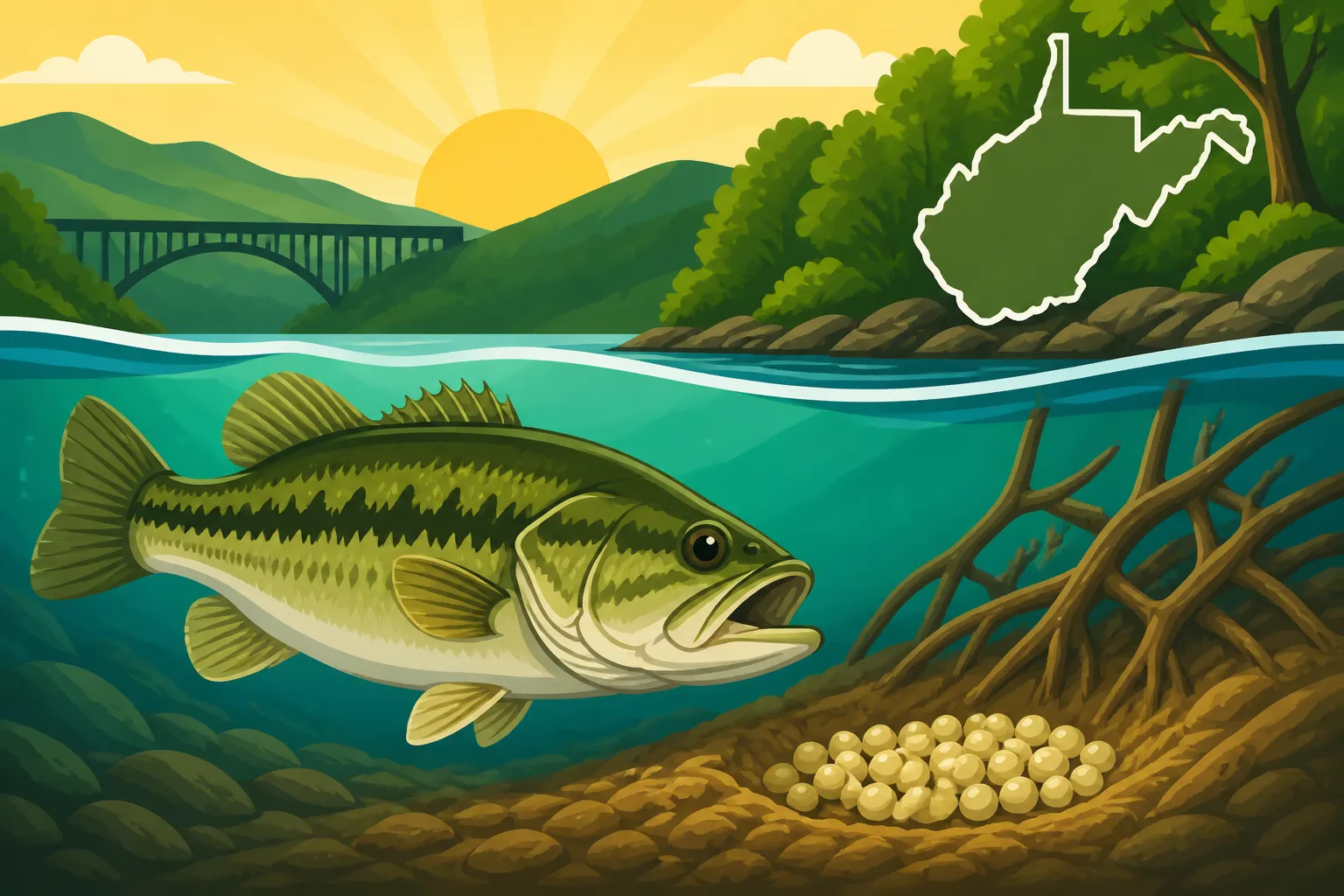
During this phase, male largemouth bass move into very shallow, protected areas—often in depths of just 1 to 5 feet, sometimes even less. They meticulously fan out circular depressions on the bottom, known as beds, typically over gravel, sand, or hard clay bottoms, and sometimes near submerged stumps or grass clumps. These beds are their chosen nurseries. Females then move onto these beds to lay their eggs, which the males immediately fertilize. A single female can lay thousands of eggs, and she may visit multiple beds with different males or even return to the same bed over several days. After laying her eggs, the female usually retreats to slightly deeper water to recover, sometimes becoming difficult to catch as her energy is depleted.
The male bass, however, remains fiercely protective of the nest. His primary instinct is to guard the eggs and newly hatched fry from predators like bluegill, crayfish, and even other bass. While he won't be actively feeding in the traditional sense, he will aggressively strike anything that approaches his bed, perceiving it as a threat. This is where "sight fishing" comes into play, where anglers try to cast directly to a visible bed. It's important to approach this with caution and respect for the fish, as excessive pressure can stress the bass and potentially lead to nest abandonment. The overall duration of the actual spawning can vary widely, from a few days to a couple of weeks for individual fish, and several weeks across an entire lake as different waves of bass move up.
Post-Spawn: Recovery and Summer Patterns
After the intensity of spawning, both male and female largemouth bass enter a recovery period. This transition marks the shift from spring to summer patterns, and it's another challenging but rewarding time for West Virginia anglers.
Once the eggs have hatched and the male's fry-guarding duties are largely complete (though some males will continue to guard for a short time), both sexes begin to move away from the shallow spawning grounds. The females, particularly, are often exhausted and thin, needing time to recuperate. They'll typically move to nearby cover in slightly deeper water, such as submerged timber, weed lines, or rock piles, often in depths of 5-15 feet. Their feeding activity will be somewhat subdued initially, but as they regain strength, they'll start to feed more consistently. Males will follow a similar pattern, gradually moving out and resuming more typical feeding behaviors.
During the post-spawn, largemouth bass begin to spread out, transitioning towards their deeper summer haunts. This period can last for several weeks, depending on the individual fish and water temperatures. Anglers need to adapt by targeting transition areas where bass move between shallow and deeper water. Look for points, humps, and the edges of creek channels that offer easy access to both deep water and potential food sources. Patience is key, as bass might be a bit lethargic or spread out. However, once you find a group of recovering fish, the action can be excellent. The West Virginia Fishing Seasons by Month truly shows how these patterns shift, making it essential to understand each phase.
Key West Virginia Factors Influencing Largemouth Spawning
West Virginia's diverse topography and water bodies mean that the exact timing and nature of the largemouth bass spawn can vary considerably from one location to another. It's not a one-size-fits-all situation across the state.
Reservoir vs. River Spawning Differences
The type of water body a largemouth bass calls home significantly impacts its spawning timeline and behavior. West Virginia boasts numerous reservoirs and rivers, each presenting unique conditions.
Reservoirs, like the aforementioned Summersville Lake or Bluestone Lake, tend to have more stable water temperatures. They warm up more uniformly, and once the magic temperature range is hit, the spawn can be more consistent across large sections of the lake. However, even in reservoirs, shallower bays and northern-facing shores (which get more direct sun) will often warm faster and initiate the spawn earlier. Water clarity also plays a role; clearer reservoirs might see bass spawn deeper to protect beds from sunlight and predators, while stained waters might lead to shallower bedding. In these larger impoundments, the spawn often occurs in waves, with different groups of fish moving up at different times.
Rivers, on the other hand, such as the warmer, slower sections of the Kanawha River or the lower New River, are more susceptible to fluctuations. Heavy spring rains can cause sudden changes in water levels and clarity, sometimes delaying or disrupting the spawn entirely. Bass in rivers will seek out protected backwaters, oxbows, and slow-moving eddies with stable bottoms to build their nests, away from strong currents. If a major flood event occurs, bass might abandon their beds or lose their eggs. Anglers fishing rivers need to pay close attention to recent rainfall and river gauges, as these can be crucial indicators of spawning activity. While New River Smallmouth Bass Fishing is popular, largemouth can be found in the quieter sections, and their spawning will be tied to river conditions.
Elevation and Latitude's Role in Timing
West Virginia's mountainous terrain means that elevation and even subtle differences in latitude play a significant role in when largemouth bass spawn.
Generally, waters at lower elevations and in the southern parts of the state will experience warmer spring temperatures earlier. This means lakes and rivers near the Ohio River Valley or in the southern coalfields will likely see their largemouth spawn begin earlier, sometimes by a week or two, compared to those nestled in the higher altitudes of the Allegheny Mountains or in the northern panhandle. For instance, a lake in Logan County might see its bass spawn in early to mid-April, while a higher-elevation lake in Randolph County might not see significant spawning activity until late April or even early May.
It's a delicate balance. High-elevation lakes tend to stay cooler longer into spring, delaying the warming trend that triggers the spawn. This means that if you're planning a fishing trip in late spring, you might find post-spawn bass in one part of the state and pre-spawn or even active-spawn bass in another. Best Fishing Lakes in West Virginia often notes these geographical differences in their peak fishing times. Anglers who travel across the state for fishing often use this knowledge to "follow the spawn" or target different stages of the bass cycle.
Weather Systems and Their Effect on Spawning
West Virginia's notoriously unpredictable spring weather can throw a real wrench into the largemouth bass spawning plans. Stable weather is key for a successful and consistent spawn.
Prolonged periods of stable, warm, sunny weather are ideal. This allows the shallow waters to heat up steadily and remain within the optimal spawning temperature range, encouraging bass to move up, build beds, and complete their reproductive cycle without interruption. These are the days anglers dream of, where the fish are predictable and often visible.
However, spring in West Virginia frequently brings dramatic cold fronts, sudden temperature drops, and strong winds. A sharp dip in air temperature can quickly cool shallow water, causing bass that have moved up to stage or even begin nesting to retreat to deeper water. This can prolong the spawning period, making it appear staggered or inconsistent. Bass might pause their activity for several days until conditions stabilize again. Heavy rains can also muddy the water, making it harder for males to guard their nests visually and potentially washing away eggs. These weather events are precisely why Cold Front Fishing Tactics for West Virginia Bass are so important, especially in spring. Being able to adapt to these shifts is a hallmark of a successful West Virginia bass angler.
How Spawning Affects Largemouth Bass Fishing Strategies
Knowing when largemouth bass spawn isn't just about understanding their biology; it's about translating that knowledge into actionable fishing strategies. Each phase—pre-spawn, spawn, and post-spawn—requires a different approach if you want to be successful.
Pre-Spawn Tactics: Targeting Hungry Bass
This is often considered one of the best times of the year to catch big largemouth bass in West Virginia, precisely because their primary focus is on feeding heavily.
During the pre-spawn, bass are actively looking for substantial meals to fuel their upcoming reproductive efforts. This means they're usually found in transition areas, moving from deeper winter haunts towards shallower spawning flats. Look for them on main lake points, secondary points inside coves, creek channel bends, and the edges of submerged cover like stumps, rock piles, or early weed growth. They're often staging in depths ranging from 5 to 15 feet, depending on the water clarity and available cover.
Your lure selection should reflect their aggressive feeding. Hard baits like lipless crankbaits (e.g., Strike King Red Eye Shad), suspending jerkbaits (like those from Rapala or Lucky Craft), and medium-diving crankbaits are excellent choices for covering water and triggering strikes from active fish. You can find a huge selection of these on retailers like Amazon, often with reviews that help narrow down choices. For a slower presentation, jig-and-trailer combos or spinnerbaits worked along cover can also be incredibly effective. Remember, these bass are hungry, so don't be afraid to throw larger profile baits to entice a trophy. Best Techniques for Largemouth Bass in West Virginia Ponds will often recommend similar baits, even for smaller water bodies.
Spawning Tactics: Ethical and Effective Approaches
Fishing during the actual spawn can be both challenging and controversial, but there are ethical ways to approach it while still enjoying the experience. The key is understanding the bass's protective instincts.
When bass are on their beds, the male's primary focus is guarding the eggs. He's not feeding, but he will strike anything he perceives as a threat to his nest. This often involves "sight fishing," where you locate visible beds in clear, shallow water and cast lures directly onto or near them. Popular baits for bed fishing include soft plastic lizards, creature baits, tubes, or jigs in natural colors. The goal is to annoy the bass into striking the intruder to remove it from the bed. It’s a test of patience and precision casting.
However, it's vital to consider the ethics. Repeatedly catching a bedding bass can cause it to abandon its nest, leaving the eggs vulnerable to predators. Many anglers choose to avoid fishing for bedding bass entirely, or if they do, they practice quick, careful catch-and-release, ensuring the fish is returned to its bed as quickly as possible. Some areas might even have specific regulations or recommendations during the spawn. Always check the West Virginia Black Bass Limits and the New River Slot Limit or local regulations before heading out. Respect for the fish and the future of the fishery should always be paramount.
Post-Spawn Tactics: Locating Recovering Fish
Once the spawning is over, the bass often seem to disappear, but they haven't gone far. They're simply recovering and transitioning to their summer patterns.
Female bass, especially, need to regain energy after laying eggs. They'll often move to nearby cover in slightly deeper water than the beds, but still relatively shallow compared to true summer depths. Look for submerged timber, weed lines, rock piles, and brush tops in depths of 5 to 15 feet, sometimes adjacent to the spawning flats they just left. Males will follow suit, though often with less recovery time needed.
During this period, bass can be a bit lethargic, so presentations might need to be slower and more subtle. Soft plastics like Texas-rigged worms, Senkos, or finesse jigs can be very effective when worked slowly through cover. As they recover and become more active, moving baits like spinnerbaits, chatterbaits, and even topwater lures (especially during low-light conditions) can entice strikes. The key is to cover water around likely recovery areas and be patient. They might not be as grouped up as during the pre-spawn, but once you find one, there are often more nearby. How to Pattern Bass on an Unfamiliar West Virginia Lake will emphasize finding these transition zones.
Common Misconceptions About Largemouth Spawning
There are several myths and misunderstandings surrounding the largemouth bass spawn that can lead to frustration for anglers. Let's clear some of them up.
"They All Spawn at Once"
One of the biggest misconceptions anglers have is that all the largemouth bass in a particular lake or river spawn at the exact same time. This is simply not true.
Instead, the largemouth spawn in West Virginia, like most places, is a staggered event. Think of it more as a "wave" of fish moving up to spawn, rather than a single, synchronized mass. Several factors contribute to this:
- Individual Readiness: Not all bass mature at the same rate, nor do they all achieve optimal physical condition for spawning at the same time. Older, larger bass might spawn earlier, while younger fish might wait a bit longer.
- Microclimates: Within a single lake, there are numerous microclimates. Shallow, dark-bottomed coves with good sun exposure will warm faster than deeper, shaded areas or those with constant wind exposure. Bass in these warmer spots will initiate spawning earlier.
- Water Body Size: In large reservoirs like Sutton Lake or Cheat Lake, the sheer size and varying depths mean that the spawning process can literally last for weeks as different sections of the lake reach optimal conditions.
This staggered approach is actually good news for anglers! It means that throughout the spring, you can often find bass in all three stages—pre-spawn, active spawn, and post-spawn—somewhere on the same water body. Your task is to identify which phase the fish you're targeting are in and adapt your tactics accordingly. Don't assume that just because you saw some bedding bass last week, all the bass are done spawning now.
"Fishing During Spawn is Always Bad"
Another common myth is that fishing during the entire spawning period is "bad" or impossible. While it can be challenging, it's not universally true that all fishing stops.
As discussed, the pre-spawn phase is arguably one of the best times to catch trophy-sized bass, as they are actively feeding and bulking up. Missing out on this period because you're waiting for the "perfect" post-spawn time means missing prime opportunities. Even during the active spawning period, while male bass guarding beds aren't actively feeding, they are incredibly aggressive and will strike at perceived threats. This can offer a unique and often sight-fishing specific challenge, where precise lure placement and presentation are key.
The real dip in activity often comes for female bass immediately after they've laid their eggs. They retreat to slightly deeper water to recover, and their energy levels are low. This is when they can be truly difficult to catch. However, even then, skilled anglers know to look for those recovery areas. The post-spawn recovery also sees an increase in feeding activity as bass regain their strength and transition into their summer patterns. So, while the active spawning phase itself might require a more nuanced and ethical approach, the overall spring period encompassing pre-spawn, spawn, and post-spawn offers a fantastic window for Largemouth Bass Fishing in West Virginia if you know how to adapt to each stage.
Here’s a quick overview of the largemouth bass spawning phases:
| Phase | Water Temperature (Fahrenheit) | Primary Bass Behavior | Optimal Location for Anglers | Fishing Strategy |
|---|---|---|---|---|
| Pre-Spawn | 50-60°F | Aggressive feeding, staging near shallow | Points, channel bends, submerged cover | Fast-moving baits (crankbaits, jerkbaits), jigs, spinnerbaits |
| Active Spawn | 60-70°F | Males guarding beds, females laying eggs | Shallow, protected coves, hard bottom | Sight fishing (soft plastics, jigs), ethical catch & release |
| Post-Spawn | 68°F and up | Females recovering, males guarding fry | Nearby deeper cover, transition areas | Slower presentations (worms, jigs), eventually topwater |
Disclaimer
This article is for general informational purposes only and does not constitute professional advice. Laws, prices and regulations vary by location and change over time. Consult a qualified professional for guidance on your specific situation.