Largemouth Bass Fishing in West Virginia
It's easy to think of West Virginia as primarily a smallmouth bass or trout fishing destination, especially with all the incredible mountain streams and clear rivers. But if you overlook the state's largemouth bass opportunities, you're missing out on some truly explosive action and fantastic fishing. This comprehensive guide is dedicated to helping you unlock the potential of largemouth bass fishing in the Mountain State, offering insights into where they live, what they eat, and how to consistently put them in your net.
Understanding Largemouth Bass in West Virginia
Before we dive into the "how-to," it's crucial to understand the largemouth bass itself, especially in the context of West Virginia's unique aquatic environments. These fish aren't just scaled-down versions of their Florida cousins; they have their own specific behaviors and preferences influenced by the Appalachian landscape.
Biology and Habitat Preferences
Largemouth bass, known scientifically as Micropterus salmoides, are truly remarkable predators. They are characterized by that distinct jawline that extends beyond their eye, a dark lateral line running down their side, and often a mottled green coloration that helps them blend perfectly into their surroundings. Unlike smallmouth bass, which prefer cooler, clearer, moving water with rocky bottoms, largemouth bass are typically ambush predators. They thrive in warmer, stiller, and often murkier waters, preferring to hide in dense cover like submerged timber, lily pads, cattails, brush piles, and docks. They absolutely love structure, whether natural or man-made, that offers them a strategic hiding spot from which to launch a surprise attack on unsuspecting prey.
In West Virginia, this often means you'll find them in the state's numerous lakes, reservoirs, farm ponds, and slower-moving sections of larger rivers. They need places where they can escape the current and find plenty of aquatic vegetation or woody debris. Their diet is incredibly varied, consisting of baitfish like shad and sunfish, crawfish, frogs, snakes, and even small birds or rodents that happen to fall into the water. This opportunistic feeding behavior is what makes them so much fun to target with a wide array of lures.
Largemouth Bass vs Smallmouth Bass Identification
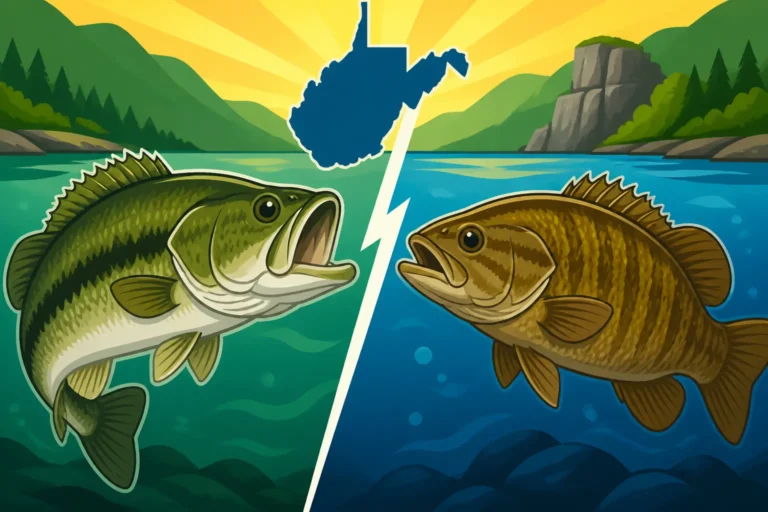
It's a common mistake, especially for newer anglers, to confuse largemouth and smallmouth bass. While both are members of the black bass family, they have distinct characteristics and prefer different habitats. Knowing the difference is key, as it dictates your approach, tackle, and even where you choose to fish. The most obvious difference, as hinted in their names, is the size of their mouth. A largemouth bass's jaw extends well beyond the back of its eye when its mouth is closed, whereas a smallmouth's jaw typically ends directly under the eye or just slightly behind it.
Beyond the mouth, their body shape and coloration offer clues. Largemouth tend to be a deeper green with a prominent, often broken, dark lateral line. Smallmouth are usually more bronze or brownish, sometimes with faint vertical bars, and lack that distinct lateral line. Their body shapes also differ, with largemouth often appearing stockier and taller, while smallmouth are more streamlined and torpedo-shaped, perfectly adapted for battling currents. If you're looking for more details on differentiating the two, checking out Largemouth Bass vs Smallmouth Bass Identification can be really helpful.
Prime Largemouth Bass Fishing Locations in West Virginia
West Virginia has a surprising number of fantastic spots for largemouth bass, even though the smallmouth often steal the spotlight. These impoundments and calmer waters offer excellent opportunities for anglers willing to explore.
Top Lakes and Reservoirs
When it comes to consistent largemouth action, West Virginia's larger lakes and reservoirs are your bread and butter. These bodies of water provide the ideal habitat with expansive shallow flats, deep timber, and plenty of coves and points for bass to hide.
- Summersville Lake: While known for its incredible smallmouth and walleye fishing, Summersville Lake also holds a robust population of largemouth, particularly in its quieter coves and tributaries. Look for areas with standing timber or deeper brush piles. The lake’s clear waters can make them a bit trickier to tempt, requiring a more finesse approach at times, but the reward can be big. Anglers often find success flipping jigs or pitching plastics into cover. For more general lake fishing info, Best Fishing Lakes in West Virginia can offer broader insights.
- Stonewall Jackson Lake: This lake is practically synonymous with quality largemouth bass fishing in West Virginia. With a significant amount of standing timber left when the lake was impounded, it's a largemouth paradise. The submerged trees and brush provide endless cover, making it a favorite for anglers who enjoy flipping and pitching. It's not uncommon to pull out trophy-sized bass here, but you'll need to be ready to work hard to get them out of the thick cover.
- Bluestone Lake: Another large reservoir, Bluestone offers fantastic largemouth opportunities, especially in its upper reaches where the water is warmer and shallower, and there's more shoreline cover. Similar to other impoundments, target submerged wood, rock piles, and any significant changes in bottom contour. The lake has periods of excellent topwater action, particularly during low light conditions or when bass are actively chasing bait.
- Tygart Lake: While also a decent walleye lake, Tygart has healthy largemouth populations. Focus on the extensive coves and arms, especially those with laydowns, docks, or other man-made structures. Spinnerbaits and crankbaits can be very effective when bass are cruising the banks or holding near points.
- Beech Fork Lake: Located in the southwestern part of the state, Beech Fork is a popular spot with good numbers of largemouth bass. It's known for its varied shoreline, offering a mix of rock, brush, and some aquatic vegetation. Jig fishing around woody cover and points often yields good results.
Hidden Pond Gems and River Backwaters
Don't underestimate the power of West Virginia's countless smaller farm ponds, state park lakes, and river backwaters for outstanding largemouth bass fishing. These smaller bodies of water often receive less pressure than the major reservoirs and can hold surprisingly large fish.
- Farm Ponds: Many private farm ponds across the state are teeming with largemouth. If you can gain permission from landowners (always ask first!), you might find yourself on a secret honey hole. These ponds often have simple ecosystems, making bass relatively easy to pattern. Focus on weed lines, brushy banks, and any deeper spots. Lures like plastic worms, spinnerbaits, and topwater frogs can be deadly. If you're specifically targeting these smaller spots, check out Best Largemouth Bass Ponds in West Virginia for more focused advice.
- State Park Lakes: Several West Virginia State Parks manage small lakes that are excellent for family fishing and often stocked with various species, including largemouth. Examples like Cacapon State Park Lake or Watoga State Park Lake provide accessible shore fishing and usually allow small boats or kayaks. These lakes tend to have a good mix of structure, from weed beds to boat docks, offering diverse fishing scenarios.
- Ohio River and Kanawha River Backwaters: While the main channels of these mighty rivers are powerful, their numerous backwaters, oxbows, and sloughs provide ideal largemouth habitat. These areas are typically calmer, warmer, and accumulate more woody debris and vegetation. Exploring these quieter sections with a jon boat or kayak can reveal incredible largemouth fisheries. Bass often hold tight to fallen trees, logjams, and secluded weed beds. A good example of a focused guide for such areas might be Kanawha River Fishing Spots, which can shed light on these types of river features.
Essential Gear for West Virginia Largemouth Anglers
Having the right gear makes a huge difference, especially when you're trying to pull a chunky largemouth out of heavy cover. You don't need a boatload of expensive equipment, but investing in a few key items will greatly enhance your success and enjoyment.
Rods, Reels, and Line
Choosing the right rod, reel, and line combination is paramount for largemouth bass fishing, especially given the varied conditions you'll encounter in West Virginia.
- Rods: For largemouth, you'll generally want a versatile rod setup. A medium-heavy to heavy power rod, typically 6'6" to 7'6" in length, is a great starting point. This power gives you the backbone needed to cast heavier lures, set hooks firmly, and most importantly, muscle fish out of thick cover. Fast action is usually preferred, meaning the rod bends mostly in the tip, allowing for quick, sensitive hooksets. Whether you prefer baitcasting or spinning gear often depends on the technique. For flipping and pitching into dense cover, a beefier baitcasting setup is almost a necessity. If you're new to fishing, a good quality spinning rod in medium power can be very versatile for a variety of lures. Best Spinning Rods for Smallmouth Bass might be a good read for understanding rod characteristics, even if it's geared towards smallmouth.
- Reels:
- Baitcasting Reels: For baitcasting, a reel with a gear ratio between 6.4:1 and 7.5:1 is a good all-around choice. A higher gear ratio is excellent for quickly retrieving slack line, crucial for working topwater baits or burning spinnerbaits, and keeping up with a fast-charging bass. A lower ratio (around 5.x:1) is better for slow-rolling bigger swimbaits or deep-diving crankbaits. Ensure it has a strong drag system, as you'll often need to put a lot of pressure on a fish.
- Spinning Reels: For spinning setups, a 2500-4000 series reel is typically sufficient. Look for a smooth drag system and a good line capacity. These are great for lighter presentations like shaky heads, wacky worms, or smaller jigs.
- Line:
- Monofilament: A classic choice, mono offers good knot strength and stretch, which can be forgiving. It's often used for topwater lures because it floats, and for crankbaits where its stretch helps prevent hooks from pulling out. Typically, 12-20 lb test is common.
- Fluorocarbon: Becoming increasingly popular, fluorocarbon is nearly invisible underwater, offers excellent sensitivity, and has less stretch than mono. It sinks, making it ideal for jigs, worms, and deep-diving crankbaits. Use 10-20 lb test. Many anglers use fluorocarbon leaders with braided main lines for the best of both worlds.
- Braided Line: Incredibly strong for its diameter and offers zero stretch, providing maximum sensitivity and powerful hooksets. Its abrasion resistance is a huge advantage when fishing heavy cover. For flipping and punching thick mats, 40-65 lb braided line is standard. You can find a wide range of these lines and reels on Amazon.
Essential Lures and Baits
The world of largemouth bass lures is vast, but a few categories consistently produce in West Virginia. Having a diverse selection will prepare you for varying conditions and fish moods.
- Soft Plastics: These are arguably the most versatile and effective lures for largemouth.
- Plastic Worms: Texas-rigged, Carolina-rigged, wacky-rigged, or Neko-rigged, worms are bass magnets. Colors like green pumpkin, junebug, and black/blue are staples.
- Jigs: Flipping jigs, casting jigs, and football jigs are excellent for targeting structure. Pair them with soft plastic craws or creature baits as trailers. Black/blue, green pumpkin, and brown are common colors.
- Creature Baits/Craws: These imitate crawfish and other forage, great for pitching into heavy cover or using as jig trailers.
- Swim Baits: Both soft and hard body swimbaits can imitate baitfish, effective for targeting cruising bass.
- Hard Baits:
- Crankbaits: Deep-diving crankbaits for offshore structure, medium divers for points and humps, and squarebills for shallow cover. Colors often depend on water clarity and local forage.
- Spinnerbaits: Excellent for covering water, especially around vegetation or sparse wood. White, chartreuse, and combinations thereof are popular.
- Chatterbaits (Bladed Jigs): These hybrids offer the flash of a spinnerbait with the vibration of a crankbait, devastating around grass and sparse cover.
- Topwater Lures: Frogs, poppers, and walking baits (like a Zara Spook) are exhilarating when bass are active and feeding on the surface, especially in the mornings and evenings.
- Live Bait: While most serious bass anglers use artificials, live bait like shiners, crawfish, or even large nightcrawlers can be incredibly effective, especially for hesitant bass. Be sure to check West Virginia Fishing Regulations Explained for any rules regarding live bait. You can easily stock your tackle box with a variety of these lures and essential terminal tackle like hooks and weights by browsing online marketplaces like Amazon.
Best Largemouth Bass Fishing Techniques
Catching largemouth bass often comes down to presenting your lure effectively in the right spot. Different situations call for different techniques, and mastering a few key ones will significantly boost your catch rate.
Flipping and Pitching
When you're dealing with dense cover – whether it's submerged timber, lily pads, or boat docks – flipping and pitching are indispensable techniques. These methods allow you to present your lure quietly and accurately into tight spots where bass love to hide.
- Flipping: This technique is used for very short-range, accurate presentations. You strip line off your reel, swing the lure like a pendulum, and guide it gently into the cover with your rod. The goal is a subtle entry, minimizing splash, directly into the bass's living room. It’s ideal for thick brush, heavy vegetation mats, and standing timber where precision is key. A heavy-action rod, stout braided line (like 50-65 lb test), and a weedless jig or creature bait are crucial. Imagine working a log jam on Stonewall Jackson Lake – flipping a jig right into the deepest part of the submerged tangle can elicit an immediate strike.
- Pitching: Similar to flipping but for slightly longer distances, often 10-30 feet. Instead of stripping line, you use a wrist and forearm motion to lob your lure underhanded, allowing it to softly land near or into cover. This is perfect for docks, sparse laydowns, or weed edges where you need to maintain a bit of distance from the cover to avoid spooking the fish. Both techniques emphasize a soft entry, letting the lure sink naturally, and paying close attention to any subtle "thumps" or line jumps that indicate a bite. Many anglers use a soft plastic craw on a weighted hook for pitching into less dense cover.
Jigging and Bottom Fishing
Many largemouth bass spend a significant portion of their time near the bottom, especially when they're not actively chasing baitfish in the water column. Jigging and various forms of bottom fishing are highly effective for these structure-oriented fish.
- Jigging: This involves working a jig (often a rubber-skirted jig with a soft plastic trailer) along the bottom, mimicking a crawfish or wounded baitfish. You cast it out, let it sink to the bottom, and then use short hops, drags, or shakes of your rod tip to animate the lure. The key is to feel for the bite, which can often be a subtle "tick" or a sudden feeling of weightlessness as a bass picks it up. Football jigs are excellent for rocky or hard bottoms, while casting jigs with brush guards are great for wood and brush.
- Texas Rig and Carolina Rig: These are classic soft plastic presentations. The Texas rig involves a bullet weight slid onto your line, followed by a bead (optional, for sound), then tied to an offset worm hook with a plastic worm or creature bait. The hook is weedless, making it perfect for dragging through grass or wood. The Carolina rig uses a heavier sinker and a swivel, with a leader (often fluorocarbon) tied to a weedless hook with your soft plastic. This rig allows your lure to float somewhat above the bottom, giving it a more natural, subtle action as the weight drags along. It's fantastic for covering deeper flats or points. When bass are sluggish due to a cold front, a slow-dragged Texas or Carolina rig can be irresistible.
Topwater and Reaction Baits
There's nothing quite like the explosive strike of a largemouth bass on a topwater lure. These techniques are often about triggering a reaction bite, capitalizing on a bass's predatory instincts.
- Topwater Lures: When conditions are right – typically low light (dawn/dusk), overcast days, or warmer water – topwater action can be incredible. Frogs are excellent for fishing over dense vegetation mats, as they are virtually weedless. Poppers create a "chugging" sound and splash, imitating a struggling baitfish, while walking baits (like a Zara Spook) have a side-to-side "walk the dog" action that can drive bass wild. The key is patience, letting the lure sit occasionally, and varying your retrieve. Imagine a calm morning on Plum Orchard Lake, and a bass exploding on your frog near a lily pad patch – that's the magic of topwater.
- Spinnerbaits and Chatterbaits: These are "reaction baits" because their flash, vibration, and erratic movement often trigger an aggressive strike from bass, even if they aren't actively feeding. Spinnerbaits are great for covering water quickly, especially around submerged grass, standing timber, or brush. They excel in murky water due to their thumping blades. Chatterbaits, with their distinct vibrating blade, are fantastic around grass lines, docks, and rocky points. They offer a unique vibration that bass often can't resist. Experiment with retrieve speeds, sometimes a faster "burn" or an erratic stop-and-go can be the ticket.
Seasonal Strategies for West Virginia Largemouth
Largemouth bass behavior changes drastically with the seasons, largely influenced by water temperature and their spawning cycle. Understanding these patterns is key to year-round success in West Virginia.
Spring: Pre-Spawn and Spawn Frenzy
Spring is arguably the most anticipated season for largemouth bass anglers. As water temperatures rise, bass become increasingly active, moving from their deep winter haunts into shallower waters to feed aggressively and eventually spawn. This period can offer some of the best fishing of the year.
- Pre-Spawn (Water Temps 45-60°F): As the ice melts and water temperatures climb into the 40s and 50s, largemouth begin to migrate towards shallower staging areas. They'll feed heavily to build energy for the upcoming spawn. Look for them on points, creek channel bends, and the sunny, northern banks of lakes and ponds where the water warms fastest. Deep-diving crankbaits, jerkbaits, and spinnerbaits are excellent for covering water and locating these active fish. They'll often be found near deeper water access, ready to push up shallow. Best Techniques for Early Spring Trout provides tips for another species, but the concept of fish moving to warmer waters is universal.
- Spawn (Water Temps 60-70°F): When water temperatures hit the low to mid-60s, bass move onto their spawning beds in shallow, protected coves and flats. The male bass will aggressively guard the nest, making them vulnerable to sight fishing. Plastic worms, lizards, and jigs pitched accurately into the bed area can draw a strike. It's important to remember that during this sensitive time, catch and release is highly encouraged to protect the future of the fishery. After spawning, bass may remain shallow for a short post-spawn period, recovering and still guarding fry, but often becoming more lethargic. You can learn more about this critical time by researching Largemouth Bass Spawning Season in West Virginia.
Summer: Deep Water and Early Morning Bites
Summer in West Virginia can present challenges for largemouth anglers, primarily due to rising water temperatures and increased recreational boat traffic. Bass often move deeper or become more nocturnal to escape the heat and bright sun.
- Deep Water Patterns (Water Temps 75°F+): In the heat of summer, largemouth often seek refuge in deeper, cooler waters, relating to offshore structure like humps, ledges, creek channels, and standing timber. Fish finders become invaluable for locating these subtle changes in the bottom contour. Techniques like deep cranking, Carolina rigging, football jigging, and drop-shotting become highly effective. Look for schools of baitfish, as bass will often be close by.
- Low Light and Shady Cover: During early mornings, late evenings, and overcast days, bass may move into shallower water to feed aggressively. Topwater lures can be incredibly effective during these times. Throughout the day, focus on dense shade – under docks, overhanging trees, or thick vegetation mats. Flipping and pitching jigs or heavy Texas-rigged plastics into these shaded pockets can coax a bite from otherwise lethargic bass. A good tackle organizer, easily found on Amazon, will help you keep all these varied lures in check.
Fall: The Feeding Frenzy Before Winter
As summer transitions into fall and water temperatures begin to drop, largemouth bass enter another major feeding period. They sense the coming winter and actively gorge themselves on baitfish, making this a prime time for anglers.
- Baitfish Migration: The key to fall fishing is often finding the baitfish. As water temperatures cool, shad and other forage fish will move into the backs of coves and creek arms. Largemouth will follow, actively corralling and ambushing them. Look for schooling bait on your electronics or visual signs like birds diving.
- Reaction and Covering Water: Spinnerbaits, crankbaits, chatterbaits, and lipless crankbaits are excellent choices for covering water and triggering strikes during the fall feeding frenzy. Bass will often be found near points, shallow flats adjacent to deeper water, and along weed edges. Don't be afraid to experiment with retrieve speeds; sometimes a fast, aggressive retrieve is what they want, other times a slower, more deliberate approach is better. This is a great time to target some of the Best Bass Fishing Spots in West Virginia as they become incredibly active.
Winter: Slow and Steady Wins the Race
Winter fishing for largemouth bass in West Virginia can be tough, but it's not impossible. Bass become much less active, their metabolism slows down, and they often relate to very specific, deep structure.
- Deep, Vertical Structure: Look for bass in deep water, often near vertical drops, steep banks, channel swings, and standing timber that extends into deep water. They might suspend over these features or hug the bottom.
- Finesse and Slow Presentations: Forget the fast-moving reaction baits; winter calls for finesse. Slow-moving jigs, shaky heads, drop shots, and blade baits worked almost imperceptibly are often the most productive. The bites will be incredibly subtle, often just a slight weight or a gentle "mush" feeling. Pay close attention to your line for any movement. Patience is paramount during winter bass fishing. On some of the deeper reservoirs like Summersville Lake, largemouth will school up in very specific spots, making them hard to find but rewarding if you do.
Largemouth Bass Conservation and Regulations
As anglers, we have a responsibility to protect our fisheries. Understanding and adhering to West Virginia's fishing regulations, particularly for black bass, is not just a legal requirement but also a commitment to sustainable fishing.
Size and Bag Limits
West Virginia has specific regulations for black bass, which include largemouth, smallmouth, and spotted bass. These regulations are designed to ensure healthy fish populations and quality fishing experiences for everyone.
- General Regulations: Always consult the current West Virginia Fishing Regulations Summary, which you can usually find online or at any licensed vendor. Generally, there are statewide aggregate daily and possession limits for black bass. This means the total number of largemouth, smallmouth, and spotted bass you can keep in a day or possess at any one time. For precise numbers, you'll want to review West Virginia Bag and Possession Limits by Species.
- Special Regulation Waters: It's critical to be aware that certain lakes, rivers, or specific sections of water bodies may have special regulations that supersede the statewide rules. This could mean different size limits (e.g., a protected slot limit where fish between certain sizes must be released) or reduced daily creel limits. For instance, some waters might have a 12-16 inch slot limit, meaning any bass caught within that size range must be immediately released, while smaller or larger fish can be kept. Always check the specific regulations for the body of water you plan to fish. These special rules are often implemented to promote trophy fisheries or protect vulnerable populations.
Catch and Release Practices
While it's perfectly legal to keep largemouth bass within the established limits, practicing catch and release, especially for larger breeding-size fish, contributes significantly to a healthier fishery. Large female bass are crucial for reproduction, and releasing them ensures they can continue to spawn and pass on their strong genetics.
- Handle With Care: When practicing catch and release, minimize the time the fish is out of the water. Handle the fish gently, supporting its body horizontally rather than vertically by the jaw alone, which can cause internal damage. Wet your hands before touching the fish to protect its slime coat, which is vital for disease prevention.
- Proper Hook Removal: Use needle-nose pliers or a hook remover to quickly and carefully remove hooks. If a fish is deeply hooked, it's often best to cut the line as close to the hook as possible rather than tearing the fish's delicate internal organs.
- Revival: If the fish seems stressed or unable to swim away on its own, hold it gently in the water, facing into the current (if applicable), until it regains its strength and swims away willingly. Never throw a fish back into the water. Responsible catch and release ensures that those big bass are there for future generations to enjoy. If you're looking for an excellent landing net that minimizes harm to fish, check out options on Amazon with rubberized or knotless mesh.
Overcoming Challenges and Advanced Tips
Even the most seasoned angler faces challenges when targeting largemouth bass. Whether it's dealing with clear water, pressured fish, or understanding subtle nuances, a few advanced tips can help you consistently put more fish in the boat.
Clear Water Strategies
West Virginia's lakes and ponds can vary greatly in clarity. While murky water offers excellent ambush opportunities for bass, clear water presents its own set of challenges, as fish can be more easily spooked and have better visibility of your line and lure.
- Finesse, Finesse, Finesse: In clear water, smaller baits and lighter lines often outperform heavier, more visible setups. Think about using light fluorocarbon leaders (6-10 lb test), smaller jigs, finesse worms, and subtle presentations like the Neko rig or wacky rig. These baits mimic natural forage more closely and don't create as much disturbance.
- Natural Colors and Stealth: Opt for natural bait colors like green pumpkin, watermelon, browns, and translucent shades. Avoid flashy, unnatural colors unless you're trying to trigger a reaction from very aggressive fish. Crucially, practice stealth. Make longer casts to avoid getting too close to the fish, use quiet boat approaches, and minimize sudden movements or noises. Bass in clear water can be incredibly wary.
- Low Light and Deeper Water: Fish clear water during low light conditions (early morning, late evening, overcast days) when bass are more likely to move shallower to feed. During bright sunny days, largemouth will often retreat to deeper water or dense, shaded cover. Target these deeper structures with subtle techniques.
Fishing Pressured Waters
Many of West Virginia's popular bass lakes receive significant fishing pressure, making the fish warier and harder to catch. These "educated" bass have seen every lure and trick in the book, requiring a different approach.
- Go Against the Grain: If everyone is fishing a certain way or in a particular spot, try something different. If they're using big crankbaits, try a small finesse worm. If they're fishing shallow, try deep. Often, fish move slightly away from the most obvious cover or hold in less accessible spots due to pressure.
- Subtle Presentations and Smaller Baits: Pressured bass often respond better to subtle, less aggressive presentations. Downsize your baits, use lighter line, and work your lures very slowly. A small, unweighted worm twitched subtly or a tiny jig worked painstakingly slow can be the key.
- Unusual Lures or Colors: Sometimes, showing them something they haven't seen before can trigger a bite. While natural colors are generally good, a completely different lure profile or a slightly off-the-wall color might stand out just enough to get a wary bass to commit. Experimentation is crucial here. Also, consider fishing during off-peak hours or weekdays when pressure is lower.
Reading Structure and Cover
Understanding how largemouth bass relate to structure and cover is foundational to consistent success. They are ambush predators, and structure provides them with both hiding spots and feeding lanes.
- Definition: Structure refers to changes in the lake or river bottom itself – points, humps, ledges, creek channels, drop-offs, rock piles. Cover refers to objects on or in the water that provide shelter – fallen trees (laydowns), brush piles, lily pads, docks, boat houses, emergent vegetation.
- Where to Focus: Bass will use the intersection of structure and cover, or transition zones, as key ambush points. For example, a brush pile on a main lake point, or a deep weed line along a creek channel. These areas offer immediate access to deeper water for safety, and shallow water for feeding.
- Interpreting Your Electronics: A good fish finder can be your best friend for locating offshore structure and identifying schools of baitfish or even individual bass. Learn to interpret your sonar and down/side imaging to pinpoint submerged timber, rock piles, and changes in depth. Mapping features on modern units can help you identify contour lines and potential bass holding areas before you even cast. A solid fish finder, like many models available on Amazon, can greatly enhance your ability to 'read' the underwater landscape. Knowing where to look for these crucial features, combined with your understanding of seasonal patterns and appropriate techniques, will elevate your largemouth bass fishing game significantly in West Virginia.
Disclaimer
This article is for general informational purposes only and does not constitute professional advice. Laws, prices and regulations vary by location and change over time. Consult a qualified professional for guidance on your specific situation.