How to tell a brook trout from a rainbow trout
It's happened to every single one of us out on the water in West Virginia: you reel in a beautiful trout, and for a split second, you pause. Is it a brook trout or a rainbow? While both are incredibly rewarding catches, knowing the difference isn't just about satisfying curiosity; it's crucial for understanding regulations and appreciating the unique beauty of these beloved fish. This guide will walk you through the tell-tale signs, so you'll confidently identify your next catch.
The Distinctive Features of a Brook Trout
Ah, the brook trout. For many West Virginia anglers, this fish holds a special place in their hearts. It's our state fish, after all, and often found tucked away in those pristine, cold mountain streams we cherish. Identifying a brook trout usually comes down to a few key visual markers that, once you know them, are pretty hard to forget. They have a truly unique aesthetic that screams "native beauty."
Spotting the Signature Vermiculations and Worm-like Patterns
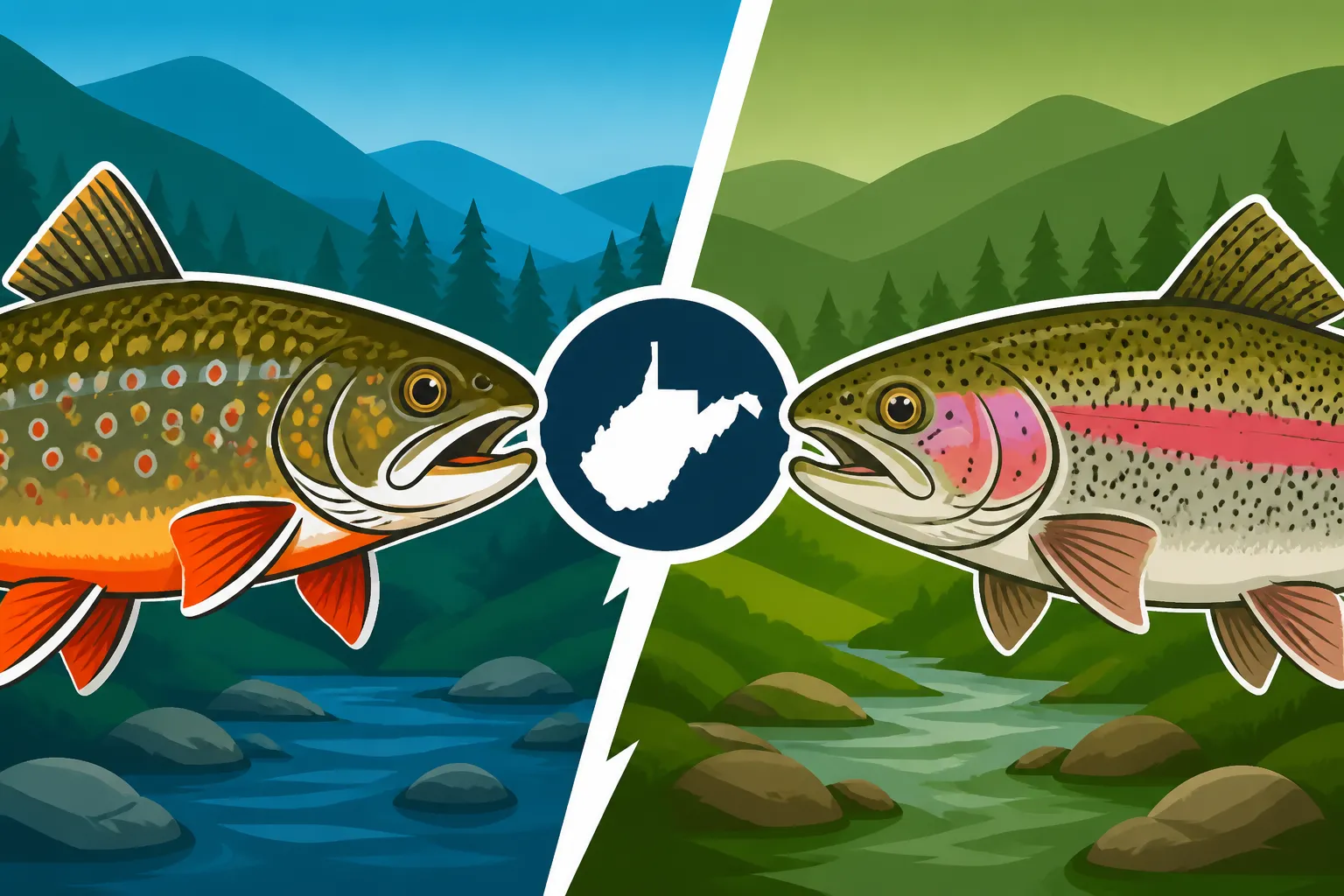
The most striking feature of a brook trout, and often the first thing experienced anglers look for, are its mesmerizing vermiculations. Unlike the distinct, round spots you might see on other trout, brook trout display intricate, wavy, worm-like patterns across their back and dorsal fin. These patterns are typically olive, dark green, or even black, and they create a stunning, labyrinthine mosaic against their darker background. Imagine the tracks a tiny worm might leave on a muddy surface, only far more artistic and natural, forming a complex camouflage that helps them blend seamlessly with the dappled light and shadow of their stream habitats. These vermiculations are a dead giveaway that you've got a true Brook Trout: West Virginia's Native and State Fish on your line, setting them apart from the spotted patterns of their rainbow cousins.
These patterns don't just sit on the surface; they are deeply integrated into the fish's coloration, allowing it to disappear against stream beds mottled with rocks and submerged logs. The intensity and exact shade of these vermiculations can vary slightly depending on the specific water body and the fish's diet, but the fundamental worm-like shape remains consistent. When you observe a brook trout, especially one pulled from a gin-clear mountain stream, take a moment to admire this natural artwork. It’s a testament to millions of years of evolution creating a perfectly camouflaged predator and a truly iconic fish for our state. You won't find this kind of intricate pattern on a rainbow trout; they have a different kind of beauty altogether.
Belly Color and Fin Markings: A Splash of White and Red
Beyond the vermiculations, a brook trout often gives itself away with its vibrant belly and distinctive fin markings. If you gently cradle a brook trout (remembering to keep your hands wet!), you'll often notice a stunning array of colors on its underside. While some brookies might have a paler, cream-colored belly, many, especially the males during spawning season, will boast a brilliant orange-red hue that can be absolutely breathtaking. This fiery belly often extends up the sides, fading into their olive or brownish flanks. It's like a little jewel pulled from the stream.
However, the real clincher for identification lies in their fins. Look closely at the leading edges of their lower fins – specifically the pectoral, pelvic, and anal fins. You'll see a crisp, bright white stripe along the very front edge, followed immediately by a thin, dark, often black line. This "white-black-red" fin pattern is a hallmark of the brook trout and is incredibly reliable for identification. This stark contrast is not typically present on rainbow trout. It's a fantastic field mark that, once you see it, will stick with you. This subtle yet powerful detail truly sets them apart and is a strong indicator of their native heritage in West Virginia's pristine waters.
Body Shape and Overall Impression: A Streamlined Native
When you hold a brook trout, you'll often get a distinct feeling from its overall form and texture. They tend to have a more streamlined, almost torpedo-shaped body compared to the robust, often deeper-bodied rainbow trout. Their scales are noticeably smaller, giving them a smoother, almost velvety feel to the touch. This sleek design is perfectly adapted for navigating the tight confines and fast currents of the small, rocky streams and runs where they thrive. A wild brook trout, in particular, will feel incredibly lithe and powerful, a testament to its agility in its natural environment.
Their head is usually relatively small in proportion to their body, contributing to that streamlined appearance. The overall impression is one of elegance and wildness. They carry a sense of history, reflecting their status as true natives of these mountains. When you observe a brook trout, its dark, olive-green back, adorned with those incredible vermiculations, often blends into a slightly lighter side, punctuated by a scattering of pale, often yellowish or cream-colored spots that may have small red or blue halos, though these are less prominent than a rainbow's. This combination of shape, small scales, and subtle coloration contributes to their unique charm and distinguishes them clearly from the more heavily spotted and often silvery rainbow trout that frequently inhabit different sections of our waterways.
Unmistakable Marks of a Rainbow Trout
Now, let's turn our attention to the vibrant and often acrobatic rainbow trout. While not native to West Virginia, these fish have become a beloved staple in our state's fishing scene, thanks to extensive stocking programs. They bring a different kind of thrill to the angler, and their appearance is just as distinct, if not more so, than the brook trout. Getting to know their features will make identification simple, especially if you're targeting waters known for Rainbow Trout Stocking in West Virginia.
The Iconic Pink or Reddish Stripe
The most famous and often the easiest identifying feature of a rainbow trout is, without a doubt, its namesake: the prominent pink or reddish stripe that runs horizontally along its lateral line, from its gill plate all the way to its tail. This vibrant stripe can vary in intensity, from a faint rosy blush to a brilliant, almost neon pink, depending on the fish's diet, water conditions, age, and whether it's in spawning colors. It truly stands out against their typically silvery or olive-green body. When you pull a rainbow from the water, this stripe is usually the first thing that catches your eye, a splash of color that instantly differentiates it from the subtly patterned brook trout.
This lateral stripe is a fantastic, reliable field mark, and it's why they're called "rainbows" in the first place. You won't find anything similar on a brook trout, which lacks this distinct band of color along its sides. Whether you're catching a freshly stocked rainbow or a robust holdover that's spent some time adapting to a larger body of water, this stripe remains a consistent and unmistakable characteristic. Keep an eye out for it, and you'll rarely misidentify this species. It's a key feature that makes learning to distinguish these two common trout relatively straightforward for any angler, regardless of experience level.
A Plethora of Small, Dark Spots
While the brook trout has its intricate vermiculations, the rainbow trout is defined by an abundance of small, dark spots. These spots are typically concentrated on their back, dorsal fin, and, significantly, their tail fin. Unlike brook trout, whose spots are often pale and scattered, rainbow trout are absolutely peppered with these darker, more defined spots. They can cover almost the entire body above the lateral line, and often extend below it as well, especially towards the tail. The tail fin, in particular, is a crucial indicator, frequently displaying rows of these small spots, creating a somewhat mottled or checkered appearance.
These spots are generally round or oval, and their density can vary, but their presence across the entire fish, including the caudal (tail) fin, is a very strong identifier. Imagine shaking a pepper shaker over the fish's back and tail – that's often the impression you get. This stark contrast with the brook trout's worm-like patterns and mostly unspotted tail makes it easy to tell them apart. When considering Trout Species Identification Guide for West Virginia, remembering the difference in spotting patterns between these two fish is one of the most fundamental lessons an angler can learn. It's a detail that, once you've observed it a few times, becomes second nature.
Tail Fin and Overall Body Form: A Powerful Swimmer
The tail fin of a rainbow trout is another critical identifying characteristic. As mentioned, it's typically heavily spotted and, importantly, tends to be more squarish or even slightly forked in shape. This is in contrast to the brook trout's tail, which is usually unspotted and often has a squarer or slightly rounded appearance. The spotted tail of a rainbow trout is a consistent and clear indicator, especially when viewed side-by-side with a brook trout. These tail spots are often arranged in distinct rows, adding to their overall peppered look.
Beyond the tail, the rainbow trout generally has a more robust, deeper body compared to the brook trout's more slender profile. Their overall color can range from a bright, silvery sheen, especially in larger, stocked rivers or lakes, to a darker, olive-green in smaller, more naturalized stream settings. They tend to feel a bit more "solid" in hand, reflecting their powerful swimming ability and often larger size potential. While a brook trout epitomizes the sleek grace of a mountain stream, a rainbow trout often embodies the strength and resilience needed for thriving in a wider array of habitats. This combination of body shape, vibrant stripe, and prolific spotting paints a clear picture of the rainbow trout, making it a distinctive and exciting catch for anglers throughout West Virginia.
Habitat, Behavior, and Angler's Experience
Understanding where these fish typically live and how they behave can also be a huge help in identification, even before you get them close enough to examine their markings. West Virginia offers such diverse aquatic environments, and each species has its preferred niches.
Where You'll Find Each Species in West Virginia
The natural habitats of brook trout and rainbow trout in West Virginia are quite different, which often gives you a good hint as to what you've caught. Our native brook trout are cold-water specialists, preferring the pristine, oxygen-rich, often higher-elevation headwater streams and smaller creeks. These are the places where the water stays chilly year-round, shaded by dense forest canopies, and where the stream beds are rocky and clean. If you're wading up a small mountain stream, particularly in areas designated as Special Regulation Waters in West Virginia or known Best Trout Streams in West Virginia that are wild or lightly stocked, there's a good chance you're encountering brook trout. They are highly sensitive to water temperature and pollution, serving as excellent indicators of stream health.
Rainbow trout, on the other hand, are much more adaptable and are the primary species used in West Virginia's extensive stocking programs. You'll find them in a much wider array of waters, including larger rivers, lakes, and tailwaters below dams. These waters might be warmer or have slightly different characteristics than the brook trout's preferred habitat. If you're fishing a popular stocked lake or a larger river like the Elk or Cranberry (especially in its lower, less wild sections), you're far more likely to be catching rainbow trout. West Virginia Trout Stocking Hotline and Schedule will give you a clear indication of where rainbows are regularly introduced, making those locations prime spots for finding them. While some naturalized populations of rainbows exist, especially in areas with suitable habitat, the majority of your rainbow trout encounters will be in waters where they've been intentionally introduced.
Subtle Behavioral Differences on the Line
Beyond their looks, these two trout species often exhibit distinct fighting styles that can give you a clue about your catch even before you see it. Brook trout, especially the wild ones from smaller streams, are often described as quick and darting fighters. They'll hit your lure or fly with surprising ferocity for their size, and then make short, powerful runs, often trying to dive under rocks or logs. They might not make huge, acrobatic leaps, but their raw, untamed energy is undeniable. It's a sharp, tenacious battle that speaks to their wild nature. When Wading Techniques for West Virginia Trout Streams in pursuit of brookies, you'll feel that spirited fight directly through your rod.
Rainbow trout, particularly those from larger, open waters, are often known for their more acrobatic displays. When hooked, they frequently launch themselves out of the water, shaking their heads in an attempt to throw the hook. They'll make longer, stronger runs, especially in lakes or wider rivers, truly testing your drag. Their fight is often characterized by aerial leaps and powerful surges that can be incredibly exciting. This difference in fighting style is another reason why anglers have such a passion for trout fishing in West Virginia – each species offers its own unique challenge and thrill. Whether you're Fly Fishing for Trout in West Virginia or using conventional tackle, you'll quickly learn to appreciate the distinct tug and pull of each species.
Genetic Background and Stocking Practices
The fundamental difference between these two species in West Virginia often boils down to their genetic background and how they're managed. Brook trout are truly native to our Appalachian streams. They've been here for millennia, evolving to perfectly fit the unique characteristics of our mountain waterways. When you catch a brook trout, you're connecting with a piece of West Virginia's natural history, a testament to its pristine environment. Their presence often indicates a healthy, unpolluted, and cold-water ecosystem.
Rainbow trout, conversely, are not native to West Virginia or indeed to the eastern United States. They originate from the Pacific drainages of western North America. They were introduced to West Virginia (and many other eastern states) decades ago to enhance recreational fishing opportunities, especially in waters that might be too warm or otherwise unsuitable for native brook trout, or to provide more robust sportfish for anglers. The vast majority of rainbow trout you encounter in West Virginia are either directly stocked fish or their immediate descendants. This means that while they've become an integral part of our fishing culture, they serve a different ecological role than the wild, native brook trout. Understanding this distinction enriches your appreciation for each fish and the waters they inhabit. It also helps explain why regulations can differ for each species, as outlined in West Virginia Fishing Regulations Explained.
Practical Tips for Anglers
Even with all the knowledge in the world, sometimes you're still left scratching your head on the water. Don't worry, it happens! Here are a few practical tips to help you make those identifications quickly and confidently, and why it truly matters to get it right.
Side-by-Side Comparison for Quick Identification
Sometimes the best way to understand the differences is to see them laid out clearly. While you might not have both species on your line at the same time, mentally reviewing these key points can help.
| Feature | Brook Trout | Rainbow Trout |
|---|---|---|
| Back/Dorsal Fin | Intricate, light "worm-like" vermiculations | Numerous small, dark spots |
| Side Stripe | Absent | Prominent pink or reddish lateral stripe |
| Belly Color | Often reddish-orange (especially males), creamy | Generally silvery or whitish, rarely colored |
| Lower Fins | Bright white leading edge, then thin black line | No distinct white leading edge |
| Tail Fin | Unspotted, squarish or slightly rounded | Heavily spotted, squarish or slightly forked |
| Body Shape | More slender, torpedo-like | More robust, often deeper-bodied, silvery |
| Spots on Sides | Pale, often yellowish spots, sometimes with halos | Small, dark spots, often profusely covering sides |
This table provides a quick cheat sheet for when you're making those split-second decisions on the water. It highlights the most reliable visual cues, helping you differentiate between these two beautiful species with confidence. Remember, a quick glance at the back for vermiculations versus spots, and then a check for that pink stripe and fin markings, will usually tell you what you need to know.
What to Do if You're Still Unsure
It's perfectly natural to be a little unsure sometimes, especially if a fish exhibits some ambiguous characteristics or if you're fishing in a mixed-species water body. If you've got a fish in hand and you're truly stumped, the best course of action is always to prioritize the fish's well-being and err on the side of caution. If you plan to release the fish, keep it in the water as much as possible, or handle it very gently with wet hands. A quick photo with your phone can be immensely helpful; you can review it later or even consult a local expert or online fishing forum for identification. There are many field guides available, some even pocket-sized, that you can purchase from places like Amazon to keep in your tackle box for quick reference.
Another responsible approach is to assume it's the species with the more restrictive regulations. For example, if there's a specific size limit or a "catch and release only" rule for brook trout in that water, and you're not 100% sure, follow that rule. This approach ensures you're always acting within the spirit of conservation and adhering to West Virginia Bag and Possession Limits by Species. Always prioritize the fish's health, and if you're not keeping it, make that release as swift and gentle as possible.
Why Proper Identification Matters
Beyond the simple satisfaction of knowing what you've caught, proper trout identification is incredibly important for several practical and ethical reasons in West Virginia. Firstly, it's about adhering to fishing regulations. Different species often have different bag limits, size restrictions, or even specific seasonal closures. For instance, West Virginia Trout Season and Stocking Rules might differentiate between wild trout waters (often brook trout) and stocked waters (often rainbow trout). Misidentifying a fish could lead to unintentional violations, which no angler wants.
Secondly, it's crucial for conservation. Understanding whether you're catching a native brook trout or an introduced rainbow trout helps you appreciate its ecological role and the management efforts in that particular water. For example, some streams have special regulations specifically to protect native brook trout populations. Knowing the difference allows you to participate responsibly in these conservation efforts, perhaps by practicing catch and release more diligently for sensitive species. When you understand what fish you're holding, you gain a deeper respect for the ecosystem and become a more informed steward of West Virginia's incredible aquatic resources. It makes you a better angler, not just a more successful one.
Disclaimer
This article is for general informational purposes only and does not constitute professional advice. Laws, prices and regulations vary by location and change over time. Consult a qualified professional for guidance on your specific situation.