Wading Techniques for West Virginia Trout Streams
Wading West Virginia's stunning trout streams can feel like a high-stakes balancing act. The slick, moss-covered rocks, unpredictable currents, and ever-changing bottom can make even a short crossing feel daunting, often leading to hesitations that keep anglers from reaching prime fishing spots. This guide is dedicated to breaking down those barriers, offering proven techniques, essential gear insights, and critical safety tips so you can confidently and effectively navigate the Mountain State's beautiful trout waters.
Understanding West Virginia Trout Stream Characteristics
Before you even think about stepping foot into a West Virginia trout stream, it's incredibly important to understand the unique characteristics of these waters. They're not all the same, and what works for a gentle meadow stream might be dangerous in a swift mountain freestone river. Knowing what to expect underfoot and how the water moves will significantly boost your safety and success.
Diverse Stream Bottoms and Currents
One of the biggest challenges of wading in West Virginia is the incredible diversity of stream bottoms. You might start on relatively stable gravel, but a few steps later, you could be on slick, moss-covered bedrock or loose, rolling cobble. Rivers like the Elk River's tailwater section or the Cranberry River can present a mix of all these, demanding constant awareness.
Imagine standing on a large, flat rock that looks stable, only to discover a thin layer of algae has turned it into an ice rink. Or stepping into a section where the riverbed is made of basketball-sized rocks that shift and roll with every ounce of pressure. These are the realities of West Virginia streams. The current itself also varies wildly; from slow, glassy pools to fast, churning riffles that can instantly knock you off balance. Understanding how these factors interact is crucial. A strong current over slick bedrock is far more hazardous than the same current over firm gravel. Always probe with your feet or a wading staff before committing your full weight. This mental mapping of the stream bed helps you anticipate and react to changing conditions, keeping you upright and focused on the fishing.
Seasonal Water Level Fluctuations
West Virginia's weather can be famously fickle, leading to dramatic changes in water levels throughout the year. A stream that was perfectly wadeable in July could be a raging torrent after a heavy spring rain or a long period of snowmelt. These fluctuations aren't just about depth; they impact current speed, water clarity, and the stability of the stream bed.
During spring runoff, for instance, streams like the Williams River or Shavers Fork can swell significantly, making previously easy crossings extremely dangerous or even impossible. Even smaller streams can become treacherous. Conversely, late summer can bring very low, clear water, which, while making wading physically easier, demands extreme stealth to avoid spooking fish. It’s essential to check local stream gauges and weather forecasts before heading out. Many anglers rely on the West Virginia DNR's various resources, including the West Virginia Trout Stocking Hotline and Schedule for current conditions, as well as general stream flow apps. Adjust your plans and your wading approach based on the current conditions, recognizing that some days, it's just safer to stick to the bank or find a smaller tributary.
Essential Wading Gear for Comfort and Safety
Attempting to wade West Virginia trout streams without the right gear is like trying to hike a mountain in flip-flops—it’s not only uncomfortable but downright dangerous. Your gear isn't just about staying dry; it's about providing stability, protection, and peace of mind. Investing in quality wading equipment is a non-negotiable part of safe and effective trout fishing.
Waders and Wading Boots: Your Foundation
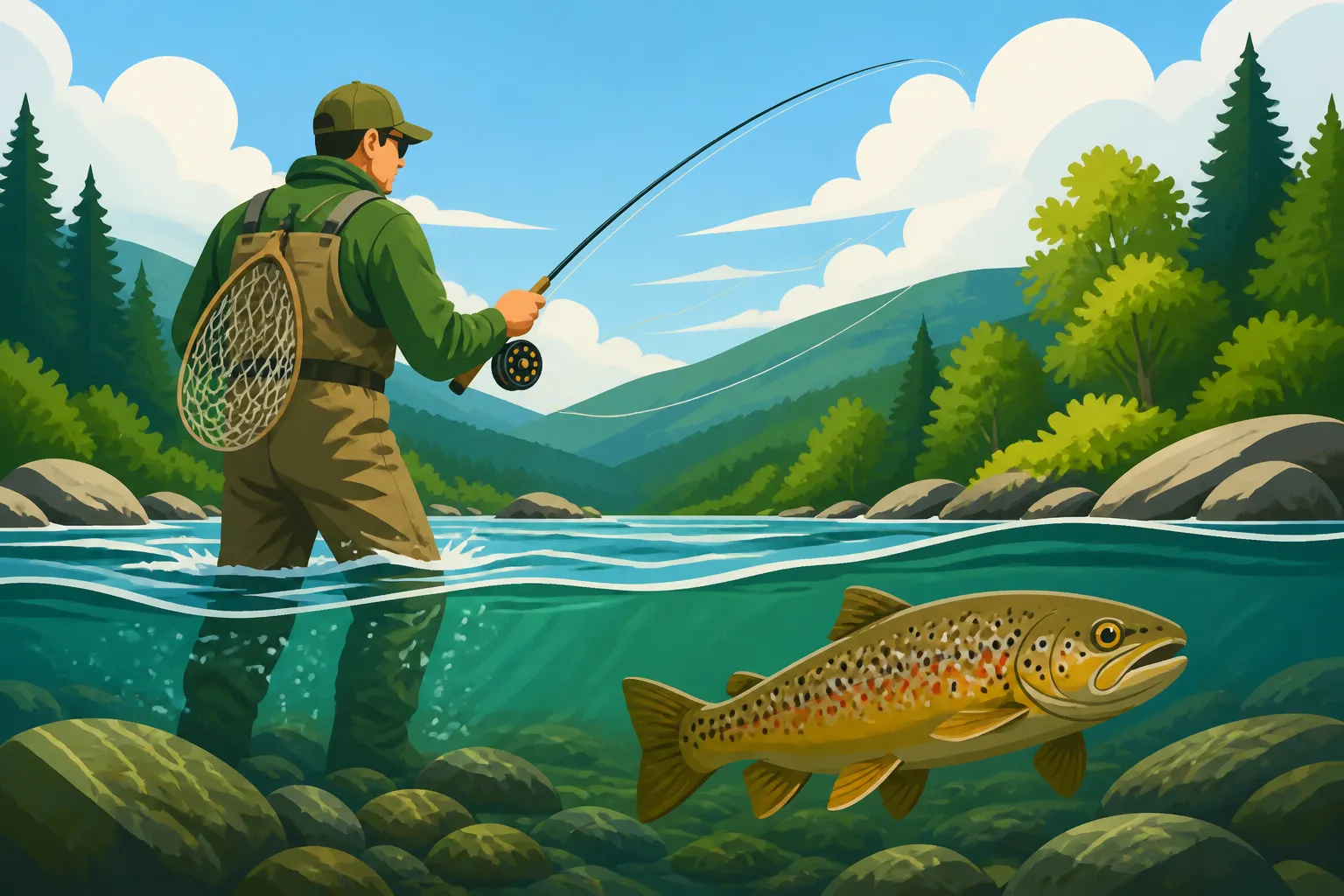
Your waders and wading boots are the absolute bedrock of your wading setup. Forget flimsy department store options; you need robust, well-fitting gear built for the rigors of rocky, fast-moving water. Breathable chest waders are generally preferred for trout fishing, allowing you to venture into deeper pools and staying comfortable across a range of temperatures. Look for durable fabrics that can withstand snags and abrasions from stream-side brush and rocks.
When it comes to boots, this is where stability truly begins. Rubber soles with aggressive tread are popular, often featuring studs or felt for extra grip. Each type has its pros and cons, which we'll cover in the table below. The key is a stiff sole for support and excellent ankle support to prevent twists and sprains on uneven terrain. Many experienced anglers agree that a good pair of wading boots is perhaps the single most important piece of safety gear you own. Brands like Simms, Orvis, and Frogg Toggs offer excellent options, and you can often find competitive prices and a wide selection of Best Waders for West Virginia Trout Streams and Best Wading Boots for Rocky Streams on platforms like Amazon. Don't skimp here; your safety and enjoyment depend on it.
| Sole Type | Pros | Cons | Ideal Use Case |
|---|---|---|---|
| Felt | Excellent grip on slick, mossy rocks and bedrock. | Poor grip on mud, snow, and dry land; can spread invasive species. | Best for purely rocky, slick riverbeds where minimal hiking is involved. |
| Rubber | Good all-around grip; performs well on mud and dry land; less prone to spreading invasives. | Can be slick on very mossy rocks; may require studs for added grip. | Versatile for mixed terrain, trails, and situations where felt is prohibited. |
| Rubber with Studs | Superior grip on virtually all surfaces, including slick rocks and ice. | Can damage boat floors; expensive; may be overkill for some conditions. | Aggressive wading in challenging, slick, or icy conditions; deep wading. |
Wading Staffs: An Indispensable Third Leg
If there's one piece of gear that veteran West Virginia trout anglers swear by, it's a good wading staff. Think of it as your third point of contact, providing crucial stability and balance, especially in strong currents or over uncertain footing. Many new anglers skip this, thinking it's only for the elderly or infirm, but that's a dangerous misconception. A wading staff literally adds a layer of confidence and safety that no boot alone can provide.
A collapsible wading staff is usually the most convenient option, easily stowed on your pack or waders until needed. Look for sturdy construction, a comfortable grip, and a tip designed to dig into the riverbed, often carbide or rubber. Before you step, you can probe the depth, check for slick spots, and test the stability of a rock. This simple act can prevent a nasty fall. Beyond safety, a staff can also help you stay upright while fighting a fish, provide support when taking photos, or even serve as a handy place to hang your Best Landing Net for Trout momentarily. Never underestimate the power of a sturdy staff to keep you safe and extend your time on the water.
Layering and Personal Flotation Devices
While waders keep you dry, proper layering beneath them is key to staying comfortable and preventing hypothermia, especially when Best Water Temperature for Trout Fishing in West Virginia is low. Start with moisture-wicking base layers, add insulating fleece or wool, and then your waders. Avoid cotton, which loses its insulating properties when wet. Even on warmer days, morning water temperatures can be surprisingly cold.
And what about Personal Flotation Devices (PFDs)? Many anglers think PFDs are only for boating, but if you're wading in deep or fast-moving rivers, especially larger ones like sections of the New River Gorge or Cheat River, an inflatable PFD can be a lifesaver. These unobtrusive devices, often worn like a small vest or belt pack, provide buoyancy if you take an unexpected swim. While not always necessary for shallow, slow-moving streams, if there's any doubt about depth, current, or your wading ability, a PFD is a wise choice. Remember, even a minor fall in cold, moving water can turn serious quickly, so consider all safety precautions, especially when exploring new or challenging waters. You can often find compact, fishing-specific PFDs on Amazon, designed not to interfere with casting.
Mastering Safe Wading Techniques
Having the best gear won't save you if you don't know how to use it—or your body—correctly in the water. Safe wading is a skill developed through practice and mindful attention to your environment. It's about moving deliberately, understanding the water's flow, and always prioritizing your safety over reaching that seemingly perfect fishing spot just a few feet further.
The Shuffle and Cross-Current Steps
The most fundamental rule of safe wading is maintaining three points of contact with the stream bed at all times. This means either two feet and your wading staff, or both feet and one hand if you're scrambling over a rock. When moving, don't lift your feet high; instead, shuffle them along the bottom. This allows you to feel the terrain ahead, test for stability, and keep your center of gravity low.
When crossing a current, always face slightly upstream and downstream at an angle, never directly broadside. This presents less surface area to the current, reducing the force pushing against you. Take short, deliberate steps, leading with your upstream foot. If you're using a wading staff, plant it firmly upstream of your body, allowing the current to push against the staff and stabilize you, rather than pushing against your body. For a deeper dive into moving water, look into articles like Wading Techniques for West Virginia Trout Streams as a starting point. This controlled, methodical movement, often described as "the shuffle," is far safer than long strides that could lead to an unexpected slip on a submerged rock or a patch of gravel.
Reading the Water for Wading Paths
Experienced anglers often talk about "reading the water" for fish, but it's equally crucial for safe wading. The surface of the water tells a story about what's happening underneath, including depth, current speed, and potential obstacles. Areas of smooth, dark water often indicate deeper sections, while rippled or "nervous" water suggests shallower, faster flow over uneven bottoms.
Look for seams, eddies, and slower currents. These are often the easiest and safest places to wade, as they offer respite from the main force of the river. A V-shape pointing downstream indicates a deeper channel, while a V-shape pointing upstream often signals a submerged obstacle or shallow bar. Always try to pick the path of least resistance. Sometimes, the safest wading path might involve walking around a deep bend or through a small side channel, even if it adds a few extra steps. Avoid areas with whitewater or extremely turbulent currents unless you are certain of your footing and equipped for such conditions. Utilizing these visual cues can guide you to safer crossings and prevent unexpected dunkings.
Group Wading and Communication
If you're lucky enough to have a fishing buddy, wading together can add a significant layer of safety, especially in larger or more challenging rivers. Two heads are better than one when it comes to reading water, and a companion can offer a steadying hand or a lifeline if someone takes a spill.
When wading as a group, communication is key. Call out slippery rocks, sudden drops, or strong currents. If you're crossing a particularly challenging section, consider linking arms or using wading staffs to create a tripod effect, providing mutual support. The stronger wader can often go first, testing the path for the others. However, be mindful of not creating a "domino effect" if one person falls. It’s also crucial to maintain a reasonable distance while fishing so you don't spook fish your partner might be targeting, but close enough to hear and see each other in an emergency. Remember that while How to Wade the South Branch Potomac Safely offers specific advice for one river, the principles of group communication apply to any shared wading experience in West Virginia.
Strategic Wading for Better Fishing Success
Wading isn't just about safely getting from point A to point B; it's an integral part of your fishing strategy. How you move through the water, where you position yourself, and how much disturbance you create can directly impact your catch rate. Smart wading can put you in the prime position to present your fly or lure effectively, without spooking the very fish you're trying to catch.
Approaching Holding Lies Stealthily
Trout, especially wild trout in West Virginia's clear mountain streams, are incredibly wary. Heavy footsteps, splashing, or even a visible silhouette can send them darting for cover. Your goal when wading towards a suspected holding lie—a deep pool, a current seam, or submerged structure—is to be as stealthy as possible.
This often means wading slowly, keeping a low profile, and approaching from downstream, allowing the current to carry away any minor disturbances you create. Avoid crunching gravel with unnecessary steps. If possible, use bank cover like trees or tall grass to break up your silhouette. Think about the fish's perspective: if you can see them, they can definitely see you. By minimizing your presence, you can get closer to your target without alerting the fish, giving you the critical advantage for a clean presentation. This stealthy approach is especially important for Fly Fishing for Trout in West Virginia, where delicate presentations are often key.
Positioning for Optimal Drifts and Casting
One of the greatest benefits of wading is the ability to position yourself precisely for the best cast and drift. Instead of being confined to the bank, you can get into the perfect angle to cast across currents, present a fly to a specific pocket, or work a lure through a prime feeding lane. This is particularly valuable in West Virginia's diverse streams, where fish might hold in small, hard-to-reach pockets.
Consider the currents and your target. Can you wade to a spot that allows you an upstream cast with a natural, drag-free drift? Or perhaps an angle that lets you swing a streamer through a deep run without catching slack water? For nymphing, getting directly across or slightly upstream can give you the best line control for detecting subtle strikes. Always try to position yourself so that your cast is optimized for the fish's lie and the current's flow. Sometimes, this means making a challenging wade, but the reward of a perfectly presented offering is well worth the effort. Explore other Spring Trout Fishing Techniques for West Virginia Streams to see how wading plays a role in effective presentations.
Minimizing Stream Disturbance
Every step you take in the water creates a certain amount of disturbance—stirring up sediment, creating pressure waves, and generating noise. While some disturbance is inevitable, minimizing it is crucial for not putting down fish further downstream. Think of your impact on the ecosystem around you.
Avoid excessive splashing or stomping. Try to keep your movements fluid and controlled. If you must move through a section where you know fish are holding, do so slowly and deliberately, pausing if necessary to let the water settle. In smaller, clearer streams, even wading across can send a ripple effect of alarm. Sometimes, the best wading technique is to not wade at all and stick to the bank, especially in very low or highly pressured waters. Be a thoughtful steward of the stream; your careful approach will not only lead to more fish but also preserve the pristine nature of these precious West Virginia resources. Many principles from Trout Fishing in West Virginia stress the importance of careful interaction with the environment.
Navigating Tricky Conditions and Emergency Preparedness
Even the most experienced anglers can find themselves in challenging situations on the water. West Virginia's streams are wild places, and understanding how to react to tricky conditions and being prepared for emergencies can literally save your life. Never assume the river will be forgiving; always be ready for the unexpected.
Dealing with High Water and Slippery Rocks
High water, often after heavy rains or snowmelt, means increased current speed and reduced visibility of the stream bed. This is when even familiar spots become treacherous. The golden rule is: if in doubt, don't go. No fish is worth risking your life. If you must wade in slightly elevated water, stick to the edges where the current is weakest and the water is shallower.
Slippery rocks are a constant battle. Moss and algae can turn even seemingly stable stones into ice. Always probe with your wading staff or lead foot. Shift your weight slowly and deliberately. If you encounter a particularly slick patch, try to find a different path or carefully slide your feet rather than lifting them high. Sometimes, getting out of the water and walking the bank is the safest and smartest option. Remember that the riverbed below Winfield Locks and Dam or other tailwater fisheries can be especially slick due to constant water flow, making a Wading Staff for Fast Current essential. Consider carrying a small brush to clean off excessively slippery boot soles if you frequently encounter such conditions.
What to Do in Case of a Fall or Swim
Despite your best efforts, a fall can happen. The most important thing is to stay calm and react instinctively. If you fall, don't try to stand up against a strong current, as this can trap your feet. Instead, turn onto your back, feet downstream, head upstream, and use your arms and wading staff to fend off rocks and steer yourself towards shallower, calmer water.
Keep your feet up to avoid them getting pinned between rocks. Once you reach a calmer spot or the bank, assess yourself for injuries and check your gear. Make sure your phone and other electronics, hopefully protected in a dry bag, are still functional. If you're cold, seek warmth immediately. Having a change of clothes in your car is always a good idea. This scenario is why a PFD can be a game-changer, giving you precious buoyancy to navigate a difficult situation. Remember, the priority is always your personal safety and getting to shore safely.
Hypothermia Prevention and First Aid
Hypothermia, a dangerous drop in body temperature, is a very real risk when wading in cold water, especially after an unexpected fall. Even on mild days, prolonged exposure to cold water can be dangerous. Knowing the signs—shivering, confusion, clumsiness, slurred speech—and how to prevent it is vital.
Always layer appropriately, even if you think the air temperature is warm. Carry a dry bag with an emergency space blanket, a warm hat, gloves, and high-energy snacks like a chocolate bar. If you or a fishing buddy show signs of hypothermia, get out of the water immediately, remove wet clothes, and get into dry layers. Share body heat if necessary and seek medical attention for severe cases. A small first-aid kit with essentials like bandages, antiseptic wipes, and pain relievers should always be part of your Best Gear for West Virginia Trout Fishing pack. Being prepared for common injuries like cuts, scrapes, or sprains can make a significant difference in remote fishing locations.
Disclaimer
The information provided in this guide is for general informational purposes only and does not constitute professional advice. Wading in rivers and streams carries inherent risks, including but not limited to drowning, injury from falling, hypothermia, and encounters with wildlife. Always exercise caution, assess conditions carefully, and prioritize your safety. Consult local regulations and weather forecasts before venturing out. The author and publisher are not responsible for any incidents or injuries that may occur as a result of following the advice in this article.