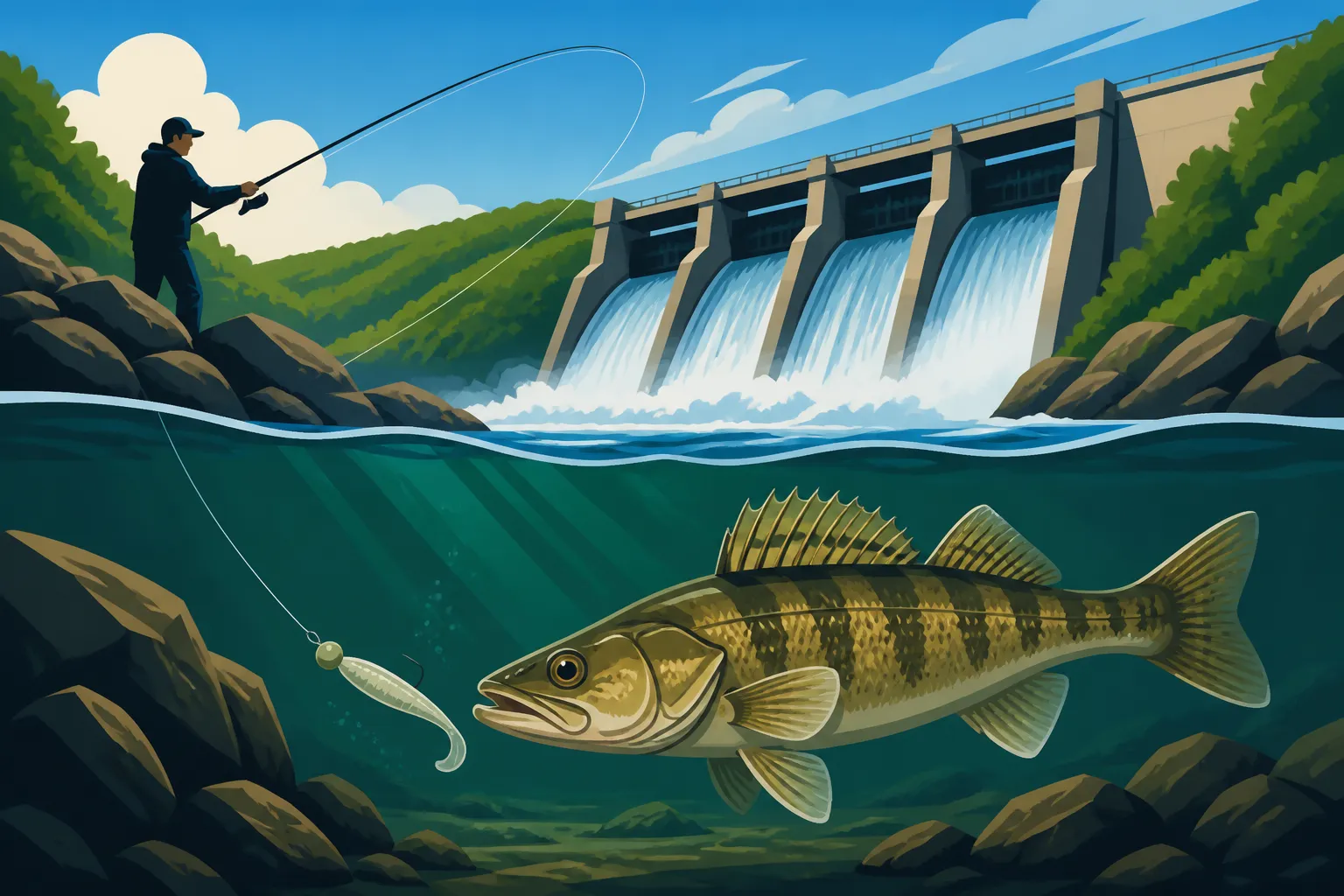
How to catch sauger below a dam
Fishing below a dam can be incredibly exciting, yet it often feels like you're trying to crack a secret code. The turbulent waters, the powerful currents, and the ever-changing conditions can make it a real challenge to locate and hook into elusive sauger. This guide is designed to demystify the art of sauger fishing below West Virginia dams, offering you actionable strategies and a deeper understanding of these fascinating fish to help you fill your cooler.
Understanding Sauger Behavior Below Dams
Sauger are incredibly adapted to river environments, and below-dam areas provide everything they could want: food, oxygen, and structure. If you want to consistently catch them, you need to think like a sauger. It's all about understanding how they use the chaotic environment to their advantage.
Why Sauger Congregate Below Dams
Dams are natural bottlenecks in a river system, and this creates a unique ecosystem that sauger absolutely love. First, the water coming through the dam is highly oxygenated, which is crucial for active fish. Second, the current itself churns up the bottom, dislodging baitfish and other forage, essentially creating a conveyor belt of food. Sauger don't have to work hard to eat here; they just have to position themselves correctly and wait for a meal to drift by. Think of it like a buffet for fish! This concentration of food and favorable conditions makes dam tailwaters prime sauger territory, especially during certain times of the year.
Beyond the immediate food source, dams also create significant temperature breaks, especially in colder months. The deeper water below a dam might hold a more stable temperature than other parts of the river, making it a comfortable refuge for sauger seeking consistent conditions.
Identifying Key Sauger Holding Spots
Not every inch of water below a dam holds sauger. They prefer specific types of current and structure that offer shelter from the main flow while providing easy access to food. Learning to read the water is paramount.
- Current Seams and Eddies: These are perhaps the most important features. A current seam is where fast water meets slow water, creating a distinct line on the surface. Sauger will often sit just on the slow side of this seam, darting into the faster current to grab passing bait. Eddies, which are swirling pockets of calm water behind obstructions or along riverbanks, are also prime ambush points. Imagine a sauger patiently waiting in the calmer water, hidden from the main current, ready to strike anything that gets swept past.
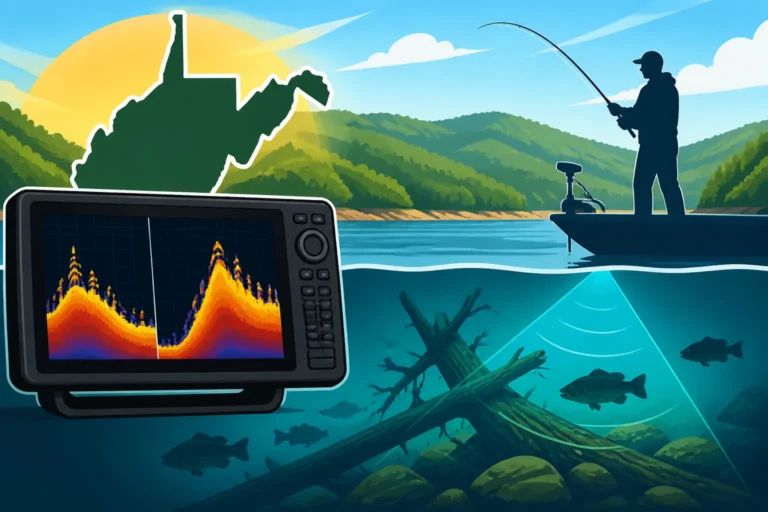
- Submerged Structure: Beyond current, sauger are drawn to structure. This could be rock piles, submerged wing dams, concrete rubble from the dam's construction, old timber, or even deep holes scoured out by the powerful current. These structures break up the current, providing a place for sauger to rest and hide. Your fish finder is your best friend here, helping you map out these underwater features. However, don't overlook natural structure like fallen trees or large boulders if they're in areas with favorable current.
- Depth Changes: While not always deep, sauger often prefer areas where the bottom drops off, creating a distinct change in depth. These ledges can provide vertical ambush points and temperature stratification. They might be just a few feet deep in one spot and quickly drop to 15-20 feet. These transitions are crucial, especially as water levels fluctuate.
Understanding the behavior patterns of these fish can also tell you a lot. Sauger, similar to their walleye cousins, are often most active during low-light conditions, such as dawn, dusk, and even at night. This is when they move out of their deeper, more sheltered spots to actively feed in shallower current seams. Knowing their habits helps you decide not just where to fish, but when. For more on how they differ from other species, check out Sauger Identification and Habits.
Essential Gear and Tackle for Dam Fishing
Fishing below a dam demands specific gear. The powerful currents, the potential for snagging, and the aggressive bites of sauger mean you need tackle that can stand up to the challenge. Don't skimp here, as cheap gear will often lead to frustration and lost fish.
Rod and Reel Selection
Your rod and reel combo needs to be robust enough to handle heavy weights and strong fish in current, yet sensitive enough to detect the subtle tap of a sauger.
- Rods: A medium-heavy to heavy power spinning or baitcasting rod, typically 6'6" to 7'6" in length, is ideal. The longer rod provides better casting distance and leverage for fighting fish in current. Look for a fast or extra-fast action tip, which gives you the sensitivity to feel light bites but transitions quickly into backbone for solid hooksets. Graphite rods are often preferred for their sensitivity. For instance, many anglers find excellent options for sensitive yet powerful rods available on Amazon, perfectly suited for the task.
- Reels: For spinning setups, a 2500-4000 series reel offers a good balance of line capacity and cranking power. For baitcasting, a reel with a robust drag system and a moderate gear ratio (around 6.3:1 or 7.1:1) is suitable for controlling jigs and fighting fish. The key is a smooth, reliable drag that won't give out when a big sauger decides to run with the current.
Line and Terminal Tackle
This is where the rubber meets the road, especially with the snags and abrasion often found below dams.
- Main Line: Braided line, in the 15-30 lb test range, is highly recommended. It offers superior sensitivity due to its lack of stretch, which is crucial for feeling bites in current and detecting bottom contact with your jig. Its thin diameter also helps cut through current, allowing you to use lighter weights.
- Leader Material: Because braided line is visible and can be easily abraded by rocks, a fluorocarbon leader is essential. Use 10-20 lb test fluorocarbon, attaching it to your braid with a strong knot like an FG knot or a double uni knot. Fluorocarbon is nearly invisible underwater and incredibly abrasion-resistant, giving you a stealthy presentation and protection from sharp rocks.
- Jig Heads: This is your primary weapon. You'll need a variety of weights to contend with different current speeds. Think 1/4 oz to 1 oz or even heavier. Consider both round ball heads and stand-up style jig heads. The stand-up jigs can be particularly effective as they keep your bait presented upright off the bottom, reducing snags. You'll find a wide selection of jig heads on Amazon that are perfect for this, often in bulk packs which is great because you will lose some.
- Lures:
- Soft Plastics: Grubs (curly-tail or paddle-tail), swimbaits, and fluke-style baits are excellent when threaded onto a jig head. Colors like chartreuse, white, pearl, motor oil, and green pumpkin are consistent producers. The action of the tail in the current is often what triggers a strike.
- Blade Baits: These vibrating metal lures are deadly for sauger, especially when vertically jigged. Their strong vibration in the water can draw strikes from aggressive fish. Popular brands offer various sizes and colors.
- Spoons: Casting spoons or vertical jigging spoons can also be effective, mimicking injured baitfish.
- Live Bait: Minnows, especially shiners or fatheads, are often irresistible to sauger. You can rig them on a plain hook with a sinker or on a jig head. When using live bait, a simple hook size 2 to 1/0 is usually sufficient.
- Sinkers: If you're drifting live bait or using a slip-sinker rig, an assortment of bell sinkers or pencil sinkers will be necessary. Again, carry a range of weights to match the current.
- Hooks: For live bait, sharp, strong octopus hooks or bait holder hooks in sizes 1 to 2/0 are common.
Here's a quick reference for common jig head weights and their typical use:
| Jig Head Weight | Current Speed (General) | Target Depth (General) | Notes |
|---|---|---|---|
| 1/4 – 3/8 oz | Light to Moderate | Shallow (5-10 ft) | Good for slower seams, less vertical jigging, subtle presentation |
| 1/2 – 3/4 oz | Moderate to Strong | Mid-Depth (10-25 ft) | Most versatile range for varied conditions |
| 1 oz + | Very Strong | Deeper (25+ ft) | Essential for heavy current, deep holes, maintaining bottom contact |
Remember, the goal is always to maintain contact with the bottom while minimizing snags. The right weight jig head lets your lure tumble naturally without being swept away or getting stuck immediately.
Effective Techniques for Targeting Sauger
Fishing below a dam isn't just about throwing a line in the water; it's about understanding the subtle nuances of presentation, current, and fish behavior. These techniques will give you a solid foundation for success.
Vertical Jigging
This is arguably the most common and effective technique for sauger below dams, especially when fishing from a boat. Sauger often hold tight to the bottom in deep holes or current breaks, and vertical jigging puts your lure right in their strike zone.
- Positioning: Whether you're in a boat or fishing from shore, you want to position yourself directly over or slightly upstream from where you suspect the sauger are holding. From a boat, use your trolling motor or anchor carefully to hold your position. If you're shore fishing, cast upstream and allow your jig to drift back to you.
- Presentation: Drop your jig directly down until it hits the bottom. Then, gently lift your rod tip a few inches to a foot, then let the jig fall back down, maintaining just enough slack to feel the bottom. The idea is to bounce or drag the jig along the bottom, creating puffs of sediment that attract attention. The strikes are often very subtle – sometimes just a slight "tick" or a feeling of added weight. Set the hook decisively at the slightest hint of a bite. This methodical approach is particularly effective in strong currents, allowing you to present your bait precisely. For general jigging advice, consider reading Jigging for Crappie in West Virginia Lakes, as many principles apply.
Casting and Retrieving
While vertical jigging dominates, casting can be highly effective, especially for covering more water or reaching sauger holding in shallower eddies or along current seams further from the dam.
- Fan Casting: Make casts across the current, upstream, and downstream, allowing your jig or blade bait to swing through different current speeds and depths. Pay close attention to where you get bites, as this can reveal a pattern.
- Bottom Bouncing: Cast your jig or lure upstream and slightly across the current. Allow it to sink and then retrieve it very slowly, maintaining bottom contact. Let the current do some of the work, bouncing your bait along the riverbed. This mimics a wounded baitfish struggling against the current. The slower the retrieve, the better, as sauger are often ambush predators and prefer an easy meal.
- Twitching and Pausing: Incorporate small twitches of your rod tip and pauses during your retrieve. These erratic movements can often trigger a reaction strike from sauger that might be hesitant to commit to a steady retrieve.
Trolling (Where Permitted)
In some larger tailwater sections or reservoir areas below dams, slow trolling can be an excellent way to cover vast amounts of water and find active fish. Always check local regulations, as trolling might be restricted close to the dam.
- Lure Choice: Small crankbaits, deep-diving jerkbaits, or even crawler harnesses (especially if fishing for walleye and sauger together) are effective when trolling. Choose lures that dive to the depth where sauger are holding, which is often near the bottom.
- Speed and Depth: Troll slowly, typically 1-2 mph, just fast enough to get your lure to its running depth and give it action. Use your fish finder to monitor depth and adjust your speed or line length to keep your lure consistently in the strike zone. Sometimes, a slight S-curve pattern with your boat can vary your lure's speed and depth, triggering strikes.
Safety and Regulations for Dam Fishing
Fishing below a dam is not without its risks. The dynamic environment, fluctuating water levels, and powerful currents demand respect and adherence to safety protocols and specific regulations.
Navigating Strong Currents and Water Releases
The dangers associated with dam tailwaters cannot be overstated. Water levels and current speeds can change rapidly and without warning.
- Hydropower Generation: Many dams are hydroelectric, meaning water is released for power generation, often on a schedule. These releases can dramatically increase current and water levels in minutes. Always be aware of potential release schedules, often posted online by the dam operators or by calling the generation plant. Heed all warning signs, sirens, and flashing lights. When you hear that siren, it's time to get out of the water and off the banks.
- Wading Safety: If you choose to wade, do so with extreme caution. Always wear a Best Wading Staff for Fast Current and wade with a partner. Use a wading staff to test the bottom before each step. The bottom can be uneven, slippery, and full of unseen hazards. Never wade into water that is higher than your knees in strong current. The force of the water can easily sweep you off your feet.
- Boat Safety: For boaters, maintaining control in strong currents is paramount. Always wear a Life Jacket Requirements for West Virginia Boaters and ensure everyone on board does too. Understand how your boat handles in current, and never approach too close to the dam structure itself. Look out for boils, whirlpools, and sudden changes in current that could capsize a small vessel. Have a reliable engine and a backup plan if it fails.
West Virginia Fishing Regulations Specific to Dams
Beyond general state regulations, certain areas below dams often have unique rules that anglers must follow. These are put in place for safety, conservation, or both.
- Restricted Zones: There are often "no-fishing" or "no-boating" zones immediately below dams. These zones are typically marked with buoys, signs, or lines on the water. Violating these can result in hefty fines and endanger your life. Always respect these boundaries.
- Species-Specific Regulations: While sauger typically fall under general regulations, always check the current West Virginia fishing regulations summary for any specific size limits, creel limits, or seasonal restrictions that might apply to sauger in the particular river section you're fishing. For broader understanding, refer to West Virginia Fishing Regulations Explained.
- License Requirements: Make sure your West Virginia Fishing License Guide for 2026 is current. Regardless of where you fish in West Virginia, a valid license is required for anyone above the age threshold.
Before heading out, always consult the most current West Virginia fishing regulations summary, available from the West Virginia Division of Natural Resources (WVDNR). Familiarize yourself with the specific rules for the body of water you intend to fish. A few minutes of research can prevent a costly fine or, more importantly, a dangerous situation.
Disclaimer
This article is for general informational purposes only and does not constitute professional advice. Laws, prices and regulations vary by location and change over time. Consult a qualified professional for guidance on your specific situation.