Best nymph rig for high mountain streams
Ever find yourself staring at those crystal-clear, fast-flowing high mountain streams in West Virginia, knowing trout are in there, but just can't seem to tempt them with your usual offerings? It's a common frustration, especially when those wild, wily trout seem to vanish the moment your fly hits the water. Trying to get your flies down to their feeding lanes in that swift current without spooking them can feel like an impossible puzzle. This guide is here to untangle that challenge, walking you through the very best nymph rig setups and techniques specifically designed to help you connect with those elusive trout in West Virginia's stunning, yet demanding, high mountain environments.
The Unique Challenges of High Mountain Streams in West Virginia
Fishing in West Virginia's high mountain streams, like those winding through the Monongahela National Forest, is a truly special experience. These aren't your typical slow-moving, wide rivers. Instead, you'll encounter pristine, often freestone (rock-bottomed) creeks characterized by their crystal-clear, oxygen-rich, and usually frigid waters. This unique environment presents both beauty and distinct challenges for the angler.
Understanding the Water Conditions
The water in these high-elevation streams is almost always cold, even in the heat of summer. This means trout, especially the native brook trout, are generally active year-round. The clarity is often exceptional, making stealth an absolute priority. Fish in these waters have evolved to be incredibly wary of anything that looks unnatural or casts a shadow, which is why your approach and presentation are so crucial. The currents can be deceptively strong, featuring a mix of fast riffles, turbulent pocket water, deep plunge pools below waterfalls, and slower, calmer runs. Each of these different water types holds trout in different ways, demanding a versatile approach to your nymphing strategy. You'll often find yourself navigating steep banks, slippery rocks, and dense rhododendron thickets, so safety and preparedness are paramount, especially when wading.
The Diet of Mountain Stream Trout
Unlike larger rivers where a wider array of aquatic life might be present, the diet of trout in high mountain streams is heavily dependent on subsurface insects. Mayfly nymphs, caddisfly larvae, and stonefly nymphs form the backbone of their diet. Terrestrial insects, like ants, beetles, and grasshoppers, also become important food sources during warmer months when they fall into the water. Because these trout spend the vast majority of their feeding time looking for food under the water's surface, a well-presented nymph rig is hands-down the most effective way to consistently catch them. They aren't often looking up for dry flies, especially in deeper, faster sections, unless there's a prolific hatch occurring. Understanding this fundamental feeding behavior is the first step to choosing the right rig and technique.
Essential Components of a High Mountain Nymph Rig
Building an effective nymph rig for West Virginia's high mountain streams isn't about complexity; it's about precision and balance. Each component plays a vital role in getting your flies into the trout's feeding zone naturally and detecting those incredibly subtle strikes.
Fly Rod and Reel Considerations
For these smaller, often brushy streams, a shorter, lighter fly rod is your best friend. Think a 2-weight to 4-weight rod, typically in the 7-foot to 8.5-foot range. This length allows for precise, short casts, easy maneuvering in tight quarters, and sensitivity to feel subtle takes. A longer rod can be a hindrance when you're casting under low-hanging branches or trying to sneak through dense rhododendron. The reel itself isn't as critical as the rod for nymphing, as you'll primarily be fighting fish on the rod rather than the reel. A simple click-and-pawl or small disc drag reel that balances your rod is perfectly sufficient. If you're still figuring out the basics, our guide on Fly Fishing for Trout in West Virginia can give you a great foundation, and exploring Best Fly Rods for West Virginia Trout Streams will help you dial in your rod choice.
Fly Line, Leader, and Tippet Selection
Your fly line should be a weight-forward floating line that matches your rod weight. This provides the casting power needed for nymph rigs, which can be a bit heavier than a single dry fly. For the leader, a standard 7.5-foot to 9-foot tapered leader, with a 3X to 5X butt section, is a good starting point. The real magic happens with your tippet.
- Tippet Material: Fluorocarbon tippet is highly recommended for nymphing in clear mountain streams. It's nearly invisible underwater, sinks faster than monofilament, and is incredibly abrasion-resistant—a huge plus when fishing around rocky bottoms. You'll typically use 5X or 6X tippet, depending on the fly size and the spookiness of the fish. For really small nymphs and ultra-clear water, some anglers even go down to 7X. You can find quality fluorocarbon tippet from brands like Seaguar or Rio, often available on Amazon.
- Tippet Length: A longer tippet section (18-36 inches) between your leader and your first fly, and then a shorter section (10-18 inches) to a dropper fly, helps achieve a more natural drift.
Choosing the Right Nymphs
The nymphs you tie on are arguably the most crucial part of your rig. In West Virginia's mountain streams, you'll want patterns that imitate the prevalent aquatic insects. Variety is key, as trout can be picky.
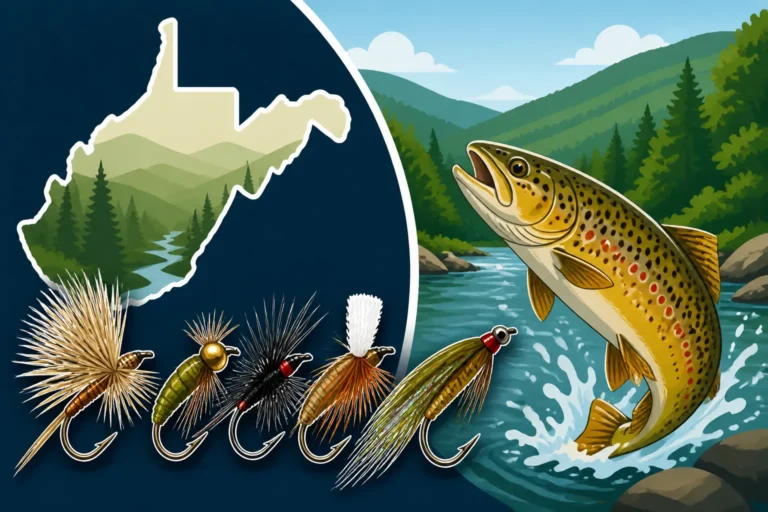
- Classic Patterns: Favorites include the Pheasant Tail Nymph, Hare's Ear Nymph, and Prince Nymph. These are versatile patterns that imitate a broad range of mayflies and stoneflies. Many anglers find success with classic patterns like the Hare's Ear or Pheasant Tail, often readily available on Amazon.
- Caddis Larvae & Pupae: Green Caddis, Tan Caddis, or Copper John patterns are excellent choices, especially where caddisflies are abundant.
- Stoneflies: Smaller Pat's Rubber Legs or Kaufmann Stone patterns in black or brown can be effective, particularly in faster, rockier sections.
- Worms and Attractors: A small red Squirmy Wormy or a Walt's Worm can be incredibly effective, especially after rain when worms might wash into the stream.
- Sizes: Most mountain stream nymphs will be in sizes #12 to #18, with some going down to #20 for picky fish or tiny hatches. Have a selection of both bead-head (for weight) and non-bead-head versions. Understanding Trout Species Identification Guide for West Virginia will help you tailor your nymph selections to what those specific trout prefer.
Strike Indicators and Weights
These are your connection to what's happening beneath the surface.
- Strike Indicators: Forget the big bobbers. For sensitive nymphing, you want something subtle. Yarn indicators (treated with floatant) or New Zealand wool indicators are popular because they are sensitive to subtle takes, land softly, and are easy to adjust. Pinch-on indicators made of foam can also work but can cause kinks in your leader. For Euro Nymphing, a brightly colored sighter made of monofilament is incorporated directly into the leader, eliminating the need for an external indicator entirely.
- Split Shot: Even bead-head nymphs sometimes need extra help to get down in fast currents. Small, non-toxic split shot (sizes B, BB, or #1) are essential. Place them on your tippet well above your flies (6-12 inches) to avoid hindering the flies' natural movement.
Setting Up Your Nymph Rig for Success
There are several effective ways to rig nymphs, each with its advantages depending on the specific water conditions and your fishing style.
The Standard Indicator Nymph Rig
This is probably the most common and versatile setup for beginners and experienced anglers alike. It uses a floating strike indicator to suspend your nymphs at the desired depth and signal strikes.
How to Set It Up:
- Leader Connection: Attach your tapered leader (7.5-9 ft, 3X-5X) to your fly line with a loop-to-loop connection or nail knot.
- Tippet Section: Tie a section of fluorocarbon tippet (5X or 6X, about 18-24 inches) to the end of your tapered leader using a double surgeon's knot or blood knot.
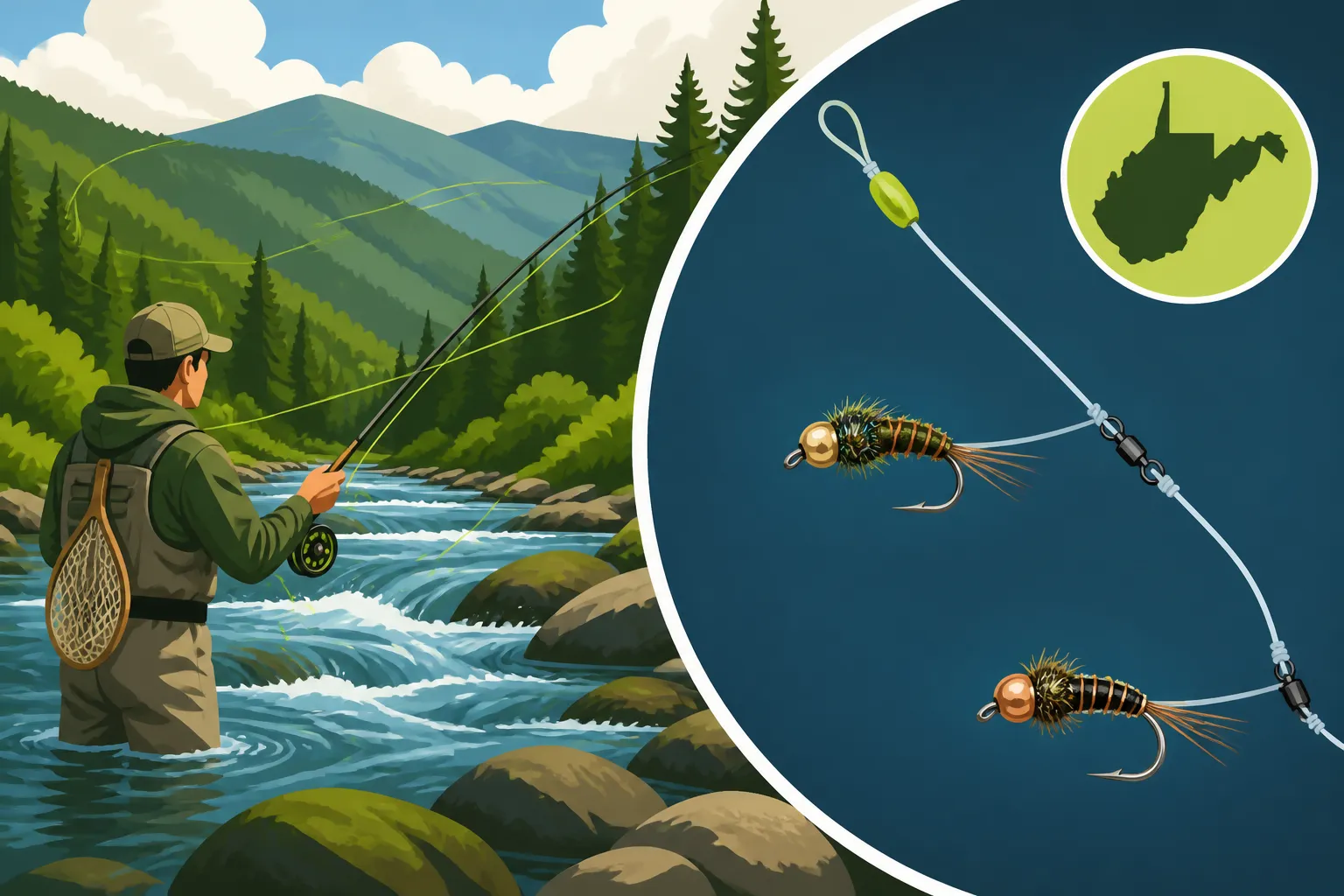
- First Nymph (Point Fly): Tie your heaviest or largest nymph (often a bead-head) to the end of this tippet section using an improved clinch knot or Davy knot. This is your "point fly."
- Second Nymph (Dropper Fly): From the bend of the hook of your point fly, tie another section of tippet (5X or 6X, 10-18 inches long) and attach your second, lighter nymph. This allows both flies to move somewhat independently and present at slightly different depths. Alternatively, you can tie the dropper off a tag end from a surgeon's knot higher up on your tippet, which can help prevent tangles.
- Strike Indicator: Attach your chosen strike indicator to your leader, typically 1.5 to 3 times the depth of the water you're fishing, above your first fly. Adjust this depth frequently based on the water you're fishing.
- Split Shot (Optional but Recommended): If your nymphs aren't getting down quickly enough, pinch on one or two small split shot about 6-12 inches above your first fly.
When to Use It: This rig is fantastic for fishing a wide range of water types, from riffles to deeper runs and pools. It provides good depth control and visible strike detection.
Euro Nymphing Rig (Tight-Line Nymphing)
For those looking for ultimate sensitivity and depth control in fast water, Euro Nymphing (also known as tight-line nymphing) is a game-changer. It eliminates the traditional strike indicator and uses a specialized leader and direct contact with the flies to detect strikes.
How to Set It Up:
- Specialized Leader: This rig typically uses a very long (10-20+ feet), level or subtly tapered leader made of monofilament, often with a highly visible "sighter" section spliced in. The sighter is usually bi-colored mono (e.g., pink and chartreuse) that helps you detect subtle movements that indicate a strike.
- Tippet Rings (Optional): A small tippet ring can be tied to the end of the main Euro Nymphing leader, to which you then attach your tippet sections. This preserves the leader length and makes changing tippet easier.
- Tippet and Nymphs: Attach 5X-7X fluorocarbon tippet (usually 2-4 feet) to the end of your leader or tippet ring. Then, tie on one or two heavily weighted nymphs (often jig-style hooks with tungsten beads). The lead fly is usually the heaviest, and a lighter nymph is tied on a dropper tag above it.
- No Indicator: The sighter section of your leader acts as your visual strike detector, but more importantly, you feel the subtle tugs through your rod.
When to Use It: This is ideal for fishing pocket water, fast riffles, and deep runs where maintaining direct contact and feeling every bump and tick is critical. It excels at getting heavily weighted flies down quickly and effectively, allowing you to stay in contact with your flies at all times. If you're tackling those incredibly tricky sections, exploring Euro Nymphing West Virginia Trout Streams might be your next step.
The Dry-Dropper Rig
This hybrid rig offers the best of both worlds: the buoyancy of a dry fly combined with the subsurface appeal of a nymph.
How to Set It Up:
- Anchor Dry Fly: Tie a large, buoyant dry fly (like a Chubby Chernobyl, Stimulator, or Hippie Stomper) to the end of your leader. This fly acts as your strike indicator and also offers a chance at a surface strike.
- Dropper Tippet: From the bend of the dry fly's hook, tie a section of fluorocarbon tippet (12-36 inches, 5X or 6X) to which you attach your nymph. The length depends on how deep you want the nymph to run; adjust it to be just above the bottom.
- Nymph Choice: Select a lighter nymph pattern, as the dry fly might struggle to float a very heavy bead-head. A Pheasant Tail, Hare's Ear, or Green Caddis nymph works well.
When to Use It: The dry-dropper is perfect for waters where trout might be looking both up and down, or when you suspect fish are holding in slightly shallower runs. It's especially effective in the spring and fall, or during cooler summer days when hatches might occur, but nymphs are still the primary food source.
| Nymph Rig Style | Primary Advantage | Best Water Conditions | Pros | Cons |
|---|---|---|---|---|
| Standard Indicator | Versatility, visible strike detection | Riffles, runs, deeper pools | Easy to learn, good depth control, clear strike visibility | Can cause drag, less sensitive to very subtle strikes |
| Euro Nymphing | Maximum sensitivity, depth control | Fast riffles, pocket water, deep runs | Excellent strike detection, precise depth, direct contact with flies | Steeper learning curve, requires specialized leader/technique |
| Dry-Dropper | Dual presentation, natural indicator | Mixed water, shallower runs, some hatches | Covers two depths, dry fly acts as indicator, exciting surface strikes | Less effective in very deep/fast water, dry fly can sink with heavy nymph |
Mastering the Art of Nymphing in West Virginia
Having the right rig is only half the battle. Your technique, approach, and understanding of the water will ultimately determine your success.
Reading the Water for Holding Lies
Trout in high mountain streams are masters of energy conservation. They'll position themselves in places where food is delivered to them with minimal effort, yet where they have cover and safety.
- Pocket Water: Look for the calmer seams and eddies directly behind large rocks or boulders in fast currents. These are prime feeding lies where trout wait for food to wash into their holding zones.
- Plunge Pools: Below waterfalls or rapids, the water scours out deeper pools. These often hold larger, more aggressive trout, especially near the bottom.
- Riffles and Runs: The transition zones where faster water meets slower water, or where a riffle smooths out into a run, are excellent places for nymphs. The aerated water provides cover, and food is abundant.
- Structure: Undercut banks, submerged logs, and overhanging vegetation all offer cover and create current breaks where trout will hide. Don't forget to review our general guide on How to fish a run and pool trout stream to maximize your chances.
Achieving a Drag-Free Drift and Presentation
The cardinal rule of nymphing is to achieve a drag-free drift. This means your flies must move at the exact same speed as the natural current, mimicking a real insect. Any unnatural drag will immediately alert wary trout.
- Upstream Casts: Generally, cast slightly upstream and across the current. This allows your nymphs time to sink to the appropriate depth before they reach the suspected holding lie.
- Mending: As your line drifts downstream, watch your indicator or sighter carefully. If you see your line pulling against the current, quickly lift your rod tip and "mend" your line (flip a loop of line upstream) to put slack back into the system and allow your flies to drift naturally. This is crucial for avoiding drag.
- Line Control: Keep as much fly line off the water as possible, especially with Euro Nymphing. This minimizes drag and maximizes sensitivity.
Detecting the Subtle Take
Unlike aggressive dry fly takes, nymph strikes are often incredibly subtle. It takes practice and focus to distinguish between a trout taking your fly and your line simply bumping the bottom.
- Indicator Dips or Stops: The most obvious sign is your indicator dipping, stopping, or moving unnaturally. Even a slight twitch can mean a fish.
- Line Twitch: With Euro Nymphing or a tight-line approach, you'll be looking for a slight twitch or hesitation in your sighter or the very end of your fly line.
- Feeling the Take: Sometimes, you'll actually feel a subtle "tick" or "tug" transmitted through your rod.
- When in Doubt, Set the Hook!: This is the golden rule of nymphing. If anything looks or feels even slightly off, set the hook with a quick, upward flick of your wrist. You'll either connect with a fish or simply retrieve your flies for another cast. You'd be surprised how many "snags" turn out to be trout!
Wading Safety and Stream Etiquette
Fishing in these streams often involves wading, and safety should always be your top concern. The rocks can be incredibly slick, and currents can be powerful.
- Wading Staff: A collapsible wading staff is an absolute must, providing a third point of contact and helping you gauge depth and footing. If you're venturing into fast-moving currents, a sturdy wading staff is your best friend, as discussed in Best Wading Staff for Fast Current.
- Wading Boots: Felt-soled wading boots offer superior grip on slick stream bottoms, though rubber soles with studs are also effective and sometimes preferred for minimizing the spread of invasive species. Our guide on Best Wading Boots for Rocky Streams can help you choose.
- Polarized Sunglasses: These aren't just for comfort; they cut glare and allow you to see submerged rocks, structure, and even trout, making wading safer and fishing more effective.
- Stealth: Approach the stream quietly and try to stay low, especially in clear, shallow water. Trout are easily spooked.
- Leave No Trace: Pack out everything you pack in. These pristine streams deserve our respect and protection. The challenge of catching Brook Trout: West Virginia's Native and State Fish in these smaller, wilder creeks makes proper rigging all the more crucial.
Advanced Tips and Troubleshooting
Once you've mastered the basics, there are always ways to refine your nymphing game for even greater success in West Virginia's high mountain streams.
Adjusting to Conditions
Mountain streams are dynamic. What worked an hour ago might not work now.
- Water Levels: After a rain, the water might be higher and murkier. This often means trout move to the edges or slower seams. You might need heavier nymphs, larger profiles, and more weight to get down.
- Water Temperature: Extreme cold can make trout sluggish. Slow down your retrieves, use smaller movements, and target deeper, slower pools where temperatures might be more stable.
- Sunlight vs. Clouds: On bright, sunny days, trout will often hide in shaded areas or deeper pockets. Your presentation needs to be extra stealthy. On cloudy days, they might be more willing to move and feed in shallower water.
- Fly Changes: If you're not getting bites, don't be afraid to change your nymph pattern, size, or even the color of your bead. Sometimes a subtle change is all it takes to trigger a strike. You'll want to choose patterns that mimic the natural insects, like those found in Best Fly Patterns for West Virginia Trout Streams.
Maintaining Your Gear
Keeping your gear in top shape ensures you're always ready for action.
- Leaders and Tippets: Regularly inspect your leaders and tippets for nicks, abrasions, or kinks. Replace them if you see any damage. Weak spots mean lost fish.
- Knots: Practice your knots at home so they become second nature on the water. A good, strong knot is vital.
- Flies: Inspect your flies before and after each outing. If hooks are dull or bent, replace or sharpen them. A dull hook won't penetrate a trout's mouth, leading to missed opportunities.
- Waders and Boots: Proper care of your Best Waders for West Virginia Trout Streams and boots will extend their life and keep you comfortable and dry. Rinse them after each use, especially if you've been in murky water, and let them dry thoroughly to prevent mold and mildew.
Understanding Local Regulations
Always carry a copy of the current West Virginia Fishing Regulations Summary. Regulations can vary significantly even between different sections of the same stream, especially concerning catch-and-release rules, bait restrictions, or special trout water designations. Ignorance of the rules is no excuse, and wardens patrol these areas. Knowing Reading the West Virginia Fishing Regulations Summary is essential.
West Virginia's high mountain streams offer some of the most rewarding and beautiful fly fishing experiences. With the right nymph rig, a keen eye for subtle takes, and a respectful approach to these wild places, you'll be well on your way to connecting with the elusive trout that call them home. So, gear up, hit the trails, and embrace the challenge and tranquility that these remarkable waters provide.
Disclaimer
This article is for general informational purposes only and does not constitute professional advice. Laws, prices and regulations vary by location and change over time. Consult a qualified professional for guidance on your specific situation.