How to read New River smallmouth structure
The mighty New River in West Virginia can feel overwhelming for even seasoned anglers, its vast expanse and powerful currents often hiding the very places smallmouth bass love to call home. Many folks find themselves casting blindly, frustrated by the river's seemingly endless stretches of similar-looking water. This guide is here to unravel that mystery, teaching you how to effectively "read" the New River's structure and locate those elusive smallmouth, turning your next trip into a productive and rewarding adventure.
Understanding the New River's Unique Character
Fishing on the New River isn't like casting into a placid lake or a gentle trout stream. This ancient river, one of the oldest on the continent, carves its way through rock, creating a complex underwater landscape that defines where smallmouth bass live, hunt, and hide. Understanding its fundamental characteristics is the first step to becoming a more effective angler here.
The Dominance of Rock and Current
The New River is, at its heart, a rock and current-driven system. Forget about vast beds of weeds or muddy flats that define other fisheries. Here, everything revolves around how the water interacts with the abundant bedrock, boulders, and gravel. Smallmouth are ambush predators, and they thrive in spots where they can hold out of the main current, conserving energy, while still having quick access to passing prey. This means you're constantly looking for disruptions in the flow, changes in the bottom composition, and anything that offers cover or a current break.
Imagine standing on the bank, watching the water. Where does the current get deflected? What natural obstructions slow it down? These are the prime targets. Learning to recognize the subtle boils, eddies, and seams on the surface tells you a story about what's happening underneath. If you can read the surface water, you're already halfway to understanding the submerged structure. It’s a dynamic environment, constantly changing with water levels, which means your ability to adapt your reading is crucial.
Depth Variations and Gradient
While the New River can appear relatively shallow in many stretches, especially during lower flows, it also harbors surprisingly deep holes, channels, and ledges. The river's gradient—its drop in elevation over a distance—creates a diverse range of water speeds and depths. Fast, turbulent rapids often transition abruptly into calmer, deeper pools, and it's in these transition zones that smallmouth often congregate.
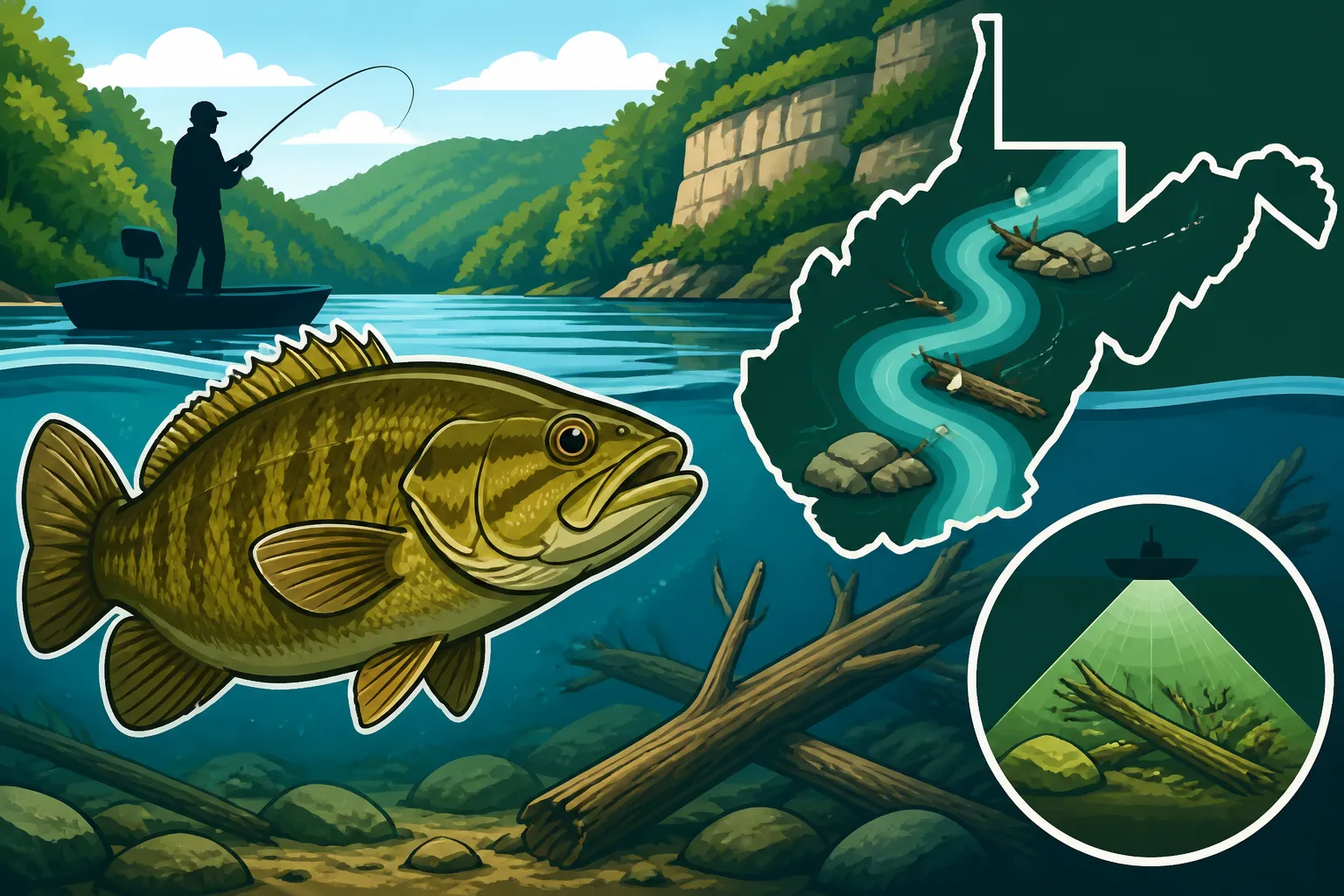
Understanding the river's depth variations means more than just having a fish finder, though a portable unit can certainly help. It means learning to interpret the visual cues. Steep bluffs along the shore often indicate deeper water directly beneath. Wider, slower sections might hide extensive gravel bars or scattered boulders. The river bed isn't uniformly sloped; it's a jagged, irregular landscape formed over millennia. Knowing that a rocky outcropping might extend into a deep submerged shelf or that a seemingly flat stretch could hide a subtle trench is vital. Mastering these subtleties is a key part of becoming a successful smallmouth angler on the New. For more insights on this remarkable fishery, check out our New River Smallmouth Bass Fishing guide.
Key Types of Smallmouth Structure on the New River
Smallmouth bass on the New River are creatures of structure. They relate to specific features in the riverbed or along its banks that offer them shelter, ambush points, and access to food. Identifying these key types of structure is paramount to finding fish consistently.
Boulders and Rock Gardens
Boulders, from car-sized rocks to smaller, head-sized stones, are quintessential smallmouth habitat on the New. They break the current, creating eddies and slack water directly behind them. These current breaks are perfect resting spots for smallmouth, allowing them to wait for forage like crayfish or baitfish to wash by. Rock gardens, which are expansive areas littered with many boulders of varying sizes, offer even more complex current patterns and ambush opportunities.
When you're looking at a stretch of river, scan for any signs of large rocks. Sometimes they'll be visible just below the surface, or you might see a distinct current seam forming downstream of a submerged obstruction. Smallmouth will often be positioned on the downstream side, right in that cushion of slack water, facing upstream. They might also be on the upstream side if there's enough turbulent cover, particularly if they're actively feeding in a riffle. Fishing these rock gardens effectively involves precise casting, often pitching lures or baits directly to the current seams and allowing them to drift naturally into the eddy.
Ledges and Drop-offs
The New River's bedrock geology means it's full of shelves, ledges, and abrupt drop-offs. These are underwater cliffs or sudden changes in depth that create significant breaks in the current and offer vertical cover. Smallmouth often patrol these edges, moving up and down the water column as light conditions, water temperature, or prey movement dictates. A deep ledge can hold fish year-round, offering them access to both shallow feeding grounds and deep refuge.
Identifying ledges from the surface can be tricky, but look for stretches where the current seems to suddenly smooth out or deepen, often near steep banks or bluffs. Using a portable fish finder, like some of the excellent models available on Amazon, can be incredibly helpful here, revealing the sharp contours of the riverbed. Once you locate a ledge, focus your efforts on casting parallel to the edge or working your lure down the face of the drop-off. Sometimes, the fish will be right on top of the ledge, while other times they'll be suspended just off the bottom in the deeper water.
Current Seams and Eddies
While not "structure" in the physical sense, current seams and eddies are directly created by structure and are absolutely vital to understanding smallmouth behavior. A current seam is the visible line where fast water meets slower water, often formed behind a boulder, point, or even a subtle change in the bottom. Eddies are pockets of recirculating water, often found behind larger obstructions or in the inside bends of the river, where the current slows or even reverses.
Smallmouth position themselves in these areas for a tactical advantage. They can sit comfortably in the slower water, expending minimal energy, and then dart out into the faster current to snatch a passing meal. Observing the river's flow is crucial here. Look for V-shaped ripples pointing upstream (indicating an obstruction) or swirling water downstream of a rock. Casting into the faster water upstream of a seam and allowing your lure to drift into the slower, holding water is a classic and effective tactic. For a deeper dive into this, our guide on How to Catch Smallmouth Bass in West Virginia Rivers offers more specific techniques.
Shoals and Gravel Bars
Shoals are relatively shallow areas, often composed of gravel, sand, and smaller rocks, where the river bottom rises. Gravel bars are similar, often formed in slower moving water, or on the inside bends of the river. These areas, particularly those with a mix of gravel and larger rocks, can be fantastic smallmouth habitat, especially during certain times of the year.
While they might seem less dramatic than deep ledges, shoals offer excellent feeding grounds for smallmouth, rich in crayfish and baitfish. The edges of these shoals, where they drop off into deeper water, are prime ambush points. Look for discolored water or slight disturbances on the surface that indicate a rising bottom. During spawning season, smallmouth will often construct their nests on clean gravel areas of shoals, making them especially important. Fishing the transition zones where the shoal meets deeper water, or working lures across the top of a productive gravel bar, can yield excellent results.
Reading the Water and the Land for Structure
Knowing what types of structure smallmouth prefer is one thing, but actually finding them on a vast river like the New requires a keen eye and a bit of practice. It's about combining visual clues with technology and a deep understanding of river dynamics.
Visual Cues: Interpreting Surface Water
Your eyes are your most powerful tool on the New River. The surface of the water often tells a clear story about what lies beneath.
- Current Seams: As mentioned, these are the visible lines where fast and slow water meet. They are frequently formed by submerged boulders, ledges, or points. Look for distinct lines of foam, debris, or differing water textures.
- Boils and Eddies: A boil is an upward surge of water, often indicating a significant obstruction or depth change below. Eddies are swirling pockets of slower water. Both are prime smallmouth holding areas. Pay attention to any unusual water movement.
- Discoloration: Clear water suddenly becoming slightly murky can indicate a shallow shoal being disturbed by current, or even a deep hole where sediment settles.
- Shadows and Light: On sunny days, look for shadows cast by underwater features, especially if the water is clear. The way light reflects off the surface can also highlight subtle changes in depth or bottom composition. Polarized sunglasses, easily found on Amazon, are an absolute must for cutting glare and seeing into the water.
- Bank Features: Steep, rocky banks on one side often correlate with deeper water and ledges directly below. A gradual, sloping bank might indicate a shallower, rockier flat extending out into the river.
By piecing together these visual clues, you can start to form a mental map of the river's unseen structure. It's a skill that improves dramatically with practice and time on the water.
Utilizing Technology: Fish Finders and Maps
While traditional river wisdom is invaluable, modern technology can significantly enhance your ability to find structure.
- Portable Fish Finders: These devices are a game-changer for river anglers. They show you depth, bottom contour, and often identify fish. On the New River, a good portable unit can help you pinpoint those critical ledges, drop-offs, and deep holes that are invisible from the surface. Many options, from simple castable units to more advanced transom-mount models for kayaks and small boats, are readily available. When kayaking, understanding the Best Kayak for the New River can help with mounting such devices.
- Topographic Maps and Satellite Imagery: Before you even launch, studying maps can give you a huge advantage. Topographic maps show elevation changes on land, which often correlate to underwater contours. Satellite imagery, like what you find on Google Maps, allows you to visually scout stretches of river, identifying potential rock gardens, rapids, and deeper pools from above. Look for changes in water color, patterns of rapids, and the shape of the riverbed during low water periods.
Combining what you see on a map or fish finder with what you observe on the water allows you to develop a much more comprehensive understanding of the river's structure and where smallmouth are likely to be hiding.
Understanding Current Dynamics
The current is the lifeblood of a river, and smallmouth bass use it to their advantage. Learning to predict how current interacts with structure is fundamental to reading the river.
- Current Breaks: Any obstruction—a boulder, a log, a submerged ledge—will create a current break. Smallmouth will typically sit in the slower water just downstream of these breaks, conserving energy while waiting for food to be swept past them.
- Seams and Eddies Revisited: The way water flows around and over structure creates these vital zones. Fish the edge of the fast water where it meets the slow water. Lures drifting naturally from fast to slow water often trigger strikes.
- Upstream vs. Downstream: Smallmouth almost always face upstream, into the current, waiting for food. This means approaching fish from downstream, quietly, is often more effective, as your presence is less likely to spook them. It also informs how you present your lure: let the current carry it naturally to the fish, as if it were a wounded baitfish or drifting crayfish. Thinking about Best Lure Retrieve Speed for Smallmouth in Fall often ties directly into understanding current flow.
Seasonal Considerations for Structure Fishing
Smallmouth bass don't always relate to structure the same way. Their preferences shift with the seasons, largely driven by water temperature, spawning cycles, and forage availability. Understanding these seasonal nuances will help you target the right structure at the right time.
Spring: Pre-Spawn and Spawning Habits
In the spring, as water temperatures begin to rise (often reaching into the mid-50s to low-60s Fahrenheit), smallmouth transition from their wintering grounds to shallower areas in preparation for spawning. During the pre-spawn, they'll congregate on larger rock formations, the edges of deep pools, and the mouths of tributaries that warm up faster. They're actively feeding to build energy for the spawn.
Once spawning temperatures are met (typically in the high 50s to low 60s), smallmouth will seek out gravelly shoals, flat rock shelves, and protected pockets of shallower water with good current flow to build their nests. They'll often be found in water 2-6 feet deep, near larger rocks or submerged logs that offer some protection. After spawning, males will guard the nests and fry aggressively. Our guide on What water temperature smallmouth bass prefer offers more specific insights.
Summer: Deep Water and Current Reliance
Summer on the New River brings warmer water temperatures, which can push smallmouth into deeper, cooler water, or into areas with stronger current and oxygenation. During this time, look for fish to relate to the deepest ledges, the tails of large, turbulent rapids, and the strong current seams where the fastest water meets deeper holding areas. They'll often be tucked tightly against current breaks, enjoying the shade and the constant supply of oxygenated water.
Early mornings and late evenings might see them moving into shallower, faster water to feed, especially on topwater lures. During the heat of the day, however, focusing on cooler, deeper structures and oxygenated current areas, sometimes referred to as "washouts" below heavy current, will be most productive. Knowing Best smallmouth bass lures for the New River in summer can give you an edge during these warm months.
Fall: Aggressive Feeding and Transition Zones
Fall is arguably one of the best times to target New River smallmouth. As water temperatures cool down, smallmouth become incredibly aggressive, putting on the feedbag in preparation for winter. They'll often be found in transition zones: areas where deep water is close to shallower feeding flats, or where strong current meets calmer pools. Ledges, rock gardens, and the edges of larger shoals can all hold significant numbers of fish.
Smallmouth will actively chase baitfish during this period, so power fishing techniques with crankbaits, spinnerbaits (like those discussed in How to fish a spinnerbait for New River smallmouth), and jigs can be incredibly effective. As fall progresses and water temperatures drop further, they'll start moving towards their deeper wintering holes, often still relating to significant vertical structure.
Winter: Deep, Slow, and Subtle
Winter fishing on the New River can be challenging but rewarding for those who brave the cold. Smallmouth typically retreat to their deepest, most stable wintering areas. This means focusing on the deepest pools, the most profound ledges, and areas where there's minimal current, but still enough flow to bring them oxygen and occasional food. They'll be much less active, schooling tightly, and requiring a much slower, more subtle presentation.
Finesse techniques, small jigs, and very slow presentations of soft plastics are often the ticket. Finding one fish in a deep wintering hole often means finding a whole school. The bite will be light, and patience is key. While the New River isn't typically known for ice fishing, these deep holes are where the fish reside when the water is coldest.
Practical Tips for Pinpointing New River Smallmouth
Beyond understanding the types of structure and seasonal movements, there are practical steps you can take on the water to effectively read the New River and find smallmouth.
Boat Positioning and Drifting
How you navigate the river profoundly impacts your success. When floating or drifting, learn to control your boat or kayak to effectively present your lures to the structure.
- Upstream Approach: Whenever possible, approach prime structure from upstream. This allows you to drift down to the fish, presenting your lure naturally with the current, much like real prey would. It also minimizes your chances of spooking fish that are typically facing upstream.
- Controlled Drifts: Use an anchor, anchor pole, or even a trolling motor to slow your drift. This gives you time to thoroughly work a piece of structure. For kayakers, an anchor trolley system can be invaluable for maintaining position in current. If you're using a kayak, consider the Best Kayak for the New River for stability and maneuverability.
- Fan Casting: Don't just cast straight ahead. Make a series of casts that fan out across a piece of structure. This allows you to cover different angles and depths, increasing your chances of finding where the fish are holding.
Mastering boat control and presentation is a constant learning process, but it directly correlates to how effectively you can exploit the river's structure.
Sound and Silence: Your Secret Weapons
Smallmouth bass are incredibly sensitive to vibrations and noise. Being mindful of your presence is often as important as your lure selection.
- Stealthy Approach: Avoid banging oars, dropping tackle, or stomping around in your boat. Fish can feel vibrations through the water, especially in shallower areas.
- Quiet Wading: If you're wading, move slowly and deliberately. Shuffle your feet rather than lifting and dropping them, which sends ripples and vibrations through the water. This is especially true in clear, low-water conditions where fish are more easily spooked.
- Listen to the River: Sometimes, the river itself gives clues. The sound of rapids can help you anticipate upcoming turbulent water and the structure associated with it. Listen for the subtle splash of a feeding fish, indicating activity in a particular area.
By being both quiet in your approach and attuned to the river's natural sounds, you increase your chances of getting close to undisturbed fish. For more on tactical lure retrieves, exploring articles like Best crankbait retrieve for New River smallmouth can refine your strategy.
Observe and Adapt: The Never-Ending Lesson
The New River is a living, breathing system, constantly changing. Water levels fluctuate, currents shift, and fish move. The most successful anglers are those who are constantly observing and adapting.
- Pay Attention to Successes (and Failures): When you catch a fish, take a moment. What kind of structure were you fishing? What was the depth? What was the current like? Try to replicate those conditions. Similarly, if a spot you expected to be productive isn't, consider why and adjust your approach.
- Learn from Others: Don't be afraid to talk to other anglers, whether at the boat ramp or on online forums. Share information (within reason, of course!). Guides often have invaluable local knowledge.
- Keep a Fishing Journal: Document your trips. Note the date, water temperature, weather conditions, water levels, specific structures fished, and what worked (or didn't). Over time, this journal will become an invaluable resource, helping you identify patterns and anticipate fish behavior. It helps you build your own library of "reads" for different river conditions.
This continuous cycle of observation, action, and adaptation is what transforms a casual angler into a true river master. For comprehensive gear recommendations, our Best Rod Length for New River Smallmouth Bass guide can help you choose the right tools for your approach.
Here's a handy table summarizing key structures and how to approach them:
| Structure Type | Identification Cues | Why Smallmouth Use It | Fishing Approach | Key Considerations |
|---|---|---|---|---|
| Boulders/Rock Gardens | Visible rocks, current seams/eddies downstream | Current breaks, ambush points, cover | Cast to seams, drift lures naturally, pitch jigs/plastics | Focus on downstream side; vary depth; use weedless lures |
| Ledges/Drop-offs | Steep banks, sudden depth changes (fish finder) | Vertical cover, access to different depths, ambush points | Cast parallel to edge, work lures down face, deep diving crankbaits | Often holds bigger fish; fish multiple depths |
| Current Seams/Eddies | Foam lines, debris accumulation, visible water texture differences | Energy conservation, ambush points | Cast upstream of seam, let lure drift into slack water, retrieve through eddy | Precision casting is key; match lure speed to current |
| Shoals/Gravel Bars | Shallow, clear water, discolored areas, slight ripples | Feeding grounds (crayfish), spawning areas (spring) | Cast across top, focus on edges/drop-offs, use bottom-bouncing lures | Productive in spring & fall; look for deeper access nearby |
| Rapids/Riffles | Fast, turbulent water, exposed rocks | Oxygenation, dislodged prey, feeding lanes | Fish edges/tails of rapids, cast into calmer pockets, use heavy jigs/spinnerbaits | Fish can be aggressive; focus on immediate current breaks |
| Deep Pools | Darker water, slow current, often after rapids | Resting areas, wintering holes, deep cover | Vertical jigging, slow retrieves, live bait, especially in winter | Patience is key; fish slowly; use electronics |
Disclaimer
The information provided in this guide is for general informational purposes only and is intended to be used responsibly. Fishing regulations, seasons, and licensing requirements in West Virginia can change. Always consult the latest official West Virginia Division of Natural Resources (WVDNR) regulations before heading out on the water. Be aware of private property boundaries and respect landowner rights. Practice responsible angling, including catch-and-release practices when appropriate, to ensure the sustainability of our fisheries.