Best crankbait retrieve for New River smallmouth
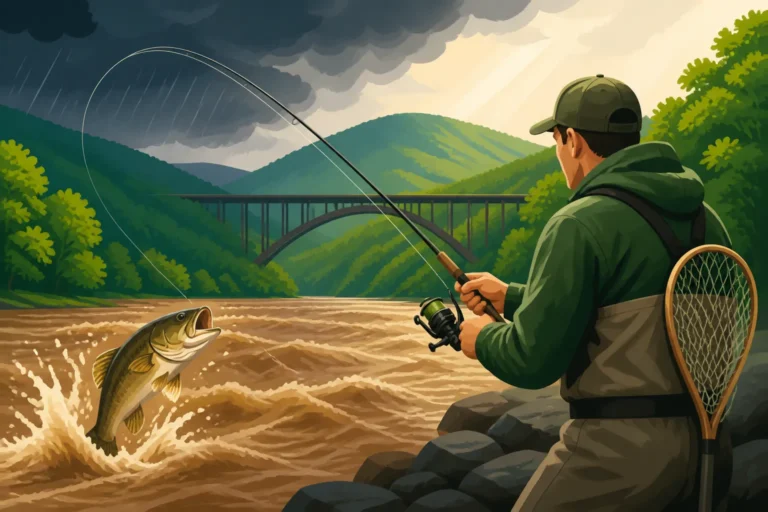
Trying to dial in the perfect retrieve for New River smallmouth bass with a crankbait can feel like trying to solve a puzzle with a thousand moving pieces. The New River is famous for its feisty smallmouth, but their temperament changes with the water, the weather, and their mood, making a "one-size-fits-all" retrieve practically impossible. This guide will dive deep into the nuances of crankbait retrieves specifically tailored for West Virginia's legendary New River, helping you unlock more bites and land those hard-fighting bronzebacks.
Understanding New River Smallmouth and Crankbait Dynamics
The New River is a truly ancient waterway, carving its path through the mountains and presenting a unique challenge and opportunity for anglers. Unlike many reservoirs, it's a flowing system with diverse structure, current, and water conditions that demand a thoughtful approach, especially when it comes to crankbaits.
Why Crankbaits Are a Go-To for River Smallmouth
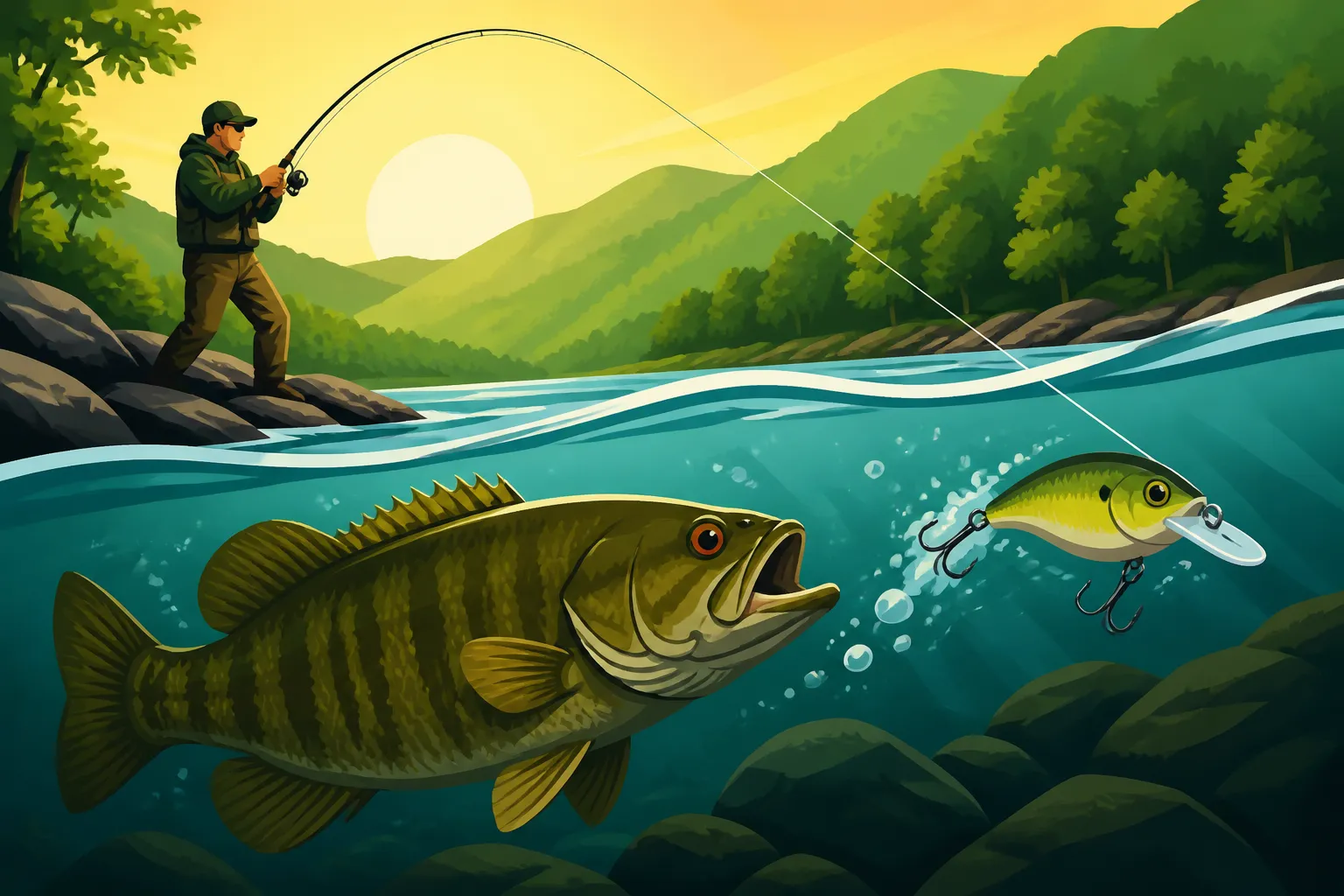
Crankbaits are phenomenal for smallmouth bass in rivers like the New for several compelling reasons. First, their inherent design mimics baitfish incredibly well, especially when they're frantically darting or struggling in the current. The built-in wobble and vibration send irresistible signals through the water, attracting curious smallmouth from surprising distances. Secondly, crankbaits allow you to cover a lot of water quickly, which is crucial in a large river system. You can fan-cast vast areas, probing different depths and current seams until you locate active fish. Finally, the deflection factor is huge; when a crankbait ricochets off a submerged rock or log, it often triggers an instinctual strike from a predator. It's that sudden, erratic change in motion that smallmouth just can't resist.
Navigating the New River's Unique Challenges
Fishing the New River is a different beast compared to fishing a calm lake. You're dealing with constant current, which affects lure presentation, depth, and how the fish position themselves. The riverbed is a mosaic of boulders, ledges, gravel bars, and woody debris, all of which can either hold fish or snag your expensive lure. Water clarity can also fluctuate dramatically, from gin-clear after a dry spell to stained and muddy after a heavy rain. Successfully fishing crankbaits here means constantly adapting to these variables, paying close attention to where the current is weakest or strongest, and anticipating where a smallmouth might be ambush waiting. For a deeper dive into the specific characteristics of these fish, check out our guide on Smallmouth Bass Habits on the New River.
Selecting the Right Crankbait Types for the New River
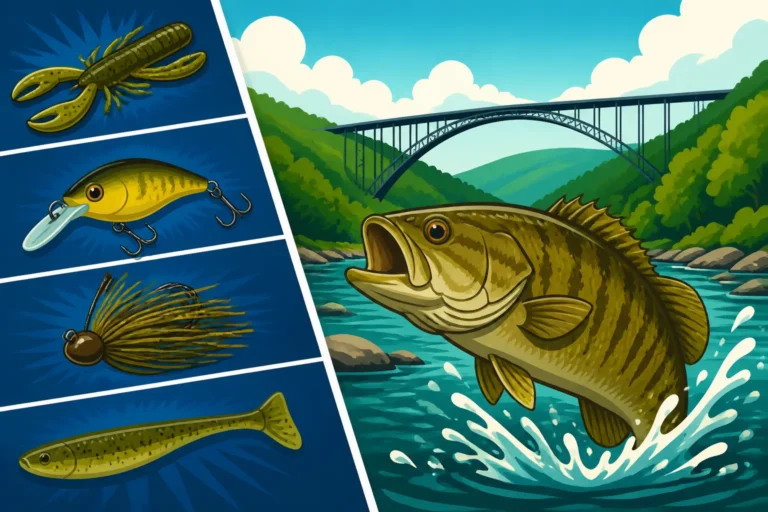
Not all crankbaits are created equal, especially for river fishing. For the New River, you'll generally want a mix of shallow, medium, and deep divers, usually in the 1.5 to 3.5-inch range, mimicking common forage like shad, crayfish, and smaller minnows. Brands like Strike King, Rapala, and Berkley offer excellent options that are readily available on platforms like Amazon. For shallow rocky runs, a square bill crankbait is invaluable because its lip is designed to deflect off cover without snagging as easily. For deeper pools or current seams, a round-billed crankbait that can dive 8-15 feet might be more appropriate. Color choice is also critical; natural crawfish patterns, shad imitations (like chrome/blue or natural shad), and sometimes brighter colors like chartreuse can be effective depending on water clarity and light conditions. For more specific recommendations, our article on Best Crankbaits for West Virginia Smallmouth Bass is a great resource.
The Art of Varying Your Retrieve: Key Techniques
The true magic of crankbait fishing, particularly for river smallmouth, lies in the retrieve. It's not just about reeling in; it's about making that lure dance and behave in a way that looks utterly irresistible to a hungry bass.
The Stop-and-Go: Pauses and Deflections
This retrieve is a classic for a reason, and it's incredibly effective on the New River. The basic idea is to reel steadily for a few turns, then pause, letting the crankbait float up or sink slightly before resuming your retrieve. That sudden stop often triggers a strike from a following fish. Where it gets even better on the New River is incorporating deflections. As your crankbait bumps into rocks, logs, or other submerged structure, it creates an erratic, fleeing action. Combine this "bouncing" with the stop-and-go. Reel, bump a rock, pause. Reel, bump again, pause. That pause after a deflection often gets inhaled.
Think about a crawfish scurrying across the bottom, then suddenly freezing or trying to hide. That's the visual you're creating. This technique is particularly deadly in areas with plenty of current breaks and rocky bottom composition. It's also fantastic when fish are a bit lethargic or spooky, as the slower pace and sudden changes can convince them to commit.
The Rip-and-Pause: Aggression in Cover
When smallmouth are feeling aggressive, or when you're fishing dense cover where they might be hunkered down, the rip-and-pause can be a game-changer. This retrieve involves more forceful, sharp tugs of your rod tip, followed by a pause. Instead of a gentle stop, you're "ripping" the crankbait forward, making it dart aggressively, then letting it sit for a moment. This sudden burst of speed, followed by vulnerability, can elicit reaction strikes from even unwilling fish.
This technique shines when targeting specific pieces of cover like submerged trees, large boulders, or current eddies where smallmouth are actively hunting. The key is to make those rips sharp and distinct, then let the bait settle on a slack or semi-slack line during the pause. If you're fishing in relatively snag-free areas, you can let it pause longer. If you're in heavy cover, keep the pauses shorter to minimize snagging. This retrieve can also be fantastic during periods of higher flow, as the aggressive action helps the lure cut through the current and get noticed.
The Steady Grind: Current and Subtle Action
Sometimes, simplicity wins. The "steady grind" involves a consistent, moderate retrieve speed without much variation. While it sounds basic, it's incredibly effective in certain New River scenarios. When fish are actively feeding and not particularly finicky, a steady retrieve that keeps the crankbait in the strike zone can be all you need. The current itself will impart a natural wobble and pulse to the lure, making it look like a struggling baitfish being swept downstream.
This retrieve is excellent for covering vast stretches of river, especially long, uniform runs or gravel flats. It's also great for targeting fish that are suspended or cruising rather than holding tight to structure. The consistent action allows smallmouth to track the lure and commit without being spooked by sudden movements. Pay attention to the speed; you want it fast enough to engage the crankbait's wobble but not so fast that it blows past the fish or looks unnatural. Experiment with slightly faster or slower speeds until you find what the fish are reacting to.
Retrieve Technique Comparison Table
| Retrieve Technique | Description | Best Conditions | Target Fish Mood | Crankbait Type Example |
|---|---|---|---|---|
| Stop-and-Go | Steady reel, pause, resume; incorporate bumps | Rocky bottom, current breaks, varying depths | Finicky, Lethargic, Following | Square Bill, Medium Diver |
| Rip-and-Pause | Sharp rod tugs, brief pause, repeat | Heavy cover, strong current seams, ambush points | Aggressive, Reactionary | Lipless, Deep Diver |
| Steady Grind | Consistent, moderate reeling speed | Uniform runs, gravel flats, open water | Actively Feeding, Cruising | Shallow to Medium Diver, Lipless |
Matching Your Retrieve to Conditions
The New River is a living, breathing entity, constantly changing. What worked yesterday might not work today, and successfully fishing crankbaits means becoming a master of adaptation.
Water Temperature and Clarity Influence
Water temperature is arguably the most crucial factor dictating smallmouth activity levels. In colder water (below 50-55°F), smallmouth are generally more sluggish. This calls for a slower, more deliberate retrieve. A drawn-out stop-and-go with longer pauses or a gentle steady grind that just barely gets the crankbait working will often be more productive. You're trying to appeal to a fish that isn't willing to chase far. Conversely, in warmer water (above 60°F), smallmouth become much more active and aggressive. This is when a faster steady retrieve or even an aggressive rip-and-pause can really shine, as fish are more likely to chase and react. Understanding the water temperature is key to determining the overall pace of your retrieve.
Water clarity also plays a massive role. In clear water, fish have a better chance to scrutinize your lure, so a more natural, subtle retrieve is often best. Long pauses and gentle twitches can entice strikes. You might also want to downsize your crankbait and opt for more natural colors. When the water is stained or muddy, smallmouth rely more on vibration and scent than sight. This is when a faster retrieve, using crankbaits with a strong wobble and loud rattles (if applicable), can be highly effective. The increased speed and vibration help the fish locate the lure, and a more aggressive retrieve can trigger a reaction bite even if they can't see it clearly. Our article on Best water temperature for smallmouth bass fishing provides more detail on ideal conditions.
Current Speed and Structure Dictate Strategy
The New River's current is its defining feature. How you retrieve your crankbait needs to directly respond to it. In fast current, a slower retrieve might be necessary just to keep the bait in the strike zone and allow it to dive properly without "washing out." A steady grind, barely faster than the current, can be incredibly effective, making the lure look like an easy meal caught in the flow. You might also need to upsize your lure slightly or use one with a more aggressive lip to get it down to depth against the push of the water.
In slower current or slack water, you'll have more control over the lure's action. This is where you can really experiment with the stop-and-go or rip-and-pause, giving the lure more erratic movements. You don't have the current doing the work for you, so you need to impart more action with your rod and reel. Understanding How to read New River smallmouth structure is also vital here. Fish will position themselves out of the main current, behind boulders, logs, or in eddies. Targeting these specific features with a precise retrieve, perhaps bumping the crankbait off the very edge of a current break, can be incredibly productive.
Seasonal Considerations for Smallmouth Habits
Smallmouth bass behavior changes dramatically throughout the year, and your crankbait retrieve should follow suit.
- Spring (Pre-spawn & Spawn): As water temperatures rise into the 50s and 60s, smallmouth move to shallower areas for spawning. During pre-spawn, they are often hungry and aggressive, making a medium-paced steady retrieve or an active stop-and-go effective. As they move into the actual spawn, they become more focused on nesting, and bites might become more territorial. A slower, more deliberate retrieve, perhaps letting the crankbait sit longer near potential beds, can trigger a defensive strike. For more on this, check out When smallmouth bass spawn in West Virginia.
- Summer: This is prime time for active smallmouth. Warmer water means higher metabolism, and fish are generally willing to chase. Faster retrieves, aggressive rip-and-pauses, and steady grinds are all in play. Early mornings and late evenings might call for more subtle retrieves, while mid-day sun could see fish holding deeper and reacting to fast-moving baits.
- Fall: As water temperatures drop, smallmouth begin their "fall feed," gorging themselves before winter. This can be another fantastic time for crankbaits, often with a slightly slower but still aggressive approach. Fish might be shallower in the mornings and evenings, moving deeper during the day. A robust stop-and-go or a varied retrieve that incorporates both speed and pauses can be very effective as they hunt for dwindling baitfish.
- Winter: Cold water slows everything down. If you're targeting winter smallmouth on the New River, expect them to be holding in deeper, slower pools. Your retrieve should be painstakingly slow, almost painfully so. Long pauses, subtle twitches, and barely perceptible movements are the order of the day. A deeper diving crankbait fished with a very slow, methodical retrieve is your best bet.
Fine-Tuning Your Setup for Optimal Crankbait Performance
Having the right rod, reel, and line can significantly enhance your ability to impart the perfect retrieve and feel those subtle bites. It's all about maximizing your connection to the lure.
Rod and Reel Choice for Crankbait Fishing
For smallmouth fishing with crankbaits on the New River, a medium-heavy to medium-power casting rod between 6'6" and 7'6" is generally ideal. A moderate or moderate-fast action is preferred because it allows the rod to load up properly on the cast, absorb the shock of striking fish, and prevent hooks from tearing out. The softer tip also helps with those important deflections off structure. For many anglers, a fiberglass or composite rod (a blend of graphite and fiberglass) is the top choice for crankbait fishing due to its forgiving action. Brands like St. Croix, Ugly Stik, and Daiwa all make excellent crankbait-specific rods. Our guide on Best Rod length for New River smallmouth bass has more details on this.
Pairing this with a baitcasting reel that has a medium gear ratio (around 6.3:1 to 7.1:1) is a solid choice. This range gives you versatility – enough power for deeper diving baits and enough speed to pick up slack quickly or work a shallow crankbait at a brisk pace. A good quality reel with a smooth drag and comfortable handle will make those long days on the New River much more enjoyable. For those who prefer spinning gear, a medium-power, moderate-fast action spinning rod with a 2500-3000 size reel can also be effective for smaller crankbaits. For general recommendations, check out Best Rods for West Virginia Rivers.
Line Selection: Mono, Fluorocarbon, or Braid?
Line choice is critical and often debated among crankbait anglers.
- Fluorocarbon: This is a favorite for many, and for good reason. It's nearly invisible underwater, which is a huge advantage in the New River's often clear waters. It also has less stretch than monofilament, giving you better feel and sensitivity, which is vital for detecting subtle bites or feeling your crankbait bumping structure. Its sinking properties also help crankbaits dive deeper. A 10-15 lb test fluorocarbon is a good all-around choice. If you're interested in maximizing your stealth, our article on Best Fluorocarbon Line for Clear River Water offers additional insights.
- Monofilament: Often called "mono," this line has more stretch, which can act as a shock absorber, helping prevent fish from tearing off. It's also more buoyant than fluorocarbon, which can be an advantage for shallow-diving crankbaits where you want to keep them higher in the water column. Its lower cost is also appealing. 12-17 lb test is common.
- Braided Line: While braid offers extreme sensitivity and strength, its lack of stretch and high visibility can be a downside for crankbait fishing, especially in clear water. However, some anglers use braid as their main line with a long fluorocarbon leader (4-6 feet) to get the best of both worlds: casting distance and sensitivity from the braid, and stealth from the fluorocarbon leader. If you go this route, consider 20-30 lb test braid with a 10-15 lb fluorocarbon leader.
The best approach often comes down to personal preference and the specific conditions you're fishing. Many experienced anglers keep multiple rods rigged with different line types to adapt quickly.
Hook Upgrades: Maximizing Your Hook-Up Ratio
Most crankbaits come equipped with decent hooks from the factory, but upgrading them can make a noticeable difference in your hook-up and landing ratios, especially with the hard-fighting smallmouth of the New River. Sharper, stronger treble hooks penetrate better and are less likely to bend or break. Look for hooks from reputable brands like Gamakatsu, Owner, or VMC.
When replacing hooks, ensure you match the size and weight of the original hooks as closely as possible. Changing the hook size or weight too drastically can alter the lure's action and depth, which you've meticulously selected for specific conditions. Many anglers also swap out the split rings for heavier-duty versions, especially on larger crankbaits, to prevent them from opening up under the strain of a big fish. This small investment can pay dividends in preventing lost fish and lost lures. You can easily find these upgrade hooks and split rings on Amazon or at your local tackle shop.
Disclaimer
Fishing regulations can change, and it is the angler's responsibility to stay informed. Always check the latest West Virginia fishing regulations issued by the West Virginia Division of Natural Resources (WVDNR) before heading out.