Best Crankbaits for West Virginia Smallmouth Bass
Choosing the right crankbait for West Virginia's feisty smallmouth bass can feel like solving a complex puzzle. You've got endless options on the market, each promising to be the "secret weapon," but the truth is, what works in one river might not cut it in a different lake, or even in the same water body just a few weeks later. This guide is here to untangle that complexity, helping you understand the nuances of crankbait selection so you can confidently tie on the perfect lure for a successful smallmouth day in the Mountain State.
Understanding West Virginia Smallmouth Habitats
Before we even dive into specific crankbaits, it's crucial to understand where West Virginia smallmouth bass live and what their environment looks like. The Mountain State offers an incredible diversity of waters, from vast reservoirs to winding mountain rivers, and each type of habitat demands a slightly different approach. Knowing the typical haunts of these bronze beauties will directly influence your crankbait choice.
River Systems vs. Lake Environments
West Virginia is renowned for its incredible river fishing, especially for smallmouth bass. Rivers like the New River, the Gauley, the Greenbrier, and the South Branch of the Potomac are iconic destinations. In these flowing waters, smallmouth are often found associated with current breaks, eddies, rocky points, and submerged timber. The constant flow means they're always positioned to ambush prey, and they're generally much leaner and meaner than their lake-dwelling cousins. Your crankbaits here need to be able to handle current, deflect off rocks, and present a quick, erratic action that mimics prey struggling against the flow. For more specific details, check out How to Catch Smallmouth Bass in West Virginia Rivers.
Lake environments, such as Summersville Lake, Stonewall Jackson Lake, and Bluestone Lake, offer a different set of challenges and opportunities. Here, smallmouth might relate more to deep structure like points, humps, ledges, and submerged creek channels. They also patrol open water, chasing baitfish schools. The absence of strong current means a crankbait's action alone has to do all the work of enticing a strike. You'll often find yourself needing crankbaits that can dive deeper, hold a consistent running depth, or cover vast expanses of water efficiently.
Structure and Cover: Where Smallmouth Hide
No matter if you're on a river or a lake, smallmouth bass are inherently structure-oriented fish. They love to ambush their prey from behind cover or relate to changes in the bottom contour. This includes everything from natural features like rock piles, boulders, ledges, log jams, and undercut banks to man-made structures such as bridge pilings, docks, and riprap.
When fishing around this kind of cover, the best crankbaits are often those designed to "crash" into it, deflecting erratically and triggering a reaction strike. A crankbait that simply gets snagged every time it touches a rock is going to frustrate you quickly. Think about a crankbait's ability to "walk" over snags, bumping and grinding without getting hung up. Understanding where these fish position themselves within different types of structure throughout the day and year is key to presenting your crankbait effectively.
The Anatomy of a Crankbait: What Matters Most
Not all crankbaits are created equal. They might look similar on the surface, but subtle differences in their design can drastically change their performance in the water. Understanding these key components will empower you to select the right tool for the job, rather than just guessing.
Lip Design and Diving Depth
The lip, or bill, of a crankbait is its defining characteristic, dictating its diving depth and action.
- Small, Stubby Lips (Square Bills): These lips generally create a shallower diving crankbait that runs with a wide, aggressive wobble. They're excellent for bumping off shallow cover like rocks, laydowns, and docks without getting hung up. Their square shape helps them deflect sharply, triggering reaction strikes from bass lurking in skinny water.
- Medium-Sized, Rounded Lips: These lips are found on medium-diving crankbaits. They create a more moderate wobble and can reach depths typically from 5 to 12 feet, depending on line size and retrieve speed. These are versatile baits, good for covering transition areas, submerged points, and deeper flats.
- Long, Thin Lips: These are characteristic of deep-diving crankbaits. The elongated lip allows them to plunge quickly to significant depths, often 15 feet or more. The angle and length of the lip also affect the bait's wobble, which can be tighter or wider depending on the design. These are your go-to for targeting deep ledges, offshore humps, and submerged timber in lakes.
- No Visible Lip (Lipless Crankbaits): These baits rely on their internal weighting and body shape to create a tight, vibrating action. They don't have a diving lip but sink at a controlled rate, making them incredibly versatile for different depths. They're fantastic for covering water, especially over grass beds or open flats, and for targeting suspended fish.
Body Shape and Action
The body shape of a crankbait significantly influences its action in the water.
- Flat-Sided: Crankbaits with flatter sides tend to have a tighter, more subtle wiggle. This action is often favored in colder water or when fish are less aggressive, mimicking a struggling baitfish rather than a fleeing one. They also tend to "flash" their sides more, which can be an excellent attractor in clear water.
- Round-Bodied: Most traditional crankbaits have a rounder, bulkier body. These typically produce a wider, more pronounced wobble and often displace more water, creating a strong vibration. This aggressive action is great for active fish in warmer water or when you need to call fish from a distance.
- Fatter, Tapered Bodies (Lipless): Lipless crankbaits often have a more tapered, baitfish-like profile. Their action is less about a wobble and more about a high-frequency vibration or "thump" as they're retrieved. This makes them exceptional for covering large areas quickly and triggering strikes from active, schooling bass.
Rattles, Hooks, and Finishes
Beyond the lip and body, other features matter.
- Rattles: Many crankbaits contain internal BBs or tungsten spheres that create noise. This acoustic signature can be a powerful attractant, especially in stained or muddy water, or when fish are aggressive. However, in clear, heavily pressured waters, a "silent" crankbait might be more effective, as too much noise can spook wary smallmouth. Different rattles produce different sounds – some a high-pitched "clatter," others a deeper "thud."
- Hooks: Most crankbaits come equipped with two treble hooks. Quality hooks are paramount for smallmouth, as they often make violent strikes and are known for their acrobatic fights. If your crankbait comes with flimsy hooks, it's a wise investment to upgrade them to stronger, sharper trebles from brands like Owner or VMC. This can make the difference between landing that trophy smallmouth and telling a "one that got away" story.
- Finishes: The finish refers to the bait's texture and paint job. Some crankbaits have a smooth, glossy finish, while others mimic scales or have a textured, matte appearance. The quality of the paint and its durability against rocks and fish teeth also varies. Some high-end crankbaits feature incredibly lifelike patterns, holographic inserts, or even feathered treble hooks for added attraction. Remember, a crankbait is constantly getting beaten up, so a durable finish means it will keep performing trip after trip.
Types of Crankbaits for West Virginia Smallmouth
Now that we understand the anatomy, let's explore the specific types of crankbaits that excel for West Virginia smallmouth, covering different depths and situations.
Square Bills: The Shallow Water Brawler
Square bill crankbaits are an absolute must-have for any smallmouth angler hitting West Virginia's rivers and shallow lakes. Their distinct square-shaped lip gives them a wide, aggressive wobble and, critically, allows them to deflect off cover without snagging nearly as often as round-lipped baits. This deflection is precisely what triggers savage reaction strikes from smallmouth hiding in ambush.
Imagine you're casting to a rocky shoal on the New River or working the shallow banks of a lake like Sutton Lake, littered with laydowns and submerged stumps. A square bill, like a Strike King KVD 1.5 or a Spro Little John, can be cranked at a brisk pace, bouncing off every piece of cover. The erratic dart and pause after a collision often mimics a panicked baitfish, irresistible to a hungry smallmouth. These baits typically run from 1 to 5 feet deep, making them perfect for covering vast stretches of shallow water, especially in stained conditions or during warmer months when smallmouth are more active and aggressive near the surface. You can find a huge selection of these at places like Bass Pro Shops or online at Amazon.
Medium Divers: Versatility for Varied Depths
Medium-diving crankbaits are your workhorses, bridging the gap between shallow square bills and deep-diving giants. These lures, generally with more rounded lips, are designed to reach depths of about 6 to 12 feet, making them incredibly versatile for a wide range of smallmouth scenarios.
Think about fishing a rocky point that drops off into slightly deeper water, or working the edges of submerged grass beds in a lake. A medium diver like a Rapala DT Series or a Norman Deep Little N can be incredibly effective here. Their consistent dive and moderate wobble allow you to effectively target fish holding a bit deeper than the square bill range, but not so deep that you need a specialized deep diver. They are excellent for covering transition areas where smallmouth might be moving between shallow feeding grounds and deeper holding areas. Vary your retrieve, pausing to let the bait float up slightly or digging it into the bottom, to find what the fish prefer. These are also great for covering open water if you spot schooling baitfish on your fish finder.
Deep Divers: Reaching the Depths
When smallmouth bass retreat to deeper water, whether due to bright sunlight, cold fronts, or simply their preference for deeper structure in larger lakes, deep-diving crankbaits become indispensable. These lures feature long, often pointed lips that enable them to rapidly descend to depths of 15 feet, 20 feet, or even more.
Consider fishing the steep ledges of Summersville Lake or the submerged creek channels of Stonewall Jackson Lake during the summer months. Here, smallmouth might be suspended over deep water or hugging the bottom along a distinct contour change. A deep diver, such as a Berkley Dredger or a Strike King 6XD, allows you to put your lure right in their strike zone. Best Fishing Rods for West Virginia Rivers will give you some ideas on tackle that can handle these heavy baits. While they require heavier tackle and can be a workout to retrieve, their ability to reach deep-holding fish can be a game-changer. The key with deep divers is to "grind" them along the bottom or deflect them off deep cover, mimicking a bottom-feeding or distressed baitfish. A medium-heavy or heavy power rod is often necessary to handle the resistance of these lures.
Lipless Crankbaits: The All-Around Thumper
Lipless crankbaits, like the iconic Rat-L-Trap or a Bill Lewis Rat-L-Trap, are unique because they don't have a distinct diving lip. Instead, their internal weighting and flat-front design create a tight, high-frequency vibration (often called a "thump") as they are retrieved. This vibration, combined with internal rattles, makes them incredibly effective at calling fish from a distance.
These baits are exceptionally versatile. They can be burned quickly over shallow flats, yo-yo'd vertically in deep water, or retrieved with a stop-and-go action through grass beds. For West Virginia smallmouth, lipless crankbaits shine in environments where you need to cover a lot of water quickly or when fish are scattered. They're particularly deadly in early spring as water temperatures begin to rise, or in fall when smallmouth are aggressively feeding on schooling baitfish. While not known for deflecting off cover like a square bill, their ability to be fished at various depths and speeds makes them a fantastic search bait. Their loud rattle can be a major attractor, but sometimes, a silent lipless bait can be the ticket for pressured fish.
Matching Crankbaits to Water Conditions and Seasons
The smallmouth bass in West Virginia are highly attuned to their environment, especially water temperature and clarity, and seasonal patterns. What works like magic in spring might be completely ignored in the dog days of summer.
Spring: Cold Water and Pre-Spawn Tactics
Spring in West Virginia often means cold, sometimes stained, water as snowmelt runs into rivers and lakes. Smallmouth are just beginning to shake off their winter sluggishness and move towards their spawning grounds. In these conditions, a more subtle approach with crankbaits is usually best.
- Action and Retrieve: Think tight wobbles and slower retrieves. Flat-sided crankbaits or medium-diving baits with a less aggressive action can be very effective. Best jerkbait for early spring bass are also fantastic. You want to mimic a lethargic baitfish, not one zipping around energetically. A stop-and-go retrieve, letting the crankbait suspend or slowly float up during pauses, can be irresistible.
- Depth: Smallmouth will often be found in transition areas – deeper pockets adjacent to shallow spawning flats, or current breaks in rivers. Medium divers are excellent for these scenarios, allowing you to probe depths from 5 to 10 feet. Lipless crankbaits can also be great for covering broad shallow flats quickly, especially in areas with emerging grass.
- Colors: In stained water, brighter, more contrasting colors like chartreuse, orange craw, or red can stand out. If the water is clearer, natural baitfish patterns like shad or perch are good choices.
Summer: Active Fish in Warmer Water
Summer brings warmer water temperatures and highly active smallmouth. They're often aggressive and willing to chase down a fast-moving lure. This is prime time for faster retrieves and more erratic actions.
- Action and Retrieve: Square bills really shine in shallow river stretches and lake shorelines, crashing off rocks and wood. Burn them, deflect them, and use short pauses. For deeper fish, medium and deep divers can be worked faster over points and ledges. Best Time to Fish Summersville Lake in Summer can offer more insights. Smallmouth are often feeding on crawfish and various baitfish, so mimicking these with aggressive, thumping crankbaits is key.
- Depth: Smallmouth will utilize a wider range of depths. In rivers, they'll hold in current seams and eddy lines. In lakes, they might be shallow early and late in the day, then move to deeper structure during bright sunlight. Have a selection of square bills, medium divers, and deep divers ready.
- Colors: Natural baitfish patterns (shad, bluegill, perch) are excellent in clear water. Crawfish patterns (browns, reds, oranges) are deadly when smallmouth are feeding on crayfish.
Fall: Feeding Frenzy before Winter
Fall is often considered one of the best times to target trophy smallmouth in West Virginia. As water temperatures drop and winter approaches, smallmouth go on a major feeding binge, trying to pack on as much weight as possible. They often school up and follow baitfish into shallower pockets or relate to major river bends and lake points.
- Action and Retrieve: Both aggressive square bills and versatile medium divers can be highly effective. Smallmouth will chase, so a fast retrieve with plenty of erratic action is often the ticket. Lipless crankbaits are also excellent for covering water and mimicking schooling baitfish.
- Depth: Smallmouth might be anywhere from shallow flats to medium-depth humps, following bait. Target areas where baitfish are congregating.
- Colors: Natural baitfish patterns, especially those with some flash, are excellent. Shad and perch imitations are very strong. Crawfish patterns also remain important.
Winter: Deep and Slow Presentations
Winter fishing in West Virginia can be tough, but rewarding for patient anglers. Smallmouth are typically deep, often in their wintering holes, and their metabolism has slowed significantly.
- Action and Retrieve: This is the time for subtle, slow presentations. Deep-diving crankbaits can be effective if fished very slowly, almost crawling them along the bottom of deep ledges or humps. The idea is to make the bait easy to catch for a lethargic fish.
- Depth: Focus almost exclusively on deep water, often the deepest parts of rivers or lakes, near vertical structure or channels. Best Hair Jig Technique for Winter Smallmouth is a good read for other cold water tactics.
- Colors: Natural, subtle colors often work best. Darker, more muted patterns can be good, but don't shy away from something with a slight flash if the water is clear.
Crankbait Colors: Beyond Just Pretty Paint
Choosing the right crankbait color is more than just personal preference; it's a critical factor influenced by water clarity, light conditions, and the prevalent forage. Think about what the smallmouth are actually seeing and what baitfish they're accustomed to eating.
Natural Patterns for Clear Water
In West Virginia's clear rivers and lakes, where smallmouth rely heavily on sight, natural baitfish patterns are often king. Think about what swims in the water you're fishing:
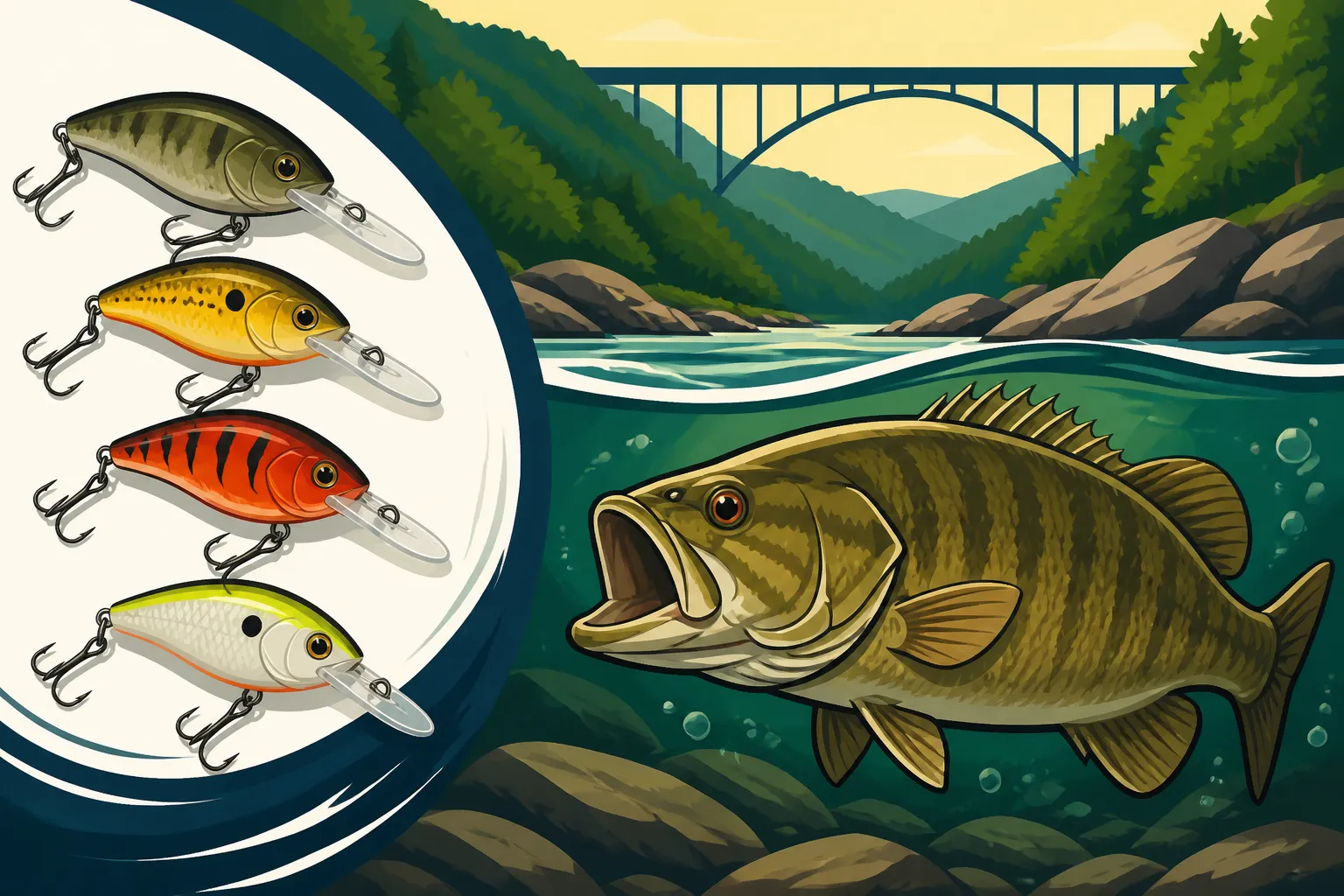
- Shad/Minnow Patterns: Silver sides, white bellies, and dark backs (like chrome/blue back, or basic shad patterns) are incredibly effective when smallmouth are keying on schooling baitfish. These patterns mimic common forage like emerald shiners or gizzard shad.
- Perch/Bluegill Patterns: If you're fishing a lake with a strong panfish population, patterns mimicking yellow perch, bluegill, or other sunfish can be deadly. These often feature green, yellow, or orange hues with darker barring or spots.
- Crawfish Patterns: Smallmouth absolutely devour crawfish! Colors like brown, red, orange, and green pumpkin, often with black accents, are fantastic in both clear and slightly stained water, especially when bumping crankbaits along the bottom. The "molting craw" look, with brighter orange or red, can be particularly good.
Bright and Bold for Stained or Muddy Water
When West Virginia's rivers swell with rain or lakes become churned up, water clarity drops significantly. In these conditions, smallmouth rely more on vibration and profile than sight. This is where brighter, more contrasting colors come into play.
- Chartreuse: This vibrant green-yellow color is a classic for stained water because it stands out. Often paired with black, blue, or orange, chartreuse crankbaits create a strong visual presence even when visibility is low.
- Fire Tiger: A combination of chartreuse, orange, and black stripes, fire tiger is another staple for dirty water. Its strong contrast helps fish locate the bait.
- Red/Orange: Especially in spring, when water temperatures are low and crawfish are molting, bright red or orange crankbaits can be extremely effective. These colors create a strong silhouette and are often associated with distress.
- Black/Blue: These dark, contrasting colors can also create a strong silhouette against a cloudy sky or dark water, making them visible to smallmouth from a distance.
UV and Reflective Finishes
Beyond solid colors, many modern crankbaits incorporate special finishes to enhance their visibility.
- UV Finishes: Some crankbaits are treated with UV-reactive paints. While humans can't see UV light, many fish species can. This means a UV-finished bait can appear brighter and more visible to a smallmouth, even in low light or deep water. It's a subtle advantage, but one that can make a difference on tough days.
- Holographic/Chrome Finishes: These highly reflective finishes are designed to flash and shimmer, mimicking the scales of a fleeing baitfish. They are excellent in clear to slightly stained water, especially on sunny days when they can really catch and reflect light. This "flash" can trigger aggressive strikes.
Retrieval Techniques for Maximum Effectiveness
Having the right crankbait is only half the battle; knowing how to work it effectively is the other. Smallmouth bass are notorious for their aggression, and precise retrieval techniques can often turn a follow into a strike.
The Stop-and-Go Retrieve
This is a fundamental and highly effective technique for crankbaits, especially in colder water or when fish are less aggressive. The idea is to mimic a struggling or dying baitfish.
- Execution: Cast your crankbait out and retrieve it at a steady pace for a few cranks. Then, abruptly pause your retrieve, allowing the crankbait to float up (if it's a buoyant model) or sink slowly (if it's suspending or sinking). The length of the pause can vary from a quick one-second stutter to a longer 5-10 second dead stop. After the pause, resume your retrieve.
- Why it Works for Smallmouth: Most strikes often occur when the bait is paused or just as you resume the retrieve. The sudden change in action, particularly the rising or falling motion, often triggers a reaction strike from a smallmouth that was following but hesitant. This technique is deadly in early spring and late fall.
Deflecting Off Cover
Smallmouth bass love to ambush. They position themselves near structure, waiting for an easy meal. Making your crankbait "crash" into that structure is an art form that consistently produces strikes.
- Execution: Target your cast to land your crankbait so it will make contact with rocks, stumps, submerged logs, or ledges. As the crankbait makes contact, allow your rod tip to absorb the impact, then quickly rip or twitch it away. This creates an erratic, unpredictable movement. For more specific spots, check out Where to Catch Smallmouth Bass on the New River.
- Why it Works for Smallmouth: A crankbait that simply swims past cover is less interesting than one that appears to be struggling or trying to escape after bumping into something. The sudden change in direction and speed, often coupled with a subtle change in sound (like the "thump" of a square bill hitting a rock), mimics a baitfish that's injured or disoriented, making it an easy target. This is particularly effective with square bills and medium divers designed to be fairly snag-resistant.
Speed and Pause Variations
Don't be afraid to experiment with your retrieve speed and the duration of your pauses. Smallmouth can be finicky, and what they prefer one day might not work the next.
- Varying Speed: Sometimes, a super-fast retrieve, often called "burning," will trigger strikes from aggressive smallmouth, especially in warmer water or when covering open flats with lipless crankbaits. Other times, a slow, methodical crawl is necessary, particularly in colder water or when fish are pressured. Experiment with subtle changes in your winding speed, from slow to medium to fast.
- Varying Pauses: The length of your pause during a stop-and-go retrieve can be critical. On some days, a mere half-second stutter is enough. On others, a long 10-second pause might be what it takes for a wary smallmouth to commit. Pay attention to when and where strikes occur to fine-tune your retrieve.
- Combining Techniques: Often, the most effective retrieve is a combination. For instance, you might burn a crankbait quickly to get it to depth, then slow roll it over a piece of structure, or incorporate a series of short jerks followed by a long pause. The key is to be adaptable and let the fish tell you what they want. How to Fish a Spinnerbait for New River Smallmouth touches on similar principles for a different lure type, emphasizing versatility.
Remember, practice makes perfect. The more you throw crankbaits in different West Virginia waters, the more you'll develop a feel for how they perform and how smallmouth react to them.
Top Crankbait Considerations for West Virginia Smallmouth
To help you make sense of all this information, here's a quick comparison of key crankbait types and their ideal applications for West Virginia smallmouth bass.
| Crankbait Type | Ideal Diving Depth (Approx.) | Key Feature | Best Conditions | Prime WV Locations | Smallmouth Reaction Triggered |
|---|---|---|---|---|---|
| Square Bill | 1-5 feet | Wide wobble, deflects off cover | Shallow, rocky rivers/lakes, laydowns, stained water | New River, Greenbrier, shallow lake coves | Reaction strike, ambush attack |
| Medium Diver | 6-12 feet | Moderate wobble, versatile | Transition areas, points, submerged grass, varied depths | Summersville Lake, Ohio River, deeper river bends | Chase, feeding on suspended bait |
| Deep Diver | 15-25+ feet | Long lip, deep diving | Deep ledges, humps, creek channels, clear deep lakes | Summersville, Stonewall Jackson, Bluestone | Instinctive strike from deep fish |
| Lipless Crankbait | Varies (sinking) | Tight vibration, loud rattle | Covering water, grass beds, open flats, schooling bait | Cheat Lake, Burnsville Lake, river flats | Vibration, calls fish, aggressive chase |
This table provides a quick reference, but remember that experimentation is always key.
Gearing Up for Crankbait Fishing in West Virginia
Having the right tackle can make a huge difference in your crankbait fishing success. West Virginia smallmouth are strong, and they fight dirty, often trying to break you off in rocks or wood.
- Rods: For most crankbait applications, a medium-heavy to heavy power rod with a moderate or moderate-fast action is ideal. The moderate action allows the rod to load up on the cast, absorb violent strikes without ripping the hooks out, and keep fish pinned during their powerful runs. Fiberglass or composite rods are often preferred for crankbaiting due to their parabolic bend. For heavy deep divers, you might opt for a longer, more powerful rod to help cast and control the lure. Best Rod Length for New River Smallmouth Bass can give you more guidance.
- Reels: A baitcasting reel is generally preferred for crankbaiting, offering better casting accuracy and control over heavier lures. A gear ratio in the 5.0:1 to 6.5:1 range is often favored, as it allows for a slower, more controlled retrieve, which is crucial for some crankbait presentations and reduces fatigue when throwing large baits all day. Brands like Lew's, Shimano, and Daiwa offer excellent options.
- Line: Monofilament or fluorocarbon are generally the go-to choices for crankbait fishing.
- Monofilament: Its stretch acts as a shock absorber, helping to prevent hooks from tearing out of a fish's mouth, especially when using treble hooks. It also has good buoyancy, which can be beneficial for some shallower-running crankbaits.
- Fluorocarbon: Less stretch than mono, offering more sensitivity and a better feel for subtle bites or when your bait ticks cover. It also sinks, which can help a crankbait reach its maximum diving depth faster and stay there. Many anglers use 10-15lb test for medium to deep divers, and slightly heavier for square bills in really heavy cover.
- Braided Line: While some anglers use braid with a fluorocarbon leader, its lack of stretch can sometimes be detrimental with crankbaits, as it can rip hooks out. However, its sensitivity is unmatched for feeling bottom composition or light bites.
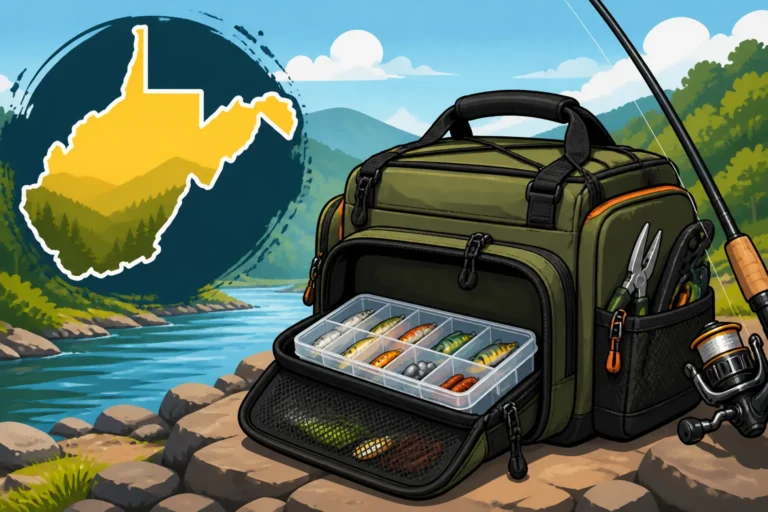
- Accessories: Don't forget your pliers for hook removal, a good landing net (especially for larger smallmouth), and some extra crankbait boxes to keep your lures organized. For those tough days, you might find some options on Amazon or at your local Bass Pro Shops.
By understanding the different types of crankbaits, how they interact with the water, and how to present them effectively, you'll be well on your way to unlocking the incredible smallmouth bass fishing that West Virginia has to offer. So grab your rods, tie on a crankbait, and hit the water – those bronze beauties are waiting!
Disclaimer
This article is for general informational purposes only and does not constitute professional advice. Laws, prices and regulations vary by location and change over time. Consult a qualified professional for guidance on your specific situation.