Best rod holder setup for a jon boat
Let's be honest, trying to keep your fishing rods secure and organized in a jon boat while navigating West Virginia's diverse waters can be a real headache. Between the narrow hulls, often-thin aluminum, and the constant need to adapt to different fishing scenarios, a haphazard rod setup can lead to broken tips, tangled lines, and endless frustration. This guide will walk you through designing and implementing the best rod holder setup for your jon boat, ensuring your gear is always safe, accessible, and ready for action, whether you're targeting smallmouth on the New River or walleye on Summersville Lake.
Why a Thoughtful Rod Holder Setup is Crucial for Jon Boats
Jon boats are fantastic workhorses for West Virginia anglers. They're typically stable, easy to launch, and can access incredibly shallow waters that larger boats wouldn't dare approach. But their design, often with open, unadorned interiors and relatively low gunwales, presents unique challenges when it comes to rod management. You might think, "Eh, I'll just lean them against the side," but anyone who's done that knows the inevitable outcome: a rod slides, a tip snaps, or worse, a rod goes overboard in a moment of excitement. A good rod holder setup isn't just a luxury; it's an investment in the longevity of your gear and your peace of mind on the water.
Protecting Your Valuable Gear from Damage
Imagine a crisp spring morning on the South Branch of the Potomac, your casting rod loaded with a jig, ready to hunt some pre-spawn smallmouth. You hit a small riffle or a sudden wake, and thwack! your rod, carelessly propped against a seat, slides to the floor and the tip snaps on a metal rib. Or perhaps you're trolling for muskie on the Little Kanawha River, and a rogue wave jostles your boat, sending your heavy muskie rod clattering. These aren't just minor inconveniences; they can mean costly repairs or replacements, effectively ending your fishing day. Dedicated rod holders keep your rods elevated, secure, and separated, drastically reducing the risk of accidental damage from bumps, waves, or even clumsy feet. They shield your reel from dirt and grit on the boat floor and prevent delicate rod tips from getting crushed or bent.
The compact nature of most jon boats also means space is at a premium. Without proper organization, rods tend to become a hazardous obstacle course, especially when you're moving around the boat to cast, net a fish, or even just grab a drink. By securing them in holders, you clear the deck, making your boat safer and more functional. It’s not just about protecting the rods themselves, but also about protecting you from tripping over them.
Enhancing Your Fishing Efficiency and Enjoyment
Beyond protection, a well-planned rod holder setup dramatically improves your fishing experience. Think about it: when a fish strikes on one line while you're actively casting another, how quickly can you switch? If your rods are simply lying around, it's a fumbling mess. With dedicated holders, each rod has its place, instantly accessible when needed. This is particularly vital in scenarios like trolling, where multiple lines are deployed. You need to grab the right rod, at the right angle, at a moment's notice.
Consider an evening spent chasing catfish on the Kanawha River. You might have several rods out, each with a different bait or rig, waiting for a bite. Trying to manage these by hand or with makeshift props is exhausting and inefficient. Rod holders allow you to fish multiple lines comfortably and effectively, increasing your chances of success. They also free up your hands for other tasks, like adjusting your bait, checking your depth finder, or simply enjoying a snack. This seamless operation reduces stress and allows you to focus more on the rhythm of the water and the thrill of the catch. A dedicated setup ensures you spend less time fumbling and more time fishing.
Types of Rod Holders Ideal for West Virginia Jon Boats
Choosing the right rod holder isn't a one-size-fits-all decision, especially with the versatility of a jon boat. Different fishing techniques and boat layouts in West Virginia will call for different styles. Understanding the pros and cons of each will help you make an informed choice that best suits your angling adventures.
Clamp-On Rod Holders: Versatility and No-Drill Convenience
Clamp-on rod holders are arguably the most popular choice for jon boat owners, and for good reason. They offer incredible flexibility and, critically for many, require no drilling into your boat's hull or gunwales. These holders typically feature a C-clamp or similar mechanism that tightens securely onto the boat's side, bench seats, or even a small transom. They are perfect for anglers who want to experiment with different setups, fish from various spots in the boat, or simply prefer not to make permanent modifications. You can quickly move them from bow to stern, or even from one side to the other, depending on current, wind, and where the fish are biting.
One of their main advantages is their adjustability. Many clamp-on models allow for both vertical and horizontal angle adjustments, letting you position your rod precisely for trolling, drift fishing, or simply holding a rod while you re-tie a lure. They come in various materials, from sturdy plastics to corrosion-resistant aluminum, perfect for freshwater environments like the Greenbrier River or Cheat Lake. However, it's worth noting that while convenient, not all clamp-on holders are created equal in terms of grip. Cheaper models might slip under the strain of a strong fish or heavy current, so investing in a quality brand, perhaps found at a specialized retailer like Bass Pro Shops, is often a wise move.
Rail-Mount and Track Systems: Adaptability and Modular Design
For jon boats that have existing rails or for owners willing to install a track system, rail-mount and track-mounted rod holders offer fantastic adaptability. Rail-mount holders attach directly to the boat's existing rails, providing a solid, stable connection point. These are often used on larger jon boats or those modified with accessory rails. The main benefit is the secure attachment and the ability to slide the holder along the rail, allowing for some positional adjustments.
Track systems take this concept even further. A track is installed permanently onto a flat surface of the boat – often the gunwale or a specially built accessory board. Once the track is in place, you can attach and re-position various accessories, including rod holders, cup holders, or even electronics mounts, by simply sliding them into the track and locking them down. This modularity is a game-changer for jon boat owners who need maximum flexibility. Want to troll for walleye with three rods off the stern one day, and then use two rods for bass fishing from the bow the next? A track system makes this incredibly easy. Brands like Scotty and Ram Mounts offer robust track systems and a wide array of compatible rod holders. While initial installation requires drilling, the long-term flexibility and customization options are unparalleled. This system is particularly useful for anglers who fish many different species and techniques across West Virginia's varied waters, from the broad Ohio River to smaller reservoirs.
Flush-Mount and Pedestal Rod Holders: Permanent Security and Strength
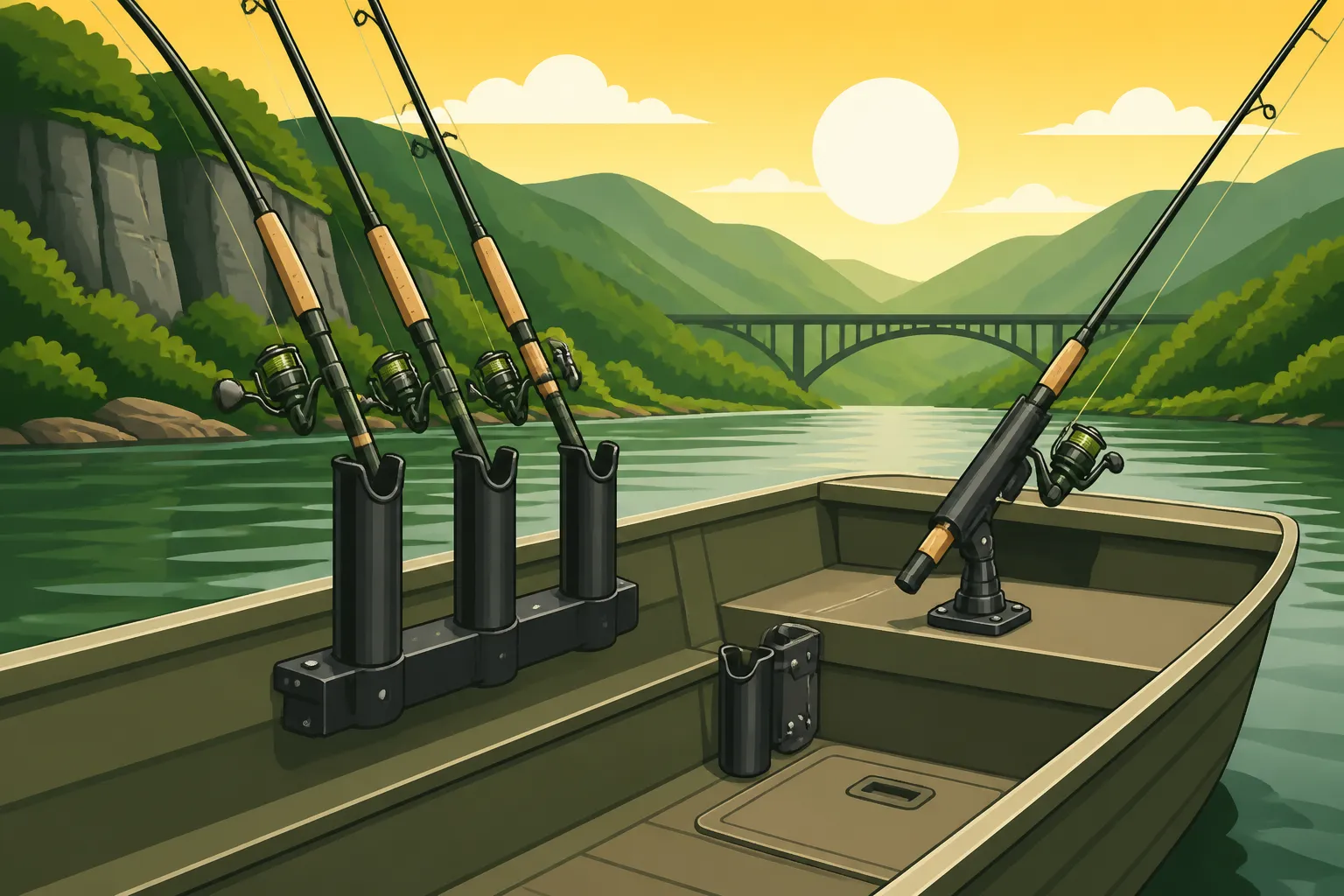
When absolute security and strength are your top priorities, and you're comfortable with permanent installation, flush-mount and pedestal rod holders are excellent options. Flush-mount holders are recessed directly into the gunwale or deck, providing a clean, low-profile look. Once installed, they are incredibly sturdy, offering minimal obstruction when not in use. They're typically angled, making them ideal for holding rods while trolling or stationary fishing. The downside, of course, is that their position is fixed, so careful planning during installation is key. They require precise cutting into your boat's structure, so this is a job that needs to be done right.
Pedestal rod holders, often seen in more serious trolling setups, are mounted on a sturdy base that stands proud of the deck. They offer excellent strength and can often be rotated or adjusted in multiple planes, providing superior control over rod angles. These are particularly favored by muskie and striped bass anglers who often use heavier tackle and need maximum leverage when a large fish strikes. While they offer superb performance, they do take up more deck space and can be an obstruction if not carefully placed. Both flush-mount and pedestal holders are built to withstand serious strain, making them great choices for targeting big fish on waters like Summersville Lake, where hybrid striped bass can put up a significant fight.
Here’s a quick overview to help you decide:
| Rod Holder Type | Pros | Cons | Best Use Cases |
|---|---|---|---|
| Clamp-On | No drilling, easily moved, adjustable angles | Can slip if not secured tightly, less robust for heavy tackle | Beginners, multi-purpose fishing, occasional use, smaller rods |
| Rail-Mount | Secure, adjustable along rail (if applicable), clean look | Requires existing rails or rail installation, fixed angle options | Boats with existing rails, moderate tackle, flexible placement |
| Track Systems | Highly modular, multi-accessory use, strong & secure | Requires permanent track installation (drilling) | Serious anglers, diverse fishing styles, maximum customization |
| Flush-Mount | Very strong, low-profile, clean aesthetic | Permanent position (drilling), fixed angles, requires precise installation | Dedicated trolling, heavy tackle, clean boat deck |
| Pedestal Mount | Extremely strong, highly adjustable (angle, rotation) | Permanent position (drilling), takes up deck space | Heavy tackle, muskie/striper trolling, maximum leverage |
Essential Considerations for Installing Rod Holders on a Jon Boat
Installing rod holders on a jon boat isn't rocket science, but there are some critical factors to ponder before you start drilling or clamping. Jon boats, by nature, often have thinner aluminum hulls compared to fiberglass boats, and their flat, open designs mean every inch of space is precious.
Material Compatibility and Reinforcement
The material of your jon boat, usually aluminum, is the first thing to consider. This metal is generally easy to drill through, but it can also be prone to flex or weakness if large holes are made without proper reinforcement. When choosing rod holders, look for those made of marine-grade aluminum, stainless steel, or heavy-duty composite plastics. These materials resist corrosion, which is vital in any freshwater environment, especially if you happen to venture into brackish waters.
If you're opting for permanent, drill-in rod holders like flush-mount or pedestal types, reinforcement is key. Simply bolting a heavy-duty rod holder to a thin aluminum gunwale might create stress points that could crack the metal over time, especially with the strain of a heavy fish or rough water. Consider backing plates made of marine plywood, aluminum, or composite material on the underside of the mounting surface. These plates distribute the load over a larger area, preventing localized stress and providing a much more secure attachment. For track systems, ensure the track itself is adequately long and secured with multiple bolts, again potentially using a backing plate if the gunwale is thin. You can often find suitable marine-grade hardware and backing materials at stores like Bass Pro Shops or online retailers such as Amazon. Don't skimp on quality here; a few extra dollars spent on proper hardware can save you a lot of grief down the line.
Optimal Placement and Angling for Different Fishing Styles
The "best" placement for your rod holders depends entirely on how you fish and what you're targeting. Are you primarily trolling for walleye on Tygart Lake? Still-fishing for catfish on Bluestone Lake? Or casting for smallmouth on the New River? Each scenario demands different angles and positions.
For trolling, you'll want rod holders that are sturdy and can be angled out from the boat to spread your lines, preventing tangles. Often, two holders off each side of the stern, angled at about 45 degrees, provide a good spread. Some anglers prefer a straight-back holder for a fifth, deeper line. The specific angle can also influence lure depth and action. If you're fishing with planer boards, you might need holders mounted higher up to keep your lines clear of the water. For still fishing, particularly for catfish or carp, you might want holders that position the rod tip lower to the water, making it easier to see subtle bites. These can often be positioned on the bench seats or along the gunwales.
When planning your layout, simulate your fishing positions. Sit in your usual fishing spot and imagine where your rod would naturally be. Ensure the rod holder doesn't interfere with casting, netting a fish, or operating the trolling motor. Consider how you'll move around the boat. If you frequently fish with a partner, make sure their areas are also optimized. Think about rod length too; a 7-foot medium-action bass rod will sit differently than a 9-foot heavy-action muskie rod. It's often helpful to use painter's tape or a marker to lay out your desired spots before making any permanent installations.
Accessibility and Storage Considerations
A great rod holder setup isn't just about holding rods; it's about making them accessible and managing space effectively. While active rods are in holders, what about your spare rods or rods that are just for transport? Jon boats often have limited storage, so integrating transport-friendly solutions is important. Vertical rod holders, often mounted on the side console or along the inside of the gunwale, are excellent for storing multiple rods vertically, keeping them out of the way but easily grabbed. These are typically simple clips or tubes that hold the rod butt and secure the tip.
Also, consider how easy it is to remove a rod from its holder when a fish strikes. Some holders have quick-release mechanisms, while others require a firm pull or twist. You want a balance of security and speed. For general transport, especially if you're trailering your jon boat or navigating rough roads to remote launches, you might want dedicated transport holders that keep rods more rigidly secured and protected from vibrations. Some anglers even build custom rod racks inside the boat for maximum protection during transit. Ensuring that your rod holders don't impede access to other essential boat features, like storage compartments, livewells, or your anchor system, is also crucial. For example, if you frequently run up the Elk River Trout Fishing spots, you want to make sure your rod holders don't block access to your cooler or tackle box.
Customizing Your Rod Holder Setup for West Virginia Fishing
West Virginia offers such an incredible variety of fishing, from big river smallmouth to stocked trout streams and massive lake muskie. Your jon boat rod holder setup should reflect this diversity, allowing you to adapt to whatever the Mountaineer State throws at you.
Trolling Setups for Lakes and Larger Rivers
Trolling is a highly effective technique for covering water and finding fish in West Virginia's larger lakes and rivers, such as Summersville Lake, Tygart Lake, or the Ohio River. For these applications, your rod holder setup needs to be robust, secure, and offer precise angle control. Many serious trollers opt for a combination of rail-mount or track-mounted holders, often paired with pedestal mounts for the heaviest rods.
When setting up for trolling, consider a "spread" pattern. You might have two rod holders angled out to the sides from the stern, maybe 30-45 degrees, to run different lures or baits at varying distances from the boat. Another one or two could be positioned directly off the stern, pointed straight back, perhaps for deeper-diving crankbaits or lines with downriggers. The key is to avoid line tangles, especially when making turns. Adjustable holders allow you to fine-tune these angles, which can be crucial for presenting lures naturally. For species like walleye or hybrid striped bass, having a consistent lure presentation is paramount. Some anglers even use specific brands like Cannon or Scotty, which specialize in trolling systems and accessories, for their robust designs and reliable performance under load. Remember that when you're Trolling Techniques for West Virginia Lake Walleye, the strength of your rod holders really matters when a big fish hits.
Still Fishing and Bank Fishing Adaptations
Not every fishing trip involves covering miles of water. Often, the most relaxing and productive days are spent anchored in a promising spot, still fishing for panfish, catfish, or even bass. Jon boats excel at getting into those quiet coves or river eddies where still fishing shines. For these scenarios, your rod holder needs are a bit different. Security is still important, but extreme strength and angle control might take a backseat to simplicity and portability.
Clamp-on rod holders are kings here. They can be easily attached to the boat's bench seats or gunwales, positioning your rod comfortably while you wait for a bite. You might set up two rods, one with a bobber rig for bluegill and another with a bottom rig for channel catfish. The ability to move these holders means you can adjust to the wind, current, or simply your own comfort. If you're using live bait for catfish on the Ohio River, you want your rod tips visible and sensitive, but also securely held so a strong bite doesn't yank the rod into the water. Sometimes, a simple, sturdy plastic holder is all you need for these applications. This allows you to relax, perhaps enjoy the scenery, and not constantly hold a rod. These holders are perfect for Catfish Fishing in West Virginia or simply a relaxing afternoon with the family catching panfish.
Transport and Storage Solutions for the Off-Season
Even the best fishing trip has to end, and safely transporting and storing your rods is just as important as having them ready on the water. Jon boats, with their open designs, can sometimes be challenging for secure rod transport, especially if you're bouncing down a gravel road to a remote river access point or simply storing them for the winter.
For daily transport to and from the launch, vertical rod holders are invaluable. These are often simple tube or clip designs mounted on the inside of the gunwale or on a flat panel near the bow or stern. They hold rods upright, keeping them separated, preventing tangles, and protecting tips and guides. Many anglers even install a bungee cord or strap across the top of these holders to prevent rods from bouncing out during travel. If you're frequently trailering your jon boat, consider adding a horizontal rod rack system along the side interior. This could be as simple as a few well-placed rod clips or a more elaborate bungee net system. The goal is to keep rods from rattling around and getting damaged. For example, if you're taking your boat to the New River Gorge Fishing Guide spots, you want to ensure your rods are secure for the journey, which can sometimes be bumpy.
When storing your jon boat for the off-season, especially if it's uncovered or exposed to the elements, it’s best to remove your rods entirely and store them indoors. However, if your boat is under cover or garaged, the vertical or horizontal onboard storage options will keep your rods organized and out of the way. Some rod holders, particularly track-mounted systems, allow you to easily remove the rod holder itself, leaving only the low-profile track, which can be beneficial for covering the boat or clearing deck space. Taking the time to properly secure your rods for transport and storage will extend their life and ensure they're ready for your next West Virginia adventure.
Choosing the Right Accessories and Maintenance
Having the right rod holders is only part of the equation. A few key accessories can enhance their functionality, and proper maintenance will ensure they last for many seasons of West Virginia fishing.
Mounts, Extenders, and Adapters
The world of rod holders is filled with various mounts, extenders, and adapters that can customize your setup even further. If your rod holders come with standard flush mounts, but you later decide you need to elevate your rods for better trolling clearance, an extender can lift the holder several inches. This is especially useful in jon boats where the gunwales might be relatively low. Adapters can allow you to mount one brand of rod holder to another brand's track system, or to convert a pedestal mount for a different type of base.
Swivel mounts are another excellent addition, especially for muskie or catfish anglers. These allow the entire rod holder to rotate with minimal effort, making it easier to fight a big fish that's running around the boat. You can pivot the rod to keep the line directly pointed at the fish, reducing stress on the line and improving your fighting angle. Always ensure any mounts or extenders are made from durable, marine-grade materials to withstand the elements and the strain of a hooked fish. When browsing options, check out the extensive selection at large outdoor retailers like Bass Pro Shops or even general online marketplaces like Amazon, as they often carry a wide range of compatible hardware. Don't forget to look for rod holder inserts, often made of rubber or soft plastic, that protect your rod handles from abrasion inside the holder.
Security and Anti-Theft Measures
Unfortunately, theft is a concern for any boat owner. While rod holders themselves aren't usually high-value targets, the expensive rods and reels they hold certainly are. For permanently mounted rod holders, using security bolts (like one-way screws or those requiring special tools) can deter casual thieves. For clamp-on or track-mounted systems, which are easier to remove, consider taking your rods and reels off the boat when it's unattended, especially overnight or at public launches.
Some rod holders come with integrated locking mechanisms or can be used with a small padlock to secure the rod in the holder. While not foolproof, these can add an extra layer of deterrence. A simple, heavy-duty cable lock can also be run through multiple rod handles and secured to a strong point on your boat if you need to leave them for a short period. For instance, if you're stopping for a quick bite after fishing Summersville Lake Bass Fishing, it’s always wise to secure your gear. Ultimately, the best security measure is vigilance and removing valuable equipment when not in use.
Cleaning and Maintenance for Longevity
Like all your fishing gear, rod holders benefit from regular cleaning and maintenance to ensure they function properly and last for years. After each trip, especially if you've been fishing in muddy rivers or waters with heavy pollen, give your rod holders a quick rinse with fresh water. This removes dirt, grit, and any corrosive elements. Use a mild soap and a brush for a deeper clean if necessary.
For metal rod holders (aluminum or stainless steel), check for any signs of corrosion, especially around the mounting points. A little silicone spray on moving parts, like adjustable swivel points or clamping mechanisms, can keep them operating smoothly. Inspect plastic or composite holders for cracks or sun damage, as UV rays can degrade these materials over time. Regularly check all bolts, screws, and clamps to ensure they are tight and secure. Vibrations from boat travel and engine use can loosen hardware, so a quick check before each season, or even periodically throughout, is a good habit. If you notice any rust or wear on a component, replace it promptly before it compromises the integrity of the entire setup. This simple routine will keep your rod holders performing optimally, ready for your next angling adventure in West Virginia's beautiful waters.
Disclaimer
This article is for general informational purposes only and does not constitute professional advice. Laws, prices and regulations vary by location and change over time. Consult a qualified professional for guidance on your specific situation.