Best hair jig technique for winter smallmouth
Winter fishing can be a real head-scratcher, can't it? The water turns frigid, the fish seem to vanish, and you're left wondering if it's even worth bundling up and heading out. If you've ever felt that icy grip of frustration trying to coax a bite from a stubborn smallmouth bass in the dead of winter, you're not alone. But what if I told you there's a subtle, almost magical technique that consistently puts fish in the net when nothing else will? This guide is all about unlocking the power of the hair jig, detailing the best techniques to fool those lethargic West Virginia smallmouth when the temperatures plummet.
The Winter Smallmouth Puzzle: Why Hair Jigs Are the Key
When the cold winds howl and the water temperatures drop into the 40s or even upper 30s, smallmouth bass become incredibly sluggish. Their metabolism slows to a crawl, and they're no longer chasing down fast-moving baits with reckless abandon. This is where many anglers get it wrong, trying to force aggressive presentations on passive fish. The beauty of the hair jig lies in its ability to perfectly mimic the natural, slow-moving forage that winter smallmouth are willing to eat, making it an indispensable tool for success.
Mimicking Winter Forage with Subtlety
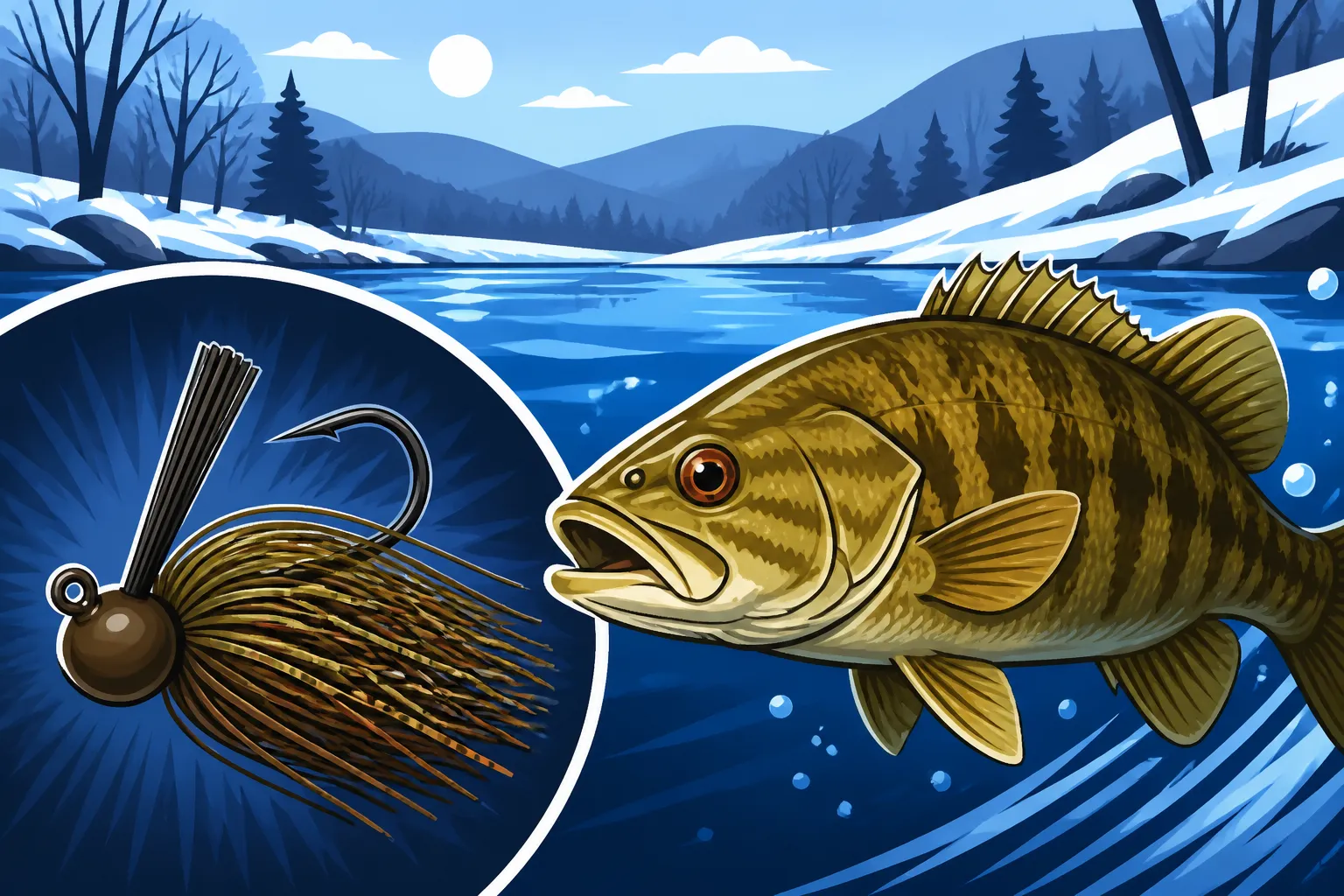
Think about what a smallmouth eats in the winter. It's not a bustling smorgasbord of fast-swimming minnows or frantic crawfish. Instead, it's often a lone baitfish, perhaps a stunned shad or a lethargic sculpin, struggling in the cold current. A hair jig, with its wispy, natural fibers like marabou or bucktail, perfectly emulates this vulnerable prey. When wet, these materials breathe and pulsate with the slightest twitch or current, creating an incredibly lifelike presentation without any aggressive action. It's this subtle, almost ghost-like movement that triggers a predatory instinct in even the most inactive smallmouth.
The key here is subtlety. We're not trying to create a commotion. We're offering an easy meal. The fine hairs of a marabou jig, for instance, expand and contract as it falls, looking like a dying baitfish fluttering downward. This isn't something a plastic or hard bait can replicate with the same realism. For smallmouth in West Virginia's clear winter waters, where visibility is often excellent, an artificial presentation that doesn't scream "fake" is paramount. It’s about being truly inconspicuous and irresistible.
The Cold-Water Advantage of Natural Materials
Beyond just mimicking forage, hair jigs have a distinct advantage in cold water because of their material properties. Unlike plastics that can stiffen and lose their action in freezing temperatures, natural hair remains supple and vibrant. This means you get maximum movement from minimal effort, which is exactly what you need when you're trying to fish slowly and precisely. The slight resistance the hair provides as it sinks also slows the fall rate, keeping the jig in the strike zone longer.
Consider a frigid January day on the New River or the South Branch Potomac. The water is often crystal clear, and the smallmouth are glued to the bottom or tucked into deep eddies. A hair jig, with its slow, controlled descent, allows you to target these depths with incredible precision. It doesn't plunge past the fish; it drifts down gently, giving them ample time to inspect and commit. This slow fall also helps you feel those incredibly light winter bites, as the jig's movement is less affected by current compared to something with more drag. The finesse required to fish these jigs also trains you to be a more observant and patient angler, a skill that translates to all types of fishing.
Gearing Up for Success: Rods, Reels, Lines, and the Perfect Jig
Just like any specialized technique, fishing hair jigs for winter smallmouth requires a thoughtful approach to your gear. You can't just grab your everyday bass rod and expect to feel those delicate taps. We're talking about ultra-sensitive setups that transmit every subtle vibration, allowing you to detect the almost imperceptible "tick" that signals a bite. Getting your gear right is half the battle when targeting cold-water bronze.
Rod, Reel, and Line Choices
For hair jigging, sensitivity is king. I recommend a light to medium-light power spinning rod, typically between 6'6" and 7'6" in length, with a fast or extra-fast action. This provides the backbone to set the hook, but a sensitive tip to feel those subtle takes. A graphite rod is almost a necessity for its superior sensitivity compared to fiberglass. Pair this with a lightweight spinning reel in the 1000 to 2500 size range, ensuring a smooth drag and comfortable balance. Best Spinning Rods for Smallmouth Bass can give you more specific ideas.
Your line choice is equally critical. I prefer a main line of 6-8 pound braided line, which offers incredible sensitivity and no stretch. However, braided line is highly visible, especially in clear winter waters. So, a critical component is a 6-10 foot leader of 6-8 pound fluorocarbon. Fluorocarbon is nearly invisible underwater, extremely abrasion resistant for fishing around rocky West Virginia river bottoms, and its low stretch helps with bite detection. The combination gives you the best of both worlds: sensitivity from the braid, and stealth from the fluorocarbon. Best Fluorocarbon Line for Clear River Water dives deeper into leader selection.
Jig Styles and Colors for West Virginia Waters
When it comes to the hair jig itself, there are a few styles that shine in winter. Marabou jigs are probably the most popular for their incredible action with minimal movement. Bucktail jigs, while a bit stiffer, offer a more compact profile and sink faster, which can be useful in deeper, faster currents. Hair jigs typically range from 1/16 oz to 1/4 oz, with 1/8 oz being a fantastic all-around size for many West Virginia smallmouth rivers.
Color choice is important but don't overthink it. Natural colors are usually best for clear, cold water. Think shades of brown, black, olive, gray, and white. These mimic common baitfish and crawfish. Sometimes, a touch of chartreuse or orange can be added as an "attractor" color, especially in slightly stained water. For instance, a black and blue hair jig can be incredibly effective when imitating crawfish. If you're fishing exceptionally clear water, like some stretches of the Elk River in winter, pure white or light gray can be unbeatable for imitating ghost minnows. You can often find a great selection of these specialized hair jigs on Amazon, making it easy to stock up on various weights and colors.
| Jig Material | Best Use Case | Typical Weight Range | Key Advantage in Winter |
|---|---|---|---|
| Marabou | Slow, subtle presentations | 1/16 – 1/8 oz | Maximum movement with minimal effort |
| Bucktail | Deeper water, faster currents | 1/8 – 1/4 oz | More compact profile, sinks faster |
| Rabbit Strip | Larger profile, more action | 1/8 – 1/4 oz | Undulating action, good for current |
| Squirrel Tail | Very subtle, compact profile | 1/32 – 1/8 oz | Realistic, natural texture |
The Art of the Retrieve: Mastering Hair Jig Presentation
This is where the rubber meets the road, or more accurately, where the jig meets the bottom. Throwing a hair jig isn't like power fishing with a crankbait or spinnerbait. It's a game of patience, feel, and subtle manipulation. The goal is to keep the jig in the strike zone, moving just enough to entice a bite, but not so much that it scares off a lethargic smallmouth.
The Subtle "Stutter-Fall"
The most effective retrieve for winter smallmouth with a hair jig is often a subtle "stutter-fall." Cast your jig upstream or up-current and let it sink to the bottom. Once it hits, engage your reel and retrieve just enough slack to maintain contact. The action comes from your rod tip, not your reel. Use short, upward twitches of your rod tip – maybe 6-12 inches – to lift the jig a foot or so off the bottom, then let it fall back on a semi-slack line. The key is to let the current and gravity do most of the work.
As the jig falls, the natural fibers will expand and contract, creating that irresistible dying baitfish presentation. Most bites will occur on the fall or right as the jig touches back down. Pay extremely close attention to your line; any twitch, jump, or sudden slackening could indicate a bite. It might not feel like a typical "thump" you're used to in warmer water; sometimes it's just a subtle weightlessness or a slight feeling of "mush." Setting the hook quickly but smoothly is crucial. This technique is extremely effective in places like the Ohio River tributaries or even smaller streams with good smallmouth populations.
Targeting Winter Smallmouth Hangouts
Knowing where to present your hair jig is just as important as how. In winter, smallmouth bass will seek out thermal refuge and current breaks. Look for the deepest pools, eddies, and slow-moving stretches of river. Current seams where fast water meets slow water are prime locations, as baitfish are often swept into these calmer areas. Deep rock piles, submerged timber, and bridge pilings also provide excellent ambush points and shelter from strong currents.
Focus your casts on the upstream side of these features, letting your jig drift naturally into them. Slowly work your way through a pool, fanning casts to cover different depths and angles. Don't be afraid to let the jig sit on the bottom for several seconds between twitches. Remember, fish are cold and unwilling to chase far. Putting the jig right in front of them is paramount. Think about the Best Fishing Rivers in West Virginia and identify those deep, slow sections that hold smallmouth during the colder months.
Decoding Winter Smallmouth Locales and Common Mistakes
Understanding where smallmouth bass hold up in winter is a critical piece of the hair jig puzzle. They aren't going to be in the same spots they were in summer, and knowing this helps you maximize your time on the water. Beyond location, recognizing common mistakes can turn a slow day into a successful one.
Fishing Too Fast
This is arguably the most common mistake anglers make when winter fishing with any technique, but especially with hair jigs. We're often conditioned to work baits with a certain pace, but in cold water, that pace needs to slow way down. If you think you're fishing slow, try fishing even slower. A good rule of thumb is to pause your retrieve longer than you think is necessary. That 5-second pause might feel like an eternity to you, but to a lethargic smallmouth, it's just enough time to decide that your jig is a vulnerable, easy meal.
Winter smallmouth aren't going to chase. They're looking for something that drifts by, almost asking to be eaten. Overworking the bait, or retrieving it too quickly, will often send them scattering. Remember the "stutter-fall" technique, where the emphasis is on the fall and the pause, not the twitch. If you're not getting bites, the first thing to adjust is always your speed – slow it down. This is especially true on large bodies of water like Summersville Lake or Bluestone Lake where smallmouth might be holding in deep structures.
Missing Subtle Bites and Setting the Hook
Winter smallmouth bites are notoriously subtle. Gone are the aggressive thumps and rod-wrenching strikes of summer. In cold water, a bite might feel like nothing more than a slight "tick," a spongy resistance, a sudden slackening of your line, or even just your jig feeling heavier than it should. This is why a sensitive rod, braided mainline, and fluorocarbon leader combination is so important. Your eyes become just as important as your hands; watch your line where it enters the water for any unnatural movement.
When you detect one of these subtle indications, resist the urge to rear back with a massive hookset like you might for a largemouth in thick cover. Instead, use a smooth, firm sweep of the rod to set the hook. A huge, aggressive hookset on a light hair jig with a sensitive rod can sometimes pull the hook right out of the fish's mouth or break your light leader. A controlled, steady pressure is often all that's needed to bury that small, sharp hook. Learning to interpret these subtle cues is a skill that comes with practice, but once mastered, it will significantly increase your winter smallmouth catch rate. This is part of the challenge and reward of Smallmouth Bass Fishing in West Virginia during the colder months.
Disclaimer
This article is for general informational purposes only and does not constitute professional advice. Laws, prices and regulations vary by location and change over time. Consult a qualified professional for guidance on your specific situation.