Best Jigs for West Virginia Walleye
Many anglers find themselves scratching their heads when it comes to consistently catching walleye in West Virginia's diverse waterways. These elusive fish can be incredibly picky, and showing them the wrong presentation often means coming home empty-handed. This comprehensive guide will pull back the curtain on the best jig types, sizes, colors, and retrieval techniques, giving you the insider knowledge to successfully target walleye across the Mountain State's lakes and rivers.
Understanding West Virginia Walleye Habits and Habitats
Before you can pick the perfect jig, you've got to think like a walleye. These fish are predators, but they're also sensitive to light and changes in their environment. West Virginia offers a fascinating array of walleye habitats, from sprawling reservoirs to winding rivers, and understanding how these fish behave in each can drastically improve your success.
Walleye Behavior in West Virginia's Lakes
In West Virginia's larger lakes like Summersville Lake, Tygart Lake, and Stonewall Jackson Lake, walleye often relate to submerged structures. Think about those deep humps, points, creek channels, and even old roadbeds you might see on a contour map. During the day, especially under bright sunlight, walleye will often retreat to deeper, cooler water or seek shade under ledges and brush piles. They're trying to escape the light that hurts their sensitive eyes.
At dawn, dusk, and on cloudy days, these fish become more active, moving shallower to feed on baitfish. They might patrol the edges of weed lines or cruise along rocky shorelines. Your jig presentation in these lake environments needs to account for both their depth and their typical foraging behavior. A vertical presentation might be key during midday, while casting and slowly retrieving can work wonders during low-light periods. Walleye Fishing in West Virginia delves into more detail about these habits.
Walleye Behavior in West Virginia's Rivers
River walleye, particularly in stretches of the Ohio River or the Kanawha River, behave a bit differently due to the constant current. Here, they'll often hold in current breaks, behind large rocks, submerged logs, or in deeper scour holes where they can ambush prey without expending too much energy fighting the flow. Confluence areas, where two rivers or a creek meet the main river, are often prime locations as baitfish are funneled through.
The river's flow also dictates jig weight and presentation. Too light, and your jig won't get to the bottom; too heavy, and it might get snagged too often or not present naturally. River walleye are opportunistic feeders, often facing upstream, waiting for an easy meal to drift by. This means a natural drift with your jig, mimicking an injured baitfish or invertebrate, can be incredibly effective. Understanding the river's contours and current lines is crucial for predicting where walleye will set up shop. The Ohio River Fishing Guide for West Virginia Anglers offers some great insights into fishing those particular waters.
Seasonal Movements and Feeding Patterns
Walleye are definitely creatures of habit when it comes to seasons, and their movements are largely driven by spawning and feeding opportunities. In early spring, after the ice melts, they'll often stage in deeper areas near spawning grounds, which could be rocky shoals, riprap, or even tributary mouths. This pre-spawn period can be fantastic for jigging, as they're actively feeding to build energy. Walleye Spawning Season in West Virginia has more on this critical time.
As summer progresses, walleye typically move to deeper, cooler water during the day, often suspending over humps or relating to thermoclines in lakes. In rivers, they'll find deeper pools and current breaks. Fall sees them packing on weight for winter, often becoming more aggressive and moving into shallower feeding flats during low light. Even in winter, dedicated anglers can find success through the ice or by slow jigging deep, cold waters. Knowing these patterns will help you choose not just if to jig, but where and how to present it.
The Anatomy of a Walleye Jig: What Makes it Effective?
A jig isn't just a hunk of lead with a hook. Every component plays a role in its effectiveness, especially when you're trying to fool a notoriously finicky fish like a walleye. Understanding these elements will empower you to select or even customize the perfect jig for any given scenario.
Jig Head Design and Weight Considerations
The shape of a jig head is far more important than many anglers realize. A round head is versatile and drops quickly, but it can snag easily in rocky bottoms. A stand-up or "arky" style head allows your soft plastic trailer to stand upright off the bottom, making it highly visible. Bullet or pointed heads are great for piercing through weeds and cover, while football heads provide excellent bottom contact and roll over rocks, minimizing snags. The weight, of course, dictates how fast your jig sinks and how well it stays on the bottom in current or wind. For general West Virginia walleye fishing, weights typically range from 1/8 ounce in shallow, calm water to 1/2 ounce or even heavier in deep, fast rivers or windy conditions.
Consider the depth you're fishing and the current you're battling. If you're fishing the deep holes of the Ohio River, a 3/8 to 1/2 ounce jig might be a good starting point to maintain bottom contact. If you're casting to a shallow point on Summersville Lake, a 1/8 or 1/4 ounce might be all you need for a natural fall. There's a delicate balance: you want enough weight to get down and feel the bottom, but not so much that it looks unnatural or constantly snags.
Hook Size and Quality for Walleye
The hook on your jig is your direct connection to the fish, and its quality is paramount. Walleye have bony mouths, and a sharp, strong hook is essential for solid hooksets and preventing lost fish. Many cheaper jigs come with flimsy, dull hooks that will bend out or fail to penetrate. Investing in jigs with high-quality, chemically sharpened hooks right out of the package, or replacing hooks on cheaper jigs, is a smart move.
Hook size should correspond to the size of your bait and the average size of the walleye you expect to catch. Generally, a larger hook (e.g., a 1/0 or 2/0) is better for larger soft plastics or larger live bait, while smaller jigs will require smaller hooks (e.g., a #4 or #2). You want enough hook exposed to get a good bite without overpowering the bait's action. Remember, walleye aren't generally known for crushing baits; they often "mouth" them, so a small, sharp hook can make all the difference in connecting.
Trailers: Soft Plastics, Live Bait, and Scent
The trailer is what gives your jig its appeal and is often the key to enticing a strike. Soft plastic grub tails, paddle tails, and swimbaits are incredibly popular and versatile. They offer vibration, flash, and a lifelike profile that can be customized with different colors and sizes. For example, a curly-tail grub on a jig head is a classic, effective combination that mimics baitfish or aquatic insects. You can find a huge variety of soft plastics to experiment with at stores like Bass Pro Shops or even in bulk online at Amazon.
Live bait is another phenomenal trailer option for walleye, especially when they're being finicky. Minnows, shiners, nightcrawlers, and leeches are all walleye favorites. Tipping your jig with a piece of nightcrawler or a lively minnow adds natural scent, flavor, and movement that artificial baits sometimes lack. Many anglers combine both, using a small soft plastic grub tipped with a minnow head or a piece of worm to get the best of both worlds. Don't forget scent attractants, which can be applied to both soft plastics and live bait to further entice hesitant walleye.
Top Jig Styles for West Virginia Walleye
There's a dizzying array of jigs out there, and each has its own strengths and weaknesses. For West Virginia walleye, certain styles consistently outperform others depending on the conditions. Let's break down the go-to choices that should be in every angler's tackle box.
Grub Jigs and Paddle Tails: The Versatile All-Rounders
When in doubt, start with a grub jig. These are incredibly versatile and effective in almost any walleye scenario. A simple jig head paired with a curly-tail grub or a paddle tail swimbait can mimic a wide range of forage, from minnows to aquatic insects. The curly tail provides a tantalizing wiggling action even on a slow retrieve, while a paddle tail thumps and vibrates, sending out signals that walleye can detect with their lateral lines.
They're fantastic for casting and retrieving, especially along contours, weed edges, or rocky points in lakes like Tygart or Sutton. You can also vertical jig them effectively over deeper structure. The key is to match the grub or paddle tail size and color to the baitfish present in the water. If the walleye are feeding on small emerald shiners, a 2-3 inch silver or white paddle tail might be perfect. If they're keying on larger shad, a 4-inch grub could be the ticket. Experimentation is key, but these are absolute staples.
Hair Jigs and Feather Jigs: Subtle Appeal for Cold Water
Hair jigs and feather jigs are old-school classics that are still incredibly effective, especially in colder water or when walleye are lethargic. Their strength lies in their subtle, natural breathing action. Unlike soft plastics which rely on a more aggressive retrieve to generate action, hair and feathers undulate and pulse with the slightest movement, even when barely jigged or drifted. This makes them deadly for slow presentations.
These jigs often mimic small baitfish, crayfish, or even aquatic insects. Bucktail jigs, for instance, have been catching walleye for generations. In the early spring or late fall on river systems like the Kanawha, slowly working a black, brown, or olive hair jig along the bottom can be incredibly productive. Their natural appearance and minimalist presentation can often trigger bites from hesitant walleye that ignore more flashy offerings. If you're targeting those deep, cold water walleye, these should absolutely be in your arsenal.
Blade Baits and Jigging Spoons: For Vertical Jigging and Aggressive Fish
When walleye are holding tight to deep structure, or when you've located a school of aggressive feeders, blade baits and jigging spoons truly shine. These aren't jigs in the traditional sense, as they don't typically have a soft plastic or hair trailer, but they are fished with jigging motions and are indispensable for walleye. Blade baits, like the classic Heddon Sonar or Rapala Rippin' Rap, vibrate intensely on the lift and flutter on the fall, creating a lot of flash and commotion. Jigging spoons, such as a Kastmaster or Hopkins spoon, also flutter erratically when dropped, mimicking a dying baitfish.
These are primarily vertical presentations. You drop them straight down to the fish you see on your sonar, then lift and drop them, varying the height and speed of your jig. This technique is fantastic for targeting suspended walleye or those holding close to the bottom in deep lakes. They can also be effective when casting and retrieving with a "lift and drop" motion. When fishing deep humps on Summersville Lake or the deep pools of the Ohio River, these baits can often elicit reaction strikes from otherwise inactive fish. How deep to troll for walleye at Tygart Lake provides context for deep water fishing where these excel.
Weedless Jigs: Fishing the Cover
Sometimes, the walleye are hiding in the thick stuff – dense weeds, submerged timber, or heavy brush piles. In these situations, your standard open-hook jig will just get snagged relentlessly, leading to frustration and lost tackle. This is where weedless jigs become your best friend. These jigs are designed with brush guards, typically made of wire or heavy monofilament bristles, that protect the hook point from snags while still allowing for a solid hookset when a fish bites.
Common weedless jig designs include those similar to bass jigs, with a stiff fiber guard, or specialized weedless jig heads that allow you to rig soft plastics Texas-style, burying the hook point in the plastic. While walleye aren't as notoriously cover-oriented as largemouth bass, they will use dense vegetation or wood for ambush points, especially during low-light conditions. Having a few weedless jig options in your box, perhaps rigged with a soft plastic crayfish imitation or a compact paddle tail, will open up new fishing opportunities in otherwise inaccessible areas.
| Jig Type | Primary Use Case | Typical Weight Range (oz) | Best Walleye Behavior | Pros | Cons |
|---|---|---|---|---|---|
| Grub/Paddle Tail | All-around, casting & retrieving, vertical | 1/8 – 1/2 | Active, neutral | Versatile, wide range of forage mimicry | Can be less effective on very finicky fish |
| Hair/Feather Jig | Cold water, lethargic fish, slow presentation | 1/16 – 3/8 | Finicky, slow | Subtle, natural action, excellent in cold | Less flash/vibration, can be overlooked |
| Blade Bait | Vertical jigging, aggressive fish | 1/4 – 3/4 | Aggressive, reaction bites | High vibration, flash, covers water quickly | Can snag easily, primarily vertical |
| Jigging Spoon | Vertical jigging, deep water | 1/4 – 1 | Aggressive, reaction bites | Heavy, gets deep fast, strong flash | Can snag easily, less natural presentation |
| Weedless Jig | Heavy cover (weeds, wood) | 1/8 – 1/2 | Ambushing, in cover | Minimizes snags, allows fishing in thick stuff | Hooksets can be trickier, less exposed hook |
Choosing the Right Jig Size and Weight
Selecting the correct jig size and weight is often the most critical decision when walleye fishing. Too light, and you're not getting to the fish; too heavy, and your presentation looks like a brick falling through the water. It’s all about finding that Goldilocks zone – just right.
Matching the Hatch and Water Depth
The "match the hatch" principle is fundamental. If walleye are feeding on small, 2-inch minnows, a 4-inch grub jig isn't going to get many bites. Pay attention to what baitfish are prevalent in the water you're fishing. Often, gutting the first walleye you catch can give you invaluable clues about their current diet, helping you adjust your jig size and color. This is where understanding What walleye eat in West Virginia lakes comes in handy.
Water depth is another major factor. In shallow water (under 10 feet) with little current, a 1/8 or even 1/16 ounce jig might be perfect for a slow, natural fall. As you move deeper, or as the current increases, you'll need to increase your weight to maintain bottom contact and feel those subtle bites. For depths of 20-30 feet, a 1/4 to 3/8 ounce jig is often a good starting point. Deeper still, or in very fast current, you might need a 1/2 ounce or heavier. The goal is to feel your jig lightly ticking the bottom or structure without it getting swept away or free-falling too quickly.
Current and Wind Considerations
West Virginia's rivers, particularly the Ohio and Kanawha, present unique challenges due to current. Current will lift lighter jigs off the bottom, making it impossible to effectively fish deep holes or current seams. You need enough weight to cut through the water and maintain a controlled drift or retrieve. Sometimes, using a slightly heavier jig than you think you need is better, as it allows you to maintain feel and control.
Wind is the lake angler's equivalent of river current. A strong breeze creates surface chop and undercurrents that can make it difficult to feel a light jig or keep it in the strike zone. On windy days on a large lake like Summersville, bumping up your jig weight by one or two sizes can make a huge difference in staying connected to your bait and feeling those light walleye bites. It's often a process of trial and error, starting with a moderate weight and adjusting up or down until you achieve the desired feel and presentation.
Finesse vs. Power Jigging
Your jig weight also dictates your fishing style. Finesse jigging, typically with lighter weights (1/16 – 1/4 oz), is about subtle presentations, slow falls, and delicate movements. This is ideal for finicky walleye, clear water, or when fish are holding tight to cover and aren't chasing aggressive baits. It requires a sensitive rod and line to detect those incredibly light bites.
Power jigging, using heavier jigs (3/8 oz +), is about covering water quickly, getting baits deep efficiently, and creating more aggressive action. This is great for active walleye, deep structures, or when using larger soft plastics that need more weight to maintain their action. It also works well in strong currents or when trying to punch through heavy wind. Understanding when to employ each style, and having the right jig weights to do so, is a mark of a skilled walleye angler.
Unlocking Walleye with Jig Colors and Presentation
Choosing the right color and perfecting your presentation are the final pieces of the puzzle for consistent walleye success. These factors can often turn a slow day into a memorable one, especially when conditions are tough.
Water Clarity and Light Conditions
The rule of thumb for jig colors is often "bright water, natural colors; dark water, bright colors." In clear water, such as many of West Virginia's mountain streams or some of the clearer lake sections, natural colors like greens, browns, pearl white, or watermelon are usually more effective. These mimic the natural forage without appearing overly aggressive or unnatural to wary walleye.
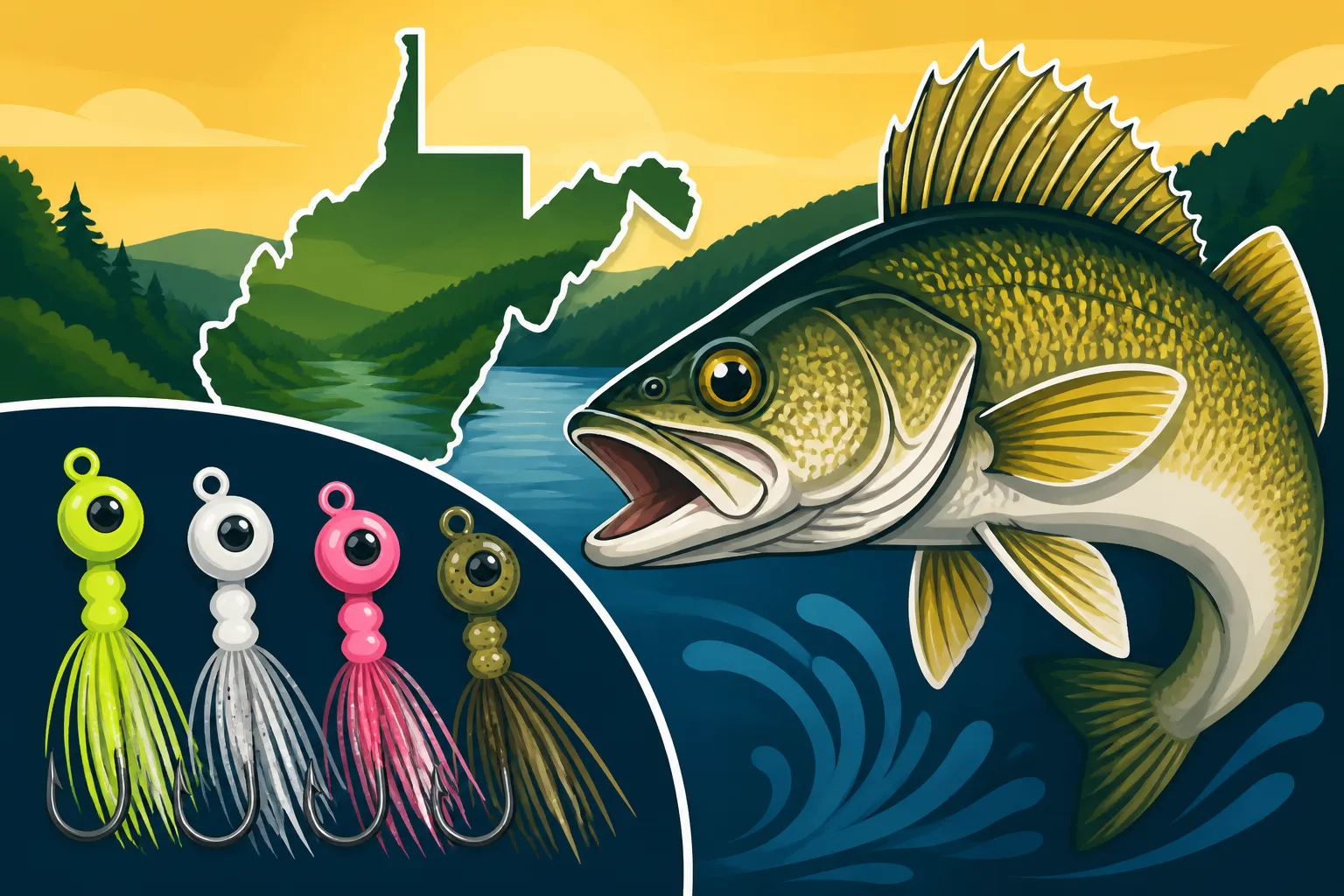
In stained or muddy water, which can often be found after heavy rains in West Virginia rivers or in some lake tributaries, bright or contrasting colors excel. Chartreuse, orange, bright pink, and firetiger patterns create a more visible silhouette and stand out in low visibility. On cloudy days or during low-light periods (dawn/dusk), even in moderately clear water, a brighter color can sometimes grab a walleye's attention more effectively. Always consider the available light; under bright sun, a more muted or translucent color might be better than a fluorescent one.
Natural vs. Attractor Colors
Beyond clarity, it's a debate between natural and attractor colors. Natural colors aim to perfectly imitate the local baitfish or crayfish. Think subtle shades of green pumpkin, brown, white, or silver. These are often best when walleye are actively feeding and keyed in on a specific forage. If you've observed schools of shad or shiners, a jig with a similar color and flash can be deadly.
Attractor colors, on the other hand, don't necessarily mimic anything exactly but rather serve to provoke a strike through their flash, contrast, or vibrancy. Hot pink, bright chartreuse, or firetiger patterns are classic attractor colors. These can be incredibly effective when walleye are sluggish, when the water is murky, or when you're trying to elicit a reaction strike from a non-feeding fish. Sometimes, a walleye might not be hungry, but a bright, irritating color darting past them can still trigger an aggressive response. Don't be afraid to experiment with both natural and attractor hues; often, the fish will tell you what they prefer on any given day.
Jigging Techniques: Vertical, Casting, Drifting
How you present your jig is just as important as the jig itself. Different situations call for different techniques:
-
Vertical Jigging: This involves dropping your jig straight down to the bottom and working it directly beneath the boat. It's incredibly effective when you've pinpointed fish on your Best Fish Finders for West Virginia Lakes or when walleye are holding tight to deep structure. The motion is typically a sharp lift of 6-18 inches, followed by a controlled fall back to the bottom. Bites often occur on the fall, so pay close attention to your line. This technique excels in deep water, or when ice fishing.
-
Casting and Retrieving: This is a versatile technique for covering water, especially shallower flats, points, or weed edges. Cast your jig out, let it sink to the desired depth (often the bottom), and then use a "lift and drop" or "hop and drag" retrieve. You're trying to make the jig appear like a wounded baitfish or a crawling crayfish. Vary your retrieve speed and pause lengths. This is a great way to locate active fish, particularly during low light or on those productive river stretches.
-
Drifting (or Dragging): Often used in rivers or on windy lakes, drifting involves allowing your jig to slowly move along the bottom with the current or wind. You're using just enough weight to maintain bottom contact, but not so much that it constantly snags. The rod tip is often held steady, and you're feeling for that subtle "tick" of a bite. This is a highly effective, natural presentation that covers water slowly and thoroughly. On rivers, you might drift with the current, while on lakes, you might use a drift sock to control your speed in windy conditions. The slow, natural movement of a grub or hair jig on a controlled drift can be irresistible to walleye.
Advanced Jigging Strategies and Tips for Success
Once you've mastered the basics of jig selection and presentation, you can dive into more advanced strategies that can truly elevate your walleye game in West Virginia. These tips focus on leveraging technology, optimizing your tackle, and making crucial adjustments.
Reading Your Sonar and Locating Walleye Structure
Modern sonar and fish finders are invaluable tools for walleye anglers. Don't just look for "arches" representing fish; learn to interpret the structure and contours they reveal. Walleye relate heavily to underwater features like humps, ledges, submerged timber, rock piles, and old creek channels. Your sonar can show you these features, as well as baitfish schools that walleye are likely to be preying on.
Look for subtle changes in bottom composition. Harder bottoms (rocks, gravel) often show up as a thicker, more intense line on your display, while softer bottoms (mud, silt) appear thinner. Walleye frequently patrol the edges where these bottom types meet. Also, pay attention to the thermocline in lakes, as walleye often suspend just above or within this temperature barrier in summer. Understanding your electronics is key to finding those productive, overlooked walleye haunts. Best Fish Finders for West Virginia Lakes provides a deep dive into choosing and using this technology effectively.
Terminal Tackle and Line Selection for Jigs
The best jig in the world is useless if your terminal tackle isn't up to snuff. For jigging, a sensitive rod and line combination is paramount for feeling those subtle walleye bites, which often feel like nothing more than a slight increase in weight or a faint tap. Braided line (10-20 lb test) is an excellent choice for its zero-stretch properties, allowing for maximum sensitivity and strong hooksets, especially in deeper water. However, braid is highly visible.
Therefore, it's almost always paired with a fluorocarbon leader (6-12 lb test). Fluorocarbon is nearly invisible underwater, more abrasion-resistant than mono, and offers some stretch to absorb head shakes. The length of your leader can vary, from a couple of feet to 6-8 feet, depending on water clarity and how spooky the fish are. For jigging, a quality swivel to connect your braid to your fluorocarbon leader is also a good idea to prevent line twist. Make sure your knots are strong and regularly check your leader for nicks and abrasions, especially when fishing around rocks or timber.
Seasonal Jigging Adjustments
Walleye behavior changes drastically with the seasons, and your jigging approach needs to adapt accordingly.
- Spring: During pre-spawn and early spawn, walleye are often shallow near rocky areas. Light jigs (1/8 – 1/4 oz) with natural grubs or hair jigs fished slowly can be deadly. Post-spawn, they might disperse and become harder to locate, often moving to secondary points or deeper flats.
- Summer: Walleye move deep in lakes during the day to avoid light and find cooler water. Vertical jigging with heavier blade baits or spoons over humps and channels is effective. River walleye will hold in deeper pools and current breaks. Night fishing with jigs can also be extremely productive as they move shallower. Best Time of Day to Catch Walleye in West Virginia emphasizes low-light periods.
- Fall: This is often a fantastic time for aggressive walleye as they feed heavily. They can be found shallower than summer, especially on windy days, keying on baitfish. Casting and retrieving grubs, swimbaits, or even larger hair jigs can work wonders.
- Winter: If targeting through the ice or in open water, vertical jigging with small spoons, blade baits, or tiny hair jigs is the ticket. Walleye are lethargic, so slow, subtle movements are crucial. They'll often be found in deep holes or transitions.
Always be willing to experiment with jig weights, colors, and retrieve speeds until you find what the walleye are responding to on that particular day. Sometimes, a slight change in the plastic tail or a different jig head shape can make all the difference. Having a wide selection of jigs from reliable brands found at Bass Pro Shops or online at Amazon will ensure you're ready for any condition West Virginia throws at you.
Disclaimer
This article is for general informational purposes only and does not constitute professional advice. Laws, prices and regulations vary by location and change over time. Consult a qualified professional for guidance on your specific situation.