Best wading boots with felt vs rubber soles
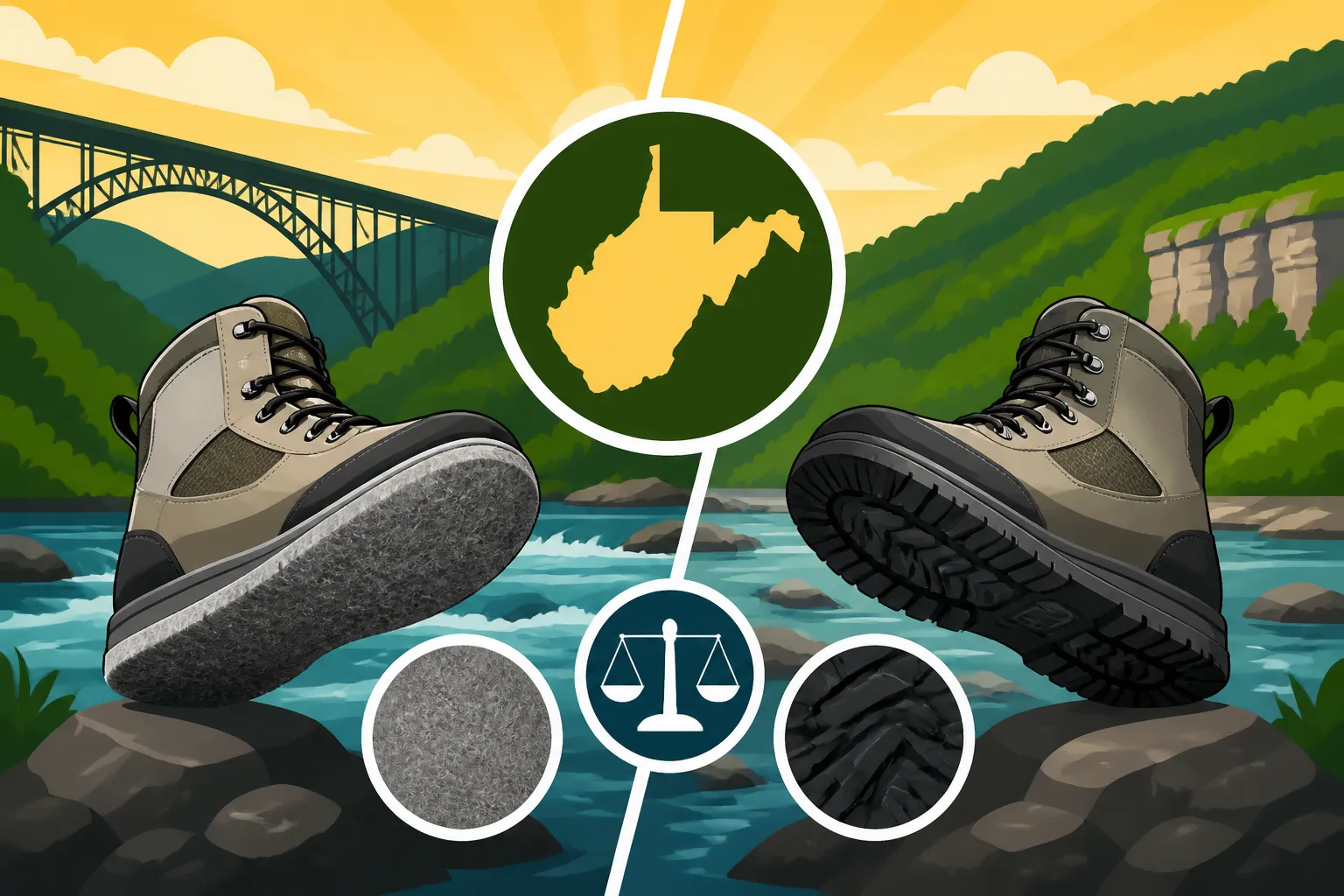
There's nothing quite like the feeling of stepping into a pristine West Virginia trout stream, the cool water swirling around your legs as you seek out a wary brook trout or a freshly stocked rainbow. But that feeling can quickly turn to anxiety, or even danger, if you're not confident in your footing. One of the most common dilemmas facing anglers when choosing wading boots is whether to go with traditional felt soles or the increasingly popular rubber soles. This guide is here to help you navigate that often slippery decision, detailing the pros and cons of each so you can make an informed choice for your specific fishing adventures in the Mountain State.
Understanding the Wading Boot Dilemma: Felt vs. Rubber
For decades, felt soles were the undisputed king of stream traction. Their ability to grip slick, algae-covered rocks in riverbeds felt almost magical, offering a level of confidence that rubber simply couldn't match in those particular conditions. Many seasoned anglers in West Virginia, especially those who spend countless hours picking their way through the rock gardens of the Cranberry River or the fast currents of the Elk River, swore by felt and wouldn't consider anything else. They had a point – when it came to sheer grip on slimy rocks, felt was superior.
However, the world of fishing gear is always evolving, and with new materials and a growing awareness of environmental concerns, rubber soles have made a significant comeback. Modern rubber compounds are far more advanced than their predecessors, offering much-improved grip and versatility, often with the option to add studs for even greater traction. This has led to a real head-scratcher for many anglers: do you stick with the tried-and-true felt, or embrace the innovations and environmental benefits of rubber? It’s not a simple choice, and what works best often depends on where and how you typically fish across our beautiful state.
The core of this debate boils down to finding the balance between maximum grip and environmental responsibility, all while considering the diverse terrains you might encounter here in West Virginia. Are you primarily a dedicated fly angler who rarely leaves the stream bed? Or do you traverse muddy trails, hike to remote spots, and sometimes fish from the bank or a boat? Your answers to these questions will heavily influence which sole type is truly "best" for your personal fishing style and the challenging landscapes we call home. Understanding the nuances of each material will save you from potential slips and contribute to a more enjoyable day on the water.
Why This Choice Matters in West Virginia's Diverse Waters
West Virginia is a state defined by its incredible and varied waterways. We have everything from high-gradient mountain freestone streams like those you might find tucked away in the Monongahela National Forest, where rocks are abundant and often slick with moss, to larger, slower-moving rivers with softer bottoms and muddy banks. Then there are the expansive lakes, where bank fishing or launching a boat might be your primary mode of access. Each of these environments presents unique challenges for traction, and your wading boot choice can significantly impact your safety and comfort.
Imagine fishing the New River Gorge, where you might be navigating across large, rounded boulders in swift current one moment, and then hiking a steep, muddy bank to reach a new run the next. A boot that performs flawlessly on those slick boulders might become a liability on a muddy incline, gathering heavy clods of mud and reducing grip. Conversely, a boot designed for versatile terrain might leave you feeling a little uneasy on algae-covered rocks if it lacks the specialized grip needed. The "one size fits all" approach rarely works perfectly here, which is why a thoughtful consideration of felt versus rubber is so crucial for West Virginia anglers.
Beyond just traction, your choice also impacts your overall fishing experience. Poor footing leads to fatigue, slower movement, and can even deter you from exploring certain sections of a stream or river. A slip and a fall can result in anything from a bruised ego to a broken bone, or at the very least, a thoroughly soaked cellphone and an early end to your fishing trip. Investing in the right sole type is an investment in your safety, your enjoyment, and your ability to fully immerse yourself in the natural beauty and fantastic fishing opportunities West Virginia offers. It’s about being prepared for whatever the stream throws at you.
Initial Considerations: Safety, Environment, Durability
When you’re standing in the aisle at a retailer like Bass Pro Shops or browsing online on Amazon, trying to decide between a pair of felt-soled boots and their rubber-soled counterparts, several key factors should immediately come to mind. First and foremost is safety. As discussed, a fall in a swift current or on treacherous terrain can be more than just a minor inconvenience; it can be genuinely dangerous. The confidence that comes from solid footing allows you to focus on your casting, presentation, and ultimately, catching fish, rather than constantly worrying about your next step.
Next up, and increasingly important, is environmental impact. Felt, while excellent for grip, has a significant downside: it can easily pick up and transport invasive species, such as New Zealand mud snails or various aquatic plant fragments, from one waterway to another. These hitchhikers can devastate local ecosystems, outcompeting native species and altering habitats. Many states, including some of our neighbors, have outright banned felt soles for this reason. While West Virginia doesn't currently have a statewide ban, it's a concern that responsible anglers should certainly keep in mind, especially when moving between different river systems or even sections of a large river like the Ohio.
Finally, durability and longevity play a big role, especially considering the investment wading boots represent. Felt tends to wear down faster than rubber, particularly if you do a lot of hiking on dry land or gravel. Rocks, asphalt, and even concrete can quickly abrade the felt, diminishing its grip and lifespan. Rubber, on the other hand, is generally much more robust against varied terrain, though its specific durability can vary based on the rubber compound and tread design. Thinking about how long your boots will last and how much "off-water" wear they'll endure should factor into your decision-making process.
The Case for Felt Soles: Grip and Stream Traction
Let’s be honest: for sheer, unadulterated grip on slimy, algae-covered rocks, felt soles are incredibly hard to beat. When you wade into a classic West Virginia trout stream, like the Dry Fork or a section of the South Branch Potomac that's known for its tricky footing, the way felt "sucks" onto those slick surfaces gives you an unparalleled sense of security. It's a connection to the streambed that rubber, even with advanced compounds, often struggles to replicate in those exact conditions. This superior grip is precisely why felt has been the traditional choice for serious river anglers for so long.
The material itself, typically a dense, pressed synthetic fiber, creates a large surface area of contact with the irregular contours of river rocks. This maximizes friction, especially when wet, effectively "grabbing" onto the microscopic textures of the rock and the slime layer. When you're standing knee-deep in a strong current, trying to maintain your balance while casting, that confidence in your footing is absolutely invaluable. It allows you to concentrate on the fishing, rather than performing a constant balancing act. For many, the feeling of felt on river rock is simply irreplaceable, making it the preferred choice for those who prioritize maximum stream safety above all else.
However, it's not just about the slime. Felt also performs exceptionally well on smooth, wet bedrock, and even on loose gravel, where the felt fibers can embed themselves slightly for added stability. This makes it a fantastic choice for many of West Virginia's iconic fly fishing rivers, where you're often covering challenging ground to reach prime lies. The grip profile is generally consistent across a wide range of submerged textures, providing a predictable and trustworthy feel underfoot. It’s no wonder that despite the rise of rubber, many still hold a deep loyalty to their felt-soled boots, especially if their fishing adventures rarely take them far from the water's edge.
How Felt Works Its Magic on Slick Rocks
The secret to felt's incredible grip on slick, wet rocks lies in its unique material properties and how it interacts with water and surfaces. Unlike hard rubber, which can "skate" over wet, smooth surfaces due to insufficient friction, felt is soft and porous. When submerged, the felt material absorbs a small amount of water, which helps it to conform intimately to the irregular contours of the rocks. This increased contact area, combined with the microscopic fibers of the felt, creates a high coefficient of friction, effectively "sticking" the sole to the rock surface.
Think of it like tiny, soft fingers gripping every minuscule crevice and bump on the rock, even those covered in a slick layer of algae. The felt isn't just relying on tread patterns, as rubber does; it's using the entirety of its surface area to create adhesion. This is why when you're wading across a boulder that looks like it's been buttered, a felt sole often provides surprising purchase. The design minimizes hydroplaning, which can be a significant issue for hard rubber on smooth, wet surfaces, by allowing water to be pressed out and through the porous felt, maintaining direct contact with the rock. This tactile feedback and predictable grip build immense confidence, especially for anglers new to challenging wading conditions.
While the physics are complex, the practical result for the angler is straightforward: fewer slips and greater stability. This translates directly to more comfortable and safer wading, which in turn leads to a more enjoyable and productive fishing trip. Whether you're carefully placing your foot in a swift riffle or navigating a deep, slow pool with a mossy bottom, felt soles offer that peace of mind. For those whose West Virginia fishing typically involves extensive wading in rocky, potentially treacherous streambeds, the "magic" of felt is a compelling argument that's hard to dismiss.
Specific Scenarios Where Felt Excels in WV
When considering specific West Virginia angling scenarios, felt soles truly shine in certain environments. Primarily, if your fishing almost exclusively involves wading in rocky, freestone rivers and streams, particularly those with a reputation for slick bottoms, felt is often the superior choice. Think about the classic trout streams like the Cranberry River or the Williams River, or even the trickier sections of the Shavers Fork. These waters are often characterized by abundant, algae-covered boulders and bedrock, where a single slip can ruin your day or worse. Felt provides maximum confidence in these conditions.
Another prime scenario is during low-water periods when stream beds become even more exposed and the potential for algae growth increases. If you're planning a trip to one of the Best Fly Fishing Rivers in West Virginia during a dry spell, felt might be your best friend. The consistent grip it offers means you can focus on reading the water and presenting your fly, rather than constantly worrying about your footing. For dedicated trout anglers who spend hours moving methodically upstream or downstream, felt offers a level of stability that allows for precise movements and better stealth.
Finally, if you're frequently fishing tailwater fisheries, like below Summersville Dam or Sutton Dam, which can have very slick, scoured rock bottoms due to fluctuating water levels, felt can provide a crucial advantage. These environments often present a unique challenge where hard rubber soles struggle without significant studding. For many experienced anglers who know the nuances of How to Fish a Tailwater in West Virginia, felt is a non-negotiable part of their gear, ensuring they can access and effectively fish prime holding lies with safety and assurance.
Felt's Downsides: Environmental Concerns and Wear
Despite their exceptional grip on slick rocks, felt soles come with some significant drawbacks that modern anglers need to consider. The most pressing issue, and one that has led to felt bans in other regions, is the potential for transporting aquatic invasive species (AIS). The porous, fibrous nature of felt makes it an ideal medium for trapping microscopic organisms, eggs, and plant fragments. When an angler moves from one watershed to another, even a short drive away, these unwanted hitchhikers can be inadvertently introduced to a new environment, where they can wreak havoc on native ecosystems. This environmental concern is a major reason why many anglers are now opting for rubber.
Beyond the environmental impact, felt soles also have practical limitations regarding durability and versatility. If your fishing adventures include any significant amount of hiking on dry land, gravel paths, asphalt, or even concrete boat ramps, felt will wear down surprisingly quickly. The soft, fibrous material is simply not designed for abrasive surfaces, and you'll notice accelerated deterioration, reducing its lifespan and effectiveness on the water. This means if you're parking a distance from the river and have a substantial walk, or if you fish from a drift boat and often step onto rocky banks, felt might not stand up to the abuse.
Furthermore, felt offers virtually no traction on ice or snow. While West Virginia isn't known for extensive ice fishing, you might encounter icy banks or frozen sections of streams during colder months, especially in the higher elevations. In these conditions, felt soles become extremely slippery, posing a serious safety risk. This lack of versatility for off-water conditions or cold-weather angling means that felt, while a specialist in stream wading, often falls short as an all-around boot for the diverse conditions West Virginia anglers might encounter throughout the year.
The Case for Rubber Soles: Versatility and Durability
Rubber soles have come a long, long way in the past couple of decades. Gone are the days when rubber wading boots meant a guaranteed slip-and-slide experience on any rock that dared to harbor a bit of algae. Modern rubber compounds, often incorporating specialized gripping patterns and materials, now offer significantly improved traction, making them a viable and often preferable alternative to felt, especially for the all-around West Virginia angler. Manufacturers like Simms, Patagonia, and Korkers have invested heavily in R&D to create rubber soles that perform admirably in a variety of conditions, often rivaling felt for safety and stability.
One of the biggest advantages of rubber is its inherent versatility. If your fishing trips often involve a mix of wading, hiking trails to access remote spots, launching boats, or fishing from muddy banks, rubber soles are almost certainly the better choice. They perform well on dry land, gravel, dirt, and even slick, wet grass without the rapid wear that plagues felt. This means you don't need to change boots depending on your access method or how much walking you plan to do, simplifying your gear setup and making your transitions from land to water much smoother.
Moreover, rubber soles are generally much more durable than felt, especially against abrasive surfaces. This translates to a longer lifespan for your boots, offering better value for your investment in the long run. Many rubber-soled boots are also designed with the option to add removable studs or cleats, which can significantly enhance their grip on slick rocks, effectively bridging the gap where felt traditionally held a strong advantage. This adaptability makes rubber a compelling choice for the angler who demands a single pair of boots to handle everything from a quick trip to a stocked pond to a challenging backcountry river excursion. Best Waders for West Virginia Trout Streams often pair well with durable rubber soles.
The Advancements in Rubber Sole Technology
The evolution of rubber sole technology has been a game-changer for wading boots. Early rubber soles were notoriously bad on wet, slimy rocks, leading to many tumbles and firmly cementing felt's dominance. However, today's rubber is a different beast entirely. Manufacturers now use proprietary rubber compounds that are softer, stickier, and more adept at conforming to irregular surfaces. These aren't just your typical hiking boot soles; they are engineered specifically for the challenging, wet environments anglers face.
Beyond the rubber compound itself, tread patterns have also become incredibly sophisticated. Instead of simple lugs, modern wading boots feature multi-directional patterns, siping (small slits in the tread), and varied lug depths designed to maximize surface contact and shed water quickly. Some brands even integrate different rubber densities within a single sole, with stickier compounds in critical grip zones. This intelligent design allows the rubber to flex and grip better on wet surfaces, while still providing robust traction on dry land or muddy trails. You can often find these advanced features when looking at options from brands like Patagonia or Orvis on platforms like Amazon.
The biggest game-changer for rubber soles, however, is the widespread availability and effectiveness of carbide studs and cleats. These small, replaceable metal points can be screwed into dedicated ports on most modern rubber soles, or even directly into the rubber itself. They provide incredible purchase on slick, algae-covered rocks and even offer some grip on ice. This studding option means that rubber soles, when augmented with cleats, can often match or even surpass felt's performance in the most treacherous stream conditions, giving anglers the best of both worlds: versatility and extreme traction when needed. It effectively nullifies one of felt's last remaining strongholds in the debate.
Scenarios Where Rubber Shines: Muddy Banks, Boat Use, Diverse Terrains
While felt truly excels on slick, submerged rocks, rubber soles are the undisputed champions when your fishing day involves a wider variety of terrain. If you're frequently navigating muddy riverbanks, scrambling up steep, dirt trails to access a secluded fishing spot, or launching a boat, rubber is the clear winner. Felt quickly becomes clogged with mud, turning your boots into heavy, slippery platforms that offer zero grip. Rubber, with its aggressive tread patterns, sheds mud much more effectively, keeping you safer and more comfortable on land.
Consider fishing a large West Virginia lake like Summersville Lake or Stonewall Jackson Lake. You might spend a good portion of your day fishing from a boat, but occasionally pull up to shore to wade a productive flat or simply stretch your legs. Felt soles are notorious for being slippery on boat decks, posing a significant safety hazard. Rubber soles, on the other hand, provide excellent traction on wet boat surfaces, making them a much safer choice for boat-based anglers. They also won't track as much grit and grime into your boat as mud-caked felt.
Moreover, if your angling takes you across diverse landscapes, such as hiking into high-elevation streams for brook trout, or traversing mixed terrain including gravel roads, grassy fields, and rocky outcrops before reaching the water, rubber soles offer far superior performance and durability. They are designed to handle these varied surfaces without premature wear. For anyone who embraces the adventurous side of West Virginia fishing and isn't solely confined to the stream bed, the versatility and robust nature of modern rubber soles, especially when combined with studs, make them an incredibly appealing and practical choice. This makes them ideal for combining with your Best Gear for West Virginia Trout Fishing.
Rubber's Limitations: Initial Slickness, Stud Requirements
Despite the impressive advancements in rubber sole technology, it's important to acknowledge that they do have some limitations, particularly when compared to felt in its ideal environment. The primary drawback of un-studded rubber soles is that on extremely slick, algae-covered bedrock or heavily slimed river rocks, they can still feel less secure than felt. While modern rubber is far better than older versions, there's often an initial "skate" or a moment of reduced grip that can make some anglers feel less confident, especially in fast-moving, treacherous water. This feeling can be particularly pronounced if you're accustomed to the unwavering grip of felt.
To truly optimize rubber soles for maximum grip on slick rocks, many anglers find that adding studs or cleats is almost a necessity. While this significantly enhances traction, it does add an extra step and an additional cost. You'll need to purchase the studs separately (unless they come with the boots), install them, and periodically check and replace them as they wear down or fall out. For some, the idea of having to actively "upgrade" their boots to get optimal performance on certain surfaces is a minor inconvenience compared to the out-of-the-box performance of felt in those same conditions.
Furthermore, while rubber is generally more durable than felt, not all rubber compounds are created equal. Some budget-friendly rubber soles might still be quite hard and offer less grip than premium, sticky rubber blends. It pays to invest in quality when choosing rubber. Also, while studs offer fantastic grip on most slick surfaces and ice, they can be damaging to some boat surfaces (especially inflatable rafts or painted decks) and can be quite noisy and even slippery on certain indoor surfaces or smooth concrete. This means you need to be mindful of where you're walking when studded, reinforcing the idea that no single sole type is perfect for every conceivable scenario.
Making Your Choice: Factors for West Virginia Anglers
The decision between felt and rubber soles isn't about one being inherently "better" than the other in all situations; it's about which sole type aligns best with your individual fishing habits, the types of waters you frequent in West Virginia, and your personal priorities. There’s no universal answer, and what works for an angler on the New River might not be ideal for someone primarily exploring the small, high-gradient streams in the eastern panhandle. Taking the time to honestly assess your needs will lead you to the most effective and safest choice for your feet on the water.
One of the most crucial factors is how much time you actually spend wading in the water versus hiking to the water. If you're a dedicated stream angler who spends 90% of your time immersed, carefully picking your way over slick rocks, felt might still offer that superior, confidence-inspiring grip. However, if your typical day involves a mix of significant hiking, crossing muddy trails, fishing from a boat, or even occasionally venturing onto icy banks, then the versatility and durability of rubber, especially when studded, becomes a much more compelling option.
Ultimately, your choice is a personal one, but it's one that deserves careful thought given the safety implications and environmental considerations. Whether you lean towards the traditional grip of felt or the modern versatility of rubber, ensure your boots are comfortable, provide good ankle support, and are well-maintained. After all, comfortable and secure feet are the foundation of a great day fishing!
| Feature | Felt Soles | Rubber Soles (Un-studded) | Rubber Soles (Studded) |
|---|---|---|---|
| Grip on Wet, Slimy Rocks | Excellent, traditional best-in-class | Moderate to Good (improving with tech) | Excellent, often rivals/exceeds felt |
| Grip on Dry Land/Trails | Poor (wears quickly, slippery when dry) | Excellent | Good (studs can be noisy/damaging on hard surfaces) |
| Grip on Mud | Poor (clogs easily, becomes heavy and slick) | Good to Excellent (sheds mud effectively) | Good to Excellent |
| Grip on Ice/Snow | Very Poor (extremely slippery) | Poor to Moderate (some winter-specific compounds) | Excellent |
| Durability | Lower (especially with extensive dry walking) | High (generally very robust) | High (studs may need replacement) |
| Environmental Impact | High risk for transporting invasive species | Low risk | Low risk |
| Versatility | Low (specialized for stream wading) | High (good for mixed land and water) | High (best for all-around challenging conditions) |
| Maintenance | Requires thorough cleaning to prevent AIS | Easier to clean, less AIS risk | Regular check/replacement of studs needed |
| Cost | Typically similar to rubber, but may need more frequent replacement | Varies, can be higher for premium compounds | Varies, plus cost of studs |
Considering the Type of Water You Fish Most Often
The single most important factor in your felt versus rubber decision should be the predominant type of water you fish in West Virginia. Are you a purist who spends virtually all your time fly fishing in the rocky, often slick beds of mountain trout streams like the Elk River, Seneca Creek, or the Cranberry's special regulation sections? If so, the unmatched grip of felt on those particular surfaces might still be your preferred choice, offering that crucial confidence in swift current and across slippery boulders. You might value that specific traction above all else, even with the environmental considerations.
However, many West Virginia anglers enjoy a much broader range of experiences. Perhaps you're chasing smallmouth bass on the New River, which can involve a mix of slick bedrock, gravel bars, and muddy banks, often with significant stretches of hiking to access different runs. Or maybe you're targeting muskie on the Little Kanawha, which might mean a lot of time in a boat, interspersed with wading rocky stretches and climbing in and out of the river onto varied shoreline terrain. For these diverse scenarios, the rubber sole, particularly one that can be studded, offers a level of adaptability that felt simply cannot match. It’s about matching your footwear to the demands of your favorite fishing spots.
Even within a single species, the fishing environment can vary wildly. Trout fishing, for example, isn't just about high mountain streams. You might also fish stocked impoundments or larger rivers with less aggressive bottom structures. If you're primarily fishing lakes or slow-moving rivers with softer, less rocky bottoms, felt provides little to no advantage and quickly becomes a liability on muddy banks or boat decks. Think critically about your "average" fishing trip – what kind of ground do your feet touch most often? That's your biggest clue for which sole type will serve you best. For those who frequently visit Best Trout Streams in West Virginia, the choice becomes even more critical for safety.
The Role of Studs and Cleat Systems
For anglers leaning towards rubber soles but still concerned about grip on those notoriously slick West Virginia rocks, studs and cleat systems are an absolute game-changer. These small, often carbide-tipped accessories can be screwed into the sole of most modern rubber wading boots, dramatically increasing their traction on slippery, algae-covered surfaces, wet wood, and even ice. They effectively bridge the performance gap between felt and rubber, giving you the best of both worlds: the versatility and durability of rubber, combined with felt-like (or even superior) grip in challenging stream conditions.
There are generally two types of stud systems: integrated studs that are part of the boot's design and replaceable, screw-in studs or cleats. Many rubber-soled boots from brands found at Bass Pro Shops are designed with specific ports or reinforced areas where you can easily screw in carbide studs. This allows you to customize your traction based on your specific needs. If you're heading to a particularly challenging, rocky section of stream, you can load up your boots with studs. If you're planning a trip that involves a lot of boat use or dry hiking, you can remove some or all of them to prevent damage to your boat or unnecessary wear on the studs themselves.
However, studs aren't without their considerations. They can be noisy on dry land, and walking on hard surfaces like concrete or asphalt with studs can quickly wear them down. They can also scratch or damage some boat surfaces, so care must be taken when moving in and out of a boat. Despite these minor drawbacks, for any angler who chooses rubber soles and regularly encounters slick rocks or icy conditions, adding studs is a highly recommended upgrade. It transforms a good rubber sole into an outstanding one, providing unparalleled security and confidence when it matters most. It’s a vital component to consider for your Best Wading Staff for Fast Current setup, as well.
Maintenance and Longevity of Each Sole Type
Proper maintenance is crucial for maximizing the longevity and effectiveness of both felt and rubber wading boots, and the type of sole influences the specific care required. For felt soles, the most critical aspect of maintenance, beyond drying them thoroughly, is preventing the spread of aquatic invasive species. After every outing, especially if you're moving between different waterways, felt boots need to be meticulously cleaned. This means scrubbing off all mud and debris, followed by a thorough drying, ideally in direct sunlight. Some anglers even recommend soaking felt soles in a bleach solution or freezing them to kill any potential invaders, a practice that highlights the significant environmental concern. Neglecting this cleaning not only risks spreading AIS but also allows debris to embed in the felt, reducing its grip over time.
Rubber soles, on the other hand, are generally much easier to clean and pose a significantly lower risk for AIS transport. A simple rinse with a hose and a quick scrub to remove visible mud and debris is often sufficient. They dry faster than felt, too, which can be a huge convenience, especially on multi-day trips or when you're fishing frequently. This ease of cleaning contributes to their overall longevity, as less embedded grit means less wear on the sole material itself. However, even rubber soles benefit from thorough drying to prevent mildew and extend the life of the boot's other components.
When it comes to pure wear and tear, rubber generally wins out. As mentioned, felt can abrade quickly on dry, abrasive surfaces. If you hike a lot, you might find yourself replacing felt-soled boots more frequently than rubber ones. Rubber, especially high-quality compounds, is designed for greater abrasion resistance, giving it a longer useful life for varied terrain. If you're using studded rubber soles, your maintenance routine will also include regularly checking and replacing worn or lost studs. While this adds a step, it's a small price to pay for consistent, superior traction. No matter your choice, treating your wading boots well will ensure they support countless future West Virginia fishing adventures.
Disclaimer
This article is for general informational purposes only and does not constitute professional advice. Laws, prices and regulations vary by location and change over time. Consult a qualified professional for guidance on your specific situation.