Best ice auger for panfish holes
There's nothing quite like the crisp air and serene quiet of a West Virginia winter day, surrounded by snow-covered hillsides, as you sit on a frozen lake, waiting for that tell-tale tap on your line. But let's be real, the magic can quickly evaporate if you're wrestling with a terrible ice auger that's heavy, dull, and just plain refuses to cooperate. This guide is all about helping you find the perfect ice auger specifically for chasing those delicious panfish, making your time on the hard water more enjoyable and productive.
Why the Right Auger Matters for Panfish in West Virginia
When you're out on the ice in West Virginia, whether it's on a smaller pond in the eastern panhandle or one of the larger impoundments up north, your gear can make or break your day. And for panfish, the auger isn't just a tool; it's a critical part of your strategy.
The Frustration of a Bad Auger Experience
We've all been there, haven't we? You haul your gear across a slick, icy expanse, eager to get your lines in the water. You find a promising spot, set your bucket down, and grab your auger, ready to drill. Then, it happens. The dull blades grind instead of cut, requiring Herculean effort to bore through even a few inches of ice. Or perhaps your old gas auger decides today is the day it won't start, leaving you pulling on the cord until your arm feels like it's going to fall off, all while your buddies are already catching fish. Maybe it's just so heavy that every hole feels like a full-body workout. These experiences are frustrating, time-consuming, and can genuinely diminish the joy of ice fishing, especially when targeting active panfish schools that demand quick moves.
Speed and Efficiency for Panfish
Panfish, like bluegill, crappie, and perch, often school up and can be incredibly active feeders. The problem is, they also tend to move. One minute you're on a hot bite, the next the school has vanished, leaving you with an empty hole. This is where speed and efficiency come into play. Being able to quickly drill a new hole, or a series of holes, to find that moving school means more fish in your bucket and less time spent shivering over an unproductive spot. You want an auger that cuts through ice like butter, letting you focus on the fish, not the physical labor of making holes. For more general advice on fishing through the cold, check out our guide on Ice Fishing in West Virginia.
Portability and Ease of Use on the Ice
West Virginia's ice fishing spots can range from easily accessible state park lakes to more remote ponds that require a decent hike. No matter where you go, dragging heavy, cumbersome equipment across the ice is never fun. For panfish, you're often moving frequently, trying to locate those elusive schools. A lightweight, easy-to-carry auger is a game-changer. It means less fatigue, quicker transitions between spots, and ultimately, a more enjoyable day on the ice. Imagine being able to pick up your auger with one hand and sprint to a new area where a friend just called out, "Fish on!" That kind of agility is invaluable, and it starts with the right auger.
Types of Ice Augers for West Virginia Panfish
The world of ice augers has evolved dramatically over the years, offering anglers a range of options from classic manual power to high-tech electric models. Each type has its own set of advantages and disadvantages, especially when considering the specific needs of panfish anglers in West Virginia.
Manual Augers: Simplicity and Cost-Effectiveness
Manual augers are the old faithful of the ice fishing world. They consist of a handle, a shaft, and a set of sharp blades, relying entirely on your muscle power to get the job done. For many years, these were the only real option, and they still hold a special place in the hearts of many anglers.
The biggest pros of a manual auger are their simplicity, low cost, and light weight. You don't need to worry about fuel, batteries, or complex maintenance. They are incredibly reliable because there are no moving parts to break down. If you're only planning to drill a few holes in relatively thin ice (say, 6-10 inches), and you're not planning on moving around much, a manual auger can be perfectly adequate. They are also incredibly quiet, which can be a huge advantage for spooky panfish, as loud motor noise can send them scattering. For a quick afternoon trip to a local pond to target bluegill or crappie, a sharp manual auger can certainly suffice. However, if you encounter thicker ice, or plan to drill many holes in a day, the physical exertion can quickly become exhausting, and that's when the downsides become apparent.
Cordless Electric Augers: The Modern Angler's Choice
If there's one category that has truly revolutionized ice fishing in recent years, it's the cordless electric auger. These units combine the power of a motor with the convenience of a battery, offering a fantastic balance of performance and portability, making them an ideal choice for panfish anglers in West Virginia.
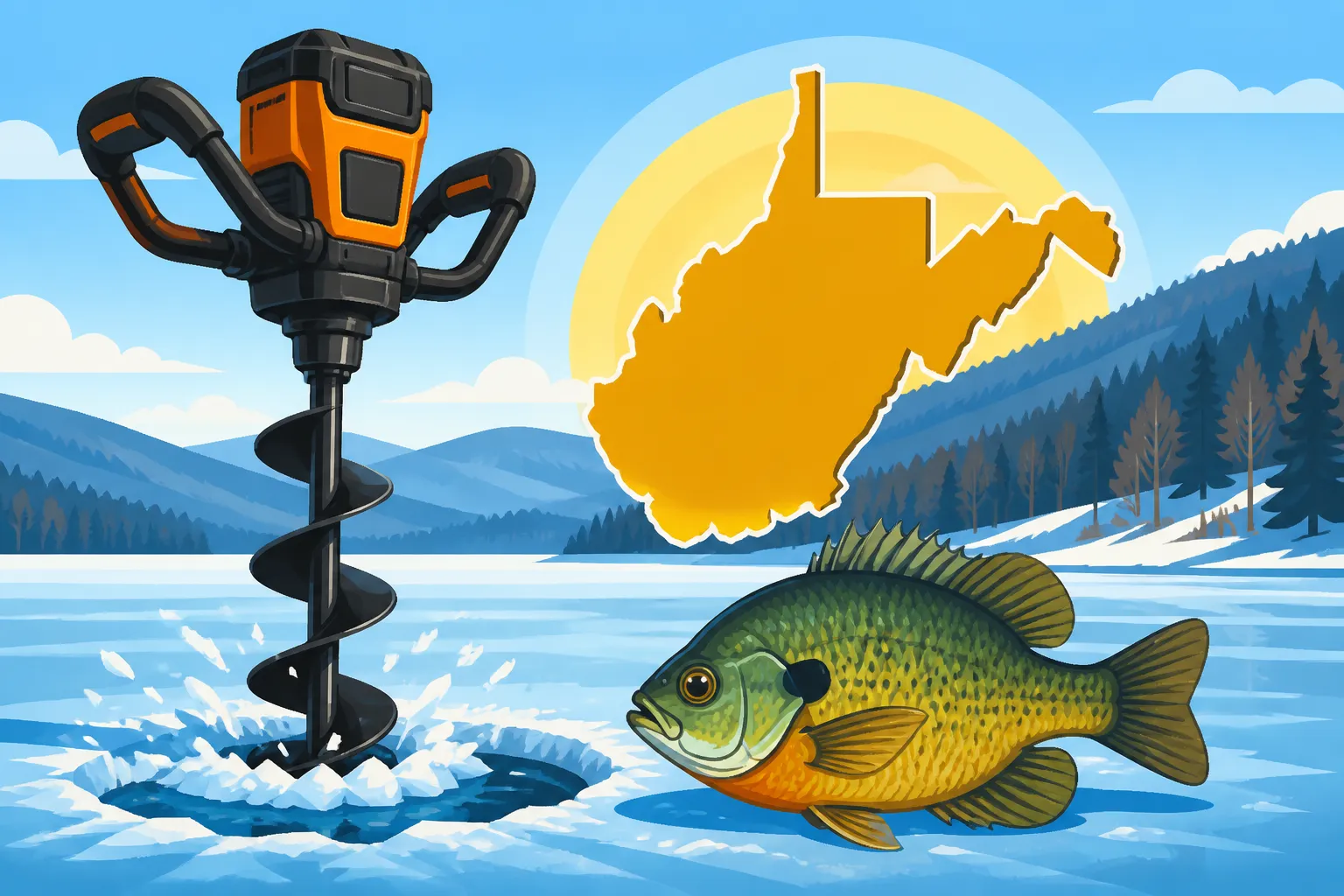
Electric augers operate quietly, a huge plus for not spooking fish. They start instantly with the push of a button, no more pulling a cord until your shoulder aches. They produce no exhaust fumes, which is great for fishing inside ice shanties or simply for enjoying cleaner air outdoors. For panfish, which often require drilling many holes quickly to stay on active schools, the speed and ease of an electric auger are unparalleled. You can zip around a lake, drilling new holes in seconds, staying mobile and staying on the fish. Brands like ION and Strikemaster Lithium are popular choices and can often be found at big retailers like Bass Pro Shops or online through Amazon. When looking at these, pay close attention to battery life and ensure you have spare batteries if you plan for a full day of heavy drilling. Some models even come with a convenient carrying bag, which further enhances portability. They really shine when you're focusing on smaller diameter holes, allowing the battery to last longer and the cutting to be effortless.
Propane and Gas Augers: Power for the Masses (and When It's Overkill)
Gas-powered and propane-powered augers represent the traditional powerhouse option for ice fishing. They are designed for serious ice, thick conditions, and drilling a very large number of holes, sometimes for species that require wider holes, like muskie.
The main advantage of these augers is raw power and sustained drilling capability. They can chew through many feet of ice with ease and keep going as long as you have fuel. However, for panfish, they are often overkill. They are significantly heavier than manual or electric options, making them cumbersome to carry, especially if you're frequently moving spots. They are also noisy, potentially spooking fish, and produce exhaust fumes, which can be an issue in enclosed spaces. While a powerful gas auger might be necessary if you're targeting trophy walleye on a massive lake with very thick ice, for panfish in West Virginia, you're likely to find the weight, noise, and fumes more of a hindrance than a help. For most panfish scenarios, the benefits simply don't outweigh the drawbacks.
Key Features to Consider for Panfish Augers
Choosing the best ice auger for panfish isn't just about picking a type; it's about matching specific features to the way you fish. For West Virginia's panfish opportunities, a few key elements really stand out.
Auger Diameter: The Sweet Spot for Panfish
When it comes to drilling holes for panfish, bigger isn't always better. In fact, a smaller diameter auger is often the "sweet spot" for several reasons. Most panfish (bluegill, crappie, perch) are relatively small, and a 4-inch to 6-inch hole is more than adequate to land them.
Here's why a smaller diameter makes a huge difference:
- Less Effort, More Holes: A smaller diameter means less ice to cut, requiring significantly less effort, whether you're using a manual or electric auger. This translates to faster drilling and more holes per battery charge (for electric models).
- Safety and Stealth: Smaller holes are less conspicuous to fish, potentially making your presentation more natural. They also refreeze faster, which is a consideration for safety on busy lakes, although you should always be aware of How thick ice needs to be to fish safely in West Virginia.
- Portability: Smaller auger bits are generally lighter and easier to manage, adding to the overall portability of your setup.
- Optimal Sizes: A 4-inch auger is fantastic for ultra-light panfishing and maximizing battery life on electric models. A 5-inch or 6-inch auger offers a good balance, giving you enough room to maneuver a small lure and land a decent crappie or perch without over-drilling. Anything larger than 6 inches is usually unnecessary for panfish and just adds weight and effort.
Weight and Portability: Less is More
As we touched on earlier, mobility is key when chasing panfish. You'll often be moving from hole to hole, perhaps even from one end of a cove to another, trying to locate active schools. This makes the weight and overall portability of your auger a huge factor.
- Electric Augers: Many modern electric augers are designed with lightweight materials, with some models weighing as little as 15-20 pounds, including the battery. This is a significant advantage over many gas models that can easily tip the scales at 30-40 pounds or more. Look for models with comfortable handles and consider adding a padded shoulder strap or a dedicated carrying case.
- Manual Augers: These are typically the lightest option, often weighing less than 10 pounds, making them incredibly easy to carry.
- Beyond Weight: Think about the overall footprint. Does it break down easily for transport in a sled or backpack? Does it have built-in handles that are easy to grip with gloves on? These seemingly small details contribute immensely to ease of use throughout a long day of fishing. When assembling your full kit, consider how your auger fits with other essentials like your Best ultralight rod for panfish and tackle.
Battery Life and Power (for Electric)
If you're leaning towards an electric auger, the battery is its heart. You need enough power to drill the holes you need and enough longevity to last your fishing session.
- Voltage and Amp-Hours: Look at the battery's voltage (V) and amp-hours (Ah). Higher voltage often means more power to cut through thicker ice, while higher amp-hours generally translate to longer battery life and more holes per charge. For panfish, you don't necessarily need the absolute highest voltage, but decent amp-hours will ensure you're not constantly swapping batteries. Many successful panfish anglers find 40V to 80V systems with 4-6Ah batteries to be more than sufficient.
- Spare Batteries: It's always a good idea to have at least one spare battery, especially on colder days when battery performance can decrease slightly. Keep spare batteries in an inside pocket of your jacket to keep them warm.
- Charging Time: Consider how long it takes to recharge a battery. While not a critical on-ice feature, it impacts your readiness for the next trip.
Blade Type and Durability
The blades are where the rubber meets the road—or rather, where the steel meets the ice. Sharp, efficient blades are paramount for easy drilling.
- Blade Material: Most auger blades are made from high-carbon steel. Look for models with hardened or coated blades for increased durability and corrosion resistance.
- Straight vs. Curved Blades:
- Curved (Chipper) Blades: Often found on older or heavier-duty augers, these chip away at the ice. They can be good in dirty or refrozen ice but might be slower and require more effort.
- Straight (Shaving) Blades: These blades are designed to shave thin layers of ice, providing a much smoother, faster, and more efficient cut. They are generally preferred for electric and modern manual augers when targeting panfish in clean ice.
- Ease of Replacement: Blades will eventually dull or get nicked, especially if you accidentally drill into the bottom or hit a rock. Choose an auger where blades are easily replaceable. Some manufacturers offer quick-change systems, and having a spare set of sharp blades can save a fishing trip. You can find replacement blades and other essential Best Ice Fishing Gear for West Virginia at most outdoor retailers.
Recommended Augers and Where to Find Them
Alright, so you're convinced that a good auger is essential for your West Virginia panfish pursuits. Now, let's talk about generally what to look for and how to maintain your investment. Remember, specific models and prices change frequently, so think about characteristics rather than just brand names.
Top Picks for Each Category
While I won't name specific models with prices, I can guide you on the types of characteristics to seek out when browsing for your perfect panfish auger.
- For the "Get Started" Angler (Manual): Look for a lightweight, compact hand auger, ideally with a 4-inch or 5-inch diameter. Brands that offer ergonomic handles and high-carbon steel shaving blades will serve you well. They're perfect for those occasional, short trips where you're only drilling a few holes, or if you're introducing someone new to Panfish Fishing in West Virginia. You'll often find excellent, reliable options under various brand names that focus on ease of use.
- For the "Mobile & Efficient" Angler (Cordless Electric): This is where many panfish enthusiasts land. Focus on electric augers with a 4-inch, 5-inch, or 6-inch diameter. Prioritize models that emphasize lightweight design (under 20 pounds with battery), quick-charge capabilities, and respectable battery life (a 4-6 Ah battery often works wonders for panfish). Features like LED lights, reverse mode (to clear slush without lifting the auger), and comfortable grips are nice bonuses. You'll find a wide selection of these at places like Bass Pro Shops, where you can often get hands-on experience, or through the extensive reviews and product details available on Amazon. Don't forget to check out the reviews from other panfish anglers!
- For the "Power User" (Gas/Propane): If you really feel you need the power, perhaps you also target larger fish or fish incredibly thick ice often, opt for a propane model over gas for cleaner burning and easier starting in cold weather. Look for models with good cold-start reliability and a reputation for durability. Even then, consider sticking to a 6-inch or 8-inch bit for versatility, as anything larger is truly overkill for panfish.
Maintenance Tips for Longevity
No matter what type of auger you choose, proper maintenance is crucial to ensure it performs reliably season after season. A well-maintained auger is a joy to use; a neglected one is a headache.
- Blade Care: This is arguably the most important. Always cover your auger blades with a protective guard when not in use. This protects you from sharp edges and, more importantly, protects the blades from nicks and dulling. After each trip, wipe the blades clean and dry them thoroughly to prevent rust. If your blades get dull, replace them immediately. Trying to force a dull auger through ice is dangerous and ineffective.
- Battery Maintenance (Electric): For electric augers, follow the manufacturer's recommendations for battery storage and charging. Generally, store batteries in a cool, dry place at a partial charge (around 50%) during the off-season. Avoid fully discharging lithium-ion batteries and try not to leave them fully charged for extended periods. When fishing, keep spare batteries warm, as cold temperatures reduce their efficiency.
- Engine Care (Gas/Propane): For fuel-powered augers, use fresh fuel and the correct oil mixture (for 2-strokes). Stabilize your fuel if it's going to sit for a while. Always drain the fuel system or run the carburetor dry before storing it for the off-season. Keep the spark plug clean and check the air filter.
- General Cleaning: After each trip, wipe down your auger to remove ice, slush, and dirt. A little care goes a long way in preventing corrosion and extending the life of your equipment.
Safety First on the Ice
While having the best auger makes drilling holes easier, remember that ice fishing always carries inherent risks. Always prioritize safety. Never go out on ice that you're unsure about, and always tell someone where you're going and when you expect to return. Always carry ice picks and wear a life jacket, especially when traversing unfamiliar ice. For those planning to venture out onto West Virginia's frozen waters, make sure you understand Best Techniques for Ice Fishing Panfish and always prioritize safety over a potential catch. The right gear helps, but your knowledge and caution are your best tools out there.
Disclaimer
This article is for general informational purposes only and does not constitute professional advice. Laws, prices and regulations vary by location and change over time. Consult a qualified professional for guidance on your specific situation.