Best Kayak for Lake Fishing in West Virginia
There's nothing quite like the freedom of gliding across a mirror-smooth West Virginia lake in your kayak, heading toward that hidden cove you've been eyeing, or silently paddling along a shoreline where bigger boats can't go. But if you've ever tried to fish from a standard recreational kayak, you know the frustration: tippy, no storage, nowhere to put your rods, and forget standing up! This guide is all about helping you navigate the exciting world of fishing kayaks to find the perfect vessel for tackling our beautiful West Virginia lakes, ensuring your next outing is less about frustration and more about reeling in the big one.
Why Kayak Fishing Lakes in West Virginia is a Game Changer
Kayak fishing has absolutely exploded in popularity, and for good reason! Here in West Virginia, with our stunning array of lakes and reservoirs, a kayak isn't just a boat; it's a key that unlocks incredible fishing opportunities that were once hard to reach. It’s a completely different experience than shore fishing or even fishing from a larger powerboat.
The Unmatched Access to Hidden Honey Holes
Think about those shallow coves, those tight pockets of lily pads, or those submerged timber areas that are just too risky for a fiberglass bass boat. A fishing kayak can glide right in, quietly, without spooking the fish. You can hug the shoreline of places like Summersville Lake, tracing every contour, or explore the inlets of Bluestone Lake that are simply inaccessible to most other vessels. This ability to get into the skinny water means you're often targeting fish that see far less pressure, making your chances of a successful day skyrocket.
It's not just about shallow water either. Kayaks are fantastic for navigating through crowded areas on popular lakes. Ever been frustrated trying to fish a hot spot only to have powerboats zoom by, creating waves and commotion? In a kayak, you can often find quieter corners, or simply use your low profile to your advantage, slipping through areas unnoticed. It really opens up the map of possibilities on any given lake, turning what might seem like a small body of water into an expansive fishery.
This stealth and access is particularly crucial when targeting wary fish like largemouth bass, which often hide deep within cover. The ability to approach these areas silently, without the splash of an anchor or the rumble of an outboard, gives you a significant edge. It’s all about getting your lure into those prime locations without alerting your quarry, and a kayak excels at this.
A Quieter, More Intimate Fishing Experience
There’s a profound difference between the rumble of a motor or the constant hum of a trolling motor and the near-silent paddle strokes of a kayak. This tranquility isn't just good for the fish; it's incredibly good for the angler. Kayak fishing allows you to truly immerse yourself in the natural surroundings of West Virginia's lakes. You hear the birds, the rustle of leaves on the shore, the subtle splashes of feeding fish – sounds often drowned out by engine noise.
This intimate connection with nature can dramatically enhance your fishing experience, turning a simple outing into a genuine retreat. It’s less about speed and covering vast distances, and more about deliberate movement and observation. You become more attuned to the water, the wind, and the behavior of the fish, leading to a deeper understanding of the environment. Many anglers find this meditative aspect of kayak fishing to be its greatest reward.
Moreover, the quiet approach is a secret weapon for sight fishing. On clear days, especially in lakes like Sutton Lake or Tygart Lake, being able to silently approach a shallow flat or a rock bar allows you to spot fish before they know you’re there. You can precisely cast to cruising bass or sunfish, greatly increasing your hook-up ratio. This intimate perspective completely changes how you interact with the fish and their habitat.
Cost-Effectiveness and Portability for the Everyday Angler
Let’s be honest, fishing can be an expensive hobby. Powerboats come with a hefty price tag, not to mention the ongoing costs of fuel, maintenance, storage, and insurance. Fishing kayaks offer a wonderfully accessible alternative. The initial investment is significantly lower, and the running costs are almost non-existent – no fuel, minimal maintenance, and often, you can store it right in your garage or backyard. This makes kayak fishing an excellent option for those who want to get on the water frequently without breaking the bank.
Beyond the cost, consider the incredible portability. Most fishing kayaks can be easily transported on the roof rack of almost any vehicle, or even in the bed of a truck. This means you don't need a heavy-duty towing vehicle or a dedicated trailer for every trip. You can launch from almost anywhere – a designated boat ramp, a small beach, or even an undeveloped shoreline – opening up a huge range of launch points that are off-limits to larger boats. This convenience translates to more time fishing and less time worrying about logistics.
This ease of transport and launch is especially beneficial for exploring the many state park lakes and smaller, lesser-known fishing spots across West Virginia. You won't be confined to just major access points, allowing you to discover your own hidden gems. Imagine spontaneously deciding to hit a small pond after work; with a kayak, it's entirely feasible. For more on getting your vessel around, you might find our guide on Best Boat Trailer Setup for River Launches helpful, even if you’re only considering kayaks, as the principles of safe transport are similar.
Understanding Different Kayak Types for Lake Fishing
When you start looking at fishing kayaks, it can feel like a whole new language. There are so many shapes, sizes, and features! But generally, most fishing kayaks fall into a few main categories, each with its own set of advantages and disadvantages. Understanding these basic types is the first step to narrowing down your options and finding what truly fits your needs for fishing West Virginia's diverse lakes.
Sit-on-Top (SOT) Kayaks: Stability and Space
Sit-on-top kayaks are, by far, the most popular choice for fishing, especially on lakes. As the name suggests, you sit on top of the kayak in an open deck area, rather than inside a cockpit. This design offers several key benefits that anglers love. Firstly, they tend to be incredibly stable. Their wider hulls and often flatter bottoms make them less prone to tipping, which is a huge confidence booster when you're casting, reeling in a fish, or even trying to stand up to get a better view or stretch your legs. Many modern fishing SOTs are designed with standing platforms, perfect for sight fishing those clear lake waters.
The open deck also provides a tremendous amount of space for gear. You'll find plenty of room for tackle boxes, coolers, extra rods, and even a small crate or cooler for your catch. Scupper holes in the bottom allow any water that splashes onto the deck to drain out, keeping your seating area relatively dry. This design also makes them very easy to get on and off, which is a big plus if you decide to take a swim or need to wade ashore to chase a fish. For general advice on choosing a kayak, our article Best Kayaks for West Virginia Fishing offers a broader perspective.
While SOTs are fantastic for stability and gear capacity, they might not be the fastest kayaks on the water. Their wider design, while stable, creates more drag. If your fishing involves covering huge distances quickly, this is something to consider. However, for most lake fishing scenarios where you're paddling to a spot and then thoroughly working it, the benefits of stability and storage far outweigh any minor speed sacrifice. They are also generally self-bailing, meaning if you take on water from waves or rain, it drains out through the scupper holes, a comforting feature for many anglers.
Sit-Inside (SIT) Kayaks: Speed and Shelter
While not as common for dedicated fishing as SOTs, sit-inside kayaks still have their place, especially for anglers who prioritize speed, efficiency, and a bit more protection from the elements. In a sit-inside kayak, you sit down into a cockpit, and your legs and lower body are enclosed within the hull. This can keep you drier and warmer, which is a significant advantage during cooler months or on windy days when spray might be an issue. The enclosed design also gives them a lower center of gravity, which can contribute to a feeling of security for some paddlers, although a narrow SIT will be less stable than a wide SOT.
SIT kayaks typically have sleeker, narrower hulls than SOTs, making them more efficient through the water. This means you can cover longer distances with less effort, which could be appealing if your favorite West Virginia lake is particularly vast or you like to explore many different areas in one trip. They track straighter and are generally faster to paddle. However, the trade-off is often less open deck space for rigging and gear, and getting in and out can be a bit more challenging, especially if you have mobility issues or need to exit quickly.
For fishing, SIT kayaks require a bit more creativity for rigging. You might need to use track systems mounted on the deck or rely on less accessible storage in bulkheads. Standing up to fish is generally not an option in most SIT kayaks, making them less ideal for sight fishing or those who prefer a standing retrieve. But if you're an angler who values speed and protection, and you don't carry a lot of bulky gear, a SIT kayak could still be a viable, albeit less conventional, choice for your lake excursions.
Pedal-Drive vs. Paddle-Drive: Hands-Free vs. Traditional Power
This is perhaps one of the biggest decisions when choosing a modern fishing kayak, especially for lake use. Traditionally, kayaks are propelled by paddles – a simple, reliable, and effective method. Paddle-drive kayaks are generally lighter, less complex, and more affordable. They offer excellent exercise and allow for a very quiet approach, which is fantastic for sneaking up on fish. You also have full control over your speed and direction with each stroke, making it easy to navigate tight spots or subtle currents.
However, the major downside of paddle-drive is that your hands are occupied with paddling, meaning you can't always fish effectively while moving. This is where pedal-drive kayaks come into their own. Pedal-drive systems, like those offered by brands such as Hobie with their MirageDrive or Old Town with their Sportsman line, allow you to propel the kayak using your legs, much like a bicycle. This frees up your hands entirely for casting, reeling, holding a net, or even eating a sandwich! The ability to maintain speed and position while actively fishing is a huge advantage, especially when trolling or working a shoreline.
Pedal-drive kayaks are a game-changer for covering larger areas of a lake like Stonewall Jackson Lake or for battling windy conditions without constantly wrestling a paddle. They also often come with integrated steering systems, making precise maneuvering a breeze. The trade-off? They are typically heavier, more expensive, and have more moving parts that require maintenance. They might also be harder to operate in very shallow, weed-choked waters where a prop or fins could get snagged. However, for serious lake anglers, the hands-free fishing experience often makes the investment well worth it. You can explore more about maximizing your kayak's mobility with our guide on the Best Trolling Motor for a Fishing Kayak.
Key Features to Look For in a Lake Fishing Kayak
Once you’ve got a handle on the basic kayak types, it's time to dive into the specific features that will make or break your fishing experience on West Virginia’s lakes. A great fishing kayak isn't just about getting from point A to point B; it's a stable, comfortable, and highly functional platform designed to make your time on the water more productive and enjoyable. Don't rush this part – really think about how you fish and what matters most to you.
Stability: The Foundation of a Good Fishing Kayak
This is arguably the most crucial feature for lake fishing. Lakes can be calm, but they can also be notoriously choppy, especially larger reservoirs when the wind picks up or powerboats create wakes. A stable kayak means you can cast confidently, reel in a thrashing fish without feeling like you're going to flip, and perhaps even stand up for better visibility and casting angles. Look for kayaks with wider beams (the width of the boat) and flatter hull designs. Catamaran-style hulls or pontoon designs also offer exceptional stability.
Think about your personal comfort level. If you're new to kayak fishing or not a strong swimmer, prioritize maximum stability. If you're an experienced paddler and prefer a bit more speed, you might sacrifice a little stability for a narrower hull. Many modern fishing kayaks are designed with "secondary stability" in mind, meaning they might feel a little wobbly initially, but they resist tipping over when leaned onto their side. Test paddling is ideal if you can find a dealer that offers it, or read reviews from other anglers of similar build and experience.
Ultimately, stability equates to confidence on the water. You want to focus on fishing, not on maintaining your balance. A highly stable platform also allows you to move around more freely, access gear, and manage a landing net without fear of an unexpected dip. For those just starting, opting for a wider, more stable sit-on-top kayak with a comfortable seat is always a safe bet for enjoying your time on West Virginia's beautiful lakes.
Storage and Rigging Options for Your Gear
Fishing, by its nature, involves gear. Lots of it! Rods, tackle boxes, bait, a cooler, maybe a net, pliers, and personal items. A good lake fishing kayak needs smart storage solutions. Look for ample deck space, especially in the stern (rear) for a cooler or a milk crate filled with tackle. Bungee cords over tankwells are common and effective. Internal hull storage, accessed through hatches, can keep valuable items dry and secure, though it's often less accessible while on the water.
Beyond simple storage, consider the rigging capabilities. Does the kayak have integrated gear tracks? These are fantastic for mounting rod holders, fish finders, camera mounts, and other accessories without having to drill into the hull. If not, consider how easy it would be to add these yourself. Recessed rod holders are a must for keeping extra rods secure and out of the way. Think about where you want your essential tools – pliers, line cutters – and ensure there are convenient spots for quick access.
Many kayak brands, like Wilderness Systems or Perception, design their fishing models with these needs in mind, offering specialized pods, molded-in sections for tackle trays, and dedicated spots for electronics. The more organized and accessible your gear is, the less time you'll spend fumbling and the more time you'll spend fishing. Taking a moment to visualize your typical fishing setup in a potential kayak can save you a lot of headaches down the line.
Comfort for Long Days on the Water
Imagine spending 6-8 hours on Summersville Lake, casting, paddling, and waiting for bites. If your seat is uncomfortable, that dream day can quickly turn into a painful ordeal. Modern fishing kayaks have made huge strides in seat design. Gone are the days of thin, molded plastic seats; today, many models feature elevated, stadium-style seats with thick padding, adjustable backs, and even breathable mesh materials. These seats not only keep you comfortable but also elevate you higher off the water, improving your visibility and making casting easier.
Adjustability is key. Look for seats that can be moved forward or backward to accommodate different leg lengths, or tilted for optimal posture. Some seats can even be removed from the kayak for use as a camp chair on shore. Beyond the seat, consider footpegs or adjustable footrests. Being able to brace your feet comfortably provides stability and allows you to transfer power more efficiently when paddling. The better your posture, the less fatigue you'll experience in your back and legs.
Don't underestimate the importance of comfort. It directly impacts how long you can stay out on the water and how much you enjoy your fishing trip. While you might save a few dollars on a kayak with a basic seat, the long-term enjoyment and ability to fish for extended periods often makes the upgrade to a more ergonomic seating system well worth the investment. After all, the best kayak in the world is useless if you're too uncomfortable to use it!
Portability and Transport Considerations
Even the most amazing fishing kayak is only as good as your ability to get it to and from the water. West Virginia’s lakes often have varying access points, from paved ramps to rough dirt paths. Consider the kayak's weight and length. Heavier kayaks, especially pedal-drives or those over 12-13 feet, can be a challenge to load onto a roof rack alone. If you're typically fishing solo, a lighter kayak or one with good grab handles might be a better choice.
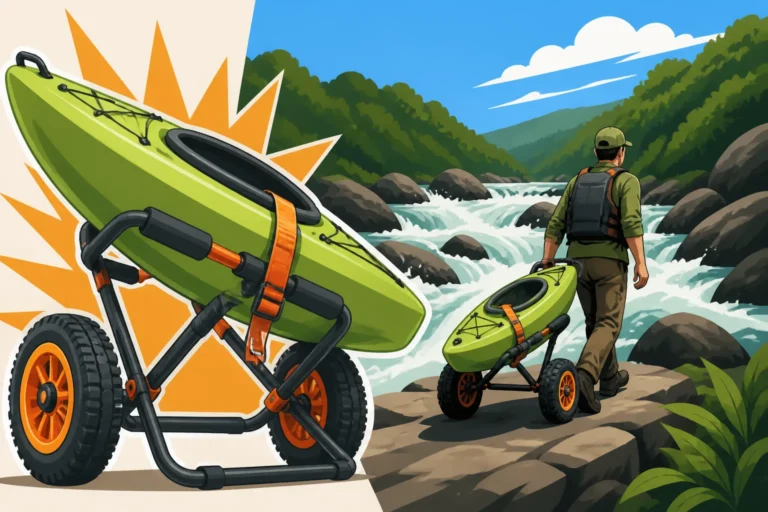
Think about your primary mode of transport. Will it go in the bed of your truck? On a trailer? Or on top of your car? Each method has its own pros and cons. A quality kayak cart or trolley can be an absolute lifesaver for moving heavier kayaks from your vehicle to the launch point, especially if it's a bit of a walk. Manufacturers often design their kayaks with specific carrying handles or even wheel inserts to make transport easier.
The ease of loading and unloading will greatly influence how often you actually use your kayak. A cumbersome boat might end up sitting in the garage more often than not. Brands like Perception and Crescent offer models that balance features with manageable weights. Don't forget about securing your kayak during transport; quality tie-downs and roof rack systems are essential. For general safety on the water, you'll also want to make sure you're familiar with Life Jacket Requirements for West Virginia Boaters.
Matching Your Kayak to West Virginia's Diverse Lake Environments
West Virginia isn't just one type of lake. From sprawling, deep reservoirs to quaint, secluded state park ponds, our waters offer a variety of experiences. The "best" kayak for lake fishing really depends on where you plan to spend most of your time. Understanding the characteristics of these different lake types will help you choose a kayak that truly shines in your preferred fishing grounds.
Large Reservoirs: Summersville Lake and Bluestone Lake
Our large reservoirs, like Summersville Lake, Bluestone Lake, or Stonewall Jackson Lake, are vast and can feel more like inland seas on a windy day. These lakes are characterized by open water, often deep channels, and significant boat traffic from powerboats, jet skis, and pontoons. For these types of waters, stability is paramount. You'll want a kayak that can handle wakes and choppy conditions without making you feel constantly on edge. Wider sit-on-top kayaks, especially those around 12-14 feet in length, offer excellent tracking and stability in these conditions.
The sheer size of these lakes also means you might want to cover a lot of water. This is where a pedal-drive kayak truly earns its keep. Being able to cruise at a good pace, hands-free, while trolling or casting, is a massive advantage when you're trying to locate fish over expansive flats or along long shorelines. The ability to quickly reposition due to wind or to follow a school of baitfish can make all the difference. For specific insights into one of our prime locations, check out our Summersville Lake Fishing Guide.
Storage capacity is also important for reservoir fishing, as you might be out for a full day, needing a cooler for drinks and snacks, multiple tackle boxes, and perhaps even an anchor system to hold your position in open water. Look for kayaks with large stern tankwells, plenty of gear tracks for electronics (a fish finder is invaluable on these big waters!), and comfortable, elevated seating for long hours of fishing.
Smaller, More Secluded Lakes: State Park Gems
West Virginia is also home to numerous smaller lakes, often found within our beautiful state parks or tucked away in quieter regions. Think of places like Watoga State Park Lake or Plum Orchard Lake. These waters usually have less boat traffic, are often shallower, and present more opportunities for exploring tight coves and quiet shorelines. For these environments, while stability is still good, maneuverability and lighter weight can become more critical.
A shorter, lighter sit-on-top kayak, perhaps in the 10-12 foot range, can be easier to load and unload at undeveloped access points. Its shorter length will make it more nimble for navigating tight spaces, around submerged timber, or through weed beds. Paddle-drive kayaks are perfectly suitable for these smaller waters, as you won't need to cover vast distances, and the quiet approach is ideal for these peaceful settings.
Even in smaller lakes, a comfortable seat and adequate storage for a modest amount of tackle and a small cooler are still important. The ability to stand up and sight fish can be a huge advantage in clear, shallow ponds where you might spot cruising bass or bluegill. For general information about fishing these scenic spots, our West Virginia State Park Fishing Guide provides a great overview. The focus here is less on battling big waves and more on intimate exploration and precise fishing.
Multi-Purpose Kayaking: When You Fish and Recreate
Perhaps you're not just a fishing fanatic. Maybe you also enjoy leisurely paddles with family, or you like to take your kayak out for exercise. If your kayak needs to pull double duty, it means finding a balance between dedicated fishing features and general recreational comfort and performance. This is a common scenario for many West Virginia anglers who want versatility from their investment.
For multi-purpose use, you might lean towards a sit-on-top kayak that offers a good blend of stability for fishing but is also streamlined enough for comfortable paddling. While a dedicated fishing kayak can be quite heavy and wide, a hybrid approach might mean sacrificing a little bit of fishing-specific rigging for a slightly lighter, more paddle-friendly design. Look for kayaks that have a relatively clean deck when not rigged for fishing, allowing for easier casual paddling.
Many brands offer "recreational fishing kayaks" that strike this balance well. They might have a couple of flush-mount rod holders, a decent tankwell, and a comfortable seat, without going all-in on heavy-duty pedal drives or extensive gear track systems. The key is to honestly assess how often you'll be doing each activity. If 80% of your time is fishing, lean more towards a fishing-specific model. If it's a 50/50 split, a versatile recreational fishing kayak will serve you best. For those who love to explore different waters, a Best Kayak for the New River might be a consideration, even if lakes are your primary focus, as it showcases the versatility kayaks offer.
| Kayak Feature / Lake Type | Large Reservoirs (Summersville Lake) | Small Lakes (State Parks) | Multi-Purpose (Both) |
|---|---|---|---|
| Stability | Very High (Critical for waves/wakes) | High (Good for comfort) | High (Balance for both) |
| Length | Longer (12-14 ft+) for tracking | Shorter (10-12 ft) for maneuverability | Medium (11-13 ft) for balance |
| Propulsion | Pedal-Drive highly recommended | Paddle-Drive (lighter, simpler) | Either (pedal for fishing, paddle for speed) |
| Storage/Rigging | Extensive (fish finder, multiple rods) | Moderate (basic tackle, 1-2 rods) | Moderate to High (flexible setup) |
| Weight | Can be heavier (features add up) | Lighter (easier to transport) | Moderate (balance of features/weight) |
| Maneuverability | Good tracking is key | Nimble in tight spots | Balanced |
| Best For | Long distances, open water, heavy gear | Quiet exploration, precise casting | Versatility, family outings + fishing |
Essential Accessories to Complement Your Lake Fishing Kayak
Getting the right kayak is a huge step, but it’s only part of the equation. To truly make your lake fishing experience productive, safe, and enjoyable in West Virginia, you'll want to invest in a few key accessories. Think of these as the supporting cast that elevates your kayak from a simple boat to a fully-equipped fishing machine. Don't skimp on these; they can make a significant difference in your day.
Safety Gear: Life Jackets and Whistles
This isn't just a recommendation; it's a non-negotiable requirement. A comfortable, properly fitted life jacket (also known as a Personal Flotation Device or PFD) is the single most important piece of safety gear you’ll own. In West Virginia, like almost everywhere, children have specific PFD requirements, but for adult anglers, wearing your PFD at all times on the water is just plain smart. Look for fishing-specific PFDs that have extra pockets for small tackle, pliers, or a whistle, and allow for a full range of motion for casting. Brands like Onyx or NRS make excellent fishing PFDs that are designed for comfort during long days.
Beyond the PFD, a whistle is another small but mighty piece of safety gear. It's an audible signal device that can be crucial if you get into trouble, need to alert other boaters to your presence, or signal for help. Keep it attached to your PFD or a lanyard around your neck so it's always accessible. Other often-overlooked safety items include a small first-aid kit, a headlamp (even if you don't plan to be out after dark, things happen!), and a bright flag on a pole for visibility, especially on larger, busy lakes. For more details on what's required, you can consult West Virginia Boating Laws for Anglers.
The unpredictable nature of weather in West Virginia, especially during sudden thunderstorms, makes preparedness key. Even on seemingly calm lake days, conditions can change rapidly. Investing in good safety gear isn't about expecting the worst; it's about being prepared so you can enjoy your time on the water with peace of mind.
Anchoring Systems for Holding Your Position
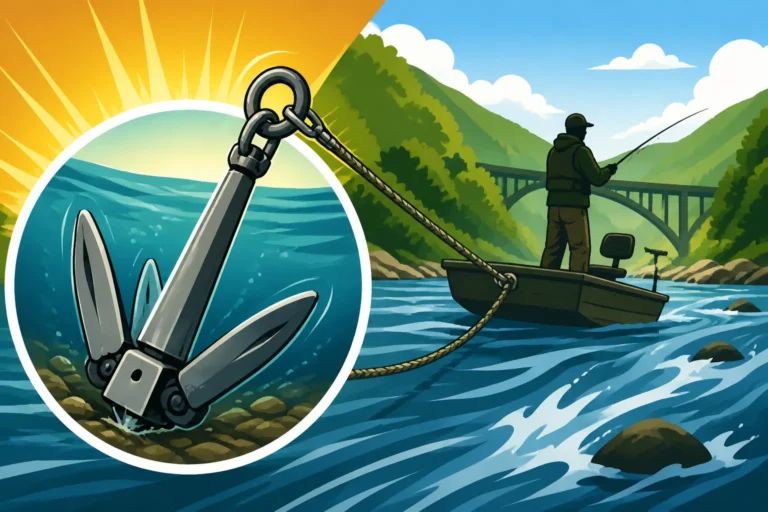
One of the biggest frustrations for kayak anglers on lakes is being constantly pushed around by wind or current. An effective anchoring system is crucial for holding your position over a promising drop-off, a brush pile, or within a tight fishing spot. There are several popular options. A simple grapple anchor, usually 1.5 to 3 pounds, is a common choice for kayaks. It folds up for easy storage and has good holding power in most lake bottoms.
Pair your anchor with an anchor trolley system. This ingenious setup allows you to move your anchor line from the bow to the stern (or anywhere in between) along the side of your kayak. This lets you precisely position your kayak relative to the anchor point, helping you fish a seam in the current or hold against the wind without being blown sideways. It’s an absolute game-changer for control.
Another popular option, especially for soft bottoms or smaller areas, is a stake-out pole or a shallow water anchor system. These are poles that you manually push into the bottom to hold your kayak in place. They are silent, quick to deploy, and perfect for shallower coves or flats. Power-Pole Micro anchors are a more advanced, motorized version of this concept. The right anchoring system will dramatically improve your ability to stay on the fish and present your lures effectively. If you also fish rivers, you may find our guide Best Anchor System for River Fishing insightful for adapting your anchor tactics.
Electronics: Fish Finders and GPS
While not strictly "essential" for everyone, a fish finder can be a monumental advantage for lake fishing, especially on larger, deeper bodies of water. These devices help you locate fish, identify underwater structure (like humps, ledges, or submerged timber), and gauge water depth and temperature – all critical information for successful fishing. Many modern fish finders are designed to be compact and kayak-friendly, often running on small, rechargeable batteries.
Look for models that offer CHIRP sonar for clear target separation and perhaps side imaging or down imaging to get a better view of the bottom and surrounding areas. Brands like Humminbird and Lowrance offer excellent kayak-specific units. Mounting can be done via gear tracks or specialized transducer mounts that clamp to the hull. A good fish finder can save you countless hours of blind casting by putting you directly on the fish.
Many fish finders also include GPS capabilities, or you can opt for a separate handheld GPS unit. GPS is invaluable for marking productive waypoints (like that brush pile you found, or a hidden rock bar), navigating back to your launch point, or exploring unfamiliar territory. On a vast lake, knowing exactly where you are and where you've been can boost both your fishing success and your safety. Best Portable Fish Finder for Kayak Fishing delves deeper into choosing the right unit.
Rod Holders and Organization
Trying to manage multiple rods in a kayak without proper holders is a recipe for tangled lines, broken tips, and frustration. At a minimum, your fishing kayak should have a few flush-mount rod holders in the stern for storage while paddling. But for active fishing, adjustable rod holders that clamp onto gear tracks or side rails are invaluable. These allow you to position a rod for trolling, hold a bait rod while you cast another, or simply keep a spare rod ready for quick deployment.
Brands like Scotty, Ram Mounts, and YakAttack offer a wide range of rod holders that are durable and highly adjustable. Consider your fishing style: if you troll, you'll want more outward-facing holders. If you primarily cast, you might just need one or two for spare rods. Beyond rod holders, think about general tackle organization. A fishing crate in the stern, often customized with rod holders and tool pouches, is a popular solution for keeping tackle boxes, a small cooler, and other essentials organized and accessible.
Small gear caddies, magnetic tool holders, and bungee systems can help keep pliers, line snips, and other frequently used items within arm's reach. The goal is to create a functional "cockpit" where everything you need is easily accessible without having to turn around or rummage. This efficiency on the water means more time with your line in the water and less time searching for that perfect lure.
Top Kayak Brands and Where to Find Them
Alright, so you've got a clearer picture of what kind of fishing kayak will work best for you on West Virginia's lakes and what features are non-negotiable. Now, let's talk about some of the brands that are leading the charge in fishing kayak innovation and where you can actually get your hands on one of these amazing vessels. There's a wide range out there, from budget-friendly options to high-end, feature-packed machines, so there's truly something for every angler and every budget.
Popular Brands Known for Fishing Kayaks
When you start looking at fishing kayaks, certain names will come up repeatedly, and for good reason. These brands have a reputation for quality, innovation, and designs specifically tailored to anglers' needs.
One of the most recognizable names is Hobie. Hobie is practically synonymous with pedal-drive kayaks, specifically their revolutionary MirageDrive system. If you’re serious about hands-free fishing on larger West Virginia lakes and have the budget, a Hobie kayak like the Pro Angler or Passport series is often at the top of many anglers' wish lists. They offer exceptional stability, tons of storage, and incredible efficiency, making them fantastic for covering vast distances.
Another highly respected brand is Old Town Canoes & Kayaks. While they've been around forever, their recent line of Sportsman fishing kayaks, particularly those with their proprietary PDL (Pedal Drive) system, has become incredibly popular. They offer great stability, comfort, and an excellent balance of features for the price. They also have a strong reputation for durability.
For those who prefer paddle power or are looking for a more entry-level, yet still feature-rich, option, Wilderness Systems offers some fantastic choices. Models like the Tarpon or ATAK series are known for their excellent hull designs, comfort, and ample rigging options. They track well and offer a good blend of stability and efficiency.
Perception Kayaks is another solid brand, often offering more budget-friendly options without sacrificing too much quality. Their Pescador series is a popular choice for beginners or those who want a reliable, stable fishing kayak for general lake use without all the bells and whistles of higher-end models. They’re a great starting point for many West Virginia anglers.
Finally, for something a bit different, Crescent Kayaks has gained a loyal following. They focus on hybrid designs that are incredibly stable, paddle efficiently, and are known for their open deck space and versatility. Their models like the LiteTackle or Shoalie are fantastic for anglers who want a highly maneuverable and stable paddle kayak that feels almost like a stand-up paddleboard in terms of fishability.
Shopping for Your Kayak: Online vs. In-Store
So, you've got a few brands and models in mind. Now, where do you actually buy one? You essentially have two main options: shopping online or visiting a physical retail store. Both have their pros and cons.
Shopping In-Store:
Visiting a physical store, such as a Bass Pro Shops or a specialized outdoor gear retailer, offers some distinct advantages. First and foremost, you can physically see, touch, and even sit in the kayaks. This is incredibly important for assessing comfort, storage layout, and overall feel. You can get a much better sense of the kayak's size and weight in person, which is crucial for determining portability. Sales associates can also provide expert advice, answer specific questions, and help you compare different models side-by-side. Many larger stores also offer a good selection of accessories, allowing you to get everything you need in one trip. The downside is that selection might be limited to the brands they carry, and prices might sometimes be slightly higher than online.
Shopping Online:
Websites like Amazon, as well as direct-to-consumer brand websites, offer an unparalleled selection of kayaks. You can browse hundreds of models, read countless reviews, and often find competitive pricing or sales that might not be available in local stores. Online shopping is convenient, allowing you to do your research from the comfort of your home. However, the obvious drawback is that you can't physically inspect the kayak. You're relying on pictures, specifications, and other people's reviews, which might not always translate perfectly to your personal preferences. Be sure to carefully check shipping costs, delivery times, and return policies when buying a large item like a kayak online.
Many anglers find a hybrid approach to be the best. Do your initial research online, identify a few models you like, and then try to find a local dealer or even a friend who has one you can check out in person. Once you've narrowed down your choice and are comfortable with the purchase, you can then decide whether the best deal is online or at a local retailer. Either way, take your time, ask questions, and make sure the kayak you choose is the perfect fit for your West Virginia lake fishing adventures.
Disclaimer
This article is for general informational purposes only and does not constitute professional advice. Laws, prices and regulations vary by location and change over time. Consult a qualified professional for guidance on your specific situation.