Best Trolling Motor for a Fishing Kayak
There’s nothing quite like the freedom of paddling your kayak out to that perfect fishing spot in West Virginia, but let's be honest, sometimes your arms are just screaming for a break, or that current is pushing you harder than you'd like. This guide is all about making your kayak fishing trips more efficient and less exhausting by exploring the world of trolling motors designed specifically for fishing kayaks, helping you pinpoint the best option to keep you on the fish longer and navigate with ease.
Why Consider a Trolling Motor for Your Fishing Kayak?
Kayak fishing is an incredible experience, offering unmatched access to secluded waters and a truly intimate connection with nature. However, it also comes with its own unique set of challenges. Battling strong currents, covering long distances, or simply trying to hold a precise position against the wind can turn a relaxing day on the water into an unforeseen workout. This is where a trolling motor can literally be a game-changer, transforming your paddling vessel into a stealthy, power-assisted fishing machine.
Overcoming Paddling Fatigue and Covering More Water
Let's face it, West Virginia has some incredible waterways, from the vast expanses of Summersville Lake to the winding currents of the New River. Trying to paddle these distances, especially when you're also fighting wind or current, can zap your energy quickly. By the time you reach your prime fishing spot, you might be too tired to even cast effectively. A trolling motor takes the grunt work out of propulsion, allowing you to conserve your energy for what truly matters: fishing.
Imagine you're targeting smallmouth bass on a wide section of the New River Smallmouth Bass Fishing or exploring the far reaches of Stonewall Jackson Lake Fishing. With a trolling motor, you can cruise to distant coves, move swiftly between honey holes, and reposition yourself with a mere touch of a button or foot pedal. This ability to cover more water with less effort directly translates to more time fishing and potentially more fish in the net. It also extends your fishing day; you won't have to cut it short just because your shoulders are burning.
Achieving Precise Position and Stealth
One of the biggest advantages of a fishing kayak is its stealth. You can sneak up on wary fish in shallow water or tight cover without the noise and disturbance of a larger boat. A trolling motor, particularly electric ones, enhances this stealth by offering silent propulsion. You can glide into position, slowly work a shoreline, or hold steady over a submerged structure without spooking your target.
Think about trying to hold your kayak in a specific spot on the Elk River Trout Fishing while fly fishing in a light current, or precisely casting to a log jam on the Greenbrier River Fishing Guide. Doing that with a paddle requires constant adjustments, often pulling your focus away from your presentation. A trolling motor, especially those with advanced GPS features like spot-lock, can hold your position automatically, freeing up both your hands and your concentration to focus entirely on fishing. This precision allows you to present your lure exactly where you want it, for as long as you need, increasing your chances of a successful hook-up.
Key Features to Look for in a Kayak Trolling Motor
Choosing the right trolling motor for your fishing kayak isn't as simple as grabbing the first one you see. There are several crucial features you'll want to consider to ensure it meets your specific needs and the demands of West Virginia's diverse waterways. Getting this right means the difference between a frustrating add-on and a truly valuable fishing tool.
Thrust Power: Matching Motor to Kayak and Conditions
Thrust is arguably the most important specification for a trolling motor. It's measured in pounds and indicates how much pushing power the motor can generate. The general rule of thumb is to have at least two pounds of thrust for every 100 pounds of your kayak's fully loaded weight (kayak, angler, gear, battery). However, for river fishing in West Virginia, where currents can be significant, you might want a bit more.
For smaller, lighter kayaks (around 10-12 feet) that might see use on calm ponds or smaller lakes, a 30-45 lb thrust motor might suffice. But if you're venturing onto larger impoundments like Summersville Lake Fishing Guide or tackling the robust flows of the New River, you'll likely want something in the 55-70 lb thrust range. Remember to factor in your body weight, all your tackle, cooler, and the battery itself. An underpowered motor will struggle against headwinds or currents, leading to frustration and faster battery drain. Conversely, an overpowered motor might be overkill, adding unnecessary weight and cost.
Battery Voltage and Run Time Considerations
Trolling motors typically run on 12V, 24V, or even 36V systems, though for most kayaks, 12V is the standard. The voltage dictates the power, but the battery's amp-hour (Ah) rating is what determines your run time. You'll need a deep cycle marine battery, and increasingly, lithium-ion batteries are becoming popular for their lighter weight and longer life, despite a higher upfront cost.
Consider how long you typically fish and the type of waters you frequent. If you only plan short trips on small, calm lakes, a single 12V group 24 or 27 deep cycle battery might get you through the day. For longer excursions or for navigating stronger currents, you might need a larger capacity battery, or even consider a second one if your kayak can handle the weight. Always check the motor's recommended voltage and ensure your battery setup matches. Don't forget a quality charger! You don't want to get to the lake and realize your battery is dead. The right battery choice is crucial; check out Best Trolling Motor Battery for a Fishing Kayak for more in-depth information.
Control Systems: Foot Pedal vs. Handheld Remote vs. Integrated
How you control your trolling motor dramatically impacts your fishing experience. Each system has its pros and cons, and the best choice often comes down to personal preference and your fishing style.
- Foot Pedal Control: Common on larger bass boats, foot pedals offer hands-free operation, which is a huge advantage for anglers who want to keep their hands on their rod and reel. This is fantastic for bass fishing where precise boat control while casting is paramount. However, installing a foot pedal in a kayak can be challenging due to limited space and the need for sturdy mounting. They are also typically more expensive and can add considerable weight.
- Handheld Remote Control: Many modern kayak trolling motors come with wireless handheld remotes. These are incredibly versatile, allowing you to control speed, direction, and even advanced features like spot-lock from anywhere in the kayak. This is perfect for kayak anglers who prioritize flexibility and don't want to be tethered to a foot pedal. However, there's always the risk of dropping or losing the remote, and you'll need to remember to keep it charged.
- Integrated Controls: Some kayaks, particularly those designed for specific brands of motors (like certain Hobie models with their Evolve motors or Old Town' with Minn Kota), feature integrated controls directly into the kayak's hull or steering system. These offer a seamless experience, often with a simple joystick or dial. They are incredibly convenient but limit your motor choice to compatible models.
Here's a quick comparison of these control types:
| Feature | Foot Pedal Control | Handheld Remote Control | Integrated Control |
|---|---|---|---|
| Hands-Free | Yes | No (one hand on remote) | Yes (often steering via rudder or joystick) |
| Precision | Excellent (direct steering input) | Good (can be precise with practice) | Excellent (designed for seamless integration) |
| Installation | Complex, often requires modification | Simple (motor mounts, remote is wireless) | Pre-installed or specific, easy integration |
| Cost | Higher | Moderate to High | Often part of kayak/motor package, higher initial |
| Flexibility | Limited to fixed position | High (can control from anywhere in kayak) | High (seamless with kayak's design) |
| Typical Use | Bass fishing, covering open water quickly | General fishing, precise spot holding, varied use | Brand-specific kayaks, streamlined experience |
Shaft Length: Critical for Kayak Trolling Motors
Shaft length is another crucial element, often overlooked. If the shaft is too short, your propeller will cavitate (suck air) in choppy water, losing thrust and damaging the motor. If it's too long, the prop will be unnecessarily deep, causing drag and making it more prone to hitting submerged objects, a real concern in many West Virginia rivers with varying depths.
For most fishing kayaks, a shaft length between 36 and 48 inches is common. To determine the ideal length, measure the distance from where the motor will be mounted to the waterline. You generally want the propeller to be submerged by at least 12 inches to ensure proper thrust and avoid cavitation, even in slightly rough conditions. Consider both the bow and stern mounting options, as the shaft length requirement might differ.
Types of Trolling Motors and Mounting Options for Kayaks
The versatility of fishing kayaks means there isn't a one-size-fits-all solution for trolling motors. Manufacturers have responded with various motor types and mounting systems to suit different kayak designs and angling preferences. Understanding these options is key to integrating a motor effectively into your setup.
Transom Mount Trolling Motors
Transom mount motors are perhaps the most common and often the most budget-friendly option for kayaks. These are typically designed for small boats and easily clamp onto the stern (rear) of your kayak, much like a traditional outboard motor. They are simple to install and remove, making them a popular choice for anglers who want flexibility or don't want to permanently modify their kayak.
The downside is that they affect steering. Since the motor is at the back, you'll still rely on your kayak's rudder or paddle for directional control, which can feel a bit sluggish or counter-intuitive compared to bow-mounted options. For kayaks without a rudder, this means a lot of paddle corrections. They are a great entry-level option for calmer waters or when you primarily need forward propulsion, but less ideal for precise maneuvering in tight spots or strong currents. Many smaller kayaks, especially those without complex bow designs, are well-suited for a transom mount.
Bow Mount Trolling Motors
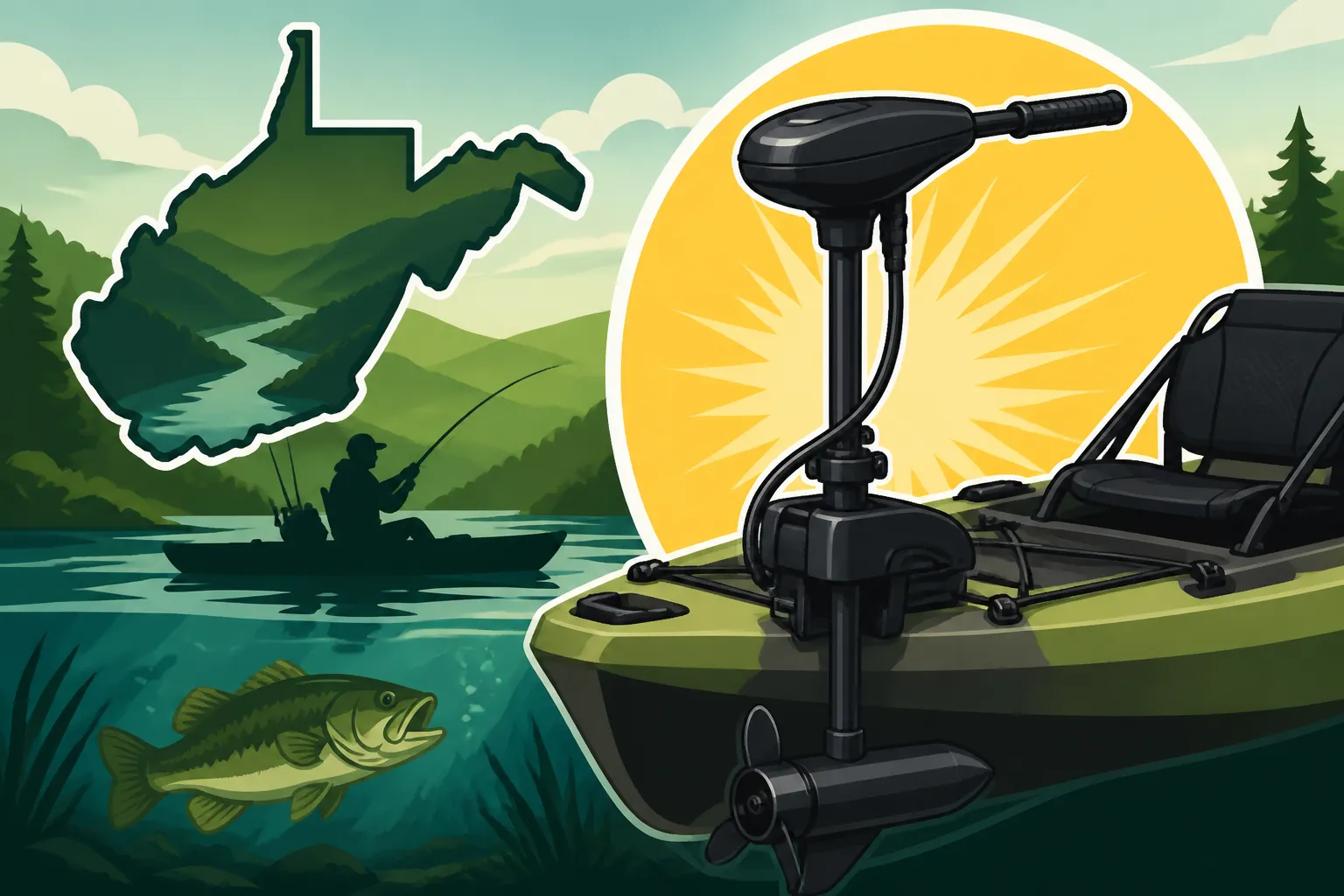
Bow mount trolling motors, as the name suggests, attach to the front of your kayak. These are generally more sophisticated and often come with advanced features like GPS-guided navigation and spot-lock technology. The biggest advantage of a bow mount is superior control; pushing the boat from the front allows for much more precise steering, making it easier to hold a line, navigate tight cover, or turn on a dime. This is particularly beneficial for tactics like working a submerged tree line or staying perfectly still over a brush pile while fishing for crappie at Beech Fork Lake Fishing.
However, bow mounts typically require a flat, sturdy surface on the kayak's bow for installation, which isn't always available on every kayak design without significant modification or a specialized mounting bracket. They are also generally more expensive and heavier than transom mounts, and their shaft length needs careful consideration to ensure the propeller is deep enough without being prone to hitting bottom. For kayaks designed with a dedicated bow mounting plate or for those willing to invest in aftermarket solutions, a bow mount offers unparalleled control.
Side Mount and Integrated Systems
Beyond transom and bow mounts, some creative solutions exist for kayak trolling motors, including side mounts and fully integrated systems.
- Side Mounts: These are less common but can be a good compromise for kayaks that lack suitable bow or transom space, or for anglers who prefer to keep the stern clear for other gear. A side mount bracket attaches to the gunwale (side) of the kayak, allowing the motor to deploy off the side. The downside here is that a side-mounted motor can create asymmetrical thrust, making the kayak pull to one side, and might interfere with paddling or casting if not positioned carefully. They are often aftermarket solutions for specific kayak models.
- Integrated Systems: Some premium fishing kayaks are designed from the ground up to accept specific trolling motors seamlessly. Brands like Hobie with their eVolve electric motor system, or Old Town with their Minn Kota-powered kayaks, offer fully integrated propulsion. These systems often feature motors that drop through a scupper hole or are built directly into the hull, with controls conveniently located near the angler. The advantages are a clean, streamlined look, superior performance, and often advanced features. The main drawback is the significantly higher cost and the fact that you're tied to a specific brand and model of motor and kayak. But for those who want the ultimate in convenience and performance, these integrated systems are hard to beat. When you're looking at higher-end setups, Bass Pro Shops can be a great place to see these systems in person and talk to knowledgeable staff.
Powering Your Kayak Trolling Motor: Batteries and Chargers
The heart of any electric trolling motor system is its power source. Without the right battery and a reliable way to keep it charged, your motor is just dead weight. This section will delve into the critical aspects of powering your kayak trolling motor, ensuring you have the juice to enjoy your time on the water.
Deep Cycle Marine Batteries: The Workhorse
Traditional deep cycle marine batteries have long been the standard for trolling motors. Unlike starting batteries, which deliver a burst of high current to crank an engine, deep cycle batteries are designed to provide a steady, lower current over a long period, discharging deeply and recharging many times.
You'll typically encounter lead-acid deep cycle batteries, often available in Group 24, 27, or 31 sizes. The larger the group number, generally the more amp-hours (Ah) capacity it has, meaning longer run times.
- Pros: Relatively inexpensive, widely available (you can often find them at your local hardware store or auto parts shop, as well as places like Bass Pro Shops), and reliable.
- Cons: They are heavy! This is a significant consideration for kayaks, where every pound matters for portability and performance. They also discharge more quickly in cold weather and require more maintenance (checking water levels in flooded batteries). Their usable capacity is often only about 50%, meaning you shouldn't drain them completely to prolong their life.
When selecting a lead-acid battery, match its amp-hour rating to your motor's draw and your typical fishing duration. If your motor draws, say, 30 amps at full speed, and you want 3 hours of run time, you'd ideally need a battery with at least 90 Ah of usable capacity (30 A * 3 hr = 90 Ah). Since you only use about half, you'd look for a 180 Ah battery to be safe. It’s a bit of math, but it's crucial for avoiding a dead battery mid-trip!
Lithium-Ion Batteries: The Lighter, More Efficient Alternative
Lithium-ion batteries, specifically LiFePO4 (lithium iron phosphate) versions, are rapidly gaining popularity among kayak anglers for excellent reasons. While they have a higher upfront cost, their benefits often outweigh the initial expense for serious users.
- Pros: Significantly lighter than lead-acid batteries (often less than half the weight for comparable capacity), provide consistent power output throughout their discharge cycle, much longer lifespan (thousands of charge cycles compared to hundreds for lead-acid), and have a much higher usable capacity (80-100%). They also perform better in cold temperatures and are generally maintenance-free. This weight saving can be huge for a kayak, making it easier to transport and improving overall kayak performance.
- Cons: Higher initial purchase price. They also require specific chargers designed for lithium batteries.
If you're serious about long days on the water or frequently fish in challenging conditions, the weight savings and extended run time of a lithium battery are incredibly appealing. Imagine being able to paddle and portage your kayak with less strain, all while having reliable power for your motor.
Chargers and Power Management
Regardless of your battery choice, a good charger is non-negotiable. For lead-acid batteries, you'll want a "smart" charger that can detect battery type and condition, and adjust its charging cycle to prevent overcharging and extend battery life. For lithium-ion batteries, you must use a charger specifically designed for LiFePO4 batteries. Using an incompatible charger can damage the battery and pose a safety risk.
Consider multi-bank chargers if you run more than one battery, allowing you to charge them simultaneously. On-board chargers are also an option for more permanent setups, integrating the charging system into your kayak or transport vehicle. Proper care and charging are paramount to getting the most out of your battery investment and ensuring your trolling motor is ready for your next adventure in West Virginia's waters.
Installation and Maintenance Tips for Kayak Trolling Motors
Getting your trolling motor properly set up and then keeping it in top shape is key to a hassle-free fishing experience. Nobody wants to deal with motor issues when they're trying to enjoy a peaceful day on the Best Fishing Lakes in West Virginia.
DIY vs. Professional Installation
Deciding whether to install your trolling motor yourself or hire a professional largely depends on your comfort level with tools, your kayak's design, and the complexity of the motor system.
- DIY Installation: For many transom-mount motors, DIY installation is quite straightforward. It typically involves clamping the motor to the stern and routing the power cable to your battery. You might need to drill a few holes for cable pass-throughs or a more secure mounting bracket, but these are generally manageable tasks. If you're using a simple handheld remote motor, the electrical hookup is usually direct to the battery terminals. However, when you start looking at bow-mount motors with advanced features or custom mounting plates, the DIY aspect becomes more involved. It might require fiberglass work, precise measurements, and more complex wiring if you're integrating switches or power outlets. Always consult your kayak's manual and the motor's instructions. A mistake here could compromise your kayak's integrity or lead to electrical problems. When buying a motor, you can often find good instructional videos or forums online, or simply ask for advice when purchasing from retailers like Amazon or Bass Pro Shops.
- Professional Installation: If your kayak requires significant modification, involves complex wiring for multiple accessories, or if you're simply not comfortable with the installation process, hiring a professional is a wise investment. Marine mechanics or specialized kayak outfitters can ensure the motor is securely mounted, all wiring is safe and properly sealed, and your kayak's warranty isn't voided by incorrect modifications. While it adds to the overall cost, the peace of mind knowing your setup is safe and functional is often worth it, especially if you plan to tackle challenging waters like the New River Gorge Fishing Guide.
Essential Maintenance for Longevity
Like any piece of marine equipment, your trolling motor requires regular maintenance to perform optimally and last for many seasons. Neglecting it can lead to premature failure and costly repairs.
- Rinse After Every Use: This is especially critical if you fish in brackish water, but even freshwater can leave behind mineral deposits or algae. A thorough rinse with fresh water, focusing on the propeller, shaft, and motor head, helps prevent corrosion and build-up.
- Check Propeller and Shaft: Periodically inspect the propeller for fishing line, weeds, or other debris wrapped around the shaft. Even a small amount of line can damage the prop seal, leading to water intrusion into the motor. Check for bent blades or chips; a damaged prop can cause vibrations and reduce efficiency. Carry a spare prop and the necessary tools for quick changes on the water.
- Battery Terminal Care: Keep your battery terminals clean and free of corrosion. Use a wire brush if needed, and apply a dielectric grease or battery terminal protector to prevent future corrosion. Ensure all connections are tight. Loose connections can lead to power loss and potential damage.
- Inspect Wiring: Regularly check all wiring for frays, cuts, or exposed sections. Ensure all connections are securely made and protected from water. Any compromised wiring can be a safety hazard and lead to electrical problems.
- Lubrication and Storage: Some motors have grease zerks or specific points that require periodic lubrication; consult your motor's manual. During the off-season or extended storage, disconnect the battery, clean the motor thoroughly, and store it in a dry, protected area. If your motor has a removable propeller, take it off for cleaning and inspection.
- Software Updates: For advanced motors with GPS or other digital features, check the manufacturer's website for any available software updates. Keeping your motor's software current can improve performance and add new features.
By following these installation guidelines and maintenance tips, you'll ensure your kayak trolling motor remains a reliable companion for all your West Virginia fishing adventures.
Top Considerations for West Virginia Kayak Anglers
West Virginia's fishing landscape is incredibly diverse, from vast, calm reservoirs to swift mountain rivers. This variety means that choosing and using a kayak trolling motor effectively requires a tailored approach. What works great on Summersville Lake might be less ideal on the Cranberry River.
River Fishing vs. Lake Fishing Demands
The primary distinction for West Virginia kayak anglers is often whether they're fishing rivers or lakes, as each presents unique challenges and opportunities for trolling motor use.
- River Fishing: Rivers like the New River, Greenbrier, or the South Branch of the Potomac offer incredible smallmouth bass fishing and, in some cases, muskie. However, they also present significant currents, hidden rocks, and constantly changing water levels. For river fishing, a more powerful trolling motor (55-70 lb thrust) is often preferred to combat currents effectively. A sturdy mounting system is crucial to withstand the bumps and jostles of river navigation. Durability is key. A shorter shaft length might be advantageous in shallower, rocky sections to avoid prop strikes, but you need to balance this with ensuring adequate prop submersion in deeper holes. Foot pedal or GPS-enabled bow mounts can be fantastic for holding position while you work a seam or a eddy. Remember to stay aware of West Virginia Boating Laws for Anglers, especially regarding navigation and required safety equipment.
- Lake Fishing: West Virginia's impoundments like Summersville Lake, Cheat Lake, or Tygart Lake offer vast expanses of water, often with less current but potentially more wind. Here, covering long distances is often the goal. While thrust is still important, battery life might become the top priority for anglers wanting to explore far reaches. Motors with advanced GPS features like spot-lock are incredibly valuable for holding position over deep structure, a hot crappie bed, or trolling open water for walleye. Propeller guards can be useful for navigating weed beds. Shaft length might be less critical than in shallow rivers, but still needs to ensure prop submersion in choppier conditions. For these large, open waters, a comfortable seat and ample battery capacity, perhaps even multiple batteries, will make your long days more enjoyable.
Navigating Currents, Obstacles, and Regulations
West Virginia's dynamic waters mean you'll constantly be navigating changing conditions.
- Currents: Strong currents in rivers demand a motor with sufficient thrust to hold your position or move upstream effectively. Always assess the current before relying solely on your motor. In very strong whitewater sections, a trolling motor might not be enough, and paddling skills or portaging will be necessary. Some motors feature a "max current" rating, which can be a helpful guide.
- Obstacles: Rocks, submerged logs, and shallow spots are common in many West Virginia rivers. Look for motors with durable composite shafts that can flex upon impact without breaking. A skeg on the lower unit helps protect the propeller. Always be vigilant and keep an eye on your depth finder (if you have one) to avoid costly prop strikes. You might consider a motor with a "stow and deploy" feature that allows you to quickly pull the motor out of the water in very shallow sections.
- Regulations: It's absolutely crucial to be aware of West Virginia's specific boating and fishing regulations. While kayaks are generally considered non-motorized vessels, adding a trolling motor often changes their classification. This can mean new requirements for registration, numbering, and safety equipment. For example, Are Kayaks Required to Be Registered in West Virginia? if they have a motor? What about Life Jacket Requirements for West Virginia Boaters? Always check the latest regulations from the West Virginia Division of Natural Resources (WVDNR) to ensure you're compliant. Ignorance of the law is never an excuse, and a violation can quickly ruin a fishing trip.
By carefully considering these West Virginia-specific factors, you can make an informed decision about the best trolling motor for your fishing kayak, ensuring it enhances, rather than hinders, your pursuit of the Mountain State's incredible fisheries.
Disclaimer
This article is for general informational purposes only and does not constitute professional advice. Laws, prices and regulations vary by location and change over time. Consult a qualified professional for guidance on your specific situation.