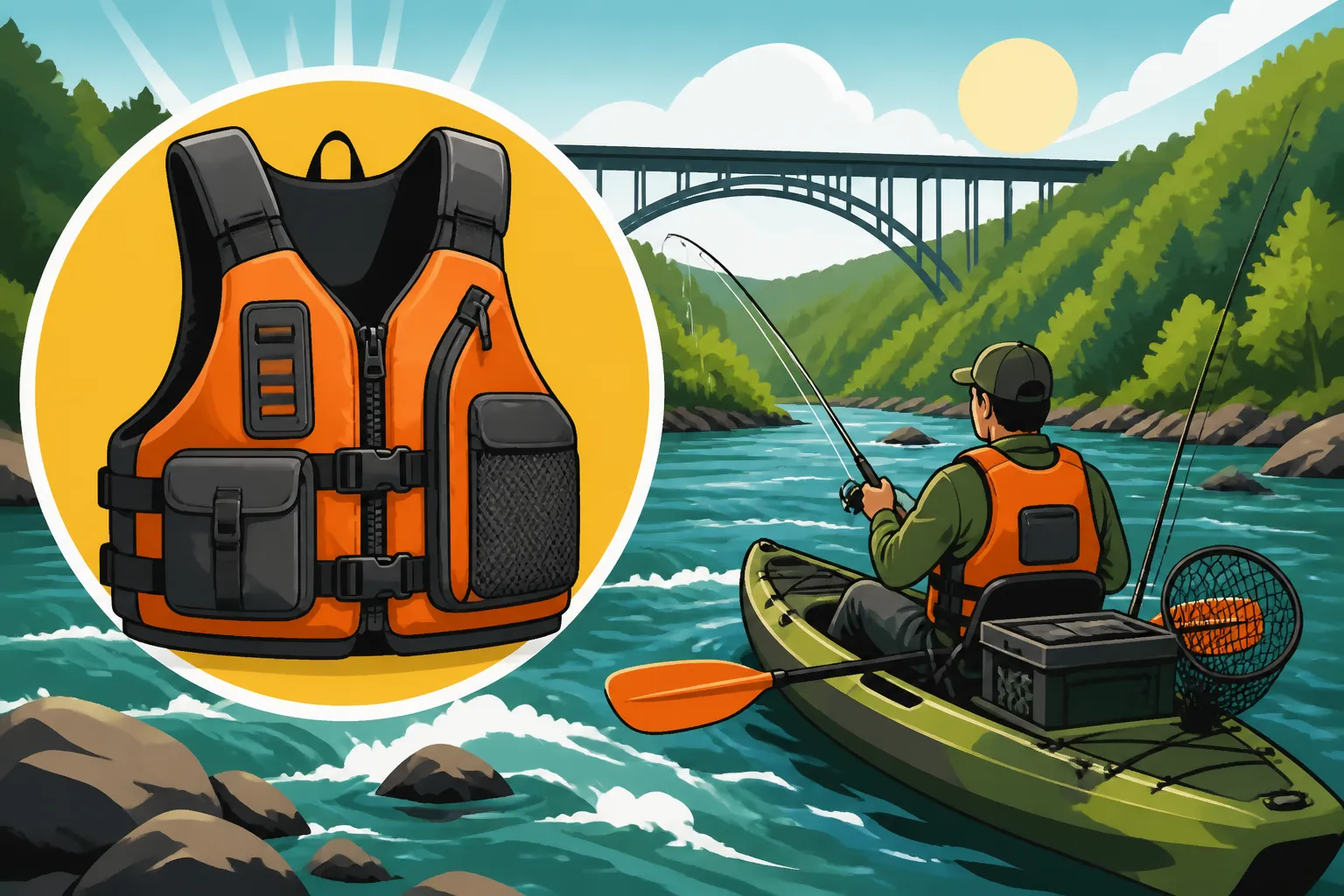
Best Life Jacket for River Kayak Fishing
Trying to find the perfect life jacket for your river kayak fishing adventures in West Virginia can feel like searching for a needle in a haystack. There are so many options out there, and the stakes are high – your safety, after all! This guide is here to cut through the noise and help you understand exactly what to look for in a personal flotation device (PFD) that will keep you safe, comfortable, and ready to reel in that next big catch on our beautiful, often challenging, rivers.
Why a Specialized Life Jacket for River Kayak Fishing Matters
When you’re out on a West Virginia river in your kayak, whether you're navigating the swift currents of the New River or leisurely paddling on the Greenbrier, you're facing a unique set of challenges that a standard recreational life vest just isn't designed for. Your PFD isn't just a piece of safety equipment; it's an integral part of your fishing system, and it needs to perform under specific conditions.
The Unique Demands of River Environments
River environments, especially in West Virginia, are incredibly dynamic. You've got everything from calm pools and gentle floats to surprising rapids, submerged rocks, and swift currents that can quickly pull you into a dangerous situation. A bulky, ill-fitting life jacket designed for a motorboat simply won't cut it. It can restrict your movement, snag on branches, or hinder your ability to self-rescue if you capsize. You need a PFD that moves with you, allows you to paddle effectively, and doesn't get in the way when you're casting or landing a fish.
Imagine you're battling a feisty smallmouth bass on the South Branch Potomac Smallmouth Fishing grounds, and suddenly your kayak gets caught in an eddy. A poorly designed life jacket could make it incredibly difficult to lean, brace, and paddle your way out of trouble, not to mention trying to fight the fish simultaneously. This is why specialized river kayak PFDs are engineered with a shorter cut and contoured foam that provides maximum arm mobility for paddling and casting, keeping your focus on the fish and the river, not on uncomfortable gear.
Furthermore, river conditions can change in an instant. A sudden downpour can quickly raise water levels and increase current speed, turning a tranquil float into a more serious proposition. Your PFD needs to be robust enough to handle potential abrasions from rocks or logs, and its flotation should be reliable even if you end up in cold, fast-moving water. This resilience is a hallmark of good river-specific PFDs.
Comfort is King for All-Day Paddling
Let's be honest, if a PFD isn't comfortable, you're far less likely to wear it consistently, and that defeats its entire purpose. River kayak fishing often involves long hours on the water, paddling, casting, and battling the elements. A PFD that chafes, rides up, or feels restrictive will quickly become a nuisance, distracting you from your fishing and potentially leading you to make poor safety choices. The goal is to find a life jacket that you almost forget you're wearing.
Think about those warm, humid West Virginia summer days when you're out on Summersville Lake Bass Fishing. The last thing you want is a PFD that traps heat and makes you sweat excessively. Modern river kayak PFDs are designed with excellent ventilation, often featuring mesh backs or strategic cutouts to promote airflow, keeping you cooler and more comfortable throughout your trip. This design consideration is crucial for endurance and enjoyment, allowing you to focus on the joy of fishing rather than the discomfort of your gear.
Proper fit is paramount for comfort. A PFD that's too loose will ride up when you're in the water, offering ineffective flotation and potentially becoming a choking hazard. One that's too tight can restrict breathing and movement. The best PFDs for kayak fishing offer multiple adjustment points – shoulder straps, side straps, and waist buckles – to allow for a snug, custom fit over different layers of clothing, adapting to your body and your angling attire throughout the seasons.
Safety Features Beyond Basic Flotation
While flotation is the primary job of any PFD, a specialized river kayak fishing life jacket goes above and beyond, integrating features that cater specifically to the needs of anglers in potentially challenging environments. These aren't just bells and whistles; they're functional additions that can significantly enhance your safety and efficiency on the water.
Consider the possibility of an unexpected swim. In a river, this isn't just about staying afloat; it's about being able to get back to your kayak or shore. Many river PFDs include sturdy grab handles, often on the shoulders, which can be invaluable for a friend to pull you back into a boat or for you to grab onto your own kayak if you've capsized. Some advanced models even incorporate quick-release harness systems, crucial for whitewater situations or when attaching a rescue throw bag.
Beyond the immediate flotation, these PFDs often feature reflective accents or bright colors to increase visibility, especially important during dawn, dusk, or foggy conditions common in West Virginia's mountainous terrain. Accessory attachment points, like D-rings or lash tabs, allow you to secure important safety items such as a whistle, a river knife, or a small first-aid kit, ensuring they're always within reach when you need them most.
Key Features to Look For in a River Kayak PFD
Choosing the right PFD involves more than just picking a color you like. You need to consider several critical features that directly impact safety, comfort, and functionality specifically for river kayak fishing. Ignoring these details can lead to discomfort at best, and a dangerous situation at worst.
Flotation Type and Buoyancy Ratings
The core function of a life jacket is to provide flotation, but not all flotation is created equal. Most PFDs you'll consider for river kayak fishing will be Type III (Flotation Aid) or, in some cases, Type V (Special Use Device) due to their specific design features. Type III PFDs are generally excellent for recreational boating and fishing, offering good mobility and comfort for sustained wear. They are designed to keep a conscious person upright in calm water. For more challenging river conditions, a Type III specifically designed for paddling will have better arm mobility.
Buoyancy is measured in pounds of flotation, and while all PFDs are designed to provide enough lift to keep an average adult's head above water, specialized river PFDs might offer slightly higher buoyancy than a basic vest, particularly if they are designed for whitewater or colder conditions where heavier clothing might be worn. Always check the label for the specific buoyancy rating and ensure it aligns with your weight and the conditions you expect to encounter. Remember, proper fit is just as important as the buoyancy rating; a PFD with adequate flotation won't work if it rides up over your head.
Some manufacturers, like those found through Bass Pro Shops, will clearly mark their PFDs with appropriate usage, often detailing if they're suitable for paddling or even specific water types. It’s also crucial to understand that an inflatable PFD, while often very comfortable and low profile, has different buoyancy considerations. If it’s not automatically inflating, you must be conscious and able to manually deploy it in an emergency. For turbulent river environments, a traditional foam PFD is often preferred for its immediate and constant flotation.
Design and Fit for Kayak Anglers
The design of a river kayak PFD is where the angling-specific features really shine. One of the most critical design elements is a high-back or thin-back profile. Traditional life vests often have bulky foam padding across the entire back, which can push uncomfortably against the high backrest of many fishing kayaks. A PFD with a high-back design places its flotation primarily on the chest and upper back, or uses thinner foam in the lower back, allowing you to lean back comfortably against your kayak seat without the PFD riding up or creating pressure points.
Beyond the back design, look for contoured chest panels that flex with your body as you paddle and cast. Shoulder straps should be wide and padded to distribute weight comfortably, especially when pockets are loaded. The overall cut of the PFD should be shorter at the waist to prevent it from bunching up when you're seated and to allow for unrestricted leg movement when wading or entering/exiting your kayak. These seemingly small details make a massive difference over hours on the water.
Adjustability is another key aspect of design. A good river kayak PFD will feature multiple adjustment straps (shoulders, sides, waist) to ensure a snug, customized fit. These straps should be easy to reach and adjust, even while you're wearing the PFD. The goal is a fit that is secure enough that it won't ride up if you go into the water, yet comfortable enough that it doesn't restrict your breathing or movement. Many PFDs also come with internal grip material to help prevent riding up.
Storage and Accessory Management
For kayak anglers, a PFD isn't just about safety; it's also a wearable tackle box and tool belt. The best life jackets for river kayak fishing incorporate intelligent storage solutions and accessory management features that keep your essential gear close at hand without impeding your movements. This can be a game-changer for efficiency and safety, especially when you're focused on a fish or navigating challenging water.
Look for multiple pockets of varying sizes. Larger pockets can hold small tackle boxes, soft plastics, or a snack, while smaller pockets are perfect for line clippers, forceps, or a phone in a waterproof bag. Some PFDs even include dedicated pockets with drainage to prevent water accumulation, or internal organization sleeves to keep items from clanking around. Having quick access to tools like a river knife, often secured to a lash tab, is not just convenient but a critical safety feature in case of line tangles or entanglement. You can find a vast array of these PFDs on platforms like Amazon, offering different pocket configurations and accessory options.
Beyond pockets, D-rings and lash tabs are invaluable. These allow you to attach gear like a whistle, a light, a VHF radio, or even a small camera. A dedicated tool retractor attachment point is fantastic for securing frequently used items like pliers or line snips, keeping them tethered and accessible. Thoughtful placement of these features ensures your gear is organized, secure, and doesn't interfere with your casting arm or paddling stroke. Imagine fumbling for your pliers when a muskie has your hook deep; having them immediately available makes all the difference. Best Muskie Gear for West Virginia Rivers often emphasizes quick access to tools.
Understanding Different PFD Types for West Virginia Waters
The world of PFDs can seem a little confusing with all the different types and classifications. But for river kayak fishing in West Virginia, understanding the nuances between Type III and Type V, and the pros and cons of foam versus inflatable, is key to making an informed decision that matches your specific needs and the waters you fish.
Type III (Flotation Aid) vs. Type V (Special Use)
Most kayak fishing PFDs fall into the Type III category. These are flotation aids designed for general recreational use, offering a minimum of 15.5 pounds of buoyancy. The key characteristic of a Type III is its focus on wearer comfort and mobility, which is why it's so popular among paddlers and anglers. They typically allow for a full range of motion for paddling and casting, and often come in various styles, including vest, jacket, and even some hybrid inflatables. For the majority of West Virginia's rivers and lakes, from the calm stretches of the Greenbrier to the big impoundments like Summersville Lake Fishing Guide, a Type III PFD specifically designed for paddling is usually the best choice.
Type V PFDs, on the other hand, are "Special Use Devices." This classification is applied to PFDs designed for specific activities or conditions, and they must be worn to be considered legal. While some Type V PFDs are specialized rescue vests for whitewater, others are unique inflatable designs. What makes a Type V different is that it meets specific buoyancy requirements but might have features that make it less suitable for general wear, or it might derive its Type V rating from unique safety features or inflation mechanisms. If you're tackling more serious whitewater or swift water environments, some Type V PFDs offer integrated rescue harnesses and higher buoyancy, but these might be overkill and less comfortable for standard kayak fishing. For most kayak anglers, a well-designed Type III offers the ideal balance of safety, comfort, and functionality.
It's crucial to understand that a Type V PFD might have unique requirements for wear or use to maintain its approval. Always read the label carefully to ensure you're using it as intended. For instance, some Type V inflatable PFDs are only approved if worn, while a Type III might be simply on board the vessel. For casual to moderate river kayaking and fishing, the comfort and mobility of a Type III are often preferable.
Inflatable vs. Foam PFDs for Rivers
This is a big decision point for many kayak anglers. Foam PFDs are the traditional choice and offer inherent buoyancy – they float whether you're conscious or not, and there's no inflation required. They are incredibly reliable, always "on," and generally more durable for the bumps and scrapes that come with river fishing. For colder waters or situations where you might be knocked unconscious, a foam PFD is often recommended because it provides immediate and continuous flotation without any action required from the wearer. This makes them a strong choice for West Virginia's unpredictable river environments, where a sudden capsize in cold water could be disorienting.
Inflatable PFDs, whether manual or automatic, offer a much lower profile and are often incredibly comfortable and cool to wear, especially during hot summer days. They rely on CO2 cartridges to inflate when needed. Manual inflatables require you to pull a cord to inflate, meaning you must be conscious and able to perform the action. Automatic inflatables deploy when submerged in water, offering a higher degree of passive safety. However, they require maintenance (checking cartridges, re-arming kits) and can be sensitive to moisture or accidental deployment. While highly comfortable, for challenging river conditions, the immediate and constant buoyancy of a foam PFD often provides greater peace of mind and robust safety, especially if you anticipate contact with rocks or heavy currents.
A hybrid PFD attempts to blend the best of both worlds, offering a minimal amount of inherent foam flotation (typically 7.5 lbs) and then providing additional buoyancy via a CO2 cartridge. This means you have some flotation even if the inflatable portion fails or isn't deployed, but you still benefit from a lower profile than a full foam PFD. These can be a good compromise for certain kayak anglers who prioritize comfort but still want some passive flotation. However, for true peace of mind on many of West Virginia's rivers, the robust reliability of a full foam PFD, particularly one designed for paddling, is hard to beat.
Considerations for Different River Conditions (Flatwater vs. Whitewater)
West Virginia's rivers offer a huge spectrum of conditions, from placid stretches perfect for leisurely floats to serious whitewater rapids. Your choice of PFD should ideally match the most challenging conditions you anticipate encountering. For calm lakes, slow-moving rivers, or flatwater sections like those on the Kanawha River, a comfortable, basic Type III foam PFD with angler-specific features is usually more than adequate. Here, the primary concern is staying afloat in the event of a capsize and having gear accessible.
However, if your kayak fishing takes you into areas with swift currents, Class I or II rapids, or even mild whitewater, like certain sections of the New River Gorge Fishing Guide, you'll want a PFD with enhanced features. This might include a higher buoyancy rating, a more rugged exterior fabric to withstand abrasions, and crucial safety elements like a swiftwater rescue harness (often found on Type V PFDs) or a strong grab handle for quick extraction. The foam distribution might be more robust, providing better impact protection as well as flotation.
When deciding, think about the worst-case scenario for the waters you typically fish. If a swim in a particular stretch of river could involve being pinned against a rock or dragged through swift current, then investing in a PFD with higher inherent buoyancy, robust construction, and even quick-release features is a wise choice. Always prioritize the safety margins for the most challenging environment you frequent. Many experienced river guides even carry a separate throw bag, regardless of PFD features, for added safety in swiftwater scenarios.
Finding the Perfect Fit and Maximizing Comfort
You could buy the most advanced, feature-rich life jacket on the market, but if it doesn't fit properly, it's essentially useless and incredibly uncomfortable. A PFD is not a "one size fits all" item, and finding the right fit is arguably the most critical step in ensuring your safety and enjoyment on West Virginia's waterways.
Sizing and Adjustability for Your Body Type
Proper sizing starts with consulting the manufacturer's size chart, which typically correlates PFD size to your chest circumference. Do not guess; measure your chest accurately at its widest point. Once you have a PFD in your size, the real fitting begins. Don the PFD, ensuring all buckles are fastened and straps are loose. Start tightening the waist strap first, then the side straps, and finally the shoulder straps. The goal is a snug fit that allows full range of motion without feeling restrictive.
A properly fitted PFD should not ride up when you lift your arms. A good test is to have someone pull up on the shoulder straps; if the PFD moves up past your ears or chin, it's too loose. It should feel secure, almost like a hug, but you should still be able to breathe deeply and move your arms freely for paddling and casting. Remember that you might wear different layers of clothing throughout the year, from a thin shirt in summer to a fleece jacket in cooler months. A PFD with ample adjustability will accommodate these changes, maintaining a snug fit regardless of your attire.
Don't forget to consider your personal shape. Women might prefer PFDs with specific bust contours or front zipper designs for a more comfortable and secure fit. Taller or shorter individuals might find certain PFD lengths more suitable to avoid interfering with their kayak seat or restricting leg movement. Brands available through retailers like Bass Pro Shops or Amazon often provide detailed sizing guides and customer reviews that can offer insights into how a particular model fits different body types.
Venting and Breathability for Warm West Virginia Summers
West Virginia summers can get hot and humid, and being on the water doesn't always provide enough relief. A poorly ventilated PFD can quickly turn a pleasant fishing trip into an uncomfortable, sweaty ordeal. This is why breathability and venting features are paramount for kayak anglers. Look for PFDs that incorporate mesh panels, especially on the back (if not a high-back design), or strategic cutouts that allow air to circulate.
Many modern kayak fishing PFDs feature mesh lower backs to accommodate high-backed kayak seats while also promoting airflow, preventing heat buildup between your back and the seat. Some even use thinner, perforated foam or moisture-wicking internal liners to help manage sweat. The goal is to minimize skin contact with solid foam panels where possible, particularly in areas prone to sweating.
Consider the materials used in the PFD's construction. Lighter, quick-drying fabrics can contribute significantly to overall comfort on hot days. While durability is important, excessive bulk and heavy, non-breathable materials can lead to overheating. Striking a balance between robust protection and heat management is key to staying comfortable and hydrated during long days on sunny West Virginia lakes and rivers.
Trying Before You Buy: The Importance of a Test Fit
While online shopping offers convenience, when it comes to a PFD, nothing beats trying it on in person, ideally with the layers you expect to wear while fishing. Head to a local outdoor or sporting goods store that stocks a good selection of PFDs. Don't be shy about spending some time in the store trying on different models and sizes.
Once you have a PFD on and adjusted, try to mimic your typical fishing motions. Sit in a chair to simulate your kayak seat (especially if it has a high back) and see if the PFD rides up or bunches. Paddle your arms, cast an imaginary line, and reach for items on your side or behind you. Pay attention to any points of chafing or restriction. Does it rub your neck or arms? Does it restrict your breathing? Can you comfortably reach all your pockets and attachment points?
Even if you plan to buy online from Amazon or a specialized paddling store, a preliminary in-store try-on can help you determine the right brand and model that fits your body shape and comfort preferences. This small investment of time can prevent frustration and ensure you end up with a PFD that you'll actually want to wear, every single time you hit the water. Remember, your PFD is your most important piece of safety gear, so don't compromise on fit.
Essential Safety and Maintenance Tips for Your PFD
A life jacket is an investment in your safety, and like any critical piece of gear, it needs proper care and attention to ensure it performs when you need it most. Neglecting your PFD can compromise its effectiveness, putting you at unnecessary risk on the water.
Regular Inspection and Care for Longevity
It’s easy to toss your PFD into a gear bin after a long day of fishing, but a few moments of care can significantly extend its lifespan and ensure its reliability. After each trip, especially if you've been in salty or brackish water (though less common in West Virginia rivers, it's good practice), rinse your PFD thoroughly with fresh water. This removes dirt, grit, sunscreen, and fish slime that can degrade the fabric and stitching over time.
Once rinsed, hang your PFD in a well-ventilated area, out of direct sunlight, to air dry completely. Never store a wet PFD, as this can lead to mildew growth, which not only smells terrible but can also weaken materials. Avoid storing it in extremely hot places, like the trunk of a car, for extended periods, as prolonged heat can break down the foam buoyancy cells. Periodically, check all straps, buckles, and zippers for signs of wear, fraying, or damage. Make sure zippers run smoothly and buckles snap securely. If you notice significant wear, torn fabric, or compressed foam, it might be time for a replacement. Replacing a lost West Virginia fishing license is one thing, replacing a critical piece of safety gear is another!
Proper Wear and Emergency Preparedness
Wearing your PFD correctly is just as important as having one. All buckles should be fastened, and all straps tightened to achieve a snug fit. A loosely worn PFD can ride up, providing inadequate flotation and potentially slipping off in an emergency. It should be snug enough that it doesn't move significantly when you tug on the shoulders. If you're using an inflatable PFD, make sure the CO2 cartridge is properly armed and that the indicator shows it's ready for deployment.
Beyond simply wearing it, think about what else you should have attached to your PFD for emergencies. A marine whistle is mandatory for many boating regulations and can be critical for signaling for help. Many PFDs have a small loop specifically for attaching one. A small, sharp river knife, easily accessible, is invaluable for cutting tangled fishing line or other entanglements. Some anglers also attach a small, waterproof flashlight or a personal locator beacon (PLB) for added safety, especially if fishing remote areas or at dawn/dusk. Always let someone know your float plan, including where you're going and when you expect to return. This simple step can be life-saving.
| Feature | Foam PFD (Traditional) | Inflatable PFD (Manual/Automatic) | Hybrid PFD |
|---|---|---|---|
| Buoyancy | Inherent, always active | On-demand (manual pull or water activation) | Inherent (minimal) + on-demand (inflatable) |
| Comfort/Profile | Can be bulky, but modern designs are streamlined | Very low-profile, cool and comfortable | Low-profile, more comfort than full foam |
| Reliability | Always floats, no mechanical failure | Requires working CO2 cartridge, potential for failure | Combines inherent float with inflatable boost |
| Maintenance | Rinse, dry, inspect for wear | Rinse, dry, inspect for wear, re-arm kit checks | Rinse, dry, inspect for wear, re-arm kit checks |
| River Suitability | Excellent for all river types, especially swift/cold | Best for calm water, less suitable for swift current | Good compromise for moderate conditions |
| Cost | Moderate to high | Often higher (initial + re-arm kits) | Higher (initial + re-arm kits) |
| Best For Anglers | Robust safety, constant float, durable | Minimal bulk, great for hot weather/calm waters | Balance of comfort and passive safety |
When to Replace Your Life Jacket
Life jackets don't last forever, and knowing when to retire an old one is crucial. The general guideline is to replace a PFD when it shows significant signs of wear and tear, or if the foam has become compressed. Tears, rips, or cuts in the outer fabric can compromise the integrity of the foam and the PFD's structure. Frayed or stretched straps, broken buckles, or corroded zippers are also clear indicators that your PFD is no longer reliably safe.
Another sign of foam degradation is when the PFD feels noticeably less buoyant or if the foam feels stiff and brittle instead of pliable. Even if it looks okay, if a PFD has been stored improperly (e.g., exposed to extreme heat or continuously compressed), its internal foam might have lost its flotation capability. A simple float test in calm water can sometimes reveal if the PFD is no longer providing adequate lift. Put it on and see if it holds you comfortably high in the water.
Inflatable PFDs have an expiration date for their CO2 cartridges, and the inflation mechanism itself can wear out over time. Always follow the manufacturer's recommendations for inspecting and replacing these components. Even if your PFD looks okay, consider replacing it after 5-10 years of regular use, as UV exposure and general wear can degrade materials that aren't immediately visible. Remember, a new life jacket is a small price to pay for peace of mind and ensuring you come home safely after a great day of West Virginia fishing.
Disclaimer
This article is for general informational purposes only and does not constitute professional advice. Laws, prices and regulations vary by location and change over time. Consult a qualified professional for guidance on your specific situation.