Best Muskie Gear for West Virginia Rivers
Muskie fishing in West Virginia rivers isn't for the faint of heart, and if you've ever tried to land one of these toothy titans with gear that's just not up to snuff, you know the frustration. The sheer power, the explosive runs, the head shakes – it takes a toll on subpar equipment and can leave you with a broken heart and a lost trophy. This comprehensive guide is here to ensure you're armed with the absolute best muskie gear for navigating our challenging West Virginia rivers, helping you turn those "almosts" into triumphant catches.
Understanding West Virginia Muskie Fishing
Before we dive into the nitty-gritty of specific gear, it’s crucial to understand why muskie fishing in West Virginia rivers demands such specialized equipment. These aren't your typical pond bass; they're apex predators, often referred to as "the fish of 10,000 casts," and they thrive in diverse, often unforgiving river environments. From the fast currents of the New River to the slower, snag-laden stretches of the Little Kanawha, each river system presents its own set of challenges that your gear needs to be ready for.
The Elusive Nature of River Muskie
Muskie are notoriously elusive and incredibly powerful. They can grow to impressive sizes, often exceeding 40 or even 50 inches, and their muscular bodies are built for short, explosive bursts of speed. When you hook a muskie, especially in river current, it's an immediate, no-holds-barred fight. They'll dive into submerged timber, rip line off your reel, and thrash violently at the boat or shoreline. This isn't just about having strong gear; it's about having durable, reliable, and purpose-built gear that can withstand immense pressure and repeated abuse. Many anglers dream of catching one of these giants, and understanding their strength is the first step in preparing for the battle. If you're wondering where these giants lurk, our guide on Best Muskie Waters in West Virginia can point you in the right direction.
Unique Challenges of West Virginia Waters
West Virginia's rivers are wild and beautiful, but they present unique obstacles for muskie anglers. You're often dealing with strong currents that require heavy lures to reach the strike zone and powerful rods to control a fish once it's hooked. Submerged logs, rock piles, and thick weed beds are common, providing perfect ambush points for muskie but also serious snags for your line and lures. Navigating these waters, whether by boat or by wading, means your gear needs to be robust enough to handle impacts, abrasion, and the constant stress of fighting fish in tight quarters. Furthermore, varying water clarity, from clear mountain streams to stained, lower-river sections, influences lure choices and presentation, which in turn impacts the type of line and leaders you might choose. The demanding conditions mean your equipment needs to be top-tier to avoid heartbreaking failures.
Rods: The Foundation of Your Muskie Arsenal
Your fishing rod is arguably the most critical piece of equipment in your muskie setup. It's your primary connection to the fish, transmitting every twitch and head shake, and it needs to be able to cast heavy lures all day long while having the backbone to set a hook and turn a powerful fish. Skimping on a muskie rod is a common mistake that quickly leads to frustration and lost fish.
Rod Length and Power: Finding the Right Balance
When it comes to muskie rods for West Virginia rivers, you'll generally be looking at longer, heavier-action rods than for almost any other freshwater species. A rod length between 8'0" and 9'6" is typical. Longer rods offer several advantages: they provide better casting distance for covering more water, enhance leverage during the fight (especially important for keeping a fish out of snags), and help with longer figure-eights boat-side to entice follows.
The "power" of the rod refers to its lifting strength. For river muskie, you'll want a heavy (H) or extra-heavy (XH) power rod. This isn't overkill; it's essential. You're often casting lures that weigh several ounces, and you need the raw power to drive a large, sharp hook into a muskie's bony mouth. A strong rod also allows you to put maximum pressure on a fish, minimizing the fight time and increasing its chances of survival post-release. Think of it like this: if you're trying to stop a runaway freight train, you don't use a bicycle brake. The same principle applies here. For a deeper dive into rod choices, check out Best Fishing Rods for West Virginia Rivers.
Rod Action and Material: Durability Meets Sensitivity
Rod "action" describes where the rod bends when pressure is applied. For muskie, a fast or extra-fast action is usually preferred. This means the rod primarily bends in the top third or quarter, providing a very sensitive tip for detecting subtle bites and excellent power in the backbone for hooksets. This combination is crucial when fishing heavy lures and needing to react instantly to a strike.
The material of your muskie rod is also vital. Graphite composites are common, offering a good balance of sensitivity and strength while keeping the rod weight manageable for a full day of casting. Look for rods with reinforced blanks and durable guides, as they will take a beating from heavy lures and powerful fish. Top brands like St. Croix, G. Loomis, and Shimano offer excellent muskie-specific rods that are built to last and perform under pressure. You might even find some great options on Amazon or specialized fishing stores like Bass Pro Shops that carry these heavy-duty rods. The construction needs to be solid to handle the repetitive casting of large baits and the intense battles.
Reels: Power and Durability for Battle
Just like your rod, your reel needs to be a workhorse. It’s responsible for holding enough heavy line, providing a smooth and powerful drag, and enduring the mechanical stress of reeling in large, resistant lures and fighting big fish. A standard bass reel simply won't cut it for muskie fishing.
Baitcasting Reels: The Only Way to Go
For muskie fishing, a heavy-duty baitcasting reel is non-negotiable. Spinning reels, while versatile for other species, lack the line capacity, gear strength, and torque needed to effectively cast large muskie lures and subdue these powerful fish. Baitcasting reels are designed to handle heavy lines and offer more direct power transfer, which is crucial for cranking in large baits and gaining leverage during a fight.
When selecting a baitcaster, look for models specifically designed for muskie or large saltwater applications. These reels feature larger spools, stronger gears, and more robust construction. Companies like Abu Garcia, Shimano, and Daiwa are well-known for producing reliable muskie reels. Their larger frame sizes accommodate the heavy components and provide the necessary rigidity to prevent flex under extreme load. For a comprehensive overview of what to look for, our guide on Best Baitcasting Reels for Muskie Fishing offers more detail.
Gear Ratio and Drag Systems: Managing the Fight
The gear ratio of your muskie reel determines how quickly you can retrieve line. For muskie fishing, a versatile gear ratio around 5.1:1 to 6.4:1 is often preferred. Slower ratios (like 5.1:1) provide more torque for retrieving large, high-resistance lures like deep-diving crankbaits or large bucktails. Faster ratios (like 6.4:1) are excellent for quickly picking up slack, working jerkbaits, or burning bucktails, but they offer less raw cranking power. Many experienced anglers will have a couple of reels with different ratios to match specific lure presentations.
Equally important, if not more so, is the drag system. A muskie reel needs a smooth, powerful, and consistent drag that can withstand prolonged runs without faltering. Look for reels with carbon fiber drag washers and a high maximum drag rating. A sticky or inconsistent drag can mean the difference between landing a trophy and snapping your line during a powerful muskie run. Test the drag thoroughly; it should dispense line smoothly under pressure, without any hesitation or jerking. The ability to fine-tune your drag is critical for preventing line breaks and managing the intense surges of a hooked muskie.
Line and Leaders: Unbreakable Connections
Your line and leader are the final, and most vulnerable, connection points to a muskie. These components must be incredibly strong, abrasion-resistant, and able to withstand the sharp teeth of these apex predators. Don't ever cut corners here, as a moment of weakness in your line can lead to the heartbreak of losing a fish of a lifetime.
Braided Line: Strength and Sensitivity
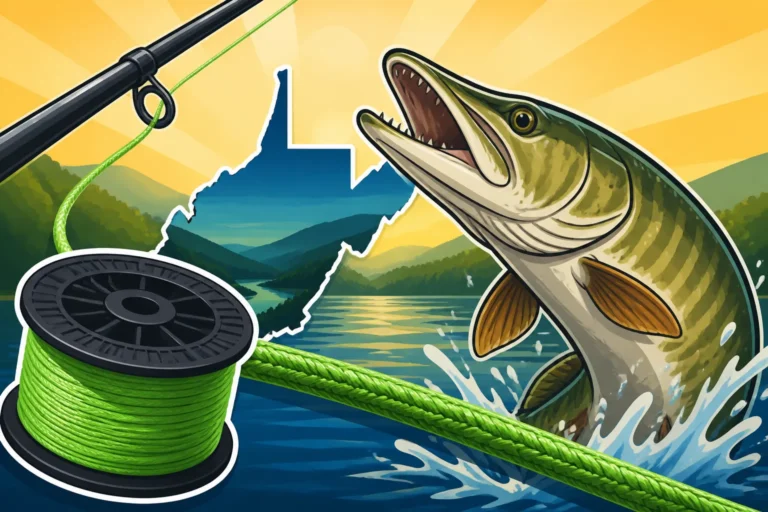
For muskie fishing in West Virginia rivers, braided line is the undisputed champion. Unlike monofilament or fluorocarbon, braid offers superior strength-to-diameter ratio, virtually no stretch, and excellent abrasion resistance. The lack of stretch provides incredible sensitivity, allowing you to feel even the most subtle taps and better detect when your lure is fouled. It also translates to more powerful hooksets, as energy is transferred directly from the rod to the hook.
You'll want to use heavy braided line, typically ranging from 80-100 lb test. While this might seem excessive, remember you're casting large, heavy lures, often through snags, and fighting truly massive fish. The heavy test line provides insurance against line breaks from abrasion on rocks, wood, or the muskie's rough gill plates during a fight. Brands like PowerPro, Sufix, and Berkley offer excellent braided lines that are popular among muskie anglers. For specific recommendations, our guide on Best Line Weight for Muskie Fishing provides more information. It's an investment, but one that pays dividends in confidence and successful landings.
Leaders: The Critical Link for Tooth-Proofing
Directly connecting your lure to braided line is a recipe for disaster with muskie. Their razor-sharp teeth will slice through braid (and most monofilament/fluorocarbon) like butter. This is where a specialized leader comes into play. Muskie leaders are designed to be tooth-proof and should be an integral part of your setup.
There are two primary types of leaders:
- Fluorocarbon Leaders: These are popular for their low visibility in clear water and good abrasion resistance. You'll need very heavy fluorocarbon, typically 100-200 lb test, to stand up to muskie teeth. While not entirely tooth-proof if a fish swallows the lure deep, it's a good compromise for stealth and strength. Fluorocarbon leaders are usually 12-24 inches long and are often connected to the braided main line with a strong knot like a FG knot or an Albright knot, and to the lure with a high-quality snap or swiveling clip.
- Wire Leaders: For maximum tooth-proofing, especially when fishing areas with high muskie density or when targeting truly giant fish, wire leaders are the way to go. These can be made from single-strand wire (titanium or stainless steel), multi-strand wire, or sometimes even heavy-duty fluorocarbon coated wire. Wire leaders are virtually impervious to cuts from muskie teeth. They are often a bit more visible than fluorocarbon, but when a muskie is in a feeding frenzy, visibility is less of a concern than pure stopping power.
Regardless of the material, always use high-quality snaps and swivels rated for heavy duty. Cheap hardware will fail. The leader should be long enough to protect the main line from the fish's teeth, but not so long that it interferes with casting or lure action. Most anglers opt for leaders around 12-18 inches in length. This setup ensures that when that monster strikes, your connection points are ready for the battle.
Lures: Enticing the Apex Predator
Muskie lures are a world unto themselves – big, often expensive, and specifically designed to trigger strikes from these powerful fish. Having a diverse selection of lures is key to adapting to different water conditions, forage bases, and muskie moods in West Virginia's rivers. You won't catch a muskie on a bass jig, and understanding the specific tools of the trade is paramount. Our guide on Best Lures for Muskie Fishing in West Virginia offers even more detail on this topic.
Bucktails and Inline Spinners: Classic Muskie Catchers
Bucktails are arguably the most iconic and consistently productive muskie lures. They consist of a heavy wire shaft with one or more blades (Colorado, Indiana, Willowleaf), a skirt of bucktail hair (or synthetic materials), and one or more treble hooks. Their flash, vibration, and pulsating action are irresistible to muskie.
- Cowgirl and Bulldawg Styles: Think large, double-bladed bucktails for maximum flash and vibration. These are fantastic for covering water quickly and calling fish from a distance. Larger sizes are great for deeper water or strong currents, while slightly smaller versions can be effective in shallower river sections.
- Inline Spinners: While similar in concept, inline spinners generally have a single blade and a more streamlined profile. They're excellent for retrieving quickly and can be particularly effective in situations where muskie are chasing fast-moving bait.
When fishing bucktails in West Virginia rivers, focus on retrieve speed. Often, a fast retrieve is key to triggering a reaction strike. Experiment with different colors and blade combinations. Black and nickel, black and orange, or natural baitfish patterns are always good starting points. You can find a huge variety of these lures at fishing specialty stores or online retailers like Amazon.
Glide Baits and Jerkbaits: Subtlety and Aggression
Sometimes, muskie want a different presentation than a fast-moving spinner. This is where glide baits and jerkbaits shine. These lures offer a more erratic, stop-and-go action that can mimic injured baitfish, often triggering strikes from hesitant muskie.
- Glide Baits: These lures, often solid wood or plastic, glide from side to side with a gentle sweep of the rod. They are worked with a series of twitches and pauses, creating a mesmerizing dance in the water. Glide baits are fantastic for "fishing slow" when muskie are finicky or when targeting specific structure. They allow for precise presentations around submerged timber or rock piles.
- Jerkbaits: True to their name, jerkbaits are worked with sharp jerks of the rod, causing them to dart, dive, and suspend. Hard-bodied jerkbaits mimic fleeing baitfish, while softer versions can offer a more natural profile. These lures are highly effective when muskie are ambush predators, waiting to strike at anything that looks vulnerable.
Learning to work glide baits and jerkbaits takes practice, but mastering their erratic movements can unlock incredible muskie action, especially on rivers where fish have seen every bucktail under the sun. Experiment with pause length and retrieve cadence; often, the pause is what triggers the strike.
Soft Plastics and Topwaters: Versatile Options
Beyond the hard baits and bucktails, soft plastics and topwater lures offer additional versatility for river muskie.
- Large Soft Plastics: Think giant swimbaits, grubs, and creature baits, often weighted and fished like jigs. These offer a more subtle, natural presentation than hard baits and can be very effective in cold water or when muskie are lethargic. Their soft texture can also entice fish to hold on longer, giving you a better chance to set the hook. They can be fished deep around structure or slowly retrieved through weed beds.
- Topwater Lures: When conditions are right – usually calm water, low light, or during warm summer evenings – topwater muskie strikes are legendary. Prop baits, walk-the-dog baits, and "creeper" style lures create an incredible commotion on the surface, drawing violent, heart-stopping strikes. Nothing beats the thrill of a muskie exploding on a topwater lure. These are particularly exciting on smaller river sections where you can visually track the fish. For those who enjoy the thrill of the chase after dark, Night Fishing for Muskie in West Virginia offers some great insights into topwater strategies.
Having a good selection of these lure types, in various sizes and colors, will allow you to adapt to whatever the West Virginia rivers throw at you. Remember, muskie are opportunistic, and sometimes a change in presentation is all it takes to trigger a bite.
Essential Muskie Accessories: Beyond Rod and Reel
While rods, reels, line, and lures are the core components, a suite of specialized accessories is absolutely crucial for safe, effective, and responsible muskie fishing. These tools protect both you and the fish, ensuring that your trophy catch can be properly handled and released to fight another day.
Landing and Handling Tools: Safety First
Muskie are large, powerful, and armed with sharp teeth and gill plates. Attempting to land and handle one without the right tools is dangerous for both you and the fish.
- Large Landing Net: This is non-negotiable. You need a big, muskie-specific landing net with a long handle (essential for boats or high banks) and a rubberized, knotless mesh. Rubberized mesh protects the fish's slime coat and fins, minimizing harm, while the large hoop makes it easier to scoop up a thrashing muskie. Standard bass nets are far too small and can injure the fish. Our article on Best Landing Net for Muskie goes into more detail.
- Long-Nose Pliers or Jaw Spreaders: Once in the net, muskie often have lures deeply embedded in their mouths. Long-nose pliers are essential for safely removing hooks. For really stubborn hooks or when a fish has swallowed a lure, heavy-duty jaw spreaders can be used to safely hold the mouth open while you work. Always use pliers that are strong enough to withstand the pressure of extracting large, sharp hooks.
- Bolt Cutters or Heavy-Duty Hook Cutters: Sometimes, hooks are so deeply set or tangled that removal is impossible without causing undue harm to the fish. In these situations, the only ethical choice is to cut the hooks. Carry a pair of heavy-duty bolt cutters or dedicated hook cutters that can easily snip through large treble hooks. This is a game-changer for fish survival.
- Muskie Gloves: Wearing heavy-duty, protective gloves (like thick leather or specialized muskie handling gloves) can protect your hands from teeth, gill rakers, and sharp hooks when you need to handle the fish for a quick photo.
These tools are not optional; they are a fundamental part of responsible muskie fishing. Always prioritize the safety of the fish to ensure the sustainability of our amazing muskie fisheries in West Virginia.
Storage and Transport: Protecting Your Investment
Muskie gear is an investment, and proper storage and transport are key to keeping it in top condition and organized.
- Large Tackle Box or Bag: You'll need a tackle storage solution that can accommodate oversized muskie lures. Look for large utility boxes or soft-sided tackle bags with plenty of room and heavy-duty zippers. Many muskie anglers use specialized boxes with deeper compartments or custom dividers to prevent lures from tangling. Keeping your lures organized not only saves time on the water but also prevents damage to your expensive baits.
- Rod Holders: Whether you're in a boat or transporting rods in your vehicle, sturdy rod holders are essential. They protect your expensive muskie rods from damage during transit and keep them secure when not in use on the water. For boaters, vertical rod holders are common for keeping multiple rods ready for action.
- Boat Accessories: If you're fishing from a boat on West Virginia rivers, consider a reliable anchor system to hold your position in current, a quality depth finder (especially useful for finding structure and baitfish), and navigation tools. Many muskie anglers also use large measuring boards and digital scales to quickly and accurately record their catches before release.
Remember, organization on the water means more time fishing and less time fumbling for gear. Investing in good storage and transport solutions protects your equipment and enhances your overall fishing experience.
Boats for West Virginia Muskie Rivers
The type of boat you use can significantly impact your access and effectiveness when chasing muskie in West Virginia's diverse river systems. From nimble kayaks to more robust jon boats, each has its advantages and limitations depending on the specific stretch of water you're targeting.
Jon Boats and Small River Rigs
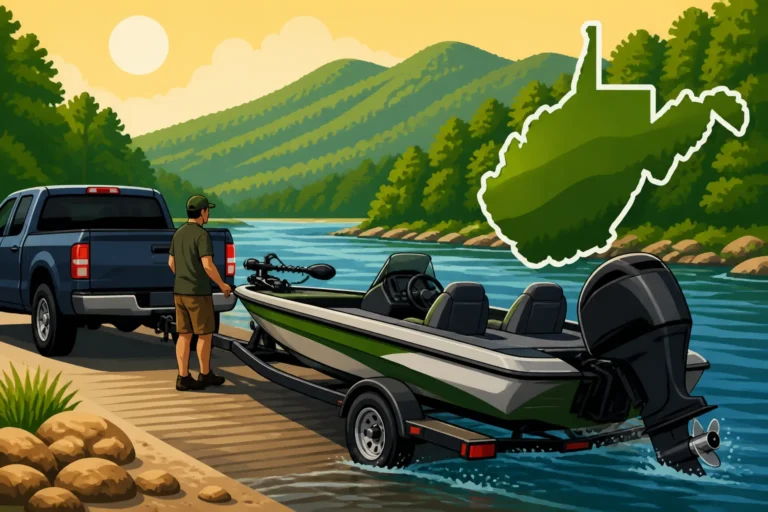
For many West Virginia muskie anglers, a jon boat or a similar small, shallow-draft river boat is the go-to choice. These boats are typically:
- Versatile: Jon boats can navigate relatively shallow waters and are sturdy enough to handle moderate currents. Their flat bottom allows them to get into skinny water where other boats can't, providing access to prime muskie ambush points.
- Durable: Made from aluminum, they are tough and can withstand occasional bumps against rocks or submerged logs, which is inevitable when fishing rugged river environments. This durability makes them ideal for the kind of abuse river fishing can dish out.
- Customizable: Many anglers outfit their jon boats with casting decks, secure rod holders, and even shallow-water anchors to create a highly functional muskie fishing platform. A reliable outboard motor, often paired with an electric trolling motor for quiet navigation and precise boat control, completes the setup.
However, jon boats can be challenging in very strong rapids or extremely rough open water. They are best suited for the vast majority of West Virginia's navigable muskie rivers, offering a balance of access and stability. Our guide on Best Boats for West Virginia Rivers and Lakes can help you choose the right vessel for your adventures.
Kayaks for Stealth and Access
For anglers who prefer a more intimate and stealthy approach, or for those targeting smaller, less accessible river sections, a fishing kayak is an excellent option.
- Stealth and Quiet: Kayaks are incredibly quiet, allowing you to approach muskie lies without spooking these wary predators. This stealth can be a huge advantage, especially in clearer waters.
- Unparalleled Access: They can navigate extremely shallow water, slip through tight channels, and be portaged around small rapids or obstructions, opening up vast stretches of river that are inaccessible to larger boats. This is perfect for exploring those remote, wild sections of river.
- Health and Exercise: Paddling or pedaling a kayak provides a great workout and connects you more directly with the environment. Modern fishing kayaks are stable, comfortable, and can be rigged with rod holders, fish finders, and plenty of storage for muskie gear.
However, kayak fishing for muskie requires careful consideration of safety, especially in strong currents. Always wear a PFD, understand river conditions, and be prepared for potential swims. While you might not be able to carry as much gear as a jon boat, a well-rigged fishing kayak can be incredibly effective for targeting river muskie.
Putting it All Together: Building Your Muskie System
Building your muskie gear system is more than just buying individual items; it's about creating a cohesive setup where each component works seamlessly with the others. Matching your gear to your fishing style and the specific West Virginia waters you frequent is key to maximizing your success and enjoyment.
Matching Your Gear to Your Fishing Style
Consider how you primarily fish for muskie. Are you a bank angler, wading the shallows? A kayaker covering miles of river? Or do you prefer a boat, casting to structure? Each approach will influence your gear choices:
- Bank/Wading Anglers: Might prioritize slightly shorter rods for easier casting in tight quarters, lighter tackle bags for mobility, and a more compact landing net that's easier to carry. Durability for repeated bushwhacking and scrambling along riverbanks is a must.
- Kayak Anglers: Need compact, manageable rods that can be handled from a sitting position, secure rod holders, a large but collapsible net, and dry bags for electronics and personal items. Stealth and efficient use of space are paramount.
- Boat Anglers: Can afford longer rods, heavier reels, and a larger selection of lures. They'll also need boat-specific accessories like sturdy rod racks, a powerful trolling motor, and a fish finder to locate structure and fish.
Thinking about your typical fishing scenario will help you make informed decisions. For example, a heavy-duty 9-foot rod is fantastic from a boat but might be cumbersome for wading a brushy stream bank. Understanding How to Catch Muskie in West Virginia will help guide your gear selection.
Investing Wisely and Finding Quality Gear
Muskie fishing gear can be a significant investment, but it’s an investment in durability, performance, and ultimately, success. Don't be tempted to buy cheap, undersized gear; it will almost certainly lead to broken equipment and lost fish, costing you more in the long run.
- Prioritize Core Components: If budgeting, focus your primary investment on a high-quality rod and reel first. These are the components that take the most stress and directly impact your ability to cast, fight, and land fish. You can gradually build your lure collection over time.
- Seek Out Specialized Retailers: While general sporting goods stores carry some fishing gear, dedicated tackle shops or large outdoor retailers like Bass Pro Shops or Cabela's will have a much wider selection of muskie-specific equipment. Online retailers like Amazon can also be a great source, but make sure to read reviews and choose reputable brands. Often, the staff at these specialized stores are muskie anglers themselves and can offer invaluable advice.
- Buy for Durability: Muskie fishing is tough on gear. Look for robust construction, high-quality materials, and reputable brands known for their reliability. Metal components, strong stitching, and heavy-duty zippers are signs of gear that will last.
Ultimately, having the right muskie gear for West Virginia rivers isn't just about catching more fish; it's about being prepared for the challenge, enjoying the process, and ensuring that when that monster strike happens, you're ready to embrace the fight of a lifetime and bring it to the net safely. It's about confidence in your equipment so you can focus on the thrilling experience of chasing these incredible fish.
| Gear Category | Key Considerations for WV Rivers | Recommended Specs | Why It Matters |
|---|---|---|---|
| Rod | Length for casting distance & leverage; power for heavy lures & fish | 8'0" – 9'6" Length; Heavy (H) or Extra Heavy (XH) Power; Fast Action | Handles heavy baits, powerful hooksets, controls fish in current/structure |
| Reel | Strong gears, smooth drag, line capacity, torque for large baits | Heavy-duty Baitcaster; 5.1:1 – 6.4:1 Gear Ratio; High Max Drag | Essential for casting heavy lures & fighting strong, fast muskie |
| Main Line | Strength, abrasion resistance, no stretch for sensitivity | 80-100 lb Braided Line | Cuts through water, sensitive to bites, withstands abrasion & extreme pressure |
| Leader | Tooth-proof, abrasion resistant, strong connections | 100-200 lb Fluorocarbon or Wire Leader (12-18 inches) | Protects main line from muskie teeth, critical for landing fish |
| Lures | Variety for different conditions & muskie moods; large size | Large Bucktails, Glide Baits, Jerkbaits, Big Soft Plastics, Topwaters | Attracts attention, mimics forage, triggers aggressive strikes from large predators |
| Landing Net | Large hoop, long handle, knotless rubberized mesh | Muskie-specific Net (hoop ~30-40 inches); Long Handle | Safely lands and protects fish, essential for quick release & angler safety |
| Handling Tools | Safety for fish & angler, hook removal efficiency | Long-nose Pliers, Jaw Spreaders, Bolt/Hook Cutters, Gloves | Safe hook removal, protects hands, allows for quick, responsible release |
| Boat (Optional) | Access to varied river sections, stability, maneuverability | Aluminum Jon Boat or Stable Fishing Kayak | Navigates shallow/current waters, stealthy access, durable in river conditions |
Disclaimer
This article is for general informational purposes only and does not constitute professional advice. Laws, prices and regulations vary by location and change over time. Consult a qualified professional for guidance on your specific situation.