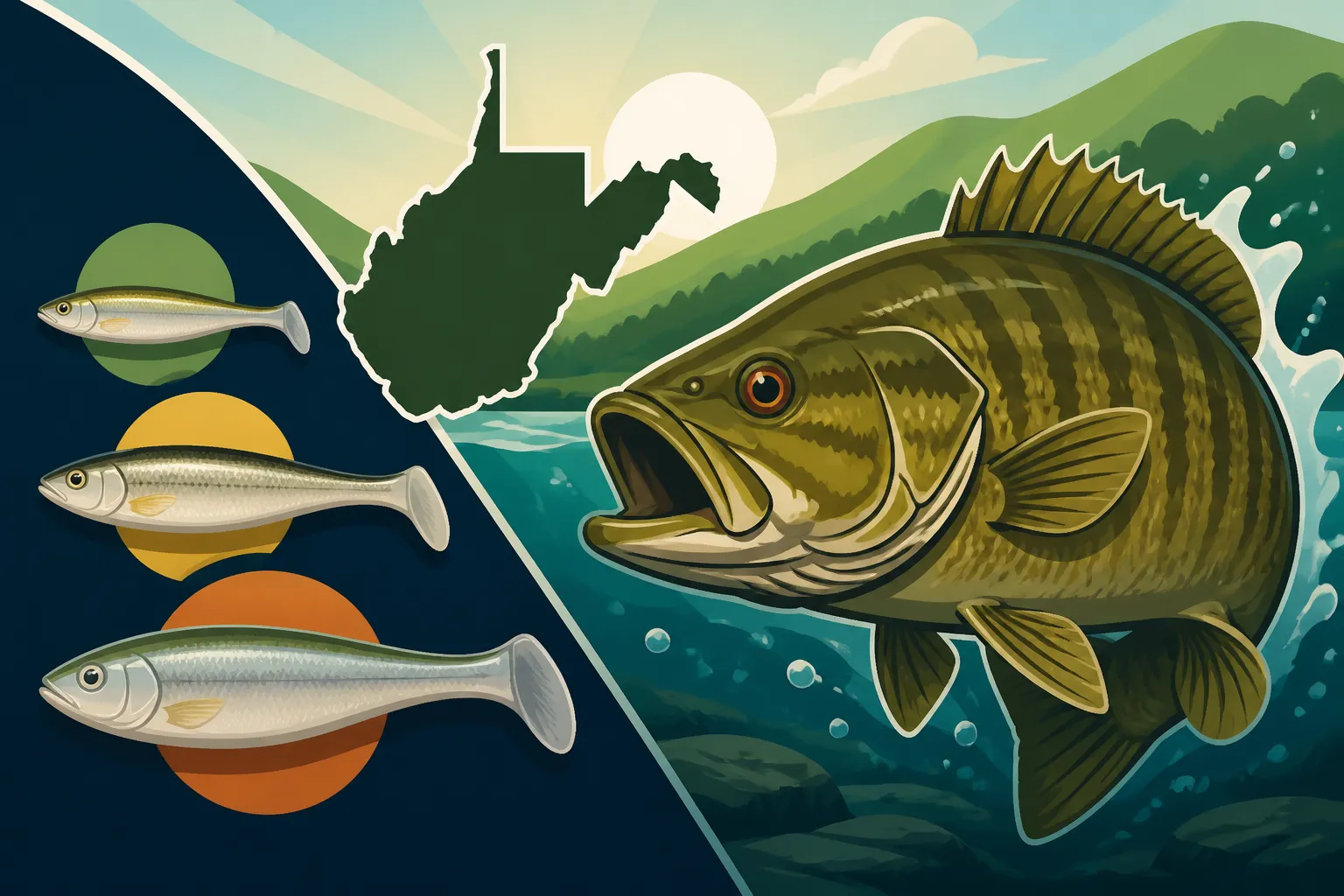
Best swimbait size for big smallmouth
There's nothing quite like the thrill of a big smallmouth bass absolutely clobbering a lure, and when you're specifically hunting those bronzeback bruisers here in West Virginia, you quickly realize that sometimes, your usual tackle just isn't cutting it. Those smaller, average-sized baits might catch fish, sure, but they often miss the mark for the true giants. This guide is all about honing in on the secret weapon for those lunker smallmouth: choosing the absolute best swimbait size to entice the biggest fish in our rivers and lakes.
Understanding Swimbait Sizing for West Virginia Smallmouth
When you're out on the water, whether it's the legendary New River or a quiet mountain lake, you're not just throwing a piece of plastic; you're trying to mimic a meal. And for big smallmouth, that meal needs to look substantial.
Why Size Matters for Trophy Smallmouth
Think about it from the fish's perspective. A big smallmouth didn't get big by being lazy or by chasing after every tiny minnow that swims by. They're efficient predators. They're looking for a caloric payoff that justifies the energy expenditure of the chase and the strike. This is where the concept of "match the hatch" really comes into play for bigger fish. If a larger smallmouth can eat one 6-inch meal instead of three 2-inch snacks, it's going to opt for the bigger, more efficient meal almost every time.
Larger swimbaits present a more appealing visual target and a more substantial profile, suggesting a significant energy reward. Smaller fish are often intimidated or simply can't handle a big swimbait, which paradoxically means you're naturally filtering out the dinks and increasing your odds of connecting with a trophy. Our West Virginia waters are teeming with various forage – crayfish, hellgrammites, shad, various minnows, and even juvenile panfish – and the bigger smallmouth key into these larger food sources. If you're consistently catching small fish, it's a sure sign you need to rethink your bait size.
The General Range: What Anglers Start With
Most anglers start with swimbaits in the 2-4 inch range, and for good reason—they're versatile, catch a lot of fish, and match a wide array of smaller forage. But when your goal shifts to only big smallmouth, you have to shift your mindset and your tackle. You're no longer just fishing for bites; you're fishing for specific bites.
For targeting bigger smallmouth, a good starting point is usually in the 4-inch category, but don't be afraid to push that boundary much further. We're talking about baits that are explicitly designed to entice the larger, more cautious fish that have seen it all. These aren't just scaled-up versions of smaller baits; they often have different swimming actions, more intricate details, and require a different approach. The jump from a 3-inch grub to a 5-inch swimbait might seem small, but to a smallmouth, it's the difference between a snack and a feast.
Diving Deeper into Swimbait Sizes for West Virginia's Waters
The "best" size isn't a single number written in stone. It's a range, influenced by the specific conditions and the behavior of the fish on any given day. But for truly big smallmouth, you'll find yourself gravitating towards a certain sweet spot and occasionally going even larger.
The 4-6 Inch Sweet Spot: Versatility for Various Conditions
For many West Virginia rivers and lakes, swimbaits in the 4-6 inch range hit a fantastic sweet spot. They're substantial enough to attract the attention of larger smallmouth, yet not so imposing that they completely shut down fish that might be in a less aggressive mood. This size range offers incredible versatility, allowing you to imitate a wide variety of prey, from larger minnows and small shad to juvenile bluegill or even a fleeing crayfish.
Within this range, you'll find everything from soft plastic paddle tail swimbaits, often rigged on a jig head, to more realistic boot tail or even multi-jointed hard body swimbaits. Brands like Keitech, Megabass, or even more readily available options often produce excellent baits in this size. Imagine casting a 5-inch paddle tail that perfectly mimics a stunned shad near a current seam on the New River Smallmouth Bass Fishing or slowly swimming a 4-inch boot tail along the rocky ledges of Summersville Lake. These baits are still manageable on typical bass gear, but they offer that larger profile that bigger fish appreciate. You can often find a good selection of these mid-range swimbaits by browsing dedicated fishing sections at large retailers or online storefronts like Amazon. Just be sure to read reviews and look for swimbaits known for a realistic swimming action.
Going Bigger: 6-8 Inches for True Trophy Hunters
This is where the commitment to trophy smallmouth really shows. Many anglers hesitate to throw swimbaits in the 6-8 inch class, fearing they're simply too big. But for the smallmouth that are pushing the 4-5 pound mark and beyond, these larger baits can be incredibly effective. These are often used when you're specifically targeting that one monster you know lives under that particular log or in that deep hole.
Larger swimbaits excel in a few key scenarios:
- Clear Water Conditions: In clear West Virginia rivers and lakes, fish have excellent visibility. A larger, more detailed swimbait can appear incredibly lifelike, triggering strikes from wary giants.
- Sparse Cover: When smallmouth aren't relating to tight cover, they're often cruising open water, looking for an easy meal. A large swimbait swimming through their territory can be an irresistible target.
- Matching Large Forage: If you know your target waters hold significant populations of larger baitfish like gizzard shad or larger juvenile sunfish, an 8-inch swimbait suddenly doesn't seem so out of place.
- Low Pressure Situations: On waters that don't see a lot of swimbait pressure, or during times when fish are extremely aggressive, going big can pay off huge.
Throwing these larger baits requires more robust tackle, often a dedicated heavy power casting rod, but the reward of a truly massive smallmouth makes it all worthwhile. If you're serious about finding these bigger baits, major fishing retailers like Bass Pro Shops often carry a more extensive inventory of larger, specialized swimbaits that you might not find at smaller local shops. Don't be shy about asking staff for recommendations on what's working locally for larger bass.
When to Downsize Even for Big Smallmouth
While the general rule for big smallmouth is to go big, fishing is rarely about absolutes. There are absolutely times when even the biggest smallmouth can get finicky, pressured, or simply prefer a slightly smaller presentation. Think about those brutal cold front conditions when fish are sluggish and hunkered down, or immediately after the spawn when they might be recovering and not actively chasing huge meals.
In these situations, dropping down to a 3-4 inch swimbait, or even a smaller grub or tube bait, can be the ticket. The key is to present it slowly and methodically, making it an easy, opportune meal rather than a high-energy chase. You're still targeting big smallmouth, but you're adapting to their mood. It's about presenting a realistic offering that's less intimidating. So, while our main goal is often to throw big baits for big fish, a smart angler always keeps a few slightly smaller options handy for those challenging days. Remember, a 4-pound smallmouth will still readily eat a 3.5-inch swimbait if it's the right presentation!
Factors Influencing Your Swimbait Size Choice
Choosing the right swimbait size isn't just about throwing the biggest thing you can find. It's about making an informed decision based on several critical factors specific to the water you're fishing in West Virginia.
Forage Base: Matching What They Eat
This is arguably the most important factor. Smallmouth bass are opportunistic predators, but they are also highly tuned into the dominant baitfish and prey in their environment.
- Crayfish: Many West Virginia rivers and rocky lakes are absolutely loaded with crayfish. A swimbait that mimics a crayfish, often in a shorter, bulkier profile and natural browns, greens, or oranges, can be deadly. Sizes around 3-5 inches are often ideal for crayfish imitations, as larger smallmouth regularly feed on substantial crawdads. What lures imitate the crawfish smallmouth eat provides more detailed information on this.
- Shad and Alewives: In larger reservoirs like Summersville Lake or Tygart Lake, shad and alewives are often the primary forage. These baitfish can range from 2-3 inches up to 6-8 inches or more. If you see schools of larger shad, don't hesitate to throw a 6-7 inch shad-profile swimbait.
- Minnows and Juvenile Fish: Rivers like the South Branch Potomac or the Elk River might have abundant shiners, chubs, or small suckers. A 4-6 inch swimbait mimicking these slender baitfish can be incredibly effective. Sometimes, smallmouth will even target juvenile panfish like bluegill, especially around weed lines or submerged timber.
Before you even make your first cast, try to observe what the fish are eating. Look for baitfish jumping, minnows schooling, or even just turning over rocks to see what size crayfish are present. This "scouting" can be invaluable in selecting the right swimbait size.
Water Clarity and Depth
These two factors significantly impact how a fish perceives your lure.
- Clear Water: In the gin-clear waters often found in West Virginia's mountain streams and some reservoirs, fish rely heavily on sight. This allows you to use larger, more realistic, and more detailed swimbaits. The fish have more time to inspect the bait, so a natural presentation and a convincing size are key. Larger baits also displace more water, creating a more noticeable presence even with good visibility.
- Murky or Stained Water: When the water has a little color, perhaps after a heavy rain or in certain sections of the Ohio River, fish rely more on lateral line vibrations and sound. While a bigger bait creates more vibration, sometimes a slightly smaller bait with a more aggressive paddle tail can be more effective as it creates a tighter "thump" that fish can home in on. In these conditions, a 4-5 inch swimbait might be more productive than an 8-inch one, as the fish's strike zone is reduced.
- Depth: When fishing deeper water, especially for suspended smallmouth, a larger swimbait often makes sense. Light penetration is limited at depth, so a bigger profile is simply easier for the fish to see and track from a distance. A 6-inch swimbait will stand out much more than a 3-inch one in 20 feet of water.
Current and Structure
West Virginia is famous for its rivers, and current plays a massive role in smallmouth behavior and lure presentation.
- Strong Current: In powerful currents like those found on sections of the New River, smaller, lighter swimbaits can be difficult to control. They might wash out of the strike zone too quickly or not present naturally. A slightly heavier, larger swimbait can offer more stability, allowing it to "swim" more effectively in the current and stay in the strike zone longer. This also helps it sink faster to where the fish are holding in eddies or behind current breaks. For example, How to Catch Smallmouth Bass in West Virginia Rivers often involves dealing with current.
- Structure: Smallmouth love structure—rock piles, ledges, submerged timber, bridge pilings, and current seams. When fishing around larger, more prominent structure, a larger swimbait can be more effective. It presents a more significant meal that a fish hiding in that structure would be willing to ambush. If you're targeting big smallmouth relating to deep rock gardens, a 6-inch bait falling down a rock face can look like an injured baitfish, triggering a reaction strike.
Rigging and Presentation for Larger Swimbaits
Successfully fishing larger swimbaits for big smallmouth requires more than just picking the right size; it demands the right gear and a thoughtful approach to presentation. You can't just slap a 6-inch swimbait on your ultralight combo and expect success.
Choosing the Right Gear for the Job
This is non-negotiable. Undersized gear will lead to lost fish, broken lines, and a whole lot of frustration.
- Rods: For 4-6 inch swimbaits, a medium-heavy power, fast action casting rod (around 7'0" to 7'4") is often ideal. It provides the backbone to cast the heavier bait and drive the hook home, while still having enough tip sensitivity for accurate casts and detecting subtle bites. For 6-8 inch swimbaits, you'll want to step up to a heavy power rod, perhaps 7'4" to 7'8", specifically designed for throwing larger baits. Check out Best Fishing Rods for West Virginia Rivers for more details.
- Reels: A baitcasting reel with a decent retrieve ratio (6.1:1 to 7.1:1) and a strong drag system is usually preferred for larger swimbaits. The casting efficiency and power of a baitcaster are a huge advantage.
- Line: Spool up with 12-20 lb fluorocarbon line or 30-50 lb braided line with a 15-20 lb fluorocarbon leader. Fluorocarbon's low stretch and abrasion resistance are excellent for feeling bites and fighting fish around rocky cover. Braid offers superior casting distance and strength, with the fluoro leader providing stealth and abrasion resistance. Best Fluorocarbon Line for Clear River Water might be a good read for specific line choices.
- Jig Heads and Hooks: Match your jig head weight to the depth and current you're fishing. For instance, a 1/4 oz to 1/2 oz jig head is common for 4-5 inch swimbaits, while 1/2 oz to 1 oz (or even heavier) might be needed for bigger baits in strong current or deep water. Ensure the hook is stout enough to handle a big smallmouth. Many prefer an "underspin" jig head with a small blade for added flash and vibration, especially in slightly stained water. For fishing around heavy cover like submerged timber or dense weeds, consider using a weedless swimbait hook.
Effective Retrieval Techniques
The beauty of a swimbait is its inherent lifelike action, but how you retrieve it can make all the difference.
- Slow and Steady: Often, a slow, steady retrieve is all you need. Let the swimbait do its work, mimicking a cruising baitfish. Vary your retrieve speed to see what the fish prefer.
- The "Stop and Go": Incorporate pauses. Cast, let the bait sink to your desired depth, then retrieve a few feet, pause, let it fall slightly, and repeat. Many strikes occur on the fall, as the bait looks like a dying or injured fish.
- Bumping Structure: If you're fishing near rock piles or submerged timber, let your swimbait occasionally bump into the structure. This can mimic a disoriented baitfish, triggering a reaction strike from an ambush predator.
- Current Seams: When fishing rivers, cast your swimbait slightly upstream of a current seam or eddy, allowing the current to carry it naturally into the strike zone. Then, begin a slow retrieve. This can be especially effective on rivers known for excellent smallmouth, such as those covered in New River Gorge Fishing Guide.
- Mimicking a Wounded Baitfish: Think about how a wounded or struggling baitfish would move. A sudden twitch of the rod, followed by a pause, can often be the perfect trigger.
Practical Considerations: Where to Stock Up
Finding a diverse selection of quality swimbaits, especially in the larger sizes suitable for trophy smallmouth, can sometimes be a challenge. While your local tackle shop might have some great options, for a truly wide array, it's often best to look at larger retailers or online.
Major outdoor retailers like Bass Pro Shops typically carry an extensive inventory of swimbaits from various manufacturers, including both mainstream and niche brands. They often have dedicated sections for different types of bass fishing, making it easier to find specialized baits. Online marketplaces like Amazon also offer a massive selection, allowing you to compare brands, read reviews, and find exactly the swimbait sizes and styles you're looking for, sometimes at competitive prices. It's always a good idea to check multiple sources to ensure you're getting the best options available for your West Virginia fishing adventures.
Remember, the goal isn't just to catch a smallmouth, but to catch a big one. By carefully considering swimbait size, understanding the forage, and adapting your tackle and technique, you'll significantly increase your chances of landing that bronzeback giant you've been dreaming of. Best Tackle for West Virginia Smallmouth Bass can further assist in optimizing your gear.
| Swimbait Size Range | Target Smallmouth Size | Typical Forage Imitated | Ideal Conditions | Gear Recommendation |
|---|---|---|---|---|
| 3-4 Inches | Average to Large (1-3 lbs) | Smaller minnows, juvenile panfish, crayfish | Challenging conditions (cold fronts, pressured water) | Medium power casting/spinning rod, 10-15lb fluorocarbon |
| 4-6 Inches | Large to Trophy (2-5 lbs) | Larger minnows, shad, juvenile bluegill, substantial crayfish | Versatile for most conditions, active fish | Med-Heavy power casting rod, 12-17lb fluorocarbon or braid w/ fluoro leader |
| 6-8 Inches | Trophy Hunters (4+ lbs) | Large shad, suckers, big panfish | Clear water, sparse cover, targeting specific giants, highly active fish | Heavy power casting rod, 17-20lb fluorocarbon or 40-50lb braid w/ fluoro leader |
Disclaimer
This article is for general informational purposes only and does not constitute professional advice. Laws, prices and regulations vary by location and change over time. Consult a qualified professional for guidance on your specific situation.