What lures imitate the crawfish smallmouth eat
Few things are more frustrating for a West Virginia angler than spending hours on a beautiful river, knowing trophy smallmouth bass are lurking, but just not being able to coax a bite. Often, the missing piece isn't your technique, but your lure choice – specifically, failing to present a convincing imitation of a smallmouth's favorite meal: the crawfish. This guide is all about cracking the code on what makes a crawfish imitation irresistible and arming you with the best lures and tactics to land those bronze beauties in our mountain state's legendary waters.
Why Crawfish Are a Smallmouth Bass's Favorite Meal in West Virginia
If you've ever spent time wading our clear, rocky rivers like the New or the South Branch of the Potomac, you've probably seen a crawfish scuttling across the bottom. These crustaceans are everywhere, and to a smallmouth bass, they're like prime rib. Understanding why they're so crucial to a smallmouth's diet is the first step in choosing the right lures.
Understanding the Smallmouth's Diet: A River Rhapsody
Smallmouth bass are opportunistic predators, constantly on the lookout for their next meal. Their diet shifts depending on the season, water conditions, and what's available, but crawfish consistently rank at the top of their menu. Why? Because crawfish are a high-protein, energy-rich food source that's relatively easy to ambush, especially when they're molting and their shells are soft. Think about it – a smallmouth doesn't have to chase a fast-moving baitfish far when a juicy crawfish is slowly crawling or trying to hide under a rock. These crustaceans are particularly abundant in the rocky, oxygen-rich rivers and streams that smallmouth bass call home here in West Virginia, making them a staple from spring through late fall.
Our rivers are teeming with various species of crawfish, from the common Northern clearwater crayfish to the native species that have evolved alongside our smallmouth for millennia. Smallmouth learn early on that these armored critters mean a substantial meal, and they'll actively seek them out in their rocky lairs. This ingrained feeding behavior means that if you can convincingly imitate a crawfish, you're tapping into a fundamental predatory instinct. It's not just about getting a reaction strike; it's about appealing to their natural hunting patterns, which makes your presentation that much more effective.
The Importance of "Matching the Hatch" for Bottom Dwellers
The concept of "matching the hatch" is usually associated with fly fishing for trout, where anglers painstakingly imitate emerging insects. But for smallmouth bass, especially those targeting bottom-dwelling prey like crawfish, the principle is just as vital. It's not just about the type of food, but also its appearance and behavior. A smallmouth that sees dozens of real crawfish every day isn't easily fooled by something that looks or moves unnaturally. If your lure doesn't look like a crawfish, doesn't feel like a crawfish (to the smallmouth, that is), or doesn't move like a crawfish, you're significantly reducing your chances.
This is where many anglers go wrong. They might throw a generic plastic worm or a brightly colored spinnerbait, which can certainly catch fish, but they're not capitalizing on the smallmouth's primary food source. When you match the hatch with a crawfish imitation, you're presenting a meal that the bass expects to see and is actively looking for. This can be the difference between a few speculative bites and consistent hookups, especially on pressured waters or when the bite is tough. It’s about being observant of the local forage and adapting your tackle accordingly, ensuring your offering looks as natural as possible. For more insights on this, check out our guide on Best Baits for Smallmouth Bass on the New River.
Decoding Crawfish: What Lures Need to Mimic
To truly fool a smallmouth, your lure needs to tick a few boxes that scream "crawfish!" It's more than just a vague resemblance; it's about understanding the subtle cues that trigger a predatory response. From their color palette to their characteristic movements, every detail can make a difference.
Colors That Convince: From Olive to Orange
Crawfish aren't just one color; they're a spectrum, and their coloration can change dramatically based on several factors. Water clarity, the color of the river bottom, and even their molting stage all play a role. In West Virginia's typically clear, rocky rivers, you'll often find crawfish that blend in with the gravel and stones. This means hues of olive green, mottled brown, and grey are extremely effective. These natural tones are the bread and butter of crawfish imitations.
However, don't overlook vibrant colors, especially reds and oranges. When a crawfish molts its shell, it often exhibits a softer, brighter red or orange hue. This makes them vulnerable and a prime target for smallmouth. Also, in colder water, or after heavy rains when the water might have a slight stain, brighter colors can stand out better. Consider what a crawfish might look like against the specific substrate you're fishing – dark rocks, sandy patches, or weed beds – and choose your lure color accordingly. You can find a huge variety of these nuanced colors on retailers like Amazon, making it easy to experiment.
Shape and Profile: The Subtleties of a Critter's Form
While you don't need a taxidermy-quality replica, the overall shape and profile of your lure are crucial. Crawfish have a distinct, segmented body, prominent claws, and a tail that's often tucked. A good imitation will present a bulky, yet somewhat compact, profile in the water, especially when it's sitting on the bottom or being dragged. The "bulk" suggests a substantial meal, while the overall shape should avoid anything too elongated or fish-like.
The appendages are key. Those claws, antennae, and legs might seem small, but they create subtle movements and vibrations in the water that mimic a real crawfish. Many soft plastic crawfish imitations incorporate thin, waving appendages that flutter with the slightest current or rod twitch. When a smallmouth sees these subtle movements, it registers as a living, breathing meal. Remember, it's not just about what you see, but what the bass perceives through its lateral line and vision.
Movement and Action: The Escape and Defensive Scuttles
This is arguably the most critical aspect of crawfish imitation. Real crawfish move in very specific ways, and a successful lure will replicate these actions. Their primary mode of escape is a rapid, backward darting motion, propelled by a flick of their tail. They also scuttle slowly along the bottom, probing for food, or hunker down in a defensive posture with claws raised.
Your retrieve needs to incorporate these natural movements. A slow drag across the bottom with periodic pauses mimics a crawling crawfish. A sharp twitch of the rod tip, followed by a pause, can simulate that backward dart or a defensive "pop." The goal is to make your lure look vulnerable, either by trying to escape or by being caught unawares. Smallmouth are incredibly attuned to these cues, and an erratic, lifelike movement can often trigger a strike when a steady, mechanical retrieve would be ignored. Learning How to Catch Smallmouth Bass in West Virginia Rivers often comes down to mastering these nuanced retrieves.
Top Lure Categories for Fooling West Virginia Smallmouth with Crawfish Imitations
Now that we understand the "why" and "what" of crawfish imitations, let's dive into the "how." There's a fantastic array of lures out there designed to mimic these tasty crustaceans, each with its own strengths and ideal applications.
Soft Plastic Jigs and Trailers: Versatility on the Riverbed
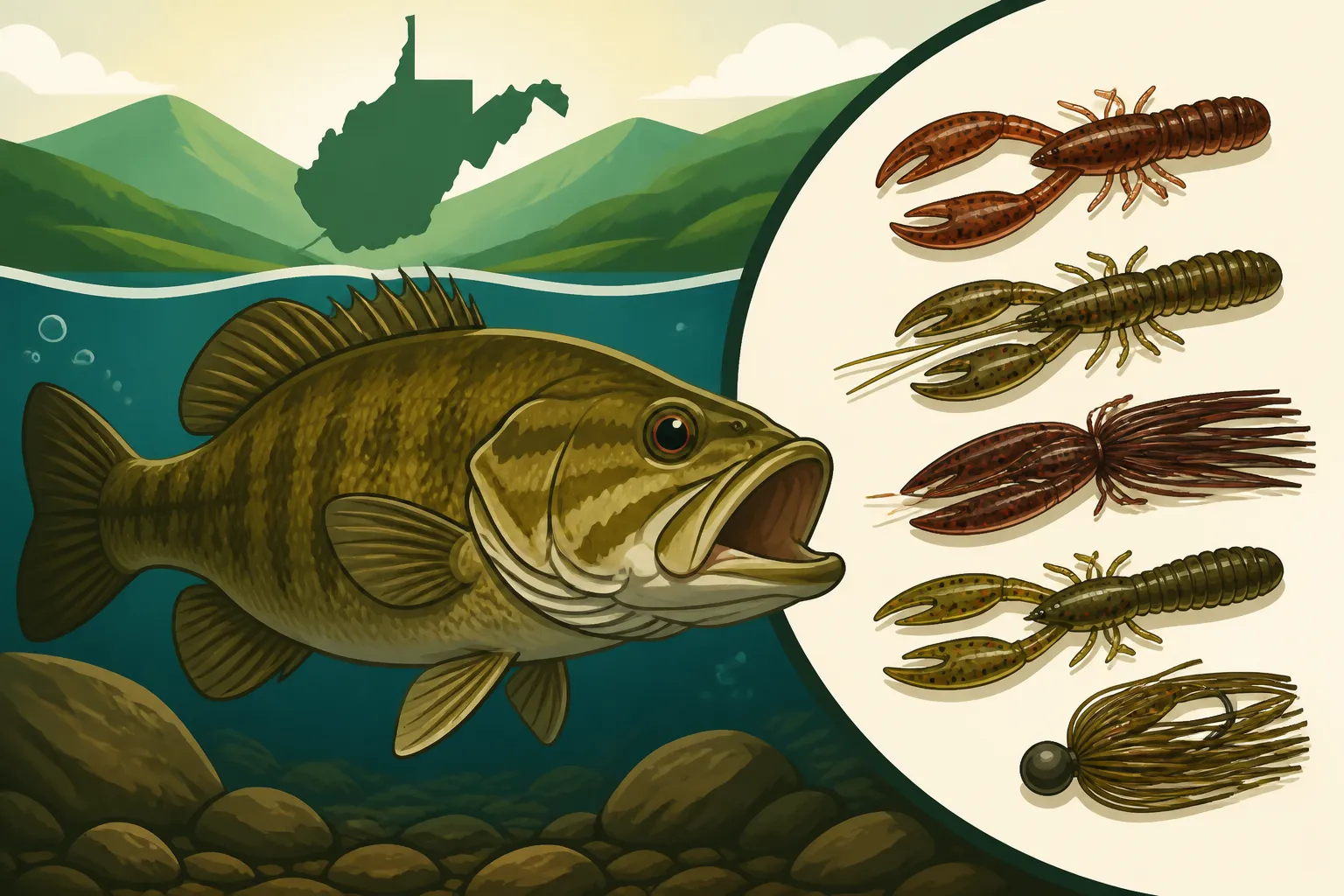
When you think "crawfish imitation," soft plastic jigs and trailers are probably the first things that come to mind, and for good reason. They are incredibly versatile and deadly effective. This category includes everything from classic tube jigs to creature baits and standalone crawfish trailers.
- Tube Jigs: These hollow, cylindrical soft plastics with tentacled skirts are iconic smallmouth lures. When rigged with an internal jig head, they spiral and dart on the fall, then settle on the bottom with their tentacles flaring, perfectly mimicking a defensive crawfish. They're excellent for dragging, hopping, or pitching into rocky crevices. You can find a wide variety of colors, from natural greens and browns to more aggressive reds, on online platforms like Amazon.
- Creature Baits & Crawfish Trailers: These are molded plastics that are designed explicitly to look like crawfish, often with realistic claws and segmented bodies. When rigged on a jig head or as a trailer on a skirted jig, their appendages flap and wave, creating irresistible action. The key here is the subtle movement and lifelike feel. You can drag them, hop them, or even swim them slowly near the bottom. They shine when smallmouth are hugging cover or when you need a bulkier, more substantial profile. The best ones often have a good salt content, which makes bass hold on longer.
Lure Action and Application
| Lure Type | Primary Action | Best For | Ideal Conditions | Pros | Cons |
|---|---|---|---|---|---|
| Tube Jigs | Spiral, Dart, Tentacle Flare | Dragging, Hopping, Pitching | Rocky bottoms, current breaks, clear water | Versatile, weedless rigging, good feel | Can get snagged in heavy cover, less realistic profile |
| Creature Baits/Trailers | Claw Flap, Leg Wiggle | Pitching into cover, dragging, slow presentations | Wood, rock piles, moderate current | Highly realistic, great vibration, larger profile | Can be bulky, not as weedless as tubes |
These soft plastic options allow for excellent feel on the bottom, letting you detect subtle bites and understand the terrain. They are often rigged weedless, making them ideal for navigating the snaggy bottoms of West Virginia's rivers where smallmouth often hide around submerged logs and rocky ledges.
Crankbaits and Jerkbaits: Hard-Bodied Crawfish That Dive and Dart
While soft plastics excel at mimicking a crawfish crawling or defending itself, hard baits like crankbaits and jerkbaits are champions at imitating an escaping, darting crawfish. These lures bring an aggressive action that can trigger reaction strikes from even finicky smallmouth.
- Shallow-Diving Crankbaits: Look for crankbaits with a wide, flat bill and a crawfish-like profile. These baits are designed to dive quickly and then "dig" into the bottom, kicking up puffs of sediment just like a real crawfish. The erratic deflection off rocks and logs is incredibly effective. Colors should again lean towards natural greens, browns, and mottled reds or oranges. The vibration and flash they create as they bounce along the bottom can be irresistible. Consider throwing these in shallower riffles, runs, and current breaks where smallmouth are actively feeding on fleeing crawfish.
- Jerkbaits: While often associated with baitfish imitations, certain jerkbaits, especially those with subtle, natural colors and a wider body profile, can effectively mimic a darting crawfish. The key is their suspend or slow-rise action. When you twitch a jerkbait, it darts erratically, then pauses, hanging tantalizingly in the water column. This pause can look exactly like a crawfish trying to escape, then freezing in fear. While not typically a "bottom-bouncing" lure, a jerkbait worked over submerged rocky structure or along current seams can be deadly for smallmouth looking up for an easy meal. Many anglers find these effective in cooler water when bass are less willing to chase.
The beauty of crankbaits and jerkbaits is their ability to cover water quickly and draw strikes from active fish. They offer a different presentation than soft plastics, often eliciting a more aggressive response, and are fantastic for targeting active smallmouth in open water or along defined structure. You can find excellent options for Best Crankbaits for West Virginia Smallmouth Bass.
Ned Rigs and Finesse Tactics: Subtle Presentations for Tricky Fish
Sometimes, smallmouth are just plain finicky. Clear water, heavy fishing pressure, or cold front conditions can make them hesitant to commit to aggressive presentations. This is where finesse tactics, particularly the Ned rig, shine as subtle crawfish imitations.
- The Ned Rig: This technique utilizes a small, mushroom-shaped jig head paired with a short, buoyant soft plastic bait, often a small crawfish or creature imitation. The magic of the Ned rig is how it sits on the bottom: the buoyant plastic stands straight up, mimicking a crawfish in a defensive posture with its claws raised. It's incredibly subtle and looks incredibly natural. You primarily fish a Ned rig by dragging it slowly, pausing frequently, and occasionally giving a very gentle hop. The minimal action and small profile are perfect for bass that are otherwise shut down. It's a fantastic choice for tackling areas with clear water and light currents, often used when larger, more aggressive lures are being ignored.
- Other Finesse Options: Beyond the Ned rig, consider drop shots or split shot rigs with very small crawfish or creature baits. These setups allow for an even more delicate presentation, keeping your bait suspended just above the bottom or slowly drifting with the current. The idea is to present a very small, natural-looking offering with minimal hardware to spook wary smallmouth. These tactics are particularly effective when fishing deep pools, slow eddies, or anywhere bass are holding tight to structure and examining their food carefully. You can easily stock up on these small, realistic baits and specialized jig heads through online retailers like Amazon.
Finesse tactics are about patience and subtlety. They might not cover water as quickly as a crankbait, but they can unlock bites when nothing else will. For more information on fishing in specific areas, like How to fish rocky bluffs for smallmouth, remember that finesse can often be the key to success.
Strategic Fishing: Presenting Your Crawfish Lures in West Virginia Waters
Having the right lure is only half the battle. Knowing where and how to present it is what truly brings your crawfish imitation to life and convinces those West Virginia smallmouth to strike. It's all about understanding their habitat and behavior.
Reading the River: Where Crawfish (and Smallmouth) Hide
West Virginia's rivers are mosaics of varying depths, currents, and structures. To effectively fish crawfish imitations, you need to think like a crawfish and, by extension, like a smallmouth bass. Crawfish thrive in rocky environments, using cracks and crevices for shelter from predators and strong currents. Smallmouth bass, in turn, know this and will actively hunt for crawfish in these same locations.
Look for areas with abundant rock. This includes classic smallmouth habitat like riffles that transition into deeper pools, current seams where fast water meets slower water, and areas with submerged boulders, ledges, and gravel bars. Eddies behind large rocks or fallen trees are prime ambush points where smallmouth can rest out of the current and wait for dislodged crawfish to drift by. Additionally, check under cut banks or alongside large root wads where crawfish might be burrowing. Understanding Smallmouth Bass Habits on the New River or other prominent waterways will highlight these specific types of structures as prime targets. Pay attention to changes in bottom composition – a transition from sand to rock is often a hotspot.
Retrieval Techniques: Bringing Your Imitation to Life
The way you move your lure is just as important as the lure itself. Remember those natural crawfish movements we discussed? Your retrieve needs to incorporate them. Don't be afraid to experiment, as smallmouth can be particular about presentation on any given day.
- The Slow Drag and Pause: This is a fundamental technique for soft plastic jigs and Ned rigs. Cast your lure upstream or up-current and let it sink to the bottom. Once it settles, slowly drag your rod tip horizontally, feeling the lure crawl over rocks and gravel. Pause frequently, allowing the lure to rest on the bottom. This mimics a crawfish slowly foraging or trying to hide. Most bites will come on the pause or just as you begin to drag again.
- The Hop-and-Drag: A slightly more aggressive approach involves lifting your rod tip sharply, allowing the lure to "hop" off the bottom, then letting it fall back down on a slack line before dragging it again. This simulates a crawfish trying to escape or a defensive dart. The key is to keep tension on the line as it falls so you can detect subtle strikes. This technique is especially effective when smallmouth are more active.
- Short Pitches and Current Swings: When fishing specific structure like a large boulder or a submerged log, make short, accurate pitches. Let the current carry your lure naturally past the structure, maintaining just enough tension to feel for bites. For crankbaits, simply reeling them in a steady retrieve, letting them bounce off the bottom and deflect off obstacles, is highly effective, as the deflections mimic an erratic, fleeing crawfish. You might find that Best lure retrieve speed for smallmouth in fall varies from spring or summer, so always be flexible!
Equipment Considerations: Matching Rods and Lines to Your Lures
The right equipment enhances your ability to present these lures effectively and feel those subtle bites. You don't need highly specialized gear, but a few considerations can make a big difference.
- Rods: For soft plastic jigs and Ned rigs, a medium-light to medium power spinning rod with a fast action is ideal. The fast action provides sensitivity to feel the bottom and detect light bites, while the moderate power allows for good casting distance with lighter baits. For crankbaits, a medium power casting rod with a moderate-fast action is often preferred, as the softer tip helps with casting and prevents tearing hooks out of a fish's mouth. When you're looking for Best Fishing Rods for West Virginia Rivers, think about versatility for different lure types.
- Reels: Spinning reels in the 2500-3000 size range are perfect for finesse applications, offering smooth drag and good line capacity. Baitcasting reels with a medium retrieve ratio (around 6.x:1) work well for crankbaits, providing enough power to retrieve and manage larger lures.
- Line: Fluorocarbon line is an excellent choice for crawfish imitations due to its low visibility, sensitivity, and abrasion resistance – crucial when fishing rocky bottoms. For spinning setups, 6-10 lb test is usually sufficient. For baitcasting, 10-15 lb fluorocarbon or a braided main line (15-20 lb) with a 8-12 lb fluorocarbon leader provides strength and sensitivity, especially if you're targeting bigger fish or fishing heavier cover.
By carefully selecting your gear to match your chosen crawfish imitation and the conditions, you'll be better equipped to feel those crucial bites and bring those hard-fighting West Virginia smallmouth to hand. Whether you're planning a trip to a specific location or just stocking up for your next outing, Best Tackle for West Virginia Smallmouth Bass can help guide your choices.
Disclaimer
This article is for general informational purposes only and does not constitute professional advice. Laws, prices and regulations vary by location and change over time. Consult a qualified professional for guidance on your specific situation.