How to fish rocky bluffs for smallmouth
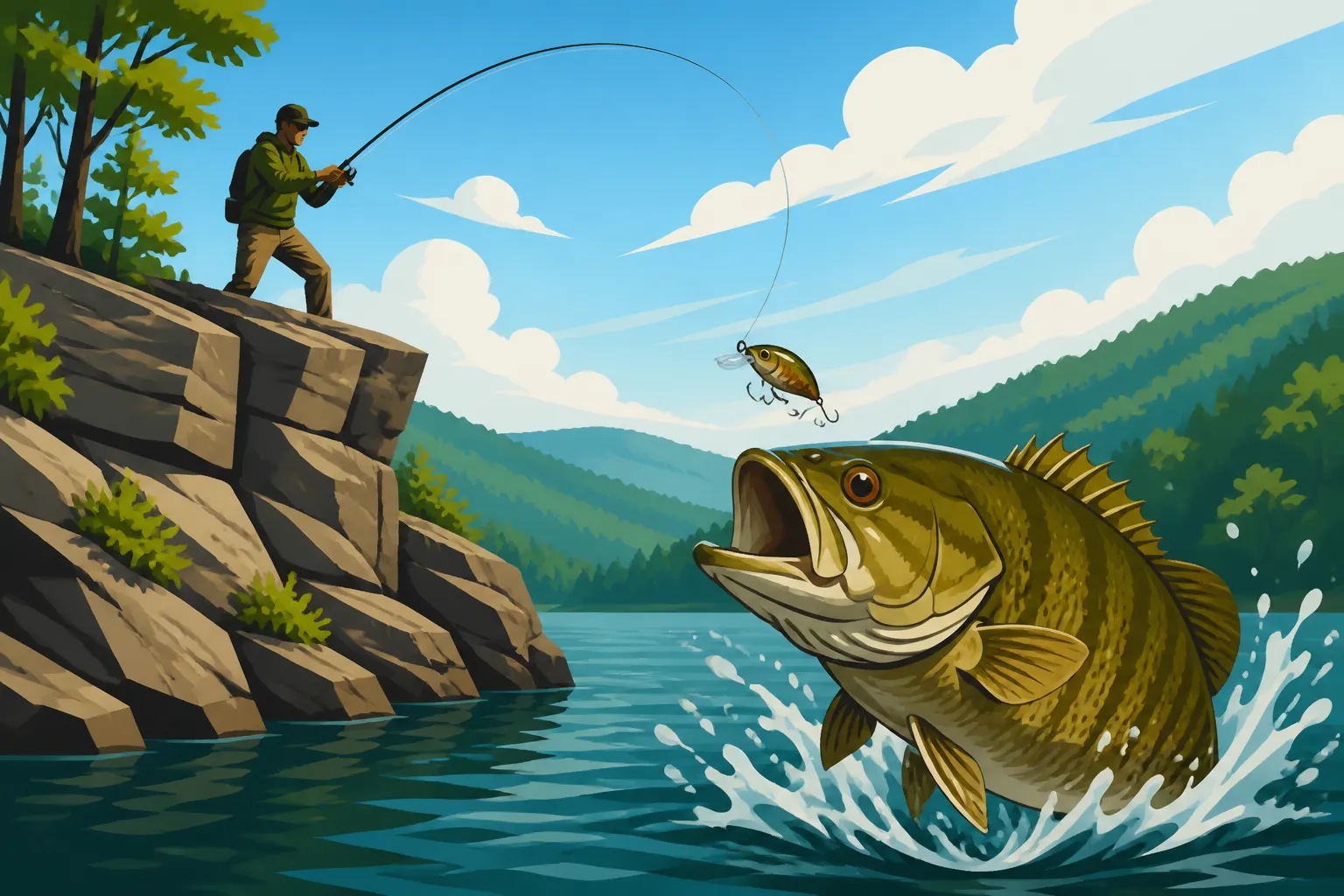
There’s nothing quite like the sight of a towering, rocky bluff plunging into a West Virginia river, hinting at the depths and hiding places it offers. Yet, for many anglers, these incredibly promising spots can also be incredibly frustrating. You know smallmouth bass are often lurking in these prime locations, but getting them to bite can feel like trying to solve a cryptic puzzle. This guide is here to unravel those mysteries, helping you understand why smallmouth flock to bluffs and, more importantly, how to consistently coax them out.
Why Rocky Bluffs are Smallmouth Bass Goldmines
Rocky bluffs aren't just pretty scenery; they're genuine ecosystems that offer everything a smallmouth bass could ever want: shelter, ambush points, and a buffet of food. Understanding these underlying attractions is your first step to unlocking their secrets. It’s not just about casting a lure; it’s about understanding the smallmouth’s world.
The Perfect Habitat: Structure, Shade, and Current Breaks
Think about it from a smallmouth’s perspective. A rocky bluff offers a ton of nooks, crannies, ledges, and sheer drop-offs. These aren't just random rocks; they're intricate apartments. The bass can tuck themselves into a dark crevice, hidden from predators above and potential prey below, ready to dart out and ambush. We're talking about prime real estate. On a sunny day, the deep shadows cast by the bluff provide a cool, comfortable refuge from intense sunlight, allowing bass to conserve energy while still being able to feed. This is especially true during the dog days of summer.
Beyond shelter, bluffs are masters of current manipulation. As river currents flow past a bluff, they create eddies, seams, and slack water areas. These are like highways and rest stops for baitfish, and consequently, for the smallmouth that feed on them. Smallmouth are incredibly efficient predators; they’d rather let the current bring their meal to them, expending minimal energy, than chase it all over the river. A subtle current seam, where fast water meets slow water, is often a prime ambush point for a hungry smallmouth. Don't overlook the micro-currents and eddies that form right up against the rock face – these can be critical.
An Abundant Food Source: Crawfish and Baitfish
West Virginia's rocky river bottoms, particularly around bluffs, are absolutely teeming with crawfish. These crustaceans are like candy to smallmouth bass, a primary food source that helps them grow big and strong. Crawfish scuttling along the rocks or trying to hide in crevices are easy targets for a smallmouth waiting in ambush. Any lure that mimics a crawfish, both in color and action, is going to be a huge producer here. We'll dive more into specific lures later, but keep that crawfish connection in mind.
Beyond crawfish, various baitfish are also drawn to the bluffs. Smaller fish use the structure for protection, or they might be grazing on algae and aquatic insects that thrive on the rocks. When schools of minnows, shiners, or darters swim by, the smallmouth are keenly aware, ready to burst from their hiding spots to snatch a meal. This combination of plentiful crawfish and passing baitfish makes bluffs a consistent food delivery system, ensuring smallmouth rarely have to go far to fill their bellies. This consistent food supply is one of the main reasons you'll find healthy populations of smallmouth in these areas, often leading to excellent catches.
Essential Gear for Conquering Rocky Bluff Smallmouth
Fishing rocky bluffs isn't quite the same as fishing a gentle, gravelly flat. You’re dealing with snags, potential abrasion, and often needing to make precise casts to tight spots. Having the right gear setup will not only improve your chances of success but also reduce frustration from lost lures and snapped lines.
Rods, Reels, and Lines: Power and Sensitivity
For bluff fishing, you're going to want a rod with a bit of backbone. A medium-heavy power spinning rod or casting rod, typically in the 6'6" to 7'2" range, is a great choice. The extra power helps you control larger smallmouth trying to dive into the rocks, and it gives you the leverage to pull lures free from minor snags. A fast or extra-fast action tip is crucial for sensitivity, allowing you to feel subtle bites and the bottom composition, while still providing the necessary quick hook sets.
Pair that rod with a reliable reel. For spinning gear, a 2500-3000 series reel offers a good balance of line capacity and drag power. For baitcasting, a reel with a moderate to high gear ratio (6.1:1 to 7.1:1) will help you pick up slack quickly and keep fish from burrowing into the rocks.
Line choice is critical around abrasive rocks. Many anglers swear by braided line as their main line (15-20 lb test) for its incredible strength and sensitivity, then tie on a 6-10 foot fluorocarbon leader (10-15 lb test). Fluorocarbon is nearly invisible underwater and has excellent abrasion resistance, making it ideal for the last few feet near your lure. The combination gives you the best of both worlds. You can find excellent options for all these components readily available online, perhaps even on Amazon, which is a convenient place to browse different brands and models. For more on line choices, consider checking out Best Fluorocarbon Line for Clear River Water.
Lures That Mimic Nature and Trigger Bites
When fishing bluffs, you're often trying to imitate either a crawfish or a baitfish. Here are some of my go-to lure types:
- Jigs (Football and Skirted): These are absolute smallmouth magnets around bluffs. Football jigs in brown, green pumpkin, or black-and-blue mimic crawfish perfectly. Pair them with a soft plastic craw trailer for added bulk and action. Skirted jigs, often in similar colors, can also be highly effective. The key is to let them crawl and hop along the bottom, bumping into rocks.
- Tube Jigs: Soft plastic tubes, often rigged with an internal jig head, are incredibly versatile. They imitate both crawfish and baitfish, and their natural fall is irresistible to smallmouth. Colors like green pumpkin, brown, or black are excellent choices. Hop them, drag them, or let them fall slowly near vertical rock faces.
- Ned Rigs: Don't underestimate the power of the Ned rig. This finesse presentation, usually a small mushroom-head jig with a short, buoyant plastic worm, is fantastic for pressured fish or when the bite is tough. It stands up off the bottom, making it an easy meal. Its subtle action can be deadly.
- Crankbaits (Deep Diving and Squarebill): For covering water and finding active fish, crankbaits are essential. Deep-diving crankbaits that mimic baitfish are great for probing deeper ledges and drop-offs. Squarebill crankbaits are perfect for bumping off shallower rocks without getting hung up as easily, creating a reaction strike. Natural baitfish patterns or crawfish colors are generally best.
- Jerkbaits: Especially in cooler water, jerkbaits are dynamite. Their erratic, darting action perfectly mimics a wounded baitfish, and smallmouth can't resist them. Suspending jerkbaits that hang in the strike zone for a few seconds can be particularly effective.
- Topwater Lures: On calmer mornings or evenings, or overcast days, don't forget the thrill of a topwater bite. Poppers, walking baits, and prop baits can draw explosive strikes from bluff-dwelling smallmouth. The commotion they create often brings fish up from deeper water.
Carrying a variety of these lures, in different sizes and colors, will ensure you're ready for whatever the smallmouth or conditions throw at you. You might find a great selection of these on Amazon, ensuring you have what you need before your next trip. To further broaden your lure knowledge, check out Best Smallmouth Bass Lures for the New River in Summer or Best Crankbait Retrieve for New River Smallmouth.
Techniques for Targeting Bluff-Dwelling Smallmouth
The way you present your lure around rocky bluffs can make all the difference. It's not just about what you throw, but how you throw it and how you work it. Precision and patience are your best friends here.
Positioning and Casting Strategies
Your approach to the bluff itself is crucial. Try to maintain a comfortable casting distance, ideally keeping your boat or kayak a bit away from the bluff face to avoid spooking fish. Think about casting parallel to the bluff whenever possible, allowing your lure to stay in the strike zone longer. This is especially effective if the bluff has ledges or a consistent drop-off. If you’re casting perpendicular, aim to hit the base of the bluff or just beyond it, letting your lure fall directly into potential ambush points.
When casting, pay close attention to any visible features: rockslides, large boulders that have broken off, small pockets of calmer water, or noticeable current breaks. These are all high-percentage targets. Often, the biggest smallmouth will hold in the most subtle, yet advantageous, spots. Practice your skipping or pitching casts if you're targeting tight pockets under overhanging rocks or brush. The more accurately you can place your lure, the better your chances. Being able to cast a lure right into a tiny eddy behind a massive rock can be the difference between a slow day and a banner day.
Lure Presentation and Retrieve Techniques
Once your lure is in the water, the presentation is key.
- Jigs and Tubes: For bottom-contact lures like jigs and tubes, a slow, methodical retrieve is usually best. Cast to your target, let the lure sink to the bottom (pay attention to that line for any "thump" on the fall!), then use subtle rod tip movements to hop, drag, or shake the lure. You want it to mimic a crawfish scuttling and pausing, or a baitfish grazing. Often, the bite will come on the fall or when the lure is paused. Feeling those subtle bites requires a lot of concentration and a sensitive rod.
- Crankbaits: When throwing squarebill crankbaits, aim to make them deflect off the rocks. That sudden, erratic change in direction often triggers a reaction strike from a smallmouth. For deep-diving cranks, try to "grind" them along the bottom, occasionally allowing them to tick off submerged rocks or ledges. Vary your retrieve speed; sometimes a steady reel is best, other times, a stop-and-go retrieve is more effective.
- Jerkbaits: The classic jerkbait retrieve is a "twitch, twitch, pause." Cast it out, reel up your slack, then give your rod tip two sharp downward twitches, followed by a pause. The length of the pause can be critical. Experiment with short pauses (1-2 seconds) and longer pauses (5-10 seconds), especially in colder water. The suspending nature of many jerkbaits allows them to hang tantalizingly in the strike zone during these pauses.
- Topwater: For topwater lures, the technique depends on the lure type. Poppers are worked with short, sharp snaps of the rod tip to make them "pop." Walking baits require a consistent rhythm of twitching and reeling to make them "walk the dog." Focus on creating commotion and mimicking a struggling baitfish on the surface.
Always remember to vary your retrieve until you find what the smallmouth are responding to on a given day. What worked yesterday might not work today, so be willing to adapt. Best Baits for Smallmouth Bass on the New River provides even more detail on specific lure presentations.
Reading the Water and Adapting Your Approach
Fishing bluffs isn't a one-size-fits-all endeavor. The river environment is constantly changing, and successful anglers are those who can "read the water" and adjust their tactics accordingly.
Understanding Current and Water Levels
The current around a bluff is your biggest clue. Smallmouth love current, but they don't want to fight it constantly. They'll position themselves in eddies, behind large boulders, or in the calmer seams where they can ambush prey without expending too much energy. Look for these current breaks. If the current is strong, focus on the most defined slack water areas. If the current is weaker, they might be more spread out along the bluff face.
Water levels also play a huge role. In higher water, smallmouth might push tighter to the bluff face, seeking refuge from the increased flow and utilizing newly submerged cover. They might also move into shallower pockets on the bluff that are only accessible at higher levels. In lower, clearer water, smallmouth can become warier. You might need to make longer casts, use lighter line, or switch to more subtle finesse presentations like the Ned rig. The smallmouth’s habits on the Smallmouth Bass Habits on the New River can be a useful read to further understand these dynamics. Always check the river conditions before you head out!
Seasonal Considerations for Bluff Fishing
Smallmouth behavior around bluffs changes with the seasons:
- Spring: As water temperatures rise, smallmouth will become more active. They'll move up to feed aggressively before the spawn. Bluffs offer great staging areas. Jigs, jerkbaits, and even early season crankbaits can be highly effective. They'll often be found shallower as the water warms.
- Summer: During the heat of summer, smallmouth might retreat to the deeper, cooler sections of the bluff or hold tight in the shade. Early morning and late evening can be prime topwater times. Throughout the day, focus on deep jigs, tubes, and deep-diving crankbaits. During midday, they'll often be lethargic, so slow presentations are key.
- Fall: This is often considered prime time for trophy smallmouth. As water temperatures drop, they feed heavily to pack on weight for winter. They can be found at various depths along the bluff, often actively chasing baitfish. Crankbaits, jerkbaits, and larger jigs are all productive. This is when you can really hit a home run on these bluffs.
- Winter: Bluff fishing can still be productive in winter, especially during warmer spells. Smallmouth will typically be deeper and less active. Slow, methodical presentations with jigs, Ned rigs, and suspending jerkbaits are your best bet. Focus on periods of stable weather and the warmest parts of the day.
Always remember that smallmouth are creatures of opportunity. The more you observe and adapt, the more successful you'll be. Pay attention to water clarity, temperature, and sunlight conditions, as these all influence where and how smallmouth will relate to the bluff. Understanding Best Time of Year to Fish in West Virginia will help you align your bluff fishing trips for maximum success.
Safety and Best Practices When Fishing Bluffs
Fishing around rocky bluffs can be incredibly rewarding, but it also comes with its own set of challenges and safety considerations. Being prepared and respectful of the environment is paramount.
Navigating Rocky Terrain and Currents
Whether you’re in a boat, kayak, or wading, rocky bluffs often mean navigating tricky waters. If boating, be acutely aware of submerged rocks, sudden depth changes, and strong currents that can pull you into danger. Always wear your life jacket, especially in rivers known for their strong currents like parts of the New River. For kayakers, understanding river dynamics and having a solid anchor system for holding position is critical. If you're wading, a sturdy wading staff is your best friend. Always test the bottom before taking a step, as drop-offs can be sudden and currents surprisingly strong.
Be mindful of the weather. Sudden storms can quickly raise water levels and increase current, making navigation hazardous. Always check the forecast before you head out. When choosing your vessel, consider if it's suitable for the specific stretch of river you're targeting. Best Boats for West Virginia Rivers and Lakes or Best Kayaks for West Virginia Fishing can offer more guidance on appropriate watercraft.
Practicing Catch and Release and Minimizing Impact
Many of West Virginia's smallmouth bass fisheries, especially around these prime bluff areas, are sustained by healthy catch-and-release practices. Smallmouth are resilient, but proper handling is key to their survival.
- Handle with care: Minimize the time the fish is out of the water.
- Wet hands: Always wet your hands before touching a fish to protect its slime coat.
- Support the fish: Support the fish horizontally, especially larger ones, to avoid damaging internal organs or jaw.
- Barbless hooks: Consider crushing the barbs on your hooks to make removal easier and less stressful for the fish.
- Release quickly: Revive the fish in the water, facing it into the current if needed, until it swims away under its own power.
Beyond fish handling, always pack out everything you pack in. Leave no trace. Respect private property along the riverbanks, and be courteous to other anglers you encounter. These bluffs are shared resources, and by being responsible stewards, we can ensure they continue to provide incredible fishing opportunities for generations to come. Your fishing adventure is a journey, and every trip to a West Virginia bluff offers a new lesson and a chance to deepen your connection with these magnificent smallmouth.
Disclaimer
This article is for general informational purposes only and does not constitute professional advice. Laws, prices and regulations vary by location and change over time. Consult a qualified professional for guidance on your specific situation.