Best Techniques for Carp on the Fly
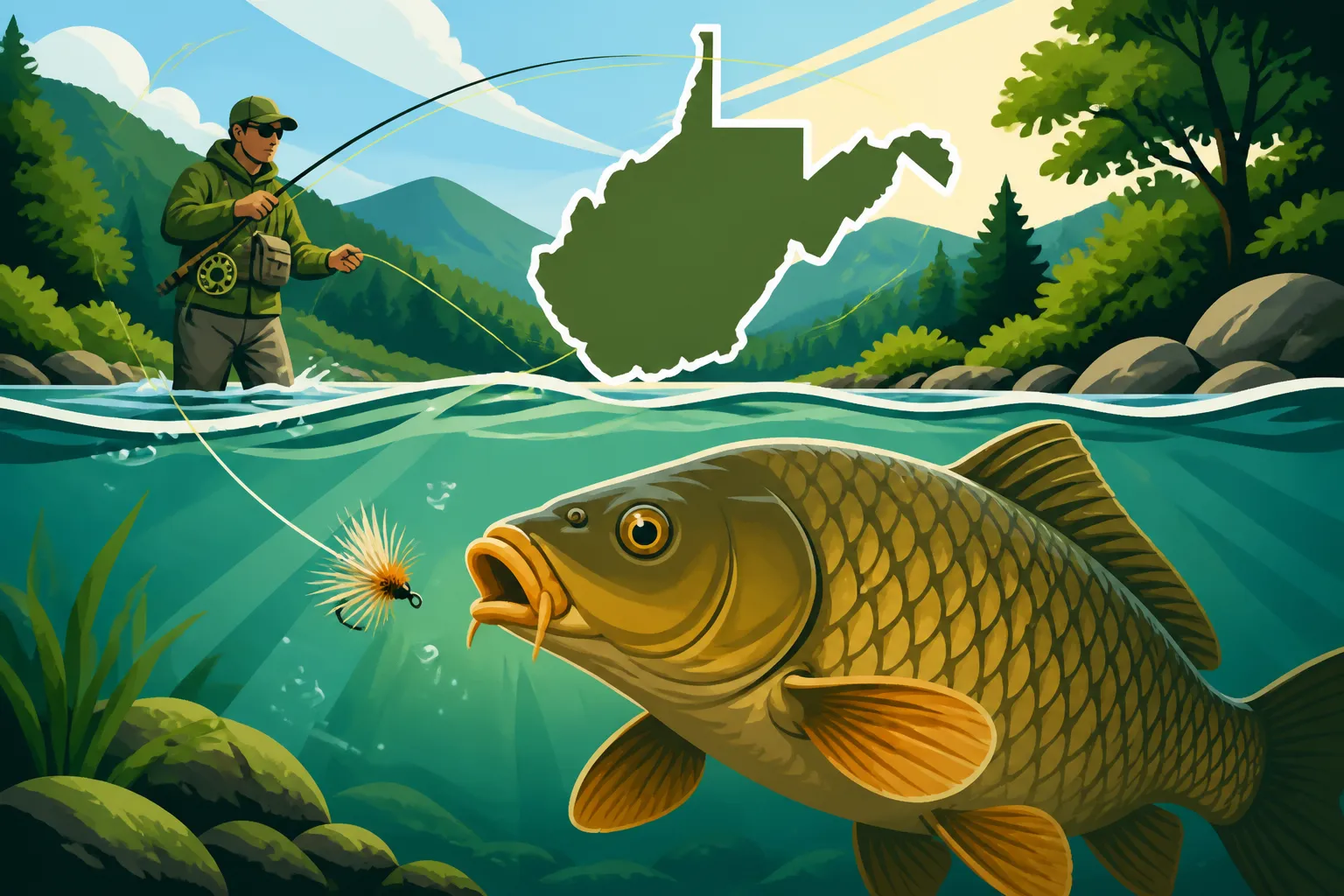
Oh, the humble carp! So often overlooked, dismissed as a "trash fish" by many, but I'm here to tell you that if you're looking for a serious challenge and an incredibly rewarding fight on a fly rod, West Virginia's carp are your golden ticket. They're wary, powerful, and demand precision, making them one of the most exciting, yet frustrating, targets for any fly angler. This guide is going to strip away the misconceptions and dive deep into the best techniques for tricking these magnificent, often elusive, fish with a fly in the Mountain State.
The Allure of Carp on the Fly in West Virginia
Let's be real: when most folks think about fly fishing, images of pristine mountain trout streams or perhaps the crashing waves for saltwater species come to mind. Carp? Not so much. But that's precisely where the magic lies. West Virginia has an incredible abundance of these powerful fish, often in plain sight, offering a unique and deeply satisfying angling experience if you're willing to embrace the challenge.
Why Target Carp with a Fly Rod?
The biggest frustration I hear from anglers when I talk about carp is often, "Why bother? They're just bottom feeders." And yes, they do root around in the mud, but to dismiss them completely is to miss out on one of the most challenging and exciting freshwater fly rod opportunities out there. These aren't your typical hatchery-raised, eager-to-please trout. West Virginia carp are wild, wily, and incredibly strong.
When you hook into a decent-sized common carp or even a mirror carp on a fly rod, you're in for a battle. They make long, powerful runs, testing your drag and your knots to their limits. It's a true test of angling skill, combining sight fishing, delicate presentation, and a fight that can feel like you've hooked a freight train. Plus, they're everywhere! From sprawling rivers like the Kanawha and Ohio to quieter farm ponds and state park lakes, carp are accessible, abundant, and often, quite large. It's an opportunity to hone your skills in your local waters, often without driving hours to a "trophy" trout stream. The sheer visual aspect of spotting a feeding carp, making the perfect cast, and watching it inhale your fly is an adrenaline rush that rivals any other species.
Understanding West Virginia's Carp Waters
West Virginia offers a diverse range of habitats where carp thrive, each presenting its own set of challenges and opportunities. You're not just limited to one type of water, which means you can adapt your approach based on what's available near you.
Our larger rivers, like the Ohio River and the Kanawha River, are absolute carp factories. Here, you'll find large, powerful common carp that can push well into the double digits. These river fish often require heavier gear and longer casts to reach them in deeper channels or along current seams. They feed on a variety of organisms, from aquatic insects to small crayfish and plant matter stirred up by the current. You might find them tailing in shallow backwaters, especially during warmer months, or cruising along rip-rapped banks. These big rivers are dynamic, and understanding the flow and structure is key to finding concentrations of fish. You can find detailed information about various fishing spots in our Ohio River Fishing Guide for West Virginia Anglers and Kanawha River Fishing Spots to help you scout out prime locations.
Then there are the numerous lakes and ponds scattered across the state. Places like Summersville Lake, Stonewall Jackson Lake, and even smaller farm ponds can hold impressive numbers of carp. In these stillwater environments, carp are often more susceptible to sight fishing tactics, especially when they move into shallow flats and weed lines to feed. On a clear, sunny day, spotting their dark forms against a light bottom, or seeing the tell-tale mud plumes as they root for food, is incredibly exciting. The challenge here is usually stealth – they're incredibly sensitive to vibrations and shadows. Knowing the West Virginia Fishing Seasons by Month can also help you anticipate when carp might be most active and feeding in these different environments.
Essential Gear for Fly Fishing West Virginia Carp
Let's be clear: you can't just grab your dainty 3-weight trout rod and expect to land a 20-pound river carp. While carp might not have teeth, their sheer power and size demand specialized gear. Skimping here will lead to broken rods, popped lines, and a lot of heartbreak.
Rod, Reel, and Line Selection
Choosing the right rod, reel, and line is paramount for a successful carp on the fly experience. It's all about matching power with finesse.
For most West Virginia carp fishing, particularly in smaller ponds and creeks, a 7 or 8-weight fly rod is a fantastic all-around choice. This provides enough backbone to cast larger, heavier flies (like weighted crayfish patterns) and enough power to handle a 5 to 10-pound carp without being completely overpowered. If you're tackling the behemoths of the Ohio or Kanawha rivers, or if you consistently encounter fish over 15 pounds, bumping up to a 9 or even a 10-weight rod isn't overkill. These heavier rods offer more lifting power and control, which is essential when a big river carp decides to run for a snag. Many anglers find excellent quality fly rods in these weights on platforms like Amazon, offering a good balance of performance and value.
Your reel needs to be equally up to the task. Forget lightweight trout reels; you need a large arbor reel with a smooth, powerful drag system and ample backing capacity. Carp will make long, scorching runs, and a sticky or weak drag will lead to snapped leaders or lost fish. A good rule of thumb is to have at least 150-200 yards of 20-pound backing. This isn't just for big fish; it's a critical buffer when a carp decides to sprint across an entire flat. The large arbor design helps retrieve line quickly, which is crucial for managing slack after a long run.
For fly line, a weight-forward floating line is your bread and butter. It allows for accurate, delicate presentations, which is key for spooky carp in shallow water. You want a line that loads your rod efficiently for those quick, precise casts. In deeper river sections or when targeting fish in current, an intermediate sink tip line can also be incredibly useful, allowing your fly to get down to the feeding zone without using excessive weight on the fly itself. Make sure your line weight matches your rod weight for optimal casting performance.
Leaders, Tippet, and Flies
This is where the rubber meets the road, or rather, the tippet meets the carp. Stealth and strength are your two guiding principles.
Your leader setup is critical. You'll want a stout, tapered leader, typically 7.5 to 9 feet long, with a strong butt section. The leader's breaking strength should be in the 10 to 15-pound range. From there, you'll want to tie on a section of fluorocarbon tippet. Fluorocarbon is less visible in the water than monofilament and is more abrasion-resistant, which is a huge plus when fighting carp around rocks or woody debris. I typically use 8 to 15-pound test fluorocarbon, adjusting based on water clarity and fish size. In super clear, still waters, I might drop down to 8 or 10-pound to fool wary fish, but in stained river conditions, I'm not afraid to bump up to 12 or 15-pound. The strength is vital – carp will find every weakness in your setup.
Now for the fun part: flies! Carp aren't generally insectivores in the same way trout are, so you're not going to be matching hatches. Instead, you're imitating things they forage for on the bottom. Here are some of the most effective patterns for West Virginia carp:
- Crayfish Imitations: Carp absolutely love crayfish. Patterns like the Clouser Crayfish, NearNuff Craw, or even a simple woolly bugger in olive or brown, weighted to sink quickly, can be deadly. These are especially good in rocky rivers and lakes where crayfish are abundant.
- Worm Patterns: San Juan Worms or similar chenille worm patterns can be incredibly effective, especially after rain when natural worms are washed into the water.
- Bread Flies: Yes, bread. Carp are often conditioned to eat bread crumbs from people feeding ducks or recreational areas. A small, white foam or yarn fly that mimics a piece of bread can be irresistible. This is more for specific scenarios, but when it works, it's lights out.
- Hybrid Nymphs/Small Creature Flies: Patterns like the Prince Nymph, Pat's Rubber Legs, or a variety of "buggy" nymphs in larger sizes (size 6-10) can imitate a range of aquatic invertebrates that carp root for.
- Mop Flies: These chartreuse or tan chenille flies, often weighted, are surprisingly effective. They don't imitate anything specific but seem to trigger an aggressive feeding response.
Unlike the delicate flies you might use for Fly Patterns for West Virginia Trout Streams, carp flies are often larger, heavier, and tied on stronger hooks (size 4-10, sometimes even larger). When shopping for these, make sure to look for strong, sharp hooks that won't straighten under pressure. You'll find a good selection of materials and pre-tied carp flies on Amazon. Remember, while you might already have some gear for Best Gear for West Virginia Trout Fishing, carp gear is a distinct category.
| Rod Weight | Target Fish Size | Typical Location | Leader/Tippet | Common Flies |
|---|---|---|---|---|
| 6-7 wt | 3-8 lbs (smaller carp) | Smaller ponds, creeks, shallow lake flats | 7.5-9 ft, 8-10 lb FC tippet | Small worms, mop flies, bread flies |
| 8 wt | 8-15 lbs (average carp) | General purpose, medium rivers, larger lakes | 7.5-9 ft, 10-12 lb FC tippet | Crayfish, larger nymphs, woolly buggers |
| 9-10 wt | 15-30+ lbs (trophy carp) | Large rivers (Ohio, Kanawha), deep lake channels | 9 ft, 12-15 lb FC tippet | Large crayfish, heavy buggers, large worms |
Spotting and Stalking Carp: The Hunt
This is truly where fly fishing for carp becomes a hunting game. You're not blindly casting; you're actively searching, identifying, and planning your attack. It's incredibly visual and deeply engaging.
Reading the Water for Carp Signs
Carp are masters of camouflage and can be incredibly subtle in their feeding habits. To find them, you need to learn to "read" the water and identify their tell-tale signs. This takes practice and a keen eye.
One of the most common signs you'll see, especially in shallower, muddier areas, are mud plumes or clouds. As carp root around on the bottom for food, they stir up sediment. A fresh, swirling cloud of mud often indicates a feeding carp is actively working that area. If the plume is moving, follow it quietly, and you might spot the fish itself. Look for small, individual puffs of mud too, which often mean a carp is sucking up a morsel from the bottom. Another clear sign is tailing. This happens when a carp is feeding head-down in shallow water, and its tail breaks the surface. This is a prime target, as the fish is actively focused on feeding and often less aware of its surroundings. The sight of a large, golden tail waving in the air is one of the most exciting things you can see as a carp angler.
You'll also need to look for cruising fish. These carp are often moving slowly, either searching for new feeding grounds or simply navigating the water. They might be harder to tempt, as they're not intensely focused on one spot. Look for dark shapes against lighter bottoms, or subtle movements and disturbances on the surface. On sunny days, especially when the sun is at your back, you'll have the best visibility. Don't forget to look for rolling carp – these are fish that are usually feeding in deeper water but come to the surface to gulp air or simply move around. While harder to cast to effectively, they indicate that carp are present in the area. Polarized sunglasses are absolutely essential here; they cut through the glare and allow you to see into the water much more effectively. You can find excellent options on Amazon that make a huge difference in your ability to spot fish.
The Art of the Approach
Once you've spotted a carp, the real challenge begins: getting close enough for a cast without spooking it. Carp have an uncanny ability to detect threats, whether it's a shadow, a vibration, or a sudden movement. This is similar to the stealth required for Wading Techniques for West Virginia Trout Streams, but often even more magnified due to the carp's size and wariness.
Stealth is everything. Move slowly, deliberately, and with as little noise as possible. If you're on foot, shuffle your feet rather than taking heavy steps to avoid sending vibrations through the water. If you're in a kayak or boat (and Best Kayak Fishing Spots in West Virginia can offer some fantastic carp opportunities), use a paddle or trolling motor sparingly and gently. Avoid casting your shadow over the fish. On a sunny day, try to approach with the sun in your favor, so your shadow falls away from the fish. Wear drab clothing that blends into the background, not bright colors that stand out.
Positioning is key. Try to get into a position that allows you to make a comfortable cast without false casting excessively over the fish. Ideally, you want to be downstream or downwind of the carp, so your line drift doesn't alert them. Pay attention to the wind, as it can both help and hinder. A gentle breeze can ripple the water surface, breaking up your outline and making it harder for carp to see you, but a strong wind can make casting accurately a nightmare. Sometimes, getting on your knees or even crawling to the water's edge can make all the difference, minimizing your profile and giving you a better angle of approach. Remember, a long, accurate cast is often better than a short, close one if it means avoiding spooking the fish.
Presentation and Hookset: Tricking the Golden Ghost
So you've spotted the fish, made your stealthy approach, and now it's time for the moment of truth: the cast and presentation. This is where many anglers fail, as carp demand a very specific kind of delicacy and accuracy.
Delivering the Fly
Carp are notoriously sensitive to clumsy presentations. A fly line splashing down too hard, or a fly landing too close to their nose, will send them rocketing away.
Accuracy is paramount. You need to place your fly precisely where the carp will see it and have it naturally drift into their feeding zone. The general rule of thumb is to lead the fish. Cast your fly a few feet in front of the carp's nose, or slightly beyond it, allowing it to sink and settle on the bottom before the fish reaches it. This simulates a natural food item that has been there for a while, rather than something that just fell from the sky. The exact lead distance depends on water depth, current, and how fast your fly sinks. In shallower, still water, a lead of 2-3 feet might be enough. In moving water or deeper areas, you might need to lead by 5-10 feet.
Gentle presentation. Aim for a soft, quiet landing of your fly. Avoid a loud splash. The goal is to make the fly land as naturally as possible. Once the fly is in the water, allow it to sink naturally to the bottom. Carp are often feeding on the bottom, so your fly needs to be there. This is where heavily weighted flies or an intermediate sink-tip line become invaluable. If the carp is actively tailing or grubbing, present the fly directly into the mud plume or slightly ahead of the tail. The carp is already focused on rooting around, and your fly will blend in with the disturbed bottom. Watch for any subtle twitches or movements that indicate the carp has noticed your fly. Sometimes, a very subtle twitch or slow retrieve of the fly can imitate a struggling worm or a moving crayfish, drawing the carp's attention.
The Delicate Dance and the Explosive Fight
So, your fly is on the bottom, a carp is approaching… now what? This is the nerve-wracking part where patience is tested, and the payoff can be immense.
The take is often subtle. Unlike a trout violently attacking a dry fly, a carp's take can be incredibly soft and difficult to detect. They often just mouth the fly, suck it in, or simply settle over it. Look for any change in the carp's behavior: its mouth might open and close, its tail might twitch, or it might just pause. Sometimes, the only sign is a subtle "tick" on your line, or the leader might straighten or move horizontally. If you see the carp's head dip or its body subtly shift, assume it has taken your fly. Do not wait for a rod-bending strike.
The strip set is crucial. This is probably the biggest mistake trout anglers make when switching to carp. Do not lift your rod to set the hook like you would with a trout. Carp have tough, cartilaginous mouths, and a strong, horizontal strip set is necessary to drive the hook home. Keep your rod tip pointed low towards the water and, when you detect a take, make a firm, long strip of your fly line. Only once you feel the solid weight of the fish, lift your rod to apply pressure. If you lift too early, you'll simply pull the fly out of its mouth.
Once hooked, be prepared for an explosive fight. Carp are incredibly powerful. Their first move is almost always a long, sustained run. Let them run! Your reel's drag is your best friend here. Don't try to stop them prematurely, or you'll risk snapping your leader or popping your fly off. Keep your rod bent, maintaining constant pressure to tire the fish out. They will often make several strong runs, especially if they are large river carp. Pump the fish by lifting your rod and then reeling down, gaining line slowly but surely. Be especially vigilant if the carp tries to dive into snags, logs, or weed beds. This is where a strong leader and patience really pay off. Managing a powerful fish like a carp on the fly is similar to the techniques you might employ when Muskie Fishing in West Virginia – it's about control, patience, and letting the fish exhaust itself before you bring it to hand.
Specific West Virginia Carp Scenarios and Tactics
West Virginia's diverse waters mean you'll encounter carp in a variety of environments, each requiring slightly different approaches. Adapting your tactics to the specific water body you're fishing will significantly increase your success.
River Carp Tactics
Rivers are often where you'll find the biggest, most powerful carp in West Virginia. The consistent current and abundant food sources allow them to grow to impressive sizes.
In larger rivers like the Ohio or the Kanawha, carp will often hold in deeper channels, eddies, and slack water areas adjacent to the main current. Look for subtle current seams where slower water meets faster water; these are often feeding lanes. The carp will use the slower water to conserve energy while still having easy access to food washing down in the current. Rip-rapped banks, bridge pilings, and submerged rock formations are also prime holding areas. When these areas have a softer bottom, you might see them actively "mudding" in groups.
Presenting your fly in a river requires a good understanding of drift. You want your fly to tumble or settle naturally downstream, just like real food items. Often, a longer cast upstream, allowing the fly to sink and then drift down into the carp's zone, is most effective. Be prepared for faster takes in current, as the fish has less time to inspect the fly. Sometimes, a small amount of weight added to your leader (split shot) can help your fly get down faster in deeper or faster-moving water. On warmer days, or after heavy rains when water levels are higher, check out shallow backwater areas, oxbows, and flooded fields connected to the main river. Carp will often move into these calmer, nutrient-rich zones to feed and escape the stronger currents. These spots can be fantastic for sight fishing. Again, knowing the nuances of rivers like those detailed in the Ohio River Fishing Guide for West Virginia Anglers and Kanawha River Fishing Spots will greatly aid your carp river expeditions.
Lake and Pond Carp Tactics
Lake and pond carp fishing in West Virginia often leans more heavily into sight fishing, especially in clearer waters. This is a thrilling visual game.
Shallow flats and weed lines are prime territory in lakes and ponds. Carp love to cruise these areas, rooting around in the vegetation and soft bottom for aquatic insects, crustaceans, and plant matter. Look for large, relatively flat areas of the lake or pond, especially those with muddy or silty bottoms and sparse vegetation. In the spring and early summer, carp will move into these warm, shallow areas to spawn, often becoming very active and visible, though they can be harder to tempt during the spawn itself. Outside of spawning, these flats offer consistent feeding opportunities.
When fishing lakes and ponds, your best bet is usually to look for actively feeding fish. A carp that's tailing, mudding, or cruising slowly with its head down is a much better target than one simply suspending or moving quickly. Cast your fly several feet ahead of the fish's path, allowing it to sink to the bottom. Let it sit. Carp are often curious and will investigate the fly. If the carp seems to ignore it, a very subtle twitch of the fly can sometimes get its attention. But often, the key is simply presenting it well and letting it remain still. On bright, sunny days, fish will often move into the shallower areas to warm themselves, making them more visible. Pay attention to wind direction; a persistent wind can push food items and carp to one side of a lake. Our Best Fishing Lakes in West Virginia guide can give you some excellent starting points for exploring these stillwater carp opportunities.
Troubleshooting Common Carp on the Fly Challenges
Even seasoned carp on the fly anglers face challenges. These fish are notorious for their wariness and can quickly humble even the most confident caster. But with a few adjustments and a dose of patience, you can often turn a tough day around.
Dealing with Spooky Fish
It's going to happen. You'll make what you think is a perfect cast, only to have the carp bolt away in a flash, leaving nothing but a cloud of mud and a feeling of frustration. Spooky fish are par for the course with carp, but there are ways to mitigate it.
First, increase your casting distance. If you're consistently spooking fish when you get within 30 feet, try staying back at 40-50 feet. This means you need to be proficient with your casting, but it significantly reduces your presence and the chance of a splashdown near the fish. You might sacrifice a bit of accuracy, but if the fish doesn't know you're there, it's a trade-off worth making. This also ties back to stealthy movements on your part; sometimes, it's not the cast, but your approach that sends them packing. Slow down even more, minimize vibrations, and try to stay low.
Second, adjust your leader and fly. In exceptionally clear water or when carp are particularly skittish, try a longer leader (10-12 feet) and a lighter tippet (8-pound fluorocarbon, assuming the fish aren't absolute monsters that demand heavier). A smaller, more sparsely tied fly can also be less intimidating. The goal is to make your presentation as invisible and natural as possible. For example, if you were using a heavily weighted crayfish, try a smaller, unweighted San Juan Worm, relying on its natural sink rate rather than a plop from weight.
Finally, patience and observation. Sometimes, a spooked carp will settle down and return to a feeding pattern after a few minutes, especially if you haven't made repeated, aggressive attempts to catch it. Observe their behavior. Are they spooking from the fly landing? From your shadow? From your line? Identify the trigger and adjust. Sometimes, it's simply a matter of finding a less spooky fish or moving to a different spot where the carp aren't as pressured.
Landing and Handling Large Carp
Once you've managed to hook into a large carp, the fight is only half the battle. Landing and handling these powerful fish correctly is crucial for both the angler's success and the fish's well-being. This is particularly important for catch-and-release, which is common among fly anglers.
Invest in a large, rubberized landing net. A net designed for trout or even average bass simply won't cut it for a big carp. You need a net with a wide hoop and deep, rubberized mesh. The rubberized mesh is important because it's gentler on the fish's slime coat, reduces fin damage, and prevents hooks from getting tangled. Trying to hand-land a thrashing 15-pound carp is a recipe for injury to both you and the fish. Many excellent quality large nets are available on Amazon that are perfect for carp.
Once the fish is in the net, minimize its time out of the water. Carp are hardy fish, but like all fish, they stress when out of their element. Unhook the fish quickly and gently, using forceps or pliers. If you plan to take a photo, prepare your camera beforehand and keep the fish in the net in the water until you're ready. When lifting the fish for a photo, support its body horizontally with two hands – one under the belly and one near the tail – to avoid putting undue stress on its internal organs and spine. A cradle-style weighing sling is also a great tool for handling larger fish safely and accurately.
Release the fish carefully. Gently place the carp back into the water, allowing it to recover on its own. Hold it upright if necessary, in calm water, until it swims away under its own power. Don't just toss it back. This careful handling ensures the fish's survival and allows it to fight another day, continuing to provide thrilling challenges for future anglers. These practices are very similar to those advised for larger game fish like muskie; you can learn more about proper fish handling in our guide on Muskie catch and release survival tips.
Fly fishing for carp in West Virginia is a truly underappreciated gem in the angling world. It demands skill, patience, and a willingness to step outside the traditional fly fishing box, but the rewards are immense. From the thrill of the hunt to the powerful, drag-screaming fight, carp on the fly offer an accessible and exhilarating experience that every serious angler should try.
Disclaimer
Please note that fishing regulations, license requirements, and local conditions can change. Always consult the latest West Virginia Division of Natural Resources (WVDNR) regulations before heading out on the water. This guide is for informational purposes only and does not supersede official regulations.