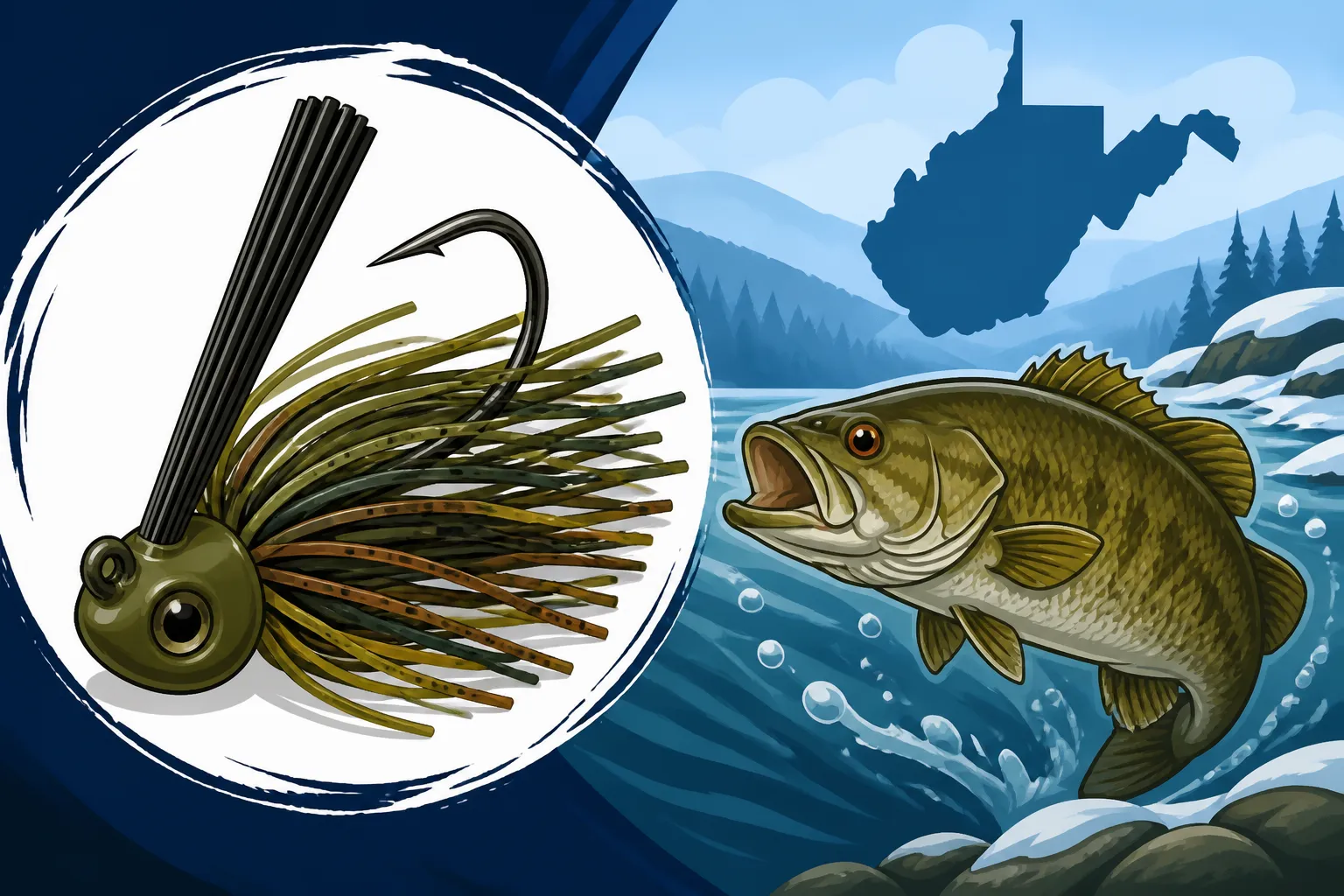
Best hair jig for cold water smallmouth
Trying to tempt a West Virginia smallmouth bass in the bone-chilling cold of winter can feel like an impossible task. They're lethargic, tight-lipped, and often hunkered down deep, making them incredibly frustrating to locate and provoke into striking. This guide is all about mastering one of the most effective, yet often overlooked, baits for these challenging conditions: the hair jig. We'll dive deep into why these subtle offerings work wonders and how you can use them to land some fantastic cold-water bronzebacks.
Why Hair Jigs Excel in Cold Water for Smallmouth Bass
When the water temperatures plummet in our West Virginia rivers and lakes, smallmouth bass change their behavior drastically. They're no longer chasing down fast-moving baits with reckless abandon. Their metabolism slows to a crawl, and they become incredibly energy-conscious. This is where the subtle allure of a hair jig truly shines, offering a presentation that larger, more aggressive lures simply can't match.
Mimicking Natural Prey with Subtle Movements
Think about what a smallmouth might be looking for in cold water. They're not actively hunting large, fleeing baitfish. Instead, they're opportunistically feeding on slower, weaker prey items like crayfish, sculpins, or even smaller minnows that are themselves sluggish in the cold. A hair jig, especially one tied with natural materials like deer hair or rabbit fur, has a living, breathing quality in the water that perfectly imitates these cold-stunned morsels. The individual strands of hair pulse and undulate with the slightest movement of the rod tip, or even just the subtle currents, without the need for aggressive retrieves. This lifelike, almost "breathing" action, even when the lure is held stationary, can be irresistible to a hesitant smallmouth. They don't have to expend much energy to investigate, and the subtle movement is often enough to trigger a defensive or opportunistic strike. It’s less about a chase and more about an easy meal passing by.
The Advantage of a Smaller, Less Invasive Profile
In clear, cold water, smallmouth bass can be incredibly wary. Large, flashy, or noisy lures can often spook them before they even get a chance to inspect the bait. Hair jigs typically present a much smaller, more compact profile, which reduces the intimidation factor. This minimalist design is less intrusive and appears far more natural to a fish that's already on high alert. Furthermore, the light weight and natural materials of a hair jig allow it to fall slowly and subtly through the water column. This "dying baitfish" or "scurrying crayfish" presentation is exactly what triggers strikes from cautious, cold-water smallmouth. It sinks without a loud splash or a violent wobble, allowing you to present it directly into their wintering holes without alerting them to your presence. The ability to fish a hair jig vertically and maintain contact with the bottom structure is also a huge plus, as cold-water smallmouth are often hugging cover tightly.
Key Features of an Effective Cold Water Hair Jig
Not all hair jigs are created equal, especially when you're specifically targeting cold-water smallmouth bass. There are specific characteristics that make certain jigs far more effective in these challenging conditions. Paying attention to these details can make a significant difference in your success rate.
Weight and Fall Rate: The Art of the Slow Drop
For cold-water smallmouth, the fall rate of your jig is paramount. You're generally looking for a slow, controlled descent that mimics a struggling or dying prey item. This usually means opting for lighter jig weights than you might typically use in warmer water or faster currents. Jigs in the 1/8 to 1/4 ounce range are often ideal for depths of 10-25 feet, allowing for that tantalizing slow flutter. If you're fishing deeper wintering holes or in slightly stronger currents, you might need to bump up to a 3/8 ounce, but always aim for the lightest weight that still allows you to maintain bottom contact and feel the subtle bites. The goal is to keep the jig in the strike zone for as long as possible while it slowly descends, giving those lethargic smallmouth ample time to react. Too heavy, and it plummets past them before they can even register it; too light, and you can't get it to the fish. It's a delicate balance.
Color and Profile: Subtle Hues and Natural Shapes
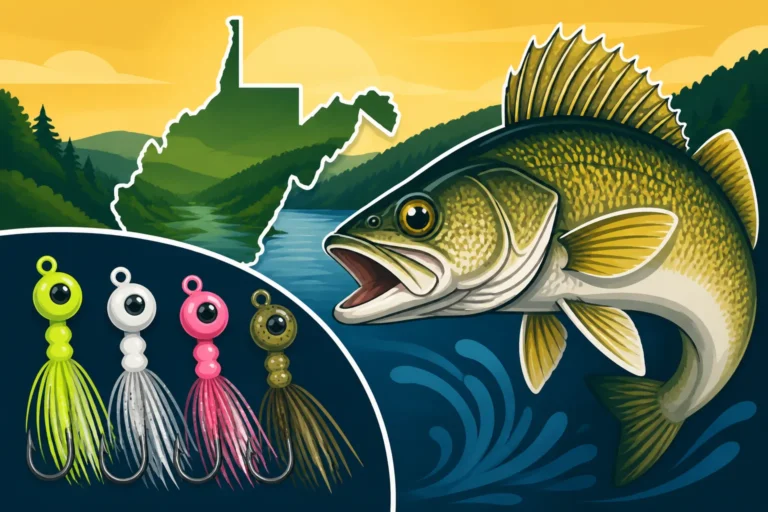
When it comes to color, subtlety is key in clear, cold water. Natural, muted tones tend to outperform flashy or vibrant colors. Think about the forage available to smallmouth in winter: West Virginia Fishing Seasons by Month shows that natural food sources are less abundant and often less colorful. Crayfish, sculpins, and various minnows are typically browns, greens, grays, and blacks. Popular and effective colors for hair jigs include black, brown, olive green, gray, and combinations of these. Sometimes, a touch of chartreuse or orange in the tail can provide a slight accent, but the overall presentation should remain natural. The profile of the jig also matters. You want a compact, baitfish or crayfish-like shape that doesn't look overly aggressive. Many anglers find success with traditional "marabou" jigs or deer hair jigs that have a tapered, natural silhouette. Some jigs might incorporate a small amount of flash material, but it should be minimal and iridescent, not overtly reflective. The goal is to imitate a small, vulnerable creature, not a disco ball. You can find a fantastic selection of these specific colors and profiles from retailers like Bass Pro Shops or even smaller, specialized fly shops online.
Hook Quality: Staying Sticky in the Cold
You might be using lighter line and subtle presentations, but when that cold-water smallmouth finally commits, you need a hook that's up to the task. Cold-water bites are often incredibly light, feeling like nothing more than a slight tick or the sudden weight of a wet sock. When you set the hook, it needs to penetrate quickly and securely. This means opting for hair jigs tied on high-quality, sharp hooks. Look for jigs that feature chemically sharpened hooks or those made from strong, thin wire that can pierce easily. A dull hook will result in missed opportunities and frustration. Furthermore, cold-water smallmouth often have incredibly tough mouths, so a hook with a good barb and stout construction is essential to keep them pinned during the fight. Don't skimp on hook quality to save a few dollars; it's the critical connection between you and that trophy fish. Many popular brands offer jigs with these superior hooks, and it's always worth checking the product descriptions when purchasing.
| Feature | Ideal for Cold Water Smallmouth | Why it Matters |
|---|---|---|
| Weight | 1/8 to 3/8 ounce | Slow, controlled fall mimics dying prey; maintains bottom contact. |
| Color | Black, Brown, Olive, Grey | Natural, muted tones are less intimidating in clear, cold water. |
| Profile | Compact, tapered, baitfish/crayfish | Mimics small, vulnerable forage; less intrusive. |
| Action | Subtle, "breathing" pulse | Hair undulates with minimal movement, triggers lethargic fish. |
| Hook Quality | Sharp, strong, good barb | Ensures solid hooksets on subtle bites and holds fish with tough mouths. |
How to Fish Hair Jigs for Cold Water Smallmouth
Fishing hair jigs for cold-water smallmouth is less about power and speed, and more about finesse, patience, and attention to detail. It's a methodical approach that can be incredibly rewarding once you understand the nuances. Forget what you know about fast retrieves and aggressive jerks; this is a slow dance.
Slow, Deliberate Retrieves: Less is More
The absolute golden rule for fishing hair jigs in cold water is "less is more." Smallmouth bass are not going to chase down a rapidly retrieved bait. Instead, they're looking for an easy meal. Your retrieve should be incredibly slow and deliberate, often involving long pauses. A common technique is to cast your jig out, let it sink all the way to the bottom, and then slowly drag it, hop it, or barely twitch it along the bottom. Imagine a crayfish scuttling slowly or a minnow struggling to swim. After a subtle movement of your rod tip—perhaps a 6-12 inch pull or a gentle lift—let the jig settle back to the bottom. The magic often happens on the fall or during the pause, as the hair slowly expands and contracts. Sometimes, simply letting the current impart action is enough. It requires immense patience, and you'll often go several minutes between movements, but it's this natural, unhurried presentation that often triggers the strike. Remember that cold water means less oxygen and slower metabolic rates for fish; they aren't going to exert themselves for a meal. This subtle approach matches their energy level. For more on how water temperature affects fish behavior, check out Best water temperature for smallmouth bass fishing.
Targeting Wintering Holes and Transition Areas
Finding cold-water smallmouth is half the battle, and once you've located them, the hair jig is your best tool for drawing a strike. Smallmouth in winter will typically congregate in deeper holes, often near significant structure like rock piles, boulders, submerged timber, or bluff walls. These areas offer stability from current, deeper water for thermal refuge, and nearby cover. Look for the deepest pools in rivers, or main lake points and steep drops in reservoirs. Best Fishing Rivers in West Virginia and Best Fishing Lakes in West Virginia can give you an idea of where to start your search for these deep pockets. Beyond the deepest parts, pay close attention to transition areas – where a deep flat meets a drop-off, or where current slows significantly near a rock wall. Smallmouth will often stage on these edges, ready to ambush whatever drifts by. Vertical jigging directly into these holes can be incredibly effective. Get your boat or kayak positioned directly over the structure, drop the jig down, and work it slowly, paying close attention to your electronics to mark fish. Sometimes, they'll be belly-to-the-bottom, almost invisible until you drop a tempting hair jig right on their nose.
Bite Detection and Hooksets: The Finesse Game
Cold-water smallmouth bites are notoriously subtle. You won't often feel a violent tug or a rod-bending strike. Instead, it might be a slight "tick," a mushy feeling, or simply the line going slack when it should be tight. Sometimes, it just feels like your jig got a little heavier, or like you snagged a piece of moss that then moves. Because these bites are so light, every single anomaly should be treated as a fish. Maintain constant, yet light, tension on your line so you can detect these faint signals. Using a sensitive rod is absolutely crucial here; we'll talk more about gear in the next section. When you feel something, anything, make a gentle but firm sweep set rather than a powerful jerk. Too much force can pull the light hook out of the fish's mouth or break lighter line. The smallmouth will often just "mouth" the jig or inhale it cautiously, so that quick, subtle sweep set is usually all you need to drive the hook home. It takes practice and a lot of patience, but mastering this finesse bite detection is key to consistently catching cold-water smallmouth on hair jigs.
Choosing the Right Gear for Hair Jig Fishing
Your gear setup can make or break your success when fishing hair jigs for cold-water smallmouth. The delicate nature of the presentation and the subtle bites demand specific rod, reel, and line choices that maximize sensitivity and control.
Rod, Reel, and Line Setup: Sensitivity is Key
For cold-water hair jig fishing, sensitivity is paramount. You need to feel every subtle change on the bottom and every faint bite. This means opting for a spinning rod setup, which generally offers more finesse and lighter line capabilities than baitcasting gear.
- Rod: Look for a medium-light to medium power rod, typically 6'6" to 7'6" in length, with a fast or extra-fast action. The fast tip allows for precise jig manipulation and telegraphs even the lightest bites, while the moderate power helps cushion those subtle hooksets and fights. A high-modulus graphite rod will provide the best sensitivity. Many anglers swear by specific rods known for their backbone and sensitivity. A good quality rod is an investment worth making for this technique. You can find excellent options suitable for this from retailers like Bass Pro Shops or even smaller specialized online tackle stores that focus on finesse fishing. For more on general rod selection, see Best Spinning Rods for Smallmouth Bass.
- Reel: Pair your sensitive rod with a high-quality spinning reel in the 2000-3000 size range. Smooth drag is crucial, as you'll likely be using lighter line, and a steady retrieve will help you maintain contact with the jig.
- Line: This is where things get interesting. Many anglers prefer a braided main line (6-10 lb test) for its incredible sensitivity and lack of stretch, which helps detect those light bites. However, braid is visible in clear water, so you'll need a fluorocarbon leader (6-10 lb test) of about 6-10 feet, tied on with a strong knot like an FG or Alberto knot. Fluorocarbon is nearly invisible underwater and has excellent abrasion resistance, which is important when dragging jigs over rocky bottoms. Alternatively, some anglers prefer to spool up entirely with a high-quality, low-stretch fluorocarbon line for the ultimate in stealth and sensitivity. Whichever you choose, ensure your line is fresh and free of nicks.
The Importance of Electronics: Seeing What You Can't Feel
While hair jig fishing is a "feel" game, modern electronics can be an invaluable asset, especially when locating fish in deep wintering holes. A good fish finder, particularly one with down imaging or side imaging capabilities, can reveal the precise contours of the bottom, identify key structures like isolated boulders or submerged timber, and most importantly, mark individual fish. Best Fish Finders for West Virginia Lakes provides a good overview of options.
When targeting smallmouth with hair jigs, your fish finder helps you:
- Locate Depth and Structure: Identify those deep rock piles, ledges, and creek channels where smallmouth will congregate.
- Mark Fish: Directly see schools of fish or individual fish holding tight to the bottom. This allows you to drop your hair jig right on their heads, increasing your chances significantly. Sometimes a smallmouth will be so tight to the bottom they just look like a bump, so don't be afraid to drop on those anomalies.
- Gauge Bottom Composition: Differentiate between soft mud, hard rock, or gravel, which can often indicate prime smallmouth habitat.
- Monitor Bait Presentation: With practice, you can even see your jig on the screen as it falls and interacts with the bottom, helping you refine your retrieve and ensure it's in the strike zone.
Having reliable electronics on your boat or kayak can dramatically reduce the time spent searching and significantly increase your fishing efficiency, making your cold-water outings more productive and less of a guessing game. Even simple portable units available on Amazon can offer a significant advantage for bank or kayak anglers.
Final Thoughts on Mastering the Cold Water Hair Jig
Fishing for cold-water smallmouth bass with hair jigs is a testament to patience and precision. It's a technique that rewards the thoughtful angler who understands the subtle cues of both the fish and the presentation. There will be days when it feels like you're just dragging a piece of string through the water, but the reward of feeling that faint "tick" and then battling a feisty winter bronzeback is truly something special. Remember to embrace the slow approach, trust your sensitive gear, and pay close attention to your surroundings, both above and below the water. The hair jig isn't always the easiest bait to fish, but it is undeniably one of the most effective tools in your arsenal when the temperatures plummet and you're chasing those elusive West Virginia smallmouth. So bundle up, grab your hair jigs, and get ready for a different kind of fishing challenge.
Disclaimer
This article is for general informational purposes only and does not constitute professional advice. Laws, prices and regulations vary by location and change over time. Consult a qualified professional for guidance on your specific situation.