Best water temperature for smallmouth bass fishing
For any angler chasing the feisty smallmouth bass in West Virginia, few things are as frustrating as showing up at your favorite river or lake, casting your heart out, and coming up empty-handed. You've got the right lures, the perfect rod, and the enthusiasm, but sometimes, it just doesn't click. Often, the missing piece of the puzzle isn't your technique, but the water temperature – an invisible factor that dictates everything a smallmouth does. This guide will dive deep into how water temperature influences smallmouth bass, helping you understand their behavior and where to find them, no matter the season, here in the Mountain State.
Understanding Smallmouth Bass Metabolism and Water Temperature
Smallmouth bass, like all fish, are cold-blooded creatures. This means their body temperature directly mirrors the water around them, and this temperature profoundly impacts their metabolism, energy levels, and overall activity. It's not just a number on a gauge; it's the fundamental driver of their day-to-day existence and, crucially, their willingness to bite your line. If you can grasp this concept, you're already a huge step ahead of most anglers.
The Ideal Temperature Range
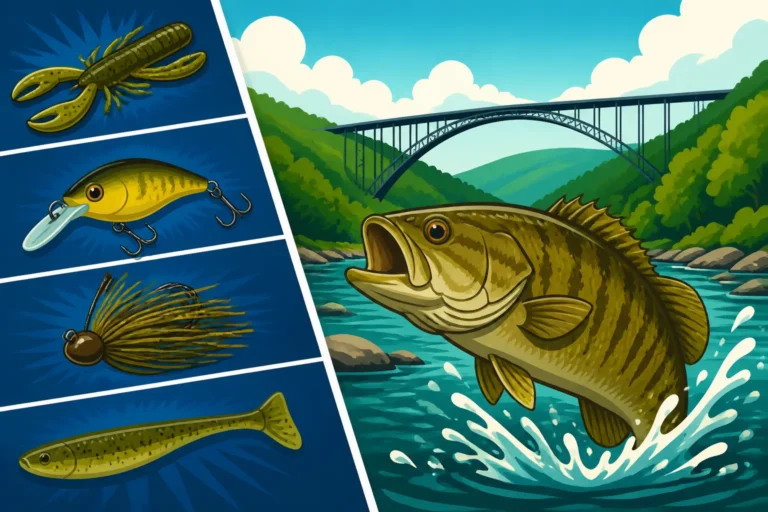
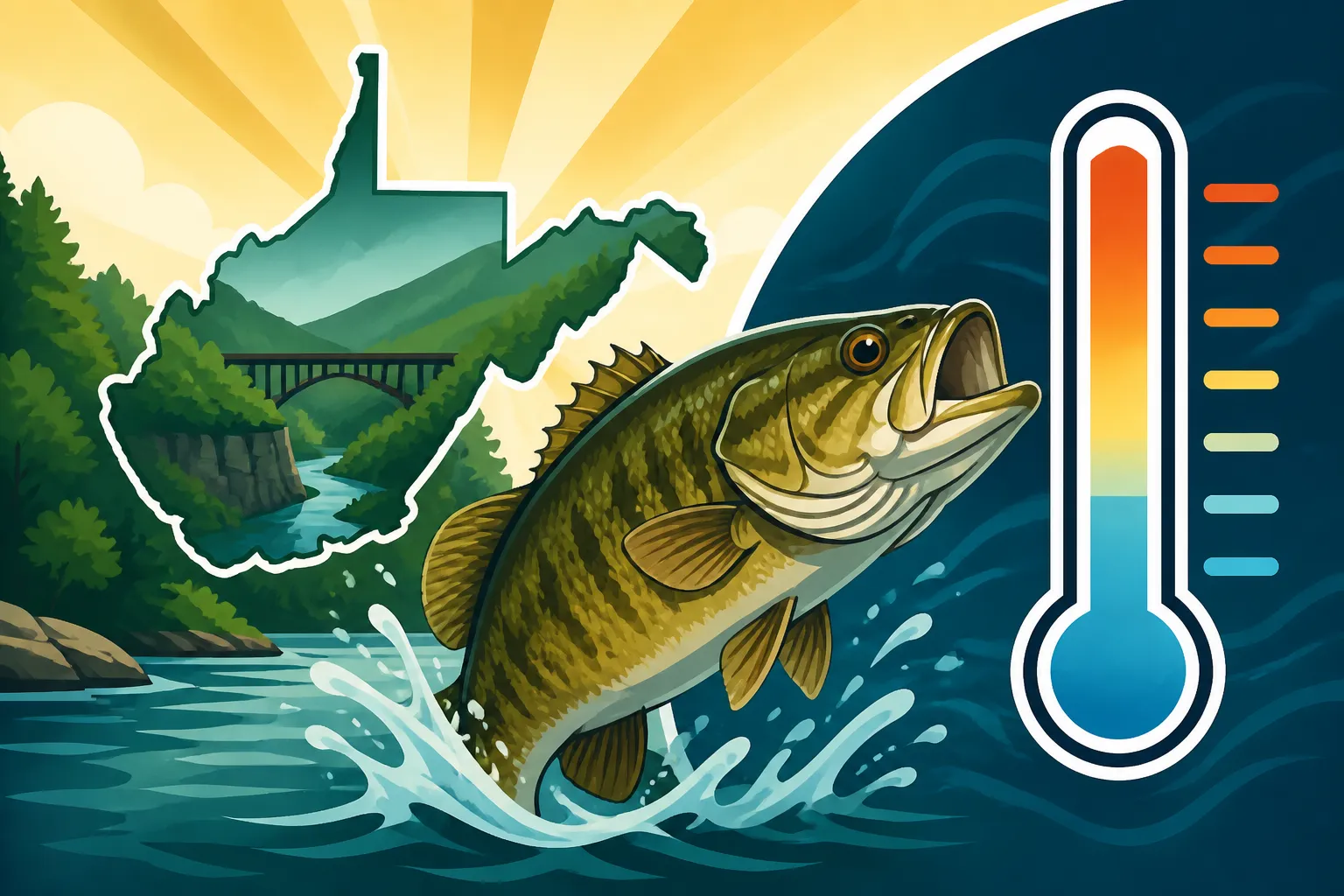
Smallmouth bass thrive within a specific temperature window where they are most active and comfortable. This "sweet spot" is where their metabolism is running efficiently, they're digesting food well, and they have plenty of energy for hunting and spawning. Generally, smallmouth bass are most active and feed aggressively when water temperatures range from about 55 to 70 degrees Fahrenheit. Below or above this range, their activity levels can drop significantly, making them harder to find and entice. Think of it like us humans; we have a comfortable temperature range where we're most productive, and fish are no different. It’s during these prime conditions that you'll often find the most consistent action, whether you're targeting them on the New River or in one of our many reservoirs.
How Temperature Affects Behavior
Beyond just general activity, water temperature dictates almost every aspect of a smallmouth's behavior. When waters are cold, say below 45-50 degrees Fahrenheit, their metabolism slows way down. They become sluggish, move less, and often congregate in deeper, more stable areas where the temperature is slightly warmer or less prone to fluctuation. They might only feed sporadically, making quick, opportunistic strikes rather than aggressive chases.
Conversely, when water temperatures climb too high, generally above 75 degrees Fahrenheit, smallmouth can become stressed. They might seek out cooler, oxygen-rich pockets, like spring inflows, deeper thermoclines, or the shade of overhanging trees and submerged structures. Their feeding can again become sporadic, or they might prefer low-light conditions to avoid the heat. Within that ideal 55-70 degree range, however, they're aggressive, roaming, and actively hunting baitfish and crawfish, making them much more predictable for anglers. Understanding these nuances is key to knowing how to Catch Smallmouth Bass in West Virginia Rivers throughout the year.
Seasonal Water Temperature Patterns and Smallmouth Bass Movement in West Virginia
West Virginia's diverse waterways, from the fast-flowing New River to the sprawling Summersville Lake, all experience distinct seasonal temperature shifts. Knowing what to expect as the year progresses is absolutely vital for consistently finding smallmouth bass. Each season brings a new set of challenges and opportunities, and the smallmouth's response to changing water temperatures is your most reliable clue for success.
Spring: Warming Waters and the Pre-Spawn/Spawn
As winter's grip loosens and spring arrives in West Virginia, water temperatures begin their slow, steady climb. This is arguably one of the most exciting times to target smallmouth bass. Once water temperatures hit the mid-40s to low-50s Fahrenheit, smallmouth start to become more active. They'll move out of their deep wintering holes and begin migrating towards shallower staging areas, driven by the urge to feed and prepare for spawning. This pre-spawn period is when they're packing on weight, and often feeding aggressively, especially on baits that mimic crawfish or larger baitfish. You might find them congregating in areas with a bit of current, rock outcroppings, or submerged timber that offers ambush points.
The true magic happens when water temperatures climb into the 55-65 degree Fahrenheit range – this is prime spawning territory. Smallmouth will move onto shallower flats, gravel beds, and protected coves to build their nests. During this period, while they are focused on reproduction, they can be highly protective of their beds, often striking at anything that comes too close. However, it's important to remember that during the spawn, fish are vulnerable, and responsible angling means minimizing disturbance to ensure future populations. You can find more details on general seasonal patterns in our guide on West Virginia Fishing Seasons by Month.
Summer: Peak Activity and Thermoclines
Summer brings the warmest water temperatures, and in West Virginia, this means consistent smallmouth action, but with some caveats. Early summer, especially when water temperatures are still in the 65-72 degree range, can offer some of the Best Smallmouth Bass Fishing in West Virginia. The fish are fully active, chasing down topwater lures at dawn and dusk, and readily striking a variety of presentations throughout the day. They'll be spread out across their habitats, using current breaks, rock piles, and submerged vegetation as ambush points.
As summer progresses and water temperatures push into the mid-70s and even higher, especially in shallower lakes and slower river sections, smallmouth will often seek refuge. This is where understanding thermoclines becomes crucial in deeper reservoirs. A thermocline is a distinct layer within a body of water where temperature changes rapidly with depth. Above it, the water is warm and well-oxygenated. Below it, the water is colder and often oxygen-depleted. Smallmouth will often suspend or hold just above or within the cooler, oxygenated water of the thermocline. In rivers like the New River, they might tuck into deeper pools, seek out shade, or gravitate towards areas with cooler spring feeds. This is a time when understanding deep structure is paramount; you can learn more about how to fish deep structure for summer walleye, a lot of which applies to bass too.
Fall: Cooling Down and Feeding Frenzies
When the days shorten and air temperatures begin to cool, West Virginia's waterways follow suit, signaling another fantastic time for smallmouth bass fishing. As water temperatures drop from the mid-70s into the 60s and 50s, smallmouth bass enter a fall feeding frenzy. They know winter is coming, and they need to bulk up. This period sees them becoming incredibly aggressive, often actively chasing down larger baits as they try to consume as many calories as possible.
They'll often be found shallower than in summer, chasing baitfish in the backs of creeks or along rocky points and flats. This is a prime time for throwing crankbaits, spinnerbaits, and swimbaits that mimic fleeing forage. The fish are often schooled up, so when you find one, you're likely to find more. Knowing the Best Lure Retrieve Speed for Smallmouth in Fall can make all the difference during this productive season. As temperatures dip into the low 50s, their activity will start to slow, but they'll still be feeding, just perhaps a bit more predictably in deeper staging areas near wintering grounds.
Winter: Slow and Deep
Winter fishing for smallmouth in West Virginia can be challenging but incredibly rewarding for those who brave the cold. Once water temperatures consistently fall below 45-50 degrees Fahrenheit, smallmouth bass activity dramatically decreases. Their metabolism slows to a crawl, and they typically retreat to the deepest, most stable parts of their environment. This could mean deep pools in rivers, the deepest sections of reservoirs, or areas with large rock formations that offer thermal stability.
During winter, smallmouth don't move much, and their feeding windows are short and infrequent. They'll typically hold tight to cover and are much less likely to chase. Your approach needs to change dramatically, focusing on slow, subtle presentations right on their nose. Jigs, finesse worms, and slow-moving spoons are often effective. It’s a game of patience and precision, but catching a big winter smallmouth is a true accomplishment.
Here's a quick look at how water temperature generally affects smallmouth behavior:
| Water Temperature Range (Fahrenheit) | Smallmouth Behavior & Location | Recommended Lures/Techniques |
|---|---|---|
| Below 40° | Extremely sluggish, very deep, minimal feeding. | Vertical jigs, slow-fished finesse baits on bottom. |
| 40-49° | Sluggish, deep holes, seeking stable temps. | Jigs, slow-rolled spinnerbaits, blade baits, subtle presentations. |
| 50-54° (Early Spring) | Increased activity, moving shallower to staging areas. Pre-spawn. | Jerkbaits, crankbaits (slow retrieve), jigs, tubes. |
| 55-65° (Prime Spawn) | Highly active, moving to shallower spawning beds, very aggressive/protective. | Jigs, tubes, small swimbaits, creature baits, some topwater. |
| 66-70° (Post-Spawn/Early Summer) | Recovering, highly active, feeding aggressively. | Topwater, crankbaits, spinnerbaits, soft plastics, virtually anything. |
| 71-75° (Mid-Summer) | Active, but may seek cooler deeper water or shade during heat of day. | Drop shots, deep crankbaits, jigs, topwater (early/late). |
| 76°+ (Late Summer) | Stressed, seeking oxygenated cooler water, nocturnal feeding. | Night fishing, deep structure, finesse baits. |
Practical Tips for Measuring Water Temperature and Adjusting Your Approach
Knowing what the ideal temperatures are is one thing, but actually getting accurate readings and then applying that knowledge on the water is where the rubber meets the road. It's not just about looking at a single number; it's about understanding the context of that temperature and how it fits into the broader seasonal pattern and even daily fluctuations.
Tools for Accurate Temperature Readings
Gone are the days of guessing. Modern anglers have several excellent tools at their disposal to get precise water temperature readings.
- Handheld Digital Thermometers: These are perhaps the simplest and most accessible tools. You can find reliable waterproof models, often available on Amazon, that give you a quick, accurate reading. Simply submerge the probe into the water for a minute or two, and you'll get your temperature. Some even come with a clip to attach to your vest or tackle bag. This is particularly useful for wading in smaller streams or when you want to check different depths from a boat.
- Boat-Mounted Fish Finders/Sonar: Many modern fish finders, even entry-level models, come with a built-in temperature sensor on the transducer. This provides real-time surface temperature readings as you move. Higher-end units can even give you temperature profiles at different depths, which is invaluable for finding those summer thermoclines in lakes like Summersville Lake. Brands like Garmin and Humminbird offer excellent options.
- Wading Thermometers: Specifically designed for stream anglers, these robust thermometers often have a protective casing and a lanyard. They're perfect for quickly checking the temperature of different runs, pools, or tributaries while you're focused on Fly Fishing for Trout in West Virginia, as trout also have specific temperature preferences.
Always make sure your thermometer is calibrated and giving accurate readings. A few degrees off can make a huge difference in how you approach your fishing.
Interpreting the Data and Adapting Your Lures
Getting a temperature reading is just the first step. The real skill comes in interpreting what that number means for the smallmouth bass at that exact moment and then adjusting your strategy accordingly.
If you're in that prime 55-70 degree window, you can often be more aggressive with your presentations. Try faster retrieves with crankbaits or spinnerbaits, or experiment with topwater lures, especially during low light. Fish are actively hunting, so they're more likely to chase. This is when a diverse tackle box, perhaps stocked with some of the Best Baits for Smallmouth Bass on the New River, really shines.
When temperatures are colder (below 50 degrees), it's time to slow down. Think finesse. Use jigs or soft plastics on lighter line, and work them painfully slow along the bottom or near deep cover. The fish won't chase, so you need to put the bait right in front of them and give them plenty of time to react. Consider using darker, more natural colors that don't spook sluggish fish.
Conversely, if the water is very warm (above 75 degrees), you'll want to focus on early morning, late evening, or night fishing. During the day, seek out deeper water, shade, or areas with current and cooler inflows. Downsize your lures, use subtle presentations like a drop shot, and target areas where fish are likely seeking refuge. You might even find them tucked into pockets where cooler spring water enters the main river system.
Understanding water temperature empowers you to make informed decisions, whether it's choosing the right depth, the right retrieve speed, or even deciding which section of a river or lake to focus on. It takes the guesswork out of the equation and replaces it with a strategic approach, increasing your chances of a successful day chasing West Virginia smallmouth bass. For those looking at equipment specifics, knowing the Best Rod Length for New River Smallmouth Bass can also factor into how you present baits across different temperature ranges.
Disclaimer
Fishing conditions and regulations in West Virginia can change. Always consult the latest West Virginia Division of Natural Resources fishing regulations before heading out on the water. This information is for general guidance only.