Best used boat to buy for river fishing
Finding the perfect used boat for navigating West Virginia's incredibly diverse rivers can feel like trying to solve a puzzle with a thousand pieces. From the swift, rocky currents of the New River to the broad, slow stretches of the Ohio, our waterways demand different things from a vessel, and nobody wants to sink their hard-earned cash into a boat that just isn't up to the task or constantly needs repairs. This guide is here to simplify that search, helping you understand which used boats are best suited for our Mountaineer state's fishing adventures and precisely what to scrutinize before you hand over your money.
Decoding West Virginia's Diverse River Landscape
Before you even start dreaming about specific boat models, you need to think about where you plan to do most of your fishing here in West Virginia. Our rivers aren't all created equal, and what works perfectly on one might be a nightmare on another. Understanding these differences is absolutely critical for choosing the right used boat.
The Riffles, Rapids, and Rocky Bottoms
Many of West Virginia's most iconic fishing rivers, like the upper New River, sections of the Greenbrier, or some of our smaller mountain streams, are defined by their challenging character. We're talking about stretches with significant current, shallow riffles, hidden rock gardens, and occasional rapids that can chew up an unprepared hull in a heartbeat. For these waters, maneuverability and a shallow draft are king. You need a boat that can skim over obstacles, turn on a dime, and take a beating from time to time without springing a leak. A deep V-hull designed for big lakes will be constantly getting hung up, frustrating your fishing trip and potentially causing serious damage.
Think about those moments when you're drifting downriver, casting to a promising seam, and suddenly the water shallows out faster than you expected. A boat with too deep a hull or an exposed propeller can quickly become a liability, leaving you stranded or worse. The ability to navigate these unpredictable environments is paramount. This often means looking for boats that are lighter, have flatter bottoms or modified V-hulls, and are designed to shrug off impacts with submerged rocks.
Wider, Slower Moving Rivers and Pools
On the flip side, West Virginia also boasts numerous wider rivers and expansive pool sections where the current is much gentler, or even almost non-existent. The Kanawha River, the lower stretches of the Ohio River, or larger reservoirs that feed into river systems (like Bluestone Lake on the New River) often feature long, calm stretches that require different considerations. Here, stability becomes a more prominent factor, especially if you plan to stand and cast, bring multiple anglers, or carry a good amount of gear. You might also want more room to spread out, a higher freeboard to handle boat wakes from other traffic, and the capability for a larger, more powerful motor to cover greater distances efficiently.
In these slower-moving, wider areas, speed might come into play more. If you're covering many miles between fishing spots, a boat that can plane out and move at a decent clip will save you a lot of time and fuel. Comfort also plays a bigger role; longer fishing days on calm water make you appreciate a stable platform that doesn't feel tippy every time someone shifts their weight. While still needing to be rugged, these sections generally pose less immediate threat to a boat's hull from sudden, unseen impacts compared to the rock-strewn upstream sections.
Navigating Tailwaters and Impoundments
Don't forget the unique challenges and opportunities presented by tailwaters below dams or the impoundments themselves. Rivers like the Elk River below Sutton Dam or the Tygart Valley River below Tygart Lake Dam can have highly variable flows depending on power generation schedules. One minute it's a placid stream, the next it's a raging torrent. Your boat needs to be able to handle these rapid changes in water level and current. Stability is key for anchoring in strong currents, and a powerful, reliable motor is crucial for maneuvering safely.
On the flip side, fishing larger impoundments like Summersville Lake or Stonewall Jackson Lake (which are essentially wide river sections or reservoirs) often means dealing with significant wind chop and open water. For these areas, a boat that offers a smoother, drier ride in rougher conditions will be appreciated. While the focus here is "river fishing," many anglers will transition between river and lake-like conditions, making versatility a valuable trait. Understanding the specific characteristics of these tailwaters – the depths, the potential for debris, and the current speeds – will help narrow down your choice to a vessel that won't leave you feeling under-gunned or overmatched.
Top Contenders: Used Boats for West Virginia Rivers
Now that we've thought about where you'll be fishing, let's dive into the types of used boats that truly shine on West Virginia's rivers. You'll quickly see that there's no single "best" boat, but rather a few strong contenders each with their own unique strengths and weaknesses.
The Ubiquitous Aluminum Jon Boat
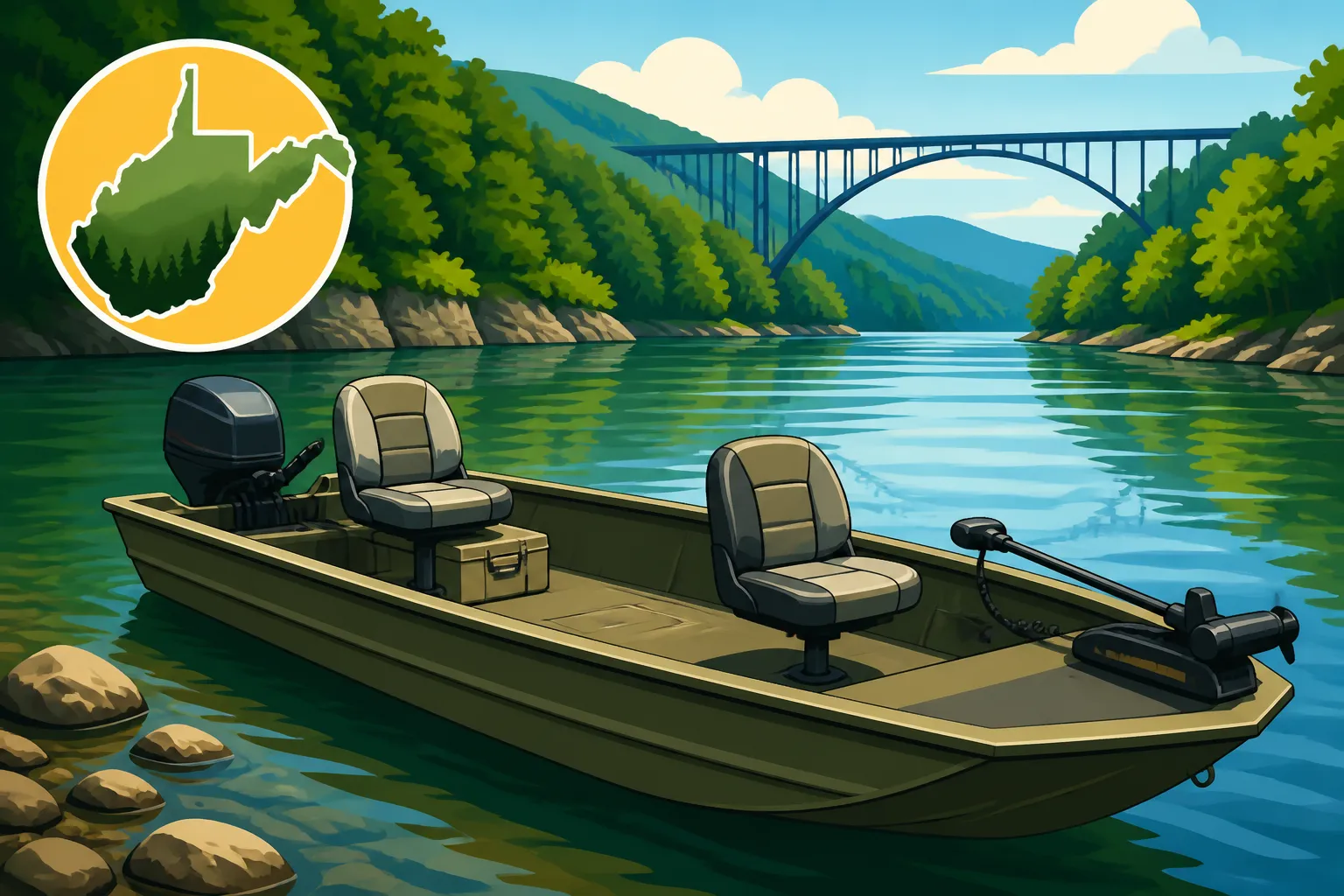
Ah, the trusty aluminum jon boat. If there's one boat that embodies the spirit of river fishing in West Virginia, it's often this workhorse. These flat-bottomed or slightly modified V-hull boats are incredibly popular for a reason: they are often affordable, incredibly durable, and built to take a beating. Their flat bottom allows them to float in remarkably shallow water, letting you access skinny backwaters and glide over riffles where other boats would certainly get stuck. This shallow draft is a huge advantage on many of our rivers, preventing constant headaches from submerged rocks.
Jon boats are also relatively lightweight, making them easier to launch and retrieve, even at primitive access points. They are generally stable enough for standing to cast, especially in calmer water, and their open interior design offers plenty of space for gear, coolers, and extra passengers. You can find them in various lengths, from small 10-footers perfect for solo missions on smaller creeks to larger 16-18 foot models that can handle bigger water and heavier loads. Just remember, while their flat bottom excels in shallow water, it can also lead to a bouncier, wetter ride when you encounter choppy water or larger boat wakes. When looking for a used jon boat, pay close attention to the welds and rivets, as these are common points of wear and tear or potential leaks on older models. Best Jon Boats for Shallow Rivers provides even more detail on these versatile vessels.
The Versatile Small Aluminum V-Hull
Stepping up from the basic jon boat, you'll often find small aluminum V-hull boats, sometimes referred to as utility boats or deep-V fishing boats. These boats offer a compromise between the shallow-water capabilities of a jon boat and the smoother ride of a deeper-V lake boat. Their V-shaped bow slices through chop more effectively, providing a drier and more comfortable ride, especially on wider rivers like the Kanawha or when crossing a breezy impoundment. The V-hull also offers better tracking in strong currents and superior stability in rougher conditions compared to a flat-bottomed jon boat.
While they won't float in quite as shallow water as a true jon boat, many smaller V-hulls (think 14-16 feet) still have a relatively shallow draft that makes them perfectly suitable for many West Virginia rivers. They often come with slightly more creature comforts than a barebones jon boat, such as built-in seating, storage compartments, and even casting decks. When searching for a used model, inspect the transom carefully, as this area takes a lot of stress from the motor. These boats are excellent all-around performers for anglers who fish a mix of river types, offering a good blend of ruggedness and comfort.
The Niche but Nimble Drift Boat
For a specific type of river fishing, particularly fly fishing or float fishing for trout and smallmouth bass on moderate-to-fast flowing rivers, a drift boat is a truly exceptional tool. These boats are designed for incredible maneuverability and precise boat control in moving water, allowing anglers to hold position, pivot, and navigate complex currents with ease. They are typically wider in the beam, very stable, and feature high sides to handle waves and keep occupants dry. The distinctive rocker in their hull (a curved bottom) helps them spin and turn quickly.
Drift boats are almost always propelled by oars, though some can accommodate a small kicker motor for moving across still pools or for safety. They are not built for speed or covering long distances under power, but rather for a controlled, deliberate drift down a river, presenting baits or flies to prime holding water. While less versatile for lake fishing or very shallow, rocky stretches, for the dedicated river angler focusing on a specific style of fishing, a used drift boat can be an absolute game-changer. They hold their value well, but their specialized nature means they might be harder to find on the used market than jon boats or V-hulls. When you do find one, examine the hull for major repairs or structural damage, as they are often put through demanding conditions.
Considerations for Canoes and Kayaks
While our primary focus here is on "boats," it's worth a quick mention that for many West Virginia river scenarios, a fishing kayak or canoe can be an incredibly effective and cost-efficient alternative to a traditional motorized boat. For solo anglers or pairs looking to fish smaller streams, navigate tight channels, or access remote areas that larger boats simply cannot reach, a sturdy fishing kayak or canoe might be the ideal choice. Many modern fishing kayaks offer excellent stability, storage, and even pedal drives for hands-free propulsion.
They are often easier to transport, launch, and retrieve than traditional boats, requiring less horsepower and often less maintenance. Of course, they come with limitations in terms of capacity, protection from the elements, and speed on larger bodies of water. However, for a truly intimate river fishing experience, don't overlook the potential of a used fishing kayak. You can find out more in our guide on Best Kayaks for West Virginia Fishing.
What to Scrutinize When Buying a Used River Boat
Once you've zeroed in on the type of boat that fits your West Virginia river adventures, the real work begins: inspecting potential used boats. This is where you need to put on your detective hat and be thorough. A quick glance is not enough; you're looking for hidden problems that could turn your dream boat into a money pit.
Hull Integrity: Your Boat's Foundation
The hull is the most critical part of any boat, especially one destined for rocky West Virginia rivers. Start by giving the entire hull, inside and out, a very close inspection. Look for significant dents, deep gouges, or signs of stress cracks, particularly around the transom, keel, and any major bends or chines. Aluminum boats are tough, but repeated impacts can cause fatigue. Check for any patch jobs, especially on the bottom. While a small, well-done patch isn't necessarily a dealbreaker, a series of crude repairs might indicate a boat that's been severely abused.
Pay extremely close attention to the transom, which is the flat surface at the back where the outboard motor attaches. On older boats, especially those made with wood core transoms (less common in small aluminum boats but still possible), look for soft spots, rotting, or evidence of water intrusion. Push on it firmly. If it feels spongy, walk away. A failing transom is a very expensive repair. Also, inspect all rivets or welds thoroughly. Leaking rivets are a common issue on older aluminum boats, and while some can be fixed, widespread leakage can be a nightmare. Imagine pulling your new-to-you boat out of the water after a long day on the New River, only to find it's taken on a worrying amount of water – not ideal!
Motor Matters: Outboard Health
For most river boats, the outboard motor is its heart. This is often the most expensive component to repair or replace, so a thorough inspection is crucial. If possible, insist on hearing the motor run, ideally in a test tank or on the water. Listen for unusual noises, rough idling, or excessive smoke. Check the propeller for dings, bends, or missing pieces, which can indicate rough use. Inspect the lower unit for leaks around the propeller shaft or prop hub, which could signal seal issues.
Take the cowling off and look at the powerhead. Does it look relatively clean, or is it covered in oil, corrosion, or old fuel stains? Check the spark plugs for proper color (tan/brown is good, black/oily is bad). Most importantly, if you're serious about a motor, have a qualified marine mechanic perform a compression test. This simple test can reveal a lot about the engine's internal health. Low or uneven compression across cylinders is a major red flag. Buying a used boat with a healthy hull but a dying motor is like buying a beautiful car with a blown engine. While sites like Bass Pro Shops or Amazon offer some DIY motor parts, major repairs require professional expertise, and costs can quickly escalate.
Trailer Troubles and Triumphs
It's easy to overlook the trailer, but for a river boat, it's just as important as the boat itself. You'll be launching and retrieving at various ramps, sometimes in less-than-ideal conditions, so a reliable trailer is non-negotiable. Start by checking the tires – not just for tread depth, but for dry rot, cracks, and proper inflation. Don't forget the spare! Test all the lights; often, wiring issues are easily fixable but can be a safety hazard.
Crucially, inspect the wheel bearings. Grab each wheel and try to wiggle it back and forth and up and down. Any play or clunking sounds could indicate worn bearings that need immediate replacement, a common failure point that can leave you stranded roadside. Check the frame for rust, especially at welded joints. Look at the bunks or rollers that support the boat; they should be in good condition and properly adjusted. A winch and hitch coupler should operate smoothly. Remember, a cheap boat with a bad trailer is still a bad deal because you'll immediately incur the cost of a new or extensively repaired trailer. West Virginia Boat Registration Requirements also apply to trailers, so ensure all necessary paperwork is in order.
Electrical and Accessories Check
While usually less critical than the hull or motor, the electrical system and accessories can still add up to unexpected costs. Test all lights (nav lights, anchor light, interior lights). Ensure the bilge pump works; this is a critical safety item. Check the condition of the battery and its connections – corrosion is a bad sign. If there's a fish finder or other electronics, test them if possible. Often, older units might not be worth much, but a good modern unit can be a bonus.
Look at any installed rod holders, anchor systems, or seating. Are they securely mounted? Are there any obvious signs of shoddy wiring or modifications that could cause problems down the line? It's okay if some accessories are missing or need replacing; these are often easy upgrades. However, a boat with a tangled mess of wiring or non-functional safety components indicates a lack of care by the previous owner.
Safety Gear and Documentation
Finally, always ask about the included safety gear. While you'll want your own, having some of the basics like life jackets, a fire extinguisher, a paddle, and a throw cushion can save you from immediate purchases. Remember, Life Jacket Requirements for West Virginia Boaters are strict, especially for children, so ensure you have enough properly sized vests for everyone on board.
Equally important is the documentation. Ensure the seller has a clear title for the boat and the motor (if separate) and proof of registration. Verify the Hull Identification Number (HIN) on the boat matches the title. If buying from a private seller, a bill of sale is essential. Without proper documentation, you could run into major headaches when trying to register the boat in your name. Knowing the West Virginia Boating Laws for Anglers is also your responsibility as a new boat owner.
| Component | What to Look For (Inspection Points) | Red Flags |
|---|---|---|
| Hull | Dents, gouges, scratches, signs of previous repairs, condition of rivets/welds, transom integrity (firmness, rot) | Soft/spongy transom, widespread leaks, major structural cracks, crude/repeated patches |
| Motor | Starts easily, idles smoothly, runs without excessive smoke/noise, propeller condition, lower unit seals (no oil leaks), compression test results | Hard starting, rough idle, excessive smoke, knocking, oil leaks, damaged prop, low/uneven compression |
| Trailer | Tire condition (tread, dry rot), working lights, wheel bearing play, frame rust, bunk/roller condition, winch/coupler function | Severely rusted frame, seized bearings, non-working lights, deeply cracked tires |
| Electrical | All lights (nav, anchor, interior) function, bilge pump works, battery condition, clean wiring, functional electronics | Dead battery, corroded terminals, tangled/exposed wiring, non-functional bilge pump |
| Safety | Required life jackets (proper size/condition), fire extinguisher, paddle, horn, throwable device | Missing essential safety gear, expired extinguisher, damaged life jackets |
| Documents | Clear title (boat & motor), current registration, matching HIN, bill of sale | Missing titles, mismatched HIN, previous owner liens, expired registration |
Budgeting Beyond the Purchase Price
It's a common rookie mistake to focus solely on the sticker price of a used boat. But the truth is, the initial purchase is just the beginning of your investment. There are several ongoing and immediate costs you need to factor into your budget to truly enjoy your new-to-you river boat in West Virginia.
Registration, Licensing, and Insurance
First and foremost, that boat needs to be legal! In West Virginia, almost all motorized boats, and even some non-motorized vessels over a certain length, require registration with the state DNR. This involves fees, which can vary based on boat length and type. You'll need to submit the proper paperwork, including the title you received from the seller. Don't forget the trailer, either; it will also need to be registered and licensed for road use. West Virginia Boat Registration Requirements outlines all the specifics, and you'll want to be familiar with the West Virginia Boat Registration Renewal Period to avoid any lapses.
Beyond registration, consider boat insurance. While not always legally required for smaller vessels, it's a wise investment, especially given the potential for unexpected damage on rocky rivers or theft. Insurance can protect your investment, cover liability in case of an accident, and give you peace of mind. Get a few quotes before you buy to understand these ongoing costs. And just a quick note, for smaller craft, you might wonder Are Kayaks Required to Be Registered in West Virginia?, which is a different set of rules entirely.
Maintenance and Unexpected Repairs
A used boat, by its very nature, will likely require more maintenance than a brand-new one. Even a well-maintained older boat will need regular oil changes for the motor, fuel filters, spark plug replacements, and winterization if you're storing it for the colder months. These routine tasks are essential for keeping your outboard running smoothly. Factor in the cost of fuel for your outings – those trips up and down the river add up!
Then there are the unexpected repairs. A propeller might strike a hidden rock, a bearing on the trailer could go bad, or a minor leak might develop. Having a contingency fund for these "oops" moments is crucial. While you can find many common parts on sites like Amazon or at local Bass Pro Shops, the cost of specialized marine components or professional labor can quickly eat into your fishing budget. It’s always better to over-budget slightly for maintenance and repairs than to be caught off guard.
Essential Upgrades and Gear
Finally, don't forget the gear! While the used boat might come with some basics, you'll undoubtedly want to personalize it and add essential fishing tools. This could include a reliable fish finder to locate structure and fish (check out Best Fish Finders for West Virginia Lakes), a good anchor system appropriate for river currents (different from a lake anchor!), additional rod holders, a comfortable seat cushion, or a cooler.
You'll also need to ensure you have all the necessary safety equipment that might not have been included with the boat, such as extra life jackets, a first-aid kit, and a whistle or horn. While these aren't always immediate purchases, they should be part of your overall budget consideration. Building out your ideal setup might involve a few trips to local tackle shops or browsing reputable online retailers like Bass Pro Shops for specific items. Remember, a great used boat is just the platform; the right gear makes it truly yours.
Disclaimer
This article is for general informational purposes only and does not constitute professional advice. Laws, prices and regulations vary by location and change over time. Consult a qualified professional for guidance on your specific situation.