Best trailer hitch setup for a small jon boat
Trailering a small jon boat around West Virginia can be a real headache, can't it? From navigating winding mountain roads to backing down a questionable gravel ramp, you need a hitch setup that's as reliable as your old fishing buddy. This guide is all about helping you understand exactly what you need to tow your small jon boat safely and efficiently, ensuring you spend less time worrying about your trailer and more time on the water.
Understanding Your Small Jon Boat and Trailer Needs
Before we even get into the hitch itself, let's talk about what you're actually pulling. A small jon boat, typically under 16 feet, often comes on a pretty basic, single-axle trailer. But "basic" doesn't mean "ignore." Every piece of that trailer, and how it connects to your tow vehicle, plays a crucial role in getting you to your favorite fishing hole without a hitch (pun intended!). West Virginia's unique landscape, with its steep hills, sometimes unpaved access roads, and often remote launch sites, demands a bit more thought than just a one-size-fits-all solution.
The Anatomy of a Small Jon Boat Trailer
Your small jon boat trailer is generally a relatively lightweight affair, but don't let that fool you into thinking any old hitch will do. These trailers usually feature a single axle, which means they're easier to maneuver in tight spots and weigh less overall. However, it also means weight distribution is crucial; you don't want too much tongue weight (the downward force on your hitch ball) or too little. Too much can overload your vehicle's rear suspension, while too little can lead to dangerous trailer sway on the highway, especially when hitting those inevitable West Virginia potholes.
It's vital to know your trailer's Gross Vehicle Weight Rating (GVWR) and your boat's weight, including all your gear. Add it all up to get your total loaded trailer weight. Most small jon boat trailers are designed for specific weight ranges, and understanding this number is the very first step in choosing the right hitch components. Overloading your trailer, or using undersized hitch components, isn't just a risk for your gear, it's a safety hazard for everyone on the road. Always check the manufacturer's specifications for both your boat and trailer to ensure you're within safe limits.
Navigating West Virginia's Diverse Launch Points
If you've spent any time fishing in the Mountain State, you know that not all boat ramps are created equal. You might find yourself at a beautifully paved state park ramp one day, then tackling a primitive, steep, and gravel-strewn access point on a remote section of the Greenbrier River the next. These varied conditions demand flexibility and robustness from your towing setup. A hitch that works fine on flat, smooth asphalt might scrape the ground on a steep, rutted incline, or fail to provide enough traction on a loose surface.
Consider the approach angle. A long, low-slung hitch mount might drag on the ground when your tow vehicle crests a hill or dips into a ravine before the ramp. This is particularly common on the less-maintained, older ramps or those tucked away on public lands. You also need to think about clearance. If you're heading to a spot like a remote section of the Gauley River or a quiet pond in a Wildlife Management Area, you might encounter uneven terrain before you even get to the water's edge. Your hitch components need to be robust enough to handle these bumps and scrapes without compromising structural integrity.
Essential Components of a Reliable Hitch Setup
Okay, so you know your boat and trailer, and you're ready to tackle those West Virginia backroads and ramps. Now, let's break down the actual parts of the hitch system that connect your tow vehicle to your trailer. Getting these components right is absolutely non-negotiable for safe and stress-free towing. Each piece has a specific job, and they all have to work together seamlessly.
The Hitch Receiver
The hitch receiver is the foundation of your towing setup. This is the square tube that bolts directly to the frame of your tow vehicle, usually under the rear bumper. Receivers are categorized into "classes" based on their maximum towing capacity and receiver opening size. For small jon boats, you'll most likely be looking at a Class I, II, or sometimes a Class III receiver.
| Hitch Class | Receiver Opening | Max Gross Trailer Weight (GTW) | Max Tongue Weight (TW) | Common Uses |
|---|---|---|---|---|
| Class I | 1.25 inches | Up to 2,000 lbs | 200 lbs | Small utility trailers, very light boats, bike racks |
| Class II | 1.25 inches | Up to 3,500 lbs | 350 lbs | Small fishing boats, pop-up campers, larger bike racks |
| Class III | 2 inches | Up to 8,000 lbs | 800 lbs | Mid-size boats, travel trailers, car haulers |
It's crucial to match the receiver's capacity to your actual loaded trailer weight. Don't just go by the boat's dry weight; factor in the trailer itself, your motor, fuel, batteries, tackle, and even a cooler full of ice. Always err on the side of caution and choose a receiver with a capacity comfortably above your estimated maximum loaded weight. Most small jon boats will fall well within the Class II range, but if you have a larger motor or carry a lot of heavy gear, a Class III might offer better peace of mind and expand your towing versatility for future needs. You can find robust hitch receivers and have them professionally installed at places like U-Haul or specialized auto shops, or even order them online through retailers like Amazon.
The Hitch Ball and Mount
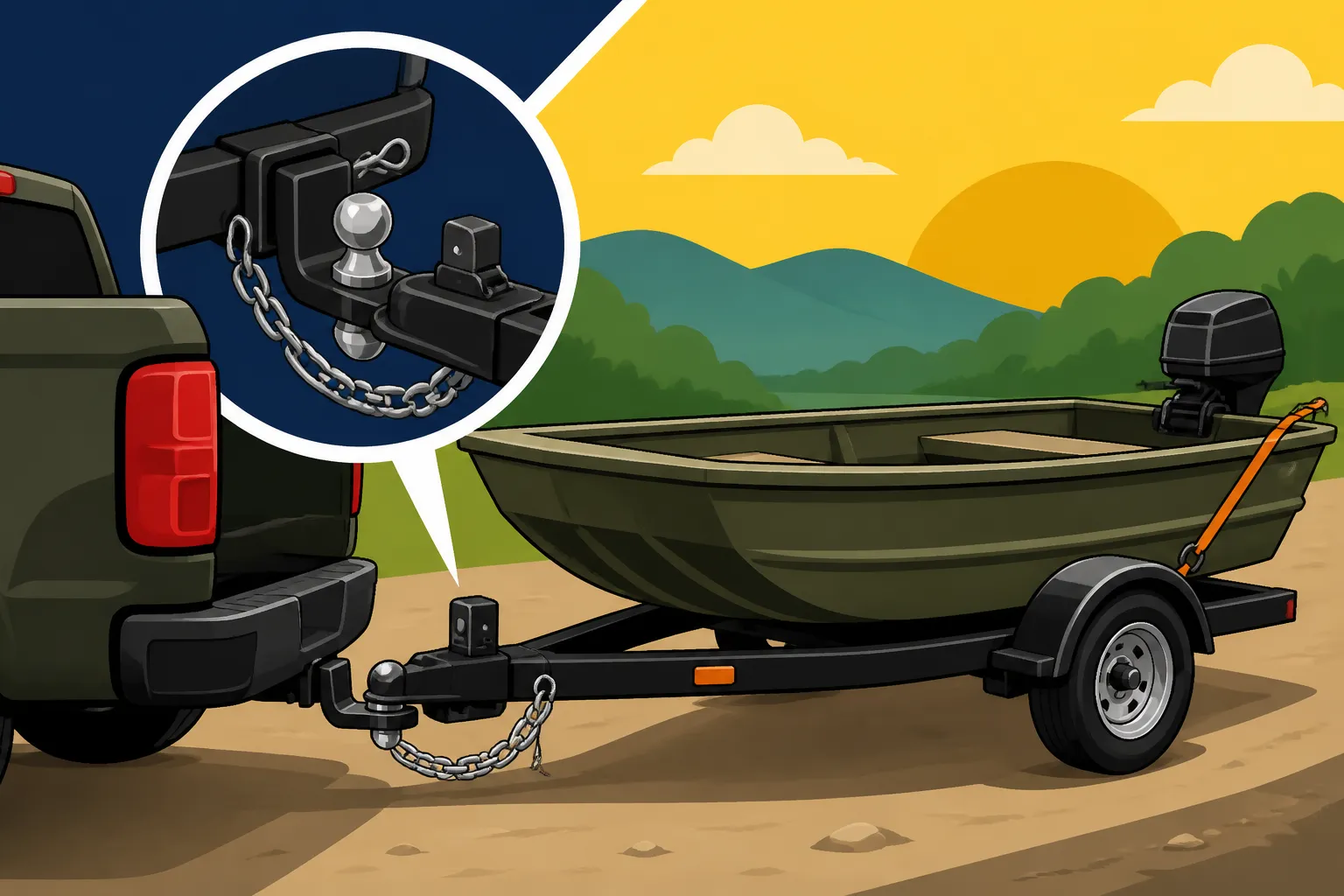
Once you have your receiver, you'll need a hitch ball and a ball mount. The ball mount is the shank that slides into your receiver and holds the hitch ball. These come in various lengths and, more importantly, with different "drops" or "rises." The goal here is to ensure your trailer tows as level as possible. If your trailer is nose-down, it puts extra stress on the tow vehicle's rear and the front of the trailer. If it's nose-up, you lose tongue weight, which can lead to instability and sway, especially at highway speeds on I-79 or I-64.
To determine the correct drop or rise, park your tow vehicle on level ground and measure the height from the ground to the inside top of your receiver opening. Then, measure the height from the ground to the top of your trailer coupler (the part that connects to the hitch ball) when the trailer is level. The difference between these two measurements tells you the drop or rise you need in your ball mount. Many manufacturers, including those you might find at Bass Pro Shops, offer adjustable ball mounts that allow you to change the height, which can be incredibly useful if you ever change tow vehicles or trailers, or if you frequently encounter very steep or uneven ramps.
The hitch ball itself also needs to match your trailer's coupler size perfectly. The most common sizes for small boat trailers are 1-7/8 inches or 2 inches, with 2 inches being very prevalent. Always double-check your coupler to ensure you get the right size. An improperly sized ball can lead to the trailer detaching, which is an absolute nightmare scenario that no angler wants to face on a busy road.
Wiring Harness and Lights
Let's not forget about the electrical connections. It's not just about compliance with West Virginia Boating Laws for Anglers; it's about safety. Your trailer needs functioning tail lights, brake lights, and turn signals to communicate your intentions to other drivers, especially crucial when navigating through dimly lit areas or during unexpected West Virginia fog. Most small jon boat trailers use a 4-flat wiring connector, which is fairly standard and provides power for running lights, brake lights, and turn signals.
Your tow vehicle will need a compatible wiring harness installed, which taps into your vehicle's existing electrical system. If your vehicle didn't come with a factory towing package, you'll likely need an aftermarket kit. These are generally straightforward to install for someone with basic automotive knowledge, or any mechanic can do it for you. Make sure all connections are secure and waterproof, as they'll be exposed to the elements and potentially submerged when launching and retrieving your boat. A corroded connection can lead to frustrating and dangerous light failures. Before every trip, do a quick check: hook up the trailer, turn on your headlights, step on the brakes, and activate your turn signals to ensure everything is working correctly. This simple routine can prevent a lot of headaches, or even a ticket, down the road.
Practical Considerations for West Virginia Anglers
Towing a boat isn't just about having the right parts; it's about knowing how to use them effectively and safely, especially given the unique challenges of fishing in West Virginia. Our state's beautiful, rugged terrain often means remote access points and varied conditions, making good judgment and preparation essential.
Choosing the Right Ball Mount for Different Ramps
As we touched on earlier, a "level trailer" is the ideal, but sometimes a steep, rocky, or heavily rutted ramp might require a slightly different approach. If you frequently visit shallow, primitive ramps, a ball mount with a bit more ground clearance might be beneficial to prevent scraping the hitch on the ground. This might mean having two ball mounts: one optimized for highway travel and perfectly level towing, and another with a greater rise (or less drop, depending on your vehicle) for those really challenging launch spots.
Adjustable ball mounts, which allow you to quickly change the height, are fantastic for anglers who fish a wide variety of waters. Brands like B&W Tow & Stow or Andersen Hitches offer robust adjustable options, which you can often find at reputable outdoor retailers or even on Amazon. While they might be a bit more of an upfront investment than a fixed ball mount, the convenience and peace of mind they offer when pulling up to an unknown ramp can be priceless. Think about the peace of mind you'll have when you're heading to a new spot on the Elk River Trout Fishing section, knowing your hitch can handle whatever the access road throws at it.
Safety Chains and Breakaway Cables
These aren't optional; they're critical safety features and a legal requirement. West Virginia Boating Laws for Anglers require safety chains. You should always have two safety chains, crossed under the tongue of the trailer, connecting the trailer frame to your tow vehicle's hitch receiver or designated attachment points. Crossing them creates a cradle that can help prevent the trailer tongue from hitting the ground if it ever disconnects from the hitch ball. Ensure they are strong enough for your trailer's weight and have sturdy hooks.
The chains should have just enough slack to allow for turns without becoming taut, but not so much that they drag on the ground. A good rule of thumb is to allow them to hang slightly below the trailer tongue. Additionally, some heavier trailers (though rarely a small jon boat trailer) require a breakaway system, which applies the trailer brakes automatically if the trailer separates from the tow vehicle. While not typically needed for small jon boats, it's good to be aware of the different safety features available. Always double-check your safety chains before you ever pull out of your driveway. It takes seconds and could prevent a major accident.
Maintenance and Inspection Tips
Your trailer hitch setup isn't a "set it and forget it" component. Regular inspection and maintenance are key to longevity and safety. Here's a quick checklist for your West Virginia fishing adventures:
- Rust Prevention: West Virginia weather can be tough. Road salt in winter, humidity, and constant exposure to water at boat ramps all contribute to rust. Keep your hitch receiver, ball mount, and hitch ball clean and apply a thin layer of grease to the hitch ball and the shank of the ball mount. Store your ball mount indoors when not in use.
- Electrical Connections: Regularly check your wiring harness for frayed wires, corrosion, or loose connections. A dielectric grease can help protect electrical contacts from moisture. Don't forget to check the trailer lights themselves – bulbs can burn out, and wiring inside the trailer can get damaged.
- Hitch Pin: Always use a high-quality hitch pin to secure the ball mount in the receiver. For added security and to prevent theft of your ball mount, consider a locking hitch pin. This is a small but significant detail often overlooked.
- Coupler Condition: Inspect your trailer's coupler mechanism regularly. Ensure it latches securely onto the hitch ball and that the safety pin or clip is always in place. A worn coupler is a major safety risk.
- Tires and Bearings: While not strictly part of the hitch setup, the trailer tires and wheel bearings are vital. Check tire pressure before every trip (including the spare!) and learn how to inspect and repack wheel bearings. "Bearing Buddies" or similar bearing protectors can help keep grease in and water out, extending bearing life, which is critical when repeatedly dunking your trailer in water. If you're heading to a distant spot like Summersville Lake Fishing Guide or the Ohio River Fishing Guide for West Virginia Anglers, reliable bearings are non-negotiable.
Upgrading and Troubleshooting Common Issues
Even with the perfect setup, you might encounter bumps in the road – literally. Understanding common towing issues and smart ways to address them can save you a lot of frustration and keep your fishing trips smooth. Investing a little extra time and money into certain upgrades can significantly enhance your towing experience in West Virginia.
Common Towing Problems and Quick Fixes
- Trailer Sway: This is one of the most frightening towing issues. It often feels like the trailer is trying to steer your vehicle. Common causes include insufficient tongue weight, improper tire pressure on the trailer, or strong side winds.
- Quick Fixes: First, pull over safely. Check your tire pressure on both the tow vehicle and the trailer. Re-distribute weight in the boat to increase tongue weight (moving gear forward). Drive slower, especially on windy days or when passing large trucks. If sway is a persistent issue, consider a weight distribution hitch, though this is usually overkill for small jon boats.
- Hitch Noise (Clunking/Rattling): That annoying metallic clunking when starting or stopping can drive you crazy.
- Quick Fixes: Often, this is due to play between the ball mount shank and the receiver opening. A hitch tightener or anti-rattle device can wedge into this space, eliminating the movement and the noise. These are inexpensive accessories that can make a huge difference in comfort. Some locking hitch pins also incorporate anti-rattle features.
- Scraping on Ramps: You've tried to back down a steep ramp, and your hitch or the rear of your trailer is dragging.
- Quick Fixes: As mentioned, an adjustable ball mount can help here. Sometimes, approaching the ramp at a slight angle can also provide a bit more clearance. If it's the back of the trailer scraping, consider adding "skid plates" or rollers to the very end of the trailer frame.
Smart Upgrades for Smoother Towing
While a basic setup gets the job done, a few thoughtful upgrades can transform your towing experience, especially for those frequent trips to remote West Virginia fishing spots.
- Locking Hitch Pin: A simple, yet effective upgrade. It replaces the standard pin and clip, requiring a key to remove the ball mount. This deters theft of your entire ball mount and sometimes even the trailer if the coupler is locked onto the ball. For any serious angler with an investment in their boat, this is a no-brainer, and you can pick one up easily at Bass Pro Shops or even a local hardware store.
- Anti-Rattle Hitch Device: These inexpensive gadgets insert into the hitch receiver alongside your ball mount, tightening the fit and eliminating much of the annoying rattling and clunking that can accompany towing. They're a small investment for a significant increase in towing comfort.
- Tow Vehicle Upgrades: Depending on your tow vehicle, you might consider some upgrades if you're frequently pushing its limits. This could include heavy-duty shocks, upgraded brakes, or even a transmission cooler. While not directly part of the hitch, these enhancements can make your tow vehicle handle the added stress of trailering much more effectively, leading to a safer and more enjoyable ride. Remember, safety should always be your top priority, especially when hauling precious cargo like your Best Jon Boats for Shallow Rivers through the beautiful, but sometimes challenging, West Virginia landscape.
By understanding your equipment, maintaining it properly, and being aware of the specific challenges our West Virginia terrain presents, you'll be well on your way to hassle-free fishing adventures. Tight lines!
Disclaimer
This article is for general informational purposes only and does not constitute professional advice. Laws, prices and regulations vary by location and change over time. Consult a qualified professional for guidance on your specific situation.