Best fly pattern box for a beginner
Starting your fly fishing journey in West Virginia is an exciting adventure, but it quickly brings a unique challenge: what on earth do you do with all those tiny, delicate, and often expensive flies you've amassed? They can't just rattle around in your pocket, becoming a tangled mess or getting crushed before they even touch the water. This guide is all about helping new fly anglers choose the perfect fly pattern box to keep those precious creations safe, organized, and ready for action on your next outing.
Why a Dedicated Fly Box is Essential for New Fly Anglers
When you're first getting into fly fishing, it's easy to overlook the seemingly simple things, like how to store your flies. You might think any old container will do, or that stuffing them into a ziplock bag is sufficient. But trust me, that mindset quickly leads to frustration on the water and a lot of wasted time and money. A dedicated fly box isn't just a container; it's an investment in the longevity of your flies and the efficiency of your fishing.
Protecting Your Precious Patterns
Think about the delicate nature of a fly. A dry fly, with its intricate hackle and fragile wings, can be crushed beyond recognition in a general tackle box or a crowded pocket. Nymphs, while often more robust, can have their hooks bent or their soft hackles matted if not stored properly. Even streamers, with their larger profiles, can get their marabou or rabbit strip tails tangled and flattened, losing that crucial swimming action in the water.
I've been there. You reach into your vest for that perfect Fly Patterns for West Virginia Trout Streams you just tied, only to pull out a mangled mess that looks more like a dust bunny than a fishing lure. It's incredibly frustrating, especially when fish are rising, and you've wasted precious moments trying to untangle or re-fluff a damaged fly. A good fly box is designed specifically to cradle each fly, holding it securely without compressing its delicate components. This means your flies retain their shape, their fish-attracting qualities, and their effectiveness, ready for you to present them flawlessly on waters like the Cranberry River or the Williams River.
Streamlining Your Selection on the Water
For beginners, the sheer number of fly patterns available can be overwhelming. Trying to decide what to tie on, especially when conditions are changing or fish are picky, is a challenge in itself. If your flies are jumbled together, it adds another layer of stress. You'll spend valuable fishing time rummaging, squinting, and fumbling instead of focusing on casting and presentation.
A well-organized fly box helps you quickly identify and access the fly you need. Imagine you're wading a beautiful stretch of the Elk River Trout Fishing, and suddenly a hatch starts. Fish are rising, and you need to match the hatch now. With a properly organized box, you can quickly locate the right size and pattern without having to empty your entire collection onto a rock. This efficiency isn't just about saving time; it reduces frustration and keeps you in the moment, increasing your chances of success. It's all about making your fishing experience smoother, more enjoyable, and ultimately, more productive.
Key Features to Look for in Your First Fly Pattern Box
Choosing your first fly box can feel like a big decision with so many options out there. But by focusing on a few key features, you can narrow down the choices and find something that perfectly suits your budding fly fishing habits and the types of waters you'll be exploring in West Virginia.
Size and Portability
The size of your fly box directly impacts its portability and how many flies it can hold. For a beginner, starting with a medium-sized, highly portable box is often the best approach. You're likely not carrying hundreds of patterns right out of the gate, and a smaller box fits easily into a vest pocket, a chest pack, or a small sling pack. This is crucial when you're hiking into those more secluded mountain streams or navigating thick streamside brush.
Consider your typical fishing style. Are you mostly bank fishing, or will you be wading extensively? If you're wading the New River or other larger rivers, a slightly larger box that can accommodate bigger streamers might be useful, but for general trout fishing on smaller streams, portability usually wins. A box that's too bulky will become a nuisance, especially when you're trying to move stealthily or balance on slippery rocks. It's a balance: enough capacity for your core flies without becoming cumbersome.
Storage Mechanism: Foam vs. Slit Foam vs. Compartments
This is perhaps the most critical decision when choosing a fly box, as it dictates how your flies are held and protected.
- Standard Foam: These boxes feature a flat piece of foam that you simply push the hook point into. They are generally inexpensive and work well for larger, more robust flies like Woolly Buggers or basic nymphs where crushing isn't as big of a concern. However, for delicate dry flies with intricate hackle, standard foam can compress them and damage their shape over time. They also don't hold flies as securely, so smaller flies can sometimes pop out if the box is jostled aggressively.
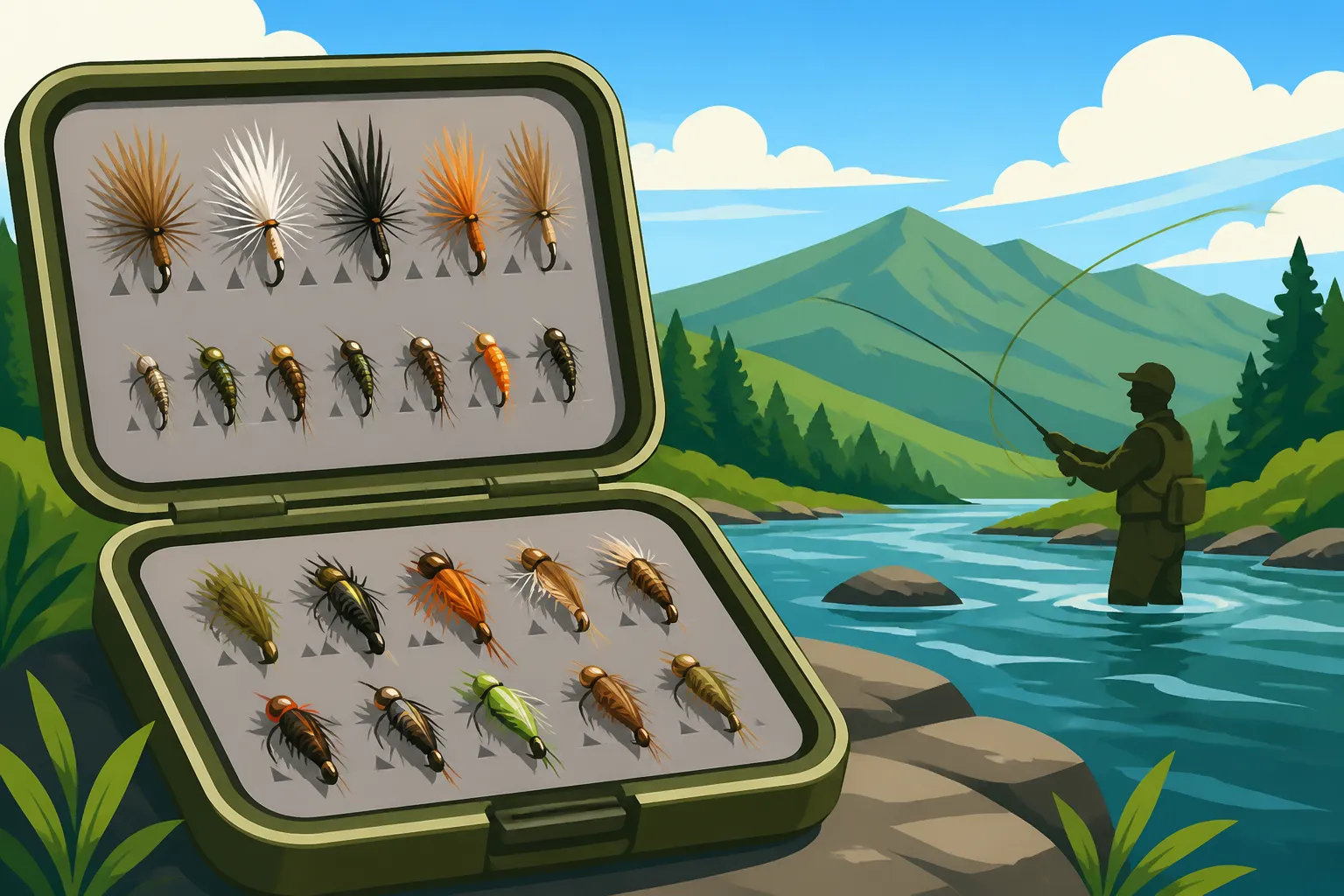
- Slit Foam: This is often considered the gold standard for versatility and protection, especially for beginners. Slit foam boxes have rows of pre-cut slits in the foam. You slide the bend of the hook into the slit, and the foam holds the fly securely by the shank and hook bend. This method prevents hackle from being crushed and keeps each fly individually separated. They accommodate a wide range of fly sizes, from tiny midges to medium-sized streamers, making them incredibly versatile for the varied Trout Fishing in West Virginia you'll encounter. You can find excellent slit foam boxes from brands like Umpqua or Cliff's, often available at outdoor retailers like Bass Pro Shops or online through Amazon. These are highly recommended for new anglers building a diverse collection.
- Compartments: Boxes with individual compartments are fantastic for specific types of flies, particularly large, bulky patterns like poppers, deer hair bass bugs, or even muskie flies, which simply won't fit or be protected well in foam. They're also useful for storing terminal tackle like split shot, indicators, or leader material. However, for a diverse collection of smaller trout flies, compartmentalized boxes are much less efficient in terms of space. You can't fit nearly as many flies, and the individual compartments can still allow smaller, lighter flies to bounce around and tangle. For a beginner, a compartment box might be a good supplemental option for a few specialty flies, but usually not your primary box.
Durability and Water Resistance
Let's be realistic: as a beginner, you're probably going to drop your fly box. It's almost a rite of passage! You might stumble on a slippery stream bank, or accidentally knock it out of your boat. This is where durability comes into play. Look for boxes made from robust, impact-resistant plastic. You want something that can take a tumble on rocks or concrete without cracking or bursting open.
Equally important is water resistance. West Virginia weather can be unpredictable, and streams are, well, wet. A fly box with a good rubber gasket or O-ring seal around the lid is invaluable. This seal prevents water from seeping in if the box is dropped in a puddle or submerged for a moment. Wet flies can lead to rusty hooks, mildew, and general fly degradation, which means you're replacing flies sooner than you should. Knowing your flies are protected from the elements provides peace of mind, allowing you to focus on the fishing, not worrying about your gear.
Visibility and Organization Aids
When you're first learning to identify different fly patterns and match them to hatches, being able to see your flies easily is a huge advantage. Many modern fly boxes feature clear lids, allowing you to quickly scan your collection without opening the box. This saves time and prevents you from unnecessarily exposing your flies to rain or wind.
Beyond visibility, consider how the box aids in internal organization. Some boxes have removable dividers, or different colored foam sections that you can dedicate to specific fly types (e.g., green for dry flies, blue for nymphs). While you can always add your own labels, a box designed for intuitive organization makes it much easier to keep your Best Gear for West Virginia Trout Fishing in order. For instance, you might dedicate one side of a double-sided box to nymphs and the other to dry flies, or separate by size, making it a breeze to find that perfect small midge or a larger stonefly imitation.
Popular Fly Box Types and What Suits a Beginner
The world of fly boxes is surprisingly diverse, offering specialized solutions for every type of fly and fishing scenario. For a beginner, however, keeping it simple and versatile is key. Let's explore some of the most common types and see which ones are best suited for someone just starting out on West Virginia's beautiful waters.
The Classic Compartment Box
While not always the first choice for a beginner's primary trout fly box, compartment boxes certainly have their place. These boxes feature rigid, often adjustable, dividers that create separate cubbies for individual flies or small groups of flies.
- Pros: They are excellent for larger, bulkier patterns like big foam hoppers, poppers, or even bass bugs and muskie flies that would otherwise get crushed or tangled in foam. Each fly gets its own space, ensuring it retains its shape. They're also fantastic for organizing different sizes of a single pattern, or for keeping leaders, tippet spools, or small split shot weights neatly separated. If you venture into Muskie Fishing in West Virginia with flies, a compartment box might become essential for those massive streamers.
- Cons: The biggest drawback for a beginner focused on general trout fishing is their inefficiency for smaller, more numerous flies. You can fit far fewer small dries or nymphs in a compartment box compared to a slit foam box of the same size. Also, if the compartments aren't tight-fitting, very tiny flies can still sometimes jump between sections. For a diverse trout collection, you'll need multiple compartment boxes, which quickly adds bulk.
- Good for: As a secondary box for a few specialized, larger flies you might pick up, or for organizing terminal tackle. For your core collection of trout flies, however, there are better options.
Slit Foam Boxes: A Beginner's Best Friend
If I had to recommend one type of fly box for a beginner, it would almost always be the slit foam box. This design strikes a near-perfect balance of security, capacity, and versatility for the average fly angler just getting started.
- Why it's great: The pre-cut slits securely hold the hook bend and shank, preventing the fly from bouncing around or getting dislodged. Crucially, this method also keeps the hackle and delicate components of dry flies from being crushed. You can pack a surprising number of flies into a relatively small slit foam box, making it highly efficient for space. They accommodate a wide range of fly sizes, from tiny size 22 midges (though inserting them can be a bit fiddly initially) all the way up to modest size 8 streamers or nymphs. This versatility means one or two good slit foam boxes can handle the majority of your early fly collection, whether you're targeting brook trout in a small mountain stream or larger rainbows in a stocked impoundment. Many prominent brands in fly fishing, such as Umpqua and Cliff's, offer excellent slit foam boxes. These can be found at specialized fly shops or through larger outdoor retailers like Bass Pro Shops and Amazon.
- Considerations: While excellent, very tiny flies (size 20 and smaller) can sometimes be a bit challenging to seat perfectly in the slits for a beginner. However, with a little practice, it becomes second nature.
Magnetic and Silicone Boxes
As you gain experience, you might explore more specialized fly box designs.
- Magnetic Boxes: These typically feature a magnetic base that holds barbless hooks without puncturing foam. They're incredibly gentle on delicate flies and ideal for very small, barbless patterns used in technical dry fly fishing. However, they aren't common as a primary box for beginners due to their limited capacity for larger flies and their niche application.
- Silicone Boxes: These are a newer innovation, featuring a silicone insert with deep slits or dimples. Silicone is incredibly durable, offers excellent grip on hooks, and is often impervious to temperature changes. They're also very long-lasting. While great, some anglers find it slightly harder to insert and remove flies compared to traditional foam. They're a fantastic, durable option once you're comfortable with fly handling and want an upgrade.
Multi-Layer or "Book-Style" Boxes
These boxes essentially stack multiple layers of foam or compartments, often hinged, to maximize storage capacity in a relatively compact footprint.
- Pros: They are fantastic for anglers who carry a very extensive collection of flies, as they can hold a tremendous number without being overly bulky. You might have several different types of slit foam pages or compartment pages within one "book."
- Cons: For a beginner, they can be overkill. The sheer number of flies might be overwhelming, and the boxes themselves can be a bit pricier. While efficient, they are generally heavier and thicker than a single-sided slit foam box, which might impact portability on a lightweight vest or chest pack.
Here’s a quick overview of these types:
| Fly Box Type | Best For | Pros | Cons | Beginner Suitability |
|---|---|---|---|---|
| Slit Foam | All-around, varied fly sizes | Secure, protects hackle, high capacity | Can be tricky with very tiny hooks | Excellent |
| Compartment | Large streamers, poppers, leaders | Strict organization, no crushing | Less space for small flies, bulkier | Good (for specific flies) |
| Magnetic | Tiny barbless flies | Very gentle, great for delicate flies | Limited capacity, not for all fly types | Niche, not primary |
| Silicone | Durable, secure, good grip | Long-lasting, excellent fly retention | Sometimes harder to remove flies, can be stiff | Good (step up) |
| Multi-Layer | Extensive fly collections | High capacity in compact form | Can be bulky/heavy, overkill for small collections | Later stage |
Stocking and Maintaining Your First Fly Box
Once you've picked out that perfect fly box, the next step is to fill it! For a beginner, this part can feel like another hurdle, but with a sensible approach to stocking and a little regular maintenance, your fly box will quickly become a reliable companion on all your West Virginia fishing adventures.
Starting Small and Growing Your Collection
The biggest mistake beginners make is trying to buy every fly pattern they see. Resist the urge! Your first fly box doesn't need to hold hundreds of flies, and frankly, a massive, unorganized collection is more overwhelming than helpful. Instead, focus on acquiring a core set of versatile patterns that are known producers in West Virginia for the species you're targeting, primarily trout.
Good starting points include general attractor patterns like Woolly Buggers (in olive, black, and white), Pheasant Tail Nymphs, Hare's Ear Nymphs, and a few basic dry flies like Elk Hair Caddis or Parachute Adams. These flies imitate common aquatic insects and baitfish and will catch fish almost anywhere. Don't forget a couple of larger terrestrial patterns like foam hoppers for late summer fishing. As you gain experience and observe what the fish are keying in on, you can gradually expand your collection.
Think about the specific Trout Fishing in West Virginia you plan to do. If you're hitting stocked waters, bright attractor flies might work well. If you're exploring wild brook trout streams, smaller, more natural patterns will be your go-to. You'll quickly learn which patterns you use most often, and those are the ones to duplicate in various sizes.
Organization Strategies for Clarity
A fly box is only as good as its organization. The goal is to be able to find the fly you need quickly and efficiently. Here are a few simple strategies for beginners:
- Group by Fly Type: Dedicate sections or sides of your box to specific fly types. For example, all your dry flies on one side, all your nymphs on the other. If you have streamers, give them their own section.
- Group by Size: Within each fly type, arrange your flies by size. This makes it incredibly easy to grab a size 14 Parachute Adams when you see fish rising to medium-sized mayflies, or a larger size 10 if they're taking bigger insects.
- Group by Color: For some patterns, like Woolly Buggers, you might organize them by color (e.g., all black ones together, then olive, then white).
- "Go-To" vs. "Reserve": Many anglers keep a smaller "go-to" box in their vest with their most frequently used, confidence-inspiring patterns in various sizes. Larger, less frequently used patterns or excess stock can be kept in a "reserve" box in your pack or vehicle. This prevents your primary box from being overly cluttered.
- Clear Lids and Labels: As mentioned, clear lids are a blessing for quick identification. For closed-lid boxes, consider adding a small label to the outside indicating the general contents (e.g., "Dry Flies – Sizes 14-18"). This is especially helpful if you start accumulating multiple boxes.
When choosing a specific Fly Pattern Box for a Beginner, consider models with transparent lids which are a lifesaver for quickly spotting what you need.
Care and Maintenance
Your fly box and its contents require a little love and attention to stay in top shape.
- Dry Your Flies: After a day of fishing, especially if you've caught a lot of fish or fished in the rain, your flies will be wet. Never store wet flies in a closed box for extended periods. This is a surefire way to encourage rust on your hooks and mildew on your delicate materials, rendering your flies useless. Open your box at home and let the flies air dry completely before closing it up. If some flies are particularly soaked, you can even remove them and lay them out on a paper towel.
- Check for Wear and Tear: Regularly inspect the foam or compartments of your box. Foam can degrade over time, especially if exposed to extreme heat or UV light. Slits might widen, making them less secure. If you notice flies falling out easily, it might be time for a new box or a replacement insert.
- Keep Out of Direct Sunlight: Prolonged exposure to direct sunlight, especially on a hot dashboard, can warp plastic boxes, degrade foam, and potentially damage delicate fly materials. Store your boxes in a cooler, shaded spot when not in use.
- Clean Out Debris: Little bits of leaves, grass, or dirt can accumulate in your box. Periodically give it a quick clean with a small brush or a puff of air to remove any debris.
- Before and After Each Trip: Make it a habit to quickly glance through your main fly box before heading out. This ensures you have all the patterns you anticipate needing and that everything is in order. After your trip, do another quick check, not just for drying flies but also to note any patterns you ran out of or wished you had, informing your next fly-tying or purchasing session. This routine will ensure your gear is always ready for fishing Special Regulation Waters in West Virginia or any other productive spot.
Taking good care of your fly box and its contents means your flies will last longer, and you'll spend more time fishing and less time fumbling around. Happy casting on West Virginia's beautiful trout streams!
Disclaimer
This article is for general informational purposes only and does not constitute professional advice. Laws, prices and regulations vary by location and change over time. Consult a qualified professional for guidance on your specific situation.