Best wire leader for muskie fishing
Oh, the sheer terror of hooking into a monster muskie, feeling that incredible weight and fight, only for your line to go slack because your leader failed! It’s a gut-wrenching experience that every serious muskie angler dreads. You spend hours, sometimes days, casting big baits, braving the elements, all for that one opportunity. And when it comes, you need your gear to be absolutely bulletproof. This comprehensive guide is all about equipping you with the knowledge to choose, rig, and maintain the best wire leader for muskie fishing in West Virginia, ensuring you’re ready when that toothy critter decides to strike.
The Absolute Necessity of a Wire Leader for Muskie Fishing
Let's face it, muskie aren't called "the fish of 10,000 casts" for nothing. They're elusive, powerful, and possess a mouth full of razor-sharp teeth that can sever standard fishing line in an instant. Trying to tackle these freshwater titans without a proper wire leader is like trying to chop down a tree with a butter knife – utterly futile and guaranteed to end in disappointment.
Understanding the Muskie's Dental Arsenal
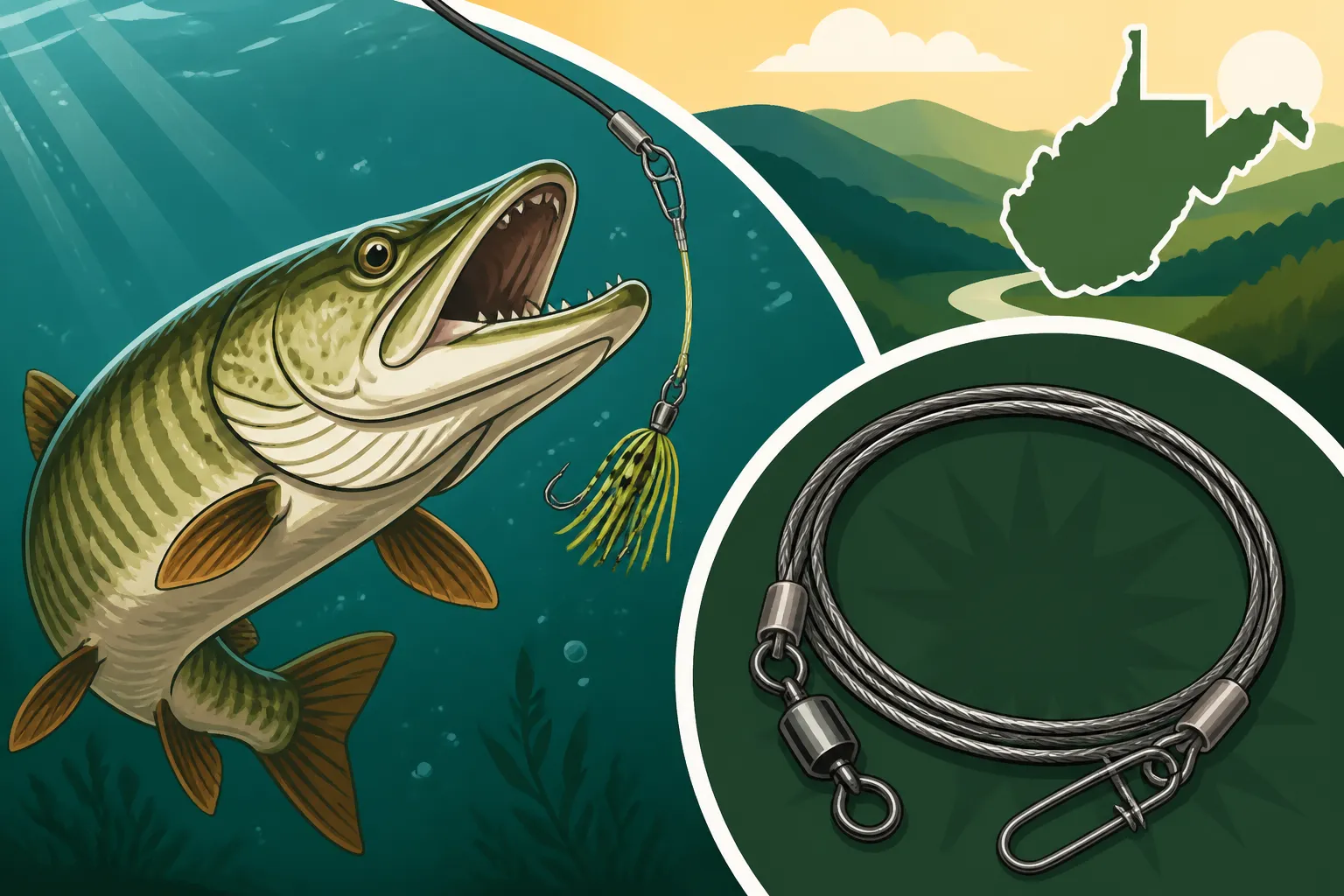
Muskie have a formidable set of teeth, not just large canines but also numerous smaller, needle-sharp teeth lining their jaws. These aren't just for holding prey; they're designed to shred. Imagine a tiny, biological saw blade in their mouth. When a muskie engulfs your lure, or even just clamps down to crush it, those teeth can easily cut through monofilament or fluorocarbon main lines, no matter how heavy. It's not about the strength of the fish pulling, but the cutting action of those teeth. You might have the stoutest rod and reel, but if your leader isn't up to snuff, that trophy fish is going to be nothing more than a heartbreaking story of "the one that got away."
Protecting Your Investment and the Fish
Beyond the sheer frustration of losing a fish, there are two other critical reasons why a wire leader is non-negotiable. First, you've likely invested a good chunk of change in those big muskie lures. Losing a prized bucktail or a custom glide bait to a toothy tear-off is not only financially painful but also incredibly annoying. A robust leader ensures your expensive tackle stays connected. Second, and perhaps even more importantly, is the welfare of the fish. When a muskie breaks off with a lure in its mouth, especially if it's deeply hooked, the chances of survival diminish significantly. A solid wire leader helps ensure a clean, controlled fight, allowing for a quicker, safer release. We want these magnificent fish to thrive in our West Virginia waters for generations to come.
Different Wire Leader Materials and Their Performance
When it comes to wire leaders, you've got options, and each material brings its own set of strengths and weaknesses to the table. Understanding these differences is key to making an informed choice that suits your fishing style and the conditions you'll encounter while Muskie Fishing in West Virginia.
Stainless Steel Wire Leaders
Stainless steel has long been the workhorse of muskie leaders, and for good reason. It's strong, durable, and relatively affordable.
Single-Strand Stainless Steel
Single-strand wire is exactly what it sounds like: a single, solid piece of stainless steel wire. It offers incredible bite protection and is extremely difficult for a muskie's teeth to cut through. Many anglers appreciate its rigidity, which helps prevent lures from fouling on the retrieve, especially when casting large baits. However, single-strand wire is prone to kinking. Once kinked, its structural integrity is compromised, and it needs to be replaced immediately. A kink essentially creates a weak point where the wire can snap under pressure. This can be a real hassle when you're out on the water and a hard-fighting muskie puts a bend in your leader. You'll often find these leaders in pre-made options at places like Bass Pro Shops, or you can buy bulk wire and make your own using crimps.
Multi-Strand Stainless Steel (Cable)
Multi-strand stainless steel leaders, often referred to as "wire cable," are made by weaving together several finer strands of wire. This construction makes them much more flexible than single-strand wire, offering better knot-tying capabilities (though crimps are still preferred for maximum strength) and more natural lure presentation. They're less prone to kinking than single-strand and generally offer good abrasion resistance. The trade-off is that they are sometimes slightly thicker for the same breaking strength, and while tough, the individual strands can fray over time from repeated abuse or contact with sharp objects, indicating a need for replacement. This type of leader is a popular choice for those who value flexibility and durability over the extreme rigidity of single-strand.
Titanium Leaders: The Modern Edge
Titanium leaders represent a significant advancement in muskie fishing technology. They're often hailed for their superior performance, though they typically come with a higher price tag.
Single-Strand Titanium (Memory-Free)
The biggest advantage of single-strand titanium is its incredible resistance to kinking and its "memory-free" property. Unlike stainless steel, titanium wire can be bent and twisted repeatedly, and it will spring back to its original straight shape. This means fewer leader changes due to kinks and more confidence in your setup throughout the day. It's also exceptionally strong for its diameter, offering a stealthier presentation compared to a bulkier steel leader of similar strength. Anglers often love the peace of mind titanium provides, especially when you're working expensive baits and don't want to worry about a compromised leader. The downside, as mentioned, is the cost. However, many anglers find the longevity and performance justify the investment, especially when targeting trophy fish in prime Best Muskie Waters in West Virginia.
Multi-Strand Titanium (Knot2Kinky, Surflon Micro Supreme, etc.)
Multi-strand titanium, like AFW's Surflon Micro Supreme or Knot2Kinky, offers the best of both worlds: extreme flexibility and kink resistance. These leaders are incredibly supple, allowing for maximum lure action, and can even be tied with certain knots, though crimps remain the strongest connection. They are excellent for techniques where lure presentation is paramount, like with glide baits or jerkbaits that need to wobble and dart naturally. They share the memory-free characteristics of single-strand titanium, making them highly durable against abuse. The cost is again a factor, but for anglers who demand the absolute best in flexibility and resilience, multi-strand titanium is often the top choice. You can find pre-made versions or spools of this wire on Amazon or other online retailers if your local shop doesn't carry it.
Other Options: Heavy Fluorocarbon and Leader Alternatives
While not strictly "wire," heavy fluorocarbon leaders deserve a mention, especially for specific situations.
Heavy Fluorocarbon (100-200 lb Test)
Some muskie anglers, particularly those in extremely clear water or during colder periods when fish can be very line-shy, opt for heavy fluorocarbon leaders (typically 100 lb test and up, sometimes as high as 200 lb). Fluorocarbon is nearly invisible underwater, which can sometimes make a difference in getting finicky fish to commit. It's also very abrasion-resistant against rough cover. However, it is not entirely bite-proof against a muskie's teeth. While 100+ lb fluorocarbon is surprisingly tough, a direct chop from a muskie's main canines can still sever it. It's a calculated risk that some anglers take for the stealth factor, often for very specific techniques like jigging or when fishing very clear impoundments. If you choose this route, be prepared to check your leader constantly for nicks and abrasions and replace it at the slightest sign of damage. This is generally more of a specialized tactic and less of a universal solution for muskie.
Here's a quick comparison of the main wire leader types:
| Leader Type | Key Advantages | Key Disadvantages | Best Use Case |
|---|---|---|---|
| Single-Strand Steel | High bite protection, rigid (anti-fouling), cost-effective | Prone to kinking, easily compromised once bent | Simple presentations, hard-pulling lures, budget-conscious |
| Multi-Strand Steel | Flexible, good bite protection, less prone to kinking than single-strand | Can fray, thicker diameter for strength, not memory-free | Versatile, good all-around choice for various lures |
| Single-Strand Titanium | Kink-proof, memory-free, excellent strength-to-diameter | Higher cost, less flexible than multi-strand | Maximum durability, fewer leader changes, confidence |
| Multi-Strand Titanium | Extremely flexible, kink-proof, memory-free, stealthy | Highest cost, requires proper crimping skills | Natural lure presentation, delicate baits, top performance |
| Heavy Fluorocarbon | Near invisibility, good abrasion resistance | Not truly bite-proof, requires constant checking | Extremely clear water, line-shy fish, specific presentations (risky) |
Choosing the Right Wire Leader: Factors to Consider
Selecting the best wire leader isn't just about picking a material; it involves considering several factors that will impact your success and confidence on the water.
Length Matters: Balancing Stealth and Safety
The length of your leader is a crucial decision. Most muskie anglers use leaders between 9 inches and 18 inches.
- Shorter Leaders (9-12 inches): These offer less visibility, which might be a factor in clear water conditions or for particular lures that require very precise action. They also reduce the chance of the leader getting wrapped around the lure during a cast or retrieve. However, shorter leaders leave less room for error. A muskie might still engulf a lure deep enough that its teeth can make contact with your main line above the leader if the leader is too short.
- Longer Leaders (12-18 inches): A longer leader provides an extra margin of safety. If a muskie really inhales a bait or thrashes violently boatside, a longer leader keeps those sharp teeth away from your main line. While some argue a longer leader can affect lure action or be more visible, many muskie anglers happily use 15-inch leaders without issue, especially for larger baits. The choice often comes down to personal preference and confidence. For West Virginia rivers like the New or the Elk where muskie can be found, a 12-15 inch leader is a good starting point.
Pound Test: Overkill is Better Than Underkill
When it comes to muskie, there's no such thing as "too strong" for your leader. These fish are built like tanks and fight like wildcats.
- Minimum Strength: Most experienced muskie anglers won't go below 80 lb test for their wire leaders, with many preferring 100 lb, 120 lb, or even 150 lb test, especially with titanium. The higher pound test often means a slightly thicker wire, which provides more cutting resistance.
- Why So Strong? It's not just about the direct pull strength. It's about the wire's ability to resist deformation, kinking, and the cutting action of those powerful jaws. A heavier wire also offers more abrasion resistance against underwater structure like submerged timber or rocky ledges, which you'll definitely encounter in New River Gorge Fishing Guide or Kanawha River Fishing Spots. You're fighting a fish that can easily weigh 30-50 pounds and is intent on shaking your lure loose. Don't skimp here.
Hardware: Swivels and Snaps
The connections at either end of your leader are just as important as the wire itself. A strong leader is useless if it's attached with weak components.
High-Quality Swivels
You need a swivel that can handle the torque and power of a muskie. Ball bearing swivels are generally considered the best choice because they rotate smoothly under pressure, preventing line twist, which is a common issue with large, rotating muskie lures like bucktails. Look for swivels rated for at least 150-200 lb test. Brands like Sampo or Stay-Lok are often trusted by muskie anglers. A strong, corrosion-resistant swivel ensures your line stays healthy and your lure spins freely.
Reliable Snaps
The snap is where you connect your lure, so it needs to be incredibly strong and secure. Avoid cheap, flimsy snaps at all costs. Muskie can easily bend or break weak snaps, leading to lost fish and lures. Look for heavy-duty, interlock snaps or coastlock snaps made from high-quality stainless steel. These offer excellent strength and are easy to operate, allowing for quick lure changes without compromising security. Again, match the snap's breaking strength to your leader's pound test. Brands like Malin or Stay-Lok are reliable choices. When buying leaders, check the quality of the hardware carefully. If it looks cheap, it probably is. You can often find excellent standalone hardware components at Bass Pro Shops or online retailers like Amazon to custom-build or upgrade your leaders.
Rigging and Maintenance: Ensuring Your Leader Holds Up
Having the right leader is only half the battle; knowing how to properly rig it and maintain it throughout your fishing day is equally vital. A poorly crimped leader or one that's gone unchecked can fail just as easily as a cheap one.
The Art of Crimping and Knotting
Most wire leaders, especially those made from harder materials like single-strand steel or titanium, are best secured with crimps.
Crimping
Crimping creates a strong, clean loop at each end of your leader, which is then attached to your swivel and snap. Proper crimping requires a good quality crimping tool and appropriately sized crimps for your wire.
- Select the Right Crimp: The crimp sleeve should be snug on your wire but not so tight that it deforms the wire before crimping. Too loose, and it won't hold properly.
- Thread the Wire: Pass the wire through the crimp sleeve, then through the eye of your swivel or snap, and back through the crimp sleeve, forming a loop.
- Adjust the Loop: Make sure your loop is small enough to keep the hardware snug but not so small that it stresses the wire.
- Crimp Firmly: Use your crimping tool to compress the crimp sleeve. Don't over-crimp to the point of cutting the wire, but ensure it's tight and secure. You should see a slight indentation but no sharp edges or signs of weakness.
If you're buying pre-made leaders, inspect the crimps closely. A well-made leader will have perfectly formed crimps that inspire confidence.
Knotting (for flexible wires)
While crimping is generally preferred for all wire leaders, some highly flexible multi-strand titanium wires can be tied with specific knots, such as a Clinch Knot or a Uni Knot. If you choose to knot, ensure you're using a wire specifically designed for knotting and practice extensively. Always moisten the knot before tightening to reduce friction and heat buildup, which can weaken the wire. However, for maximum peace of mind, especially when targeting trophy muskie, a properly crimped connection is hard to beat.
Routine Checks and When to Replace Your Leader
Your leader is the first line of defense against those sharp teeth, and it takes a beating. Regular inspection is non-negotiable.
Check for Kinks and Bends
If you're using single-strand stainless steel, any visible kink means the leader is compromised and needs to be replaced immediately. Even titanium, while kink-resistant, can develop micro-fractures after severe abuse. Give your leader a thorough visual inspection after every few fish, and certainly after any violent strike or snag. Run your fingers gently along the length of the wire, feeling for any rough spots, burrs, or irregularities.
Look for Fraying and Wear
Multi-strand leaders can show signs of fraying, where individual strands of wire begin to separate. This significantly weakens the leader. Similarly, any leader material can suffer abrasion from rubbing against rocks, logs, or even the muskie's gill plates during a fight. If you see any signs of wear, no matter how minor, it's time to swap it out. It's much cheaper to replace a leader than to lose a trophy fish or an expensive lure.
Inspect Hardware
Don't forget the swivel and snap. Check for signs of bending, corrosion, or damage to the snap's locking mechanism. A snap that doesn't close securely is a recipe for disaster. A stiff or grinding swivel indicates it might be seized up and needs replacement to prevent line twist. Remember, every component in your leader system is a potential point of failure.
Carrying Spares: Always Be Prepared
Never head out for a day of muskie fishing without a selection of spare leaders. Muskie fishing is tough on gear, and leaders will inevitably need to be replaced. Having a few pre-rigged spares means you can quickly swap out a damaged leader and get back to fishing, minimizing downtime.
Consider carrying a variety of lengths and strengths if you fish different conditions or use a wide range of lures. Having a small tackle box or bag specifically for your muskie leaders, crimps, and tools can keep you organized. You can find excellent leader wallets or storage solutions at places like Bass Pro Shops or by browsing the fishing tackle section on Amazon. This preparedness ensures that when that 50-inch muskie finally hits your bait on the Little Kanawha River Muskie Fishing, you're ready for the fight of a lifetime.
Disclaimer
This article is for general informational purposes only and does not constitute professional advice. Laws, prices and regulations vary by location and change over time. Consult a qualified professional for guidance on your specific situation.