Best Spoons for Ice Fishing Panfish
There's a special kind of magic that settles over West Virginia when the lakes and ponds freeze solid, transforming our beloved fishing spots into a whole new playground. But for many anglers, the thought of dropping a line through a small hole in the ice to tempt finicky panfish can feel intimidating. The truth is, while panfish like crappie, bluegill, and yellow perch can be shy under the ice, mastering the art of ice fishing with the right spoons can turn a slow day into an unforgettable haul. This guide is all about equipping you with the knowledge to pick and present the best spoons for those tasty winter panfish.
The Allure of Ice Fishing for Panfish in West Virginia
When the winter winds howl and the landscape turns to white, many anglers pack away their gear, but a dedicated few know that some of the best fishing of the year is just getting started. Ice fishing for panfish in West Virginia's frozen lakes and ponds offers a unique challenge and a rewarding experience, often yielding some of the most delicious catches of the year.
Why Spoons Are a Panfisher's Best Friend Under the Ice
Think about it: beneath that layer of ice, the world is a little dimmer, a little colder, and the fish are generally more lethargic. They're not chasing down fast-moving prey with the same vigor they might in warmer months. This is where a good spoon truly shines. Spoons, particularly the smaller, lighter varieties, offer a combination of flash, wobble, and subtle movement that can trigger bites from even the most hesitant panfish. They mimic dying baitfish or even tiny crustaceans, presenting an easy meal that panfish simply can't resist. Unlike a static bait, a spoon allows for active presentation, giving you control over the action and appeal.
For many West Virginia ice anglers, a well-chosen spoon is often the first thing tied onto the line when prospecting a new hole. The versatility of spoons means they can be jigged aggressively to call in fish from a distance or barely twitched to coax a bite from a curious but uncommitted fish. Whether you're targeting a school of crappie suspended over deep water or bluegill hugging the bottom near structure, there's a spoon designed to get their attention. You'll find that having a varied selection in your tackle box makes all the difference when you're trying to figure out the fish's mood.
The Unique Challenges of Targeting Panfish in Winter
Ice fishing for panfish isn't without its quirks, and understanding these challenges is the first step to overcoming them. For one, panfish metabolisms slow down dramatically in cold water. This means they're not expending as much energy, and therefore, they're often less aggressive in their feeding. They might mouth a bait rather than striking it hard, making a sensitive rod and proper technique essential. Furthermore, the limited visibility under the ice, coupled with the natural light penetration, can make fish wary. A spoon that's too large, too flashy, or presented too aggressively can easily spook them.
Another challenge is locating the fish in the first place. Unlike open water where you can cover vast areas by boat, ice fishing means drilling multiple holes and actively searching. Panfish often school up tightly in winter, so finding one can mean finding a whole pile of them. However, if you've drilled a dozen holes and haven't seen a whisper on your sonar, you know the frustration. This is where your spoon selection and presentation become critical. Having an array of different spoon sizes, colors, and actions allows you to experiment and adapt to what the fish are responding to on any given day. It's a game of finesse and persistence, and the right gear, including your spoons, is half the battle.
Decoding the Anatomy of a Successful Panfish Ice Spoon
Not all spoons are created equal, especially when it comes to tempting panfish beneath a sheet of ice. The perfect spoon for these delicate eaters has a specific set of characteristics that make it irresistible. Understanding these elements will help you build a go-to arsenal for your West Virginia ice fishing adventures.
Size and Weight: Precision Matters for Finicky Eaters
When it comes to ice fishing for panfish, remember this golden rule: smaller is often better. Panfish, particularly bluegill and smaller crappie, have relatively small mouths. A spoon that's too large will simply be ignored or bumped without a hookset. We're generally talking about spoons in the 1/32 to 1/8 ounce range, with some anglers even going as small as 1/64 ounce for extremely finicky bluegill. The exact size will depend on the species you're targeting and the depth you're fishing. For instance, a larger crappie might readily hit a 1/8 ounce spoon, while bluegill will prefer a 1/32 ounce offering.
The weight of the spoon is also crucial for presentation. In shallow water, a lighter spoon will have a slower, more enticing fall, giving fish more time to react. In deeper water, or if there's a slight current, a slightly heavier spoon might be necessary to get down quickly and stay in the strike zone. The balance between weight and size allows for that perfect, fluttering descent that mimics a struggling baitfish without being so heavy that it drops like a rock and flies past interested fish. Having a range of sizes and weights will allow you to adjust to the depth and the fish's activity level.
Action and Profile: Enticing Bites from Lethargic Panfish
The action of a spoon under the ice refers to how it moves through the water column when jigged or twitched. This is where spoons truly differentiate themselves. A good panfish spoon will have a subtle, seductive action. This might be a gentle wobble, a slow flutter, or an erratic darting motion, all designed to imitate an injured or disoriented baitfish. Under the ice, an overly aggressive action can often scare fish away. Instead, a natural, almost lazy movement is often what triggers a strike.
The profile of the spoon—its shape and how it appears to the fish—is equally important. Some spoons are very slender and streamlined, while others are broader or have a unique curvature. Think about what natural prey items look like in the water. Most minnows are slender, but some insects or larvae might be rounder. A slender spoon might cut through the water more quickly, while a broader spoon will have more resistance, creating a slower fall and a wider wobble. Experimenting with different profiles can make a significant difference, especially on days when the fish are particular. Best Jigging for Crappie in West Virginia Lakes often involves a careful selection of both size and profile to match the local forage.
Color and Finish: Matching the Mood and the Meal
Color is often the first thing that catches an angler's eye, and it's certainly important for panfish, but it's not the only factor. The finish of the spoon—whether it's metallic, glow-in-the-dark, matte, or holographic—can also play a huge role. In clear water and bright conditions, natural colors like silver, gold, or subtle baitfish patterns often excel. These colors reflect light in a way that looks realistic. However, in low light conditions, deeper water, or stained water like you might find in some West Virginia impoundments, brighter or glow-in-the-dark options can be highly effective. Chartreuse, orange, and bright pink can stand out, providing a visual cue that a lethargic panfish might key in on.
Many ice anglers also swear by spoons with an "eye" painted on them. This small detail can give the illusion of a living creature and provide a focal point for the fish to strike. Some spoons even feature UV reactive paints, which can be very visible in deeper water where UV light penetrates further than visible light. It's always a good idea to have a range of colors and finishes in your tackle box. If the bite slows down with one color, switching to another might be the trick. You can often find a great selection of these specialized spoons at reputable tackle shops or online retailers like Bass Pro Shops or Amazon, allowing you to build a diverse collection.
Top Spoon Styles for West Virginia Ice Anglers
When you're out on the ice in West Virginia, whether you're at Cheat Lake, Summersville Lake, or a local farm pond, having a few go-to spoon styles can make all the difference. Each style has its unique action and is better suited for certain situations and species.
Classic Jigging Spoons: The Bread and Butter
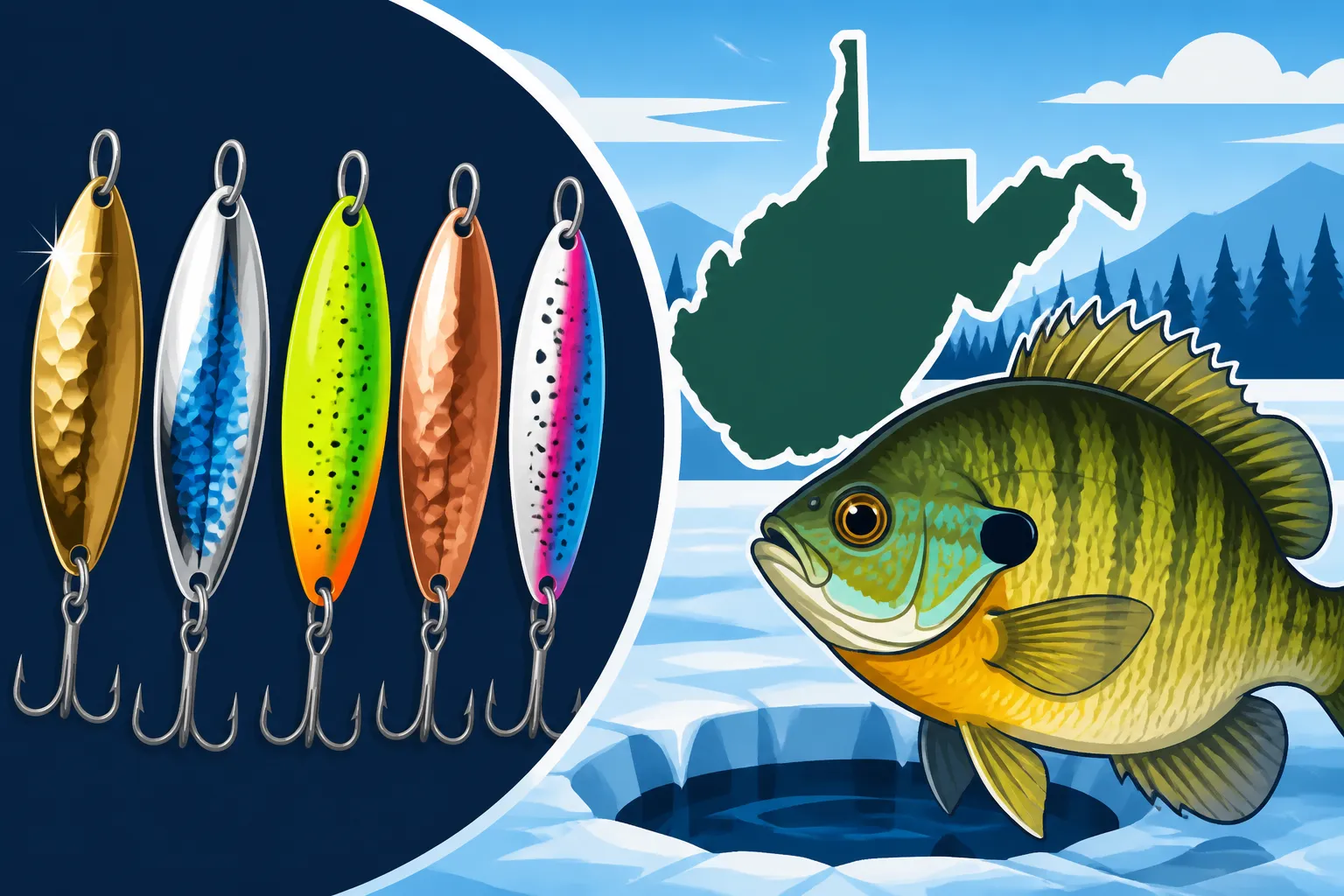
The classic jigging spoon is arguably the most versatile and widely used spoon for ice fishing panfish. These are typically slender, elongated spoons that, when jigged, dart erratically and then flutter or wobble on the fall. Their design allows them to sink relatively quickly, making them efficient for searching different depths. Common materials include lead, zinc, or brass, often coated in various colors and finishes.
The beauty of a classic jigging spoon lies in its simplicity and effectiveness. When you lift your rod tip, the spoon shoots upwards, mimicking a fleeing baitfish. As it falls on a slack or semi-slack line, it shimmies and flashes, looking like an injured minnow. This "fall" is often when the panfish strike. Brands like Northland Fishing Tackle and Custom Jigs & Spins offer a fantastic array of these spoons in tiny sizes perfect for West Virginia panfish. They work well for all panfish species, from aggressive yellow perch to more cautious crappie and bluegill. You can vary your jigging retrieve from sharp snaps to subtle twitches to trigger bites. Best Techniques for Ice Fishing Panfish often centers around mastering the jigging motion with these tried-and-true spoons.
Flutter Spoons: Subtle Seduction for Suspended Panfish
Flutter spoons are designed with a thinner, often slightly wider profile than classic jigging spoons, giving them a more pronounced and slower flutter on the fall. This distinct action is incredibly effective for suspended fish, especially crappie that often hang in the middle of the water column in deeper lakes like Stonewall Jackson Lake or Tygart Lake. Instead of darting, they tend to glide and shimmer more horizontally as they descend, mimicking a slowly dying or vulnerable baitfish.
Because their action is more subtle and prolonged, flutter spoons excel when panfish are less active or holding in open water. They stay in the strike zone longer, giving sluggish fish more time to decide to bite. You might use a light jigging motion, just enough to get the spoon to lift and then slowly fall. The slower descent of a flutter spoon also makes it easier for fish to track and ambush. These spoons are often made of lighter metals or even plastic, contributing to their unique, slow-motion presentation.
Specialized Designs: Teardrops, Demon Jigs, and More
Beyond the broad categories, there's a world of specialized spoon designs that are absolute panfish killers, especially when the bite gets tough.
- Teardrop Spoons: As the name suggests, these are small, often heavily weighted teardrop-shaped jigs that provide a compact profile. They might not have the same flash or flutter as a traditional spoon, but their ability to get down quickly and present a small, tantalizing target is unmatched. Many teardrop spoons come with a small hook, perfect for tipping with a single maggot, waxworm, or a tiny plastic tail. They are excellent for bluegill and perch that are hugging the bottom or dense cover.
- Demon Jigs and Similar Styles: These often feature a small, lead body with a flashy, usually hammered or holographic, finish and a sharp, upturned hook. They are designed for a more aggressive, yet still subtle, jigging action. When twitched, they dance erratically, creating a lot of flash in a small package. Like teardrops, they are almost always tipped with bait for maximum appeal.
- Horizontal Jigging Spoons: Some spoons are designed to be fished horizontally, hanging level in the water. These often have small wings or fins that give them a unique gliding action when twitched. They can be incredibly effective when fish are suspended and you want a bait that stays in their eye-level zone for a longer period.
These specialized designs cater to the nuanced preferences of panfish and the varying conditions you'll encounter on West Virginia's frozen waters. Having a few of these in your tackle box, perhaps picked up from an online order on Amazon or during a visit to a local Bass Pro Shops, ensures you're ready for anything.
| Spoon Type | Typical Size Range (Oz.) | Primary Action on Fall | Best for | Pros | Cons |
|---|---|---|---|---|---|
| Classic Jigging | 1/32 – 1/8 | Erratic dart, wobble | All panfish, varying depths | Versatile, good for aggressive and neutral fish, sinks quickly | Can be too aggressive for very finicky fish |
| Flutter Spoon | 1/32 – 1/8 | Slow glide, shimmer | Suspended crappie, lethargic fish | Stays in strike zone longer, subtle action, excellent visibility | Sinks slower, less "calling power" for distant fish |
| Teardrop Spoon | 1/64 – 1/16 | Compact drop | Bottom-hugging bluegill/perch | Smallest profile, gets to depth fast, ideal for tipping | Minimal flash/action without tipping |
| Horizontal Jigging | 1/32 – 1/8 | Level glide, dance | Suspended panfish, targeting eye-level | Stays horizontal, good for maintaining depth, subtle enticing action | Can require more finesse to impart action |
Matching Your Spoon to West Virginia's Diverse Waters and Conditions
West Virginia's fishing landscape is incredibly varied, from crystal-clear mountain lakes to stained river backwaters, and each environment presents its own set of challenges and opportunities for ice fishing panfish. Being able to select the right spoon for the specific conditions you face is a hallmark of a skilled angler.
Clear Ice and Shallow Waters: Finesse is Key
When you're fishing through clear ice, especially in shallower waters like many of the smaller state park lakes or accessible farm ponds, stealth and finesse become paramount. Fish in these conditions often have excellent visibility and can be easily spooked by unnatural presentations. This is where you'll want to lean heavily on natural colors and the smallest spoons in your arsenal.
Think about silver, gold, black, or subtle baitfish patterns. These colors mimic natural forage without being overly flashy. The spoon's finish should be more subdued; a matte or natural metallic finish is often better than a brightly painted or highly reflective one. For action, choose spoons that have a very subtle flutter or a gentle glide. A tiny teardrop spoon tipped with a single waxworm or a micro jigging spoon with minimal action can be incredibly effective. Best Ice Fishing Lakes in West Virginia often includes these clear water spots where a delicate touch makes all the difference. Present your spoon with minimal jigging, often just a slow lift and fall, or even dead-sticking it with a slight tremble, letting the natural light interaction do most of the work.
Dark, Stained Waters or Deep Basins: Making a Statement
Conversely, when you're faced with stained water, whether it's from runoff or natural tannins, or if you're plumbing the depths of a large impoundment like Summersville Lake, you need to make your presence known. In these conditions, visibility is low, and panfish rely more on vibration and flash to locate prey. This is when brighter colors and more assertive spoon actions come into play.
Fluorescent colors like chartreuse, orange, bright pink, or even glow-in-the-dark options can be incredibly effective. These colors show up much better in low-light environments. Spoons with a hammered finish or a holographic coating will reflect what little light is available, sending out maximum flash. For action, consider a classic jigging spoon that darts aggressively or a flutter spoon that creates a wide, slow descent. The increased action helps create subtle vibrations in the water, which fish can detect with their lateral lines. Don't be afraid to experiment with slightly larger spoons here, too, as the reduced visibility might make a larger profile less intimidating and easier for fish to find. Sometimes a bold presentation is exactly what it takes to call in fish from a distance.
Species-Specific Preferences: Crappie, Bluegill, and Perch
While panfish often overlap in their preferences, there are some subtle differences that can help you dial in your spoon selection for specific species commonly found in West Virginia.
- Crappie: These notorious schoolers often suspend in the water column, especially larger ones. Flutter spoons and classic jigging spoons with a slower, more horizontal fall are often exceptional for crappie. Colors can vary, but silver, white, and chartreuse are perennial favorites. Crappie also have a soft mouth, so a sharp, smaller hook is key. Crappie Fishing in West Virginia details how these fish often respond well to baits that hover enticingly.
- Bluegill: Our feisty bluegill tend to be structure-oriented and often feed closer to the bottom or within weed beds. They have smaller mouths, so tiny teardrop spoons, micro jigging spoons, and even tungsten ice jigs are the go-to. Natural colors like black, brown, and olive can be excellent, but on sunny days, a small gold or silver spoon can also entice them. Tipping with a maggot or waxworm is almost always a good idea for bluegill. Bluegill Habits in West Virginia Ponds shows how their feeding behavior often dictates a smaller, more subtle offering.
- Yellow Perch: Perch are often found in deeper basins or along drop-offs, and they tend to be more aggressive than bluegill, though less so than crappie. They respond well to both classic jigging spoons and slightly larger flutter spoons. Gold, silver, and perch-patterned spoons are particularly effective. They love a bit more action than bluegill and can often be triggered by a series of sharp jigs followed by a pause. Yellow Perch in West Virginia Lakes can be targeted effectively with spoons that offer both flash and a moderate fall rate. Knowing these nuances will undoubtedly improve your success on the ice.
Mastering the Art of Spoon Presentation for West Virginia Panfish
Having the right spoon is only half the battle; knowing how to present it effectively is where you truly unlock its potential. Ice fishing is a game of subtle movements, observation, and patience, especially when targeting panfish.
The Jigging Cadence: When to Aggressively Jig and When to Dead Stick
The term "jigging" covers a wide spectrum of movements, from subtle tremors to sharp, aggressive snaps. For panfish, your jigging cadence is critical and often needs to be adjusted based on the fish's mood.
- Aggressive Jigging: Sometimes, especially early in the season or when fish are highly active, a more aggressive jigging motion can call them in. This might involve a series of 1- to 2-foot lifts and drops, creating significant flash and movement. This technique is often used to attract fish from a distance, or to trigger a reaction strike from a curious but hesitant fish. After a few aggressive jigs, let the spoon fall freely on a semi-slack line, allowing it to flutter enticingly. Many times, the strike will occur as the spoon is falling or during the pause immediately after.
- Subtle Twitches and Tremors: More often than not, panfish under the ice prefer a much more subtle approach. This involves small, delicate twitches of the wrist, sometimes only moving the spoon an inch or two. Think of it as making the spoon "shiver" in place. This delicate action mimics a struggling insect or a minnow barely clinging to life, which is irresistible to lethargic panfish.
- Dead-Sticking: Sometimes, the most effective presentation is no movement at all. "Dead-sticking" involves letting your spoon sit completely still for extended periods, or with just the slightest trembling motion imparted by your hand. This can be deadly when fish are extremely finicky or when they approach your spoon but refuse to commit to a moving target. Many anglers will set up a second rod as a dead-stick, often with a live bait or a slightly different spoon, to see what the fish prefer. Observing how fish on your sonar react to different jigging styles will quickly help you determine the most effective cadence for that day.
Sweetening the Deal: Tipping Your Spoon with Live Bait or Plastics
While spoons are effective on their own, tipping them with a little something extra can significantly increase your strike rate, especially for panfish. This "sweetener" adds scent, taste, and additional visual appeal, often making the difference between a look and a bite.
- Live Bait: The kings of tipping for panfish are live maggots, waxworms, or spikes. A single maggot hooked through the skin on the tip of your spoon's treble hook, or a couple threaded onto a single hook, provides an irresistible wiggling motion and a burst of natural scent. This combination of flash from the spoon and living movement from the bait is often too much for panfish to resist. Small minnows can also be effective for larger crappie or perch when hooked through the lips or dorsal fin on a bare hook below your spoon. You can easily find these live baits at local bait shops across West Virginia.
- Plastics: When live bait isn't available or you prefer artificials, tiny soft plastic tails designed for ice fishing jigs can be incredibly effective. These micro plastics come in various shapes (grubs, worms, larvae imitations) and colors. Tipping your spoon with a 1-inch grub or a small, slender plastic tail can add just enough extra action and profile to seal the deal. Experiment with different plastic colors to find what the fish are keying on that day. For example, a spoon with a small white or chartreuse tail can often outperform a bare spoon in stained water.
Using Electronics to Optimize Your Spoon Fishing
In today's ice fishing world, electronics are a game-changer, turning guesswork into informed decisions. Using a flasher or a fish finder allows you to see your spoon, the fish, and their interactions in real-time. This feedback loop is invaluable for optimizing your presentation.
As you drop your spoon down the hole, you'll see its signature on the flasher screen. Then, you'll see fish appear as marks, either holding near the bottom or suspended. The magic happens when you observe how the fish react to your spoon. Are they rising aggressively to meet it? Are they shying away? Are they following it but not committing? This visual information allows you to adjust your jigging cadence, your pauses, and even your spoon choice almost instantly. If fish are rising quickly, a more active retrieve might be in order. If they're just barely approaching your spoon and then retreating, a dead-stick or a more subtle twitch might be the ticket. Best Fish Finders for West Virginia Lakes provides detailed insights into various models that can significantly enhance your ice fishing experience, making you a much more efficient panfish angler.
Essential Gear for a Successful Spoon-Based Ice Fishing Trip
Beyond the spoons themselves, having the right supporting tackle and accessories can dramatically improve your comfort, efficiency, and success on the ice. After all, a perfectly presented spoon won't do much good if your line snaps or you can't feel the bite.
Line and Leaders: Keeping Your Presentation Stealthy
The line you choose for ice fishing panfish is far more critical than you might imagine. Because panfish are often finicky and your spoons are small and light, you need a line that is thin, sensitive, and has minimal stretch.
- Monofilament: Monofilament lines in the 2 to 4-pound test range are a popular choice. They have a bit of stretch, which can be forgiving for soft-mouthed fish, and they are relatively invisible in clear water. However, the stretch can sometimes make it harder to detect subtle bites.
- Fluorocarbon: Many serious ice anglers prefer 2 to 4-pound test fluorocarbon line as their main line or as a leader. Fluorocarbon is nearly invisible underwater, extremely abrasion-resistant (great around ice edges), and has very low stretch, offering excellent sensitivity for detecting those light panfish bites. It also sinks, which can help get small spoons down faster.
- Braided Line with Fluorocarbon Leader: For ultimate sensitivity, some anglers will use 4 to 6-pound test braided line as their main line, tied to a 2 to 4-foot fluorocarbon leader of 2 to 4-pound test. The braid offers zero stretch, telegraphing every bump and tap directly to your hands. The fluorocarbon leader maintains stealth in the water. Remember, cold weather can affect line performance, so look for lines designed for cold temperatures.
Rods and Reels: Sensitivity and Control are Paramount
Your rod and reel setup for ice fishing panfish should prioritize sensitivity and control above all else. You're not casting long distances, so lightweight and responsive gear is key.
- Rods: Ice fishing rods are short, typically ranging from 24 to 36 inches. For panfish, you'll want an "ultralight" or "light" power rod with a fast or extra-fast action. This means the tip is very flexible and sensitive, allowing you to see and feel the lightest bites, while the backbone provides enough power to set the hook. Many ice rods have very bright, highly visible tips that act as bite indicators. Brands like St. Croix and Fenwick make excellent panfish ice rods.
- Reels: Small spinning reels (500 or 1000 series) are standard for ice fishing panfish. They should be lightweight, have a smooth drag system, and be capable of handling thin lines. Look for models designed to perform well in freezing temperatures, as some reels can stiffen up in extreme cold. A good reel allows for precise line management and smooth retrieves. A visit to a local sporting goods store or browsing online options on Bass Pro Shops or Amazon can help you find the perfect rod and reel combo. Best Rod and Reel Combo for Beginners is a great resource if you're just starting out.
Tackle Storage and Organization: Staying Ready on the Ice
On the ice, efficiency is king. You don't want to be fumbling with frozen fingers trying to find the right spoon. Proper tackle storage and organization are essential.
- Small Tackle Boxes/Wallets: Invest in small, compact tackle boxes or soft-sided tackle wallets specifically designed for ice fishing spoons and jigs. These often have clear lids or individual compartments, allowing you to see your lures at a glance without exposing everything to the cold. Keeping your spoons organized by size, color, or type will save you precious time when the bite is on.
- Extra Hooks and Split Rings: Small spoons often come with tiny treble hooks. These hooks can dull quickly, especially after repeated contact with the ice or fish mouths. Keep a supply of replacement hooks (single or treble, depending on your preference and local regulations) in various sizes. Likewise, small split rings can weaken over time. Always have replacements on hand.
- Line Clippers and Forceps: A good pair of sharp line clippers is indispensable for tying knots in freezing conditions. Forceps or needle-nose pliers are crucial for safely removing hooks from fish, especially small ones, and for bending trebles if needed.
Having these essential items readily accessible will ensure that you spend more time fishing and less time fumbling, maximizing your chances of a successful panfish outing on West Virginia's beautiful frozen waters. Best Tackle Bag for Bank Fishing (which can also apply to ice fishing) emphasizes the importance of accessibility and organization for any angler.
Disclaimer
This article is for general informational purposes only and does not constitute professional advice. Laws, prices and regulations vary by location and change over time. Consult a qualified professional for guidance on your specific situation.