Best wading staff for fast mountain streams
That heart-stopping slip on a mossy, algae-covered rock in a roaring West Virginia mountain stream is a moment many of us anglers know all too well. The sudden loss of footing, the icy water rushing over your waders, and that frantic scramble to regain balance can turn a peaceful fishing trip into an instant adrenaline rush – and not the good kind. This guide is all about helping you prevent those unnerving tumbles by diving deep into how to choose the best wading staff for navigating those unpredictable, fast-flowing waters, keeping you upright, safe, and focused on the fish.
The Absolute Necessity of a Wading Staff in West Virginia's Fast Waters
When you picture West Virginia's incredible trout streams and smallmouth rivers, you're likely thinking about crystal-clear currents, rugged terrain, and the thrilling fight of a wild fish. What might not immediately come to mind are the hidden dangers lurking beneath those beautiful waters: slick rocks, unseen potholes, and currents strong enough to sweep you off your feet. This is precisely why a wading staff isn't just an accessory; it's a critical piece of safety equipment, especially when you're exploring the more challenging stretches of rivers like the Cranberry or the Elk.
Navigating Treacherous Terrain with Confidence
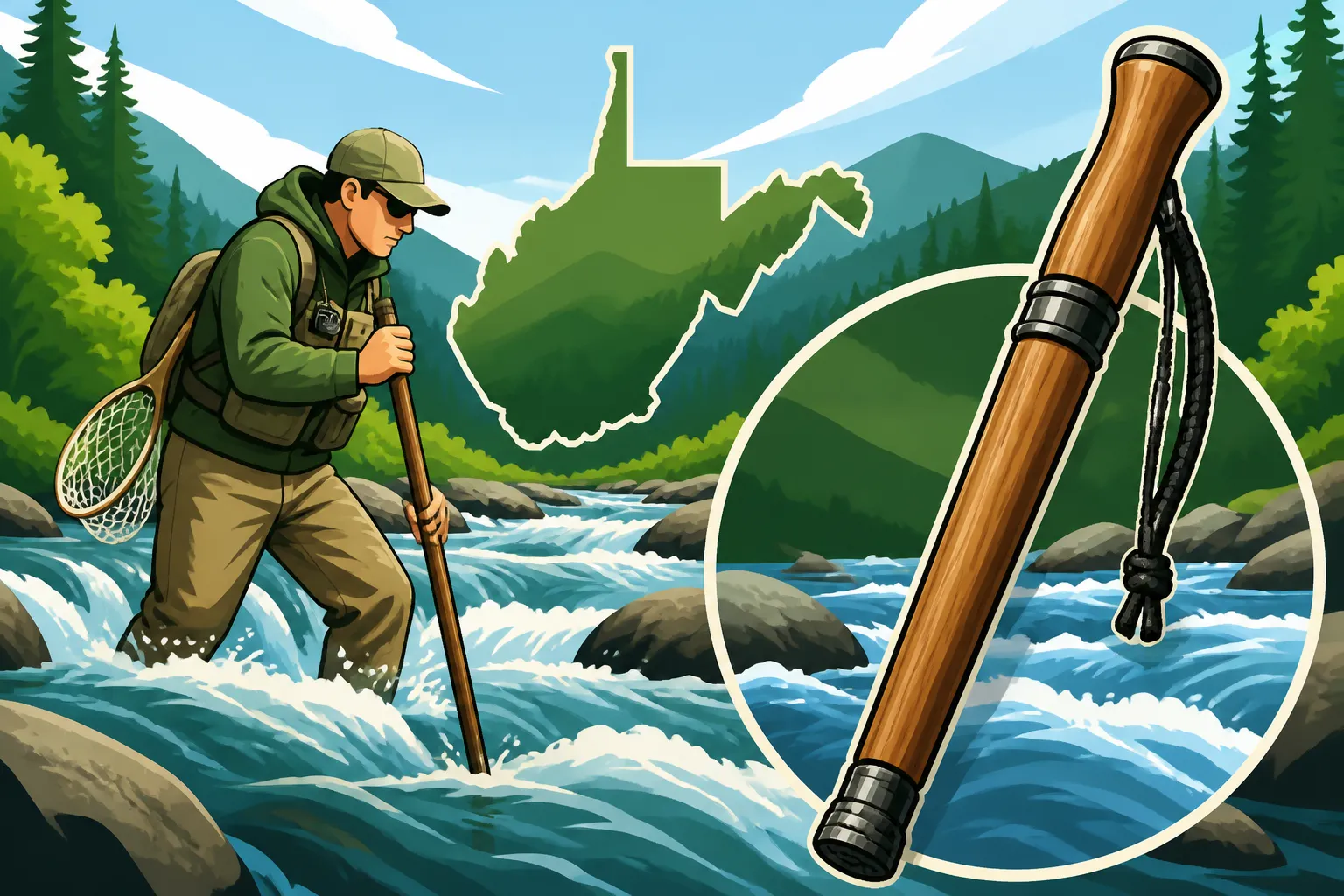
Our mountain streams here in West Virginia are notoriously rocky, and those rocks, once submerged, become incredibly slick. Algae, moss, and mineral deposits turn seemingly stable footing into a skating rink. Without a third point of contact, your balance is always precarious. A good wading staff provides that vital extra support, allowing you to test the bottom before committing your full weight. It acts like an extension of your arm, probing the depths, feeling for stable ground, and giving you an instant sense of what's beneath the surface. This confidence boost alone can transform a hesitant, anxious wade into a far more enjoyable and productive experience. You'll find yourself able to reach those prime fishing spots, like the deeper runs or the opposite bank, that you might otherwise avoid. Wading Techniques for West Virginia Trout Streams become much more effective when you're not constantly worried about taking a swim.
A Crucial Tool for Safety and Stability
Beyond just avoiding a dunking, a wading staff is a serious safety device. Imagine stepping into a swift current and finding yourself in water deeper than expected, or losing your footing entirely. Without a staff, you could be swept downstream, potentially injuring yourself on rocks or losing valuable gear. A staff allows you to brace yourself against the current, maintain an upright position, and even recover from a stumble. It's a lifeline. For those who venture out solo, or in remote areas like some sections of the Shavers Fork, it's an indispensable companion. It can also be invaluable if you need to cross a wider, faster section of river. By creating a triangle of support with your two feet and the staff, you significantly increase your stability, making each step more secure. This peace of mind lets you truly enjoy the beauty and challenge of Fly Fishing for Trout in West Virginia.
Key Features to Seek in a Wading Staff for Mountain Streams
When you're outfitting yourself for West Virginia's rugged streams, not all wading staffs are created equal. The ideal staff for a gentle, flat river might not cut it in the swift, rocky currents of our mountain hollers. Focusing on specific features will ensure you pick a staff that's up to the challenge.
Material Matters: Carbon Fiber vs. Aluminum
The material of your wading staff heavily influences its weight, durability, and how it feels in the hand.
- Carbon Fiber: Often considered the premium option, carbon fiber staffs are incredibly lightweight and surprisingly strong. This low weight is a huge advantage when you're hiking miles into a backcountry stream or carrying it all day on your vest or pack. They tend to be very rigid, offering excellent feedback on what's beneath the water. However, while strong, carbon fiber can be more brittle than aluminum and might splinter or snap under a direct, sharp impact if dropped or caught between rocks in a fall. If you're a serious backpacker seeking High-elevation trout streams in the Monongahela National Forest and every ounce counts, carbon fiber is usually the top choice.
- Aluminum: A more common and generally more budget-friendly option, aluminum staffs are still lightweight but have a bit more heft than carbon fiber. Their main advantage is their resilience: aluminum tends to bend rather than break, meaning it can often survive impacts that might damage carbon fiber. This makes them incredibly durable for everyday abuse. They might transmit slightly less "feel" from the stream bottom due to a bit more flex, but for most anglers, this isn't a significant drawback. You'll find a wide variety of sturdy aluminum options at places like Bass Pro Shops.
Grip, Deployment, and Tip Design
These are the tactile and functional aspects that dictate how comfortable and effective your staff will be in real-world scenarios.
- Grip: The handle should be comfortable and provide a secure hold even when wet or slimy from handling fish. Cork grips offer a classic feel and good insulation, while dense foam or rubber grips provide excellent non-slip performance. Some grips are ergonomically designed to fit the hand, reducing fatigue over a long day. A good leash or lanyard attached to the grip is also crucial, ensuring you don't lose your staff if you drop it or release it to fight a fish. Many modern staffs integrate a self-coiling lanyard or a retractor that keeps the staff conveniently tethered to your vest or belt.
- Deployment: How quickly and easily your staff deploys can be a game-changer when you suddenly encounter a tricky section of water.
- Folding Staffs: These typically collapse into several sections connected by an internal cord, much like a tent pole. They can be snapped open rapidly with a flick of the wrist. This design is highly portable and great for stashing in a pack or on the side of a vest.
- Telescoping Staffs: These have sections that slide into one another, locking into place with cam locks or twist locks. They allow for adjustable length, which can be handy, but they might be slower to deploy than folding staffs and can sometimes slip if the locks aren't tight.
- Fixed Staffs: These are a single, non-collapsible piece. While less portable for hiking, they offer the ultimate in stability and reliability with no moving parts to fail. They're excellent if you're primarily fishing spots with easy access and constant wading.
- Tip Design: The tip of your wading staff is where the rubber (or carbide) meets the rock. Different materials offer different levels of grip on various surfaces.
- Rubber Tips: These are quiet and provide decent grip on smooth, dry surfaces but can be less effective on slick, wet rocks or slimy bottoms.
- Carbide or Spiked Tips: These are aggressive and designed to bite into slippery rocks, ice, or muddy banks, offering superior traction. Many staffs come with interchangeable tips, allowing you to switch between rubber for general use and carbide for truly challenging conditions. For the notoriously slippery rocks found in places like the Cranberry River's special regulation waters, a carbide tip is almost a must.
Retention Systems
Once you've deployed your staff, you don't want to lose it. Most wading staffs come with some form of retention system to keep it attached to you. This is usually a coiled lanyard or a retractable tether that clips onto your wading belt, vest, or pack. This allows you to quickly release the staff to cast or land a fish, knowing it won't float away downstream. Losing your staff in a strong current can be as dangerous as not having one at all, so a reliable retention system is non-negotiable.
Top Considerations When Choosing Your Wading Staff
With so many options out there, narrowing down the best wading staff for your West Virginia adventures involves considering your personal fishing style, the type of waters you frequent, and your budget.
Packability and Portability for Remote Access
Many of West Virginia's most pristine fishing spots, especially for trout, require a bit of a hike. Whether you're making your way into the gorge for New River Smallmouth Bass Fishing or seeking out remote stretches of the Williams River, you'll want a staff that can be easily stowed away when not in use.
- Folding staffs are generally the most portable, collapsing down to a very compact size that can fit into a backpack or be clipped onto the side of a smaller fishing pack. This is ideal for anglers who value minimalism and have longer treks to their fishing destination. Look for models that come with a small carrying pouch or integrate well with existing pack systems.
- Telescoping staffs also offer good portability, though they might not collapse as small as some folding models. Their adjustable length, however, can be a plus if you find yourself wading in varying depths or want to share the staff with someone of a different height. Fixed staffs, while offering superior rigidity, are the least portable option and are generally only practical for very short walks to the water or if kept in a boat.
Durability and Longevity
West Virginia's rivers and streams are beautiful but unforgiving. Your wading staff is going to take a beating. It will be scraped against rocks, subjected to strong currents, and inevitably dropped or leaned on heavily. Investing in a durable staff means it will last for many seasons.
- Look for staffs with robust locking mechanisms if they are folding or telescoping. Flimsy buttons or cam locks are prone to failure.
- Check the quality of the cord connecting folding sections; a strong, elastic cord will prevent segments from separating prematurely.
- Consider the tip material, as discussed earlier. A carbide tip will generally last longer and perform better on rocky bottoms than a simple rubber cap.
- While carbon fiber is strong, aluminum might be the more durable choice for sheer impact resistance in a rugged environment. Think about how often you fish, how rough you are on your gear, and whether the extra cost of carbon fiber is justified by the weight savings for your specific needs.
- The longevity of your staff also comes down to a bit of maintenance. After a long day on the water, especially in muddy or silty streams, it's a good idea to rinse off your staff, particularly the folding or telescoping joints, and allow it to dry completely. This prevents grit from wearing down components and corrosion from compromising materials.
Finding the Right Fit and Budget
Just like choosing the right pair of Best Wading Boots for Rocky Streams, personal fit and your budget play significant roles.
- Length: A good rule of thumb is that your wading staff should reach roughly to your armpit when held upright. This provides enough length to probe depths ahead of you and offer stable support. Some staffs are adjustable, which can be useful, but a fixed or semi-fixed length that's appropriate for your height is often best for maximum stability.
- Budget: Wading staffs range widely in price. You can find basic aluminum models for a reasonable cost, while high-end carbon fiber, quick-deploying staffs can be a more significant investment. While it might be tempting to save a few dollars, remember that this is a piece of safety equipment. A staff that fails you in a critical moment isn't a bargain. Weigh the features against the price. A mid-range aluminum folding staff is often an excellent balance of durability, portability, and cost for most West Virginia anglers. Check online retailers like Amazon or specialized fishing shops like Bass Pro Shops to compare models and features.
Here's a quick comparison of common wading staff types:
| Feature | Fixed Length Staff | Folding Staff | Telescoping Staff |
|---|---|---|---|
| Portability | Low (bulky) | High (very compact) | Moderate (adjustable length) |
| Deployment Speed | Instant (always ready) | Fast (flick of wrist) | Moderate (adjust and lock) |
| Stability | Excellent (no moving parts) | Very Good (solid connections) | Good (depends on lock quality) |
| Durability | Highest (single piece) | High (strong cord/ferrules) | Moderate (locks can wear/slip) |
| Ideal Use | Frequent wading, short access | Hiking, backpacking, versatile | Varied depths, multiple users |
| Weight | Moderate to heavy | Lightweight to moderate | Moderate |
Wading Staff Best Practices and Safety Tips
Having the best wading staff in the world won't do you much good if you don't know how to use it effectively. Developing good wading habits, especially in West Virginia's challenging waters, is paramount for your safety and enjoyment. A wading staff is a tool that truly shines when combined with proper technique and awareness.
The Tripod Method: Your Golden Rule for Stability
The most fundamental technique for using a wading staff is what's often called the "tripod method" or maintaining "three points of contact." When wading across a stream, you should always have at least two points (either both feet or one foot and the staff) firmly planted on the bottom before moving the third point.
Here's how it works:
- Probe Ahead: Before taking a step, use your wading staff to probe the water ahead of you. Feel for depth, check for large rocks, slick spots, or sudden drop-offs. Get a sense of the bottom composition.
- Plant the Staff: Once you've identified a stable spot, plant your staff firmly into the streambed. This is your first point of contact.
- Move One Foot: With the staff and one foot securely planted, carefully move your other foot to a new, stable position. This is your second point of contact.
- Move the Other Foot: Now, with the staff and your newly planted foot providing stability, you can bring your trailing foot forward.
By maintaining this "tripod" throughout your wade, you dramatically reduce your risk of slipping. Always keep your staff slightly upstream and downstream of your body as you move, bracing against the current. This technique is especially crucial when navigating tricky sections on your way to prime Best Bass Fishing Spots in West Virginia or deeper pools.
When to Deploy and When to Stash
A wading staff isn't meant to be held constantly like a crutch. It's a tool to be deployed when needed.
- Deploy when: You're crossing swift currents, entering unfamiliar water, navigating rocky or uneven bottoms, wading in depths above your knees, or moving across long stretches of river. If you're carrying a heavy pack, or if you're feeling fatigued, deploy it. Even a small increase in water flow can necessitate its use.
- Stash when: You're standing in relatively calm, shallow water to fish, or making a short, easy walk on dry land. A good folding or telescoping staff with a reliable retention system allows for quick deployment and stashing, so you can adapt to changing conditions without fumbling. Don't be afraid to put it away when it's not needed, but always keep it easily accessible. Many anglers clip their staff to their vest or the back of their waders so it's out of the way but ready in an instant.
Combining with Other Essential Gear
A wading staff is one piece of the safety puzzle. For optimal security and comfort on West Virginia's waterways, it should be used in conjunction with other crucial gear.
- Wading Boots: Your Best Wading Boots for Rocky Streams are your primary line of defense against slips. Choose boots with excellent traction, whether it's felt soles for maximum grip on slick rocks or rubber soles with aggressive lug patterns for general use. Many anglers also add screw-in studs or cleats to their rubber-soled boots for enhanced grip in challenging conditions.
- Waders: Breathable waders, particularly Best breathable waders for summer fishing, are essential for comfort, but ensure they fit well and allow for a full range of motion. Properly fitting waders, along with a wading belt cinched snugly, can help prevent water from filling your waders if you do take a spill.
- Life Jacket/PFD: While not typically worn for wading shallow trout streams, if you're venturing into larger rivers with deeper, swifter currents, especially from a boat or kayak, a personal flotation device (PFD) is a non-negotiable item.
- Appropriate Clothing: Dress in layers suitable for the weather conditions. Cold water can quickly lead to hypothermia, even in warmer air temperatures, if you get wet. Always carry extra layers in a dry bag, just in case.
By embracing these best practices and integrating a quality wading staff into your gear setup, you'll be well-prepared to tackle the majestic, and sometimes challenging, waters of West Virginia. It's about empowering you to enjoy the fishing without the nagging worry of an unexpected fall.
Disclaimer
This article is for general informational purposes only and does not constitute professional advice. Laws, prices and regulations vary by location and change over time. Consult a qualified professional for guidance on your specific situation.