Best hook size for stocked trout bait fishing
There's nothing quite like the excitement of hitting a freshly stocked West Virginia stream or lake, rod in hand, ready for some trout action. But all too often, anglers find themselves frustrated, watching trout nibble without committing, or worse, losing fish right at the bank. A common culprit? The wrong hook size for your bait, leading to missed bites and disheartening outings. This guide will walk you through the nuances of selecting the best hook size for stocked trout bait fishing, ensuring your presentation is spot-on and your chances of success skyrocket.
Understanding Stocked Trout Behavior and Why Hook Size Matters
Stocked trout are a fantastic resource for anglers in West Virginia, providing accessible and often plentiful fishing opportunities. However, they aren't always like their wild counterparts. They come with their own quirks and preferences that directly impact how you should approach your hook and bait selection. Ignoring these nuances can lead to a lot of wasted time and bait.
The Finicky Nature of Recently Stocked Trout
When trout are first released into a stream or lake, especially if they've spent their lives in a hatchery, they can be a bit disoriented. They're transitioning from a pellet diet to natural forage, and this period can make them either incredibly aggressive or surprisingly finicky. Sometimes they'll strike anything, but other times, a less-than-perfect presentation will result in them just batting at the bait or letting it drift by without a second glance. It's a dance between their natural instincts and their hatchery upbringing.
Furthermore, once they've been in the water for a few days, especially in heavily pressured areas, they can become quite wary. They've seen a lot of hooks and lines, and anything that looks unnatural can spook them. This is where the subtleties of your rig, including your hook size, become absolutely critical. You want your bait to look as natural and unthreatening as possible, almost as if it's an organic part of their new environment.
The Role of Hook Size in Bait Presentation
Think of your hook as the delivery system for your bait. If the delivery system is too big or too obvious, it can detract from the appeal of the bait itself. For trout, especially those that might be a bit shy, a large, chunky hook can be a huge turn-off. It's visible, it can impede the natural movement of the bait, and it might make the entire offering look suspicious.
The goal is to choose a hook that is just big enough to securely hold your chosen bait and ensure a solid hookset, but small enough to be either completely hidden by the bait or nearly invisible in the water. This delicate balance ensures that when a trout mouths your bait, they get a mouthful of deliciousness, not a mouthful of metal. It's about maximizing appeal and minimizing suspicion, which is fundamental to successful trout fishing in West Virginia's diverse waters.
Matching Hook Size to Your Favorite Baits
Choosing the right hook size isn't a one-size-fits-all situation. It depends heavily on the type of bait you're using. What works for a tiny piece of corn won't work for a wriggling nightcrawler, and vice-versa. Understanding how to pair your hook with your bait is one of the most important lessons you can learn for consistent success on West Virginia's stocked trout waters.
PowerBait, Dough Baits, and Marshmallows
These artificial and semi-artificial baits are staples for many West Virginia trout anglers, and for good reason—they work! When you're using moldable baits like PowerBait, Berkley Gulp, or even small marshmallows, the key is to completely conceal the hook. This often means opting for smaller, sometimes even treble, hooks.
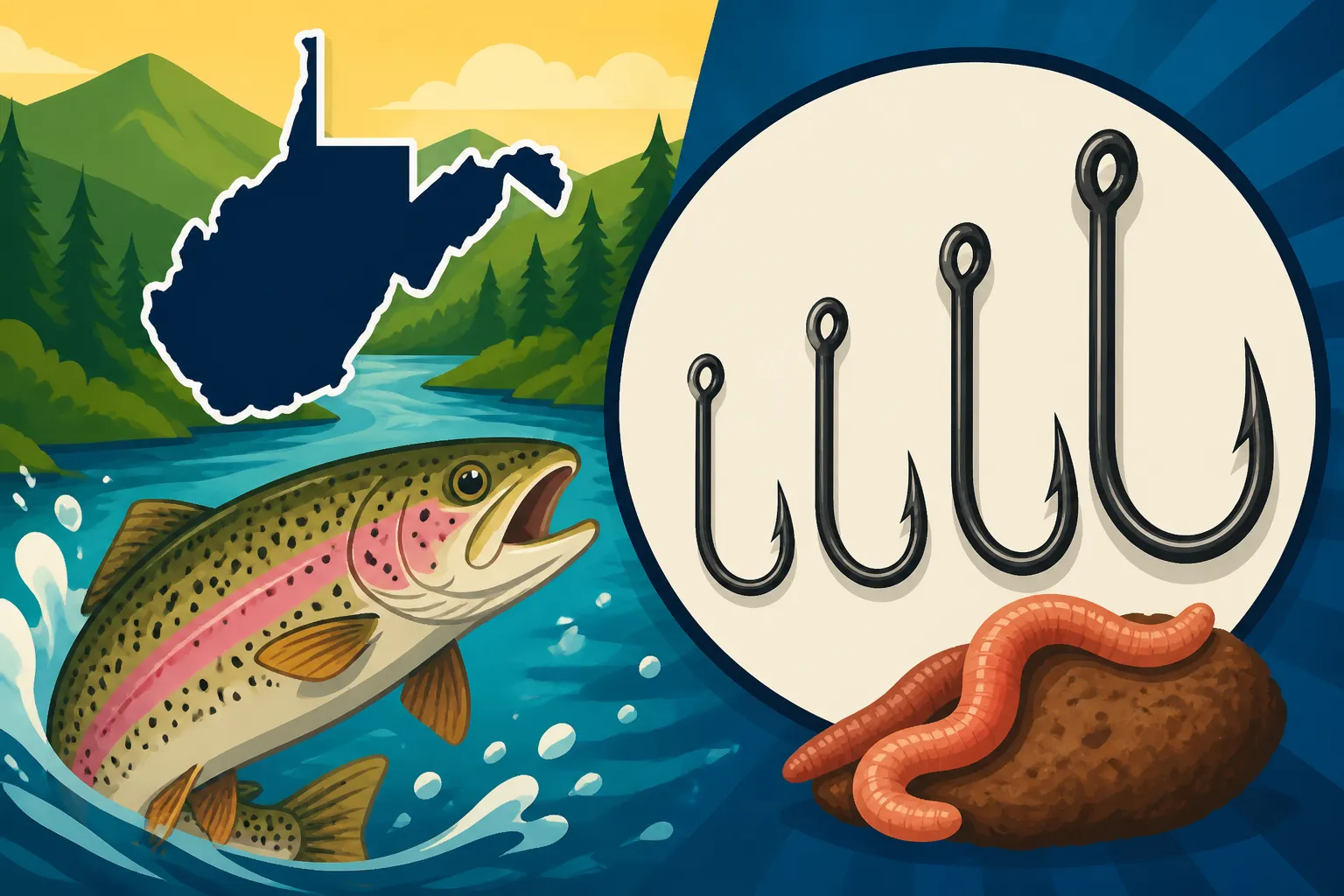
For these doughy baits, a size 10 or 12 single hook is often a fantastic choice, especially if you're aiming for catch and release. Many anglers also find success with a small treble hook, typically a size 12 or 14. The multiple points of a treble hook can help secure the softer bait and provide a better hookup ratio, though they can be harder on the fish if you plan to release them. The trick is to mold the bait around the hook so that no metal is visible, creating a buoyant or slowly sinking ball of temptation. Remember, when trout are fresh from the hatchery, sometimes they go for bright colors, so pairing your hook with a vibrant PowerBait color for early season trout can be a winning combination.
Worms, Minnows, and Live Baits
When you're fishing with natural offerings like mealworms, wax worms, garden worms, or small minnows, the goal shifts slightly. While concealment is still important, you also want to allow the bait to move naturally. This calls for single hooks, often in slightly larger sizes to accommodate the bait's bulk and ensure good penetration.
For smaller live baits like wax worms or mealworms, a size 8 or 10 bait holder hook (which has small barbs on the shank to keep the bait from sliding down) is perfect. Thread the worm onto the hook, leaving a bit of tail to wiggle. If you're using a larger piece of nightcrawler or a small minnow, you might step up to a size 6 or even a size 4 single hook. The key is to hook the bait in a way that it remains lively and enticing. For minnows, hooking through the lips or just behind the dorsal fin allows them maximum movement, mimicking distressed prey. While we're talking about live bait, you might be interested in the nuances of Best live bait for smallmouth bass for other West Virginia species, but for trout, smaller is usually better.
Corn, Salmon Eggs, and Tiny Baits
Sometimes, trout can be incredibly picky, or they've been pressured heavily, and a subtle approach is necessary. This is where micro-baits like a single kernel of corn, a salmon egg, or even a small piece of cheese come into play. For these tiny morsels, you need the smallest hooks available to maintain a natural presentation and ensure the hook is completely hidden.
Sizes 14, 16, or even 18 are not uncommon for these baits. A small, fine-wire single hook is ideal. The challenge here is to thread the bait onto the hook so that it's secure but doesn't damage the bait, causing it to fall off. For a single kernel of corn, gently thread the hook through the skin and out the other side, leaving the point barely exposed or completely hidden. Salmon eggs can be delicate; a special "egg hook" with a small gap and fine wire can work wonders, or simply hide a tiny hook within the egg itself. The idea is to make the trout feel no resistance and see no foreign objects when they inhale your offering.
Hook Styles and Features for Stocked Trout
Beyond just size, the actual style and features of a hook play a huge role in its effectiveness for stocked trout bait fishing. Different hook designs are tailored for specific baits, presentations, and even the angler's intention (like catch and release). Making an informed choice here can significantly improve your hook-up ratio and the well-being of the fish.
Single Hooks vs. Treble Hooks
This is often one of the first decisions an angler makes. Single hooks have one point, while treble hooks have three. Both have their place in trout fishing, but their advantages and disadvantages are distinct.
Single Hooks:
- Pros: Generally less damaging to fish, making them ideal for West Virginia catch and release rules for trout. They are easier to remove, which means less stress and higher survival rates for released fish. They can be incredibly sharp and penetrate well with a good hookset. They also tend to snag less on submerged cover, a common issue in many West Virginia streams.
- Cons: Sometimes have a lower hook-up ratio compared to trebles, especially if fish are just lightly mouthing the bait. If the fish doesn't fully commit, a single point might not find purchase.
- Best Use: All types of bait fishing where catch and release is a priority, or when using live baits that you want to move naturally.
Treble Hooks:
- Pros: Offer a higher chance of hook-up due to multiple points. Fish often just need to mouth the bait for one of the three points to find a hold. Excellent for soft, doughy baits like PowerBait, as they grip the bait well.
- Cons: Far more damaging to fish, often leading to deep hooks or multiple wounds, making catch and release difficult and sometimes lethal. Can be very difficult and time-consuming to remove, especially if a fish swallows the bait. They also snag more easily on underwater debris.
- Best Use: When keeping fish is the goal, or when using very soft artificial baits where maximum hook retention is needed.
When buying hooks, whether for single or treble options, you can find a huge variety at local tackle shops or through online retailers like Bass Pro Shops or Amazon, making it easy to experiment with what works best for your specific fishing style and West Virginia waters.
Offset and Kahle Hooks
While not as commonly discussed for trout as they are for bass or catfish, certain specialized hook styles can offer advantages in specific situations for stocked trout.
Offset Hooks (or Worm Hooks):
- Description: These hooks have a bend near the eye, creating an "offset" from the shank. They are primarily designed for rigging soft plastics weedless, but for trout, a small offset hook can be useful for larger natural baits.
- Advantages for Trout: When using larger live worms, an offset hook can help keep the worm straight and natural, preventing it from balling up. It also provides a bit more gap for better hooksets when a trout fully engulfs the bait.
- Considerations: Still generally larger than what you'd use for tiny baits, so they are best reserved for bigger natural offerings.
Kahle Hooks:
- Description: Kahle hooks have a wide gap and a point that's in line with the eye, similar to a wide-gap circle hook. They are designed for natural baits and often result in lip hooks, which are great for catch and release.
- Advantages for Trout: If you're using larger natural baits like a whole nightcrawler or a shiner minnow, a small Kahle hook (perhaps a size 6 or 4) can be excellent. They tend to hook fish in the corner of the mouth, reducing the chance of gut-hooking and making release much easier. This aligns well with conservation practices for West Virginia trout stocking schedule for January and other stockings throughout the year.
- Considerations: Like circle hooks, Kahle hooks work best when you avoid setting the hook aggressively. Instead, let the fish take the bait and swim away, then slowly reel in, allowing the hook to slide into the corner of the mouth. This can take some getting used to.
The Importance of Sharpness and Strength
Regardless of the size or style, two critical attributes of any hook are its sharpness and strength. A dull hook is a missed fish, plain and simple. Even the slightest dullness can prevent proper penetration, especially into the tough mouth parts of a larger, older trout.
Sharpness:
- Why it matters: A needle-sharp hook point penetrates easily with minimal pressure, ensuring a solid hookset even when a trout is just gently mouthing the bait.
- Maintenance: Always check your hook points before tying on a new rig. You can test sharpness by lightly dragging the point across your thumbnail – if it digs in, it's sharp; if it slides, it's dull. Carry a small hook sharpener to hone points throughout your fishing day.
- Tip: When browsing for hooks, pay attention to descriptions that mention chemically sharpened or laser-sharpened points, as these usually offer superior sharpness right out of the package.
Strength:
- Why it matters: Even if you're targeting modest-sized stocked trout, you never know when you might hook into a surprise lunker or a strong, healthy fish that puts up a serious fight. A weak, cheap hook can bend or break, leading to a lost fish and a lot of disappointment.
- Considerations: Fine-wire hooks are great for delicate presentations with tiny baits, but they can straighten out under heavy pressure. If you're targeting larger holdover trout or fishing in snaggy areas, a slightly heavier wire hook might be a better choice, even if it's a hair less subtle.
- Balance: The goal is to find a balance between a hook that is light enough for a natural presentation but strong enough to handle the fish you expect to catch. Don't compromise on quality for a few cents; good hooks are an investment in your fishing success.
Practical Tips for West Virginia Trout Waters
West Virginia's fishing landscape is incredibly diverse, from rushing mountain streams to tranquil lakes, and the ideal hook size can shift depending on where and how you're fishing. Being able to adapt your approach to different conditions is a hallmark of a successful angler.
Adapting to Different Water Conditions
The environment where you're fishing plays a huge role in how trout perceive your bait and hook. What works on a slow-moving pond might be completely ineffective in a fast, clear river.
Clear, Low Water:
- In clear water, trout have excellent visibility and are often more wary. This is when stealth is paramount. You'll want to opt for the smallest possible hooks that still allow for a secure bait presentation and hookset. Think size 12-16, with light line and fluorocarbon leaders. The goal is to make your offering look as natural and unencumbered as possible. This is also where a good pair of Best polarized sunglasses for sight fishing can help you spot those wary fish before they spot you.
- If you're fishing a highly visible area like a shallow riffle or a calm pool, even a hint of a hook can turn trout away. A perfectly hidden hook in a natural bait is your best bet.
Turbid or High Water:
- When the water is stained or slightly turbid after a rain, trout's visibility is reduced. This can make them less wary and more aggressive, as they rely more on scent and vibration. You might be able to get away with a slightly larger hook (say, size 8-10) without spooking them.
- The trade-off for slightly larger hooks in turbid water is often a more secure presentation for your bait, especially if you're using something robust like a nightcrawler that needs to stay put in stronger currents. Focus on strong scents and baits that won't wash off easily.
Fast Current:
- In fast-moving sections of rivers or below dam outflows, trout are opportunistic feeders, often looking for food swept downstream. The current also helps to obscure your line and hook. Here, a slightly heavier wire hook can be beneficial to keep your bait from spinning unnaturally in the current, and the current itself can help hide any slight visibility of the hook.
- Consider using baits that stay on the hook well in current. While a tiny hook for a single salmon egg might work in a calm eddy, it could quickly be stripped off in a strong riffle. Larger worms or PowerBait molded securely around a hook can be more effective. For these fast-water scenarios, mastering Best technique for fishing a riffle for trout can be a game-changer.
The Catch and Release Consideration
For many West Virginia anglers, trout fishing isn't just about harvesting a meal; it's about the sport and the conservation of the resource. If you intend to release your catch, your hook choice is more critical than ever.
- Barbless Hooks: The absolute best choice for catch and release. Barbless hooks slide out easily, causing minimal tissue damage. You can buy hooks that are already barbless, or you can take a pair of pliers and gently crimp down the barb on a standard hook. While some might worry about losing fish, a properly played fish on a tight line is rarely lost on a barbless hook.
- Single Hooks: As discussed earlier, single hooks are inherently less damaging than trebles. They're easier to remove and typically result in fewer foul-hooked fish.
- Hook Placement: The smaller and lighter the hook, the more likely a fish will inhale it completely, potentially leading to a gut hook. This is where vigilance comes in. If you're fishing with small hooks and delicate baits, watch your line closely for even the slightest twitch, and set the hook immediately. A timely hookset often means a hook in the lip or corner of the mouth, which is ideal for release.
- Best Practices: Always handle trout gently with wet hands, keep them in the water as much as possible, and use a de-hooking tool or forceps to quickly and safely remove the hook. These practices, combined with appropriate hook choices, are key to responsible angling and ensure future generations can enjoy West Virginia Fishing Season Dates and Closures for these beautiful fish.
Where to Find the Right Hooks
Finding the perfect hooks for your West Virginia trout fishing adventures is easier than ever. You have a multitude of options, from local shops to large online retailers.
- Local Tackle Shops: These are goldmines of local knowledge. Staff at your nearest tackle shop can often provide invaluable advice on what hook sizes and styles are currently working best in the local waters. Plus, you're supporting a local business!
- Sporting Goods Stores: Larger stores like Bass Pro Shops or Cabela's carry a vast array of hooks from various manufacturers. You'll find everything from bulk packs of simple bait hooks to specialized, chemically sharpened models. This is a great place to browse and compare different brands and styles.
- Online Retailers: Websites like Amazon offer an incredible selection, often at competitive prices. You can easily find specific hook models, sizes, and brands with just a few clicks. It's a convenient option for stocking up or finding those hard-to-locate specialty hooks. Just be sure to read reviews and ensure you're getting quality products.
| Bait Type | Recommended Hook Size (Single Hook) | Recommended Hook Size (Treble Hook) | Notes |
|---|---|---|---|
| PowerBait / Dough Baits | #10 – #14 | #12 – #14 | Conceal hook completely. Small trebles grip better but are harder on fish. |
| Worms (Mealworm/Waxworm) | #8 – #10 (Bait Holder) | N/A | Allow natural movement; bait holder hooks prevent sliding. |
| Nightcrawlers (pieces) | #6 – #8 (Bait Holder) | N/A | Use enough hook to secure the worm; larger hook for larger pieces. |
| Minnows / Shiners (small) | #4 – #6 (Live Bait Hook / Kahle) | N/A | Hook through lip or dorsal fin for lively presentation. |
| Corn / Salmon Eggs | #14 – #18 | N/A | Smallest hooks for maximum concealment and delicate baits. Fine wire preferred. |
| Marshmallows | #10 – #14 | #14 | Conceal completely; buoyant baits need small, light hooks to stay suspended naturally. |
No matter where you choose to purchase your hooks, prioritize sharpness and quality. A cheap, dull hook will only lead to frustration, while a well-chosen, sharp hook will increase your enjoyment and success on West Virginia's beautiful trout waters. If you're just getting started, a Best rod and reel combo for beginners combined with the right hooks will set you up for success.
Disclaimer
This article is for general informational purposes only and does not constitute professional advice. Laws, prices and regulations vary by location and change over time. Consult a qualified professional for guidance on your specific situation.