Best technique for fishing a riffle for trout
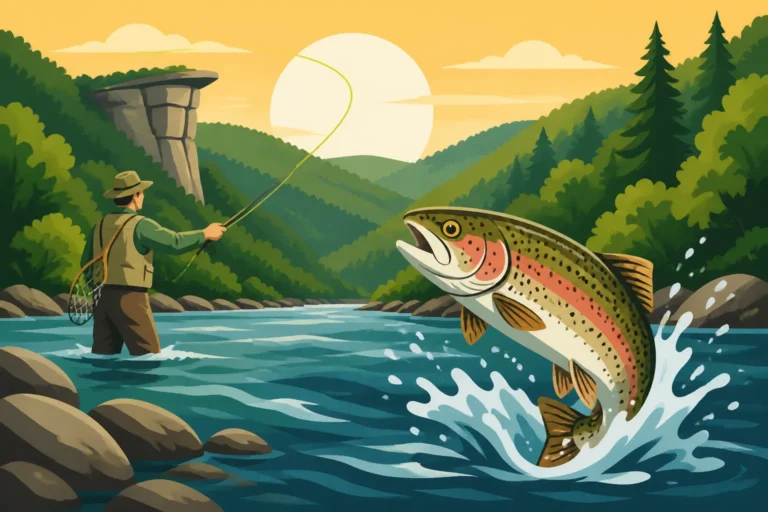
We've all stood streamside, gazing at a beautiful riffle – that lively, bubbly stretch of water – and felt a mix of excitement and confusion. It looks so fishy, but how on earth do you effectively present a bait or a fly in all that chaos? This guide is here to unravel the mysteries of fishing West Virginia riffles for trout, offering practical, actionable techniques that will help you turn those promising spots into productive ones.
Decoding the Riffle: Why Trout Love Them and How to Spot the Sweet Spots
Riffles are essentially the grocery stores and oxygen bars of a trout stream. They're vibrant, dynamic sections where the water flows over rocks, creating turbulence, aeration, and an abundance of food. Understanding why trout hang out here is the first step to knowing how to fish them. It's not just random, turbulent water; there's a method to the madness, and trout know exactly where to position themselves for maximum benefit with minimum effort.
The Dynamics of Moving Water
The primary draw of a riffle for trout is the incredible oxygen content. As water tumbles over rocks, it picks up dissolved oxygen, which is vital for cold-water species like trout. This aeration isn't uniform; the fastest, most turbulent sections are typically the most oxygenated. Beyond oxygen, riffles act as natural conveyor belts for food. Aquatic insects, dislodged by the current, invertebrates, and even small baitfish get swept through these zones, offering trout a continuous, easy meal delivery service. They can simply hold in a strategic position and let the buffet come to them.
Think of it like this: a trout isn't going to fight the strongest current all day. Instead, they'll find subtle breaks in the flow, often right next to the fastest water. These "current seams" are goldmines. They could be behind a larger rock, in a slight depression on the streambed, or along the edge where the fast water meets a slower pocket. The trout sits in the slower water, expending minimal energy, while keeping an eye on the fast lane for passing food. The bigger the seam, the more a trout can relax and simply open its mouth. You'll often find multiple trout stacked in a good current seam, each taking their turn at the passing meal.
Identifying Productive Lies Within the Riffle
Not all riffles are created equal, and even within a single riffle, some spots are far better than others. Learning to "read the water" is a skill that comes with practice, but there are clear indicators of prime trout habitat. Look for changes in depth, variations in current speed, and submerged structure. A slightly deeper trench running through a riffle, for instance, provides both cover and a steady food line. The "head" of a riffle, where the water first accelerates, can be excellent, as can the "tailout" where it begins to slow and transition into a deeper pool.
Rocks are your best friends in a riffle. A large boulder breaking the current creates a quiet eddy directly behind it, a perfect ambush point. The same goes for submerged logs or root wads. Any obstacle that creates a noticeable "cushion" of slower water is worth a cast. Also, pay attention to the seams where two different currents merge, or where fast water brushes against a slower bank. These are superhighways for insects and prime feeding lanes. Remember, trout are lazy predators; they want to eat as much as possible while using the least amount of energy. Your job is to find where they've set up their lazy buffet line.
Essential Gear for Conquering West Virginia Riffles
Having the right equipment can make all the difference when fishing these lively sections of a West Virginia trout stream. You'll need gear that allows for precise casting, subtle presentations, and the ability to detect light bites amidst turbulent water. Whether you prefer the elegance of fly fishing or the versatility of spin fishing, there are key considerations for your rod, reel, line, and terminal tackle.
Fly Fishing Setup for Riffles
For fly anglers, a medium-fast action fly rod between 8 to 9 feet in length, typically in a 3-weight to 5-weight range, is ideal. This length gives you enough reach to manage your line and perform mends, while the weight provides sensitivity for detecting strikes and enough backbone to handle a decent West Virginia trout. Brands like Orvis, Redington, or Fenwick offer excellent rods for various budgets. Your fly reel should balance the rod and hold a corresponding weight-forward floating fly line. For more insights into selecting your setup, check out our guide on Best Fly Rods for West Virginia Trout Streams.
When it comes to leader and tippet, fluorocarbon is often preferred, especially in clearer waters or for spookier trout. Its low visibility and fast sink rate help get your flies down quickly. A 9-foot tapered leader ending in 5x or 6x fluorocarbon tippet is a good starting point. You'll want to carry an assortment of nymphs – patterns like Pheasant Tails, Hare's Ears, Squirmy Worms, and Prince Nymphs are riffle staples. Don't forget some split shot to get your flies down to the feeding zone, and strike indicators, which are crucial for detecting subtle takes in choppy water. Many anglers find great deals on these essential fly fishing accessories on Amazon.
Spin Fishing Setup for Riffles
Spin fishing in riffles often calls for a lighter, more sensitive setup. A lightweight spinning rod, between 6 to 7 feet long, with a fast or extra-fast action and a light or ultralight power rating, is perfect. This provides the sensitivity to feel delicate bites and the casting accuracy needed to hit small pockets. Pair this with a small, smooth spinning reel (1000 or 2000 series) spooled with 4-6 pound test monofilament or fluorocarbon line. Monofilament offers a bit more stretch, which can be forgiving with lighter lures and tippets, while fluorocarbon offers greater sensitivity and less stretch. For general river fishing, you might also find insights in our article on Best Spinning Rods for Smallmouth Bass, as many principles apply.
Your tackle box for riffles should include an array of small inline spinners (like Panther Martin or Mepps in sizes #0 to #2), small spoons (such as Kastmasters or Little Cleos), and perhaps some tiny soft plastics rigged on jig heads. Live bait, like small worms, crickets, or mealworms, presented on a small hook with a minimal split shot, can also be incredibly effective. Consider using a small swivel above your lure or bait to prevent line twist, especially with spinners. Always check local regulations, as some special regulation waters may restrict bait usage. You can find a fantastic selection of these lures and baits, along with helpful reviews, on Amazon.
Mastering the Techniques: Fly Fishing and Spin Fishing Strategies
Now that you know what gear to bring and where to look, it's time to talk about how to present your offering to those riffle-dwelling trout. The key in both fly and spin fishing is to get your lure or fly into the trout's feeding zone, keep it there naturally, and be ready to detect the often subtle strike.
Fly Fishing Techniques: Nymphing and Dry-Dropper
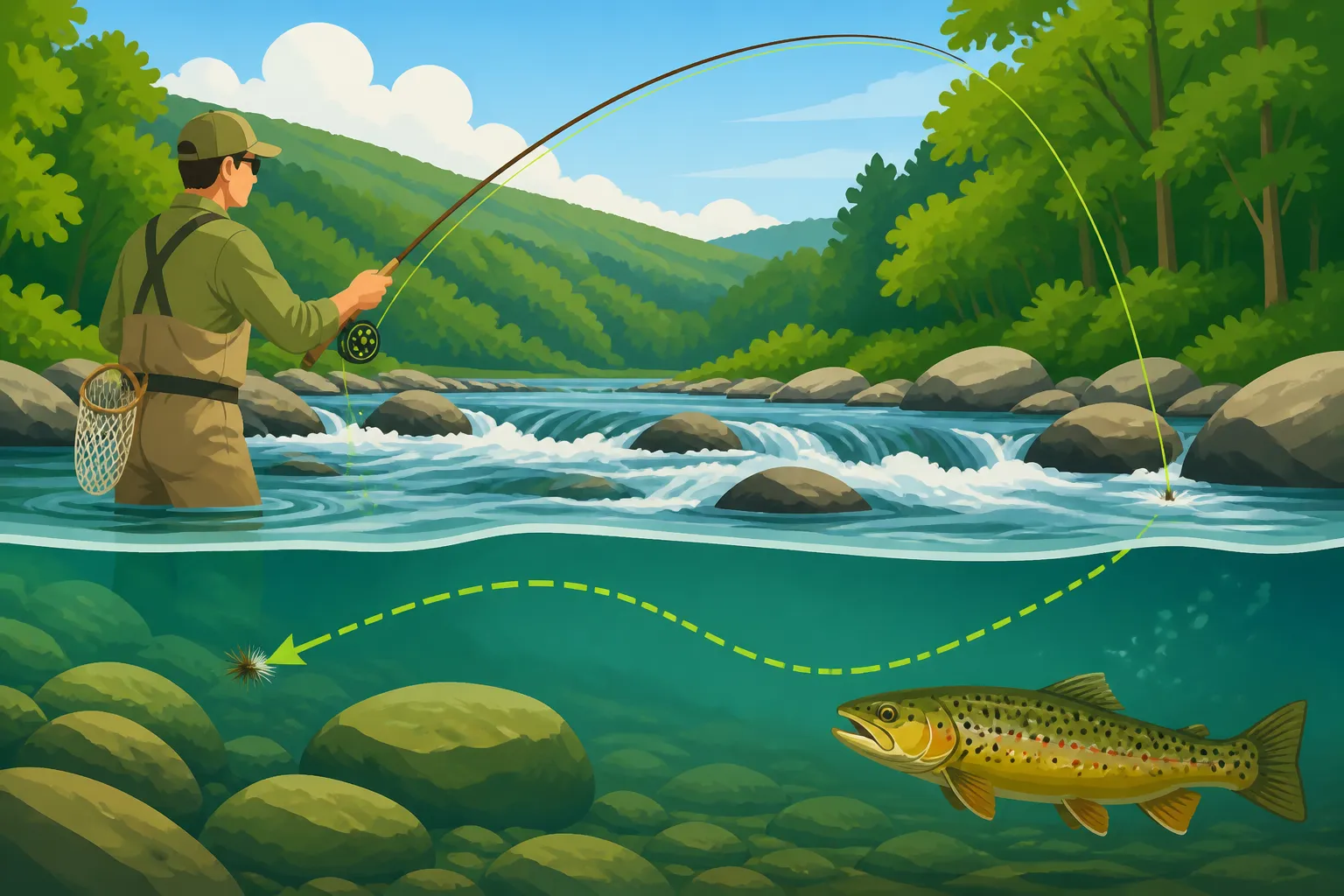
For fly anglers, nymphing is king in riffles. Trout are overwhelmingly feeding sub-surface, so getting your nymph down quickly and naturally is paramount. The "tight-line nymphing" or "Euro nymphing" technique is incredibly effective here. This involves using a long leader, heavier nymphs, and keeping as much of your fly line off the water as possible to minimize drag. You'll cast upstream, slightly across, and then use your rod tip to guide the flies downstream at the same speed as the current, trying to maintain a "dead drift." The strike indicator will be your visual cue for a take, but often you'll feel a subtle tug or see your line hesitate. For more in-depth knowledge on this specific technique, you might find our guide on Euro Nymphing West Virginia Trout Streams helpful.
Another popular and versatile method is the dry-dropper rig. This involves tying a heavier nymph (your "dropper") off the bend of a buoyant dry fly. The dry fly acts as both an attractor and a strike indicator. You'll cast this rig upstream and let it drift naturally through the riffle. The dry fly bobs on the surface, and if it pauses, dips, or darts unnaturally, set the hook – it likely means a trout took your nymph below. This setup allows you to cover both the surface and sub-surface layers, appealing to trout that might be looking up for emerging insects or down for nymphs. Knowing Fly Patterns for West Virginia Trout Streams can give you an edge in selecting the right flies for either of these methods.
Spin Fishing Techniques: Casting and Retrieving
For spin fishing, precision casting is vital in riffles. You want to cast slightly upstream and across, letting your lure or bait drift naturally into the prime lies you've identified. With inline spinners, cast upstream and retrieve just fast enough to get the blade spinning, allowing the current to carry it downstream. The key is to make it look like a natural food item struggling in the current, not a propeller boat speeding by. Pay attention to how the current affects your retrieve; you'll often need to vary your reel speed to maintain that natural drift.
When using small jigs or soft plastics, you can employ a "lift and drop" retrieve, simulating a struggling insect or baitfish. Cast upstream, let the jig sink briefly, then gently lift your rod tip to make it hop off the bottom, letting it fall back naturally. Most strikes will occur on the fall. For live bait, simply cast upstream with minimal weight, allowing the bait to tumble naturally downstream with the current, just like a dislodged worm or bug would. Keep your bail open or your reel in free spool if safe, to allow for the most natural drift possible, and watch your line for any twitch or pause that indicates a bite. Many West Virginia trout streams have varying regulations, so always refer to our guide on West Virginia Fishing Regulations Explained before heading out.
Beyond the Cast: Reading the Water and Stealthy Approaches
Fishing riffles isn't just about throwing your line in the water; it's about a holistic approach that combines observation, stealth, and a deep understanding of trout behavior. Your success will often hinge on what you do before you even make your first cast.
The Art of the Approach and Stealth
Trout in riffles, especially those in clear, low-pressure waters, are incredibly wary. A heavy footstep on the bank, a visible silhouette against the sky, or even a carelessly cast shadow can send them scurrying for cover. Always approach a riffle from downstream, moving slowly and quietly. Use any available cover – trees, bushes, bank irregularities – to break up your outline. Keep a low profile, even kneeling if necessary, especially when fishing smaller, more intimate streams.
Your first cast should always be to the closest, most promising water. This minimizes disturbance to areas further upstream, which you can then fish later. If you spook a fish, don't keep hammering that spot immediately; move on to the next promising lie and come back later. Remember, a stealthy approach means you're not just trying to avoid spooking the fish you see, but also the fish you don't see. For those who enjoy getting into the water, understanding Wading Techniques for West Virginia Trout Streams is absolutely crucial for both safety and stealth. Proper Best Waders for West Virginia Trout Streams and Best Wading Boots for Rocky Streams will make a huge difference.
Reading Micro-Currents and Detecting Strikes
Once you've made your stealthy approach, the real work of reading the water begins. Within the larger current seams we discussed, there are often subtle "micro-currents" that funnel food even more efficiently. Watch leaves, bubbles, or bits of debris as they float downstream. They'll show you exactly where the food is traveling. Try to match your drift to these micro-currents. This often means adjusting your casting angle or making small "mends" (for fly anglers) to reposition your line without moving your fly or lure.
Detecting strikes in a riffle can be challenging because the turbulent water creates so much visual and sensory noise. For spin fishermen, this means keeping a direct connection to your lure and watching your line where it enters the water for any sudden twitch or stop. For fly fishermen, your strike indicator is your primary visual aid, but learning to feel for subtle taps or unnatural hesitations in your line is also key. Don't be afraid to set the hook at anything that feels "off." Often, what you thought was a snag was actually a trout. And when you do hook into one, having a good Best Landing Net for Trout ready will prevent you from fumbling a beautiful fish.
Common Riffle Mistakes to Avoid
- Excessive Drag: This is the cardinal sin of riffle fishing. If your fly or lure isn't drifting at the same speed as the natural current, it looks unnatural and trout will ignore it. Mend your fly line, adjust your position, or try a different cast to achieve that perfect, drag-free drift.
- Too Much Weight (or Not Enough): If your flies aren't getting down to the fish, you need more weight. If they're constantly snagging, you have too much. It's a fine balance that changes with depth and current speed. Carry a variety of split shot sizes and adjust as needed.
- Overlooking the Edges: Many anglers focus solely on the fastest water. But the often slower, slightly deeper water along the banks, where the riffle meets the calmer pool, can hold large trout. These transition zones offer trout easy access to food without the constant fight against the main current.
- Wading Carelessly: Crashing through a riffle sends shockwaves through the water and spooks everything downstream. If you must wade, do so slowly, deliberately, and only when necessary. Often, you can fish a significant portion of a riffle from the bank.
Seasonal Considerations for Riffle Fishing
While riffles can be productive year-round, their effectiveness often shifts with the seasons in West Virginia. Understanding these nuances can help you optimize your approach and increase your chances of success.
Spring and Early Summer: Prime Riffle Action
Spring is arguably the prime time for fishing riffles in West Virginia. After the cold winter, trout are often eager to feed, and the warmer temperatures of spring kickstart insect hatches. Riffles are vibrant with emerging caddis, mayflies, and stoneflies, making them a natural magnet for hungry trout. During this time, both nymphs and dry flies can be incredibly effective. As the water warms into early summer, these prolific hatches continue, and the higher oxygen levels in riffles provide a comfortable thermal refuge for trout as ambient temperatures rise. This is also a fantastic time to use small spinners, as they can imitate the darting movements of baitfish or larger insects. Keep an eye on West Virginia Trout Season and Stocking Rules to know when the action is really heating up.
Late Summer and Fall: Adjusting Your Approach
As late summer arrives, water temperatures in many streams will peak. While riffles still offer essential oxygen, some larger trout might retreat to deeper, cooler pools during the hottest parts of the day. However, early mornings and late evenings can still be highly productive in riffles. Focus on the deeper pockets within the riffle or the transition zones into deeper water. Terrestrial insects like grasshoppers and ants become more prevalent, making dry-dropper rigs with a terrestrial pattern on top an excellent choice. As fall approaches, water temperatures begin to drop, and trout become more active again, often feeding aggressively in riffles to build up reserves for winter. This can be a fantastic time for larger nymphs and streamers, especially as trout begin to focus on bigger meals. You might even find some Golden Rainbow Trout in West Virginia in these areas after fall stockings, adding an extra thrill!
Winter: The Riffle's Subtle Appeal
Winter fishing in riffles can be challenging but rewarding. Trout activity slows significantly, but they still need to feed, and riffles remain a reliable source of oxygen and dislodged insects. The key in winter is to fish slower and deeper. Focus on the very bottom of the riffle, using heavy nymphs or small jigs that can get right into the trout's holding lies. The trout will be less willing to move far for a meal, so precise presentations are crucial. Mid-day, when water temperatures are at their warmest, is often the best time to fish. Don't expect fast action, but a patient angler can often entice a few strikes from lethargic but hungry trout. Remember to dress warmly; being comfortable on the water is half the battle in winter.
Ultimately, fishing riffles for trout in West Virginia is a dynamic and rewarding experience. By understanding trout behavior, selecting the right gear, mastering your presentation, and adapting to seasonal changes, you'll be well on your way to more successful days on the water.
Disclaimer
This article is for general informational purposes only and does not constitute professional advice. Laws, prices and regulations vary by location and change over time. Consult a qualified professional for guidance on your specific situation.