Best Drift Boats for West Virginia Rivers
Navigating the challenging, often shallow, and sometimes incredibly swift currents of West Virginia's premier fishing rivers can be a real headache if you're not equipped with the right vessel. Traditional motorboats often can't get you where the fish are hiding, or they simply aren't suited for the intimate dance required on flowing water. This guide is designed to walk you through everything you need to know about choosing and utilizing the best drift boats to unlock those pristine, hard-to-reach honey holes and provide an authentic Mountain State angling adventure.
Why Drift Boats are the Ultimate Vessel for West Virginia Rivers
West Virginia's rivers are a true angler's paradise, but they demand respect and the right tools. From the legendary smallmouth bass waters of the New River to the pristine trout streams nestled in our mountains, these waterways are dynamic. They feature everything from gentle riffles and deep pools to challenging rapids and incredibly shallow stretches, often all within a short distance. This unique character is precisely why drift boats stand out as the superior choice for serious river anglers. They offer an unparalleled blend of maneuverability, stability, and stealth that other boats simply can't match, allowing you to effectively fish the state's diverse aquatic landscapes.
Unmatched Maneuverability and Stealth
One of the greatest advantages of a drift boat is its ability to be precisely controlled in current. Unlike a motorboat that relies on mechanical propulsion, a drift boat is propelled and steered by oars, giving the angler or guide an intimate connection with the water. This allows for subtle adjustments to maintain optimal casting distance, hold a seam, or navigate around obstacles with surgical precision. Imagine silently slipping into a quiet eddy where trophy fish are holding, without the noise and disturbance of an outboard motor.
The flat-bottom or semi-V hull designs, combined with a pronounced rocker, enable drift boats to spin on a dime and effortlessly glide over shallow rocks where a prop-driven boat would likely hang up or cause damage. This maneuverability is crucial when you're targeting elusive species in complex river environments, providing the stealth needed to get close without spooking your quarry. This precision also means you can maintain the perfect drift speed to present your flies or lures naturally, mimicking natural prey movement.
Accessing Remote and Shallow Waters
Many of West Virginia's most productive fishing spots are found in areas inaccessible to larger, heavier boats. Think about the hidden stretches of the Best Fishing Rivers in West Virginia or the smaller, wilder tributaries. These areas often feature rapid elevation changes, significant rock gardens, and depths that fluctuate dramatically throughout the season. A drift boat's design, particularly its relatively shallow draft, allows it to navigate these challenging conditions with grace.
This capability translates directly into expanded fishing opportunities. You're no longer confined to easily accessible boat ramps or deep channels. Instead, you can explore miles of pristine water, reaching spots that see far less pressure. This opens up possibilities for true wilderness fishing experiences, letting you discover those untouched pockets where fish are less wary and more willing to strike. It’s about experiencing the river on its own terms, getting into the heart of the action.
Environmental Friendliness and Quiet Enjoyment
Beyond the practical fishing advantages, drift boats offer a quieter, more environmentally friendly way to enjoy our state’s natural beauty. Without a roaring engine, you're free to fully immerse yourself in the sounds of the river – the rushing water, the calls of birds, and the rustle of leaves along the bank. This provides a more peaceful and contemplative angling experience, which for many, is a core part of fishing.
The absence of an engine also means no fuel emissions or oil leaks, contributing to cleaner water and healthier aquatic ecosystems. This aligns perfectly with the conservation values many West Virginia anglers hold dear. When you're fishing near other anglers, the quiet operation of a drift boat also means you're less likely to disturb their experience, contributing to a more harmonious environment on the water. Operating a Boat Near an Angler in West Virginia addresses some of these considerations more broadly.
Key Features to Look for in a West Virginia Drift Boat
When you start looking at drift boats, you’ll quickly realize there’s a lot more to them than just a pointy front and a flat back. The design and construction details are critical for how the boat handles on our particular rivers. You need something that can take a beating from shallow rocks, respond instantly to your oars, and provide a stable platform for casting and fighting fish in unpredictable currents.
Hull Design and Rocker
The hull design is arguably the most critical feature. Most drift boats feature a "flat bottom" or "modified V" hull with a significant "rocker." The rocker refers to the upward curve of the hull from front to back. A boat with more rocker will be incredibly nimble, able to spin and maneuver quickly in tight spots and turbulent water. This is fantastic for navigating technical sections or tight turns on smaller streams, making it easier to avoid obstacles. However, a high-rocker boat can sometimes feel less stable and require more effort to row in flat, open water.
Conversely, a boat with less rocker will track straighter and require less effort to row across long stretches of calm water, but it will be less responsive and harder to turn quickly in whitewater. For West Virginia's diverse rivers, often a moderate to aggressive rocker is preferred, striking a balance between nimble maneuverability and stable tracking. You want enough curve to pivot effortlessly but not so much that you feel like you're constantly fighting the current or losing stability when standing.
Construction Materials and Durability
Drift boats come in several common materials, each with its own set of pros and cons regarding durability, weight, and cost. Understanding these differences is crucial for matching the boat to your typical fishing conditions and budget.
- Fiberglass: This is a very common material, known for its smooth finish, excellent hydrodynamics, and ability to be molded into complex shapes. Fiberglass boats are often lighter than their wooden counterparts and can be quite durable, though impacts on sharp rocks can cause gel coat damage or structural cracks if severe. Repairs are possible, but they can be specialized. They tend to offer a quieter ride as well.
- Aluminum: Aluminum boats are incredibly rugged and low-maintenance. They can withstand significant impacts from rocks and are generally easier to repair than fiberglass. They are often heavier and can be noisier on the water, especially when bumping over submerged objects, which might be a consideration for stealthy fishing. However, their sheer durability makes them a favorite for guides and anglers who frequently encounter rough, rocky rivers.
- Wood: Traditional wooden drift boats, often built from marine plywood, offer a classic aesthetic and a very quiet, supple ride. They can be incredibly durable if well-maintained, but they require more upkeep (painting, varnishing, sealing) than fiberglass or aluminum. They are also often heavier and can be more susceptible to rot if not properly cared for. Many wooden drift boats are custom-built, reflecting a high level of craftsmanship and often a higher price tag.
- High-Density Polyethylene (HDPE): A newer material, HDPE boats are nearly indestructible, incredibly quiet, and very low maintenance. They are highly resistant to impacts and abrasion, making them ideal for extremely rocky or shallow rivers. They can be heavier than fiberglass, and their molding process might limit some design intricacies, but for sheer toughness and peace of mind, they are gaining popularity.
| Material | Durability | Weight | Maintenance | Cost (Relative) | Pros | Cons |
|---|---|---|---|---|---|---|
| Fiberglass | Good | Light | Moderate | Mid-High | Smooth ride, quiet, aesthetically pleasing | Can crack on severe impact, specialized repairs |
| Aluminum | Excellent | Heavy | Low | Mid-Range | Extremely tough, easy repairs | Can be noisy, heavier |
| Wood | Good | Varies | High | High | Classic look, quiet, unique feel | Requires consistent upkeep, susceptible to rot |
| HDPE | Exceptional | Heavy | Low | Mid-High | Nearly indestructible, quiet, very low upkeep | Can be heavier, design flexibility may be limited |
Length, Width, and Transom Considerations
The overall dimensions of a drift boat will impact its performance and capacity.
- Length: Longer boats (16-18 feet) generally offer more carrying capacity, better stability in big waves, and a smoother ride through choppy water. They can also be harder to maneuver in very tight spots and require more power to row. Shorter boats (14-15 feet) are lighter, more nimble, and easier to handle in smaller, brushy streams, but might feel less stable with a full load or in significant rapids. For many West Virginia rivers, a 16-foot boat strikes a great balance.
- Width: A wider boat generally means more stability, which is fantastic when you're standing up to cast or when navigating challenging sections of river. It also typically provides more interior space for gear and passengers. However, excessively wide boats can be harder to row and might not fit as easily into tight channels or between bankside obstacles.
- Transom: Most drift boats are designed for rowing, but many come with a "squared-off" transom that allows for the attachment of a small outboard motor (typically a 2.5 to 10 horsepower engine). This can be incredibly useful for reaching upstream sections quickly, covering long stretches of flat water, or as a safety measure. If you plan on fishing larger rivers like the New River where covering distance can be a factor, a transom is a feature worth considering. However, remember that many of the true wilderness sections might still require you to rely solely on oar power.
Types of Drift Boats and Their River Applications
While the term "drift boat" often brings to mind a very specific image, there are variations in design that cater to different river conditions and angling styles. Understanding these distinctions will help you pick the perfect vessel for your West Virginia adventures, whether you're fly fishing for trout or casting big baits for muskie.
Traditional Western-Style Drift Boats
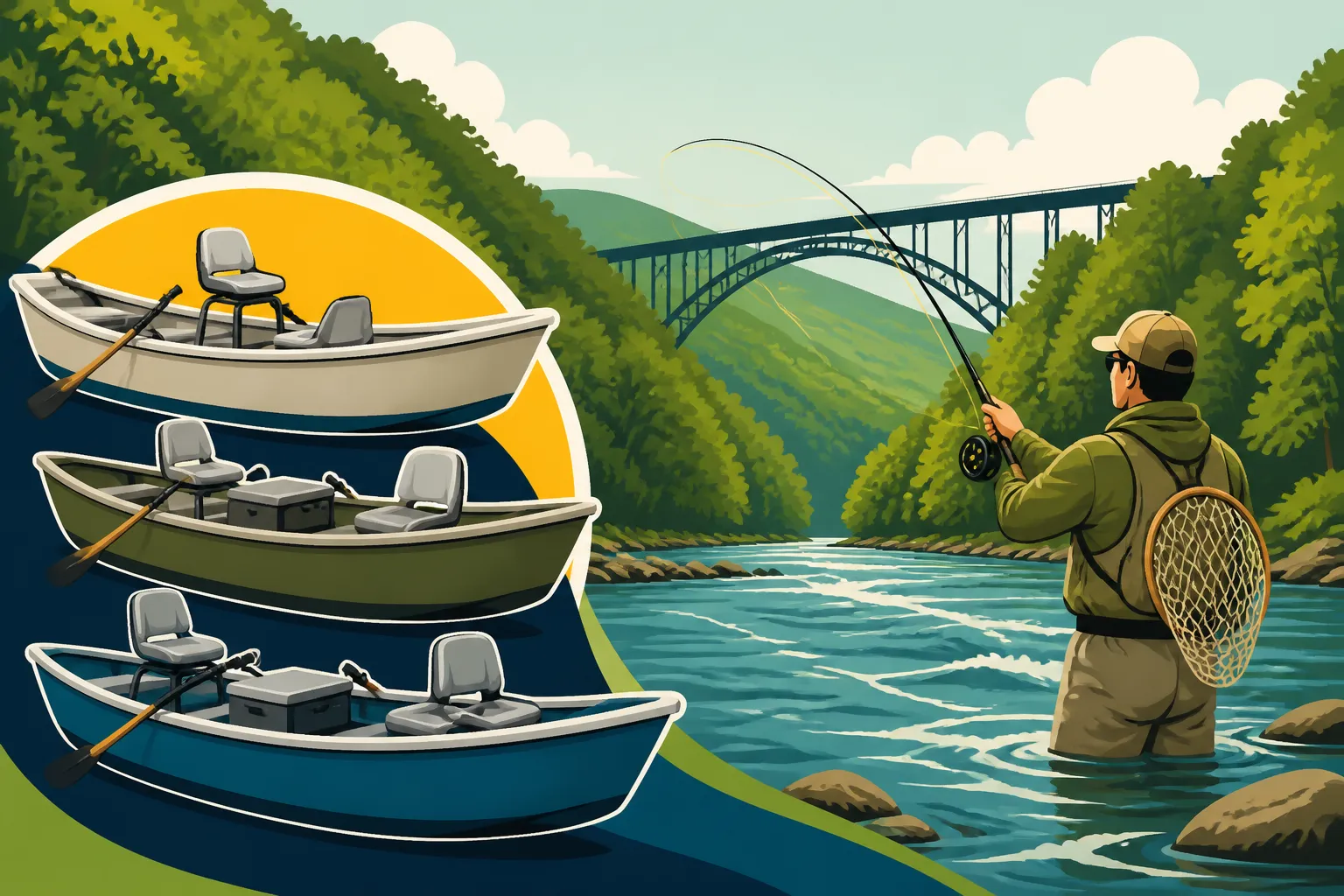
When most people think of a drift boat, they're picturing the classic Western-style model. These boats typically feature a wide, flat bottom (or a very shallow V) for stability and a pronounced rocker that curves sharply upward at both the bow and stern. This design makes them incredibly agile, allowing the rower to pivot and turn quickly to navigate rapids and shallow sections. They usually have a pointed bow and stern, or a slightly flared, narrower transom.
These boats are the workhorses for fly fishing guides on famous Western rivers, and they translate beautifully to the larger, more technical rivers of West Virginia. They excel on waters like the New River Gorge where you might encounter substantial rapids and need precise control, or the larger sections of the Potomac where diverse water types demand versatility. New River Gorge Fishing Guide highlights just how dynamic these waters can be. They typically offer ample storage for gear, a casting brace for stability, and comfortable seating for two anglers and a rower.
Low-Profile and Technical Water Boats
For those who primarily focus on smaller, shallower, or more technical trout streams – think classic fly fishing on tributaries or certain sections of the Elk River – a low-profile drift boat or a specialized "technical water" design might be ideal. These boats are often shorter, narrower, and have an even more exaggerated rocker than traditional models. Their reduced size and weight make them easier to launch and retrieve in less-developed access points and more agile in tight, brushy channels.
The lower profile means they catch less wind, which is a significant advantage on exposed rivers. However, their reduced freeboard (the distance from the waterline to the top of the boat's side) means they might not be suitable for larger rapids or very choppy water where waves could easily wash over the sides. These boats shine when you're wading frequently or need to precisely work small pockets and runs. For specific situations, they offer unmatched performance and can sometimes be a more user-friendly alternative to a raft. Consider this option if your primary goal is Best Fly Fishing Rivers in West Virginia with minimal whitewater.
Hybrid Designs and Rafts
While not strictly "drift boats," it's worth touching on hybrid designs and rafts, as they serve similar purposes on West Virginia's rivers and might be suitable for some anglers. Hybrid boats often combine elements of drift boats with a more pronounced V-hull or a wider, more stable platform, sometimes even incorporating a small jet drive for added propulsion in shallow water. These can be fantastic for anglers who want more versatility, perhaps fishing large lakes occasionally but still needing river capability.
Fishing rafts, on the other hand, offer unparalleled stability and whitewater capability. They are softer, more forgiving on impacts, and can carry heavy loads. Many modern fishing rafts come with rowing frames, elevated seats, and casting platforms, essentially mimicking the fishing experience of a drift boat but with the added safety and resilience of an inflatable. While they don't offer the same precision of a hard-sided drift boat for holding seams, they are an excellent choice for anglers who prioritize safety in serious whitewater or who frequently fish with multiple heavy coolers and lots of gear. For those planning extended multi-day trips on rugged rivers, a raft might even be a better choice.
Outfit Your Drift Boat: Essential Gear and Accessories
Having the right drift boat is only half the battle; properly outfitting it with essential gear and accessories will make your fishing trips safer, more efficient, and more enjoyable. From the oars that propel you to the safety equipment that protects you, every piece plays a crucial role. When gathering your gear, check out local outdoor shops or browse online platforms like Amazon and Bass Pro Shops for a wide selection of quality items.
Oars and Oarlocks
Your oars are your engine and your steering wheel. The quality, length, and material of your oars significantly impact your rowing efficiency and control. Most drift boats use long oars, typically between 9 and 10.5 feet, with a good flex for power and leverage. Wooden oars offer a classic feel and good flex, while composite or fiberglass oars are often lighter, more durable, and require less maintenance. Always carry at least one spare oar, if not two, because a broken oar in swift current is more than an inconvenience – it can quickly become a serious safety hazard.
The oarlocks, which secure your oars to the boat, are equally important. Look for durable, heavy-duty oarlocks, preferably made of bronze or stainless steel, that can withstand constant abuse. Keep them lubricated to ensure smooth operation. Many experienced anglers also use "oar rights" or "oar stops" that keep the oar blades oriented correctly in the water, reducing fatigue and improving control.
Anchor Systems and Safety Gear
A robust anchor system is absolutely critical for drift boat fishing in West Virginia rivers. You'll use it constantly to slow your drift, hold your position above a promising run, or secure the boat for a wading opportunity. The type and weight of your anchor will depend on the size of your boat and the typical currents you encounter. A pyramid or rectangular anchor, weighing between 20-40 pounds, is common. Consider an anchor that can release easily if snagged, or one with a break-away system. Best Anchor System for River Fishing can provide more in-depth guidance on this.
Safety gear is non-negotiable. Every person in the boat must have a properly fitted U.S. Coast Guard-approved personal flotation device (PFD), or life jacket. Life Jacket Requirements for West Virginia Boaters dictates specifics, but it's always best practice to wear it at all times, especially in moving water. Other essential safety items include a first-aid kit, a whistle or air horn, a throw bag with rescue rope, a spare paddle (even if you have oars), and a repair kit specific to your boat's material. A bailing bucket or bilge pump is also crucial in case of water intake.
Storage and Organization
Drift boats are designed to be functional fishing platforms, and good storage solutions are key to keeping your gear organized, accessible, and dry. Many boats come with built-in storage compartments, often under seats or in the bow and stern. Look for compartments that are watertight or at least highly water-resistant. Dry boxes and dry bags are essential for protecting valuables, electronics, extra clothing, and your lunch. You can find excellent options for dry bags and boxes on Bass Pro Shops or Amazon.
Rod holders are also a must-have, protecting your valuable Best Fishing Rods for West Virginia Rivers when not in use and keeping them out of the way. Consider vertical rod holders for easy access or horizontal ones for secure transport. Net holders for your Best Landing Net for Muskie or trout net will also keep it handy without cluttering the deck. Finally, a cooler for drinks and snacks, and a separate one for fish (if you're keeping them), should be secured to prevent shifting during rapids or sudden stops.
Navigating West Virginia Rivers: Skills and Safety
Operating a drift boat effectively on West Virginia’s rivers is an art form that blends physical effort, keen observation, and a deep understanding of river dynamics. It's not just about floating downstream; it's about making deliberate choices with your oars to control your speed, trajectory, and position relative to the fish and hazards. Safety must always be your top priority, especially when dealing with unpredictable currents and rocky terrain.
Reading the Water and Current
The first step to becoming a proficient drift boat rower is learning to "read the water." This means understanding how the current flows, where eddies form, where rocks and other obstacles lie, and where fish are likely to hold. Look for V-shaped ripples pointing downstream – these often indicate submerged rocks. Smooth, glassy water typically signals deep, slower moving water, while riffles and broken water suggest shallower, faster moving sections.
Pay close attention to current seams – where fast water meets slow water. These are prime fishing spots and often areas where you can use the currents to your advantage to slow your drift or change direction with less effort. Before you even launch, spend time observing the river from above. Look at entry and exit points, scout potential rapids, and identify hazards. This pre-trip reconnaissance can save you a lot of trouble on the water.
Essential Rowing and Maneuvering Techniques
Mastering a few fundamental rowing techniques is crucial. The most common is "back-rowing" or "checking," where you row upstream against the current to slow your boat’s downstream progress. This allows anglers more time to cast to prime spots and helps you maintain control in swift water. Forward strokes are used for accelerating, maneuvering around obstacles, or crossing eddy lines.
"Ferries" are another essential skill, allowing you to move your boat sideways across the current without losing significant downstream distance. By angling your boat upstream and applying gentle pressure with your oars, you can effectively "crab" across the river. This is invaluable for getting to the other side of a run, avoiding hazards, or setting up for a different fishing lane. Practice these techniques in calmer water before attempting them in more challenging sections.
Identifying and Avoiding River Hazards
West Virginia rivers, while beautiful, are full of potential hazards. Submerged rocks and ledges are common. Learn to spot the signs – agitated water, small waves, or V-shapes in the current. Always assume rocks are present, even if you can't see them. "Strainers" – fallen trees or debris that allow water to pass through but can trap a boat – are extremely dangerous. Identify them early and give them a wide berth.
Low-head dams, often difficult to spot from upstream, create a recirculating current (a "keeper" hydraulic) that can be deadly. Always scout ahead, know your river, and portage around any dam you encounter. Swift current, especially around bends or through rapids, can quickly push you into trouble. Keep your eyes peeled for other river users, including other anglers, kayakers, or swimmers. Being aware of your surroundings and having a plan for potential dangers is paramount.
Maintenance and Care for Your Drift Boat
Investing in a drift boat is a significant commitment, and like any valuable piece of equipment, it requires regular maintenance and care to ensure its longevity and reliable performance. Proper upkeep will not only extend the life of your boat but also ensure it's always ready for your next adventure on West Virginia's beautiful rivers.
Post-Trip Cleaning and Inspection
After every trip, especially after fishing in muddy or silty rivers, it’s crucial to give your drift boat a thorough cleaning. Rinse the hull, interior, and all gear with fresh water to remove mud, sand, and any aquatic invasive species (learn to "Clean, Drain, Dry" your boat). This not only keeps your boat looking good but also prevents the spread of unwanted organisms to other waterways.
While cleaning, take the opportunity to inspect your boat for any damage. Look for scrapes, dings, or cracks in the hull, especially if you encountered shallow or rocky sections. Check the integrity of your oarlocks, anchor rope, and all tie-down points. Address minor issues promptly before they become major problems. A little epoxy or gel coat repair now can prevent costly fixes later. Don't forget to check your trailer tires and lights too!
Proper Storage and Winterization
When your drift boat isn't on the water, how you store it makes a big difference. Ideally, store it indoors or under a cover to protect it from harsh weather elements like UV radiation, rain, and snow. UV rays can degrade fiberglass and plastic hulls over time, fading colors and weakening materials. If outdoor storage is your only option, ensure it’s covered securely with a breathable tarp that allows for air circulation to prevent mold and mildew.
For winter storage, especially in West Virginia's colder climates, proper winterization is essential. If your boat has a motor, follow the manufacturer's recommendations for winterizing the engine. Remove any water from the bilge or any other areas where it might collect and freeze, as expanding ice can cause serious damage. Store all removable gear, such as PFDs, dry bags, and electronics, indoors in a climate-controlled environment to protect them from extreme temperatures and moisture.
Routine Checks and Repairs
Beyond post-trip cleanings, establish a routine for more in-depth checks. Periodically inspect all rivets, screws, and bolts for tightness, especially on aluminum boats. Check the condition of all wiring if you have any onboard electronics or lights. If you have a wooden boat, pay close attention to paint and varnish, touching up any areas where the protective coating has worn away.
Keep a small repair kit on hand that's specific to your boat's material. For fiberglass, this might include gel coat repair paste; for aluminum, a rivet gun and rivets; and for inflatables, patch kits. Being able to make minor, on-the-spot repairs can save a trip or prevent further damage. Regularly inspect your oars for splinters or cracks and replace them when they show significant wear. Good maintenance is about proactive care, ensuring your drift boat remains a reliable companion for countless fishing adventures to come.
Disclaimer
This article is for general informational purposes only and does not constitute professional advice. Laws, prices and regulations vary by location and change over time. Consult a qualified professional for guidance on your specific situation.