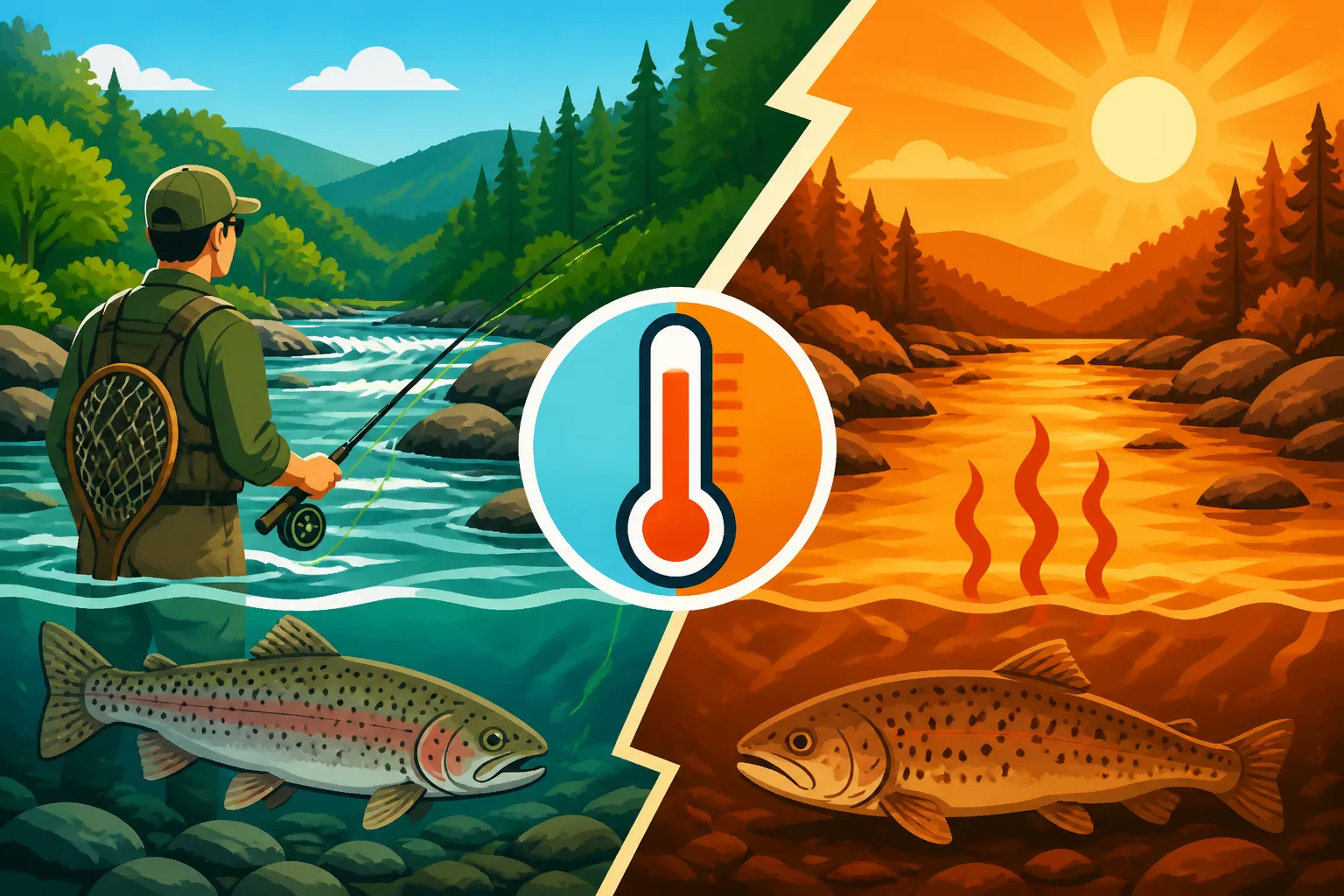
When West Virginia trout streams get too warm to fish
There's nothing quite as frustrating as planning a much-anticipated trout fishing trip in West Virginia, only to arrive at your favorite stream and find the water shimmering warm, signaling that your finned quarry is stressed. It's a common dilemma, especially as our summers get hotter and those beautiful mountain waters warm up. This guide is all about helping you understand when West Virginia trout streams become too warm for healthy trout activity, why it matters, and what you can do about it, from monitoring temperatures to making ethical fishing decisions.
Understanding Trout Temperature Tolerance
Trout are cold-blooded creatures, meaning their body temperature mirrors the water around them. Unlike us, they can't just shed a layer or crank up the AC when things get too hot. This makes water temperature the single most critical factor for their survival and well-being. When the mercury climbs, it's not just uncomfortable for them; it can be deadly.
The Ideal Range for West Virginia Trout
To really understand "too warm," we first need to know what "just right" feels like for our trout. West Virginia is home to some incredible trout fishing, with a mix of native brook trout, and stocked rainbow and brown trout. While there's some overlap, each species has its own sweet spot.
Brook trout, our state's native fish, are the most sensitive to warm water. They thrive in pristine, oxygen-rich waters typically between 45 and 60 degrees Fahrenheit (7-15 degrees Celsius). Think small, high-elevation streams like those found within the Monongahela National Forest. Rainbow trout are a bit more tolerant, doing well from about 45 to 65 degrees Fahrenheit (7-18 degrees Celsius). You'll find them widely stocked across many of our rivers and lakes. Brown trout, known for their hardiness, can handle slightly warmer conditions, up to about 68-70 degrees Fahrenheit (20-21 degrees Celsius), making them a bit more adaptable to larger rivers that might warm up quicker. Generally, when any of these species' preferred upper limit is consistently exceeded, they begin to experience significant stress.
Why Warm Water is a Threat
The physiological reasons behind trout's aversion to warm water are quite serious. It's not just about comfort; it's about survival. First and foremost, warmer water holds less dissolved oxygen. Trout, especially active ones, need a lot of oxygen to breathe through their gills. Imagine trying to run a marathon in thin air—that's what warm, low-oxygen water feels like to a trout.
Secondly, a trout's metabolism speeds up dramatically in warmer water. They need more food to sustain this accelerated metabolic rate, but often, the food sources aren't there, or they're too lethargic to hunt effectively. This leads to energy depletion and weakened immune systems. A stressed trout is also far more susceptible to diseases and parasites, which can proliferate in warmer conditions. Furthermore, if you're practicing catch and release, which is common for trout, the act of fighting a fish in warm water puts immense stress on it. Even if it swims away, its chances of survival plummet due to lactic acid buildup and exhaustion. This is why understanding West Virginia Catch and Release Rules for Trout goes hand-in-hand with knowing water temperatures.
External Factors Affecting Water Temperature
While air temperature is the most obvious culprit, several other environmental factors contribute to how quickly and how much a stream's temperature rises. Intense, direct sunlight can heat shallow, exposed stream sections surprisingly fast. Think about those wide, open stretches of river where the sun beats down all day. The lack of shade from trees and vegetation along the banks makes a huge difference.
Water depth plays a crucial role; shallower streams warm up much faster than deeper pools. This is why you often find trout seeking refuge in the deepest parts of a stream during hot weather. Stream size also matters. Smaller headwater streams, especially those fed by cold springs, tend to remain cooler longer than larger rivers that have more surface area exposed to the sun and often collect warmer runoff. Finally, recent rainfall can either cool or warm a stream. A big, cool rain can bring down temperatures, but warm, heavy rain can sometimes raise them, especially if the ground is already hot. Conversely, a prolonged drought with no rain will lead to steadily climbing temperatures.
Identifying When Streams Get Too Warm
Knowing when to hang up your waders isn't always obvious, but there are definite ways to tell if the water is getting too toasty for trout. It requires a combination of personal observation and checking official resources. Staying informed is a key part of responsible angling.
Monitoring Water Temperature on Your Own
The most direct way to know the water temperature is to measure it yourself. A good, accurate stream thermometer is an essential piece of gear for any ethical trout angler. You can find excellent, inexpensive clip-on or digital stream thermometers on platforms like Amazon, making it easy to check the temperature frequently as you move along a stream. I always recommend taking multiple readings in different parts of the water – riffles, runs, and deep pools – to get a comprehensive picture.
As a rule of thumb, when temperatures consistently hit 65 degrees Fahrenheit (around 18 degrees Celsius) for rainbow and brown trout, it's time to start thinking about limiting your fishing or targeting only the coldest pockets of water. For native brook trout, that threshold is often closer to 60-62 degrees Fahrenheit (15-16 degrees Celsius). Beyond those points, you're looking at increasing stress and mortality. Always take your readings submerged for a few minutes to get an accurate reading, not just dipping the thermometer briefly.
Signs of Stressed Trout
Beyond the thermometer, the trout themselves will tell you if they're struggling. Observing their behavior is a critical part of being a good steward of the resource. If you notice trout exhibiting lethargic behavior, barely moving, or gathering in unusual numbers at the mouths of cold springs, it's a huge red flag. Trout might also be seen gulping at the surface, which is a desperate attempt to get more oxygen from the thin layer of air just above the water.
Sometimes, you'll see them congregated in very shallow, fast-moving water, trying to find areas where the oxygen content is slightly higher, or simply trying to get away from the warmer, stiller parts of a pool. These are not feeding behaviors; these are survival behaviors. Catching a trout that feels weak, or that takes a long time to revive and swim away after being caught, is another clear indication that the water is too warm, and it’s time to call it a day. Even when Fly Fishing for Trout in West Virginia, using fine leaders and light tippets to reduce fight time can help, but nothing beats knowing when to stop.
Consulting Official Resources and Local Reports
The West Virginia Department of Natural Resources (WVDNR) is an invaluable resource for anglers. While they don't always provide real-time stream temperatures for every single stream, their website, particularly sections related to West Virginia Trout Season and Stocking Rules and special regulation waters, often contain advisories. For certain larger rivers, the U.S. Geological Survey (USGS) maintains stream gauges that report water temperature, flow, and other data online. These can be incredibly helpful for planning your trip, especially for popular destinations.
Additionally, local fly shops and sporting goods stores are often the best source for up-to-the-minute local conditions. The folks working there are usually avid anglers themselves and know the local waters intimately. They often get reports from other anglers throughout the day and can advise on specific streams or sections that might be holding cooler water. A quick call or stop by before you head out can save you a lot of grief.
Strategies for Fishing During Warming Periods (and When to Stop)
When West Virginia trout streams warm up, the game changes entirely. It's not just about finding fish; it's about minimizing your impact and ensuring the health of the fishery. Sometimes, the best strategy is simply to stay home or pursue other species.
When to Hit Pause: Ethical Angling in Warm Water
This is perhaps the most crucial point for any responsible angler: sometimes, the most ethical thing to do is to stop fishing for trout altogether. When water temperatures reach the upper 60s Fahrenheit (around 19-20 degrees Celsius) for brown and rainbow trout, and especially when they climb into the low 70s (21-22 degrees Celsius) and beyond, the risk of delayed mortality for caught-and-released fish skyrockets. For brook trout, this threshold is even lower, around 62-65 degrees Fahrenheit.
Even with the most careful handling, the stress from being hooked and fought can be too much for a trout in warm, low-oxygen water. The ethical angler knows that the long-term health of the fishery is more important than a few hours of sport. If you're out there and your thermometer is consistently reading these higher temperatures, or if you're seeing stressed fish, it’s a clear signal to pack up your gear. Consider shifting your focus to warmwater species like bass or panfish, which are much more resilient to summer heat. Checking the West Virginia Fishing Regulations Explained can also highlight any seasonal closures or special regulations for specific trout waters during warmer months.
Tactics for Cooler Water Refuge
If you still feel compelled to fish and the temperatures are borderline but not critical, there are strategies to find cooler water pockets where trout might be less stressed. Head to higher elevations. Streams like those found deep in the Monongahela National Forest, particularly those listed in a guide to Best Trout Streams in West Virginia, often maintain cooler temperatures due to their altitude, abundant shade, and spring-fed sources.
Look for spring feeds – places where cold groundwater seeps into the stream, creating a distinct cooler zone. You can often feel a noticeable temperature drop in these areas. Deep pools, especially those with good overhead cover from trees or undercut banks, also offer refuge. The sun struggles to penetrate these spots, and the sheer volume of water helps maintain a lower temperature. The darkest, shadiest parts of a stream, particularly those on north-facing slopes, will always be cooler. Fishing very early in the morning, right at dawn, before the sun has had a chance to heat the water significantly, can also be a viable option, as discussed in Best Time of Day to Catch Walleye in West Virginia (a principle that applies to trout too!).
Adjusting Your Approach and Gear
Should you decide to fish during these marginal periods, adjust your techniques to minimize stress on the fish. Use barbless hooks (or pinch down the barbs on your existing hooks) to ensure quick and easy release. This significantly reduces handling time and injury. Fight the fish quickly and efficiently to minimize exhaustion, and keep it in the water as much as possible, never letting it flop on hot banks or boat decks.
Consider using a heavier leader or stronger tippet than you might normally, to land the fish faster. Reduce the amount of time the fish is out of the water for photos – a quick snap or two while it's still partially submerged is best. Some anglers even use specialized nets with fine, rubberized mesh, also readily available on Amazon, which are gentler on fish slime coats than traditional knotted nylon nets. These gear choices, along with a careful approach, fall under the broader topic of Best Gear for West Virginia Trout Fishing.
Specific West Virginia Waters and Their Thermal Trends
West Virginia's diverse aquatic landscapes mean that not all trout streams react to rising temperatures in the same way. Understanding these differences can help you make more informed decisions about where and when to fish.
Mountain Streams vs. Larger Rivers
The small, pristine freestone streams winding through West Virginia's highest mountains are often the last bastions of cold water when summer heat sets in. Think of places like Shavers Fork or the headwaters of the Cranberry River. These streams benefit from high elevation, dense canopy cover, and frequent cold spring inputs. They typically have smaller watersheds, meaning less warm runoff from developed areas. They're often characterized as "wild trout waters" or "special regulation waters," where native brook trout and wild brown trout might thrive. These are the kinds of places where a guide like Brook Trout: West Virginia's Native and State Fish becomes invaluable.
In contrast, larger rivers at lower elevations, even those stocked with trout, tend to warm up much faster. They have broader, more exposed channels, absorb more solar radiation, and often receive warmer inflows from tributaries that have also heated up. Rivers like the Tygart Valley River or sections of the South Branch Potomac, while fantastic fisheries in cooler months, can become too warm for trout during sustained heatwaves. Anglers need to pay close attention to the specific thermal characteristics of these larger systems.
Tailwaters and Their Unique Temperature Dynamics
West Virginia also has several excellent tailwater fisheries – sections of river immediately downstream from large dams. These spots have unique temperature dynamics. The water released from the bottom of deep reservoirs (like the Sutton Lake tailwater or the Elk River below Sutton Dam) is often significantly colder than the surface water, creating a consistent cold-water environment downstream, even during the hottest parts of summer. These sections can be true havens for trout when other streams are too warm.
However, it's not always a guarantee. The depth of the dam's release, the volume of water being released, and the overall temperature profile of the reservoir can all impact the tailwater's temperature. Sometimes, if the reservoir itself gets too warm, even the deep water releases can become marginal. It's crucial to check flow and temperature reports from the WVDNR or USGS for specific tailwaters. When these tailwaters are flowing strong and cold, they can provide some of the best fishing during the dog days of summer. This is often where you'll find great opportunities for Trout Fishing in West Virginia.
| Trout Species | Ideal Temperature Range | Stress Threshold | Lethal Temperature |
|---|---|---|---|
| Brook Trout | 45-60°F (7-15°C) | 60-65°F (15-18°C) | 68°F+ (20°C+) |
| Rainbow Trout | 45-65°F (7-18°C) | 65-70°F (18-21°C) | 72°F+ (22°C+) |
| Brown Trout | 45-68°F (7-20°C) | 68-72°F (20-22°C) | 75°F+ (24°C+) |
Disclaimer
The information provided in this guide is for general informational purposes only and does not constitute legal advice. Fishing regulations, conditions, and best practices can change. Always consult the latest official West Virginia Department of Natural Resources (WVDNR) regulations and local advisories before engaging in any fishing activities. Adherence to all applicable laws and ethical angling practices is the responsibility of the individual.