How big muskie get in West Virginia
Chasing muskie in West Virginia isn't just a fishing trip; it's a dedicated pursuit of one of freshwater's most elusive and formidable predators. Many anglers dream of encountering a true monster of the deep, a fish that pushes the tape past the dreaded 40-inch mark, or even better, crests the mythical 50-inch barrier. This guide will dive deep into the real potential for muskie size in our Mountain State waters, exploring the factors that help these incredible fish grow to epic proportions, and what it truly takes for an angler to land one of West Virginia's giants.
The Potential for Trophy Muskie in West Virginia
The allure of muskie fishing often boils down to the sheer size these fish can attain. Unlike many other species, even a "small" muskie is still a substantial fish, but it's those truly gargantuan specimens that haunt anglers' dreams. West Virginia has a well-earned reputation for producing quality muskie, and occasionally, absolute beasts.
Understanding "Trophy" Size for West Virginia Muskie
When we talk about "trophy" muskie in West Virginia, most dedicated anglers are thinking of fish that stretch the tape beyond 40 inches. While a 38-inch muskie is a fantastic catch and a testament to an angler's skill, that 40-inch mark is often considered the entry point into true trophy territory. These fish have lived long, survived many challenges, and represent a significant accomplishment.
However, the ultimate quest for many is the 50-inch muskie. This length is legendary, the kind of fish that makes grown anglers weak in the knees. While incredibly rare, these 50-inch-plus giants are indeed present in West Virginia's waters, lurking in deep pools and shadowed timber. Catching one is often a once-in-a-lifetime experience, born from countless hours of casting and an intimate knowledge of the water.
The general growth rate of muskie means that fish reaching these sizes are typically quite old. They are apex predators that have learned to avoid danger and exploit their environment for maximum caloric intake. For anglers, understanding that the pursuit is a long game, often yielding more strikes from smaller, but still exciting, fish, makes the eventual trophy encounter even more rewarding. It's a journey of patience, persistence, and celebrating every single muskie that graces the end of your line.
West Virginia's State Record Muskie
The existence of a state record muskie is concrete proof of the genetic potential for immense size within West Virginia's waterways. While we won't get into specific figures that might change over time, rest assured that West Virginia has produced a muskie of truly astonishing proportions. This record-breaking fish, caught in one of our famed rivers, stands as a testament to the incredible growth potential within our native muskie populations.
This record isn't just a number; it's an inspiration. It shows that the fish are here, growing to immense sizes, and that any cast could potentially connect you with a new benchmark. The conditions that allowed that record fish to grow so large—abundant forage, excellent habitat, and sufficient lifespan—are still present in many of our prime muskie waters today.
While the state record is undoubtedly an outlier, a true anomaly of the muskie world, it should motivate every angler. It means that the next cast, the next river bend, or the next deep pool could hold your personal best, or even, dare to dream, a new state record. It's the ultimate goal in a fishery that demands respect and rewards dedication. For more on these impressive catches, check out West Virginia State Fish Records by Species.
Factors Influencing Muskie Size and Growth
Muskie don't just magically grow to monstrous sizes; a complex interplay of environmental factors, genetics, and time contributes to their impressive stature. Understanding these elements can help anglers identify prime muskie waters and appreciate the delicate balance that allows these giants to thrive.
Habitat and Forage Availability
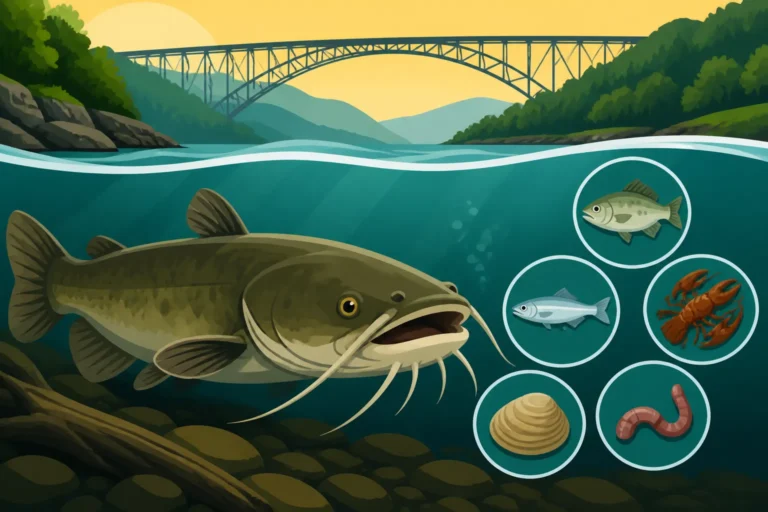
One of the most critical factors for muskie to reach trophy size is the quality of their habitat and the abundance of their food source. Muskie are powerful predators, and they need a consistent, high-calorie diet to fuel their growth. Rivers and lakes with thriving populations of suckers, carp, shad, and other robust baitfish provide the necessary sustenance for muskie to pack on pounds and inches.
In West Virginia, many of our muskie-rich waters, like the New River, Kanawha River, and several impoundments, are ecological powerhouses. They offer a diverse menu for muskie, allowing them to grow quickly and efficiently. These waters often feature extensive submerged timber, rock ledges, deep current breaks, and healthy weed beds, all of which provide perfect ambush points and cover for these stealthy hunters. A muskie needs to feel secure and have a good vantage point to hunt effectively, and rich habitats provide exactly that.
Furthermore, the overall water quality and consistent flow patterns in these prime muskie environments play a crucial role. Clean water supports a healthy food chain from the smallest invertebrates all the way up to the largest baitfish, ensuring a stable foundation for muskie growth. Good flow in rivers helps distribute food and oxygen, while stable lake environments prevent undue stress on the muskie population. For a deeper dive into where these giants lurk, explore Where to Find Muskie in West Virginia.
Age and Lifespan
It’s a simple truth in the muskie world: big fish are old fish. These aquatic titans are long-lived creatures, often surviving for a decade or more, with some known to reach ages exceeding 20 years. To hit the 40, 45, or even 50-inch mark, a muskie needs time – many years of consistent feeding and avoiding predators and anglers alike.
The growth rate of muskie can vary significantly between different water bodies. In some warmer, highly fertile lakes with an explosion of easy-to-catch forage, muskie might grow faster. However, in cooler, rockier river systems, growth can be slower but lead to incredibly stout, muscular fish. This extended lifespan is a double-edged sword: it allows them to reach impressive sizes, but also means they are more vulnerable to mortality factors over a longer period.
Only the strongest, smartest, and luckiest muskie survive long enough to achieve true trophy status. This concept of 'survivor bias' means that every large muskie you encounter is a testament to its resilience and predatory prowess. They've outsmarted countless dangers, learned to feed efficiently, and developed an instinct for self-preservation. Understanding the incredible journey a muskie takes to become a giant gives anglers even more respect for these magnificent fish. For more on their life cycle, consider reading Muskie Life Cycle and Growth Rate in West Virginia Waters.
Genetics and Stocking Programs
The genetic makeup of a muskie population plays a foundational role in the maximum size individual fish can attain. West Virginia's native muskie populations generally possess robust genetics, meaning they have the inherent capacity to grow very large given the right conditions. These native strains are perfectly adapted to their environment, having evolved over millennia to thrive in our rivers and lakes.
Beyond native populations, the West Virginia Division of Natural Resources (WV DNR) actively manages muskie fisheries, often through strategic stocking programs. These efforts aim to supplement natural reproduction, introduce new genetics if needed, and ensure a healthy population base for anglers. While stocking programs primarily focus on numbers and distribution, the long-term goal is always to support a fishery capable of producing trophy-sized fish.
It's also worth noting the presence of hybrid muskie, often referred to as tiger muskie. These are a cross between a muskie and a northern pike and are occasionally stocked in some waters due to their rapid growth rate and aggressive nature. While tiger muskie grow quickly and provide exciting angling opportunities, they typically don't reach the same extreme maximum sizes as purebred muskie. Still, they are powerful fish that can offer a thrilling fight. You can learn more about these hybrids in What a tiger muskie is and whether they are in West Virginia. The collective effort of maintaining strong genetic lines and responsible stocking is paramount to keeping West Virginia a premier muskie destination.
The Quest for West Virginia's Giants
For those truly dedicated to the chase, West Virginia offers some incredible opportunities to hook into a muskie of a lifetime. But it's not just about showing up; it's about knowing where to go, what to use, and how to approach these elusive giants.
Top West Virginia Waters for Trophy Muskie
If you're serious about hooking a giant muskie, certain West Virginia waters consistently produce the big ones. The New River, for example, is legendary. Its vast stretches, deep pools, abundant rock structure, and diverse forage base make it a prime location for muskie to grow large. Anglers regularly report fish pushing and exceeding 45 inches from its currents. The sheer wildness of the New River makes every catch feel like an epic battle.
The Kanawha River, another major player, also boasts a robust muskie population with excellent trophy potential. Its warmer, nutrient-rich waters and extensive backwaters provide an ideal environment. Upstream sections of the Elk River and Little Kanawha River are also known for producing impressive muskies, often in more intimate settings that require precise casting and stealth.
For lake anglers, Stonewall Jackson Lake and Burnsville Lake stand out. These impoundments offer different challenges than rivers but can hold massive fish in their submerged timber and deep channels. They often require a different approach, perhaps more trolling or exploring vast areas, but the reward can be just as significant. Each of these bodies of water presents unique characteristics that contribute to their status as premier muskie destinations. Knowing these prime spots is the first step in your trophy hunt. For more detailed information on specific locations, be sure to check out Best Muskie Waters in West Virginia.
| Water Body | Typical Size Range (Inches) | Trophy Potential (45"+) | Primary Forage | Key Characteristics |
|---|---|---|---|---|
| New River | 30-45+ | High | Suckers, Shad, Smallmouth Bass | Rocky, varied current, deep pools, diverse structure |
| Kanawha River | 30-45+ | High | Suckers, Carp, Shad | Slower current, warmer, extensive backwaters, timber |
| Elk River | 28-40 | Medium | Suckers, Stream Fish | Clearer water, defined runs and pools |
| Little Kanawha River | 28-42 | Medium | Suckers, Panfish | Meandering, woody debris, shallower stretches |
| Stonewall Jackson Lake | 30-48+ | High | Shad, Bluegill, Crappie | Clear water, deep timber, distinct structure |
| Burnsville Lake | 30-45 | High | Shad, Perch, Panfish | Moderate clarity, ledges, creek channels |
Tactics for Targeting Large Muskie
Chasing large muskie is a commitment, not a casual endeavor. These fish are not only big but also incredibly smart and wary. Success demands specialized gear and an unwavering resolve. You'll need heavy-duty fishing rods, often rated for extra-heavy power, paired with stout baitcasting reels capable of handling massive lures and powerful fish. Your line should be braided, typically 80-100 pound test, for strength and abrasion resistance, especially when battling fish around submerged timber or rocky ledges. Finding reliable, robust gear is crucial, and online retailers like Amazon offer a wide array of options to fit these demanding requirements.
The lures themselves are often huge – think crankbaits, jerkbaits, and glide baits that measure 8 to 14 inches or even larger. Bucktail spinners with massive blades are also muskie staples. The technique often involves repetitive casting, sometimes for hours on end, thoroughly working every piece of cover and structure. Trolling can also be incredibly effective on larger lakes, allowing anglers to cover vast amounts of water and present lures at precise depths. Persistence is key, as muskie are often called the "fish of 10,000 casts" for a reason.
Perhaps the most critical tactic, however, is the "figure-eight" maneuver boatside. When a muskie follows your lure right to the boat, executing a large, continuous figure-eight motion with your rod tip in the water can often entice the fish to strike at the last second. This technique turns almost-catches into actual catches and is a hallmark of experienced muskie anglers. For a comprehensive guide on methods, check out How to Catch Muskie in West Virginia and Best Lures for Muskie Fishing in West Virginia.
Catch, Photo, Release (CPR) for Muskie Conservation
Landing a trophy muskie is an incredible achievement, but the responsible angler knows that the real success comes from ensuring the fish's survival. Given their slow growth rate and long lifespan, truly large muskie are invaluable to the health of the fishery. They are the prime breeders, contributing their strong genetics to the next generation of giants. Therefore, Catch, Photo, Release (CPR) isn't just a suggestion; it's a vital practice for muskie conservation in West Virginia.
To ensure a successful release, proper handling is paramount. Minimize the time the fish spends out of the water – ideally, only a few seconds for a quick photo. Use a large, knotless rubberized landing net, often available on platforms like Amazon, to protect the fish's slime coat and fins. Avoid holding muskie vertically by the jaw; instead, support their body horizontally with two hands or cradle them in the net while in the water. Keep pliers and jaw spreaders handy to quickly and safely remove hooks.
Once the photos are taken, gently hold the muskie in the water, supporting its belly, and allow it to revive. If necessary, move it back and forth gently to push water over its gills until it's strong enough to swim away vigorously on its own. The pride of catching a magnificent muskie is amplified by the knowledge that you've done your part to ensure it can grow even larger, breed, and offer another angler the thrill of a lifetime. These conservation efforts are vital for the long-term sustainability of trophy muskie fishing in West Virginia. Learn more about safe release practices in Muskie catch and release survival tips.
What Anglers Can Expect and the Long-Term View
Muskie fishing is a journey, not a destination. It's about the pursuit, the learning, and the appreciation for these incredible fish. Having a realistic outlook and a commitment to conservation ensures that the thrill of the chase continues for generations.
Realistic Expectations for Muskie Anglers
Let's be real: muskie fishing is not for the faint of heart, nor for those seeking instant gratification. It truly embodies the "fish of 10,000 casts" adage. While West Virginia offers excellent muskie fishing, it's important to set realistic expectations. You will put in many hours, many casts, and often, many days without a single strike from a muskie. This is part of the challenge and what makes each encounter so special.
Most muskie you'll encounter and catch in West Virginia will fall into the 30 to 40-inch range. These are absolutely fantastic fish, offering thrilling fights and beautiful photo opportunities. They are strong, aggressive, and a true testament to the health of our waters. Celebrate every single one of them! These fish represent successful angling and a deeper understanding of the muskie's habits.
Fish pushing past 45 inches are considerably rarer, and those elusive 50-inch giants are truly exceptional catches, often representing a lifetime achievement for even the most seasoned muskie anglers. While the dream of a state record lurks, focusing on the joy of the pursuit and the reward of any muskie catch will make your time on the water much more fulfilling. Every muskie is a trophy in its own right, a powerful, wild predator that demands respect. If you're looking for general information on this pursuit, Muskie Fishing in West Virginia is a great resource.
The Importance of Conservation for Future Generations
The future of muskie fishing in West Virginia, and the continued potential for these fish to reach trophy sizes, rests heavily on conservation efforts. Every angler plays a role in protecting these magnificent creatures. The WV DNR has established specific regulations, including size limits and possession limits, designed to protect the breeding stock and allow muskie to grow to maturity. It's absolutely crucial that every angler understands and adheres to these rules, found in resources like Muskie Regulations in West Virginia Waters.
Beyond regulations, responsible angling practices, particularly catch and release, are the cornerstone of muskie conservation. Releasing large, healthy muskie ensures they can continue to spawn and contribute their genetics to the population, strengthening the fishery for years to come. Supporting organizations that champion muskie habitat restoration or participating in local clean-up efforts also makes a tangible difference.
By taking a long-term view and prioritizing the health of the muskie population, we ensure that the thrill of chasing these elusive giants remains a possibility for future generations of West Virginia anglers. The opportunity to pursue a 50-inch muskie in our wild rivers and serene lakes is a precious legacy, one that we all have a responsibility to protect and pass on. It’s not just about what size muskie can get, but ensuring they continue to get that big.
Disclaimer
This article is for general informational purposes only and does not constitute professional advice. Laws, prices and regulations vary by location and change over time. Consult a qualified professional for guidance on your specific situation.