How to tell black crappie from white crappie
It's a familiar scenario for many anglers across West Virginia: you've got a stringer full of panfish, and you're pretty sure they're crappie. But then you look closer, and some have distinct stripes while others are covered in speckles. Suddenly, you're scratching your head, wondering, "Did I just catch a black crappie, or is this a white crappie?" This guide will help you confidently tell the difference between these two popular and delicious fish, empowering you to better understand your catch and the waters you fish.
The Crappie Conundrum: Why Identification Matters
Fishing for crappie is a beloved pastime in the Mountain State, whether you're dangling a minnow under a bobber or jigging small plastics near submerged timber. Both black and white crappie offer fantastic table fare and thrilling fights on light tackle. However, despite their similarities and often shared habitats, they are distinct species, and knowing which one you've landed isn't just a matter of curiosity – it can impact your fishing strategy and adherence to regulations.
Beyond Just a "Crappie": Understanding the Species
Many anglers simply refer to both species as "crappie," and for casual fishing, that's often good enough. They both belong to the sunfish family, they're both delicious, and they generally inhabit similar types of waters, often schooling together. This shared identity is precisely why differentiating them can feel like such a head-scratcher. You might be pulling them from the same brush pile, and to the untrained eye, they just look like variations of the same fish. But under the surface, there are subtle yet consistent differences in their physical appearance, preferred environments, and even their behavior that set them apart. Understanding these nuances unlocks a deeper appreciation for these fish and can make you a more effective angler.
Imagine you're out on Summersville Lake, and you've found a honey hole. You're catching fish left and right. If you can quickly identify whether they're predominantly black or white crappie, you might start to notice patterns. Are the black crappie holding tighter to the thick brush, while the white crappie are patrolling the edges? Do they seem to prefer different baits on a given day? These observations, born from accurate identification, are the building blocks of becoming a truly savvy crappie angler.
The Practical Implications for West Virginia Anglers
Beyond simply satisfying your curiosity, there are concrete reasons why accurate crappie identification is important for West Virginia anglers. While many regulations are broad for "crappie," specific situations or future changes could necessitate knowing the difference. Different species can have different growth rates or population dynamics, which might lead to distinct management strategies in specific waters.
For instance, understanding the typical size differences or feeding habits of each species can help you select the right tackle or approach. If you know you're targeting white crappie, which tend to be more pelagic (open water) and feed on baitfish, you might opt for different presentation methods than if you were solely focused on black crappie hiding in dense cover. Always refer to the latest West Virginia fishing regulations, especially the section covering West Virginia Bag and Possession Limits by Species, as rules can change and specific waters might have unique requirements. Proper identification helps you stay on the right side of the law and contribute to sustainable fishing practices.
Decoding the Differences: Visual Cues for Identification
When you pull a crappie from the water, there are a few tell-tale signs that can instantly help you determine if it's a black or white crappie. It's not about one single factor, but rather a combination of distinct features that, once you know them, become quite easy to spot. Think of it like learning to recognize different breeds of dogs; initially, they might all just look like "dogs," but with a little guidance, those unique traits pop right out.
Spotting the Black Crappie: Speckles, Spines, and Body Shape
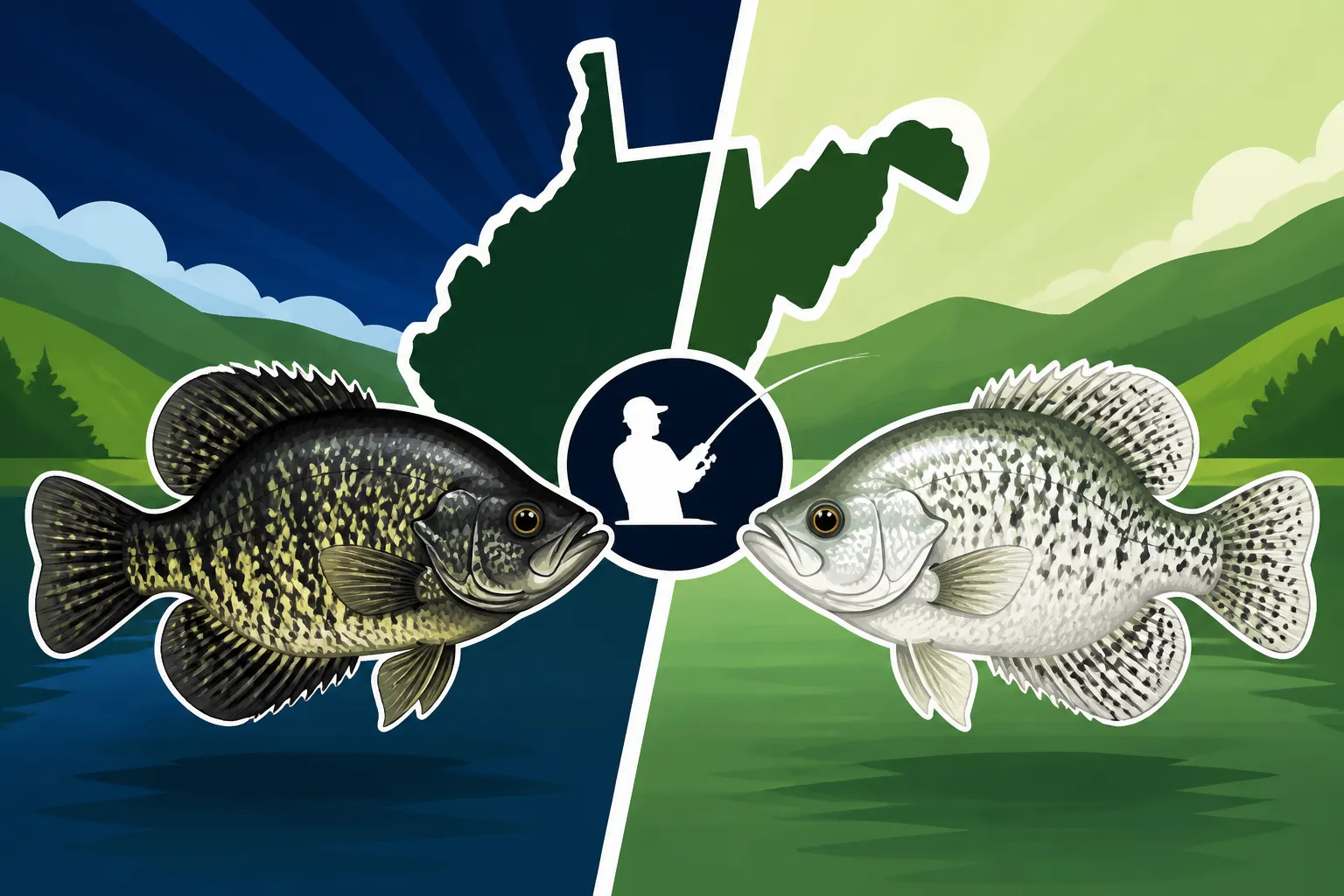
Let's start with the black crappie, also known by some as calico bass, papermouth, or speckled crappie. The most obvious visual cue for a black crappie is its overall coloration and pattern. They tend to be a darker, more mottled fish, covered in a seemingly random array of black or dark spots and speckles across their silver-gold or silvery-green bodies. These spots are scattered rather than forming distinct lines.
Beyond the spots, take a good look at their dorsal fin – that's the fin on their back. Black crappie consistently have 7 or 8 spines in their dorsal fin. You can usually count these by carefully running your finger along the front edge of the fin. Their body shape is also generally deeper and more compressed, giving them a rounder, almost disc-like appearance compared to their white crappie cousins. Imagine a slightly flatter, rounder dinner plate, and you're getting close to the black crappie's profile. If you're looking for a good field guide to help with identification on the water, you can often find excellent options on Amazon that cover various freshwater species, including detailed illustrations of crappie.
Identifying the White Crappie: Stripes, Spines, and Profile
Now, let's turn our attention to the white crappie, sometimes called slab, shiner, or sac-a-lait in other regions. The key differentiator for white crappie is their patterning. Instead of random speckles, they typically exhibit distinct, often faint, vertical bars or stripes along their sides. These bars can be more pronounced or subtle depending on the individual fish, water clarity, and mood, but they are almost always present and form a clear contrast to the black crappie's mottled look.
Next, count those dorsal fin spines again. White crappie will almost always have 5 or 6 dorsal fin spines. This is a very reliable distinguishing factor. Their body shape is generally more elongated and slender than the black crappie, with a slightly more pointed snout. Think of a fish that looks a bit more like a stretched-out oval rather than a perfect circle. While both species are fantastic sportfish, understanding these visual differences, as detailed in our guide on Crappie Fishing in West Virginia, will make you a more informed angler.
A Side-by-Side Visual Comparison
Sometimes, seeing the differences laid out side-by-side makes all the difference. Here’s a quick reference table to help solidify the visual cues we just discussed. Keep in mind that coloration can vary with water conditions and individual fish, but the other physical traits are much more consistent.
| Feature | Black Crappie ( Pomoxis nigromaculatus ) | White Crappie ( Pomoxis annularis ) |
|---|---|---|
| Body Pattern | Scattered black spots/speckles | 5-9 distinct vertical bars or stripes |
| Dorsal Fin Spines | 7 or 8 (usually) | 5 or 6 (usually) |
| Body Shape | Deeper, more rounded, disc-like | More elongated, slender, oval-shaped |
| Snout | Shorter, more blunt | Longer, more pointed |
| Overall Color | Darker, mottled, silvery-green to gold | Lighter, silvery to pale green-yellow |
Beyond the Eyeball Test: Habitat, Behavior, and Diet Clues
While the visual cues are the most straightforward way to differentiate between black and white crappie, understanding their preferred habitats, behaviors, and diets can also give you strong hints. These ecological differences often lead them to different parts of a lake or river, even when those bodies of water host both species. Knowing these tendencies can help you predict which type of crappie you're more likely to encounter in a given situation, making your fishing efforts more targeted and successful.
Habitat Preferences: Where Each Crappie Calls Home
Black crappie, with their darker, more mottled coloration, tend to favor clearer, cooler waters with abundant submerged vegetation, brush piles, standing timber, and rock formations. They are true ambush predators that thrive in environments offering plenty of cover to hide from prey and predators alike. Think of quiet coves in Summersville Lake or areas with lily pads and fallen trees in smaller impoundments. If you're fishing in a crystal-clear mountain lake or a slow-moving river section dense with aquatic plants, you're more likely to encounter black crappie. They truly appreciate that secure, sheltered feeling that thick cover provides.
White crappie, on the other hand, are a bit more adaptable and tolerant of a wider range of water conditions. They can often be found in murkier, warmer, and more turbid waters, including those with silty bottoms or less dense cover. While they still use structure, they're more comfortable relating to open water features like channel bends, submerged humps, bridge pilings, and the main lake basin. You might find them suspended over deeper water or along creek channels in larger reservoirs like Bluestone Lake. Their body shape, being more elongated, is perhaps even better suited for cruising open water in pursuit of baitfish. Many of the waters listed in a Best Crappie Lakes in West Virginia guide will hold both species, but understanding these general preferences can fine-tune your approach. You can find detailed lake maps on Amazon that can help you identify these different types of crappie habitat.
Spawning Habits and Seasonal Movements
The spawning habits of black and white crappie, while similar in many ways, do have subtle differences that can influence where you find them at certain times of the year. Both species are "nest builders," with males creating and guarding nests. However, black crappie often begin their spawning rituals a bit earlier in the spring and prefer slightly cooler water temperatures, typically in the mid-50s to low 60s Fahrenheit. They tend to seek out shallower water, often among submerged vegetation or brush, where they lay their eggs.
White crappie generally spawn a little later, as water temperatures climb into the mid-60s to low 70s. While they also use shallow areas, they might utilize slightly deeper water or areas with more sparse cover than their black crappie counterparts. These timing and depth preferences mean that if you're out fishing early in the spring, you might be more likely to encounter black crappie congregating in shallow, brushy areas, while a few weeks later, white crappie might be dominating the shallow bite. Understanding these seasonal movements is crucial for successful crappie fishing throughout the year.
Dietary Tendencies and Fishing Techniques
The slight differences in habitat and body shape also hint at subtle variations in diet and preferred feeding strategies. Black crappie, being more associated with dense cover, often feed on a wider variety of prey, including aquatic insects, small crustaceans, and smaller baitfish that lurk within the protective structure. They tend to be more ambush-oriented, darting out from cover to snatch their meal. This can make them susceptible to smaller jigs and flies presented directly into the cover.
White crappie, particularly the larger ones that cruise open water, tend to be more piscivorous, meaning they primarily feed on baitfish like shad and minnows. Their more streamlined bodies are excellent for chasing down schools of baitfish in open water. This difference in diet can influence your lure selection. For black crappie, tiny jigs, minnows, or even small flies might be incredibly effective when worked slowly around cover. For white crappie, especially in open water, slightly larger jigs, crankbaits, or trolling methods that imitate schools of baitfish might produce better results. Dive deeper into techniques with our article on Jigging for Crappie in West Virginia Lakes, and consider how these dietary notes apply. You can find a vast selection of crappie jigs and minnow imitations on Amazon to match either species' preferences. For insights on catching them during key times, check out Best Techniques for Pre-Spawn Crappie.
Putting Your Crappie Knowledge to the Test on West Virginia Waters
Learning the distinctions between black and white crappie is more than just an academic exercise; it's a skill that will sharpen your intuition as an angler. The more you practice identifying them, the faster and more accurate you'll become, leading to a deeper understanding of the West Virginia waters you love to fish.
Practical Tips for Anglers
When you're out on the water, whether it's the peaceful backwaters of the Ohio River or a bustling West Virginia reservoir, try to incorporate crappie identification into your routine. When you land a crappie, don't just admire it – actively look for those key features. How many dorsal spines? What's the pattern on its side? Is it rounder or more elongated? Over time, these observations will become second nature.
It's also a good practice to notice where you caught each type of crappie. Did the black crappie come from the thickest part of the brush pile, while the white crappie were suspended a few feet off the bottom on the outer edge? These subtle clues, when pieced together, can help you develop a more nuanced understanding of crappie behavior in your favorite spots. This level of detail elevates your fishing game beyond just luck. For more comprehensive insights, refer to our dedicated piece on Black Crappie vs White Crappie Identification.
When In Doubt: Observe and Learn
Sometimes, you'll catch a crappie that seems to have characteristics of both, or it might be a bit ambiguous due to coloration or a damaged fin. Don't fret! The most important thing is to be a responsible angler. When in doubt about specific regulations, always default to the most conservative interpretation. However, for general identification, continue to observe and learn. Take a picture, compare it to field guides (many available on Amazon!), and discuss with fellow anglers. The more fish you encounter, the more easily you'll recognize the patterns.
Crappie are a fantastic species for new and experienced anglers alike, and becoming proficient at distinguishing between the black and white varieties adds another layer of enjoyment and understanding to your fishing adventures. This foundational knowledge is also valuable for anyone interested in Panfish Fishing in West Virginia more broadly, as understanding individual species enhances your overall strategy. And if you're ever wondering how to pinpoint their hiding spots, check out How to locate crappie in West Virginia reservoirs. Getting a small ruler or fish measuring board from Amazon to keep in your tackle box can also help you quickly assess fish size and features. Ultimately, the goal is to enjoy your time on the water, respect the resource, and continually expand your knowledge of the fish that call West Virginia home. It’s a journey, not just a destination, and every crappie you identify brings you one step closer to becoming a true expert. If you're chasing the biggest, you might enjoy reading about The biggest crappie ever caught in West Virginia and Best lakes for trophy crappie in West Virginia. Also, don't forget to explore Best Techniques for Panfish in West Virginia for more fishing tips.
Disclaimer
This article is for general informational purposes only and does not constitute professional advice. Laws, prices and regulations vary by location and change over time. Consult a qualified professional for guidance on your specific situation.