How to tell a largemouth from a smallmouth bass
It's a common scenario for anglers, especially those just getting their feet wet in the Mountain State: you hook into a feisty bass, and as it comes closer to the boat or bank, you find yourself squinting, trying to figure out if it's a largemouth or a smallmouth. Both are incredibly popular game fish in West Virginia, offering thrilling fights and abundant opportunities, but they have distinct differences that impact everything from regulations to the best techniques for targeting them. This guide is here to clear up that confusion, offering clear, actionable tips to help you confidently identify whether you've landed a green-backed monster or a bronze bruiser.
The Classic Indicators: Jawline, Dorsal Fin, and Color Patterns
When you're trying to quickly distinguish between a largemouth and a smallmouth bass, there are a few key physical characteristics that stand out. These aren't just subtle nuances for biologists; they are practical, visual cues that any angler can learn to spot in seconds. Getting these down will be your biggest asset on the water.
The Jaw Test: Beyond the Eye
This is often considered the gold standard for identification, and for good reason: it’s consistently reliable. Imagine your bass lying still, its mouth closed. Now, look closely at the upper jaw, specifically where it ends in relation to the eye.
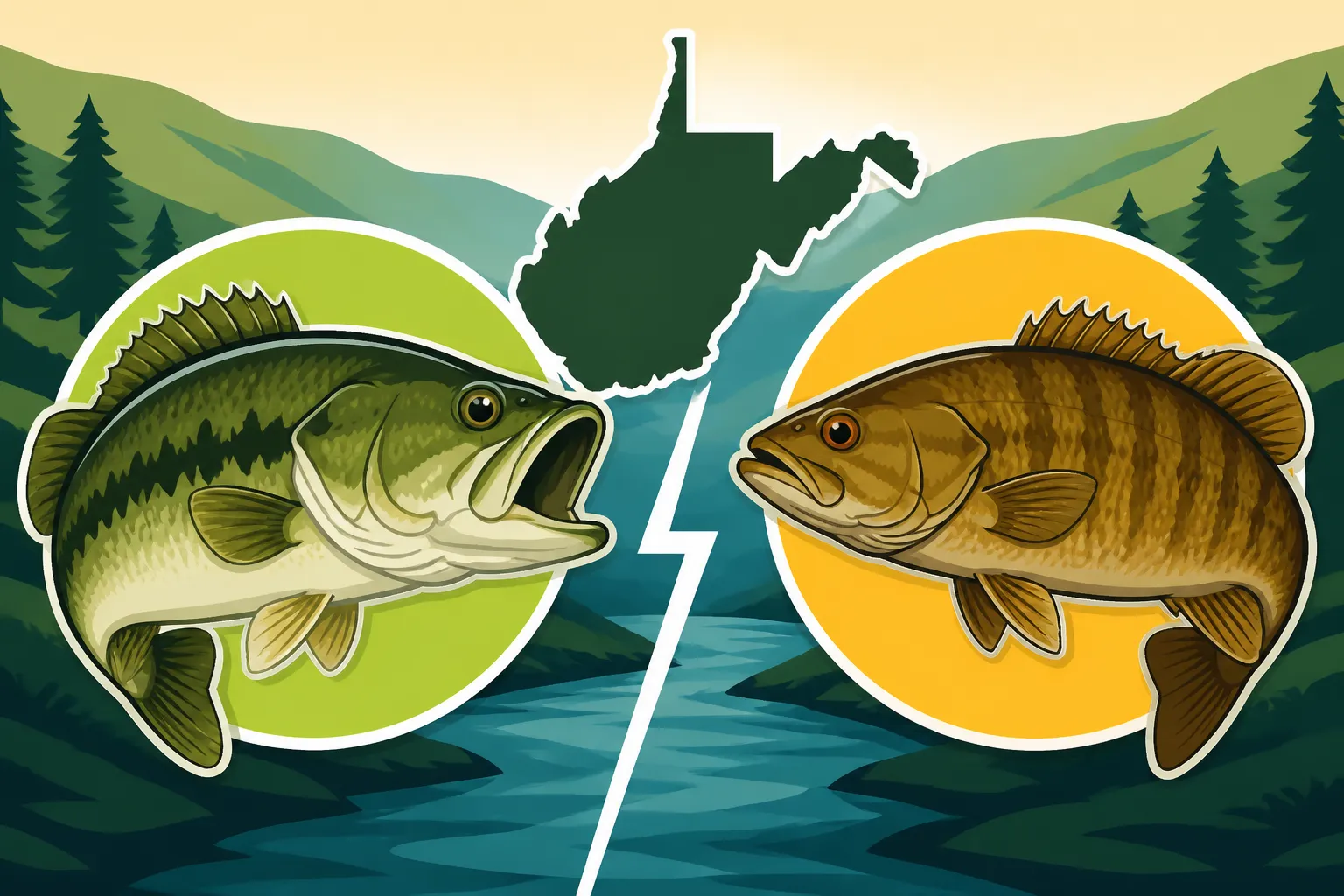
For a largemouth bass, their upper jaw extends significantly past the rear edge of their eye. Think of it like a big, expressive mouth that just keeps going. This is a very prominent feature and one of the easiest ways to tell them apart, even from a distance if the fish is positioned correctly. Their mouths are truly designed for swallowing larger prey whole, which contributes to that extended jawline. When you're fishing in a murky lake or a slow-moving river known for bigger bass, this jawline is often the first thing that confirms your suspicions.
Smallmouth bass, on the other hand, have a much shorter upper jaw. It typically ends either directly beneath the middle of their eye or, at most, aligns with the back edge of the eye. It won't extend past the eye like its largemouth cousin. This more compact jaw is proportional to their generally smaller prey items and their preference for chasing down food in faster currents. If you're pulling a bass from a rocky river and its jaw seems to stop right at its eye, you're almost certainly looking at a smallmouth. This quick check can save you from misidentifying a fish and ensure you're following the correct West Virginia Black Bass Limits and the New River Slot Limit.
Dorsal Fin Divide: Separated vs. Connected
Another critical physical difference lies in the dorsal fin, that prominent fin running along the top of the fish's back. This feature requires a little closer inspection but is equally reliable.
A largemouth bass possesses a dorsal fin that is distinctly separated into two parts. There's a noticeable, deep notch or indentation in the middle, almost making it look like two separate fins joined at their base by a very thin membrane. The front part, composed of spiny rays, will stand up quite distinctly from the softer-rayed rear section. This deep division is characteristic of the largemouth and a clear identifier once you know what to look for. This separation gives the fish a certain profile in the water, and you can often observe it even when they're swimming.
The smallmouth bass, conversely, has a dorsal fin that appears much more continuous and connected. While it still has a spiny front section and a soft-rayed rear section, the transition between the two is much smoother. There might be a slight dip or a shallow notch, but it won't be a deep, obvious separation like on the largemouth. It looks like one long, flowing fin rather than two distinct ones. This fused appearance is a solid indicator of a smallmouth, especially when you're examining a fish up close.
Color and Pattern Clues: The Green vs. Bronze Debate
While the jaw and dorsal fin are anatomical certainties, color and pattern can be strong indicators, though they sometimes vary with environment.
Largemouth bass are famously known for their darker green, olive, or even brownish-green coloration on their back and sides, fading to a lighter belly, often white or yellowish. Their most distinguishing pattern feature is a prominent, irregular, horizontal dark stripe or band running along their lateral line from their gill plate to their tail. This broken or continuous band is usually quite evident. Their scales can sometimes have a mottled or blotchy appearance, which helps them blend into the weedy, often stained waters they prefer.
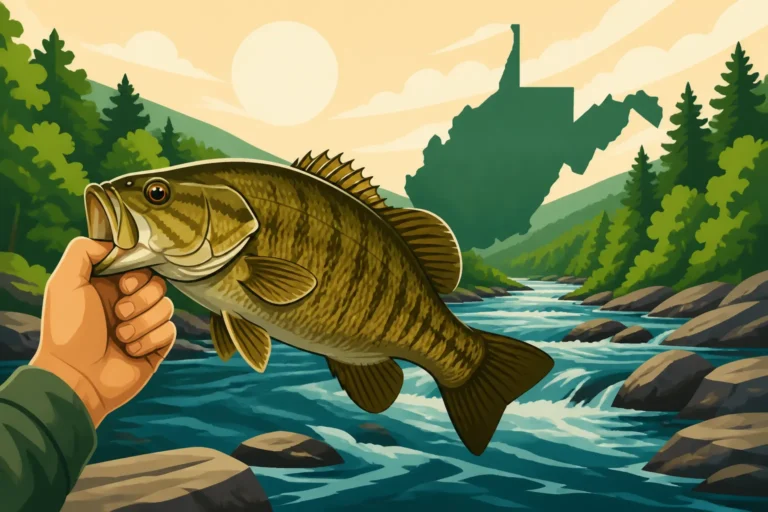
Smallmouth bass typically sport a bronzy-brown, golden-green, or even yellowish-brown hue on their backs and sides, giving them their "bronze back" nickname. Instead of a horizontal stripe, smallmouth usually display a series of vertical bars or blotches along their sides, often described as "tiger stripes." These can be quite pronounced or more faded, depending on the individual fish and its habitat. Their bellies are usually a creamy white. Smallmouth also tend to have reddish eyes, which can be another subtle but helpful clue. These color patterns help them camouflage perfectly in the rocky, often clear waters of rivers and deep lakes. For more details on these remarkable fish, check out Smallmouth Bass Fishing in West Virginia.
Habitat and Behavior: Where They Live and How They Act
Beyond their physical appearance, largemouth and smallmouth bass have distinct preferences for where they live and how they behave, especially when hooked. Understanding these differences can often give you a strong clue about what kind of bass you're targeting even before you see it. It also helps you refine your fishing strategy, whether you're casting on a wide lake or wading a swift river.
Preferred Waters: Lakes vs. Rivers
Knowing the type of water you're fishing is a huge hint when it comes to identifying bass species. They have very different preferred "neighborhoods."
Largemouth bass are generally creatures of still or slow-moving water. Think lakes, ponds, reservoirs, sluggish river backwaters, and deep, weedy creek coves. They thrive in environments with abundant aquatic vegetation, submerged timber, and other forms of cover where they can ambush their prey. They tolerate warmer water temperatures better than smallmouth and often stick close to shallow cover. If you're fishing a relatively calm, vegetated section of a lake like Summersville Lake, you're likely in prime Largemouth Bass Fishing in West Virginia territory. They love to hide in lily pads, under docks, or nestled in brush piles, waiting for an unsuspecting meal to swim by. This habitat preference means anglers often target them with different lures and techniques than those used for river-dwelling smallmouth.
Smallmouth bass, by contrast, are typically found in cooler, clearer, and faster-moving waters. They are the kings of rocky rivers and streams, thriving in currents, rapids, and around significant structure like boulders, ledges, and gravel bottoms. They also inhabit the deeper, rockier sections of large reservoirs and colder lakes, often congregating around points, humps, and submerged rock piles. Rivers like the New River are legendary for their robust smallmouth populations. If you're on a float trip down a scenic waterway, casting to eddies and current breaks, you're almost certainly going to encounter smallmouth. Their streamlined bodies and powerful tails are perfectly adapted for navigating strong currents. Understanding these habitat distinctions is crucial for finding the Best Bass Fishing Spots in West Virginia in West Virginia.
Fight Style: Leaps vs. Runs
The way a bass fights after being hooked can also tell you a lot about its species. Both are phenomenal fighters, but they express their anger in different ways.
A largemouth bass is renowned for its explosive, acrobatic jumps. When hooked, especially in shallower water or near cover, they often launch themselves clear out of the water, shaking their head violently to try and throw the hook. This aerial display is thrilling to witness and a hallmark of a largemouth fight. They use their broad, powerful bodies to thrash and create chaos at the surface, relying on leverage to dislodge the lure. If your hooked fish is breaching the surface like a miniature whale, it's probably a largemouth.
Smallmouth bass are often described as "bulldogs" or "river rockets" because of their powerful, deep-running fights. Instead of jumping high, they tend to stay in the water, making strong, continuous runs, often diving deep and using the current to their advantage. They pull hard and resist with incredible strength, often feeling much larger than their actual size. They'll hug the bottom, try to wrap you around rocks, and generally try to exhaust you with sheer power rather than aerial antics. If you're getting a relentless, deep pull with little to no jumping, you've likely got a smallmouth on the line. Learning How to Catch Smallmouth Bass in West Virginia Rivers often involves anticipating these powerful runs.
Diet Differences: What They Hunt
Their preferred diets are also indicative of their species and habitat, influencing the types of lures and baits that work best.
Largemouth bass are apex predators in their ecosystems, known for their aggressive ambush tactics and their ability to consume a wide variety of prey. Their large mouths allow them to swallow surprisingly big meals. Their diet includes smaller baitfish like shad and minnows, frogs, crawfish, snakes, ducklings, and even small rodents. They're opportunistic feeders, and anything that moves near their cover is fair game. This wide diet explains why topwater lures resembling frogs or mice, or crankbaits imitating larger baitfish, are so effective for largemouth.
Smallmouth bass, while also opportunistic predators, typically have a more specialized diet, often dictated by their clearer, rockier habitats. Their absolute favorite food source is crawfish. In many smallmouth rivers, a significant portion of their diet consists of these crustaceans. Beyond crawfish, they feed heavily on aquatic insects (nymphs and larva), hellgrammites, and smaller baitfish like sculpins and darters. Their preferences lean towards smaller, more compact prey that can be easily chased and consumed in current. This is why tube baits, jigs, and small crankbaits that mimic crawfish or small minnows are so incredibly effective for smallmouth. Knowing their preferred menu helps immensely when selecting Best Baits for Smallmouth Bass on the New River.
Nuances and Exceptions: When Identification Gets Tricky
While the primary identification methods are quite reliable, Mother Nature sometimes throws us a curveball. There are instances where distinguishing between a largemouth and a smallmouth can be genuinely challenging, even for seasoned anglers. It's important to acknowledge these nuances so you're not caught off guard.
Hybrid Bass and Environmental Factors
One of the biggest factors that can make identification tricky is how a fish's appearance can be influenced by its environment.
Color Variation: While we talked about the general "green" of a largemouth and the "bronze" of a smallmouth, these colors are not absolute. A largemouth bass living in extremely clear water with a sandy bottom might appear much lighter and more silvery than one caught from a dark, tannin-stained lake. Conversely, a smallmouth from a river with darker, muddy substrate could have a much deeper, almost blackish-brown hue, making its vertical bars less distinct. Water clarity, bottom composition, and even the local diet can all play a role in a fish's exact coloration. So, don't rely solely on color if other indicators are ambiguous.
Juvenile Fish: Younger bass, both largemouth and smallmouth, can sometimes be harder to distinguish. Their patterns might not be as fully developed, and their jawlines might not appear as dramatically different as those of mature adults. A juvenile largemouth's horizontal stripe might be more broken, almost mimicking blotches, and a young smallmouth's vertical bars might be faint. In these cases, it's essential to revert to the most reliable physical cues: the jawline in relation to the eye and the dorsal fin separation.
Hybridization: While rare in the wild for these two species, it's not entirely unheard of. There's also the possibility of encountering other black bass species, though less common in West Virginia. The main concern for anglers usually remains firmly on largemouth and smallmouth. If you happen upon a fish that truly seems to be a mix of characteristics, it's a good idea to photograph it and perhaps consult with local wildlife officials. For most everyday fishing, however, you'll be dealing with pure largemouth or smallmouth.
Angler's Advantage: Knowing Your Water
Despite the occasional tricky fish, an experienced angler has a secret weapon: intimate knowledge of the fishing spot.
Local Knowledge is Power: If you're fishing a small, murky pond absolutely choked with lily pads, it's a pretty safe bet that any bass you catch will be a largemouth. Similarly, if you're navigating the swift currents and rocky stretches of a river, you're almost certainly targeting smallmouth. Understanding the typical habitat preferences of each species for that particular body of water will often give you the answer before you even see the fish. When planning your trips, researching specific locations like those mentioned in Best Fishing Lakes in West Virginia or Best Fishing Rivers in West Virginia can give you a head start on what species to expect.
Gear and Tactics as Clues: Your fishing setup can also offer a hint. If you're throwing a massive topwater frog into thick weeds, you're geared for largemouth. If you're bouncing a small tube jig along a rocky bottom in a river, you're likely targeting smallmouth. The gear you pick, which you can often find a great selection of on Amazon, is usually tailored to a specific species and habitat. For example, the best kayaks for different fishing scenarios, which are available on Amazon, might vary if you're targeting smallmouth on a river vs. largemouth on a lake. Similarly, if you're using a Best Fish Finders for West Virginia Lakes to locate deep structure, you might be looking for walleye or deep-holding smallmouth.
Why Accurate Identification Matters
Beyond satisfying your curiosity, knowing the difference between a largemouth and a smallmouth bass is incredibly important for several practical reasons. It's not just about bragging rights; it's about responsible angling, conservation, and ultimately, becoming a more successful fisherman.
Following Regulations and Bag Limits
This is arguably the most critical reason for accurate identification. West Virginia, like many states, often has different regulations for largemouth and smallmouth bass. These differences can include:
- Size Limits: There might be a minimum length requirement for keeping largemouth bass that is different from that for smallmouth. For instance, some waters might have a 12-inch minimum for largemouth but a 15-inch minimum for smallmouth to protect specific year classes.
- Bag and Possession Limits: The number of fish you're allowed to keep in a day (bag limit) or have in your possession (possession limit) can also vary by species. Exceeding these limits, even accidentally due to misidentification, can result in fines and penalties.
- Special Regulations: Certain bodies of water might have specific regulations that apply only to one species. For example, the New River has a unique slot limit for smallmouth bass. Knowing whether you have a largemouth or a smallmouth is essential to comply with such rules.
Ignorance of the law is never an excuse. By knowing your bass, you ensure you're always fishing legally and contributing to the sustainability of the fishery. Always consult the current West Virginia Fishing Regulations Explained or specifically, West Virginia Bag and Possession Limits by Species, before heading out. You can often find excellent field guides and fishing maps on Amazon that detail these nuances.
Conservation and Species Management
Accurate identification plays a vital role in the broader conservation efforts within West Virginia. State fisheries biologists rely on angler data, creel surveys, and scientific studies to manage fish populations effectively.
Data Accuracy: When anglers correctly identify their catches, especially if they are participating in catch-and-release programs or voluntarily reporting data, it provides a much clearer picture for wildlife agencies. If everyone reports a "bass" without specifying the species, it makes it harder to understand the health and trends of individual largemouth and smallmouth populations. This data helps determine stocking needs, regulation changes, and habitat restoration projects.
Species-Specific Needs: Largemouth and smallmouth bass often have different spawning habits, growth rates, and environmental sensitivities. Managing them as distinct species allows for targeted conservation efforts. For instance, if smallmouth populations in a particular river are struggling due to habitat degradation, specific regulations or restoration projects can be implemented for them, without necessarily impacting healthy largemouth populations elsewhere. Your ability to correctly identify these fish directly aids in these crucial management decisions.
Improving Your Fishing Strategy
Finally, knowing the difference between the two bass species isn't just about rules; it's about becoming a more skilled and successful angler.
Targeted Techniques: As we've discussed, largemouth and smallmouth prefer different habitats and diets. If you can confidently identify which species you're catching, you can refine your tactics on the fly. Catching largemouth? Focus on weed lines, fallen trees, and topwater lures. Catching smallmouth? Target rocky points, current breaks, and crawfish imitations. This adaptability makes you a much more versatile angler. If you're finding Best Bass Fishing Techniques for Summersville Lake are leaning heavily towards smallmouth, you know to adjust your gear and approach to those deeper, rockier structures.
Lure and Bait Selection: Your tackle box should reflect your knowledge. Are you primarily fishing largemouth waters? Stock up on jigs, soft plastics, and crankbaits designed to imitate frogs, bluegill, or shad. Targeting smallmouth in a river? Focus on tubes, swimbaits, and spinnerbaits that mimic crawfish or small minnows. Having a variety of lures, perhaps sourced from a wide selection on Amazon, means you're prepared for whatever bass you encounter. Understanding these differences can truly elevate your fishing game, allowing you to maximize your time on the water and bring in more of your target species.
| Feature | Largemouth Bass | Smallmouth Bass |
|---|---|---|
| Upper Jaw | Extends noticeably beyond the rear edge of the eye | Ends directly under or at the rear edge of the eye |
| Dorsal Fin | Deep, distinct notch, appearing almost as two separate fins | Connected, with only a shallow or no noticeable notch |
| Color | Typically dark green to olive, lighter belly | Bronzy-brown to golden-green, creamy white belly |
| Body Pattern | Prominent, irregular horizontal stripe along lateral line | Vertical bars or blotches on sides (tiger stripes) |
| Eye Color | Typically brownish or golden | Often reddish |
| Preferred Habitat | Warm, still, weedy lakes, ponds, slow rivers, heavy cover | Cool, clear, rocky rivers, swift current, deep lake structure |
| Fight Style | Explosive, acrobatic jumps, surface thrashing | Strong, deep runs, bulldogging fight, stays low |
| Primary Diet | Larger baitfish, frogs, crawfish, snakes, ducklings | Crawfish, aquatic insects, small baitfish, hellgrammites |
Disclaimer
This article is for general informational purposes only and does not constitute professional advice. Laws, prices and regulations vary by location and change over time. Consult a qualified professional for guidance on your specific situation.