Best tube jig for smallmouth bass
Finding that perfect lure for smallmouth bass can feel like an endless quest, especially when you're facing the diverse conditions of West Virginia's rivers and lakes. Many anglers struggle to find a versatile bait that truly mimics natural forage and can be presented effectively in various depths and currents. This guide is here to unravel the mystery of the tube jig, detailing why it's such an effective tool for smallmouth anglers and how to choose the best ones for your Mountain State adventures.
Why Tube Jigs Are a Smallmouth Bass Powerhouse in West Virginia
Smallmouth bass are opportunistic predators, but they can also be incredibly finicky, especially in clear water or during post-frontal conditions. This is where the humble tube jig truly shines, offering a subtle yet enticing presentation that few other lures can match. It's not just a lure; it's a chameleon in your tackle box, capable of imitating a wide array of smallmouth forage.
The Natural Appeal of a Tube Jig: Mimicking Crawfish and Baitfish
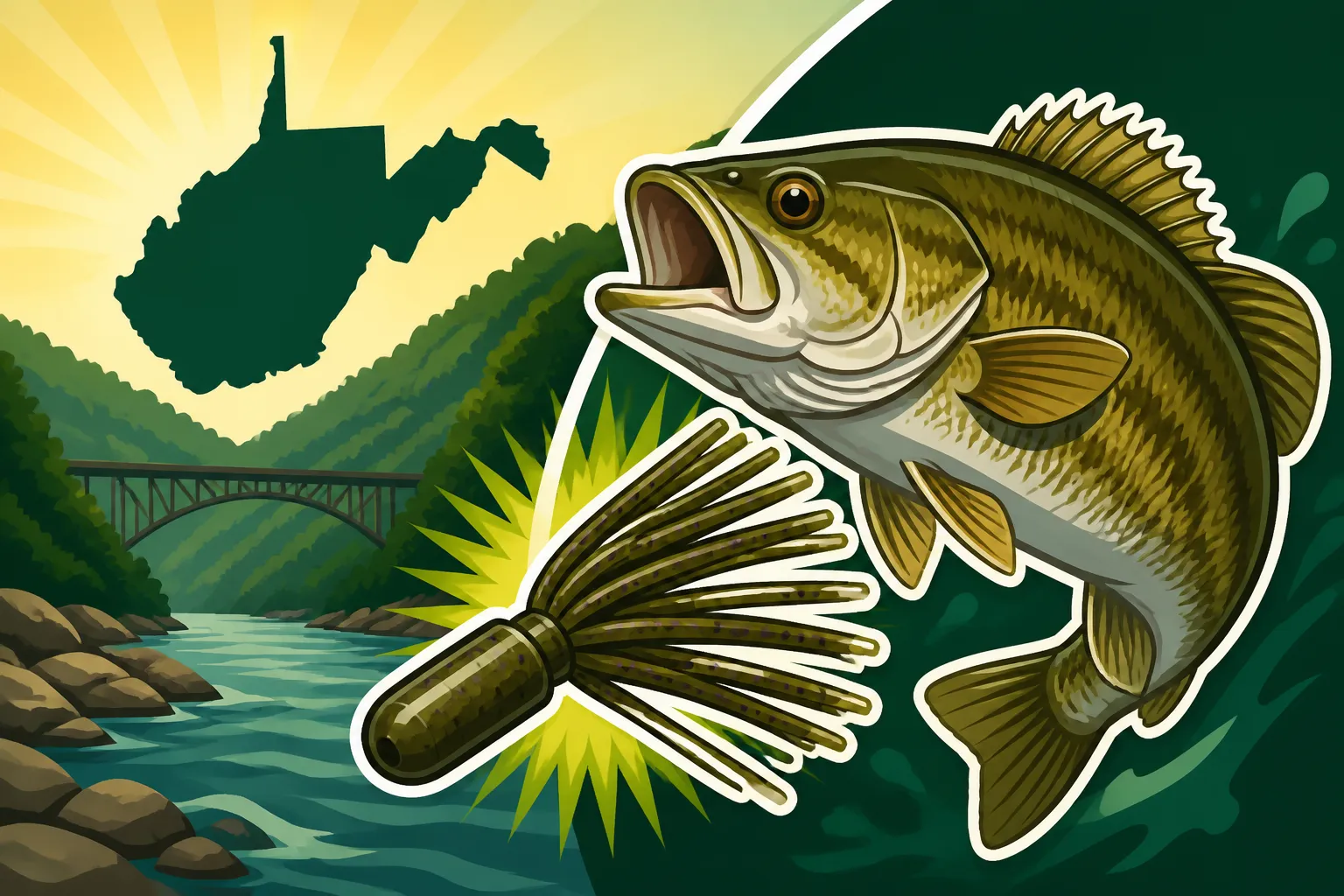
Think about what smallmouth bass primarily feed on in many West Virginia waterways: crawfish. The way a tube jig falls, shimmies, and rests on the bottom is uncannily similar to a crawfish scuttling along or hunkering down. The tentacles of the tube pulse and flare with even the slightest movement, creating a lifelike action that's hard for a curious smallmouth to ignore. When you drag it along the bottom or give it a short hop, it looks exactly like a crawfish trying to escape. Beyond crawfish, a tube jig can also perfectly imitate small baitfish, like shad or minnows, particularly when rigged with an internal jig head and retrieved with a swimming motion. Its compact profile makes it appear like a mouthful, yet it's streamlined enough to be fished in current or dense cover.
Versatility Across West Virginia's Diverse Waters
One of the greatest advantages of a tube jig is its adaptability to West Virginia's varied fishing environments. Whether you're targeting the bronzebacks of the legendary New River Smallmouth Bass Fishing areas, exploring the riffles and runs of the Greenbrier River Fishing Guide, or plumbing the depths of lakes like Summersville or Stonewall Jackson, a tube jig can be a go-to option.
For river fishing, a heavier tube jig rigged on an internal head can be pitched into strong currents or behind boulders, maintaining bottom contact where smallmouth often ambush prey. The soft plastic body is surprisingly snag-resistant, often deflecting off rocks and wood rather than getting hung up, which is a huge plus in rocky riverbeds. In clearer, calmer lake environments, a lighter tube jig with a slow fall can be deadly when fished around submerged structure, drop-offs, or alongside docks. The subtle action excels when fish are pressured or lethargic, offering a meal that doesn't scream "artificial." It's a fantastic choice for anglers who need one lure that can perform in many different scenarios, from fast-moving water to still reservoirs.
The "Feel" Factor and Subtlety
Sometimes, smallmouth bass just don't want a big, noisy crankbait or a rapidly retrieved spinnerbait. They want something subtle, something they can investigate without feeling threatened. The soft plastic nature of a tube jig provides an incredible "feel" through your rod, allowing you to detect even the slightest tap or change in bottom composition. This sensitivity is crucial when fishing for wary smallmouth that might just gently mouth the bait before spitting it out. The tube's natural buoyancy and soft texture also mean that once a smallmouth bites, it tends to hold on longer, giving you more time to set the hook. This subtlety is particularly important on those tough fishing days, perhaps after a cold front has passed through, making the fish more hesitant to strike aggressively.
Key Characteristics of the Best Smallmouth Tube Jigs
Choosing the right tube jig isn't just about grabbing a bag off the shelf. There are specific characteristics that make certain tubes more effective than others for West Virginia smallmouth, and understanding these can dramatically improve your success rate.
Size Matters: Matching the Hatch (or Crawfish)
When it comes to tube jigs, size is paramount. Smallmouth bass can be particular, and matching the size of the tube to the prevalent forage is often the difference between a good day and a great day.
- 2.5 to 3-inch tubes: These are your bread and butter for most river smallmouth, especially when fish are targeting smaller crawfish or baitfish. They offer a compact profile that's easy for smallmouth to engulf, even when they're not feeding aggressively. This size is excellent for targeting average-sized bronzebacks and often elicits strikes from larger fish too. They're particularly effective in shallower water or when you want a quicker fall rate.
- 3.5 to 4-inch tubes: When targeting trophy smallmouth, or fishing in waters known for larger crawfish populations, bumping up to a 3.5 or 4-inch tube can be incredibly effective. This larger profile represents a more substantial meal and can often deter smaller, more aggressive fish, allowing you to focus on the big ones. These work well in deeper sections of lakes or rivers, or when fish are keying in on larger prey. Don't be afraid to throw a larger tube, especially when you're hunting for that personal best.
- Smaller than 2.5 inches: While less common for dedicated smallmouth fishing, tiny tubes (1.5-2 inches) can be deadly for very pressured fish, or when targeting smallmouth in conjunction with panfish. These finesse presentations are often reserved for extremely clear water or highly pressured environments where even a 2.5-inch tube might seem too big.
It's always a good idea to have a range of sizes in your tackle box, allowing you to adapt to whatever the fish are telling you on any given day.
Color Selection for West Virginia Water Conditions
Color can be a hotly debated topic among anglers, but for tube jigs and smallmouth bass, there are some tried-and-true guidelines that hold up in West Virginia's varied conditions. The key is often contrast and natural imitation.
- Natural Crawfish Colors: Green Pumpkin, Watermelon, Brown, and various shades with orange or red flakes are absolute staples. These mimic the natural coloration of crawfish found in our rivers and lakes. In clear water, more translucent or natural patterns like Green Pumpkin with black flake or Watermelon Seed are often best. For slightly stained water, a solid Green Pumpkin or a Green Pumpkin with a subtle orange belly can be irresistible.
- Baitfish Imitations: When smallmouth are focused on baitfish, colors like pearl, white, smoke, or light gray can be highly effective. A Smoke with silver flake or a white/chartreuse combination can imitate shad or shiners. These are especially good when fished with a swimming retrieve.
- Stained or Muddy Water: In darker, stained, or Best Lure Color for Muddy Water Bass Fishing conditions, brighter colors that offer a strong silhouette can be beneficial. Chartreuse, black, or even a blue/black combination can stand out more. Some anglers even prefer solid black or dark purple, as these colors create a very defined profile in low visibility.
- Highlight Colors: Don't overlook tubes with contrasting tails or tips, like a Green Pumpkin with a chartreuse tail, or a Watermelon with an orange tip. These can add just enough flash or contrast to trigger a strike when fish are hesitant.
Always consider the water clarity and light conditions. On bright, sunny days with clear water, more natural, subdued colors usually win. On cloudy days or in murky water, brighter or darker, more opaque colors can be more visible.
Plastic Density and Salt Content: The Sink and Action
The formulation of the plastic itself plays a significant role in how a tube jig performs. Factors like plastic density and salt content directly impact the bait's fall rate, action, and even how long a fish holds onto it.
- Density and Fall Rate: A denser plastic will sink faster, which is advantageous when you need to get the lure down quickly in current or deep water. Less dense, softer plastics have a slower, more fluttering fall, which can be dynamite for suspending fish or when you need a very subtle presentation in shallower, calmer water. The perfect tube often has a balanced density that allows it to sink naturally while still having enough suppleness for the tentacles to move enticingly.
- Salt Content: Many tube jigs incorporate salt into the plastic. Salt increases the density, making the bait sink faster, but it also impacts the taste and texture. Smallmouth bass often hold onto a salty bait longer, giving you more time to react. The salt can also cause the plastic to become softer, which enhances the tube's action and makes it feel more natural to the fish. However, heavily salted baits are often less durable and might tear more easily after a few fish or snag attempts. Look for tubes that offer a good balance – enough salt for appeal, but still durable enough for repeated use on West Virginia's rugged riverbeds. Bass Pro Shops often carries a variety of tubes with different salt compositions.
Pairing Your Tube Jig with the Right Gear and Techniques
Having the perfect tube jig is only half the battle; knowing how to rig it and what gear to use can elevate your success significantly. The right setup ensures you're getting the optimal action from your tube and maximizing your chances of feeling those subtle smallmouth bites.
Jig Heads: Internal vs. External Weight
The choice of jig head is critical, as it dictates the tube's action, fall rate, and snag resistance.
-
Internal Jig Heads: These are by far the most popular choice for tube jigs, especially for smallmouth. The jig head is inserted inside the tube, with the hook piercing through the side of the plastic. This rigging method offers several advantages:
- Weedless/Snagless: The weight is enclosed, and the hook point is often positioned to ride upward, making the lure incredibly snag-resistant. This is a huge benefit when fishing rocky bottom, wood cover, or thick grass in West Virginia's rivers and lakes.
- Natural Fall: The internal weight allows the tube to "spiral" or "shimmer" on the fall, mimicking a dying baitfish or scuttling crawfish. This action is often irresistible to smallmouth.
- Compact Profile: The entire package is streamlined, making it easier to cast and retrieve through cover.
- Weight Selection: Internal jig heads come in a range of weights, from 1/16 oz for very shallow or slow current, up to 1/2 oz or more for deep water or strong currents. For most West Virginia river applications, 1/8 oz to 1/4 oz is a great starting point, allowing the tube to maintain bottom contact without getting swept away too quickly.
-
External Jig Heads (Exposed Hook): While less common for traditional tube jigging, external jig heads can have their place.
- Swim Bait Style: A tube rigged on a standard round head jig or football head jig with an exposed hook can be swum through the water column like a grub or a small swimbait. This is effective when fish are chasing baitfish higher in the water column.
- Quicker Hooksets: The exposed hook can sometimes lead to quicker hookups, especially if fish are just nipping at the bait.
- Drawbacks: The main disadvantage is increased snagging. In West Virginia's rocky rivers, this can quickly lead to lost lures.
For the most versatile and effective smallmouth tube jigging, stick with internal jig heads the majority of the time.
Rod, Reel, and Line for Tube Jig Success
Your entire setup needs to be balanced to get the most out of tube jigs. Sensitivity and control are key.
- Rod: A 6'6" to 7'0" medium-light to medium power spinning rod with a fast action is ideal.
- Power: Medium-light offers great sensitivity for feeling subtle bites and the lure's action, while still having enough backbone to handle a good-sized smallmouth. Medium power is better for heavier tubes or in areas with stronger current where a bit more control is needed.
- Action: A fast action tip allows for precise casting and quick, sharp hooksets. You need that quick tip to snap the hook through the plastic and into the fish's mouth. Many anglers find the Best Spinning Rods for Smallmouth Bass to be a perfect match.
- Reel: A 2000 or 2500 series spinning reel is perfect. These reels offer a smooth drag, good line capacity, and a retrieve speed that complements slow, controlled presentations.
- Line: This is where opinions can vary, but generally, a low-stretch line is preferred for sensitivity.
- Fluorocarbon (main line or leader): Many anglers opt for 6-10 lb Best Fluorocarbon Line for Clear River Water as a main line. It's nearly invisible underwater, extremely sensitive, and has good abrasion resistance for fishing around rocks. Alternatively, a braided main line (10-15 lb) with a 6-8 lb fluorocarbon leader is a fantastic setup. The braid offers ultimate sensitivity and casting distance, while the fluorocarbon leader provides stealth and abrasion resistance where it matters most.
Retrieving and Presenting a Tube Jig Effectively
The beauty of a tube jig lies in its versatility of presentation. Smallmouth bass can be moody, so being able to switch up your retrieve is crucial.
- Dragging: This is arguably the most common and effective technique, especially for mimicking crawfish. Cast your tube out, let it sink to the bottom, then slowly drag it along with your rod tip. Periodically pause, allowing the current or gravity to make the tentacles undulate. Pay close attention for any subtle taps or sudden heaviness – that's often a smallmouth inhaling the bait. This works exceptionally well in river runs and along the contours of lake bottoms.
- Hopping: Similar to dragging, but with more aggressive upward snaps of the rod. Cast, let it sink, then snap your rod tip up about a foot or two, letting the tube jump off the bottom before fluttering back down. The key is to watch your line as it falls; most bites happen on the drop. This technique is great for covering water and triggering reaction strikes, especially when fish are a bit more active.
- Swimming: Rigged with a lighter internal jig head, or sometimes an external one, a tube can be reeled steadily through the mid-water column, mimicking a baitfish. This is effective over submerged weed beds, around schooling bait, or when smallmouth are suspended. Vary your retrieve speed and add occasional twitches to give it a more erratic, lifelike movement.
- Pitching and Flipping: For targeting specific pieces of cover like laydowns, dock pilings, or rock ledges, tubes can be pitched or flipped into tight spots. Let it fall naturally, then give it a few subtle shakes or hops before retrieving. This is a very precise way to fish for bass hiding in ambush points.
Experiment with these techniques. On some days, a slow drag is all they want; on others, an aggressive hop is key. The smallmouth will tell you what they prefer. For more ideas, check out articles on Best Baits for Smallmouth Bass on the New River.
Top Tube Jig Brands and Styles for West Virginia Smallmouth
When you walk into a Bass Pro Shops or browse online at Amazon, the sheer number of tube jigs available can be overwhelming. Knowing which brands and styles have a proven track record for West Virginia smallmouth can help you cut through the noise and stock your tackle box with confidence.
Proven Performers and Their Specific Strengths
Over the years, certain brands have earned their stripes in the smallmouth world for producing high-quality, effective tube jigs. These aren't just generic plastics; they have specific designs and formulations that cater to what smallmouth desire.
- Strike King Coffee Tubes: Strike King is a household name in bass fishing, and their Coffee Tubes are particularly popular. What sets them apart is the added coffee scent, which not only masks human odors but is also thought to make fish hold on longer. They come in a good range of sizes and natural colors, making them versatile for various West Virginia conditions. Their plastic blend offers a nice balance of softness for action and durability. Many anglers swear by the Coffee Tube in Green Pumpkin for all-around smallmouth success on rivers like the New and the South Branch Potomac.
- Gary Yamamoto Custom Baits Tube: Yamamoto is renowned for its soft, high-salt content plastics, and their tubes are no exception. These tubes have an incredibly soft, supple feel, which gives them an unparalleled fluttering action on the fall and makes them feel very natural to a biting fish. The downside is that they can be less durable than some stiffer plastics, tearing more easily. However, their fish-catching ability often outweighs this concern for many dedicated smallmouth anglers. They are fantastic for highly pressured fish or when a super subtle presentation is needed.
- Poor Boy's Baits Tube: A lesser-known but highly regarded brand, Poor Boy's Baits are famous for their solid body, yet still supple, tube design. Their solid head means the internal jig head stays put better, and the thinner, softer tail tentacles create a lifelike action. They offer a fantastic range of realistic crawfish colors. These tubes are often a go-to for serious river anglers who need a durable, effective tube that can withstand the abuse of rocky environments while still attracting bites.
These brands represent just a few of the excellent options out there. The key is to look for tubes made with high-quality, soft plastic that has good action, and to choose colors and sizes appropriate for your specific fishing situation in West Virginia.
Budget-Friendly vs. Premium Options
Just like with any fishing gear, there's a spectrum of pricing when it comes to tube jigs. You can find excellent options at both ends of the scale, and knowing when to splurge or save can make your fishing budget go further.
- Budget-Friendly Options: Many tackle manufacturers, including store brands you might find at Bass Pro Shops or through various sellers on Amazon, offer very capable tube jigs at a lower price point. These are often excellent for everyday fishing, especially if you're fishing in areas with a lot of snags where you might lose a few lures. While the plastic might not be quite as soft or the color selection as nuanced as premium brands, they still catch plenty of fish. It's smart to stock up on these in common colors and sizes as your primary workhorses. You can also experiment with different colors without breaking the bank.
- Premium Options: Brands like Gary Yamamoto, or custom pour companies, often come with a higher price tag. What you're paying for is typically a superior plastic formulation, often with higher salt content, finer color flakes, and a softer, more lifelike texture. These premium tubes are often reserved for tournament situations, highly pressured waters, or when you're specifically targeting trophy-sized smallmouth. The increased softness and natural feel can sometimes make a difference when fish are particularly wary. It's often a good strategy to have a mix: your go-to budget tubes for general fishing, and a few packs of premium tubes for those tough days or special occasions.
Customizing Your Tubes for West Virginia Specifics
Sometimes, the perfect tube jig isn't one you buy off the shelf, but one you've personalized for your local waters. West Virginia's unique environments can sometimes call for a little customization.
- Dyeing: Spike-It and similar brands offer plastic dyes that can be used to add a contrasting tail to a tube jig. For instance, taking a Green Pumpkin tube and dipping just the very tips of the tentacles in orange or chartreuse dye can mimic a crawfish with bright claws, which can be an excellent trigger. This is especially effective in slightly stained water or when smallmouth are keying in on specific color cues. You can also use dyes to refresh faded plastics or create unique color combinations not available commercially.
- Adding Scent: While some tubes come pre-scented, adding an external scent attractant can sometimes provide an extra edge. Scent sprays or gels formulated for crawfish or fish are commonly applied to tube jigs. This can further mask human scent and give the smallmouth an additional reason to hold onto the bait, allowing you a moment longer to set the hook. This is particularly useful in cold water or when fish are lethargic and might not strike aggressively. Just be mindful not to overdo it, as some fish can be sensitive to too much artificial scent.
- Trimming and Modifying: Don't be afraid to experiment with trimming the tentacles of a tube to create a different action or profile. Sometimes, a shorter, more compact tentacle presentation is what the fish want, especially when mimicking smaller prey. You can also experiment with adding small rattles inside the tube jig for an audible attraction, though this is usually more effective in stained or muddy water where sound can help fish locate the bait.
| Tube Jig Characteristic | Clear River/Lake (e.g., New River) | Stained River/Lake (e.g., Kanawha River after rain) | Deep Water/Strong Current | Shallow/Calm Water |
|---|---|---|---|---|
| Size | 2.5 – 3.5 inches | 3.0 – 4.0 inches | 3.5 – 4.0 inches | 2.5 – 3.0 inches |
| Color | Green Pumpkin, Watermelon, Smoke | Black/Blue, Chartreuse, Dark Green Pumpkin | Natural, Darker Shades | Natural, Translucent |
| Jig Head Weight | 1/8 – 1/4 oz | 1/4 – 3/8 oz | 3/8 – 1/2 oz | 1/16 – 1/8 oz |
| Plastic Density | Softer, high-salt for slow fall | Slightly denser for quicker fall | Denser, faster fall | Very soft, slow fall |
| Primary Retrieve | Drag, subtle hop | Aggressive hop, swim | Drag, controlled hop | Slow drag, swim |
The tube jig is a truly remarkable and effective lure for smallmouth bass in West Virginia, offering an unmatched combination of natural appeal, versatility, and subtlety. By understanding the nuances of size, color, plastic density, and proper rigging, you can confidently select and present the best tube jigs for your next Mountain State smallmouth adventure. Don't be afraid to experiment with different combinations until you find what the fish are keying in on – that's often the secret to consistent success.
Disclaimer
This article is for general informational purposes only and does not constitute professional advice. Laws, prices and regulations vary by location and change over time. Consult a qualified professional for guidance on your specific situation.