Best lure color for muddy water bass fishing
There’s nothing quite like the heartbreak of showing up at your favorite West Virginia fishing spot, full of anticipation, only to find the water churned up into a murky mess after a heavy rain. That beautiful, clear stream or lake you envisioned is now a chocolate milk river, and doubt starts to creep in: "Can I even catch bass in this?" It's a common frustration for anglers here in the Mountain State, but I’m here to tell you that muddy water doesn't have to mean a ruined day. With the right lure colors and a few adjustments to your technique, you can still find success. This guide will walk you through the best lure colors for muddy water bass fishing, explaining why they work, and how to present them effectively, helping you turn those challenging days into triumphs.
Understanding Muddy Water and Bass Behavior
When the rains come and West Virginia's rivers and lakes turn turbid, it's easy to assume the fish just shut down. But that's not entirely true for bass. They adapt, and understanding how they do it is the first step to figuring out what lures will tempt them.
Why Muddy Water Presents a Challenge
First off, let's talk about why muddy water is such a pain. The main issue is visibility, or rather, the lack thereof. Clear water allows light to penetrate deeply, showcasing your lure's intricate details and natural colors. But when sediment and runoff cloud the water, that light penetration is severely diminished. It's like trying to see in a dimly lit, foggy room.
This drastically impacts a bass's primary hunting sense: sight. They can no longer easily spot your perfectly presented finesse worm from a distance or track a fast-moving crankbait. This lack of visual cues makes it harder for them to home in on a potential meal, leading to those frustrating days where your usual go-to baits just aren't producing. West Virginia's rivers, like the New River or the Kanawha, can get particularly stained after significant rainfall, transforming familiar structures into unseen obstacles for both angler and fish.
How Bass Adapt to Low Visibility
Despite the visual handicap, bass are incredibly adaptable predators. When their sight is compromised, they lean heavily on their other senses, primarily their lateral line system and their sense of smell. The lateral line is a sensory organ running along the sides of the fish, detecting vibrations and pressure changes in the water. This allows them to "feel" objects and movements around them, even in complete darkness. Think of it as their built-in sonar system.
In muddy water, bass tend to move closer to cover and structure, often holding tighter to riverbanks, submerged logs, or rock piles. This provides them with ambush points and also puts them in areas where current might be slightly less intense, allowing them to conserve energy and better detect vibrations. They also become more opportunistic feeders, relying on scent trails and strong vibrations to locate food. For instance, a big largemouth bass might patrol the edges of a flooded shoreline on a lake like Summersville Lake, waiting for a juicy crawfish or baitfish to stumble by, rather than actively chasing down prey in open water. Knowing this tells us a lot about how we need to present our lures. For more on these amazing game fish, check out our guides on how to Catch Smallmouth Bass in West Virginia Rivers and Largemouth Bass Fishing in West Virginia.
The Science Behind Lure Colors in Muddy Water
It might seem counterintuitive to obsess over lure color when the water is so dark, but there's a real science to it. The goal isn't necessarily to make your lure look "natural" in muddy water, but rather to make it stand out and be detectable.
The Importance of Contrast and Silhouette
In low-visibility conditions, bass aren't seeing fine details; they're seeing shapes and shadows. This is where contrast and silhouette become paramount. A lure that creates a strong, distinct silhouette against the murky backdrop is much easier for a bass's lateral line and limited vision to pick up. Dark colors, like black, deep blue, or junebug, absorb most of the ambient light, creating a stark, opaque profile in the water. Imagine looking at a dark object against a cloudy sky – it stands out clearly.
Conversely, some bright, fluorescent colors can also be effective because they react differently to the minimal light present, sometimes even appearing to glow or create a subtle halo effect that helps a bass pinpoint them. The key is to avoid subtle, natural colors that would simply blend into the muddy environment, becoming invisible to even a short-sighted bass. The aim is not stealth, but overt presence.
Vibration and Scent as Complementary Factors
While color helps with the visual (or semi-visual) aspect, vibration and scent are equally, if not more, crucial in muddy water. Since a bass relies heavily on its lateral line, lures that displace a lot of water and create strong vibrations become irresistible. Think about lures with thumping blades, wide wobbles, or internal rattles. These create "noise" in the water that bass can feel from a distance, drawing them in even before they get a glimpse of the lure.
Scent is the final piece of the puzzle. Bass have an excellent sense of smell, and a strong, attractive scent can be the ultimate trigger when sight and vibration have done their job of getting the fish close. Many anglers will add liquid or paste scents to their soft plastics, jigs, or even crankbaits in muddy water. Brands like Berkley PowerBait or Strike King offer a range of scented products that can make a huge difference. For instance, when you're targeting bass in the turbulent waters of the New River, a scented jig with a vibrating skirt can be a game-changer. These factors combined increase your lure's "detectability" significantly. If you're looking for more general bass fishing guidance, our article on Best Baits for Smallmouth Bass on the New River has some excellent tips.
Top Lure Colors for Muddy Water Bass in West Virginia
Knowing the "why" helps, but now let's get down to the "what." What specific colors should you tie on when the water looks like coffee with too much cream?
Dark and Opaque Colors (Black, Blue, Junebug)
When that water is truly stained, dark and opaque colors are your absolute best friends. They create the strongest possible silhouette, making your lure stand out like a billboard against a hazy sky.
- Black: This is a classic for a reason. Black absorbs almost all light, presenting a solid, unmistakable profile. It's fantastic for jigs, worms, creature baits, and even spinnerbait skirts. If you're fishing a flooded timber area in a lake like Stonewall Jackson, a black jig fished slowly can be incredibly effective.
- Blue (especially Black and Blue): The combination of black and blue is legendary in muddy water. The black provides the silhouette, while the blue offers a subtle contrast and can mimic crawfish, a primary food source for bass in many West Virginia waters. This color combo shines in jigs, ChatterBaits, and soft plastics. Many anglers find black and blue jigs particularly deadly when flipping into thick cover along creek channels or river bends.
- Junebug: This deep, purplish-black color is another muddy water staple, especially for soft plastics like worms and creature baits. It has a bit more "pop" than straight black in some light conditions but still creates that critical dark profile. It's a favorite for Texas-rigging or Carolina-rigging plastics in reservoirs or slow-moving river sections.
When you hit the local bait shop or browse for tackle on Amazon, always make sure you have a good selection of these dark hues. They are tried and true for a reason.
Bright and Fluorescent Colors (Chartreuse, Orange, White)
While dark colors work by creating a strong silhouette, bright and fluorescent colors work by maximizing visibility through reflection or glow. They catch whatever minimal light is available and make your lure "pop."
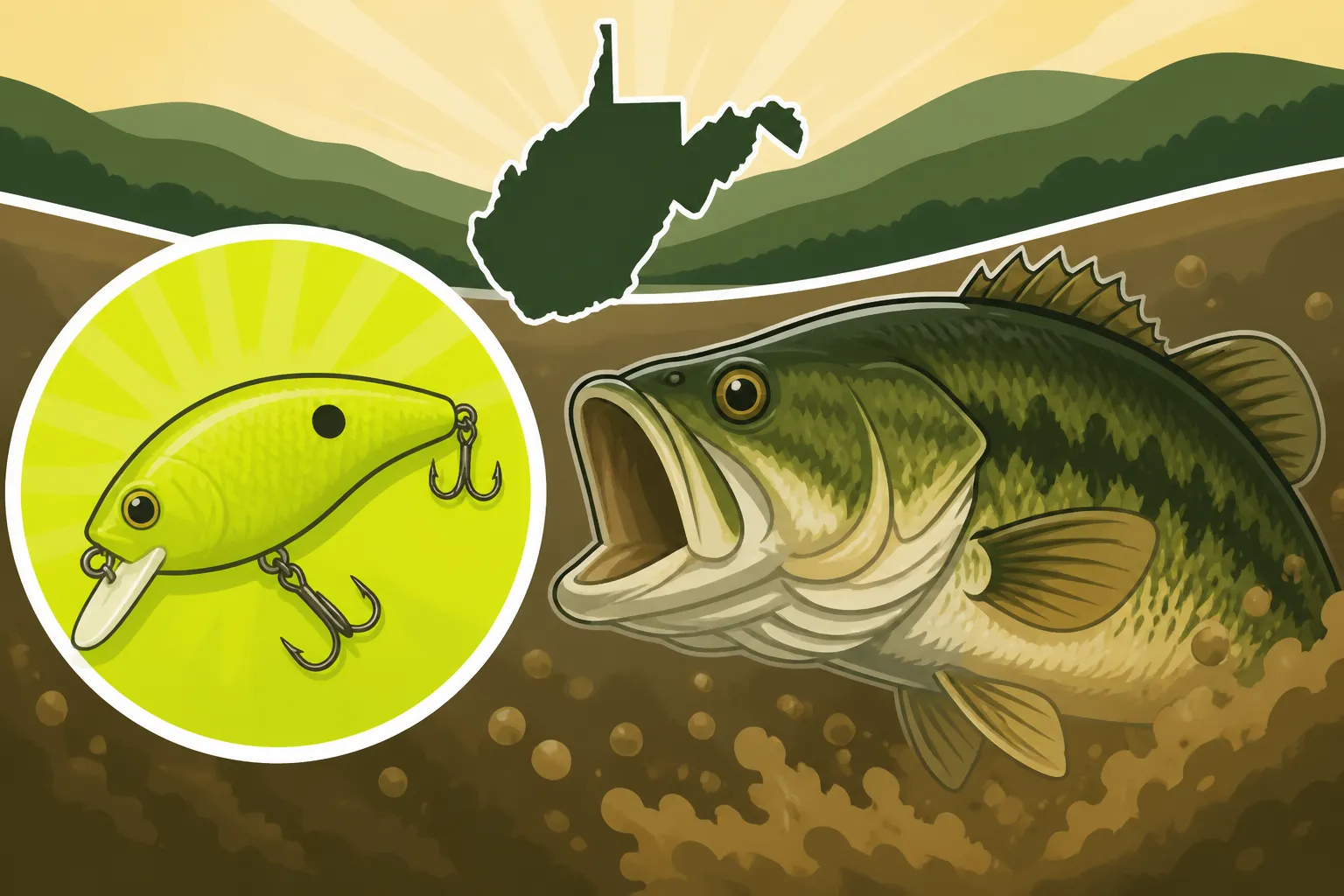
- Chartreuse: This vibrant green-yellow is arguably the king of bright colors for muddy water. It's incredibly effective because it's a color that fish can see well in low light, appearing brighter than it actually is to a bass's eye. Chartreuse spinnerbait blades, crankbaits, and swim jigs are go-to choices. Think about throwing a chartreuse crankbait down the edge of a muddy river bank on the Ohio River, where bass might be holding tight to structure.
- Orange/Red: These warm colors can be highly effective, especially when mimicking crawfish or injured baitfish. A bright orange or red can be very visible in stained water, often triggering aggressive strikes. Lures with orange bellies or red hooks can make a big difference. Sometimes, a subtle splash of orange or red is all it takes to grab a bass's attention.
- White: White can be a fantastic choice in muddy water, especially on overcast days or in slightly less turbid conditions. It creates a bright, highly visible target that can look like a fleeing baitfish. White spinnerbaits, swim jigs, and even large swimbait bodies can be incredibly productive, particularly when fished aggressively.
These bright colors offer a different approach than the dark ones, relying on their ability to reflect light and create a visible flash. It’s always a good idea to have both dark and bright options in your tackle box. Our guide on Best Crankbaits for West Virginia Smallmouth Bass has more insights on lure selections.
Combinations and "Trigger" Colors
Sometimes, the magic happens when you combine the best of both worlds, or add a subtle "trigger" color that really gets a bass's attention.
- Black and Chartreuse: This combination is particularly potent. The black provides the foundational silhouette, while the chartreuse offers that high-visibility flash. You'll often see this in spinnerbait skirts, jig trailers, or even crankbait patterns. It's designed to give the bass both a clear profile and a vivid color to zero in on.
- White and Chartreuse: Similar to black and chartreuse, this pairing maximizes visibility. The white stands out, and the chartreuse adds that extra "glow." This is great for spinnerbaits and ChatterBaits, especially if the water isn't pitch black but still quite stained.
- Red Accents: No matter the primary color of your lure, adding a splash of red can be a powerful trigger. Red mimics blood or gills and can suggest an injured prey item, often provoking an instinctive strike from bass. This could be a red hook on a jig, a red flake in a soft plastic, or a small red throat patch on a crankbait. Even a little bit of red can make a huge difference in attracting attention.
Experimenting with these combinations is key, as different conditions and bass preferences can vary. What works wonders on the Elk River might be less effective on the Cheat, so always be willing to swap out colors. Don't forget to check the West Virginia Black Bass Limits and the New River Slot Limit before you head out, to ensure you're fishing responsibly.
| Lure Color Category | Primary Effect in Muddy Water | Ideal Lure Types | West Virginia Scenario Example |
|---|---|---|---|
| Dark/Opaque | Strong Silhouette, High Contrast | Jigs, Worms, Creature Baits | Flipping flooded timber on a reservoir |
| Bright/Fluorescent | High Visibility, Reflectivity | Spinnerbaits, Crankbaits, Swim Jigs | Covering stained flats or river bends |
| Combinations | Both Silhouette & Visibility | Spinnerbaits, Jigs with Trailers | Targeting bass near current breaks after rain |
| Trigger Accents | Mimics Injury/Prey | Any lure with red hooks or highlights | Adding a subtle attractant to any muddy water presentation |
Beyond Color: Presentation and Gear Considerations
Even with the perfect lure color, your technique and equipment play a massive role in getting those bites when the water is muddy. It's not just about what you throw, but how you throw it and what you throw it with.
Slow and Deliberate Retrieve Techniques
When bass can't see your lure easily, they need more time to find it using their other senses. This means you need to slow down your retrieve significantly. Forget burning a crankbait back to the boat; that fish won't even know it's there until it's gone.
Instead, focus on slow, deliberate presentations. For jigs and soft plastics, this means hopping, dragging, and pausing them along the bottom, allowing any rattles or scent to disperse and giving bass ample time to home in. For spinnerbaits and ChatterBaits, a slow roll just above the bottom or through cover works best. Let those blades thump and vibrate at a pace a bass can track. Often, the bites will feel like a subtle "thump" or just a heavy feeling on your line, so you need to be constantly attentive. In conditions where a cold front might have pushed through, making bass even more sluggish, these slow presentations become absolutely critical. For more on this, check out our guide on Cold Front Fishing Tactics for West Virginia Bass.
Upping Your Gear for Muddy Water Success
Your gear also needs to be up to the challenge of muddy water fishing. Bass often hold tighter to heavy cover in these conditions, meaning you're more likely to be pulling them out of thick brush, submerged trees, or heavy weeds.
- Heavier Line: Opt for heavier braided or fluorocarbon lines. Braid, in particular, offers superior strength and sensitivity, helping you feel those subtle muddy water bites and rip fish out of snags. A 15-20 lb fluorocarbon or 30-50 lb braid is a good starting point for most bass applications in these conditions. This is where investing in quality fishing line, easily found on Amazon, truly pays off.
- Stronger Rods: You'll want a rod with a bit more backbone (medium-heavy to heavy power) to handle both the heavier lures and the powerful fight of a bass trying to bury itself in cover. A fast action tip will still give you the sensitivity to detect bites, while the power will help you control the fish. If you're looking for recommendations, our article on Best Spinning Rods for Smallmouth Bass has some great options.
- Sensitive Rods: Even with heavy gear, sensitivity is key. You're often feeling for subtle "thumps" or changes in pressure rather than seeing a visual strike. Graphite rods are generally more sensitive than fiberglass, allowing you to interpret what your lure is doing and what's happening at the other end of your line.
Having the right gear ensures that when a bass finally commits to your carefully chosen, perfectly presented lure, you have the muscle to land it. Getting your hands on the right equipment is simple, and you'll find a wide variety of options for everything from line to lures when shopping online, including through retailers like Amazon. For a more comprehensive look at what to bring along, check out our Best Tackle for West Virginia Smallmouth Bass guide.
Remember, muddy water fishing might test your patience, but it also offers a unique opportunity to hone your skills and understand bass behavior on a deeper level. With the right colors, plenty of vibration and scent, and a slow, deliberate presentation, you can still have incredibly productive days on West Virginia's waters.
Disclaimer
Please note that fishing regulations, conditions, and best practices can change. Always consult the latest West Virginia Division of Natural Resources (WVDNR) regulations before heading out. This guide is for informational purposes only and does not supersede official rules or professional advice.