Best technique for fan casting a new lake
There’s nothing quite like the excitement of discovering a brand-new fishing spot, but let's be honest, that initial overwhelm can quickly set in. Staring at an unfamiliar lake, wondering where to even begin, can feel like trying to find a needle in a haystack. This guide is here to unravel that mystery, showing you exactly how to approach virgin waters with confidence using the incredibly effective fan casting technique to locate fish and prime structures.
Understanding the "New Lake" Challenge
When you pull up to a lake you’ve never fished before, your mind probably races with questions. Where are the drop-offs? Are there submerged logs? What about weed lines or rock piles? Without a map, sonar readings, or local knowledge, it feels like you're completely blind. Many anglers make the mistake of just casting straight out or hitting the most obvious visible cover, which often leads to a frustratingly quiet day.
The Overwhelm of Unfamiliar Waters
Imagine standing on the shore of a vast, tranquil lake, perhaps one of West Virginia's beautiful reservoirs like Summersville Lake or Bluestone Lake. The sheer expanse can be daunting. You see water, perhaps some shoreline trees, maybe a distant point or cove. But beneath the surface, a whole world exists – ledges, humps, creek channels, brush piles, and vast expanses of open water. Without any reference points or prior success, it's easy to just throw a lure aimlessly, hoping for a bite. This isn't fishing; it's just casting. The frustration builds as minutes turn into hours with no action, and you start to second-guess every decision. It's a common struggle, and one that fan casting is perfectly designed to overcome.
No Prior Knowledge? No Problem!
This is where fan casting truly shines. It's a systematic approach that allows you to methodically search an area, piece by piece, even with zero prior intel. Think of it as painting a picture of the underwater landscape with your lure. Each cast isn't just a shot in the dark; it's a probe, gathering information. You might not know where the fish are, but fan casting helps you identify where they aren't, and, more importantly, where they might be. It's a technique that builds confidence because you're actively exploring, rather than passively waiting. This strategy is especially valuable when you find yourself at a new spot without access to advanced electronics, relying purely on your casting arm and observational skills.
The Art and Science of Fan Casting for Success
Fan casting isn't just about throwing your lure everywhere; it's a deliberate and strategic method to cover water efficiently and effectively. It’s about creating a mental map of the underwater environment, one cast at a time.
What Exactly is Fan Casting?
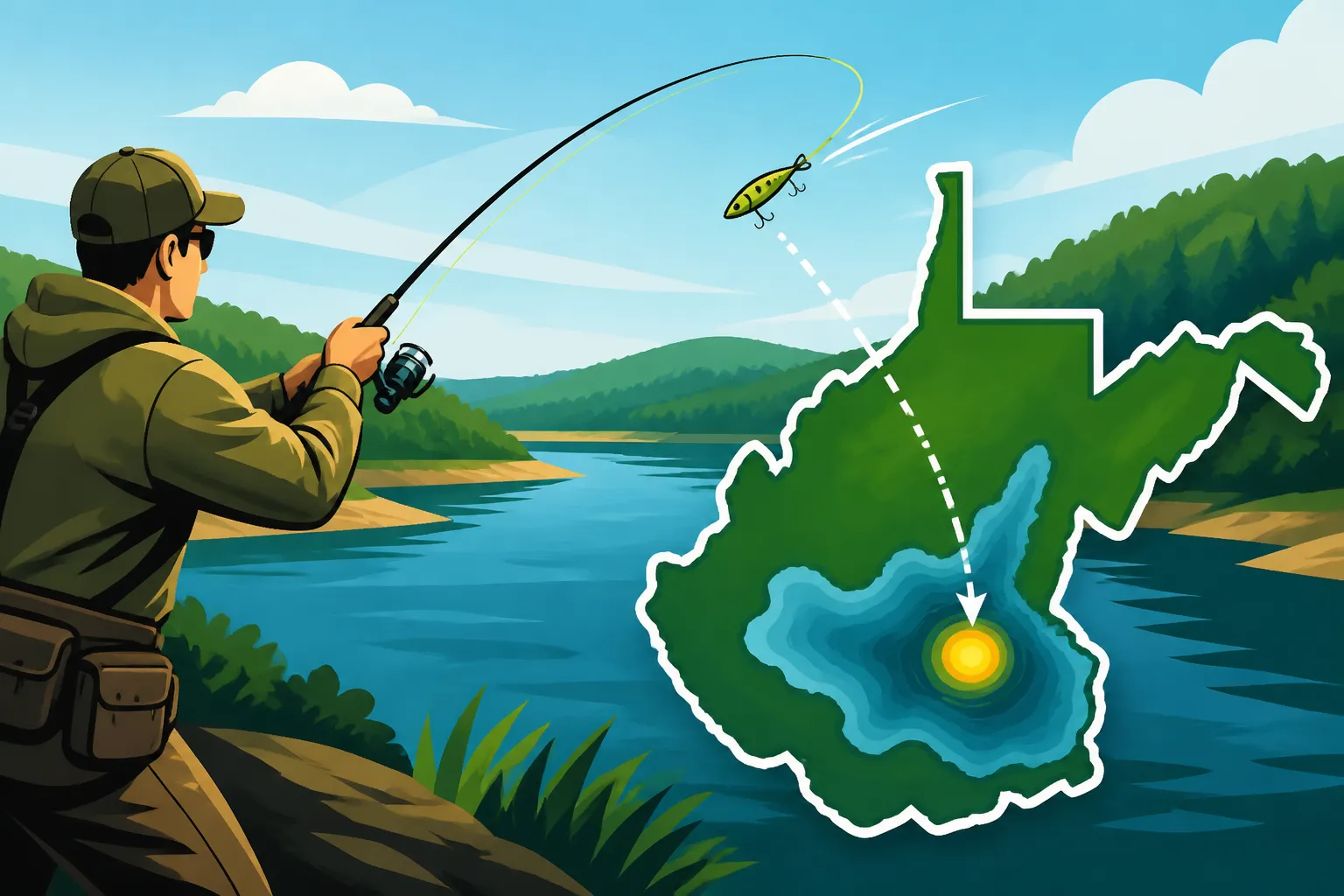
At its core, fan casting is a technique where you make a series of casts in a fan-like or radial pattern, starting from one extreme angle and working your way around to the other. Imagine your body is the pivot point, and your casts are the spokes of a wheel extending from you. You're trying to cover every inch of water within your casting range, from directly to your left, all the way to directly to your right, and everything in between. The goal isn't just to cover distance, but to cover breadth – to thoroughly explore a wide section of water from a single position. This method ensures that if a fish is in that general area, your lure will pass by it. It’s particularly effective for searching for active fish or identifying subtle changes in depth or bottom composition that might hold fish.
The Step-by-Step Fan Casting Method
Let's break down the actual process, so you can put this into practice on your next West Virginia fishing adventure.
- Choose Your Anchor Point: First, pick a spot where you'll stand (or anchor your boat/kayak). This should be a point where you can cast unimpeded in a wide arc. If you're on shore, a point of land or an open bank works well. From a boat, choose a spot that allows for casting towards various features, whether it's the bank, a submerged hump, or open water.
- The First Cast (Extreme Left/Right): Start by casting your lure as far as you can, directly to one side of your chosen arc. Let's say you choose to start on your extreme left, perhaps at a 9 o'clock position if you're facing forward.
- The Retrieve and Observation: Retrieve your lure, paying close attention to every twitch, bump, or change in resistance. What does the bottom feel like? Is it rocky, muddy, or sandy? Did you hit any weeds or wood? Did you feel any subtle bites? This retrieve isn't just about catching a fish; it's about gathering intelligence. Note the depth at which your lure is running and any contact with structure.
- The Sequential Casts: After your first retrieve, make your next cast just slightly inward from the previous one. If your first cast was at 9 o'clock, your next might be at 9:30 or 10 o'clock. The idea is that each subsequent cast overlaps slightly with the previous one, ensuring no water goes unfished.
- Completing the Arc: Continue this pattern, moving your casts in a steady arc across the water in front of you, from your starting point (e.g., 9 o'clock) all the way to the opposite extreme (e.g., 3 o'clock). Each cast should aim to cover a new, adjacent slice of water.
- Repeat and Move: Once you've completed a full fan from one side to the other, you've thoroughly worked that particular area. If you haven't found any fish or promising structure, it's time to move to a new anchor point and repeat the process. Don't linger too long in unproductive water. This systematic movement is key to covering a lot of ground on a new lake.
Reading the Water with Fan Casting
This technique isn't just for covering ground; it's a powerful tool for How to Pattern Bass on an Unfamiliar West Virginia Lake or finding other species. As your lure travels through the water, it acts as an extension of your senses. A consistent "thump-thump-thump" might indicate a rocky bottom, while a soft "mush" could mean mud or silt. If your lure snags on something solid, you've likely found a stump, log, or rock pile – all potential fish-holding structures. Any sudden change in depth that your lure registers (e.g., suddenly falling faster, or feeling resistance as it climbs) signals a drop-off or hump.
By systematically working an area, you're not just hoping; you're actively searching. If you get a bite on one side of your fan, or your lure consistently hits a specific depth contour, that's valuable information. It tells you where to focus your efforts and what kind of structure or depth the fish might be relating to. This data helps you refine your approach, perhaps switching to a different lure that better targets that specific depth or structure.
Gear, Lures, and Mindset for Effective Fan Casting
Having the right tools and the right attitude can make all the difference when you're trying to decipher a new lake. It’s not about having the most expensive gear, but the most appropriate and versatile gear for the task at hand.
Essential Gear for Covering Water
When you're fan casting, you need gear that allows for long, accurate casts and provides good sensitivity.
- Rods: A medium-heavy spinning or baitcasting rod, typically 6'6" to 7'6" in length, offers a good balance of casting distance and backbone to handle various lure weights. Look for a rod with a fast action tip, which enhances sensitivity for detecting subtle bites and bottom changes. For general-purpose searching, a versatile rod is your best friend. Many excellent options can be found on Amazon, offering a range of prices and features.
- Reels: Pair your rod with a smooth-operating reel that has a reliable drag system. A spinning reel in the 2500-3000 size range or a baitcasting reel with a medium gear ratio (around 6.4:1 to 7.1:1) is ideal. The medium gear ratio allows you to work a variety of lures at different speeds.
- Line: Spool up with a good quality braided line (15-30 lb test) for its incredible sensitivity and casting distance. Braid has almost no stretch, so every little tap or vibration from your lure is transmitted directly to your hands. Attach a fluorocarbon leader (8-15 lb test, 3-5 feet long) with a strong knot like an Albright or FG knot. The fluorocarbon is nearly invisible underwater and provides abrasion resistance, especially when fishing around submerged timber or rocky bottoms, which you'll likely encounter on a new lake. For specific species, you might adjust your leader size; for instance, going heavier for Muskie Fishing in West Virginia or lighter for spooky trout.
Lure Choices for "Blind" Searching
The key to successful fan casting lures is versatility and the ability to cover different depths and retrieve speeds. You want "search baits" that are designed to draw strikes and provide feedback on the environment.
- Crankbaits: These are arguably the best search baits. They come in various diving depths, from shallow runners to deep divers. Choose a few with different lip designs to explore various depths. Their wobbling action and internal rattles create vibration that fish can detect from a distance, even in stained water. Keep a variety of colors, including natural baitfish patterns and some brighter "reaction" colors. For example, a squarebill crankbait is fantastic for bouncing off shallow cover, while a lipless crankbait can be fished at any depth simply by counting it down and varying your retrieve. Best crankbait for stained river water can be a game-changer if the lake has poor visibility.
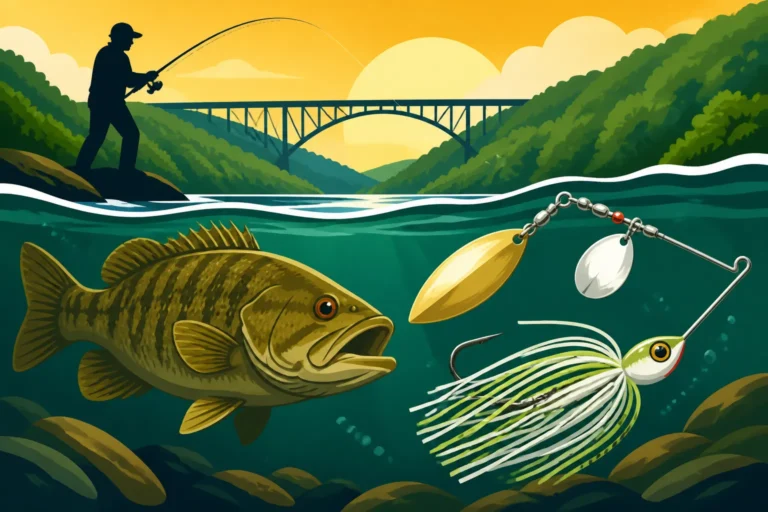
- Spinnerbaits: Another excellent choice, especially in and around cover like submerged brush, standing timber, or weeds. The flashing blades and pulsating skirt create a lot of visual and vibrational appeal, making them highly effective for enticing aggressive bites. They can be fished at various depths depending on retrieve speed and weight. Look for tandem blade configurations for maximum flash and vibration.
- Jigs (with plastic trailers): A versatile option that can be bounced along the bottom to feel out structure. A weighted jig head paired with a soft plastic craw, creature bait, or grub offers a more subtle presentation but provides excellent bottom contact. You can control the depth precisely and really "feel" what's down there. This is especially good for targeting species like smallmouth bass that often hug the bottom or relate to rocky cover.
- Swim Baits: Paddle-tail swimbaits on a weighted hook or jig head are fantastic for covering the middle water column and imitating baitfish. They offer a more natural profile and action than crankbaits or spinnerbaits, making them great for wary fish.
- Soft Plastic Worms/Creature Baits (Texas or Carolina Rigged): While not as fast for covering water, these are invaluable for slowly dissecting an area where you suspect fish are holding. They offer excellent bottom feel and a natural presentation. If your fan casting with faster moving baits identifies a promising spot, slow down and work it thoroughly with a Texas-rigged worm.
Patience and Persistence: The Mental Game
Fan casting, by its very nature, requires a degree of patience. You're not always going to catch a fish on the first few casts, or even in the first few fan patterns. The goal is information gathering, and that takes time. Don't get discouraged if you spend a good hour fan casting an entire cove without a bite. That's still valuable information – it tells you that area might not be holding active fish right now.
Persistence means sticking with the method, trusting the process, and making those systematic casts. It means continuing to pay attention to your retrieve, even when nothing seems to be happening. It's often that one subtle bump, that one unexpected snag, or that single tap that gives you the critical clue you need to unlock the puzzle of a new lake. Remember, every cast is a lesson, and every retrieve is an opportunity to learn something new about the water you're fishing.
Advanced Tips and Common Mistakes to Avoid
Once you've mastered the basic fan casting technique, there are ways to refine your approach and get even more out of your exploration, while also avoiding common pitfalls.
Varying Your Retrieve and Depth
Simply casting in a fan pattern isn't enough; you need to experiment with how you present your lure. Fish aren't always holding at the same depth or reacting to the same speed.
- Varying Retrieve Speed: On some casts in your fan, try a fast, erratic retrieve. On others, slow down significantly. A common mistake is to retrieve at the same speed every time. Different speeds can trigger different reactions from fish. A fast retrieve might provoke a reaction strike, while a slow, methodical retrieve might entice a lethargic fish.
- Changing Depths: Use lures that target different depths. If you start with a shallow-running crankbait, and get no bites, switch to a medium diver, or a jig that you can let sink to the bottom. Even with the same lure, you can manipulate its depth by altering your retrieve speed, the angle of your rod tip, or by allowing it to sink longer before starting your retrieve. For instance, a lipless crankbait can be fished from just under the surface all the way down to the bottom depending on how long you let it fall before reeling. This multi-dimensional approach will help you pinpoint the depth fish are currently using.
When to Move On (or Dig Deeper)
Knowing when to change spots versus when to really dissect an area is crucial for efficient fishing on a new lake.
- Move On: If you've completed several full fan patterns from different angles in an area, used a variety of search baits, and haven't gotten any bites or detected any promising structure, it's probably time to move. Don't fall victim to the "it looks so fishy" trap. The fish will tell you if they're there. Pack up and try another section of the lake. This iterative process of searching and moving is essential for covering new water effectively.
- Dig Deeper: However, if your fan casting yields a bite, or you consistently hit a specific type of structure (like a rock pile, a distinct depth change, or a weed line), stop fan casting and focus. This is your cue to switch to a more precise, slower presentation. If you found a rock pile with a crankbait, switch to a Texas-rigged worm or a jig to thoroughly work that specific spot. Use your Best Portable Fish Finder for Kayak Fishing if you have one, to get a better visual of the structure. You’ve identified a potential holding area; now exploit it.
Avoiding the "One Lure" Trap
It's tempting to find one lure that you're comfortable with and stick with it all day. While confidence in a lure is important, relying on a single bait, especially when exploring new water, is a significant mistake. Different lures appeal to fish in different ways and are effective in varying conditions.
Consider the following:
| Lure Type | Primary Function | Best Conditions / Feedback Offered | Advantages for Fan Casting |
|---|---|---|---|
| Crankbaits | Aggressive search, covering water horizontally | Variable depth, feel for hard bottom, deflections | Covers broad horizontal range, triggers reaction strikes |
| Spinnerbaits | Flash and vibration, navigating cover | Excellent for weeds/wood, strong vibration in stained water | Great for searching shallow to mid-depths, versatile in cover |
| Jigs (w/ trailers) | Bottom contact, detailed structure feel | Identify bottom composition (rock, mud, wood), subtle bites | Precise depth control, excellent feedback on bottom features |
| Swim Baits | Natural baitfish imitation, mid-water column | Imitates injured prey, triggers predatory instincts | Covers mid-depths naturally, good for neutral fish |
| Lipless Crankbaits | Versatile depth, strong vibration | Can be fished at any depth, good for covering open water | Fast coverage, strong vibration for locating fish |
Carry a selection of the "search baits" discussed earlier, with variations in size, color, and running depth. If your first choice isn't producing, don't hesitate to switch. The fish often show a preference, and your job is to figure out what that preference is on any given day. On a new lake, you have no baseline, so experimentation is key. Sometimes a simple color change can make all the difference, especially in West Virginia's diverse waters, which can range from clear mountain streams to murkier lowland rivers.
Ultimately, fan casting is about systematic exploration and constant learning. It transforms the daunting task of fishing a new lake into an exciting detective mission, increasing your chances of finding and catching fish. Get out there, explore, and let those lures tell you the secrets of West Virginia's hidden gems!
Disclaimer
This article is for general informational purposes only and does not constitute professional advice. Laws, prices and regulations vary by location and change over time. Consult a qualified professional for guidance on your specific situation.