Best flat-bottom boat for the New River
The New River, with its ancient currents and rugged terrain, presents a unique challenge for anglers looking to navigate its waters and reach those prime fishing spots. Many boaters find themselves wrestling with traditional V-hull boats that struggle in shallow riffles or lack the stability needed for serious casting. This guide is here to help you understand why a flat-bottom boat is often the absolute best choice for conquering the New River and what specific features you should prioritize to enhance your fishing experience.
Why Flat-Bottom Boats are the New River's Best Friend
Fishing the New River is an experience unlike any other, but it demands the right equipment, especially when it comes to your boat. The river's character — a mix of rocky shoals, swift currents, deep pools, and surprisingly shallow stretches – can be unforgiving for many watercraft. This is where the humble flat-bottom boat truly shines, offering a blend of advantages that make it uniquely suited for the challenges and rewards of this historic waterway.
Navigating Shallow Waters and Rocky Bottoms with Ease
One of the most frustrating things on the New River is hitting a shallow section and having to drag your boat or worse, damage your hull or prop. Traditional V-hull boats are designed to cut through water, which means their deepest point is often right where you don't want it: in skinny water. Flat-bottom boats, by their very design, have a much shallower draft. This means they float higher in the water, allowing you to glide over submerged rocks and navigate those ankle-deep riffles without fear.
Imagine you're drifting down a stretch of river, eyeing a promising seam where a smallmouth bass might be holding. With a V-hull, you might have to give it a wide berth, missing out on the best angle, or risk grounding out. A flat-bottom boat, however, allows you to approach those areas with confidence, getting you closer to the action. This superior shallow-water capability isn't just about avoiding damage; it's about accessing more of the river, opening up new stretches of water that might be inaccessible to other boat types. It means you can spend more time fishing and less time worrying about your prop or getting stuck.
Unmatched Stability for Serious Anglers
When you're standing up to cast, whether you're fly fishing for trout in West Virginia or slinging big bucktails for muskie, stability is paramount. A wobbly boat is not only uncomfortable but can be downright dangerous, especially with the New River's unpredictable currents. Flat-bottom boats, especially those with a wider beam, offer an incredibly stable fishing platform. Their broad, flat hull distributes weight evenly, making them feel much more secure underfoot.
Think about it: you're trying to make a precise cast, or perhaps you've hooked into a powerful smallmouth bass and need to move around the boat to fight it effectively. With a flat-bottom, you can lean over the gunwale, pivot, or even walk from bow to stern with a much greater sense of security than in a round-bottomed canoe or a narrow V-hull. This stability also comes in handy when you're loading and unloading gear, or if you have multiple anglers in the boat, each shifting their weight. It transforms your boat from just a means of transportation into a comfortable and effective fishing station.
Durability to Withstand River Rigors
The New River isn't known for its gentle nature. Between the rocks, logs, and occasional shallow scrapes, your boat is going to take a beating. That's why durability is non-negotiable. Many of the best flat-bottom boats, particularly jon boats and river skiffs, are constructed from robust materials like welded aluminum, specifically designed to stand up to abuse. Unlike fiberglass boats that can suffer spider cracks or punctures from impacts, aluminum hulls can flex and absorb shocks, and any major dings are often repairable.
This rugged construction is a huge peace of mind for New River anglers. You don't want to be constantly babying your boat, worrying about every bump or scrape. You want to focus on the fishing. A well-built aluminum flat-bottom boat can handle repeated encounters with submerged obstacles and abrasive river bottoms, ensuring that your investment lasts for many seasons of adventure. When considering your options, look for thicker gauge aluminum and reinforced keels, especially if you plan on frequent trips to particularly rocky sections of river.
Key Features to Prioritize for New River Flat-Bottom Boats
Choosing the right flat-bottom boat for the New River isn't just about picking the first one you see. It's about understanding the nuances of construction, size, and design that will directly impact your experience. Getting these details right can mean the difference between a frustrating day on the water and a truly epic fishing trip.
Material Matters: Aluminum's Reign
While you might find some smaller flat-bottom boats made of rotomolded plastic or even wood, for serious New River duty, aluminum is king.
- Aluminum: This is the go-to material for a reason. Welded aluminum boats are incredibly tough, lightweight for their strength, and relatively easy to repair. They can take a beating from rocks and shallow scrapes without catastrophic damage. When you're talking about navigating sections with exposed bedrock or gravel bars, aluminum gives you the confidence to push the limits. Look for marine-grade aluminum, typically 5052 or 6061 alloy, with a good gauge thickness. Thicker gauge aluminum (e.g., .100" or .125" instead of .063") will generally be more resistant to dings and punctures from impact.
- Fiberglass: While fiberglass can offer smoother rides and more complex hull shapes, it's generally not recommended for the New River's rocky environment. Impacts with hard objects can lead to spider cracks, delamination, or even punctures that are more difficult and costly to repair than aluminum.
Size and Capacity: Finding Your Sweet Spot
The "right" size for your flat-bottom boat depends heavily on your specific needs: how many people you typically fish with, how much gear you carry, and what sections of the New River you intend to navigate.
- Length: For the New River, boats typically range from 14 to 18 feet. Shorter boats (14-16 ft) are more nimble, easier to transport, and lighter, making them ideal for solo anglers or pairs, and for launching in more rustic access points. Longer boats (16-18 ft) offer more interior space, greater stability, and can handle slightly rougher sections of the river, especially if carrying more weight. Consider a 16-foot boat for a good balance of maneuverability and space for two anglers and gear.
- Beam (Width): A wider beam directly translates to greater stability. For a flat-bottom boat, a beam of 48 inches or more at the bottom is excellent. The wider the bottom, the more stable your casting platform will be, which is crucial when you're How to Catch Smallmouth Bass in West Virginia Rivers or muskie fishing.
- Transom Height: This is important for matching your outboard motor. Most jon boats come with either a 15-inch (short shaft) or 20-inch (long shaft) transom. Ensure your motor's shaft length matches the transom height for optimal performance and propeller depth, especially when operating in shallow water. You don't want your prop digging into the bottom, but you also don't want it cavitating.
Hull Design: More Than Just "Flat"
While we're talking about "flat-bottom" boats, there are variations in hull design that are worth noting.
- True Flat Bottom (Jon Boat Style): These boats have a truly flat bottom from bow to stern. They offer the absolute shallowest draft and maximum stability, making them perfect for extremely skinny water and standing to cast. However, in choppy water or strong currents, they can deliver a rougher ride. They are the quintessential Best Jon Boats for Shallow Rivers.
- Modified V-Hull / Semi-V Hull: These boats feature a slight V shape in the bow that gradually flattens out towards the stern. This design offers a slightly smoother ride in light chop or when powering through waves, while still maintaining a relatively shallow draft and good stability. They're a good compromise if you'll encounter a mix of calm and slightly choppier water, or if you plan to cover longer distances.
- Tunnel Hull: Some specialized flat-bottom boats, especially those designed for extreme shallow water, incorporate a tunnel in the hull that allows the outboard motor to be mounted higher, protecting the prop from obstructions. This is a niche feature but incredibly effective for very specific, very shallow stretches.
Motorization: Outboard and Trolling Motors
Powering your New River flat-bottom boat requires careful consideration.
- Outboard Motor: A reliable outboard is essential for covering distances and fighting current. Given the New River's rocky nature, a jet drive outboard is often preferred. Instead of a propeller, a jet drive sucks water in and expels it through a nozzle, allowing you to run in incredibly shallow water without fear of prop damage. While they are less fuel-efficient and have slightly less thrust than prop-driven motors of equivalent horsepower, the ability to navigate over mere inches of water is invaluable on the New River. If you opt for a prop-driven motor, ensure it's a smaller, lighter model suitable for shallow operation, and always carry a spare propeller!
- Trolling Motor: A bow-mounted electric trolling motor is a game-changer for precise boat positioning, especially when drifting or working specific structures. Models with GPS anchoring features (like those offered by Garmin, Minn Kota, or MotorGuide) allow you to "spot-lock" your boat in place with the touch of a button, freeing you up to focus on fishing. This is particularly useful for holding position over a deep pool or a productive riffle. Look for models with at least 50-70 lbs of thrust for good control in current. You can find a wide range of options at retailers like Bass Pro Shops or online at Amazon.
Interior Layout and Fishing Features
A good boat isn't just about how it moves; it's about how it works for you as an angler.
- Open Layout: For fishing, an uncluttered, open interior is generally best. This provides maximum deck space for casting, moving around, and managing hooked fish. Minimal built-in seating or storage allows for flexibility in adding your own accessories.
- Flat Deck/Floor: A true flat, non-skid floor surface enhances safety and comfort for standing and moving. Some boats will have a raised casting deck in the bow, which can be great for sight fishing.
- Storage: While an open layout is good, some integrated storage for tackle, safety gear, and batteries is always a plus. Lockable compartments keep your valuables secure.
- Transducer Mount: Ensure there's a good place to mount a fish finder transducer, ideally in a protected spot that still provides a clear view of the bottom. A side-scanning transducer can be incredibly helpful for New River Smallmouth Bass Fishing, helping you pinpoint submerged structure.
Types of Flat-Bottom Boats Best Suited for the New River
When people talk about flat-bottom boats, they're often thinking about a few specific designs that have proven their worth on rivers like the New. Each has its own strengths, making it better suited for certain types of fishing or river conditions.
The Ever-Reliable Jon Boat
The jon boat is arguably the most recognizable and ubiquitous flat-bottom boat, and for good reason. It's the workhorse of shallow-water fishing.
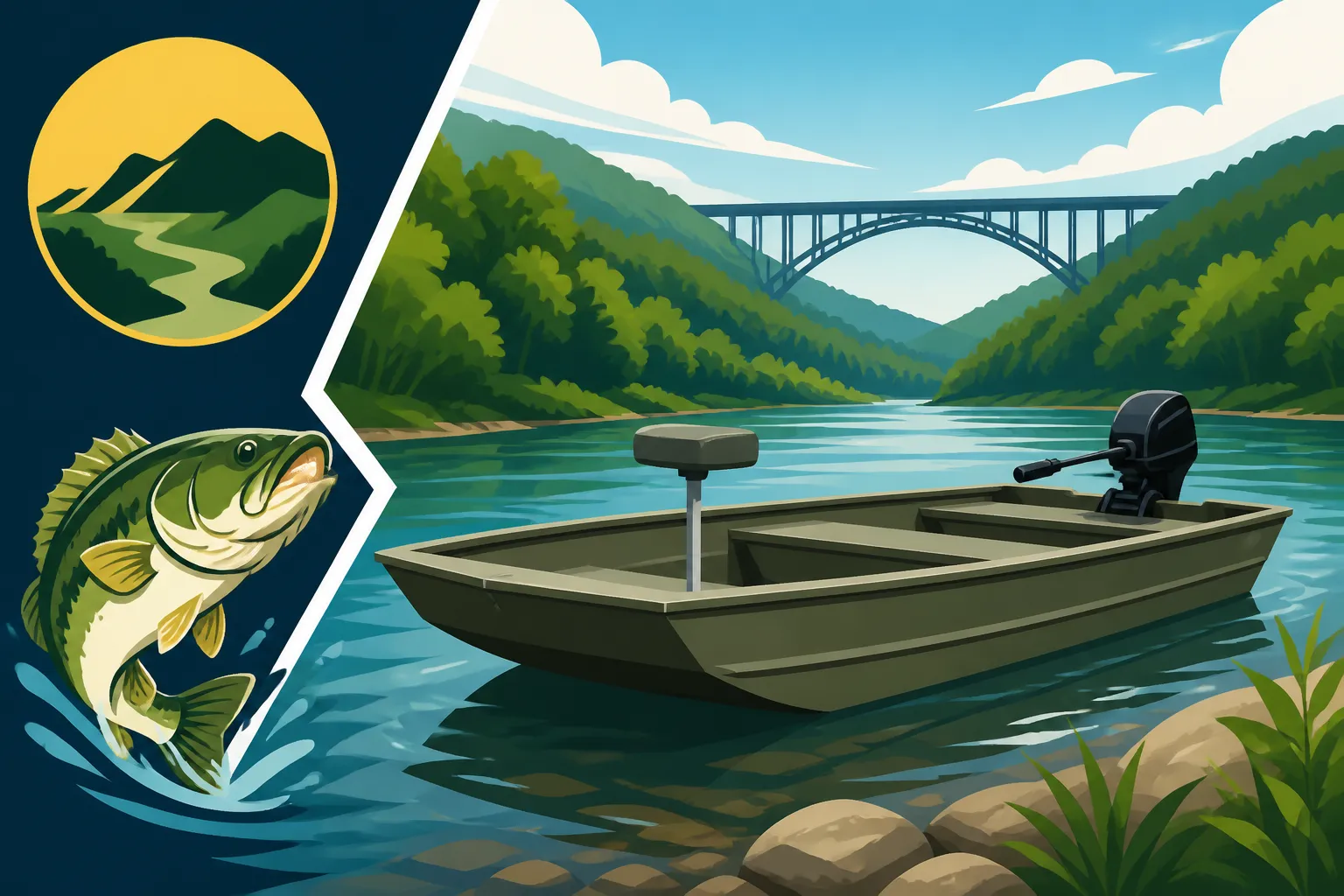
- Design & Construction: Jon boats are typically characterized by their simple, utilitarian design: a flat bottom, low sides, and a squared-off bow. Most are made from aluminum, with riveted or welded seams. The flat bottom provides exceptional stability and minimal draft, allowing them to float in incredibly shallow water. They often feature bench seats, which can be modified with aftermarket swiveling seats for more comfort while fishing.
- Pros for the New River:
- Shallow Draft: Can go almost anywhere there's water.
- Stability: Excellent for standing and casting, whether you're fly fishing or throwing lures.
- Durability: Aluminum construction stands up to bumps and scrapes against rocks and logs.
- Affordability: Generally more budget-friendly than other specialized river boats.
- Customization: Their simple design makes them a blank canvas for customization with rod holders, electronics, and seating.
- Cons:
- Rough Ride: In choppy water or when running against strong currents, the flat bottom can pound, leading to a less comfortable ride.
- Lower Sides: While great for getting in and out of the boat, the lower sides mean less protection from splash or waves, and less interior depth for gear.
- Ideal Use: Perfect for anglers who primarily fish the mid-to-lower sections of the New River, frequently navigate shallow riffles, and value stability and ruggedness above all else. They are fantastic for Float Fishing the New River or setting up to cast specific seams.
Specialized River Skiffs
While a "river skiff" isn't a universally defined boat type, it generally refers to a flat-bottomed or modified V-hull boat designed specifically for river use, often with features that enhance maneuverability and shallow-water performance beyond a basic jon boat.
- Design & Construction: River skiffs often feature a wider beam, slightly higher sides than a traditional jon boat, and may incorporate a subtle modified V in the bow for a smoother ride. Many will have reinforced keels and thicker aluminum hulls. Some might even have integrated jet tunnel designs to further protect the motor in shallow water. They often prioritize open deck space and dedicated fishing features.
- Pros for the New River:
- Enhanced Ride: The modified hull design can provide a smoother ride than a true jon boat, especially in minor chop or when running longer distances.
- Improved Handling: Often designed with better tracking and maneuverability in current.
- Durability: Typically built to a higher standard of ruggedness, anticipating harsh river conditions.
- More Features: May come with built-in livewells, rod lockers, or casting decks from the factory.
- Cons:
- Higher Cost: Generally more expensive than basic jon boats due to specialized design and construction.
- Slightly Deeper Draft: While still very shallow, a modified V might draw a tiny bit more water than a perfectly flat jon boat, though often negligible for most New River conditions.
- Ideal Use: For anglers who spend extensive time on the New River, cover longer distances, or value a slightly more refined ride and integrated features while still demanding shallow-water capability and durability.
Essential Rigging for New River Flat-Bottom Boats
Having the right boat is only half the battle; how you equip it can make or break your New River fishing adventures. Thoughtful rigging turns your flat-bottom hull into a highly effective and safe fishing machine.
Anchoring Systems for Tricky Currents
The New River's currents can be powerful and unpredictable, so a reliable anchoring system isn't just a convenience; it's a safety essential. Traditional anchor systems work, but river-specific setups are far superior.
- Bow and Stern Anchors: For maximum control and safety, you absolutely need an anchor off both the bow and the stern. This allows you to "spot-lock" yourself in the current, preventing your boat from spinning or drifting unexpectedly. Imagine you're trying to work a deep eddy for muskie; having two anchors lets you hold your position perfectly, allowing for precise casts without constantly fighting the current.
- Drift Chutes/Brakes: These parachute-like devices are invaluable for slowing your drift in faster current. When you want to methodically work a long section of river or fish a rapid, a drift chute deployed from the stern will slow your boat down, giving you more time to present your lures effectively. This is particularly useful for Kayaking Fishing Techniques for West Virginia Rivers too, and the same principles apply to boats.
- Anchor Type: River anchors are usually specialized designs like pyramid or grapple anchors that are heavy and designed to dig into rocky or gravel bottoms. Traditional fluked anchors often won't hold in these conditions. Consider a robust anchor like a drag chain or a heavy pyramid anchor for the New River. Check out dedicated Best Anchor System for River Fishing guides for more in-depth advice.
Rod Holders and Storage: Keeping Gear Safe and Accessible
Fishing the New River often involves multiple rods for different species or techniques. Keeping them secure and readily accessible is crucial.
- Flush-Mount or Clamp-On Rod Holders: These are essential for trolling, holding a spare rod, or temporarily stowing a rod while you manage a fish. Clamp-on options are great for aluminum boats as they don't require drilling. For a more permanent solution, flush-mount holders can be installed on gunwales or casting decks. Ensure they are robust enough to handle the pull of a large fish, especially if you're targeting New River Muskie Fishing.
- Vertical Rod Storage: Consider vertical rod racks mounted on the console or side walls. This keeps rods out of the way, preventing tangles and damage, especially when moving between spots or when the boat is bouncing in chop.
- Dry Storage: While not strictly rigging, having dedicated dry storage for tackle boxes, electronics, and personal items is a must. Whether it's a dedicated dry box you picked up from Amazon or integrated compartments, protecting your gear from splash and rain is vital.
Safety Gear: Never Compromise
Safety on the New River cannot be overstated. The currents, rocks, and unpredictable nature of the river demand that you be prepared.
- Life Jackets: This is non-negotiable. Every person on board must have a properly fitting, readily accessible life jacket. For West Virginia, there are specific Life Jacket Requirements for West Virginia Boaters, especially for children. Consider inflatable PFDs for adults for comfort, but always have a traditional foam vest for backups or for those who prefer them.
- Throw Cushion/Bag: A throwable flotation device is legally required and can be a lifesaver if someone unexpectedly goes overboard.
- First-Aid Kit: A well-stocked kit for cuts, scrapes, and other minor injuries is crucial, as you might be a long way from medical help.
- Whistle/Air Horn: For signaling other boats or in distress.
- Paddle/Oars: Even with an engine, having a set of sturdy oars or a paddle is essential for getting out of sticky situations if your motor fails.
- Fire Extinguisher: If your boat has an onboard fuel tank or engine, a fire extinguisher is required.
- Navigation Lights: If you plan on being out before sunrise or after sunset, ensure your boat has functional navigation lights as per West Virginia Boating Laws for Anglers.
- Tool Kit: A basic tool kit with wrenches, pliers, electrical tape, and spare spark plugs can solve many common engine issues on the water.
Electronics: Enhancing Your Fishing Edge
Modern electronics can significantly improve your success on the New River, helping you find fish and navigate safely.
- Fish Finder/GPS Combo: A good fish finder is invaluable for identifying submerged structure, deciphering bottom contours, and locating fish. Models with GPS capabilities allow you to mark hot spots, navigate back to launch ramps, and avoid known hazards. Look for units with side-imaging or down-imaging sonar for a detailed view of the river bottom and banks.
- VHF Radio: For larger boats or for those venturing into more remote sections, a VHF radio provides a reliable way to communicate with other boaters or summon help in an emergency, especially where cell service is unreliable (which is common on the New River).
Maintenance and Care for Your New River Flat-Bottom Boat
Once you've invested in the best flat-bottom boat for your New River adventures, taking care of it becomes paramount. Proper maintenance ensures longevity, reliability, and safety on the water, allowing you to focus on Best Fishing Lakes in West Virginia and Best Fishing Rivers in West Virginia for years to come.
Routine Cleaning and Inspection
After every trip, especially on a river like the New, a little routine care goes a long way.
- Wash Down: Rinse your boat thoroughly with fresh water to remove river grime, mud, and any aquatic vegetation. This is particularly important for preventing the spread of invasive species. A simple scrub brush and mild soap can tackle stubborn dirt.
- Check for Damage: Visually inspect the hull, transom, and propeller (if applicable) for any dings, scratches, or more serious damage. Address minor issues promptly to prevent them from becoming major problems. Pay close attention to welds on aluminum boats.
- Interior Clean-Up: Remove all trash, tackle, and personal items. Wipe down surfaces to prevent mold and mildew, especially if the boat will be stored for a while.
- Trailer Check: Don't forget your trailer! Check tire pressure, lights, and wheel bearings regularly. Submerging wheel bearings can cause issues if not properly maintained.
Engine Care: The Heart of Your Boat
Your outboard motor is your lifeline on the river, so it deserves consistent attention.
- Flush the Engine: After every use, especially if you've been in silty or sandy areas, flush your outboard motor with fresh water. Most outboards have a flush port for easy hose attachment. This prevents corrosion and keeps cooling passages clear.
- Check Fluids and Fuel: Regularly check engine oil (for four-stroke motors), trim/tilt fluid, and ensure your fuel system is free of water and contaminants. Keep an eye on fuel filters and change them as recommended.
- Propeller Inspection: Visually inspect your propeller for any bends, nicks, or cracks. Even minor damage can significantly reduce performance and efficiency. Carry a spare prop and the tools to change it on the water.
- Winterization: If you live in an area with freezing temperatures, proper winterization is crucial to protect your engine during storage. This typically involves stabilizing fuel, fogging the engine cylinders, changing fluids, and ensuring all water is drained.
Gear and Accessory Upkeep
Don't overlook the smaller components that contribute to your overall fishing experience.
- Life Jacket Storage: Store life jackets in a dry, well-ventilated area, out of direct sunlight, to prevent mildew and degradation of materials.
- Battery Maintenance: Keep your boat batteries charged, especially trolling motor batteries. If storing for an extended period, consider a trickle charger to maintain charge and extend battery life.
- Tackle and Electronics: Store fishing tackle in dry, organized boxes. Keep electronics covered when not in use and consider removing them for long-term storage to protect them from theft and environmental damage. Make sure your fish finder transducer is clean and free of debris.
- Canvas and Covers: If you use a boat cover, keep it clean and ensure it fits well to protect your boat from the elements during storage. Repair any rips or tears promptly. You can often find durable covers on Amazon or at your local Bass Pro Shops.
By dedicating a little time to regular maintenance, your flat-bottom boat will be ready for countless more adventures on the New River, providing a safe, reliable, and enjoyable platform for all your West Virginia fishing pursuits.
Disclaimer
This article is for general informational purposes only and does not constitute professional advice. Laws, prices and regulations vary by location and change over time. Consult a qualified professional for guidance on your specific situation.