How to catch bass around submerged timber
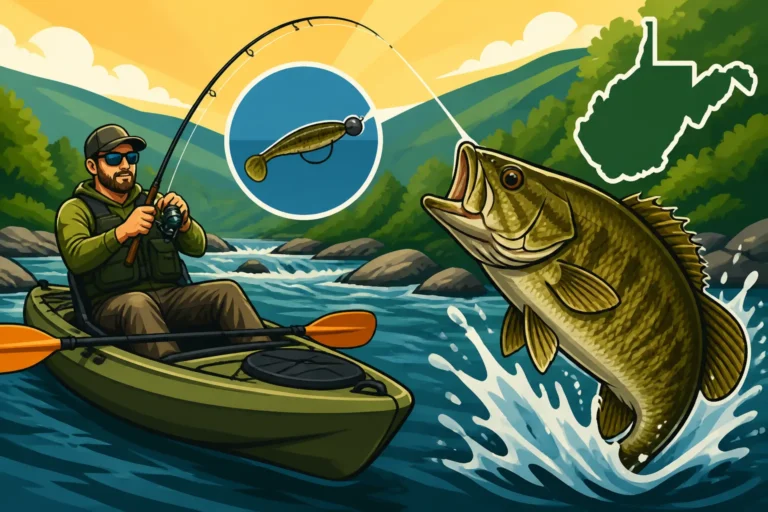
Fishing around submerged timber for bass in West Virginia can be one of the most exciting, yet utterly frustrating, experiences an angler can have. We've all been there: you spot that perfect fallen tree, a gnarly brush pile, or a cluster of old stumps just begging to hold a monster bass, only to cast, feel a soft bump, and then bam – you're hopelessly snagged, losing another favorite lure to the depths. It feels like a high-stakes game of hide-and-seek, where the bass are winning and your wallet is taking a hit. But don't despair! This guide is going to walk you through the ins and outs of deciphering these underwater puzzles, helping you understand why bass gravitate to timber, what gear you absolutely need, and the techniques that will put more fish in your boat (and keep more lures in your tackle box).
Understanding Why Bass Love Submerged Timber
Think about it from a bass's perspective. They're predators, but they're also prey. They need cover for a variety of reasons, and submerged timber offers an almost perfect package. When we talk about submerged timber, we're not just talking about one type of structure. It could be standing dead trees, fallen logs, brush piles, old stumps, or even entire submerged forests in some of our larger reservoirs like Summersville Lake or Bluestone Lake.
The Appeal of Woody Cover for Bass
Woody cover, regardless of its specific form, provides a haven for bass. First and foremost, it offers unparalleled shelter. On bright, sunny days, bass will tuck deep into the shade provided by dense timber, escaping the direct sun that can make them uncomfortable and less active. This is especially true in clearer waters where sunlight penetrates deeper. It's their cool, dark retreat where they can conserve energy.
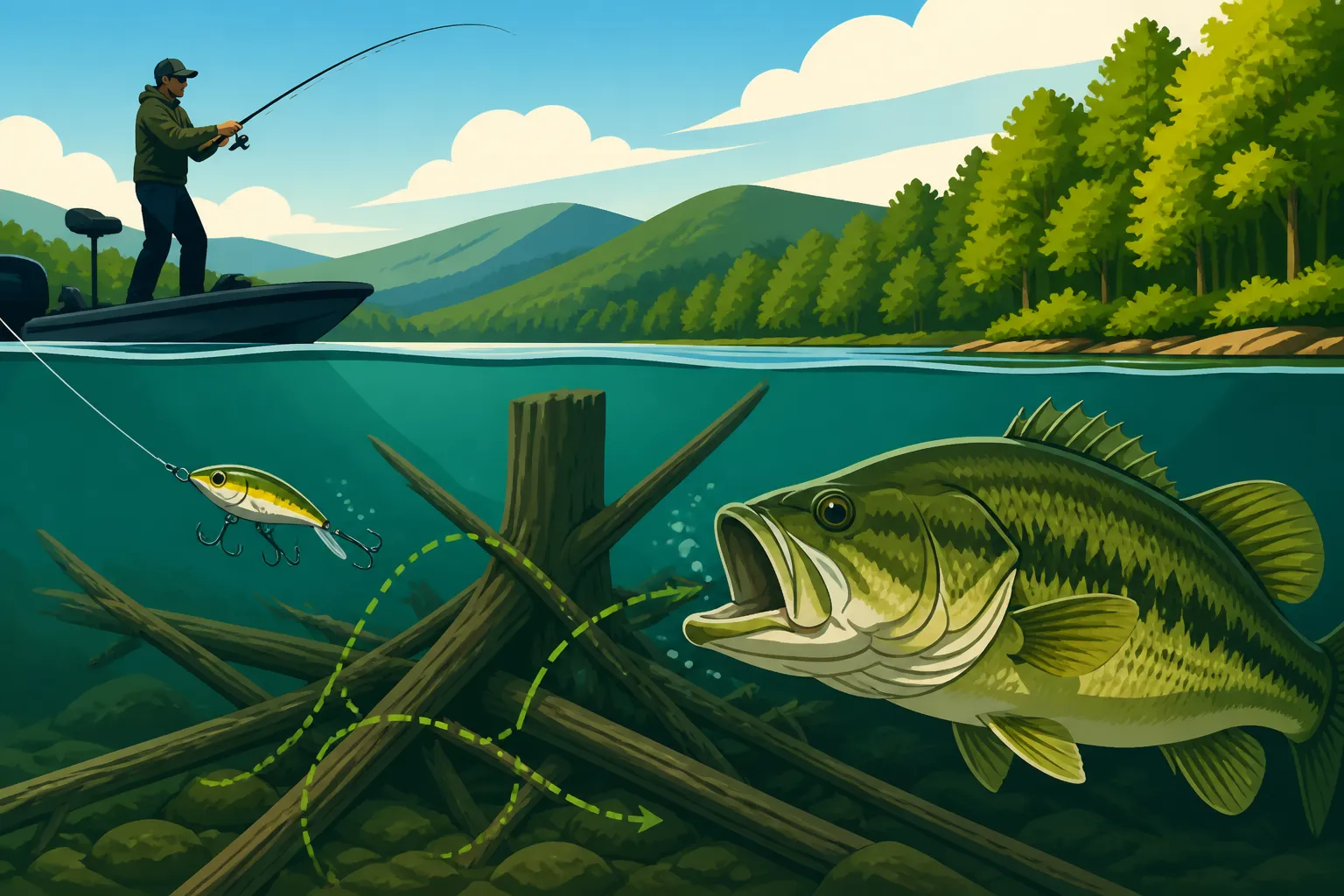
Beyond comfort, timber is a prime ambush point. Imagine a bass hiding within the branches of a fallen tree, perfectly camouflaged. As a unsuspecting baitfish, crawfish, or even a smaller bluegill swims by, the bass can explode from its hiding spot, snatching its meal with brutal efficiency. The erratic nature of timber creates countless pockets, channels, and sudden drop-offs that funnel baitfish right into a bass's strike zone, making it a strategic hunting ground. These dense, intricate structures make it incredibly difficult for prey to escape once a bass has committed to the strike.
Lastly, timber is often teeming with life. Algae grows on it, insects attach to it, and crawfish seek refuge in its crevices. This attracts smaller baitfish, which in turn attracts bass. It's a self-sustaining ecosystem that consistently provides food. So, when you're looking at a stretch of water, and you see that gnarly old log or a cluster of submerged stumps, you should immediately think, "Bass are probably calling that home."
Identifying Productive Timber
Not all submerged timber is created equal. Some timber holds fish consistently, while other pieces might as well be bare bottom. The key is to learn how to distinguish between them. For starters, look for timber that's near changes in depth, like a creek channel swinging close to a bank with fallen trees, or a stump field on a point dropping into deeper water. Bass often use timber as a highway between shallow feeding areas and deeper resting or schooling spots.
Consider the depth and type of timber. Standing timber in deeper water, often found in reservoirs when the water level rises over old forests, can be particularly productive. Bass will suspend in these trees, especially in open water away from the banks. Fallen logs and brush piles on shallower flats or points, however, are classic largemouth bass haunts, offering perfect ambush points. Pay attention to how dense the cover is; sometimes the gnarlier, the better, but it also means a higher risk of snags. Best Fishing Lakes in West Virginia and Best Fishing Rivers in West Virginia often feature these kinds of structures.
Finally, the age of the timber can play a role. Older, waterlogged timber tends to sink deeper and has more algae growth, providing better habitat over time. Newer timber, especially if it's recently fallen, might not be as established in terms of fish life, but it can still be excellent, particularly if it creates unique current breaks or shade lines.
Essential Gear for Fishing Submerged Timber
Successfully extracting a chunky bass from a tangle of wood requires specific gear. You can't just go in there with your light spinning rod and 6-pound test line and expect to win. This is where your tackle needs to be robust, forgiving, and ready for a fight.
Rods, Reels, and Line Choices
When you're wrestling bass out of submerged timber, you need power and leverage. This means moving away from lighter setups.
For rods, think heavy or medium-heavy power, with a fast or extra-fast action. A heavy power rod allows you to put the brakes on a bass trying to dive back into the cover, while a fast action tip gives you the sensitivity to feel subtle bites and the quick hookset needed before the fish burrows in. Rods in the 7 to 8-foot range are ideal, providing better casting distance for reaching distant cover and more leverage when fighting a fish. For specific models, brands like Ugly Stik or St. Croix offer reliable options that can take a beating.
When it comes to reels, a robust baitcasting reel is typically the go-to for timber fishing. Look for models with a strong drag system and a decent retrieve ratio. A higher gear ratio (7.1:1 or higher) is often preferred for quickly taking up slack line, which is crucial when a bass bites and starts running toward cover. However, a slightly slower ratio (around 6.4:1) can be excellent for lures that require a steadier retrieve. The key is a smooth, reliable drag that won't slip under pressure but can still be locked down when you need to winch a fish out of heavy cover. Best Baitcasting Reels for Muskie Fishing can also give you an idea of the kind of robust reels needed for heavy cover, as muskie gear often crosses over in terms of raw power.
Now, let's talk about line – this is perhaps the most critical component. Forget fluorocarbon or monofilament as your main line in dense timber; you need braided line.
- Braided line is incredibly strong, has virtually no stretch, and is highly abrasion-resistant. These qualities are non-negotiable when you're pulling fish out of thick wood. You want to run at least 30-pound test, but 50- to 65-pound braid is even better for punching through heavy mats or yanking big fish out of deep snags. The lack of stretch means a more direct feel for bites and more powerful hooksets, which you’ll absolutely appreciate.
- Some anglers will tie a short (12-18 inch) fluorocarbon leader to their braid using a strong knot like an FG knot or a double uni. This can be beneficial in clear water or if you feel the bass are line-shy. Use heavy fluorocarbon, at least 15-20 pound test, to maintain some abrasion resistance. However, in extremely dense cover or murky water, many anglers skip the leader altogether and tie directly to the braid, favoring brute strength over stealth. For deeper dives on line choices, check out Best Fluorocarbon Line for Clear River Water.
Lure Selection for Snag-Prone Areas
Choosing the right lure for submerged timber is all about balancing attraction with snag resistance. You want something that will entice a bite without getting hung up on every other branch.
Weedless Jigs and Soft Plastics: These are your bread and butter for timber.
- Jigs, especially those with heavy fiber weedguards, are excellent for pitching into tight cover. Paired with a creature bait or a crawfish imitation, they mimic a bass's natural forage. The weedguard deflects off wood, allowing the hook to remain protected until a fish strikes.
- Texas-rigged soft plastics are another timber hero. Worms, creature baits, and crawfish imitations rigged with the hook point buried back into the plastic are incredibly weedless. Use heavier tungsten weights (1/2 oz to 1 oz or more) to penetrate dense cover and get your bait down quickly.
- Weighted swimbaits with a weedless hook design can also be incredibly effective for swimming through the tops of submerged trees.
Spinnerbaits and Bladed Jigs: These shine on the edges of timber.
- Spinnerbaits with a single or double willow blade can be fished through sparse timber or along the outer limbs of a fallen tree. The blades often deflect off wood, preventing snags, and the flash can draw strikes.
- Bladed jigs, like the ChatterBait style, also work well when fishing parallel to or just outside of timber. Their erratic action and vibration can trigger reaction strikes. Again, they tend to come through cover better than traditional crankbaits.
Topwater and Frogs: When timber breaks the surface or creates dense mats, topwater is king.
- Hollow-body frogs can be cast directly onto thick mats of vegetation or over a field of lily pads interspersed with timber. They are almost entirely weedless and provoke explosive surface strikes.
- Walking baits or poppers can be effective when fished in open pockets or along the edges of less dense timber that's close to the surface. Just be ready for that heart-stopping explosion!
Here’s a quick overview of lure types for timber fishing:
| Lure Type | Ideal Conditions | Pros | Cons |
|---|---|---|---|
| Texas-Rigged Soft Plastics | Dense cover, deep timber, calm water | Highly snag-resistant, versatile | Slower presentation, can be subtle |
| Jigs (Flipping/Pitching) | Dense cover, brush piles, standing timber | Excellent snag resistance, heavy | Requires precise casting, can still snag |
| Spinnerbaits | Edges of timber, sparse cover, windy days | Good vibration/flash, deflects wood | Less weedless than plastics/jigs |
| Bladed Jigs (ChatterBait) | Edges of timber, slightly open cover | Strong vibration, reaction bites | Prone to snagging in very dense areas |
| Hollow-Body Frogs | Mats, lily pads, surface timber, heavy cover | Extremely weedless, exciting strikes | Limited to surface fishing |
| Crankbaits (Squarebill) | Sparse timber, laydowns, deflection | Great reaction strikes, covers water | High snag risk in dense cover |
Remember, carrying a diverse selection of these lures will help you adapt to different timber scenarios. You can find many of these specific lure types on Amazon, making it easy to stock up before your next trip.
Proven Techniques for Targeting Timber Bass
Now that you've got the right gear, let's talk about how to use it. Fishing timber isn't just about casting and reeling; it requires precision, patience, and a bit of finesse – or sometimes, just brute force.
Pitching and Flipping into Tight Cover
Pitching and flipping are absolutely essential techniques for working tight timber cover. These aren't long-distance casts; they are accurate, quiet presentations designed to drop your bait precisely into small openings or against specific pieces of wood.
- Pitching: This involves swinging your bait forward with a pendulum motion, releasing the line, and guiding the bait to its target. It's often used for slightly longer, quieter casts than flipping, allowing you to hit pockets in a log jam or the base of a standing tree from a short distance.
- Flipping: This is for extremely close-quarters combat. You pull line off your reel, hold the lure in one hand and the rod in the other, then gently swing the bait into the cover using just the rod tip. The goal is to make a stealthy entry, letting the bait fall straight down into a hole in a brush pile or right next to a stump.
With both techniques, you want your bait to enter the water with minimal splash. The idea is to make a subtle presentation, letting your Texas-rigged plastic or jig fall naturally. Pay extreme attention as the bait descends; many bites will occur on the initial fall. If you don't get a bite, let it sit for a few seconds, then impart a subtle twitch or two. If nothing happens after a few twitches, retrieve it quickly and hit another spot. This is a game of high-percentage targets, not endless re-casts on one piece of wood. Think about working every piece of isolated timber, or the outer and inner edges of larger log jams. How to fish a spinnerbait for New River smallmouth covers some overlapping concepts of precise presentations.
Cranking and Spinnerbaiting the Edges
While pitching and flipping are for the densest cover, crankbaits and spinnerbaits excel at working the edges and slightly more open timber. This allows you to cover more water and trigger reaction strikes from bass that might be cruising nearby.
- Squarebill Crankbaits: These are a fantastic choice for timber that's not overly dense. Their square bills help them deflect off wood without getting hung up as easily as traditional rounded-bill crankbaits. Cast a squarebill parallel to a fallen log or over a submerged brush pile, and let it bump and grind its way through the cover. That erratic deflecting action often triggers aggressive strikes. The key is to keep tension on the line and react quickly when it hits wood, giving a slight pause or twitch to help it bounce off.
- Spinnerbaits: When bass are a bit more active, or the water has some stain to it, a spinnerbait can be deadly. Cast your spinnerbait past the timber, then retrieve it so the blades "tick" off the branches. The flash and vibration can draw bass out of cover, especially in low light conditions or when the fish are scattered. Vary your retrieve speed and depth, experimenting with single or double blades depending on the retrieve speed and flash you want.
When using these lures, don't be afraid to make contact with the wood. That's often what triggers the strike. The deflecting action mimics an injured baitfish, which bass can't resist. However, if you feel it's getting too deep into the cover, give your rod a sharp twitch or lift to try and pop it free before it fully snags.
Topwater and Frogging Over Mats and Laydowns
There’s nothing quite like a topwater strike, and when you're fishing submerged timber that reaches the surface, or has adjacent vegetation mats, topwater baits, especially frogs, are incredibly effective and surprisingly snag-resistant.
-
Hollow-Body Frogs: These are the kings of fishing over slop, lily pads, and timber that creates a matted canopy. Cast your frog right onto the thickest cover. When you retrieve it, keep your rod tip high and work the frog with short twitches, making it "walk" or "pop" across the surface. When a bass blows up on it, resist the urge to set the hook immediately! Wait a second or two until you feel the weight of the fish, then set the hook hard. That brief pause allows the bass to fully inhale the bait, improving your hookup ratio. This is a prime tactic for large largemouth bass, and you'll find plenty of opportunities in the backwater coves of lakes like Burnsville Lake.
-
Walking Baits and Poppers: If the timber is sparser or there are open pockets around the logs, a walking bait (like a Zara Spook) or a popper can be a great option. Walk the dog with your bait across these open areas, or pop your popper to create a commotion. These baits are more prone to snagging if they hit submerged wood, so use them carefully, targeting the clear lanes. For explosive action, you can't beat a topwater strike around cover!
The key with topwater is often patience and observation. Watch for signs of bass activity, like ripples or baitfish jumping, and target those areas aggressively.
Strategies for Minimizing Snags and Maximizing Catches
Fishing timber is inherently risky when it comes to snags. It’s part of the game. However, you can significantly reduce your frustration and increase your hook-up ratio with a few smart strategies.
The Importance of Presentation and Retrieval
A careful approach is paramount. Think about how your lure interacts with the cover from the moment it hits the water to the moment it's retrieved.
- Accurate Placement: The more precisely you can drop your bait into the strike zone, rather than onto the cover you're trying to avoid, the better. Practice pitching and flipping to tight targets. A well-placed jig into a small hole in a brush pile has a much higher chance of being eaten than one that lands in the branches.
- Controlled Fall: Many bass bites happen on the fall, especially with jigs and Texas-rigs. Don't just let your bait free-fall. Keep a slight bit of tension on your line, known as a "controlled slack" or "semi-slack" line. This allows the bait to fall naturally but gives you enough contact to feel a subtle tap or a sudden weight. If your line suddenly jumps, twitches, or stops before it should, set the hook!
- Slow Down: Bass in dense cover often aren't chasing. They're waiting to ambush. Work your lures slowly through the cover. Give a jig plenty of time to sit on the bottom before twitching it. Let a Texas-rigged worm slowly crawl over a log. Patience is often rewarded here. If you're using crankbaits on the edges, a slower retrieve that allows the bait to bump and grind can be more effective than a fast burn. For tips on how current affects retrieve, you might find How to fish a tailwater release schedule on the Elk River helpful, even if it's for trout, the principles of current and presentation apply.
Retrieve Techniques to Avoid Hang-Ups
Even with the best snag-resistant lures, you'll still get hung up. But a few techniques can help you navigate the wood more effectively.
- Rod Tip Position: When fishing jigs and soft plastics, keep your rod tip high and pointed towards the lure. This gives you better control over the bait's trajectory and allows you to lift it over obstacles. If you feel your bait about to snag, a quick upward snap of the rod tip can sometimes pop it free.
- Constant Contact (but not too much): As mentioned, maintaining a slight tension helps. However, if you feel your lure bumping against a thick branch, don't just pull harder. Sometimes, a slight slack in the line can allow the lure to fall clear of the obstruction. A quick, sharp snap can also free a lightly snagged bait.
- Deflection is Your Friend: With spinnerbaits and squarebill crankbaits, actively use the timber to your advantage. When you feel the lure hit wood, give your rod a slight pause or a quick twitch. This causes the bait to deflect erratically, often triggering a strike. It's like the lure is "nervously" trying to get away from the cover, and bass can't resist.
How to Safely Free a Snagged Lure
Losing lures is inevitable when fishing timber, but you can minimize losses with smart recovery tactics.
- The Bow-and-Arrow Method: If your lure is lightly snagged, point your rod tip directly at the snag. Pull the line taut by hand (don't use your rod, you could break it!), and then quickly release it, like shooting a bow and arrow. The sudden snap can often dislodge the lure. Repeat a few times. This works best with braided line due to its lack of stretch.
- Moving Position: If the bow-and-arrow doesn't work, try moving your boat or kayak to a different angle, ideally directly over the snag or from the opposite side. This changes the angle of pull and can often free a lure that was otherwise stuck. This is where a good trolling motor or anchor system is invaluable.
- Lure Knockers/Retrievers: These are weighted devices that slide down your line, designed to bump or snag onto your lure and free it. They're an inexpensive tool that can save you a lot of money in lost lures, especially for crankbaits. You can find many options for lure retrievers on Amazon, and it's a wise investment for any angler serious about timber fishing.
- Don't Break Your Rod: Whatever you do, don't try to pull a deeply snagged lure free by cranking your reel or bending your rod to its breaking point. This is a surefire way to damage your gear. Always pull line by hand or use a lure retriever. Remember, a lost lure is cheaper than a broken rod!
Fishing around submerged timber is a challenge, but it's also where some of the biggest and most aggressive bass in West Virginia hide. By understanding their habits, equipping yourself with the right heavy-duty gear, and mastering these specialized techniques, you'll transform those frustrating snags into triumphant battles. So next time you see that gnarly log jam or those submerged trees, don't shy away. Embrace the challenge, and get ready to pull some hawgs out of the wood!
Disclaimer
This article is for general informational purposes only and does not constitute professional advice. Laws, prices and regulations vary by location and change over time. Consult a qualified professional for guidance on your specific situation.